
Trump Beat Stormy Daniels' Defamation Claim With a Law Aimed at Rich Bullies Like Him
The president, who routinely threatens to sue people for saying things he does not like, deployed an anti-SLAPP law in his own defense.


The president, who routinely threatens to sue people for saying things he does not like, deployed an anti-SLAPP law in his own defense.
It's time to move beyond the social media giants to a more decentralized world that's harder to control

Under Chinese law, disrespecting the national anthem is punishable by up to 15 days in jail.
Many who oppose "political correctness" also support a variety of specific types of censorship.
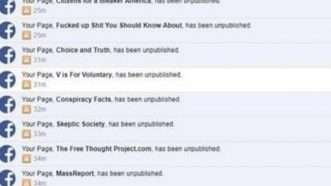
Hundreds of pages and accounts have been purged over accusations that they were "inauthentic." The page operators disagree.
Plus: libertarian accounts purged from Facebook?
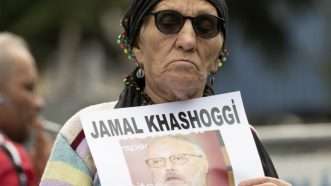
Plus: Kavanaugh and Gorsuch differ during immigration case.
An interesting dissent from denial of review by Texas's high court for criminal cases.

No, a baker cannot be compelled to "support gay marriage" with frosting.

The culture of free speech has been deteriorating for long enough that politics, sadly and predictably, is catching up.
The former president of Iran, who once banned Twitter, discovers the joys of social media.
The bigger the company, the bigger the target.
All together, in a Minnesota Court of Appeals decision handed down today.

Jamal Khashoggi visited the Saudi Consulate in Istanbul last week. He hasn't been seen since.
The Hamilton, Texas City Manager, claims the police didn't threaten her or forcibly remove the sign, but that "a police member visited the owner's home, and the owner asked the officer to take the sign."

Friday, a federal district judge issued an injunction against the ban.
So the Ninth Circuit held, applying the reasoning from the Slants case (Matal v. Tam).
The logic of a recent Second Circuit decision suggests that they do.
The right-wing politician faces prosecution and psychiatric examination for posting pictures of ISIS atrocities.
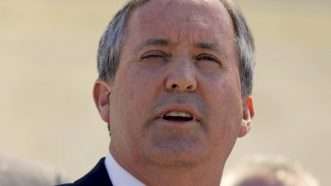
The irony is that she's protesting authoritarian police behavior.
A conservative publication had already filed such a motion; Ellison is the candidate for Minnesota Attorney General, and Deputy Chair of the Democratic National Committee.
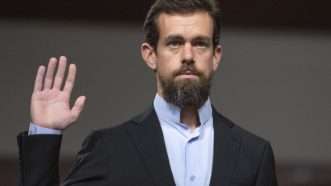
Will it stop toxic behavior or just encourage more demands for censorship?
A woman's case against the defendants who arranged the prosecution (a police department captain, who was her ex-husband and the target of her speech, and his friend who was a police investigator) can go forward.
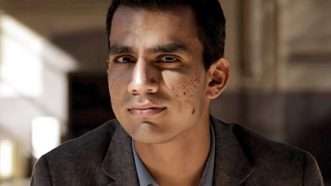
The head of Ideas Beyond Borders is translating books by Steven Pinker, Sam Harris, and others into Arabic and distributing them for free.
When she did post such a photo, she was arrested and prosecuted -- a remarkable case from two years ago, which I just learned about.
More on their unconstitutionality.
The government may not discriminate against businesses because of the political views the business (or its spokesman) has expressed.
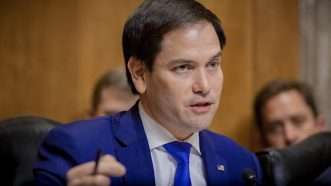
Inviting followers to harass this man violates the platform's terms of service.
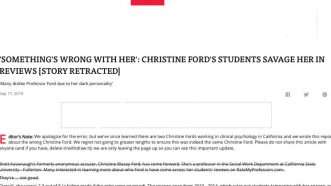
The perils of poorly sourced stories
The Supreme Court's decision in Tinker is viewed as the high-water mark for students' First Amendment rights, but Justice Black's strident dissent-not the majority-spoke for most Americans at the time.

Online platforms will be subjected to a costly, easily-abused system that will likely pull down legal content.
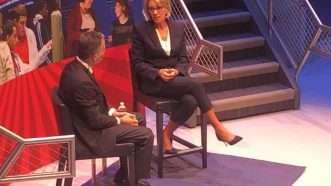
"Solutions won't come from new laws from Washington, D.C., or from a speech police at the U.S. Department of Education."
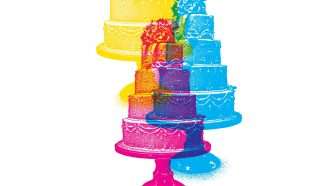
How should we feel about conscience-based discrimination?
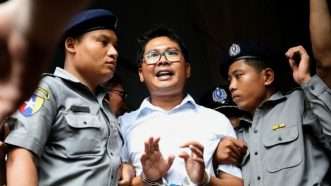
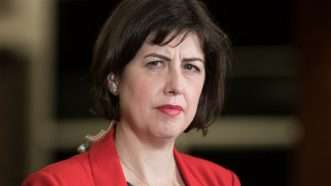
Bill also calls for holding forum moderators legally liable for extreme speech.
So a federal judge just held.
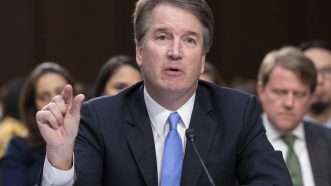
"Brett Kavanaugh said he would kill Roe v. Wade last week." Except he didn't.
So a Sixth Circuit panel just held, and it also concluded that the statements weren't actionable under Kentucky law.
The defendant, Imani Pennant, reportedly said that there's a web site that helps people create such orders.

Demands for government oversight hide opportunism amid rhetoric about safety.
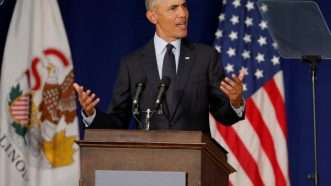
Critiquing an ex-president's warnings about anti-media rhetoric, non-voting, and unelected bureaucrats
An interesting new Younger abstention case from the Ninth Circuit, arising in our challenge to Washington's very broad criminal harassment statute.
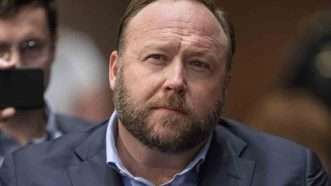
Conspiracy theorist banned for "abusive behavior."
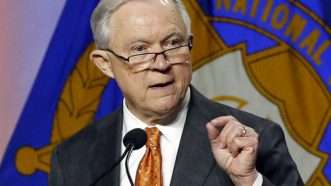
The Department of Justice plans to look into whether social media platforms are "hurting competition and intentionally stifling the free exchange of ideas."
Celebrate your independence with a subscription to Reason magazine, your most trusted source of honest, insightful news and analysis.




