9/27/1787: First Anti-Federalist letter by "Cato" is published.
The Volokh Conspiracy
Mostly law professors | Sometimes contrarian | Often libertarian | Always independent | Est. 2002
President DeSantis's First Supreme Court Nominee
Episode 423 of the Cyberlaw Podcast
This episode features a much deeper, and more diverse, examination of the Fifth Circuit decision upholding Texas's social media law than we did last week. We devote the last half of this episode to a structured dialogue between Adam Candeub and Alan Rozenshtein about the decision. Both have written about it, Alan critically and Adam supportively. I lead off, arguing that, contrary to legal Twitter's dismissive reaction, the opinion is a brilliant and effective piece of Supreme Court advocacy. Alan thinks that's exactly the problem; he objects to the opinion's grating self-certainty and refusal to acknowledge the less convenient parts of past case law. Adam is closer to my view. We all seem to agree that the opinion succeeds as an audition for Judge Oldham to become Justice Oldham in the DeSantis Administration.
We walk through the opinion and what its critics don't like, touching on the competing free expression interests of social media users and of the platforms themselves, whether there's any basis for an injunction today, given the relative weakness of the overbreadth argument, and whether "exercising editorial discretion" is a fundamental right under the first amendment or just an artifact of older technologies. Most intriguingly, we find unexpected consensus that Judge Oldham's (and Justice Thomas's) common carrier argument may turn out to be the most powerful argument in the case when it reaches the Court.
In the news roundup, we focus on the sprint to pass additional legislation before the end of the Congress. Michael Ellis explains the debate between the Cyberspace Solarium Commission alumni and business lobbyists over enacting a statutory set of obligations for systemically critical infrastructure companies.
Adam outlines a strange-bedfellows bill that has united Sens. Amy Klobuchar (D-Minn.) and Ted Cruz (R-Texas) in an effort to give small media companies and broadcasters an antitrust immunity to bargain with the big social media platforms over the use of their content. Adam is a skeptic, Alan less so.
The Pentagon, reliably braver when facing bullets than a bad Washington Post story, is performing to type in the flap over fake social media accounts. Michael tells us that the accounts pushed pro-U.S. stories but had met with little success before Meta and Twitter caught on and kicked them off their platforms. Now the Department of Defense is conducting a broad review of military information operations. I predict fewer such efforts and don't mourn their loss.
Adam and I touch on a decision of Meta's Oversight Board criticizing Facebook's automated image takedowns. I offer a new touchstone for understanding content regulation at the Big Platforms: They just don't care, so they've turned the whole effort over to second-rate AI and second-rate employees. There's a lot of explanatory power there.
Michael walks us through the Department of the Treasury's new flexibility on sending communications software and services to Iran.
And, in quick hits, I note that:
- The Justice Department's China Initiative continues to suffer pushback,
- We should all expect bad things from the emergence of violence as a service, and
- Russian botmasters have suddenly discovered that extradition to the U.S. may be better than going home and facing mobilization.
Download the 423rd Episode (mp3)
You can subscribe to The Cyberlaw Podcast using iTunes, Google Play, Spotify, Pocket Casts, or our RSS feed. As always, The Cyberlaw Podcast is open to feedback. Be sure to engage with @stewartbaker on Twitter. Send your questions, comments, and suggestions for topics or interviewees to CyberlawPodcast@steptoe.com. Remember: If your suggested guest appears on the show, we will send you a highly coveted Cyberlaw Podcast mug!
The views expressed in this podcast are those of the speakers and do not reflect the opinions of their institutions, clients, friends, families, or pets. Especially the pets.
Abortion, Classroom Discussion, and the University of Idaho
Guidance given to faculty about effects of state abortion law raises troubling academic freedom questions
According to various reports, the general counsel at the University of Idaho has issued guidance to university employees regarding the state's new abortion law. Of particular interest is the guidance to university faculty about their teaching.
Classroom Discussions. Classroom discussion of the topic should be approached carefully. While academic freedom supports classroom discussions of topics related to abortion, these should be limited to discussions and topics relevant to the class subject. The laws discussed above, specifically including those addressing promoting abortion, counseling in favor of abortion and referring for abortion, will remain applicable. Academic freedom is not a defense to violation of law, and faculty or others in charge of classroom topics and discussion must themselves remain neutral on the topic and cannot conduct or engage in discussions in violation of these prohibitions without risking prosecution.
I have been able to confirm with faculty at Idaho that this report about the general counsel's guidance is accurate.
This is perhaps an effort to implement House Bill 220, which prohibits the use of public funds to "promote abortion." In the context of a bill that is generally concerned with the provision of or referral to abortion services, this may be an aggressive interpretation of the law, but perhaps the caution is warranted.
The academic freedom implications are disturbing. Set aside the problem of faculty introducing abortion-related discussions into a class in which such topics are not germane, there are classes in which abortion-related classroom discussions clearly are germane and appropriate. A moral philosophy class might well discuss the ethics of abortion. A constitutional law class might well discuss the constitutionality of abortion. A health policy class might well discuss the public health consequences of abortion and abortion policy. A women's studies class might well discuss the effect of abortions and abortion policies on the women's movement or women's status in society.
Can a state require that professors at public universities adhere to instructional "neutrality" in relation to the topics that they teach? Certainly from an academic freedom perspective, they cannot (the First Amendment issues are potentially complicated, but I think best understood as prohibiting such a requirement). Standard and widely adopted AAUP principles call for universities to respect professorial freedom in the classroom.
Teachers are entitled to freedom in the classroom in discussing their subject, but they should be careful not to introduce into their teaching controversial matter which has no relation to their subject.
Professors have traditionally had the freedom to stake out controversial positions in the classroom and advocate for a certain perspective on the topics being taught. A good professor will certainly allow discussion and debate regarding how to view such matters, but professors should not be expected to be neutral on such questions as, for example, whether Dobbs was correctly decided or whether abortion is a moral wrong.
If the Idaho law actually requires such instructional neutrality in regards to abortion, it poses a serious threat to academic freedom in the state universities of Idaho.
Overbroad Speech Restriction in Dispute Between Two #AppleToo Whistleblowers Overturned
N.Y. Post (Theo Wayt) wrote in April about the underlying dispute:
A pair of ex-Apple employees who made headlines last year for leading a whistleblower movement against the company have since become embroiled in a bizarre legal fight, accusing each other of harassment and stalking.
Cher Scarlett and Ashley Gjøvik co-founded a whistleblower campaign called #AppleToo that last summer and fall published dramatic stories of gender and racial discrimination, sexual harassment and other ills from employees of the famously secretive tech giant….
But behind the scenes and eventually in public, Scarlett and Gjøvik had a falling-out involving claims of stalking, leaking confidential information and even secretly working on behalf of Apple. The dispute culminated in Gjøvik labeling Scarlett an "evil witch" and Scarlett receiving a restraining order against Gjøvik, court papers show.
The restraining order not only required Gjovik to stay away from Scarlett and not to surveil or communicate with Scarlett, but also provided:
[Gjovik] shall not make any statements or posts or other publications about [Scarlett], including, but not limited to, [Scarlett]'s medical information, [Scarlett]'s family, [Scarlett]'s names, on any social media or internet or other medium. Nothing about this Order prohibits [Gjovik] from testifying in administrative or judicial proceedings.
Now here's today's decision, Scarlett v. Gjovik, decided by King County (Wash.) Superior Court Judge Andrea Robertson:
"A White Woman's Documentary About Muslim Extremists Is Being Canceled. Guess Why"
An interesting article here at Reason by Robby Soave; I don't know anything else about the controversy, so I can't vouch for it, but I've generally liked Soave's work, and thought it was worth pointing to. I'd be glad to point to thoughtful contrary views, if our readers recommend them. Here are the opening paragraphs (which also link to a New York Times article on the subject), slightly reordered:
Jihad Rehab is a documentary by Meg Smaker, a former firefighter who moved from California to Yemen and then to Saudi Arabia following the September 11, 2001, terrorist attacks…. The film centers on four men who were accused of terrorism, imprisoned at Guantanamo Bay, and later sent to a rehabilitation center in Riyadh, Saudi Arabia. The center's purpose is ostensibly to deradicalize and reintegrate its involuntary participants. The New York Times describes it as spanning "an unlikely distance between prison and boutique hotel." …
{Subsequent to its inclusion at the January 2022 Sundance Film Festival, both the film and filmmaker have become pariahs in elite film circles—mostly because Smaker, a white woman, dared to make a movie about the experience of Islamic men….
"Film critics warned that conservatives might bridle at these human portraits," notes The New York Times in a recent, much discussed article about Jihad Rehab's cancellation. "But attacks would come from the left, not the right."} …
Florida All in for Assault on Academic Freedom
To defend the Stop WOKE Act, Florida asks court to eliminate any academic freedom exception to government employee speech doctrine
This past summer Florida adopted House Bill 7, better known as the Stop WOKE Act. The legislation blocks academic instruction and workplace training that "espouses, promotes, advances, inculcates, or compels" belief in a variety of race-related ideas. It is one of a number of so-called anti-"Critical Race Theory" bills that have been advanced by Republican policymakers in the states since 2020. Some have taken aim at workplace training. Others have focused on primary and secondary education. An emerging set of proposals are targeted at higher education. The Florida bill has elements of all three. The University of Florida produced providing guidance to its employees on how to comply with the bill, with a list of ideas that "instructors may not suggest or assert."
Several lawsuits have already been filed against the enforcement of Stop WOKE Act, and Judge Mark Walker has already issued a temporary injunction on the workplace training portions of the law. (Judge Walker had previously issued a sharp opinion in a case regarding the right of state university professors to serve as expert witnesses in lawsuits filed against the state. The state is currently appealing that case to the 11th Circuit.) The ACLU filed a separate lawsuit on the education components of the act, as has FIRE.
In response to anti-Communist measures aimed at state universities, the Warren Court emphasized that academic freedom was an important First Amendment value, but the scope and implications of that point are less than clear. In Garcetti v. Ceballos in 2006, the U.S. Supreme Court held that that when the speech of government employees is pursuant to their duties it is not protected by the First Amendment. Crucially, however, the Court held open the question of whether this was still true in the context of teaching and scholarship by university professors at state universities.
There is some argument that expression related to academic scholarship or classroom instruction implicates additional constitutional interests that are not fully accounted for by this Court's customary employee-speech jurisprudence. We need not, and for that reason do not, decide whether the analysis we conduct today would apply in the same manner to a case involving speech related to scholarship or teaching.
Lower courts have generally construed this as an academic freedom exception to Garcetti's government employee speech doctrine. As a consequence, scholarship and classroom teaching at state universities have continued to be afforded some degree of First Amendment protection. The academic freedom exception to Garcetti is probably critical to any First Amendment challenge to the anti-CRT bills.
I have a draft paper to be published by Wake Forest Law Review arguing that university-level classroom instruction should not be regarded as government speech for First Amendment purposes (classroom instruction in primary and secondary public schools is probably a different matter).
In its response to the ACLU lawsuit, Florida is taking a big swing at academic freedom at state universities. The state argues that Garcetti's reasoning is inconsistent with preserving an academic freedom exception to government employee speech doctrine, and it points to lower court decisions involving classroom instruction in primary and secondary public schools as indicating that the state can regulate the speech that the "employee was being paid to create."
The in-class instruction offered by state-employed educators is also pure government speech, not the speech of the educators themselves. When "public employees make statements pursuant to their official duties, the employees are not speaking as citizens for First Amendment purposes." Garcetti v. Ceballos, 547 U.S. 410, 421-22 (2006). And "[r]estricting speech that owes its existence to a public employee's professional responsibilities does not infringe any liberties the employee might have enjoyed as a private citizen." Therefore, "the employee of has no First Amendment cause of action." Accordingly, under the square reasoning of Garcetti, educators in public universities do not have a First Amendment right to control the curriculum.
Florida points in particular to a pre-Garcetti 11th Circuit ruling involving a professor at the University of Alabama. In that case, the professor made a habit of discussing his personal religious beliefs in his classes on exercise physiology. The circuit court held that the professor had no First Amendment right to defy his superiors when they told him to cut it out. The lower courts have a mixed record on the question of how much constitutional protection there might be for academic freedom of individual professors, as contrasted with academic freedom for universities as institutions, and Florida in this case urges the district court to hold that there is no "purported right to academic freedom."
Florida is right that First Amendment protection for individual professors in their scholarship and teaching at state universities is murky. Denying that such protection exists at all would be the easiest basis on which to uphold policies like the Stop WOKE Act, and Florida is willing to take that route. The stakes for the future of academic freedom in higher education could not be higher. If Florida wins on those grounds, the state could direct state university professors on what they say in their teaching and scholarship and sanction or fire professors for teaching or researching ideas that politicians do not like. Academic freedom in state universities would be a matter of grace. Of course, professors at private universities are in the same boat. Academic freedom protections in schools like Princeton University depend on contracts and professional norms, not constitutional protections. Academic freedom is under a growing threat at private universities as well. Unfortunately, if not constrained by constitutional limits, politicians seem increasingly inclined to significantly weaken the scope of academic freedom at state institutions. It is a war being waged on many fronts, and ironically the state of Florida is now joining the wokesters in urging that traditional academic freedom protections be tossed aside so as to advance currently fashionable political goals.
TV Station's Agreement with Advertisers Didn't Bar It from Airing Stories Critical of Those Advertisers
From Wellness Walk in Tubs, LLC v. Scripps Media, Inc., decided by Judge Robert Blackburn (D. Colo.) in June but just posted on the Westlaw Bulletin squibbing service:
This case arises out of a November 2018 contract between plaintiff and defendant for the provision of advertising services. The contract consists of a one-page introductory letter and an attached "Media Plan," which appears to be a replication of a Power Point presentation. The cover letter stated that defendant practiced "a Guardian culture model," which "means we are looking out for your business at every turn." Therein, defendant claimed to "place an emphasis on a high level of ethics, accuracy and balance in our news products and our business practices."
Unlike other media companies, which "believe their work is complete when your message is seen or when your prospect visits your website," defendant was "focused on how the advertising impacts your bottom line" and would be "there with you each month to ensure you are hitting your sales goals." Defendant further touted the "decades of combined experience our management team has and … their proven trace record of helping local businesses achieve their financial goals" and claimed "the strength of our product, our people and of our processes" gave it "the highest level of renewal of advertising campaigns."
Two additional pages of the Media Plan describe defendant's "Reputation Management" services. Noting that "More accurate and Consistent Business listings Helps [sic] a business to rank higher in a search!," defendant allegedly promised, inter alia, to "[e]nsure that the information about your business is correct throughout the web" and "Protect Your Reputation" by "[p]revent[ing] negative reviews with the review generation and filtering tool – improve your review score!"
Plaintiff contends that in April 2019, during the term of the contract, defendant broadcast negative, allegedly inaccurate, news stories about it. {These stories were published under the auspices of KOAA's "News5 Investigates" series.} These news stories allegedly damaged plaintiff's reputation and caused it to lose contracts and hundreds of thousands of dollars in revenue.
Plaintiff sued for breach of contract, but the court said no:
Trial Court Must Hear Challenge to "Islamic Pre-Nuptial Agreement" Before Referring Matter to Arbitration
Though the agreement provided for arbitration, under Texas family law challenges to the validity of a family law arbitration agreement can't wait until after the arbitration takes place.
From In re Ayad, decided Friday by the Texas Supreme Court:
Relator Salma Mariam Ayad married real party in interest Ayad Hashim Latif in 2008. In connection with their marriage, they signed … [an] "Islamic Pre-Nuptial Agreement" …. In the Agreement, the parties recite their "belief that Islam … is binding on [them] in all spheres of life." As relevant here, the Agreement provides that "[a]ny conflict which may arise between the husband and the wife will be resolved according to the Qur'an, Sunnah, and Islamic Law in a Muslim court, or in [its] absence by a Fiqh Panel."
The Agreement then explains how the members of the three-person panel will be selected and provides that the panel "will not represent the parties in conflict, but rather, serve as impartial arbitrators and judges, guided by Islamic Law and [its] principles." According to the Agreement, "the majority decision of the Fiqh Panel will be binding and final."
Although Ayad's signature appears on the Agreement, she alleges that she did not become aware of its contents—or even see it—until she and Latif began experiencing marital difficulties in 2020. This, Ayad asserts, is when she learned she had been "defrauded" into signing a premarital agreement that violates her fundamental rights. According to Ayad, she received the two documents in a stack with the Marriage Contract [which she acknowledges she did sign, and which isn't at issue here -EV] on top, and she thought the Agreement was another copy of the Marriage Contract.
No Pseudonymous Libel Litigation, Holds Kentucky Court of Appeals in a Covington Boys Case
From Doe v. Flores, decided Friday by the Kentucky Court of Appeals (Judge Donna Dixon, joined by Chief Judge Denise Clayton and Judge Sara Walter Combs):
John Does 1-10 … were minor students of Covington Catholic High School. On January 18, 2019, Does traveled with their classmates to Washington, D.C., to attend the March for Life. Afterward, Does and their classmates met at the Lincoln Memorial to await their bus. Members of the Black Hebrew Israelites were at the Lincoln Memorial and insulted the students. Native American activist leader Nathan Phillips was also at the Lincoln Memorial singing, chanting, and playing his drum. In response, some students engaged in school cheers, and performed a tomahawk chop "cheer." These encounters were filmed and uploaded with commentary to various forms of media. Many people took offense to the students' behavior and called for their punishment, shaming, and doxing.
Among a myriad of cases arising out of the same incident, Does 1-8 sued Ana Violeta Navarro Flores, Adam Edelen, Clara Jeffery, Jeffrey Shaun King, Jodi Jacobson, Kathy Griffin, Kevin M. Kruze, Maggie Haberman, Matthew John Dowd, and Reza Aslan for defamation per se in state court.
The court concluded that the district court rightly found that it had "no personal jurisdiction over all defendants, except Edelen":
Since Pierce v. Serafin (Ky. App. 1990), Kentucky courts have dismissed the notion that an out-of-state defendant commits an "act" in Kentucky by sending a tortious communication into the state. In so doing, Kentucky courts have "distinguished between tortious acts and tortious consequences." Kentucky courts have further recognized that the phrase [in the state personal jurisdiction statute] causing a "tortious injury in this Commonwealth by an act or omission outside this Commonwealth" would have no meaning if plaintiffs' theory was accepted. Our courts also acknowledge that if the legislature desires to broaden the long-arm statute to bring claims such as these within its reach, it certainly may; however, it is not the court's place to rewrite this statute….
And the court rejected the Does' claim against Edelen, starting by stressing their pseudonymity:
First, … we must address the elephant in the room: is it even possible to make an anonymous claim for defamation? It defies logic to think anyone could present proof of defamation anonymously. The notion is so preposterous that Does have not pointed to any case law that allows them to proceed in this manner, nor have we found any.
Today in Supreme Court History: September 26, 1986
9/26/1986: Chief Justice Warren Burger resigns.
Thoughts on Internet Content Moderation from Spending Thousands of Hours Moderating Volokh Conspiracy Threads
Of possible relevance to the Fifth Circuit's recent decision in Netchoice v. Paxton.
Reading the Fifth Circuit's decision in Netchoice v. Paxton brings me back to the old days of the Volokh Conspiracy. A little bit of context: Back when we were at volokh.com, we introduced open comment threads. For a few years, I spent over an hour a day, every day, moderating Volokh Conspiracy comment threads. I stopped after we moved to The Washington Post in 2014, where comment moderation was up to them. I'm very glad I don't do comment moderation anymore. But my comment moderation experience at volokh.com left a lasting impression.
I think three of those impressions might be relevant to thinking about Netchoice.
First: It is a strange rule of human nature that most people who are moderated in an online forum feel, with great certainty, that they are being censored for their beliefs. Few people think they just went too far, or that they broke the rules. Moderation is usually seen as the fruit of bias. So liberal commenters were positive I deleted their comments or even banned them because this is a conservative blog and we were afraid that liberal truths would pierce through the darkness and show the false claims of conservatives. And conservative commenters were completely confident that I deleted their comments or even banned them because we are liberals trying to prevent conservative truths from exposing liberal lies. It just happened all the time. Moderation led to claims of censorship like day following night.
Second: Content moderation always reflects a message of the moderator. My goal in moderating Volokh Conspiracy comments was just to keep discussions civil. My thinking was that if you can keep comments civil, you will not only encourage better comments but also entice better commenters. And I think experience proved that correct. For a few years there, moderated Volokh comment threads were pretty insightful places to go to look for perspectives on our posts. But moderation always implies some some sort of message. It implies some value or judgment that the site has (or maybe just the primary moderator has) that they want to advance. For example, when I was moderating out uncivil comments and commenters at volokh.com, I didn't care if an opinion was liberal or conservative. But my moderation still expressed a value: A belief in a marketplace of ideas, where we wanted the ideas to be expressed in a way that might persuade. That was the value we (or I) had. It's a process value, but still a value. Moderating was always an effort to further that underlying value we had.
Third, perfect comment moderation is impossible, but you can't let the perfect be the enemy of the good. I wrote above that many moderated commenters believed that they were being censored for their beliefs. A corollary is that many commenters had examples of comments from the other side that had remained up, apparently unmoderated, that to them proved the bias. If you deleted a comment as uncivil, it was common to hear howls of outrage that months ago jukeboxgrad had a substantially similar comment somewhere that is still up, so that under the principles of due process and the Magna Carta it would be despicable to moderate this comment now. The problem was scale. We might have 20 posts a day in those days, as there were a lot of short posts. An average post might get (say) 100 comments, with some getting many more. That was around 2,000 comments to wade through every day. You'd need full time moderators to try to moderate them all, with some sort of legal-like process for adjudicating individual comment moderation decisions. Moderated commenters often seemed to want that—and in some cases, to demand it. But it was just impossible given our day jobs. Moderation was needed to make comment threads worth reading, but the sheer scale of comments made imperfect moderating the best you could do.
"FBI Misled Judge in Obtaining Warrant To Seize Hundreds of Safe Deposit Boxes"
I missed this post by Eric Boehm when it went up last month, and, embarrassingly, just found it because the L.A. Times wrote about it Friday. Better later than never, though, I suppose; here's an excerpt, though you should read the whole thing:
The FBI told a federal magistrate judge that it intended to open hundreds of safe deposit boxes seized during a March 2021 raid in order to inventory the items inside—but new evidence shows that federal agents were plotting all along to use the operation as an opportunity to forfeit cash and other valuables.
Federal agents failed to disclose those plans to the federal magistrate judge who issued the warrant for the high-profile raid of U.S. Private Vaults, a private business in Beverly Hills, California, that had been the subject of an FBI investigation since at least 2019. When the raid took place, the FBI also seems to have ignored limitations imposed by the warrant, including an explicit prohibition against using the safe deposit boxes as the basis for further criminal investigations.
Those details regarding the planning and execution of the FBI's raid of U.S. Private Vaults are now out in the open after a different federal judge ruled this week that the government could not keep those details out of the public record.
As Reason has extensively reported, the raid on U.S. Private Vaults resulted in federal agents seizing and attempting to forfeit more than $86 million in cash as well as gold, jewelry, and other valuables from property owners who were suspected of no crimes. Attorneys representing some plaintiffs who are trying to recover their possessions interviewed the FBI agents who planned the raid, but federal prosecutors tried to keep some details of those depositions redacted….
The FBI had been investigating U.S. Private Vaults for more than five years and had previously targeted individuals suspected of using the business to stash the proceeds of criminal activity. In 2019, according to some of the newly unredacted depositions, federal agents shifted their approach and began building a case against the company as a whole.
But the raid that targeted the businesses also swept up the private property of hundreds of people suspected of no crime….
CNN on Minneapolis, Crime, and the "Defund the Police" Movement
An interesting article posted today, "Once nicknamed 'Murderapolis,' the city that became the center of the 'Defund the Police' movement is grappling with heightened violent crime." A brief excerpt, though there's much more there:
[T]he very community most directly impacted by crime and policing in the city — the north side — was among the least supportive of the "defund" idea.
"I think what's at issue is the White progressives' belief that they're helping us," said Lisa Clemons, a former Minneapolis police officer, who is Black and runs a gun-violence organization called A Mother's Love in north Minneapolis. "Oftentimes they are hurting us."
Clemons said people in north Minneapolis don't want to get rid of cops – "they just want respectful cops."
Minneapolis voters not only resoundingly rejected what was seen as the "defund" initiative, they also voted to strengthen the office of the mayor and reelected Frey, who'd become a local avatar for moderate Democrats put off by the party's most liberal wing.
The Minneapolis area with the largest Black population — Ward 5 on the north side — also proved a strong base of support for Frey in his reelection, according to a CNN analysis of voter data.
Today in Supreme Court History: September 25, 1981
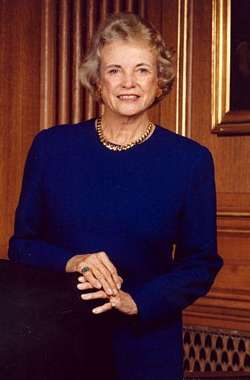
9/25/1981: Justice Sandra Day O'Connor takes the oath.
Why (Most) Citizens Are Not "Responsible for the Actions of their State"
A comment by Estonian Prime Minister Kaja Kallas highlights a longstanding pernicious fallacy.
Are citizens responsible for injustices perpetrated by their nations' governments? In a recent statement defending her policy of denying asylum to Russians fleeing Vladimir Putin's military draft, Estonian Prime Minister Kaja Kallas says the answer is "yes":
Every citizen is responsible for the actions of their state, and citizens of Russia are no exception. Therefore, we do not give asylum to Russian men who flee their country. They should oppose the war.
Notice that this statement isn't limited to those Russians who actively participate in Putin's war on Ukraine, or even to those who approve of it. All Russians are "responsible" simply by virtue of being Russian, no matter their individual actions, and therefore are denied asylum, unless perhaps they actively "oppose the war." One obvious response to Kallas is that would-be draftees fleeing Russia are in fact "opposing the war" by denying their services to the government. But there are other, more fundamental, flaws in her logic, as well.
The idea that all citizens responsible for the actions of their government is hardly new, and certainly isn't limited to the present situation in Russia. But it is wrong nonetheless. That is especially clear in the case of authoritarian regimes. But it is largely true for citizens of democratic ones, as well.
In some situations, inflicting harm on innocent citizens of unjust governments may be justifiable "collateral damage" of policies essential to curbing the evils of those states. But that's a different issue from the theory that citizens are fair game because they are somehow responsible for their government's actions.
At the very least, the citizen-responsibility theory doesn't apply to ordinary citizens of authoritarian states - including Putin's Russia - who have no meaningful influence over their governments' policies. If I had the opportunity, I would like to ask the Prime Minister whether she believes that ordinary Estonians were responsible for the actions of the USSR.
From 1940 to 1991, Estonians were citizens of the Soviet Union. During that time the Soviet regime committed a wide range of atrocities, war crimes, and other human rights violations, including initiating multiple unjust wars. For most of that period, the vast majority of Estonians (like the vast majority of other Soviet citizens) did little or nothing to oppose the regime. Were they therefore responsible for its actions?
The right answer is "no." Most Estonians (like most other Soviet citizens) did not cause the injustices of the state, had almost no chance of changing them, and would have risked severe punishment had they spoken out. We rightly admire dissidents who risk dire consequences to oppose unjust governments. But such heroism is not morally obligatory. And those who refrain from it do not thereby become responsible for the regime's injustices.
Perhaps Estonians' situation under Soviet rule is different from that of Russians today, because Estonia was forcibly annexed by the Soviet Union in 1940, against the will of most of the population. But, if we look back in history, the same can be said of most of the other territory controlled by Russia - and most other states, too. The process by which the medieval city state of Moscow came to rule the vast territory we now call Russia and its prince started calling himself "czar," was anything but consensual. It was, in fact, a long history of coercion and conquest. Much the same is true of the origins of almost all other states, especially relatively large ones.
People aren't morally responsible for the actions of entities they did not create, and do not control. If a warlord or organized crime boss takes over a territory by violence and extortion, the people who have the misfortune to live there do not thereby become responsible for all his actions. The same goes for citizens of authoritarian states. Indeed, most such regimes trace their origins to actual warlords or other similar malefactors who seized power by force.
While most citizens of authoritarian states are not responsible for the evil perpetrated by their governments, there is a minority who are. Obvious examples include the people who order and carry out unjust policies, including dictators like Vladimir Putin and their underlings. Arguably, even low-ranking soldiers and other officials who implement unjust orders are morally culpable for doing so, a precedent rightly established in post-World War II trials of Nazi war criminals, where courts refused to accept the defense of "following orders." But such people are actual perpetrators of unjust government policies, not merely citizens of the states that pursue them. And they have done more than just fail to actively oppose those policies.
Even if most ordinary citizens of authoritarian states have little or no control over their policies, one can still argue the citizens are morally culpable if they approve of them. While merely being Russian isn't enough to make you responsible for Putin's war against Ukraine, perhaps Russians do become culpable if they believe the invasion is justified.
It may, in some sense, be morally reprehensible for citizens to hold awful views like backing Putin's invasion. But it is not sufficient justification for punishing people or restricting their liberty. Freedom of speech and conscience is one of the most basic principles of liberal democracy. Among other things, governments cannot be trusted to separate out the truly awful beliefs that justify repression from those that are merely wrong, but acceptable. For these and other reasons, merely holding awful beliefs should not be a basis for restricting freedom of movement across international boundaries either, or at least there should be a strong presumption against such policies.
In addition, holding awful beliefs is often more excusable in the case of citizens of authoritarian states that impose government control over the media, and censor opposing views. In such situations, finding accurate information becomes more difficult, and even relatively conscientious people might be misled into supporting the official line.
Estonia may be justified in restricting Russian migration on some other basis. In Chapter 6 of my book Free to Move, I actually note this case as one of the rare situations where migration restrictions might be defensible. But neither they nor other states should bar Russians - or anyone else - on the theory that citizens of authoritarian states are somehow responsible for the actions of their governments.
Things are somewhat more complicated when it comes to citizens of democratic states. Democracies are generally superior to authoritarian regimes on various dimensions, including that they allow the public greater leverage over government policy. Even so, most ordinary citizens have little or no chance of changing unjust policies. In all but the smallest electorates, the odds that any one vote can change an electoral outcome are infinitesimally small. That greatly diminishes the responsibility that any individual ordinary citizen has for policy outcomes.
Moreover, even when an individual voter can make a difference, they rarely have control over the range of options put before them in an election, and how those options are structured. These systemic structures virtually never have the genuine consent of the governed. I summarized some of the reasons why here and here.
For these and other reasons, ordinary voters in even the most democratic of polities often have little choice but to vote for the lesser of evils. When that happens, a conscientious citizen can reasonably choose the lesser evil without being morally responsible for that candidate's unjust policies if they win. I explained why here:
Imagine an election where the only options are Queen Cersei from Game of Thrones, and Sauron, the Dark Lord from Tolkien's Lord of the Rings. If Cersei wins, she will kill many innocent people, and oppress others. But she will leave much of the population more or less alone (as long as they don't openly oppose her…). If Sauron wins, he will kill far more innocent people, and make the survivors his slaves….
You can instead cast a protest vote for a vastly better alternative, such as Gandalf…. But, by assumption, these are purely symbolic options, because they have zero chance of prevailing. If the protest voter would otherwise have backed Cersei, the net effect of his decision to protest is to increase the likelihood of the worst possible outcome: the triumph of Sauron….
The most obvious objection to this line of reasoning is that you should not vote for Cersei because doing so makes you morally complicit in her evil actions. If you instead protest vote or stay home, you can remain untainted.
The complicity argument is intuitively plausible. But it is not as strong as it may seem. The voter in question is not responsible for creating the sad situation in which Cersei and Sauron are the only options. The net effect of his or her actions is a positive one: less death and slavery. And his intent is also good. He is not motivated by a desire to help Cersei commit atrocities. To the contrary, he abhors them, and is only voting for Cersei to avoid still greater evil. Sadly, the only way to do so is to ensure that Cersei wins. Whether you judge the voter's decision by effects, intentions, or some combination of both, we must conclude that he did the right thing.
You can still reject this line of reasoning if you think it is never justifiable to back any evil…. That's a logically consistent worldview. But it requires adherents to bite a lot of bullets that few would actually accept. For example, it implies that everyone who backed the Allies during World War II was wrong to do so. After all, the allied governments (even the liberal democratic ones) were far from being paragons of virtue, and their triumph involved many injustices…. If supporting a lesser evil in war is sometimes defensible, surely the same applies to an election.
There is a potential catch here, however, if you believe - as I do- that voters have some obligation to cast their ballots in a responsible and informed manner. As I see it, while there is no moral duty to vote, you do have a duty to be reasonably informed and unbiased in your evaluation of the opposing candidates, if you choose to participate. Sadly, most voters routinely fall short of even fairly minimal standards of knowledge and objectivity. If I am right about the obligations of voters, many of them routinely act unethically when they cast their ballots. And the collective effect of this ignorance and bias often results in harmful and unjust policies.
But the degree of culpability individual voters deserve for such behavior is likely very small. After all, the big reason why they act that way is that the low probability of affecting electoral outcomes makes it rational to do so. Rational behavior isn't necessarily good behavior. But bad behavior that increases the odds of evil policies being enacted by a tiny amount is only reprehensible to a small degree. Being a bad voter may be roughly akin to being a slightly over-aggressive driver whose mistakes at the wheel marginally increase the risk of a serious accident. It's nowhere near as bad as, say, murder, rape, assault, or even petty theft. And individual bad voters have only the tiniest degree of responsibility for their government's evil policies - even if they voted for the incumbents who perpetrate them.
Some citizens, admittedly, have the ability to influence policy outcomes in ways that go far beyond their impact as voters. That's true of influential celebrities and political activists, for example. Their responsibility is a more complex issue that I won't try to assess here. But such people are only a small minority of the population.
In democracies, as in dictatorships, there are some people whose responsibility for unjust policies goes far beyond that of ordinary citizens, or even "influencers" whose only possible sin is failure to use their influence to try to prevent an injustice. Examples include political leaders, influential government officials, and others who order and carry out the policies in question. The average American - including the average Trump voter - has little or no culpability for Trump's cruel family separation policy. Trump and other officials who decided on and implemented the policy are a different matter. But such culpability does not arise merely from being a citizen of the United States.
In sum, the vast majority of citizens are not responsible for injustices perpetrated by their governments. This is particularly true of most citizens of dictatorships, including Putin's Russia. For that reason, we should not punish ordinary citizens for the evils their governments perpetrate, nor should we restrict their liberty because of their supposed culpability. It is particularly unjust to deny those citizens refuge from their own governments' oppression (including Putin's policy of conscripting them to fight in an unjust war), on the perverse theory that these victims of an evil state are actually perpetrators.
UPDATE: I should acknowledge that my point about Estonians' supposed responsibility for the evils of the Soviet Union was inspired by a tweet by Chris Kieser, my wife's colleague at the Pacific Legal Foundation.
Are Bumble Bees Fish? Are Fish Animals?
My eponymous co-blogger Eugene Volokh has called attention to a case that involves the question whether a bumble bee is a "fish" for purposes of a California statute. This kind of problem of surprising statutory scope comes up often (mischief rule to the rescue!). This particular case brought to mind a pithy case I sometimes teach in Remedies. It's Knox v. Massachusetts Society for the Prevention of Cruelty to Animals, 12 Mass. App. Ct. 407 (Mass. App. Ct. 1981), and is in the declaratory judgment chapter in the remedies casebook that Emily Sherwin and I are the editors of (Ames, Chafee, and Re on Remedies).
Knox raises the question whether goldfish count as "animals" under a Massachusetts statute. The court decides yes: "We merely conclude, in interpreting this humane statute designed to protect animals subject to possible neglect by prizewinners, that [it] applies to goldfish." The reason it's a remedies case is that it illustrates the kind of situation for which the declaratory judgment is apt, because the parties need an uncertainty clarified, and once it is clarified, they do not need further direction and management by the court.
"In Sum, the Problem With [the Same-Sex Marriage Cases] Is That They Recognize Only Two-Person Relationships"
A New York trial court judge concludes that polyamorous relationships are entitled to the sort of legal protection given to two-person relationships.
The decision is yesterday's West 49th St., LLC v. O'Neill, decided by New York Civil Court Judge Karen May Bacdayan. Scott Anderson and Markyus O'Neill lived together in an apartment; Anderson was on the lease, and O'Neill was not. After Anderson died, O'Neill would have had the right to renew the lease if he were "a non-traditional family member," but Anderson was married to Robert Romano. The apartment building company therefore argued that O'Neill was just a roommate, but the court concluded that there needed to be a hearing about whether Anderson, Romano, and O'Neill were actually in a polyamorous relationship:
Before gay marriage was legalized in any state, Braschi v Stahl Assocs. Co. (N.Y. 1989) was decided. The New York State Court of Appeals became the first American appellate court to recognize that a non-traditional, two-person, same-sex, committed, family-like relationship is entitled to legal recognition, and that the nontraditional family member is entitled to receive noneviction protections. The Braschi court interpreted the Rent Control Law in effect at a time when there was no legal recognition of same-sex marriage, and broadly construed the law to effectuate its remedial purposes.
Braschi is widely regarded as a catalyst for the legal challenges and changes that ensued. By the end of 2014, gay marriage was legal in 35 states through either legislation or state court action. Obergefell v Hodges (2015), the seminal Supreme Court decision that established same-sex marriage as a constitutional right, was also heralded as groundbreaking. However, Braschi and its progeny and Obergefell limit their holdings to two-person relationships. The instant case presents the distinct and complex issue of significant multi-person relationships.
The Braschi court held: