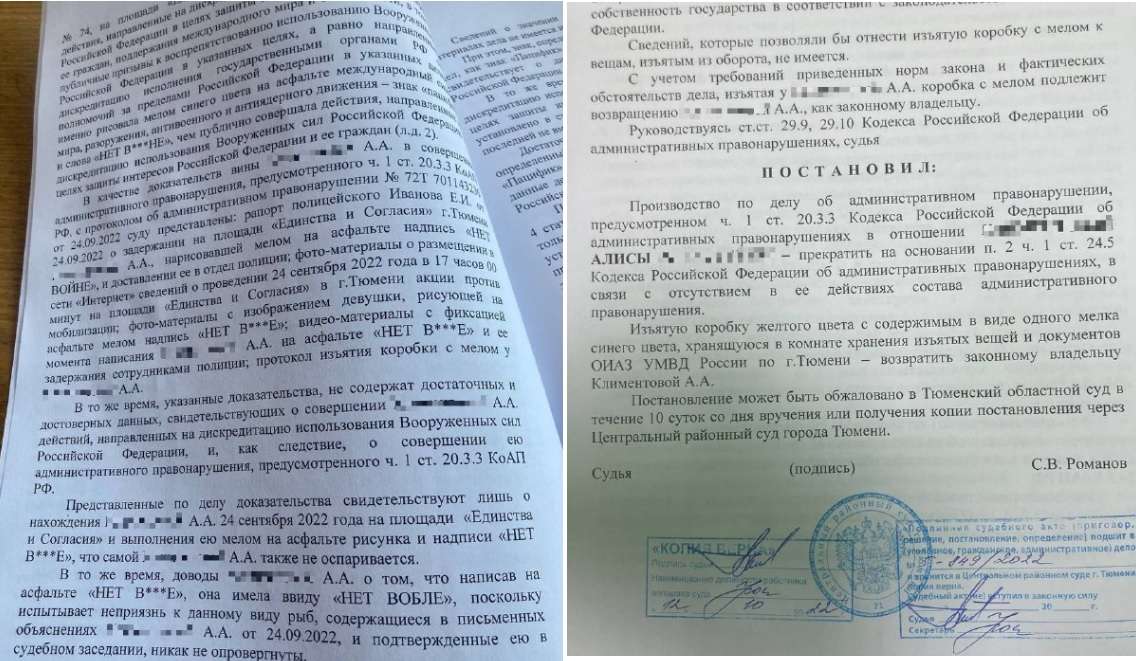
10/19/1789: Chief Justice John Jay takes oath.

Mostly law professors | Sometimes contrarian | Often libertarian | Always independent | Est. 2002

10/19/1789: Chief Justice John Jay takes oath.
We chat with philosopher, life coach, and podcaster Dr. Rebecca Roache
The tenth episode (Apple Podcasts link here and Spotify link here) of "Strangers on the Internet" with co-host and psychologist Michelle Lange features philosopher Dr. Rebecca Roache from Royal Holloway, University of London, who is also known for her "The Academic Imperfectionist" podcast. She was listed as one of the top 100 philosophers on Twitter in 2018.
A self-described introvert, Rebecca is of two minds about dating apps these days. Should she bother meeting new men or comfortably stay home, knit, and hang out with her kids and cats? And speaking of cats, come hear about "Catgate", the incident in which a (narcissistic) then-boyfriend became enraged with Rebecca because she dared to pet a stray kitty while the couple was talking! We also discuss how to learn to trust yourself again after falling prey to liars and other predators, and how to get in touch with your sense of intuition that can steer you in the right direction in all things dating.
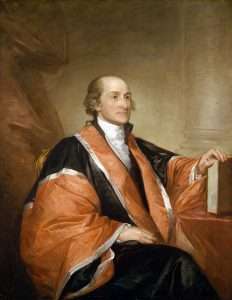
10/18/1960: Gomillion v. Lightfoot argued.
This week the Communist Chinese Party is holding a congress at the Great Hall of the People in Tiananmen Square, Beijing. The purpose of the congress is to cement Xi Jinping's genocidal, imperialist autocracy. This post explains the centrality of Tiananmen Square to the Chinese dictatorship, and to the Chinese people victimized by the dictatorship.
In brief, ever since the proclamation of the People's Republic of China on Oct. 1, 1949, Tiananmen Square has symbolized the rule of the Chinese Communist Party. The proclamation of communist rule was issued from Tiananmen, which the Party intended to transform into an icon and an instrument of its absolute power. That power reached a zenith in 1966, when millions thronged to hear Chairman Mao incite the Cultural Revolution. Yet a decade later, Tiananmen Square became the site of mass protest against Mao's tyranny. Then in 1989, the Square was occupied by students demonstrating for democracy; the students were guarded by workers throughout the city who set up barricades to attempt to stop a military invasion. The military's brutal assault demonstrated to the world that the Chinese Communist Party rules by violence and not by consent—as in 1949 and 1989, and so too today. As Mao and his party intended, Tiananmen Square does perfectly exemplify the "New China" they created: a totalitarian kleptocracy who power is maintained by force against the democratic will of the people.
This post is adapted from David B. Kopel, "The Party Commands the Gun: Mao Zedong's Arms Policies and Mass Killings," pages 1864-1964 in online chapter 19 of Firearms Law and the Second Amendment: Regulation, Rights, and Policy (3d ed.), by Nicholas J. Johnson, David B. Kopel, George A. Mocsary, and E. Gregory Wallace. Complete citations to Chinese history may be found therein.
Mao Zedong declared the People's Republic of China on Oct. 1, 1949, while standing at a rostrum on Tiananmen (Heavenly Peace) Gate--the northern entrance to the old imperial government complexes in Beijing. The Tiananmen area was large enough for a crowd of tens of thousands. Earlier in the century the Square had been a site of several historic protests, such as against the Versailles Treaty's shabby treatment of China.
The symbolism of Tiananmen was so powerful that on September 30, 1949, the day before the proclamation of the new government, the CCP leadership spent its time giving final approval to major renovation of the Tiananmen area. Buildings around the gate would be razed, so that much larger crowds could gather to hear speeches by the CCP leadership. In an open area, at the opposite side from Tiananmen gate, there would be a huge obelisk monument of China's revolutionary martyrs. Tiananmen Gate and Mao became the leading symbols of the "New China."
Episode 426 of the Cyberlaw Podcast
David Kris opens this episode of the Cyberlaw Podcast by laying out some of the massive disruption that the Biden Administration has kicked off in China's semiconductor industry – and among its Western suppliers. The reverberations of the administration's new measures will be felt for years, and the Chinese government's response, not to mention the ultimate consequences, remains uncertain.
Richard Stiennon, our industry analyst, gives us an overview of the cybersecurity market, where tech and cyber companies have taken a beating but cybersecurity startups continue to gain funding.
Mark MacCarthy reviews the industry from the viewpoint of the trustbusters. Google is facing what looks like a serious adtech platform challenge from many directions – the EU, the Justice Department, and several states. Facebook, meanwhile, is lucky to be a target of the Federal Trade Commission, which rather embarrassingly had to withdraw claims that Facebook's acquisition of Within would remove an actual (as opposed to a hypothetical) competitor from the market. No one seems to have challenged Google's acquisition of Mandiant, meanwhile. Richard suspects that is because Google is not likely to do anything much with the company.
David walks us through the new White House national security strategy – and puts it in historical context.
Mark and I cross swords over PayPal's determination to take my money for saying things Paypal doesn't like. Visa and Mastercard are less upfront about their willingness to boycott businesses they consider beyond the pale, but all money transfer companies have rules of this kind, he says. We end up agreeing that transparency, the measure usually recommended for platform speech suppression, makes sense for Paypal and its ilk, especially since they're already subject to extensive government regulation.
Richard and I dive into the market for identity security. It's hot, thanks to zero trust computing. Thoma Bravo is leading a rollup of identity companies. I predict security troubles ahead for the merged portfolio.
In updates and quick hits:
Download the 426th Episode (mp3)
You can subscribe to The Cyberlaw Podcast using iTunes, Google Play, Spotify, Pocket Casts, or our RSS feed. As always, The Cyberlaw Podcast is open to feedback. Be sure to engage with @stewartbaker on Twitter. Send your questions, comments, and suggestions for topics or interviewees to CyberlawPodcast@steptoe.com. Remember: If your suggested guest appears on the show, we will send you a highly coveted Cyberlaw Podcast mug!
The views expressed in this podcast are those of the speakers and do not reflect the opinions of their institutions, clients, friends, families, or pets.
Bloomberg's "The Trace" fabricates a conspiracy about amicus brief writers who adhere to Supreme Court Rules
If you're looking for a website like QAnon, but catering to gun control advocates, you will enjoy some articles from The Trace, a gun control website founded and funded by Michael Bloomberg. In August, The Trace presented a conspiracy about the amicus briefs filed in New York State Rifle & Pistol Association v. Bruen. The article was reprinted by Politico. Will Van Sant, The NRA's Shadowy Supreme Court Lobbying Campaign, Politico, Aug. 5, 2022.
The 12-brief conspiracy
The Politico reprint of the Trace article opens with snazzy graphics. Forty-nine amicus brief were submitted in the Bruen case: "12 of those briefs were filed by people or institutions who had received millions of dollars from the NRA, a Trace and Politico Magazine investigation found. Only 1 brief disclosed the financial connection." According to Van Sant, "neither the justices nor the public were told that 11 of these ostensibly independent voices owed their livelihoods in part to the NRA." Let's look at some of his examples.
In 1991, the Law Enforcement Alliance of America (LEAA) was created by San Jose police officer Leroy Pyle. The then-police chief of San Jose, Joseph McNamara, was one of the leading gun control spokesmen in America. McNamara attempted to fire Pyle for Pyle's Second Amendment advocacy. Pyle ended up winning his case, thanks in part to the excellent work of his attorney, who happened to be the daughter of California Senator Dianne Feinstein. Later, Jim Fotis succeeded Pyle as head of LEAA, and LEAA received substantial donations from NRA. Although LEAA is apparently now defunct, in its day it advocated for the viewpoint of most rank and file law enforcement officers: skepticism about gun control and support for strict punishment of violent criminals.
In Bruen, an amicus brief was filed by The League for Sportsmen, Law Enforcement and Defense, which is based in Virginia. Van Sant's article reports:
"Those of us involved with the League have been involved in 2nd Amendment advocacy for decades," attorney Christopher Day, counsel of record on the brief, said by email in response to a request for comment. "The League is not affiliated with the NRA, nor received any financial support from them." The League is led by James Fotis, who for many years oversaw an NRA-supported effort to elect judges and state attorneys general who opposed firearms restrictions.
According to Van Sant, it was "shadowy" for the League's 2021 brief not to disclose in that brief that the League's president had, years before, headed an organization that received NRA grants.
In its latest filing, the Department of Justice seeks to put an end to Judge Cannon's interference with the federal government's investigation documents kept at Mar-a-Lago.
Last Thursday, the Supreme Court spurned Donald Trump's request that the Court intervene in the ongoing dispute over the Department of Justice's review of documents seized at Trump's Mar-a-Lago resort. Trump and his attorneys had asked the Court to vacate the Eleventh Circuit's partial stay of Judge Aileen Cannon's order barring federal investigators from continuing to examine seized documents bearing classification markings, but the Court showed no interest in getting involved.
In the wake of the Supreme Court's rebuff of Trump's filing, the Justice Department filed a brief with the Eleventh Circuit seeking to put an end to Judge Cannon's intervention altogether. In the brief, the Justice Department argues that Judge Cannon never had jurisdiction to appoint a special master to review any of the seized documents in the first place, and further explains why there are no plausible bases for claims of Executive Privilege that would justify judicial intervention. The force of the brief is strengthened by its reliance upon the Eleventh Circuit's previous decision, staying portions of Judge Cannon's order.
From the brief:
District courts have no general equitable authority to superintend federal criminal investigations; instead, challenges to the government's use of the evidence recovered in a search are resolved through ordinary criminal motions practice if and when charges are filed. Here, however, the district court granted the extraordinary relief plaintiff sought, enjoining further review or use of any seized materials, including those bearing classification markings,"for criminal investigative purposes"pending a special-master review process that will last months. . . .This Court has already granted the government's motion to stay that unprecedented order insofar as it relates to the documents bearing classification markings. The Court should now reverse the order in its entirety for multiple independent reasons.
Most fundamentally, the district court erred in exercising equitable jurisdiction to entertain Plaintiff's action in the first place. The exercise of equitable jurisdiction over an ongoing criminal investigation is reserved for exceptional circumstances, and Plaintiff failed to meet this Court's established standards for exercising that jurisdiction here. The district court itself acknowledged that there has been no showing that the government acted in "callous disregard" of Plaintiff's rights. As a panel of this Court rightly determined, that by itself "is reason enough to conclude that the district court abused its discretion in exercising equitable jurisdiction here." Trump v. United States, 2022 WL 4366684, at *7 (11th Cir. Sept. 21, 2022) (granting motion to stay). The remaining factors under this Court's precedent likewise dictate that the district court's exercise of jurisdiction was error. The Court should therefore vacate the district court's order with instructions to dismiss Plaintiff's civil action.
I would think that the Justice Department has a reasonable likelihood of success with these arguments, in particular because an Eleventh Circuit panel has already indicated its agreement with key portions of the government's arguments. It may take some time, however, as the briefing in this appeal will not be complete until the middle of next month.
The case falls short on several grounds.
I am reprinting a post from 2012, again pertinent given that the Supreme Court is about to hear arguments in the Harvard and UNC affirmative action cases. (Harvard is a private university, but under precedent it's held to the same anti-discrimination standards as public universities via Title VI of the 1964 Civil Rights Act).
The Constitutional Accountability Center has filed an interesting amicus brief in the Fisher affirmative action case on behalf of six prominent law professor amici. The brief tries to exploit a weakness in conservative Justices' affirmative action opinions, which is that these Justices have almost entirely ignored the question of whether an originalist interpretation of the Fourteenth Amendment would allow for race-based legislation meant to advantage African Americans. The brief therefore concentrates on showing that the same Congress that enacted the Fourteenth Amendment passed several race-conscious measures intended to aid African Americans, that these measures were denounced by opponents as class legislation, and that the same Congress rejected versions of the Fourteenth Amendment that would have explicitly banned race-conscious legislation.
I have neither the time nor inclination to check the brief's citations. So let's assume that not just the brief's facts but also the interpretation of those facts (e.g., in terms of which laws count as race-conscious) are accurate. It nevertheless strikes me as only marginally helpful, at best, for at least two reasons.
First, unless I somehow missed it, every piece of race-conscious Reconstruction-era legislation mentioned in the brief is federal legislation. None of the legislation in question grants authority to states to engage in race-conscious legislation. In Fisher the underlying issue is whether a state university may engage in race-conscious admissions. The authors not only don't defend, but don't even raise, the claim that the Reconstruction Congress thought that the same standards of race-neutrality should apply to the federal as to state and local governments.
And indeed, we know that Congress didn't think that, because it passed a Fourteenth Amendment that applied only to the states, and did not deign to apply any sort of new equal protection standard to the federal government, which in turn was not covered by any explicit equal protection guarantee of the sort contained in the Fourteenth Amendment. So I think the brief makes a provocative case that perhaps the federal government should be subject to more lenient standards of race neutrality than the states, an argument that the Supreme Court itself has adopted at times, but abandoned in the Adarand case. And while it's true that the Court now holds that all levels of government are subject to the same equal protection standard, the black letter law is that the federal government is subject to the Fourteenth Amendment's standards, and not the states to whatever standard the federal government should theoretically be held too.
Second, it strikes me that if I were to find the brief persuasive on the Fourteenth Amendment issue, it would only persuade me that all levels of government may at times engage in race-conscious legislation on behalf of African Americans. But in a state like Texas, with a much larger Hispanic population than black population, the primary beneficiaries of affirmative action preferences are Hispanics. The authors provide no evidence that the Framers would have allowed race-conscious preferences for groups other than blacks (and indeed, I believe that Mexican-Americans, the primary Hispanic group in Texas, were (a) in any event considered "white" under federal law and that (b) they were nevertheless subject to federal discrimination, not federal favoritism, at the time the Fourteenth Amendment was being enacted).
More generally, most "minorities" in the United States are not African Americans, with Hispanics outnumbering blacks, plus an additional six percent Asian Americans (who don't usually benefit from admissions preferences–quite the opposite–but who are eligible for many other affirmative action programs), plus another several million Native Americans. Even among African Americans, a significant percentage of the beneficiaries of affirmative action programs, especially on university campuses, are blacks who were never subject to American slavery because they or their ancestors immigrated from Africa or the Caribbean long after the Civil War.
So the CAC brief may provide originalist evidence that the U.S. government should be given more leeway in regard to race-conscious policies than the states get, and, more generously, may provide originalist evidence that even the states may engage in race-conscious programs that benefit the descendants of American slaves. But I'm not persuaded that it's at all helpful in showing that states may willy-nilly benefit any ethnic group it chooses at the expense of any other ethnic group, as, for example, University of Texas does in preferring Hispanic applicants (who are deemed "underrepresented") and disfavoring Asian-Americans (who are deemed "overrepresented").
UPDATE: It's also worth noting that many Hispanics are solely or primarily of European heritage, and about 50% identify themselves as 'white' on census bureau forms. UT's approach, in common with how preferences work in general, is that a state university can and should favor white descendants of Spanish conquistadors or Italian immigrants to Argentina or Jewish Mexicans of Eastern European descent, solely because the former have Spanish-speaking ancestors. (Indeed, the "diversity" rationale for affirmative action seems to demand such a policy. In Grutter, the district court found that Michigan Law School gave preferences only Mexican American and mainland Puerto Ricans, but Michigan vigorously denied this, assumedly because it conflicted with the diversity rationale and suggested an illicit social justice rationale for its policies. Grutter's attorneys didn't pursue this point.) So for the brief to be persuasive in defending UT's policies, it seems to me it would need to persuade readers that the fact that the the Reconstruction Congress allowed for race-conscious federal legislation benefiting slaves and descendants of slaves somehow means that the same Congress would have endorsed state preferences based on linguistic heritage, regardless of race and regardless of whether the individuals received the preference or their ancestors had even been subject to de jure discrimination in the United States. That seem like quite a stretch.
Becket is looking for a Counsel and Constitutional Law Fellows
I am happy to pass along this announcement from Becket, which is hiring for two different attorney positions:
First, Becket is seeking to hire 1-2 new attorneys as Counsel. Ideal candidates will have an appellate clerkship, litigation experience, and excellent research, writing, and oral advocacy skills. You can find more details on the position here: https://www.becketlaw.org/counsel-position/.
Second, Becket is seeking 3 or more new attorneys for its 2023-24 Constitutional Law Fellowship. The fellowship is a one-year position that is open to exceptional recent judicial clerks. It provides immediate, hands-on experience litigating cutting-edge constitutional cases under the mentorship of experienced Becket attorneys. It is also an excellent stepping stone to an additional judicial clerkship, government service, private practice, or public interest law. Fellowships start in fall 2023 and offer a competitive salary and benefits. You can find more details here: https://www.becketlaw.org/constitutional-law-fellow-posting/.
Organic chemistry professor fired because students at NYU thought the grades were too harsh
The Academic Freedom Alliance released a statement regarding the decision of New York University not to renew the contract of organic chemistry professor Maitland Jones.
Professor Jones retired from Princeton University after a celebrated career as both a scholar and a teacher. For the past few years he has continued to teach organic chemistry at New York University. Like many contingent faculty, he has worked on short-term contracts.
Organic chemistry has long been understood to be a gateway course for medical school and advanced study in chemistry. Those courses have long been regarded as among the most difficult courses offered at many universities and have traditionally been graded accordingly.
Professor Jones continued that tradition at NYU, but students responded not just by grousing or avoiding the course but by petitioning the university to make the course easier and to replace Professor Jones with someone else who might be compliant with those demands. NYU apparently responded by declaring that the customer is always right and that professors were expendable.
The academic freedom concerns raised by this case are complicated but real. Unfortunately, this is only the most high-profile case involving the most highly regarded institution of a phenomenon that has become all too common in American higher education. The AFA wrote in a similar dispute over grading standards at Truckee Meadows Community College involving a tenured professor who was threatened with dismissal for making his case to his colleagues over the objection of his dean.
There are important conversations to be had about grading and how students are challenged and assisted in difficult courses, but if university officials cave in to pressure campaigns mounted by students by terminating professors then the faculty will be unable to meet their responsibilities as their professional judgment dictates and the assigned grades will become even more meaningless. Unfortunately, American higher education increasingly relies on contingent faculty for a great deal of teaching, and the NYU case just highlights how vulnerable those professors are to the whims of administrators. The administration's action in this case sends a clear signal to other professors who do not enjoy tenure protections that they should take care not to rock the boat or to make the students unhappy.
From the statement:
Academic freedom is essential to higher education's core mission of pursuing truth and transmitting knowledge in accordance with the expertise and intellectual skills and virtues that are needed for this mission to succeed. Academic freedom must also protect the rights that teachers need to enable them to fulfill their responsibilities to their students, the institutions they serve, the academic enterprise writ large, and the nation that relies upon properly educated graduates. To meet these obligations, teachers must honestly and accurately assess the intellectual progress and performance of their students.
. . . .
Finally, NYU's decision, including the haste and summary manner in which it was reached, appears to be another example of the trend in higher education to devolve more academic authority from faculty into the hands of administrative entities whose backgrounds and expertise reside elsewhere than pedagogy, research, and the pursuit of truth. This clear trend of devolution has obvious and unfortunate implications for academic freedom and the public good.

OK, I took some liberties with the translation—but not a lot. She wrote, "НЕТ В***Е," which most Russians today would interpret as "НЕТ ВОЙНЕ," which means "No to War." But she testified she meant, "НЕТ ВОБЛЕ," which means "No to Vobla"—a fish that is apparently called a Caspian roach in English (see the Azerbaijan stamp above)—because "she feels a dislike of this kind of fish."
This assertion, the court said, was "in no way contradicted," and the defendant was therefore acquitted. The court also ordered that her yellow box of blue chalk, which she apparently used to write this in a city square (the Square of Unity and Concord, in the city of Tumen' in Siberia), be returned to her. My hat is off to you, Alisa Alekse'evna Klimentova, and to you, Judge Sergey Vladimirovich Romanov (no relation to the other Romanovs, I presume).
My conjecture, by the way, is that this reflects not the Russian legal system's respect for the presumption of innocence (or whatever formal analog it might have in Russian law), but rather opposition by the judge or the local hierarchy (or both) to either the conduct of the war or at least to the prosecution of this dissenter. Query also where the court really had to note the color of the box and the chalk, or whether it was the judge's way of further accentuating that he knows perfectly well what Klimentova was doing, but doesn't mind. (Note that my Russian namesake Maria Volokh, who was convicted for displaying a sign that simply said "*** *****," was not so fortunate.)
The incident has apparently been promptly and massively memed. People who can read simple Russian words and phrases may enjoy the items on this page, including, for instance, Tolstoy's Gar and Peace, Brad Pitt in World Gar Z, and Darth Vader in Star Gars. And if you know Russian even better, check out this song by Semyon Slepakov, which has gotten more than 1M views in the last three days:
I was a bit perplexed that in defending YLS's commitment to free speech, Dean Gerken noted that "the faculty revised our disciplinary code and adopted a policy prohibiting surreptitious recordings that mirrors policies that the University of Chicago and other peer institutions have put in place to encourage the free expression of ideas."
From the proverbial "veil of ignorance," this may indeed be a good policy.
But in context, one may recall that the only reason that the law school's egregious bullying of a student involved in the ridiculous "trap house" scandal came to light was because the student, Trent Colbert, surreptitiously recorded statements made to him by two administrators, to wit:
-5:15: The student is told that "as a man of color, there probably isn't as much of a scrutiny of you as there might be of a white person in the same position."
-5:32: Eldik says that the student's affiliation with the Federalist Society was "very triggering" for students who "already feel" that the conservative group is "oppressive to certain communities."
-7:15: Eldik says his office has received complaints that the student's email was a "form of discrimination" and "psychically harmful."
-10:00: Eldik starts to pressure the student to apologize.
-11:40: Cosgrove and Eldik propose addressing the apology to the leaders of the Black Law Students Association specifically.
-12:10: Cosgrove warns the student that "these things amplify over time," so apologizing quickly is important "for your sake."
-13:35: After the student suggests letting his peers reach out to him individually to discuss their feelings about the email, Eldik responds: "I don't want to make our office look like an ineffective source of resolution."
-14:05: Eldik says his office has received "eight or nine student complaints about this" and tells the student that the best way to make this "go away" would be an apology.
-14:23: Eldik says an apology would give the student "character-driven rehabilitation."
-15:10: Eldik says he worries about the email affecting the student's reputation, "not just here but when you leave. You know the legal community is a small one."
-16:20: Eldik volunteers to help draft the email.
-18:10: Cosgrove warns that escalation is a possibility if the student doesn't apologize.
-20:00: Eldik characterizes the student's email as an invitation "to make a mockery of black people."
-1:13: Eldik says, "This is all because we care about you," and tells the student, "I don't have to do my job like this."
-1:35: Eldik says, "You're a law student, and there's a bar [exam] you have to take, so we think it's really important to give you a 360 view."
In this context, when a student avoiding punishment for speech only because he recorded administrator threats, trumpeting the "no surreptious recording policy" as a boon to free speech at Yale seems tone deaf at best.
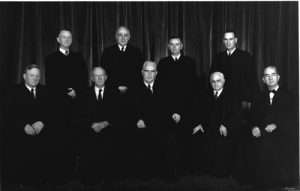
10/17/1862: Justice David Davis takes oath.
The Court's newest justice was an extremely active questioner during the Supreme Court's October arguments.
The Supreme Court's newest Justice, Ketanji Brown Jackson, was an extremely active questioner throughout the Court's October argument. Indeed, as Dr. Adam Feldman of EmpiricalSCOTUS tabulated, she spoke over twice as much at oral argument as any other justice. Here are the numbers, in graphical form.

Justice Jackson's engagement in oral argument has attracted notice. Here, for example, is what the Washington Post reported:
[F]ew were prepared for Jackson's venturesome debut in the court's first sitting. Over eight oral arguments, she dominated the questioning and commentary, speaking twice as much as her next most loquacious colleague. . . .
Jackson was a persistent questioner in every case. Her contributions ranged from the sweeping — a rejection of an originalist interpretation of a colorblind Constitution that provoked swoons from the liberal legal community — to the kind of mundane minutiae upon which even Supreme Court decisions turn. . . .
By the end of the eight arguments, Jackson had spoken more than 11,000 words, according to Feldman's statistics. That's about double the nearly 5,500 words spoken by runner-up Justice Sonia Sotomayor. (Justice Elena Kagan was in third place, indicating that while the court's three liberals may be outvoted in many cases this term, they are not going to be outargued.)
Unlike some other recent additions to the court, Jackson had months after her confirmation to prepare for the court's initial round of arguments. Olivia Warren, a former law clerk to Jackson during her time as a trial court judge, said the justice's questions reflect extensive preparation and interest in making sure she understands the positions the lawyers are taking in their briefs.
The Washington Post also noted that not every justice has received such positive reviews about their first oral arguments.
Some conservatives have grumbled that Jackson's outspokenness has been hailed as admirable, while justices on the right of the political spectrum — Justice Neil M. Gorsuch in his debut in 2017, for instance — were criticized for coming on too strong.
Case in point, here is how the Washington Post covered Justice Gorsuch's aggressive questioning when he first joined the Court:
New Justice Neil M. Gorsuch was an active, aggressive and somewhat long-winded questioner in his debut Monday at the Supreme Court, making his presence known during a series of complicated cases about legal procedures.
Gorsuch waited barely 10 minutes into the first of three hour-long cases before kicking off what became a long chain of questions. There is no expectation at the high court that new justices are to be seen and not heard, but the 49-year-old rookie seemed to push the envelope a bit.
Gorsuch asked more questions at his first oral argument — 22 — than did any of his fellow justices at their first appearances, according to Adam Feldman, a scholar who studies all things empirical about the Supreme Court. Before Monday, Justice Sonia Sotomayor had been the leader with 15 questions.
And, according to Feldman's count, Gorsuch was wordier than all of his colleagues during their first time out, save for Chief Justice John G. Roberts Jr. and Justice Elena Kagan, who had joined the court after representing the government there as its chief lawyer.
UPDATE: Feldman provides some additional data and analysis in this post.
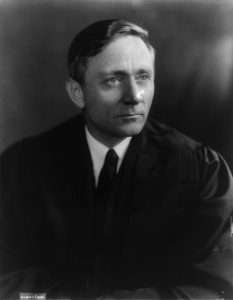
10/16/1898: Justice William O. Douglas's birthday.
Doing so qualifies as a taking requiring "just compensation" under the Takings Clause of the Fifth Amendment.

As co-blogger Jonathan Adler points out, the US Court of Appeals for the Sixth Circuit recently ruled, in Hall v. Meisner, that the government cannot seize $300,000 in home equity to pay off a $22,000 property tax delinquency. Such "home equity theft" qualifies as a taking and therefore requires payment of "just compensation" under the Takings Clause of the Fifth Amendment. The ruling was written by prominent conservative Judge Raymond Kethledge, who is sometimes considered a potential Republican Supreme Court nominee.
In some key ways, this ruling follows the reasoning of Rafaeli, LLC v. Oakland County, a 2020 decision by the Michigan Supreme Court, which reached a similar conclusion under the Michigan state constitution in a case with facts even more egregious than those of Hall (Oakland County, Michigan had seized the entire value of a $24,500 home in order to pay off a mere $8.41 tax delinquency).
There are two notable differences between the two cases. First, the Sixth Circuit decided the case under the Takings Clause of Fifth Amendment of the federal constitution, not merely a state constitution. Second, the Sixth Circuit makes clear that states cannot avoid takings liability by passing a law redefining "long-established" property interests. The government had argued that this latter consideration differentiated Hall from the state supreme court case:
The government may not decline to recognize long-established interests in property as a device to take them. That was the effect of the Michigan Act as applied to the plaintiffs here; and we agree with the plaintiffs that, on the facts alleged here, the County took their property without just compensation….
The Fifth Amendment's Takings Clause provides that "private property" shall not "be taken for public use, without just compensation…" The plaintiffs argue that Oakland County did precisely that when it took "absolute title" to their homes as payment for tax delinquencies that amounted to a mere fraction of their homes' values. Specifically, they argue that they each had a vested property right in what is ordinarily called the equity in one's home—meaning the property's value beyond any liens or other encumbrances upon it.
The district court, for its part, disagreed….. Specifically, the court held that, in the event of foreclosure, the former property owner has a property right only to any surplus proceeds (meaning proceeds in excess of the tax delinquency) obtained by the "foreclosing governmental unit" after a foreclosure sale—if in fact there was one. For that proposition the court relied upon the Michigan Supreme Court's opinion in Rafaeli, which arguably said as much… And here the foreclosing governmental unit—the County—had not obtained any surplus at all from its disposition of the plaintiffs' homes, because it conveyed them (to the City of Southfield) for merely the amounts of their tax delinquencies.
Where we respectfully disagree with the district court, however, is in its assumption that the question whether the County took the plaintiffs' property is answered solely by reference to Michigan law. True, the federal "Constitution protects rather than creates property interests," which means that "the existence of a property interest," for purposes of whether one was taken, "is determined by reference to existing rules or understandings that stem from an independent source such as state law." Phillips v. Washington Legal Foundation, 524 U.S. 156, 164 (1998… But the Takings Clause would be a dead letter if a state could simply exclude from its definition of property any interest that the state wished to take. To the contrary, rather, "a State may not sidestep the Takings Clause by disavowing traditional property interests long recognized under state law…"Id. at 167.
The question, then, is whether Michigan likewise disavowed traditional property interests merely by defining them away in its General Property Tax Act. The interest that the plaintiffs invoke here, again, is an entitlement to the equity in their homes—pursuant to principles long articulated by courts of equity, before their merger centuries later with courts of law….
Judge Kethledge goes on to explain that longstanding principles of the Anglo-American legal tradition hold that foreclosure does not entitle the government to appropriate the entire home equity held by the owners, as opposed to merely the amount needed to pay off the tax delinquency or other obligation at issue.
This ruling is part of a longstanding debate over the extent to which the property rights protected by the Takings Clause are purely defined by state law (in which case the state can often avoid takings liability simply by redefining them), or whether they are also defined by some combination of general legal tradition and natural law. The Sixth Circuit is right to conclude that broader legal principles constrain the states here. But I would add that, at least as a matter of original meaning, states are also constrained by natural law understandings of property rights. I briefly cover this point in this article (pp. 52-53), and also in Chapter 2 of my book The Grasping Hand.
Given the high value the Founders placed on property rights, it would be strange - to say the least - if these constitutional rights were left entirely at the mercy of state governments to redefine as they please, because state law protects them and plays a key role in defining their scope. The same logic would equally justify allowing states to redefine the scope of many other constitutional rights. For example, rights to speech and bodily autonomy could similarly be left to the discretion of the states on the theory that state law historically defined the scope of protection against assault and battery, and the extent to which speech could be restricted by laws against libel, slander, sedition, and blasphemy.
NOTE: Both the Sixth Circuit case and the Michigan Supreme Court case were litigated on behalf of the property owners by the Pacific Legal Foundation, which is also my wife's employer. She, however, was not involved in either case.
Government-dictated racial and ethnic classifications fail to account for the diversity within categories.
One of the stranger phenomena related to the official government racial and ethnic classifications we have all gotten used to (Hispanic, White, Black, Native American, Asian, Native Hawaiian/Pacific Islander) is the way people treat them as true sociological or anthropological classifications. Ironically, when the government established these classifications (with minor modifications in the interim), they came with the warning that the "classifications should not be interpreted as being scientific or anthropological in nature."
Nevertheless, when Steven Spielberg wanted to show he was being "culturally sensitive" to Puerto Ricans in casting West Side Story, he hired a half-Columbian, half-European actress to play Maria because, after all, Puerto Ricans and Columbians are both "Hispanic." This is like showing respect for Quebecois culture by hiring someone of half-Walloon and half-Mexican descent to play a character of French Canadian origin.
Similarly, when Michelle Malkin, a Filipina American, published her book defending the internment of Japanese Americans during World War II, many critics tut-tutted that they couldn't understand how an "Asian American" could write a book defending racism against other "Asian Americans." (E.g., "Her take on the racial politics of the internment of Japanese Americans during World War II is quite outrageous, especially for an Asian American. Even though she has a white name, it doesn't make her so.")
I found it remarkable at the time that it did not occur to any of of these critics that few people think of themselves primarily as "Asian Americans." (Indeed, I've since learned that research shows that fewer than forty percent of "Asian Americans" accept that identity even as a secondary one.) Many Filipinos, meanwhile, have resented (to put it mildly) the brutal Japanese invasion, occupation, and defense of the Philippines during World War II. So, if we looked beyond the government label of "Asian American," it was perhaps less surprising that a Filipina American wrote a book defending mistreatment of Japanese Americans during World War II than if a white author had written it. (Note: I am not suggesting that Japanese Americans should have been deprived of rights thanks the actions of the nation of Japan; rather, I'm just saying that to the extent these policies were a reaction to anti-Japanese hostility arising out of World War II, if you think of someone as a "Filipina" rather than as an "Asian American," the notion that she would be especially unlikely to defend Japanese American internment becomes much less viable.)
Four side notes. First, the West Side Story remake was entertaining, but wholly superfluous given the original. Second, the joke that gave me the post title's can be found here. Third, Malkin has since more explicitly gone off into far right racist looney land, and that may be explanation enough in retrospect. Finally, if you are interested in how our arbitrary classification came about and spread through society, you will want to check out my recent book on the subject.
10/15/1883: The Civil Rights Cases are decided.
Celebrate your independence with a subscription to Reason magazine, your most trusted source of honest, insightful news and analysis.