The Volokh Conspiracy

Mostly law professors | Sometimes contrarian | Often libertarian | Always independent | Est. 2002

The Volokh Conspiracy

Guns

Requirement of Serial Numbers on Guns Doesn't Violate Second Amendment

|

From U.S. v. Reyna, decided yesterday by Judge Robert Miller, Jr. (N.D. Ind.) (for a case reaching the opposite result, see this post):

The Heller Court made clear that the Second Amendment excludes "those weapons not typically possessed by law-abiding citizens for lawful purposes." This limit on the Second Amendment right arises from the Second Amendment's text; the Heller Court explained that the plain meaning of "militia" and the relationship between the Second Amendment's operative clause and prefatory clause show that the Second Amendment protects common weapons used for lawful purposes. This limitation comes from the text of the Second Amendment, so whether a particular type of gun is typically used by law-abiding citizens for lawful purposes is a proper question at the first step of the N.Y. State Rifle analysis.

Guns with obliterated serial numbers belong to "those weapons not typically possessed by law-abiding citizens for lawful purposes" so possession of such guns isn't within the Second Amendment's scope. Heller. Guns with obliterated serial numbers are useful for criminal activity because identifying who possessed a firearm is more difficult when the serial number is destroyed. By using a gun without a serial number, a criminal ensures he has a greater higher likelihood of evading justice.

Mr. Reyna might be right that a deserialized gun is just as useful for self-defense as a gun with its serial number intact, but that doesn't suggest that deserialized guns are typically used by law-abiding citizens for lawful purposes. A law-abiding citizen who uses a gun for self-defense has no reason to prefer a deserialized gun to a gun with serial number intact. That a law-abiding citizen could use a gun with an obliterated serial number for lawful self-defense isn't evidence that guns with obliterated serial numbers are typically used by law-abiding citizens for lawful self-defense.

Read More

Free Speech

Fashion Institute of Technology Ex-Dean's Libel Claim Related to Allegedly Racist Fashion Show Can Go Forward

|

From the trial court decision in the case, Davis v. Brown (decided Jan. 6, 2022):

Plaintiff is the former Dean of defendant Fashion Institute of Technology's ("FIT") School of Graduate Studies. Plaintiff is suing FIT and its president, defendant Joyce Brown, for defamation. The defamation is allegedly contained in a February 21, 2020 Letter to the Community (the "letter") posted by Brown on FIT's website. The letter was issued in response to criticism of the Graduate School's February 7, 2020 Fashion Show specifically with respect to the racial insensitivity of accessories used by one of the designers. Eight days after the show, the New York Post reported that a Black model refused to wear certain accessories she believed to be racist. According to plaintiff, "[t]his cricitism amplified the long simmering complaints of systemic racism at FIT under Dr. Brown's leadership". She claims that the letter was Brown's attempt to defect [deflect? -EV] criticism of her own leadership failures at FIT. Ultimately, on November 10, 2020, FIT fired plaintiff….

The underlying controversy was described in the New York Times (Kimiko de Freytas-Tamura) thus:

It is considered one of the world's most prestigious fashion schools, priding itself on producing cutting-edge designs and a roster of alumni that includes Calvin Klein, Michael Kors and Carolina Herrera.

But before the coronavirus outbreak shut down classes, the Fashion Institute of Technology in Manhattan had been in upheaval since a student designer used oversized lips and "monkey ears" in a fashion show last month, setting off widespread outrage.

(You can see a photo here; I'm not reproducing it for copyright reasons.) Here's the relevant part of the allegedly libelous letter (I quote from the trial court decision):

Read More

Guns

Analogical Reasoning and the Second Amendment

In historical inquiry, reasoning by analogy is a commonplace task for any lawyer or judge.

|

In Bruen, the Supreme Court held that "when the Second Amendment's plain text covers an individual's conduct, the Constitution presumptively protects that conduct." To justify a regulation, "the government must demonstrate that the regulation is consistent with this Nation's historical tradition of firearm regulation." And that depends on whether there is a relevantly-similar historical analogue.

In assessing a modern restriction, "this historical inquiry that courts must conduct will often involve reasoning by analogy—a commonplace task for any lawyer or judge." A green truck is not relevantly similar to a green hat if the subject is things you can wear. I would add that an antebellum ban on carrying a Bowie knife concealed is not relevantly similar to a current ban on possession of a rifle or magazine. As Bruen instructs, we look at "how and why the [modern and historical] regulations burden a law-abiding citizen's right to armed self-defense." Under that test, a modern requirement to register all guns would not be analogous to a historical requirement that a militiaman must exhibit his musket at muster.

While a historical analogue need not be "a dead ringer," Bruen cautions courts not to "uphold every modern law that remotely resembles a historical analogue," because doing so "risk[s] endorsing outliers that our ancestors would never have accepted." The analogies must be from the Founding period and, if they confirm Founding history, from later periods—but not too much later. For example, there were at least some laws at the Founding restricting firearms in polling places, legislative assemblies, and courthouses. Later history can be looked at to confirm whether this matured into an enduring tradition or was instead a dead end that should not be used to define the scope of the right.

Read More

Immigration

Podcast on United States v. Texas

In this Federalist Society podcast on a major immigration case currently before the Supreme Court, I go over the issues at stake, and make some tentative predictions about the case's likely outcome.

|

Flag of Texas.


In a recent Federalist Society podcast, I went over the issues in United States v. Texas, an important immigration case currently before the Supreme Court (the case should not be confused with the 2021 case with the same title, concerning Texas's SB 8 law anti-abortion law). The case involves a lawsuit filed by the states of Texas and Louisiana challenging the legality of the Biden Administration's immigration enforcement guidelines, which prioritize detention and deportation of those undocumented aliens who are suspected terrorists, those who have committed crimes, and those caught recently at the border. The states claim these priorities violate statutes that seemingly require nondiscretionary detention and deportation of far broader categories of migrants.

In addition to the important substantive issue at stake, there is also the question of whether the two states even have standing to sue the federal government over this issue, and whether it was appropriate for the district court to use the remedy of "vacatur" to forbid implementation of the Biden guidelines.

Both the substantive issue and the two procedural ones could potentially set important precedents for future cases, including some that go far beyond immigration policy.

In the podcast, I consider all three issues, and explain why I think the states should prevail on standing, but Biden should prevail on the merits. If that happens, the Court need not even address the issue of vacatur (because, arguably, there is no need to consider potential remedies if the Court concludes the administration hasn't done anything illegal in the first place).

I also make some tentative predictions about how the case might come out, based on the oral argument. I expect that the Biden Administration will prevail. But it's not entirely clear whether it will do so on standing or on the merits (though I very tentatively think the latter is more likely). My assessment of the oral argument is in some ways similar to Josh Blackman's. He also concludes the administration is likely to win, and is also unsure of whether it will be on the merits, or not.

If the Administration does ultimately prevail, it will be the second big victory the 6-3 conservative-controlled Court gave Biden in an immigration policy case, following Biden v. Texas, issued last June, which allowed Biden to put an end to Trump's "Remain in Mexico" policy.

The conservative justices are very reluctant to rule in favor of immigrants when it comes to issues involving constitutional rights (most notably in the 2018 Trump travel ban case). But they do not seem to be averse to doing so when the issue is separation of powers and the use of executive discretion in a pro-immigrant direction (though of course the same broad discretion can be used the other way). It's also possible that some conservative justices might be happy to use this case to strike a blow against what they regard as overbroad theories of state standing (though they were generally more skeptical of the administrations' standing arguments than the liberal justices were).

In this case, as in the loan forgiveness litigation before the Supreme Court, the Biden Administration has adopted an incredibly narrow theory of standing (in contrast with traditional liberal views on the subject), while conservative litigants have defended relatively broad theories (which is at odds with traditional conservative approaches to the subject). For those keeping score, I have long advocated the near-total abolition of constitutional standing restrictions, and have stuck to that view, regardless of the ideological valence of the case at hand. Thus, I support standing for the state plaintiffs in both the loan forgiveness case (where I think they deserve to win on the merits), and United States v. Texas (where I think they deserve to lose). In a few months, we will likely learn where the Supreme Court stands on standing in these cases.

Talk with the Authors: An Introduction to Constitutional Law: 100+ Supreme Court Cases Everyone Should Know

Randy and I will chat about our new books on Friday at 3 ET, and there will be a drawing for a free autographed copy.

|

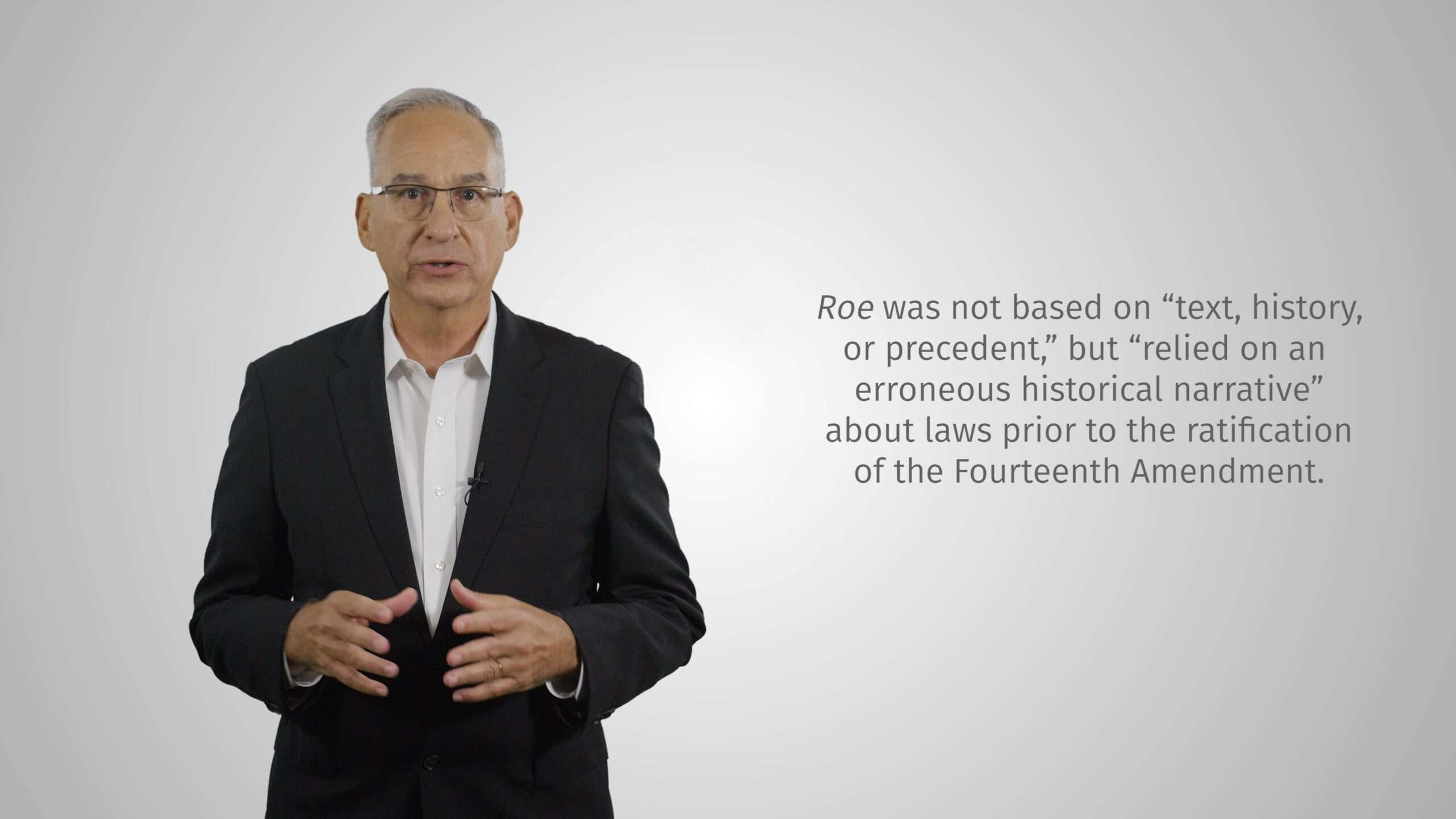
On Friday at 3:00 ET, the Federalist Society will host a webinar about our new book, An Introduction to Constitutional Law: 100+ Supreme Court Cases Everyone Should Know. We will talk about the new edition of the paperback, as well as the newly-released hardcover coffee table book. We will also debut our new videos for Dobbs and Bruen. Plus, attendees will be entered into a drawing for a fee, autographed copy of the coffee table book.

We will take questions from readers. We hope you can join!

Guns

Should Courts Appoint Historians as Experts in Second Amendment Cases?

Courts, not “experts,” should say what the law is.

|

Imagine a world in which judges appoint the nation's most prestigious historians as experts to advise the court on matters of constitutional history. How about appointing the author of a book that the Journal of American History endorsed as "meticulous and thorough," that Garry Wills enthusiastically reviewed for the New York Times, and that received the prestigious Bancroft Prize?

Turns out that Michael A. Bellesiles, author of Arming America, fabricated sources, distorted facts, and committed fraud. The Bancroft Prize was rescinded and Emory University fired him. But some judges, professors, and activists had welcomed his thesis with open arms because he attacked America's "gun culture" and derided the right to bear arms. A Ninth Circuit opinion relied on him in support of its "collective rights" holding about the Second Amendment, but the embarrassing cite was removed after the scandal broke. Until then, Bellesiles would have been the perfect candidate for a court to appoint as an "expert" on history.

In an October 27 order in U.S. v. Bullock (S.D. Miss.), Judge Carlton Reeves expressed dissatisfaction with the Supreme Court's directive in Bruen that courts must review history to decide if Second Amendment restrictions are "consistent with the Nation's historical tradition of firearm regulation." He wrote that neither "this Court" nor "the Justices of the Supreme Court, distinguished as they may be," are "trained historians. "And we are not experts in what white, wealthy, and male property owners thought about firearms regulation in 1791."

Read More

Sixth Circuit

The Sixth Circuit Denies En Banc Rehearing in Ohio State Title IX Case.

Judges on The U.S. Court of Appeals for the Sixth Circuit disagree over when Title IX claims accrue.

|

Today the U.S. Court of Appeals for the Sixth Circuit denied Ohio State University's petition for rehearing en banc in Snyder-Hill v. Ohio State University. This case arises out of allegations that university physician and athletic doctor Richard Strauss abused hundreds of Ohio State athletes between 1978 and 1998. The abuse did not become public until 2018, raising questions about when relevant Title IX claims accrued.

Earlier this fall, a divided panel of the Sixth Circuit reversed the district court's conclusion that the claims against Ohio State were barred by the statute of limitations. Judge Moore wrote for the court (joined by Judge Clay), and Judge Guy dissented. Ohio State filed a petition for rehearing en banc, which the court denied today, with four judges (Guy, Thapar, Readler, and Bush) noting their dissent.

Judge Readler wrote an opinion dissenting from the denial of rehearing en banc. It begins:

This year marks the 50th anniversary of Title IX's enactment. Over five decades, that groundbreaking law has effectuated many changes in campus life. And with a half-century of history and experience to consider, Congress might fairly contemplate extending the law's reach.

But why wait for Congress? In reversing a decision dismissing a Title IX suit filed against the Ohio State University, our Court took legislative matters into its own hands: it both extended Title IX's scope and effectively lengthened the time a plaintiff has to file suit for purported violations. See generally Snyder-Hill v. Ohio State Univ., 48 F.4th 686 (6th Cir. 2022). Over a vigorous dissent, the majority opinion in Snyder-Hill held that Title IX claims tracing back as far as four decades were nonetheless timely according to the "discovery rule" for claim accrual. In reaching that conclusion, the majority opinion leaned on the discovery "rule's purpose" as well as "Title IX's broad remedial purpose." Id. at 701. The majority opinion then extended Title IX's application to athletics referees, teenagers visiting campus, and others with no intention of being educated or employed by Ohio State. Id. at 708–09.

For many reasons, that decision should not stand. Start with its inattention to Supreme Court precedent. As Judge Guy recognized in dissent, "[n]o less than twice the Supreme Court has told courts what to do" for claim accrual purposes "when there is no federal statute of limitations at all," as is the case for Title IX: apply the occurrence rule, not the discovery rule. Id. at 713 (Guy, J., dissenting); see also Wallace v. Kato, 549 U.S. 384, 388 (2007) (describing the occurrence rule as "the standard rule that accrual occurs when the plaintiff . . . can file suit and obtain relief." (cleaned up)). That command deserves particular attention in the context of an implied cause of action, where separation of powers concerns are at their apex. See Egbert v. Boule, 142 S. Ct. 1793, 1809 (2022) (Gorsuch, J., concurring). Yet the majority opinion ignored the Supreme Court's instructions, an all too common practice in our Circuit. See Shoop v. Cunningham, 598 U.S. — (2022), slip op. at *13 (Thomas, J., dissenting from denial of cert.).

Snyder-Hill next distorted Title IX in ways no other circuit has licensed. First, it crafted an accrual rule unique to Title IX deliberate indifference claims. 48 F.4th at 703–04 (majority op.). Then, it read Title IX to cover virtually anyone who sets foot on campus, no matter the reason. Id. at 708–09. Even the 100,000 fans attending a Buckeyes football game, it appears. In that respect, the majority opinion is less a "construction of a statute" than it is "an enlargement of it by the court." See Rotkiske v. Klemm, 140 S. Ct. 355, 361 (2019) (quotations omitted).

Those errors are likely to multiply. Cases arising out of any federal statutory scheme lacking an explicit accrual date risk being tainted by the majority opinion's adoption of the wrong default rule. And if this case is any indicator, those cases may reach back to conduct over 40 years old, older than some members of our Court. Regrettably, the majority opinion has saddled the federally funded educational institutions in our circuit with this distorted application of Title IX. It is thus no surprise that amici universities with a collective enrollment of over 200,000 students—the University of Michigan, Purdue University, and others—asked us to hear the case en banc. That is on top of the Ohio State University, which itself enrolls 65,000 students. In that way, the majority opinion brought together in shared opposition collegiate rivals that rarely see eye to eye. To those universities' minds, to mine, and, most importantly, to the Supreme Court's, we are to apply the occurrence rule in this and similar settings. As that message was lost on the majority opinion, the Supreme Court should say so yet again, before more jurisprudential damage is done.

Judge Bush joined Judge Readler's dissent. Judge Thapar noted he would have granted en banc rehearing due to "tension between Sixth Circuit and Supreme Court precedent about when a claim accrues," and Judge Guy noted he dissented from the denial based upon the arguments in his panel dissent.

Judge Moore, author of the initial panel opinion, authored an opinion concurring in the denial of the petition. It begins:

The dissent from denial of rehearing recycles the same arguments put forth in the panel dissent to accuse this court of ignoring Supreme Court precedent in order to expand the scope of Title IX when, in fact, the panel's decision was firmly rooted in both this court's and the Supreme Court's long-standing precedents. Despite the en banc petition's and the dissent's claims to the contrary, the panel's opinion did not eliminate the statute of limitations for Title IX claims, nor did it improperly broaden the reach of Title IX. Instead, this court straightforwardly applied the discovery rule to the plaintiffs' claims, in line with both our precedent and the plain language of Title IX. The panel correctly decided this case for the reasons explored at length in our original opinion. I write separately to reiterate that our decision conformed with Supreme Court precedent, our precedent, the precedents of our sibling circuits, and the text of Title IX.

Given the issues involved, and the composition of the Sixth Circuit, I wonder whether this is a case in which some of the court's judges believe the initial panel opinion was wrong, but not en banc worthy.


Guns

Did the Fourteenth Amendment Alter the Meaning of the Second Amendment?

1791, not 1868, is the key date for determining the original understanding of the Second Amendment.

|

When proposing the Fourteenth Amendment to Congress in 1866, Senator Jacob Howard referred to "the personal rights guaranteed and secured by the first eight amendments of the Constitution; such as freedom of speech and of the press; … the right to keep and bear arms…." He averred that "the great object" of the amendment was "to restrain the power of the States and compel them at all times to respect these great fundamental guarantees." The design was not to change the nature of the rights, but to prevent the states from violating them.

The Second Amendment was ratified in 1791, and the Fourteenth Amendment was ratified in 1868. The Supreme Court stated in D.C. v. Heller (2008) and repeated this year in N.Y. York State Rifle & Pistol Ass'n v. Bruen: "Constitutional rights are enshrined with the scope they were understood to have when the people adopted them." So do we look for that understanding in 1791 or in 1868?

The simple answer would be that the substantive nature of the right is defined by reference to its origins in 1791, while the understanding that it's a fundamental right intended to be applied to the states would be found in 1868. But litigation-driven, preconceived outcomes are at work, few firearm restrictions existed at the Founding but more were adopted in the decades after the Fourteenth Amendment, and the incentive thus exists for opponents of the right to keep and bear arms to root for 1868 as the crucial date in order to find historical analogues to current restrictive laws.

Read More

Climate Change

Biden Administration Deploys Prizes to Address Climate Change

The Department of Energy has announced a good way to spend some of the funds authorized by the Bipartisan Infrastructure Law.

|

The Department of Energy has announced it will spend $3.7 billion to "kick-start America's carbon dioxide removal industry." While most climate policy discussions focus on how to reduce emissions of greenhouse gas emissions, this initiative is focused on how to remove greenhouse gases that are already in the atmosphere.

One of the most promising and significant parts of the announcement is the embrace of technology-inducement prizes. From the release:

  • Direct Air Capture Commercial and Pre-Commercial Prize – DOE's Office of Fossil Energy and Carbon Management (FECM) is announcing the Direct Air Capture Prize for support and prize awards totaling $115 million to promote diverse approaches to direct air capture. The Direct Air Capture Pre-Commercial Prize provides up to $15 million in prizes to incubate and accelerate research and development of breakthrough direct air capture technologies. The Direct Air Capture Commercial Prize provides up to $100 million in prizes to qualified direct air capture facilities for capturing CO2 from the atmosphere. Read the full Direct Air Capture Prize Competitions announcement here.

This represents only a small portion of the relevant funding -- and is smaller than I would like -- but it is nonetheless good to see some recognition of the power of prizes to induce desired innovation, particularly in the context of climate change.

As longtime readers may know, I have been pushing for climate prizes for some time. In 2011, I published "Eyes on a Climate Prize: Rewarding Energy Innovation to Achieve
Climate Stabilization" in the Harvard Environmental Law Review, in which I argued that technology-inducement prizes are particularly well-suited to problems like climate change. Here is the abstract:

Stabilizing atmospheric concentrations of greenhouse gases at double their pre industrial levels (or lower) will require emission reductions far in excess of what can be achieved at a politically acceptable cost with current or projected levels of technology. Substantial technological innovation is required if the nations of the world are to come anywhere close to proposed emission reduction targets. Neither traditional federal support for research and development of new technologies nor traditional command and-control regulations are likely to spur sufficient innovation. Technology inducement prizes, on the other hand, have the potential to significantly accelerate the rate of technological innovation in the energy sector. This Article outlines the theory and history of the use of inducement prizes to encourage and direct inventive efforts and technological innovation and identifies several comparative advantages inducement prizes have over traditional grants and subsidies for encouraging the invention and development of climate-friendly technologies. While no policy measure guarantees technological innovation, greater reliance on inducement prizes would increase the likelihood of developing and deploying needed technologies in time to alter the world's climate future. Whatever their faults in other contexts, prizes are particularly well suited to the climate policy challenge.

I hope this recent announcement is a sign of more to come.

Free Speech

Missouri Media Groups' Letter About Closure of Court Cases

|

From a letter (written by Mark Sableman of Thompson Coburn LLP), sent yesterday on behalf of the Missouri Broadcasters Association and Missouri Press Association to the Missouri Supreme Court, asking the court to create a rule "that governs the unusual circumstances when court hearings, files, or proceedings are closed to the public, in the absence of specific statutory authority for such closures":

Missouri courts are generally expected to conduct their affairs in public. [According to the Missouri Constitution,] "Missouri courts of justice shall be open to every person." By statute, "the sitting of every court shall be public and every person may freely attend same" and "all trials upon the merits shall be conducted in open court and so far as convenient in the regular courtroom." Records of Missouri trial courts are presumed to be open, although there are some specific statutory exceptions, such as for juvenile proceedings, paternity decisions, and others. And appellate court opinions "shall be public records."

This Court and the court of appeals have recognized that a court closure is an extraordinary situation, and that it should occur rarely, under proper procedural and substantive safeguards…. [W]e understand [the Missouri precedents on the subject] to teach that:

  • All court proceedings, except those for which there is some statutorily imposed confidentiality are presumed to be open to the public.
  • No court proceeding or records can be hidden from the public without at least a showing of compelling circumstances.
  • The paramount public interest in openness cannot be overcome simply by the desire of private litigants for confidentiality, even as to embarrassing matters.
  • A public hearing is required.
  • There must be adequate public notice and a meaningful right for the public (including the news media) to object.
  • The trial court must make detailed findings, on the record, regarding a proposed closure of proceedings or records….

Our research to date, while incomplete, indicates that various Missouri trial courts have made their records and/or proceedings secret without following these standards. In one case of which we know, litigation of interest to the national financial community, and the media covering that industry, had been closed. Another totally closed case came to the attention of a … law professor, and appears to have involved an order, of questionable constitutionality, directing a non-party to remove published material from the Internet.

Read More

Politics

Journal of Free Speech Law: "Social Sanctions on Speech," by Prof. Thomas Healy (Seton Hall)

|

Just published at 2 Journal of Free Speech Law 21 (2022), as part of the "Non-Governmental Restrictions on Free Speech" symposium; the Abstract:

Social sanctions on speech are ubiquitous. Every day, private actors respond to speech they dislike, disagree with, or find offensive with measures that impose a cost on speakers and thus potentially chill the expression of ideas. Some sanctions, such as criticism and condemnation, are mild and largely unobjectionable, while others, such as violence and vandalism, are severe and clearly unacceptable. Yet there are numerous sanctions in  between these two poles and little agreement on which ones are compatible with the principle of free speech.

In this essay, I provide a framework for thinking about social sanctions—and the phenomenon of "cancel culture" they are part of. I begin by explaining that social sanctions, in some form at least, are an inevitable and indispensable part of our free speech system. I then consider three possible criteria for distinguishing between permissible and impermissible sanctions—intent, effect, and means—and conclude that we should focus primarily on the means used to sanction. Finally, I argue that whether a particular social sanction is consistent with free speech depends on a balancing of its expressive value and its coerciveness, and I use this approach to plot a variety of social sanctions on the continuum from least to most troubling.

Politics

Journal of Free Speech Law: "Free Speech and Private Censors," by Prof. Larry Alexander (San Diego)

|

A short piece just published at 2 Journal of Free Speech Law 17 (2022), as part of the "Non-Governmental Restrictions on Free Speech" symposium; the Abstract:

In this piece I contrast societal conditions in which free speech can flourish with those in which it is threatened by private censors. I then suggest measures that would protect free speech in the latter conditions, conditions that unfortunately prevail today.

Is Grupo Mexicano an Outlier?

|

The Supreme Court has had many cases on equity over the last three decades, but it is Grupo Mexicano that is perhaps the leading case to connect the equity jurisdiction of the federal courts to the historic jurisdiction of the Court of Chancery. In a forthcoming article called "Debs and the Federal Equity Jurisdiction," Professor Aditya Bamzai and I include a footnote that shows that Grupo Mexicano is not an outlier.

In the text, we say:

As the Supreme Court has consistently understood, this statutory authorization to adjudicate equity cases was linked to the equitable jurisdiction of the English Court of Chancery in 1789. Writing in 1928, then-Professor (and future Judge) Armistead Dobie explained that "[s]ubstantially . . . the equity jurisdiction of the federal courts is the jurisdiction in equity exercised by the High Court of Chancery in England at the time of the adoption of the Constitution and the enactment of the original Judiciary Act, 1789." The modern statement of this proposition is found in the Court's decision in Grupo Mexicano, but many other cases both before and after Grupo Mexicano link section 11 of the First Judiciary Act with the English Court of Chancery's jurisdiction.

The supporting footnote says in part:

E.g., Marshall v. Marshall, 547 U.S. 293, 308 (2006) (noting that "the equity juris- diction conferred by the Judiciary Act of 1789 . . . is that of the English Court of Chancery in 1789" (quoting Markham v. Allen, 326 U.S. 490, 494 (1946)); Guar. Tr. Co. v. York, 326 U.S. 99, 105 (1945) ("The suits in equity of which the federal courts have had 'cognizance' ever since 1789 constituted the body of law which had been transplanted to this country from the English Court of Chancery."); Atlas Life Ins. Co. v. W.I.S., Inc., 306 U.S. 563, 568 (1939) ("The 'jurisdiction' thus conferred on the federal courts to entertain suits in equity is an authority to administer in equity suits the principles of the system of judicial remedies which had been devised and was being administered by the English Court of Chancery at the time of the separation of the two countries."); Matthews v. Rodgers, 284 U.S. 521, 529 (1932) ("The equity jurisdiction conferred on inferior courts of the United States by [sec- tion] 11 of the Judiciary Act of 1789 . . . is that of the English court of chancery at the time of the separation of the two countries.") (citing Judiciary Act of 1789, ch. 20, 1 Stat. 78); Waterman v. Canal-La. Bank & Tr. Co., 215 U.S. 33, 43 (1909); Arrowsmith v, Gleason, 129 U.S. 86, 99 (1889); McConihay v. Wright, 121 U.S. 201, 206 (1887); Generes v. Campbell, 78 U.S. (11 Wall.) 193, 196–98 (1870); Pennsylvania v. Wheeling & Belmont Bridge Co., 59 U.S. (18 How.) 460, 462 (1855); Fontain v. Ravenel, 58 U.S. (17 How.) 369, 384 (1855) ("The courts of the United States cannot exercise any equity powers, except those conferred by acts of congress, and those judicial powers which the high court of chancery in England, acting under its judicial capacity as a court of equity, possessed and exercised, at the time of the formation of the constitution of the United States."); Story v. Livingston, 38 U.S. (13 Pet.) 359, 368 (1839); Vattier v. Hinde, 32 U.S. (7 Pet.) 252, 252 (1833); Robinson v. Campbell, 16 U.S. (3 Wheat.) 212, 222–23 (1818) (tracing equitable remedies to "the principles of . . . equity, as distinguished and defined in that country from which we derive our knowledge of those principles").

You can read the whole article here.


Diversity

Does Diversity Training Work? Does Anyone Know?

A Princeton phsychologist suggests there is little evidence that corporate DEI programs do much to enhance diversity or inclusion.

|

Princeton psychology professor Betsy Levy Paluck has an op-ed in today's Washington Post pointing out the dearth of research showing that diversity training programs do much to enhance diversity or inclusion within organizations.

The piece begins:

In early June 2020, as Black Lives Matter protests flowered across the United States following the murder of George Floyd, businesses and other institutions rushed to enhance their diversity efforts. Chief diversity officer hires tripled among the largest publicly traded companies, enhancing diversity, equity and inclusion offerings for which U.S. companies paid an estimated $3.4 billion to outside firms that year.

What have we achieved with all this effort? In 2022, this question has special significance, as measures to increase diversity and racial equity have come under political attack, often by people who believe those shouldn't be goals in the first place. But even among people who believe in the basic mission, common questions about diversity training have shifted from "Which training is best?" to "Is the training even a good idea?" and "Does the training have negative effects?"

The problem is that the real answer to all three of these questions is: We don't know.

Professor Paluck bases this conclusion, in part, on a literature review she co-authored, "Prejudice Reduction: Progress and Challenges," published in the Annual Review of Psychology. The abstract for that paper reads:

The past decade has seen rapid growth in research that evaluates methods for reducing prejudice. This essay reviews 418 experiments reported in 309 manuscripts from 2007 to 2019 to assess which approaches work best and why. Our quantitative assessment uses meta-analysis to estimate average effects. Our qualitative assessment calls attention to landmark studies that are noteworthy for sustained interventions, imaginative measurement, and transparency. However, 76% of all studies evaluate light touch interventions, the long-term impact of which remains unclear. The modal intervention uses mentalizing as a salve for prejudice. Although these studies report optimistic conclusions, we identify troubling indications of publication bias that may exaggerate effects. Furthermore, landmark studies often find limited effects, which suggests the need for further theoretical innovation or synergies with other kinds of psychological or structural interventions. We conclude that much research effort is theoretically and empirically ill-suited to provide actionable, evidence-based recommendations for reducing prejudice.

Professor Paluck ackowledges that measuring the impact of such programs is difficult, but she does not believe that is the problem. Rather, she suggests there is something of a collective action problem. Meaningful research would require collecting data across multiple firms and corporations that contract for DEI programs are reluctant to share data or information (including employee opinions that they fear could produce PR or legal risks).

She concludes:

Collective action problems require collective solutions. Studies that combine multiple corporations and trainings could shelter participants from legal and PR risks. My research team and other behavioral and social scientists are eagerly waiting to help design these kinds of trials. Because if we don't study what works when it comes to diversity initiatives, we know what will almost surely follow: another crime of hate, followed by a surge in diversity trainings that might not help at all.

More