The Volokh Conspiracy

Mostly law professors | Sometimes contrarian | Often libertarian | Always independent | Est. 2002

The Volokh Conspiracy

Judiciary

Biden Nominee to the First Circuit Faces Potential Democratic Opposition Over Abortion

A nominee's work defending a state parental-notification law in 2005 may be a stumbling block to his confirmation.

|

With the Senate nearly evenly divided, Senate Democrats do not have many votes to spare when it comes to confirming President Biden's judicial nominees, particularly those nominated to appellate courts. Repubilcans have been fairly united in opposing most of Biden's circuit court picks, so even a few Democratic defections or absences can prevent a nominee from advancing.

The Associated Press reports that Biden's nomination of Michael Delaney to the U.S. Court of Appeals for the First Circuit may be in trouble because, among other things, when he was a deputy attoreny general in 2005, he signed a brief defending the constitutionality of a New Hampshire law requiring parental notification before a minor could obtain an abortion. From the AP report:

At issue is a New Hampshire law, passed in 2003 but repealed in 2007, that required minors to tell their parents before they obtained an abortion. As the state's deputy attorney general, Delaney was among those who signed a brief submitted to the U.S. Supreme Court that defended the law because it "does not present a substantial obstacle to any woman's right to choose an abortion."

The law, according to the brief filed in the case, Ayotte vs. Planned Parenthood of Northern New England, "promotes compelling state interests, not the least of which is protecting the health of the pregnant minor by providing an opportunity for parents to supply essential medical history information to the physician."

Delaney's involvement is detailed in response to written questions from Sen. Dianne Feinstein, D-Calif., that he submitted after his confirmation hearing last month. But his signature on the brief has caused consternation for Sen. Richard Blumenthal, D-Conn., a member of the Senate Judiciary Committee and a strong supporter of abortion rights.

New Hampshire's two Democratic Senators still support Delaney, but other Senate Democrats might not. From the AP report:

Besides Blumenthal, two other Democratic members of the closely divided Senate, Cory Booker of New Jersey and Mazie Hirono of Hawaii, have also expressed general reservations about his nomination, particularly as it relates to [his handling of a sexual assault case at St Paul's boarding school]. And at least one other Democrat on the Senate Judiciary Committee is concerned about Delaney's involvement in the Planned Parenthood case, according to a person familiar with the senator's thinking who spoke to the AP on the condition of anonymity to discuss ongoing deliberations over the nomination.

One factor being weighed is how much Delaney's involvement in the brief was just a matter of course in his job. Delaney told senators that he was not involved in the decision to appeal the case to the Supreme Court, nor did he represent New Hampshire during oral arguments there. He was not directly involved in formulating the brief's arguments, he said, and while he read the brief before it was submitted, he said he does not recall whether he offered substantive feedback. . . .

Planned Parenthood Federation of America, a potent political force in Democratic politics, was noncommittal on Delaney's nomination, saying in a statement: "Planned Parenthood conducts a review of the records of federal judicial nominees. Our review of this nominee and his involvement in the Ayotte case is ongoing."

Supreme Court

Justice Jackson Calls for Reining in the Use of Munsingwear Vacatur

The Court's newest justice questions whether her colleagues are too quick to vacate lower court decisions.

|

Today the Supreme Court GVR'd in Chapman v. Doe, granting the petition, vacating the lower court decision, and remanding the case back to the U.S. Court of Appeals for the Eighth Circuit with instructions to dismiss the case as moot. The underlying dispute concerned minor Jane Doe's attempt to obtain a judicial bypass so as to obtain an abortion without notice to her parents. After the cert petition was filed, however, the responded dismissed the underlying claims, leading the petitioner to claim the case was moot.

While a majority of the Court agreed that the case was moot and that the lower court opinion should be vacated, Justice Ketanji Brown Jackson disagreed. She authored a solo dissent from the Court's order suggesting her colleagues are too quick to invoke Munsingwear vacatur. Her brief opinion follows.

Read More

Free Speech

Why ChatGPT Output Could Be Libelous

|

My "Large Libel Models: ChatGPT-4 Erroneously Reporting Supposed Felony Pleas, Complete with Made-Up Media Quotes?" post has led to a good deal of discussion, both in the comments here and elsewhere. I much appreciate that, since I'm writing a law review article on the subject, and would love to hear people's thoughts about the matter. (I hope to post a draft here soon.)

One common response, especially among the more technically savvy, is that ChatGPT output shouldn't be treated as libel for legal purposes: Such output shouldn't be seen by the law as a factual claim, the theory goes, given that it's just the result of a predictive algorithm that chooses the next word based on its frequent location next to the neighboring ones in the training data. I've seen analogies to Ouija boards, Boggle, "pulling Scrabble tiles from the bag one at a time," and a "typewriter (with or without an infinite supply of monkeys)."

But I don't think that's right. In libel cases, the threshold "key inquiry is whether the challenged expression, however labeled by defendant, would reasonably appear to state or imply assertions of objective fact." OpenAI has touted ChatGPT as a reliable source of assertions of fact, not just as a source of entertaining nonsense. Its current and future business model rests entirely on ChatGPT's credibility for producing reasonable accurate summaries of the facts. When OpenAI promotes ChatGPT's ability to get high scores on bar exams or the SAT, it's similarly trying to get the public to view ChatGPT's output as reliable. It can't then turn around and, in a libel lawsuit, raise a defense that it's all just Jabberwocky.

Naturally, everyone understands that ChatGPT isn't perfect. But everyone understands that newspapers aren't perfect, either—yet that can't be enough to give newspapers immunity from defamation liability; likewise for lawsuits against OpenAI for ChatGPT output, assuming knowledge or negligence (depending on the circumstances) on OpenAI's part can be shown. And that's especially so when OpenAI's output is framed in quite definite language, complete with purported (but actually bogus) quotes from respected publications.

To be sure, if OpenAI billed ChatGPT as just a fun toy, a sort of verbal kaleidoscope, matters might be different. But it probably wouldn't have been able to raise $13 billion for that.

Law & Government

Cruz v. Arizona's Very Odd Jurisdictional Holding

Did the Court misunderstand its "adequate and independent state ground" doctrine?

|

Two weeks ago, Dan Epps and I released our latest podcast episode (Mr. Jurisdiction) where among other things we talked about the Supreme Court's recent decision in Cruz v. Arizona. Cruz is a capital case featuring a dispute about whether the sentencing jury was adequately informed of the consequences of a non-death sentence. In state court, under state post-conviction proceedings, the Arizona Supreme Court held that Cruz's arguments did not satisfy Arizona Rule of Criminal Procedure 32.1(g) requirement that there be "a significant change in the law" to file using the state procedure that Cruz used. The United States Supreme Court reviewed that state decision and reversed, holding that the state's interpretation of its own procedural requirement was not an "adequate and independent state ground" (AISG) for the judgment. It then vacated and remanded for further proceedings. Cruz is an odd case. But the more I think about Cruz, the more I must confess that I had not fully recognized how odd it is.

Most of the time, when a state supreme court decides a question of state law, that is the end of the story. The Supreme Court can't/won't review whether the state court got that law "wrong." But there are two important exceptions to this.

One exception is when the state supreme court's construction of state law itself creates federal constitutional problems: for instance, if it broadens criminal law in a way that creates a fair notice problem, if it contracts property rights in a way that results in a taking, if it contracts contract rights in a way that impairs the obligation of contracts, or (tbd this term) if it interprets election law in a way that usurps the state legislature's power under the elections clause. That is not what happened in Cruz.

Another exception occurs when a federal court says that the state court decision is not an "adequate and independent state ground" for the state court's judgment. What this holding means is that the state court decision is not necessarily wrong or unconstitutional, but federal courts can pierce through that state law decision to review some underlying federal law issue in the case. For instance, it might be that the state law issue is intertwined with the federal law issue (i.e. it is not "independent") as in Michigan v. Long. Or it might be that the state law holding is so novel and unexpected that it shouldn't be allowed to block federal review (i.e., it is not "adequate") as in NAACP v. Alabama ex rel. Patterson. This is what the Supreme Court said in Cruz.

But here is the really odd part. Saying that a state court holding is not adequate and independent does not mean that the state court erred. It just means that the federal court now gets to review the federal issue. So normally, a federal decision like Cruz that holds something is not an adequate and independent state ground should then go on to  . . . review the federal issue. (Or if the case arises on federal habeas, it could remand for a lower federal court to review the federal issue.)

But in Cruz, neither of those things happened. (Indeed, the Court had chosen to limit the cert grant to just the adequate-and-independent-state-ground issue.) So the Court just held that the state's decision was not adequate and independent, and then vacated and remanded, for the state court to  . . . do what?

As I understand the law, on remand, the Arizona Supreme Court would be perfectly within its rights to say "we have already decided the scope of Rule 32.1(g) as a matter of state law, and rejected Mr. Cruz's claim because of it. It is true that the U.S. Supreme Court has said that our ruling is not an adequate-and-independent-state-ground, meaning that a federal court can review the merits of Mr. Cruz's claim, but that does not mean we must or even should do it. Our previous decision is now reinstated."

It's the equivalent of a Supreme Court case whose Part I is "we have appellate jurisdiction" but that then remands rather than actually exercising that appellate jurisdiction in a Part II. I am not aware of any previous Supreme Court AISG case like this. So I am not sure how to think about what happened here. Here are three possibilities:

1, This is just a goof. The Supreme Court forgot how the AISG doctrine works, and will be quite surprised to learn that the Arizona Supreme Court can report back on remand that nothing has changed.

2, The Supreme Court is just giving a non-binding hint to the Arizona Supreme Court that it would like it to change its mind. Perhaps the Court knows that its AISG holding has not really changed anything Arizona is supposed to do, but figures a round of vacate and remand might lead to a different result.

3, The Supreme Court has subtly shifted (or plans to shift) the nature of the adequate-and-independent from a rule about federal review into some kind of constitutional constraint on state courts. This is closer to how the parties briefed the case, and could draw some support from the Supreme Court's earlier decision in Montgomery v. Louisiana. But I suspect that the majority backed away from this kind of holding quite deliberately -- perhaps as the price of a join or two. If I'm right about that suspicion, though, I still cannot tell if it backed away into option 1 or option 2.

I know that the Supreme Court doesn't take petitions for rehearing seriously, and in any event the deadline for filing one in Cruz expires today, I think, so I am not sure when and how we will get further clarification from the Court. But it seems to me that something quite odd has happened here, and I'm still not sure what it is.

UPDATE:

Footnote 11 of the amicus brief by Jonathan Mitchell and Adam Mortara warned against this approach:

It is worth asking whether, having limited the question presented to this jurisdictional issue, the Court has inadvertently laid the groundwork for an unconstitutional advisory opinion. If this Court can do nothing further after determining that it has jurisdiction over Cruz's claim, then how can that possibly alter or rule upon the state-court judgment? And what instructions from this Court would have to be obeyed on remand? A ruling from this Court on the adequacy of Arizona's procedural bar for § 1257 purposes does not and cannot change the state-law ruling below. Perhaps this is why Cruz ignores the limitation of the question presented and recasts all of his merits arguments underneath it.

Ukraine War Music

"And Luck Is a Reward for Boldness"

|

I saw this on a list of anti-war songs compiled by Russian journalist Mikhail Kozyrev. It's not obviously antiwar to me, but I'll take his word for it. It's also

It's also a highly un-Russian song, because (at least on the surface) it seems optimistic, and indeed the song is called "Hope." (Compare the Russianest Russian Song Lines I Know, "Who of death will tell us a couple honest words?" / … / "About the things that happened, there'll be many lies." / "Will the inquest tell us how hard it is to die?") The singer is Manizha, who is Tajik, but the lyrics are by Anna German, who was an Uzbekistan-born Pole. Here's an excerpt:

Read More

Due Process

Do the 5th and 14th Amendments Impose Equivalent Due Process Limits on Court Jurisdiction?

U.S. Court of Appeals Judge Neomi Rao suggests the full court needs to consider this question en banc.

|

The Due Process Clause of the Fourteenth Amendment imposes limits on the scope of personal jurisdiction that may be asserted by state courts. As the Fifth Amendment also contains a Due Process Clause, and imposes due process obligations on the federal government, does that mean that federal courts are subject to equivalent limits on personal jurisdiction? Perhaps, but perhaps not.

In a fascinating concurrence in Lewis v. Mutond, issued yesterday, Judge Neomi Rao of the U.S. Court of Appeals for the D.C. Circuit notes there are reasons to doubt whether the Fourteenth and Fifth Amendment Due Process Clauses impose equivalent limitations (particularly, as here, in cases involving foreign defendants). Of note, she cites the scholarship of co-conspirator Stephen Sachs extensively.

While the question was not squarely presented in this case, Judge Rao suggests that the D.C. Circuit needs to consider this question anew when it is properly put before her court.

Judge Rao' concurrence is below the fold.

Read More

How Should a Bureaucrat Proceed if He Doubts a Contractor's Self-Declared Race?

|

For federal transportation contracting and for Small Business Administration progams, it's advantageous to have one's business certified as a Disadvantaged Business Enterprise, or DBE. The simplest way of gaining DBE status is for the business to be at least 51% owned by a member of one of the "official" minority groups--Asian American, Black, Hispanic, Native American, or Native Hawaiian/Pacific Islander--as such businesses are considered to be presumptively disadvantaged so long as they don't exceed certain income thresholds.

But what happens if the government official suspects that the owner who claims minority status is not actually a member of the group he claims membership in? Almost everything I've read on the topic in the academic literature would suggest that the government does not arbitrate disputes over racial identity, and thus must certify based on self-identification.

This, however, is not true.

49 C.F.R. Section 26.63 - What rules govern group membership determinations?(a)(1) If, after reviewing the signed notarized statement of membership in a presumptively disadvantaged group (see §26.61(c)), you have a well founded reason to question the individual's claim of membership in that group, you must require the individual to present additional evidence that he or she is a member of the group.(2) You must provide the individual a written explanation of your reasons for questioning his or her group membership and a written request for additional evidence as outlined in paragraph (b) of this section.(3) In implementing this section, you must take special care to ensure that you do not impose a disproportionate burden on members of any particular designated group. Imposing a disproportionate burden on members of a particular group could violate §26.7(b) and/or Title VI of the Civil Rights Act of 1964 and 49 CFR part 21.(b) In making such a determination, you must consider whether the person has held himself out to be a member of the group over a long period of time prior to application for certification and whether the person is regarded as a member of the group by the relevant community. You may require the applicant to produce appropriate documentation of group membership.

The SBA provides the following additional guidance: "individuals who claim disadvantaged status as [for example] Hispanic Americans may establish their membership in that designated group by providing a birth certificate showing race, membership cards to exclusive Hispanic groups, or other evidence." Office of Business Development US Small Business Administration, Standard Operating Procedure for the Office of Business Development SOP 80 05 5 (2016), 81. If there is additional DOT guidance, I haven't been able to locate it.

What's left uncertain, meanwhile, is whether (a) the decisionmaker must also consult the official federal definition of the group, under Statistical Directive No. 15, which is discussed in detail in this article and in my book Classified; and (b) what happens if the individual meets the federal definition but does not generally hold himself out to be a member of the group (but will acknowledge his minority ancestry if asked) and/or is not regarded by others to be a member.

Ireland

The Declining Political Significance of Irish-American Identity

Conflict between Irish-Americans and WASPs was once a major feature of American politics. Its near-total disappearance is a hopeful development that we can learn from.

|

Today is St. Patrick's Day. And tonight, Irish-Americans across the country will be gathering to toast their control of the highest political office in the land. After all, Joe Biden is only the second Irish Catholic president of the United States. For their part, millions of WASPs are seething about the loss of their political hegemony to the Irish. St. Patrick's Day celebrations are a painful reminder of their humiliation. Police forces in major cities are on alert for possible ethnic riots.

OK, actually nothing like that is happening! In reality, very few Americans care that Biden is an Irish Catholic. Even fewer fear that he is somehow promoting Irish interests at the expense of WASPs, or that he is secretly doing the bidding of the Vatican. Political conflict between Irish-Americans and WASPs has almost completely disappeared. Most of the time, we barely even notice the difference between the two groups. St. Patrick's Day is perhaps the one exception to that indifference.

It wasn't always so. In the 19th and early twentieth centuries, political antagonism between Irish and WASPs was ubiquitous, sometimes rising to the level of anti-Irish rioting by nativists. There was also substantial discrimination and social prejudice against the Irish.

As late as the 1960 presidential campaign, when John F. Kennedy became the first Irish Catholic president, he felt the need to make a highly publicized speech assuring people that he would not take "instructions on public policy from the Pope," if elected:

The idea that Biden - or any other political leader - would have to give a speech like this is almost inconceivable today.

How did this change come about? The story is long and complicated, and I obviously cannot do it justice in a blog post. But one crucial factor was that most Americans came to realize that the differences between Irish-Americans and other groups were far less significant than previously thought, and also that these ethnic and religious divergences should be downgraded in the name of universal liberal principles.

Similar emphasis on universal principles over group identity were at the heart of the abolition of slavery, the successes of the Civil Rights Movement, and recent progress for gays and lesbians, most notably the establishment of the right to same-sex marriage.

A more cynical explanation for the changing status of Irish-Americans is that they were assimilated into a broader "white" identity premised on maintaining dominance over non-whites, particularly African-Americans. But such claims are undercut by the fact that the very same period during which conflict between Irish and WASPS largely disappeared (the mid to late-twentieth century) also saw a major decline (though not total elimination) of anti-black and anti-Asian racism, highlighted by the successes of the Civil Rights Movement.  Growing acceptance of universal liberal values and their implications was the decisive factor explaining why these developments all occurred during roughly the same time-frame.

This history is a rebuke to right-wing ethno-nationalists who believe that cultural and ethnic conflicts are inevitable and can only be prevented by maintaining a homogenous society, or one where there is a single clearly dominant group. But they are also a rebuke to "woke" leftist advocates of identity politics who maintain that the path to justice lies through increasing group consciousness and ethnically-based politics.

More generally, the story of the Irish-Americans undercuts claims that ethnic and racial groups are necessarily locked in a zero-sum game where one can only gain at the expense of others. The success of Irish-Americans not only advantaged themselves, but also the rest of society, which has benefited from their economic, cultural, and other contributions.

In my view, emphasis on liberal universalism and deemphasis on ethnic identity, is the best strategy for pursuing greater freedom, equality, and prosperity in the future, as well, including in the case of eliminating unjust immigration restrictions. I am far from the first to come to that realization. Frederick Douglass made much the same argument back in the 19th century.

The Irish-American case is a dramatic example of how right Douglass was. Obviously, it doesn't follow that all ethnic and racial conflict can be made to swiftly disappear. As Douglass knew, the oppression and discrimination suffered by blacks was much greater and more long-lasting than that of Irish-Americans. Its legacy is thereby harder to overcome. But even if black-white differences, and some other current ethnic and cultural antagonisms, will not be fully eliminated anytime soon, liberal universalism is the right strategy for gradually reducing the harm they cause.

Free Speech

Large Libel Models: ChatGPT-3.5 Erroneously Reporting Supposed Felony Pleas, Complete with Made-Up Media Quotes?

[UPDATE: This article originally said this what ChatGPT-4 doing this, which was my error. But, as I note below in an UPDATE, ChatGPT-4 also erroneously reports supposed criminal convictions and sentences, complete with made-up quotes.]

|

[UPDATE: My apologies for misattributing this at first to ChatGPT-4. I had accessed the OpenAI query portal through a page focusing on ChatGPT-4 (https://openai.com/product/gpt-4) and then clicking on "Try on ChatGPT Plus," which is why I had assumed that I was running GPT-4; plus the page indicated that this was the "Mar 14 version," with a link to a page that announced GPT-4. But it appears that the version was actually 3.5, and the particular results below don't appear on GPT-4. I've therefore revised the post to talk about 3.5.

But the underlying problem of bogus quotations and citations remains present with ChatGPT-4. For example, I asked ChatGPT-4, "What scandals have involved law professors? Please cite and quote newspaper articles." It mentioned the Amy Wax Penn controversy, which it seemed to describe correctly, but then went on to a different example (all redactions here and below are mine):

In 2021, [redacted], a prominent law professor at [redacted] Law School, was accused of harassment and creating a hostile work environment by a former student. The student claimed that [redacted] had made inappropriate comments about her appearance and clothing.

Source: The [newspaper connected to the law school's undergraduate institution]: "[Redacted] made comments on [the student's] appearance and clothing, and invited her to dine with him alone on multiple occasions — invitations that she felt uncomfortable declining."

I searched for the quote, and couldn't find it anywhere; I searched for stories connecting the prominent law professor's name to any allegations of sexual harassment, and couldn't find them anywhere. As best I can tell, this was entirely made up by ChatGPT-4.

Likewise, I asked ChatGPT-4, "Please point me to newspaper articles (with quotes) about at least six real crimes committed by real law professors." It gave me six items, of which at least four seemed to be entirely bogus; an example:

"Law Professor Sentenced for Tax Fraud" ([redacted]) - In 2016, [redacted], a former dean and law professor at the University of [redacted], was sentenced to 10 months in federal prison for tax fraud. Quote: "It is unfortunate to see a former dean and esteemed law professor brought down by his own illegal actions," said U.S. Attorney Barry Grissom.

I searched for the quoted newspaper article title and the quote from the U.S. Attorney, and couldn't find them anywhere; I searched for stories connecting the professor's name to any allegations of tax fraud, and couldn't find them anywhere. As best I can tell, this too was entirely made up by ChatGPT-4. I have seen several other examples as well.

Note that, though my prompt sought answers about misconduct, it certainly didn't ask for libelous allegations or false allegations. Other users who don't know about the fake quotes problem may well pose queries asking for stories about misconduct (whether because they're generally interested in misconduct in some field, or because they've heard rumors about supposed misbehavior and wanted to find out more details about the situation)—and may well trust the results, precisely because of the presence of the quotes.

So, again, my apologies for my error attributing the R.R. quotes discussed below to ChatGPT-4 instead of ChatGPT-3.5. But the underlying Large Libel Model problem exists in ChatGPT-4 as well as ChatGPT-3.5.]

Some law professor colleagues and I are writing about whether Large Language Model creators (e.g., OpenAI, the creator of ChatGPT-3.5) could be sued for libel. And some recent stories allege that OpenAI does yield false and defamatory statements; Ted Rall wrote an article so alleging yesterday at the Wall Street Journal, and another site published something last Sunday about this as well (though there the apparently false statement was about a dead person, so it's not technically libel). When I tried to ask the same questions those authors reported having asked, ChatGPT-3.5 gave different answers, but that's apparently normal for ChatGPT-3.5.

This morning, though, I tried this myself, and I saw not just what appear to be false accusations, but what appear to be spurious quotes, attributed to media sources such as Reuters and the Washington Post. I appreciate that Large Language Models just combine words from sources in the training data, and perhaps this one just assembled such words together with punctuation (quotation marks). But I would have thought that its creators would have programmed something to check its output, to confirm that anything reported in quotation marks is actually a legit quote. In the absence of such quotes, it appears that such AI tools might produce material that is especially likely to deceive viewers (as, say, a fake quote attributed to Reuters might), and is especially likely to damage the reputations of the subjects of the quotes.

I quote the exchange below; I've replaced the name of the person I was asking about with "R.R." (or "R.," when it's just the last name), because I don't want to associate him in Google search results with ChatGPT-3.5's falsehoods. Note that I did not design my question to prompt ChatGPT-3.5 to give me an answer about some guilty plea: My initial question does imply that R.R. was accused of something, but that is accurate—he in fact was publicly accused (by a coauthor of mine and me, in a blog post at the Washington Post) of arranging a scheme for fraudulently obtaining court orders as a means of hiding online criticisms of his clients. I never suggested to ChatGPT-3.5 or to anyone else that he was prosecuted for this, much less than that he pleaded guilty; to my knowledge no such prosecution or plea has taken place.

I give my questions in italics, and ChatGPT-3.5's answers as block quotes. I have also set the apparently manufactured quotes, which are attributed to prominent publications, in bold. Of course, I tried to find the quotes and any record of the alleged prosecution, and I couldn't. If I have erred in any of this, please alert me ASAP at volokh at law.ucla.edu.

Here is the exchange; if you're a researcher who wants to study this more closely, please let me know and I'll share the original, unedited transcript.

What was [R.R.] accused of?

[R.R.] was accused of creating fake court orders to remove negative online content about his clients. He was allegedly involved in a "reputation management" scheme where he and his associates created fraudulent court orders and submitted them to Google, in order to get the search engine to remove negative online reviews and other content about his clients. This practice is known as "de-indexing" and is illegal. In 2019, [R.] pleaded guilty to conspiracy to commit wire fraud and was sentenced to 3 years of probation and ordered to pay a fine.

Tell me more about [R.R.]'s 2019 guilty plea.

Read More

Politics

Short Circuit: A Roundup of Recent Federal Court Decisions

Herring monitors, state-created dangers, and kicking out the jams.

|

Please enjoy the latest edition of Short Circuit, a weekly feature written by a bunch of people at the Institute for Justice.

New cert petition: In 2014, in a case of mistaken identity, two plainclothes officers nearly beat an innocent college student to death. And despite a previous trip to the Supreme Court and a couple stops at the Sixth Circuit, the case is stuck on a pretty basic question: Can the now-former student even sue the officers at all? Here's the QP, on which there is a 30-year-old circuit split: Whether the Federal Tort Claims Act's judgment bar, 28 U.S.C. 2676, which this Court has repeatedly said functions in much the same way as the common-law doctrine of res judicata, nevertheless operates to bar claims brought together in the same action.

Read More

Russia

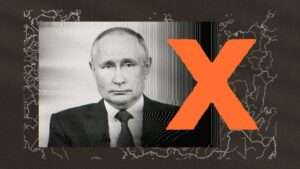
International Criminal Court Issues War Crimes Arrest Warrant Against Vladimir Putin

The charge is the crime of illegal kidnapping and deportation of Ukrainian children.

|

Vladimir Putin. (Illustration: Lex Villena; The Presidential Press and Information Office, Stasyan117)


Earlier today, the International Criminal Court issued an arrest warrant for Vladimir Putin and one of his underlings, for the crime of kidnapping and deporting Ukrainian children. Here is the ICC's official announcement of the charges:

Mr Vladimir Vladimirovich Putin, born on 7 October 1952, President of the Russian Federation, is allegedly responsible for the war crime of unlawful deportation of population (children) and that of unlawful transfer of population (children) from occupied areas of Ukraine to the Russian Federation (under articles 8(2)(a)(vii) and 8(2)(b)(viii) of the Rome Statute). The crimes were allegedly committed in Ukrainian occupied territory at least from 24 February 2022. There are reasonable grounds to believe that Mr Putin bears individual criminal responsibility for the aforementioned crimes, (i) for having committed the acts directly, jointly with others and/or through others (article 25(3)(a) of the Rome Statute), and (ii) for his failure to exercise control properly over civilian and military subordinates who committed the acts, or allowed for their commission, and who were under his effective authority and control, pursuant to superior responsibility (article 28(b) of the Rome Statute).

Ms Maria Alekseyevna Lvova-Belova, born on 25 October 1984, Commissioner for Children's Rights in the Office of the President of the Russian Federation, is allegedly responsible for the war crime of unlawful deportation of population (children) and that of unlawful transfer of population (children) from occupied areas of Ukraine to the Russian Federation (under articles 8(2)(a)(vii) and 8(2)(b)(viii) of the Rome Statute). The crimes were allegedly committed in Ukrainian occupied territory at least from 24 February 2022. There are reasonable grounds to believe that Ms Lvova-Belova bears individual criminal responsibility for the aforementioned crimes, for having committed the acts directly, jointly with others and/or through others (article 25(3)(a) of the Rome Statute).

Pre-Trial Chamber II considered, based on the Prosecution's applications of 22 February 2023, that there are reasonable grounds to believe that each suspect bears responsibility for the war crime of unlawful deportation of population and that of unlawful transfer of population from occupied areas of Ukraine to the Russian Federation, in prejudice of Ukrainian children.

Russia (like the US and China) is not a party to the treaty establishing the ICC. But the Court can claim jurisdiction based on the fact that the relevant crimes were committed in Ukraine, and Ukraine has accepted the ICC's jurisdiction.

The abduction and deportation of thousands of Ukrainian children is one of the most horrific Russian war crimes in Ukraine. But it's also just the tip of a much larger iceberg of Russian atrocities in this conflict.

So long as Putin remains in power, it is unlikely that either he or his senior subordinates will actually be tried and convicted for their crimes, except perhaps in absentia. They certainly aren't likely to face meaningful punishment. But pursuing the issue of Russian war crimes is still desirable for reasons I outlined in a previous post on this subject:

Despite the strong—and growing—evidence against Putin and other Russian leaders, the odds against trying and convicting them for war crimes are long….

But there is still value to pursuing the war crimes issue, including by investigating offenses and laying the groundwork for potential indictments and trials. First, there is some chance, even if small, that Putin will lose power if the war goes badly enough for him. History—including Russian history—has plenty of examples of despots who lost their grip on power after defeat in war.

Second, even if it turns out to be impossible to try and punish Putin, the same may not be true of other Russian officials and military personnel. Ukraine has taken many Russian prisoners, and some of them may be perpetrators of war crimes. Other Russian officials and military officers could potentially be arrested and detained if they travel beyond Russia's borders in the future. For that very reason, they might choose to avoid such travel. But that denial itself functions as a modest (though far from properly proportional) form of retribution.

Finally, emphasis on the war crimes issue can help maintain opposition to Putin's war in the West, and continue to mobilize international opinion against it. The criminal nature of the enterprise is one of the reasons (though certainly not the only reason) why the war has drawn so much international opposition, and turned Russia into a near-pariah state.

None of these admittedly modest gains will be anywhere near as satisfying as a Nuremberg-style tribunal in which Putin and other high-ranking Russian officials get tried, convicted, and punished. Sadly, such proceedings are usually only possible if the regime in question is overthrown. But we should not let the best be the enemy of the good—even the modestly good.

In the past, the ICC has sometimes been criticized for focusing primarily on various African despots and war criminals, often after they have already lost power. This has led to accusations that they are unwilling to go after major powers. Today's arrest warrant for the leader of one of the world's most powerful states is something of an answer to that critique.

Finally, the issue of child abduction should put to shame those Western social conservatives who sympathize with Putin because of his opposition to "wokeness." The large-scale brutalization of children and separation of families should outweigh any possible common ground on things like transgenderism or pronouns. Those who turn a blind eye to the former because of the latter cannot credibly claim to be defenders of "family values."

The State-Created Danger Doctrine

|

From Judge Don Willett's opinion yesterday in Fisher v. Moore, joined by Chief Judge Priscilla Richman and Judge Jacques Wiener:

A disabled public-school student was sexually assaulted by another student with known violent tendencies. [The assault involved the other student forcing the disabled student to perform oral sex on him. -EV] Despite knowing of this attack, the victim's teachers let both her and her aggressor wander the school unsupervised, and she was again assaulted by the very same student. [The opinion doesn't indicate the details of this second sexual assault. -EV] The victim's mother sued various school officials under 42 U.S.C. § 1983, alleging liability under the so-called "state-created danger" doctrine, an exception to the general rule that government has no duty under the Due Process Clause to protect people from privately inflicted harms. The school officials sought dismissal on qualified-immunity grounds, arguing that the state-created danger doctrine was not clearly established in this circuit when the underlying events occurred. The district court denied their motion.

But the school officials are right. This circuit has never adopted a state-created danger exception to the sweeping "no duty to protect" rule. And a never-established right cannot be a clearly established one. Nor do we think it prudent to adopt a never-recognized theory of § 1983 liability in the absence of rigorous briefing that grapples painstakingly with how such a cause of action, however widely accepted in other circuits, works in terms of its practical contours and application, details on which our sister circuits disagree. Also, beyond the lack of thorough briefing, we are reluctant to expand substantive due process doctrine given the Supreme Court's recent forceful pronouncements signaling unease with implied rights not deeply rooted in our Nation's history and tradition. This is especially so here, as our unbroken precedent counsels us to rule instead on a narrower ground….

The Due Process Clause of the Fourteenth Amendment provides that "[n]o State shall … deprive any person of life, liberty, or property, without due process of law." "The Due Process Clause … does not, as a general matter, require the government to protect its citizens from the acts of private actors." We have recognized just one exception to this general rule: "when [a] 'special relationship' between the individual and the state imposes upon the state a constitutional duty to protect that individual from known threats of harm by private actors." However, "a number of our sister circuits have adopted a 'state-created danger' exception to the general rule, under which a state actor who knowingly places a citizen in danger may be accountable for the foreseeable injuries that result." M.F. brings her due process claim against Appellants only under the second exception, the state-created danger theory.

Read More

Alienation of Affections in Mississippi

|

From Davis v. Davis, decided yesterday by the Mississippi Supreme Court, in an opinion for the court by Justice Leslie King:

John and Sandra Davis, a then-married couple, had two children in the 1980s. In 2018, John discovered the possibility that the children were not biologically his, but that they may have been the biological result of Sandra's extramarital sexual relations with Porter Horgan. Almost immediately after discovering this possibility, John sued Sandra and Horgan for fraud, alienation of affection, and intentional infliction of emotional distress. A jury ultimately awarded John $700,000 in damages….

John and Sandra Davis were married in 1979. John had two children from a previous marriage and had had a vasectomy. John testified that he had his vasectomy reversed in 1985. Two children were born during their marriage, Jared in 1987 and Becky in 1989. Both children were born in Louisiana, where the parties lived.

In the late 1980s, Horgan pursued Sandra and they began having occasional unprotected sexual intercourse. Both testified that the relationship was sporadic and sexual, not emotional. At some point during the 1990s, Sandra began to work for Horgan, and did so at various intervals during the 1990s. Sandra estimated that the last time she and Horgan had sexual relations was in the late 1980s or early 1990s. Horgan testified that the affair had ended, at the latest, by 1997 or 1998, when he did not see her any longer in a business capacity.

Read More

Executive Power

A Major New Defense of the Major Questions Doctrine

Legal scholar Ilan Wurman argues the controversial doctrine is justifiable on textualist and linguistic grounds.

|

The once-obscure major questions doctrine  (MQD) has become a major focus of controversy, since the Supreme Court used it in three - yes,  major -  rulings over the last two years. The three cases are the eviction moratorium decision, the OSHA large-employer vaccine mandate case, and West Virginia v. EPA. MQD may also end up playing a decisive role in the loan forgiveness cases currently before the Court.

The doctrine requires Congress to "speak clearly when authorizing an [executive branch] agency to exercise powers of vast 'economic and political significance.'" Critics had advanced a variety of charges against the major questions doctrine and the Court's use of it, including that it is politically motivated, that the line between "major" and relatively minor questions is arbitrary and unclear, and that the doctrine is incompatible with textualism.

In a forthcoming Virginia Law Review article, prominent constitutional law scholar Ilan Wurman offers an important and in some ways compelling new defense of  MQD. Here is the abstract:

In its past term, the Supreme Court formalized what it calls the major questions doctrine. The doctrine, as currently formulated, appears to require a clear and specific statement from Congress if Congress intends to delegate questions of major political or economic significance to agencies. The doctrine has been almost universally assailed on the right by scholars who argue that the doctrine is inconsistent with textualism and on the left by those who claim it is a recently invented, functionalist tool devised to reach anti-administrativist results. One can explain at least some of the cases, however, in a way that constructs a coherent doctrine in which importance has a significant but narrow role in resolving interpretive questions involving ambiguity or uncertainty. Thus understood, such a doctrine could be defensible, if not as a substantive canon, then as a kind of linguistic canon. Unlike other linguistic canons, such a canon would be about how people and lawmakers use language to accomplish results in a circumscribed range of contexts—namely, the delegation of important authorities, whether to other private actors, to government actors in Constitution, or to government actors in the executive department. But unlike substantive canons, it would not relate to a substantive value encoded in the Constitution or in longstanding tradition. Existing empirical work about how legislators legislate, and insights from the philosophy of language, suggest that such a doctrine may be consistent with textualism, and historical research further reveals that a canon of this type may be a longstanding feature of constitutional, contract, and statutory interpretation in related contexts. More provocatively, these same intuitions about importance may explain some substantive canons that are difficult for textualists to justify.

The usual defense of MQD is that it is a tool for enforcing constitutional constraints on the delegation of legislative power to the executive. Wurman argues that it can instead be justified on textual and linguistic grounds.

In the article, he outlines a number of justifications for this conclusion. For example, he cites survey data indicating that most people involved in drafting laws on Capitol Hill support some form of presumption against delegation of major issues to the executive. This evidence is significant for purposivists who advocate interpreting laws in accordance with congressional intent. But it also matters to textualists, as drafters' views provide at least some evidence of the "ordinary meaning" of a statute at the time of enactment.

Most interestingly, Wurman highlights linguistic studies showing that ordinary people expect greater clarity and more evidence to resolve important issues than relatively minor ones. I think that he is on to something here. But it is not, by itself, enough to justify MQD. If people seek greater clarity and evidence on important issues, that may support greater judicial scrutiny of major issues, as opposed to minor ones. But it doesn't necessarily lead to a presumption against delegation of major questions to the executive. It could be people want more evidence and clarity to decide such an issue either for or against delegation.

In an earlier post, I outlined what I think is a stronger textualist justification for MQD, one that actually points in the direction of a presumption against delegation:

In most situations, people expect greater clarity and precision when granting an agent broad power, than when authorizing something narrower. For example, my wife and I recently hired a contractor to repair the old and somewhat dilapidated deck attached to our house. Imagine we signed an agreement giving the contractor the authority to "modernize and improve" the deck, and he then proceeded to tear the whole thing down and replace it with a bigger and more modern structure…

[M]ost ordinary readers of the agreement would readily understand that the contractor had exceeded his authority. Tearing down and replacing the entire deck is a big, expensive step that requires clearer and more specific authorization than a vague mandate to "modernize and improve." By contrast, if the contractor had taken the much more limited step of replacing a few decaying floor boards, most people would agree his actions were properly authorized, even though the agreement doesn't specifically mention such replacement.

The same point applies to statutory language. If anything, most ordinary readers probably assume that vast grants of legal authority over millions of people require even more clarity and precision than do contractual agreements like the deck replacement. For example, in the loan forgiveness case, the Biden Administration relies on a vague provision of the HEROES Act that allows the executive branch to "waive or modify" regulations governing federal student loans to justify cancellation of over $400 billion in student loan debt. Even if semantics "divorced from context" suggests that mass cancellation qualifies as a type of waiver or modification, contextual ordinary meaning indicates that such an enormous delegation of power requires greater precision.

I also think that MQD can potentially be justified by nondelegation considerations, at least so long as the Supreme Court is unwilling to rigorously enforce nondelegation directly.

Wurman's article is a major contribution to the debate over major questions, and there is much more there than the points I have highlighted in this post. Obviously, however, it probably won't be the last word in this important debate.

I should also emphasize that neither Wurman's reasoning nor my own necessarily proves that any specific judicial use of MQD was justified. As I have previously written, I believe the Court got it right in the eviction moratorium and vaccine mandate rulings (though I differ with some of the details of its reasoning in the latter case), and would be justified in using MQD again in student loan forgiveness cases (though I also think the Court could justifiably rule against the Biden Administration even without reference to the doctrine). West Virginia v. EPA strikes me as a tougher case; Justice Elena Kagan's dissent makes a strong argument that the text of that statute is clear enough to satisfy MQD requirements. Obviously, even readers who accept the general idea of MQD might differ with my assessment of one or more of these cases.

Religion and the Law

The Overlooked Meaning of "Undue Hardship" in Title VII

|

This is the second of two posts explaining my recent article, Ordinary Meaning as Last Resort: The Meaning of "Undue Hardship" in Title VII. In the first post I attempted to show that a comprehensive look at the Court's statutory interpretation cases show that the presumption of ordinary meaning is a fallback after eliminating a statutory definition and the possibility of a technical term of art. And I argued that if the presumption of ordinary meaning is too powerful, it can cause one to miss non-ordinary meaning. This post explores the poster child for that concern: "undue hardship" in Title VII.

The term "undue hardship" was added to Title VII in a 1972 amendment that required employers to reasonably accommodate the religious observances or practices of employees or prospective employees, unless such accommodation would cause an "undue hardship on the conduct of the employer's business." Congress did not define the term. Five years later the Supreme Court took a stab in Trans World Airlines v. Hardison. There the majority determined that an "undue hardship" was anything "more than a de minimis cost."

Criticism of that judicially created definition began in the case itself, with Justice Thurgood Marshall in dissent. He raised two lines of attack. One briefly focused on ordinary meaning, arguing that the Court's definition violated "simple English usage." The other attack, based on legislative history, contended that Congress had codified an EEOC regulation using the term and a "long line of [EEOC adjudicative] decisions" fleshing out its meaning.

Read More

More