I was looking through some online archives available through my university's library, and noticed that there was a time in her political career that Kamala Harris talked a lot more about her Indian heritage.
For example, from 2009 (this was reprinted online in 2020): "One of the most influential people in my life, in addition to my mother, was my grandfather (TV Gopalan), who actually held a post in India that was like the secretary of state position in this country. My grandfather was one of the original independence fighters in India and some of my fondest memories from childhood were walking along the beach with him after he retired and lived in Besant Nagar in Madras." I take it that she was exaggerating both his contribution to Indian independence and the post he held …
A product of two cultures, Harris delights in her multiculturalism. Her grandfather was an Indian diplomat who served in posts in Delhi and Zambia, and an aunt, an obstetrician in Chandigarh, is so beloved by her patients that they often leave baskets of fruit on her doorstep after she delivers their babies. In the 1940's, Harris told the San Francisco Examiner recently, her grandmother drove around India in a VW bug, urging village women through a bullhorn to use birth control. "Even though my grandma had an arranged marriage when she was 12, she and my grandfather were very open-minded people," she said. [Though they were initially "not too happy" when her mother declined an arranged marriage and married a black man she had fallen in love with instead.]
By 2019, the Los Angeles Times reported: "She seldom delves into her Indian heritage, reflecting a broader reticence to share personal stories beyond a handful of well-worn anecdotes."
I don't think any of this is damning in any way, but it's interesting to see how ambitious public figures curate their image over time. At some point in Harris' political career, for example, she thought talking about her grandmother's arranged marriage at age 12 and how that didn't stop the grandmother from being an outspoken feminist was helpful, and at some point she decided it wasn't.
7/30/1956: Congress enacted a resolution, declaring that the motto of the United States is "In God we Trust." The Supreme Court declined to grant review in Newdow v.Congress, which considered the constitutionality of that motto.
We are about a month removed from the end of the term, and Joan Biskupic has an exclusive on the deliberations behind Moyle v. United States. Kudos to Joan for getting a scoop, which have been pretty rare the past few years. And she suggests there is a "series," so perhaps we will see Part II tomorrow?
Again, I will offer my usual caveats about SCOTUS reporting. I will assume the Biskupic accurately relayed what was told to her, but I will also assume that the various leaks she received were intended to advance certain interests. In Washington, D.C., information is power, and those who wield it do so to achieve specific goals. Never forget that. There is a reason that President Biden announced his stepping down from the race on X, after having only told a few people. Biden, or at least his team, managed to pull off the impossible D.C. trick: keeping a secret.
For a refresher on Moyle, read my septet of posts(1, 2, 3, 4, 5, 6, 7).
First, Biskupic describes her sourcing this way:
This exclusive series on the Supreme Court is based on CNN sources inside and outside the court with knowledge of the deliberations.
In the past, Biskupic has attributed her material to a Justice, but here the sourcing is a bit more opaque: "sources inside and outside." We are likely talking about double- or even triple-hearsay. A Justice told something to someone inside the Court, and someone inside the Court told that thing to someone outside the court. Barely two years after Dobbs, the SCOTUS sieve is leaking again. Chief Justice Roberts should dust off that retirement letter.
Second, we learn about how the stay was granted in January. Biskupic reveals the vote was 6-3.
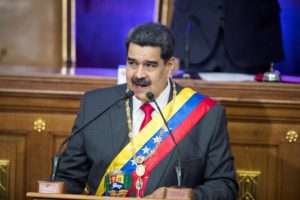
The Venezuelan experience shows that democracy cannot cure the evils of socialism, and that a democratic socialist system is unlikely to remain democratic for long.
One traditional response to evidence that the USSR, communist China, and other communist states demonstrate that socialism leads to poverty and oppression, is the argument that these regimes failed because they were undemocratic. If government control of the economy is combined with democracy instead of dictatorship, then socialism would fulfill the promise of uplifting the working class. Venezuela's history over the last 25 years undercuts such optimism.
To avoid confusion, I should emphasize that the "socialism" referred to here is government control over all or most of the economy (what Marxists call "the means of production"), not merely having a relatively large welfare state. The latter creates dangers of its own, but not of the same type and scale.
Maduro's predecessor Hugo Chavez first came to power in a democratic election in 1998. For a time, electoral democracy was maintained. But, gradually, the government's control over the economy and centralization of power (itself a requirement of socialism), enabled it to suppress opposition and establish a dictatorship. State control over the economy was a key element of this process. For example, the government used its control over food supplies to suppress opposition. If you oppose the ruling party, you are likely to go hungry. In an economy where there are few or no job opportunities outside the state apparatus, regime opponents also risk unemployment.
Meanwhile, far from uplifting the working class, Venezuelan socialism impoverished them. And that process began even before democracy was fully ended.
In a 2019 piece on "The Perils of Democratic Socialism," I outlined some reasons why democracy cannot cure the flaws of socialism, and why a socialist state cannot remain democratic for long, even if it starts out that way. Here's an excerpt where I highlighted the example of Venezuela:
Perhaps democracy will save us from any potential negative effects of bringing most of the economy under government control…. Any aspiring American Lenin or Hugo Chavez will be voted out of office or—better still—never elected in the first place.
Unfortunately, the democratic element of democratic socialism is unlikely to save us from the severe risks of the socialist part. Voters in democratic systems can and do elect dangerous demagogues. Hugo Chavez was democratically elected.
Closer to home, our own voters elected Donald Trump. And he is far from the first illiberal demagogue who ever achieved political success in American history….
A socialist state that controls most of the economy would also make it nearly impossible for voters to acquire enough knowledge to effectively monitor the government. It would greatly exacerbate the already severe problem of voter ignorance that plagues modern democracy. In a world where most voters—for perfectly rational reasons – do not even know basic facts such as being able to name the three branches of the federal government, it is highly unlikely they will learn enough to properly monitor a socialist state. Most of the powers of government would instead fall under the control of politicians, bureaucrats, powerful interest groups, or worse.
Finally, it is unlikely that a democratic socialist state will actually remain democratic in the long run. If the government controls the vast bulk of the economy, it can, over time, use its control over key resources to reward its supporters and suppress opponents. This has, in fact, actually happened in Venezuela, where the government has used such tools as its control over food resources to incentivize support for the regime, and forestall opposition.
For reasons noted in the 2019 piece, if democratic socialists came to power in the US, it would be harder for them to establish a dictatorship than it was for Chavez and Maduro in Venezuela. But that is in large part because we have more obstacles to the establishment of socialism itself than Venezuela did, such as stronger systems of federalism, separation of powers, and judicial review.
It may still be tempting to conclude that Venezuela's tragedy is the result of defects in their culture or the personalities of particular leaders, such as Chavez and Maduro. But socialist governments have led to similar horrific results in many nations around the world, despite differences in culture and leadership. Either socialism's weaknesses are caused by systemic institutional flaws, rather than local idiosyncracies, or the system tends to elevate awful leaders. Most likely, it's a combination of both.
There are, of course, obvious parallels between Maduro's use of violence and fraud to stay in power after losing this election, and Donald Trump's attempts to do the same after he lost in 2020. One major reason why Maduro may well succeed where Trump failed is that the Venezuelan regime's control of the economy and extreme centralization of power makes it easier for it to suppress opposition. Trump did not control the courts and many other key institutions, and he could not threaten opponents with unemployment and denial of food. Thanks to socialism, Maduro does have these tools of coercion available to him. Fans of democratic socialism would do well to consider whether they want Trump or someone like him to be able to wield such power, should he win an election.
Maduro's regime might yet fall. But it will probably take a mass uprising, large-scale defections by the security forces and regime elites, or some combination of both to make it happen. Socialist institutions make it easier for authoritarians to seize and keep power.
Despite some ideological differences, the "national conservative" policies advocated by Trump, J.D. Vance, and others on the right, pose many of the same dangers as socialism - including the use of state control over the economy to suppress opposition. The difference in slogans and flags between the two movements should not blind us to this underlying similarity.
There is another way in which the Venezuelan experience should give pause to the right, as well as the left. As in the similar case of Cuba, conservatives who rightly denounce socialist oppression should not at the same time try to close America's doors to refugees fleeing it. You can't combat socialism while simultaneously turning your back on its victims.
Like their Cuban counterparts, Venezuelan refugees should not be forcibly consigned to poverty and oppression merely because they had the misfortune of being born to the wrong parents in the wrong place. And, like Cubans, Venezuelan migrants can make valuable contributions to our economy and society - if only we would let them.
In sum, the Venezuelan experience should lead people on the left to reject democratic socialism, if they haven't done so already. For their part, right-wingers would do well to reject similar ideas sailing under the flag of nationalism, and adopt a more welcoming attitude to Venezuelan refugees.
I appreciate the replies from Orin, Will, and Sam. We have very different conceptions on what role a scholar should play and what role a judge should play. My writings in this area are both retrospective and prospective. I look backwards to see what qualifications a judge had at the moment of their nomination. I also look backwards from the present, to the moment of their confirmation, to assess how those qualifications may have predicted their jurisprudence. I feel fairly confident with my retrospective criticism. A person's pre-confirmation record is their record, and it cannot be changed. And a Justice's decisions are available for all to read. I write more posts about Supreme Court decisions than I care to count.
I, admittedly, feel less confident when making predictions about a judge's future trajectory. My experience with a Supreme Court prediction market has given me some insight into the process, but the Justices continue to surprise me, and everyone else, in ways that are hard to fathom. What loop ties things together? Given a Justice's unpredictability after confirmation, it is of the utmost importance to carefully scrutinize all of a prospective justice's actions before the nomination, and try to extrapolate a trajectory.
And those observations bring me back to Justice Barrett. John McGinnis, for example, favorably compares Justice Barrett to Justice Scalia as a scholar-justice. It is true that they were both academics. But the similarities end there. Justice Scalia was the general counsel at the Office of Telecommunications Policy, chaired ACUS, headed the Office of Legal Counsel, argued before the Supreme Court, worked at AEI, a prominent think tank, spent four years on the D.C. Circuit, and was very much in the mix on all issues of public concern.
I think much the same could be said for other academics who became Supreme Court Justices. Elena Kagan was Solicitor General (briefly), served in the White House Counsel, and was the Dean of Harvard Law School--all experiences that prepared her for the Court. Justice Breyer was a famous administrative law professor, but spent many years working in the Senate on Judicial Nominations, and served as Chief Judge of the First Circuit. Justice Ginsburg, in addition to being a well-regarded professor, was at the heart of the ACLU's women's rights litigation project, and then served on the D.C. Circuit for more than a decade. Jump back a few decades, and look at Justice Frankfurter. He advised FDR, was closely involved in New Deal politics, served as an assistant to the Secretary of War, was a JAG, and served in various other government positions. William O. Douglas was a law professor at Yale, but later headed the Securities and Exchange Commission. Joseph Story was appointed to the Supreme Court at the young age of thirty-two, but by that point he had already been a distinguished member of the Massachusetts Bar, a state attorney for Essex County, Massachusetts, served in the Massachusetts House of Representative, including as Speaker, and was elected to the United States House of Representatives.
Am I missing any other Justices who were academics? We can throw Robert Bork in the mix. In addition to being a law professor at Yale, he served as Solicitor General, worked as Acting Attorney General, survived the Saturday Night Massacre, plus a tenure on the D.C. Circuit.
I share Sam's and Will's basic reaction to Josh's post about the "backbone" of Supreme Court Justices, and I thought I would repost my 2021 take on the whole idea of "judicial courage" from a prior debate with Josh:
The Definition of a "Courageous" Judicial Decision: A judicial decision that stretches the law but nicely matches the observer's policy preferences.
A decade later, that still seems to accurately describe most uses of the term. I mean, I think we get it: When you really want a judge to rule a certain way, or (if they have already ruled) you want to celebrate the judge doing so, it's tempting to clothe that decision in the garb of "courage." Courage, the dictionary tells us, is strength in the face of fear or grief. Describing a judicial decision as "courageous" implies that the judge is a hero for ruling the way you want, and that the only reason they might rule the way you don't want is weakness or fear. This is an easy argument to make within a political culture. It's easy to craft an imagined audience that the Justice is claimed to be afraid of, such that rejecting that imaged audience's view is courageous. But it seems to me that it often resolves to the notion that the courageous thing is to do whatever the speaker wants.
This doesn't mean there are no legal opinions that show courage. In some cases, a judge may feel that the law requires a particular answer that the judge personally opposes and that the judge simultaneously knows will lead to particularly unpleasant personal consequences. This can come up, for example, when a lower-court judge spikes his or her own chance at promotion by handing down a ruling that the judge doesn't like and that significantly hurts their chance at being elevated to a higher court. Consider Judge Jeffrey Sutton's opinion for the 6th Circuit upholding the Affordable Care Act. Given the incredibly successful efforts to make the contrary view the only acceptable GOP view, Sutton's excellent opinion from the standard of traditional conservative judging also ensured he could not appear on a future GOP short list.
But those situations are relatively rare. And as it happens, they're not the kinds of cases that tend to get labeled "courageous" anyway. So on the whole, I think it's probably better to retire the phrase, or at least to be pretty skeptical when it is used.
The proposals include term limits for Supreme Court justices, a binding ethics code, and a constitutional amendment limiting the president's' immunity from prosecution. All 3 are potentially good ideas. But the devil is in details.
Today, President Joe Biden announced his support for three reforms: term limits for Supreme Court justices, a constitutional amendment denying the president immunity for crimes committed while in office, and a binding ethics code for Supreme Court justices. He laid out these ideas in a Washington Post op ed. My general reaction is similar to that outlined in my previous post on this topic: all three ideas are potentially good. But Biden is short on details, and term limits can only be properly adopted by a constitutional amendment. As noted in my earlier post, there is also an obvious political dimension to this announcement:
The Supreme Court has become highly unpopular. Currently, it only has an approval rating of about 36% in the 538 average of recent polls, with about 56% disapproving. Targeting the Court might be good politics…. Moreover, if reports about the proposals are correct, Biden has focused on ideas that are generally popular, such as term limits, while avoiding the much less popular (and very dangerous) idea of court-packing.
While I have been highly critical of several of the Court's recent decisions, I also think the conservative majority has many many good rulings, and that much of the left-wing criticism of the Court is overblown. But majority public opinion has a significantly more negative view of the Court than I do, thereby creating potential political momentum for various reforms.
When these ideas were first floated a couple weeks ago, Biden was still trying to salvage his own presidential campaign. Now, they could help bolster that of VP Kamala Harris (who has endorsed them). Josh Blackman is almost certainly right to note the proposals have virtually no chance of being enacted while Biden is still in office. But I think he goes too far in labeling them "pointless." Now that they have been endorsed by the current and future leaders of the Democratic Party, the chance they might eventually be enacted in some form has significantly increased. That's true of any policy idea adopted by one of the two major parties.
Below are a few comments on each of the three proposals.
Here's Biden on the amendment stripping presidential immunity:
I am calling for a constitutional amendment called the No One Is Above the Law Amendment. It would make clear that there is no immunity for crimes a former president committed while in office. I share our Founders' belief that the president's power is limited, not absolute. We are a nation of laws — not of kings or dictators.
I agree. The Supreme Court's badly flawed recent ruling in Trump v. United Statesgoes way too far in granting such immunity to the president. Biden is wrong to suggest that, in the wake of the ruling, "there are virtually no limits on what a president can do." In reality, the decision is vague on several key points, thereby making it difficult to figure out exactly how much immunity it actually gives the president. Also, there are non-criminal constraints on presidential power (e.g. - people can go to court to get an injunction against illegal executive orders). Still, broad presidential immunity is a bad thing, and enacting a constitutional amendment to abolish all or most of it would be good.
However, Biden tells us next to nothing about the details of such an amendment. I think the version recently proposed by 49 Democratic members of Congress is very good. Not clear whether Biden - and, more importantly, Harris - would support it, or some other approach. In addition, as I previously noted, the odds against enacting any controversial constitutional amendment are extremely long.
Biden on term limits:
Second, we have had term limits for presidents for nearly 75 years. We should have the same for Supreme Court justices. The United States is the only major constitutional democracy that gives lifetime seats to its high court. Term limits would help ensure that the court's membership changes with some regularity. That would make timing for court nominations more predictable and less arbitrary. It would reduce the chance that any single presidency radically alters the makeup of the court for generations to come. I support a system in which the president would appoint a justice every two years to spend 18 years in active service on the Supreme Court.
Here, I have little to add to what I said before. Term limits for SCOTUS justices are a good idea, with broad support from both experts and the general public. A system of 18-year terms is also good, and similar to that proposed by various legal scholars. But any term limit plan must be enacted by constitutional amendment, not merely by a congressional statute. The latter would be unconstitutional, and would set a dangerous precedent, if it succeeded.
Annoyingly, Biden doesn't tell us whether term limits should be enacted by amendment or statute. He also doesn't address the difficult issue of how to handle current justices. Including them in the term limit plan (effectively forcing some to retire soon) would anger the right. Not doing so would likely offend the left.
Biden on a binding ethics code:
I'm calling for a binding code of conduct for the Supreme Court. This is common sense. The court's current voluntary ethics code is weak and self-enforced. Justices should be required to disclose gifts, refrain from public political activity and recuse themselves from cases in which they or their spouses have financial or other conflicts of interest. Every other federal judge is bound by an enforceable code of conduct, and there is no reason for the Supreme Court to be exempt.
Unlike with term limits, Congress has broad (though not unlimited) power to enact ethics restrictions on the Supreme Court. I'm fine with requiring justices to disclose gifts (though there should be an exemption for small ones; no need to disclose every time a friend takes a justice out to dinner or the like). Indeed, I would go further and suggest large gifts should be banned outright. It also makes sense to require justices to "recuse themselves from cases in which they or their spouses have financial or other conflicts of interest." Justices already routinely recuse when there are financial conflicts. However, much depends on what qualifies as an "other conflict of interest." I don't think the mere fact that a spouse has been active on an issue in the political arena qualifies.
As for refraining from "political activity," it depends on what counts as such. Justices should not endorse or campaign for political candidates (to my knowledge, no modern justice has done that). On the other hand, it's fine for them to express views on various law and public policy issues. Both liberal and conservative justices routinely do so in variety of writings and speeches. For example, both Justice Gorsuch and Justice Sotomayor have publicly advocated policies to expand access to legal services. Such advocacy is a useful contribution to public discourse, and should not be banned, though I am no fan of Sotomayor's proposal to impose "forced labor" on lawyers (her term, not mine).
Finally, Biden doesn't say how the ethics code would be enforced, or what the penalties for violations would be. For obvious reasons, those details are extremely important.
In sum, all three of these proposals potentially have merit. But the details matter, and Biden hasn't given us much on that score.
I share co-blogger Sam's misgivings about Josh's post assessing the courage of the justices, which I think demonstrates a fundamental misunderstanding of judicial psychology.
There's a difference between lacking courage, and just not agreeing with your colleagues (or your blog critics) about the right thing to do. I've never seen good evidence that the justices secretly agreed with Josh about the right path in any of these cases and were shying away because of a lack of courage.
Two take two of his examples:
Chief Justice Roberts's infamous vote and opinion in NFIB v. Sebelius have been raked over from every angle, but at bottom, there is not much reason to doubt that he wrote the opinion he wrote because he thought it was the best way to implement his own view about the scope of judicial review in a democracy, implemented through the doctrines of constitutional avoidance, severability, etc. (That's so even if you believe the leaks about the way his vote and opinion evolved at conference, which can more easily be explained on legal grounds.)
The fact that Justice Barrett as a law professor did not write op-eds and amicus briefs or "get into the mix" is also not evidence of lack of courage. It is just as likely that she thought the cases were complicated, had better things to do with her time, or a different view about the vocation of a scholar. Frankly, if more con law professors would get "out of the mix," they would be much better scholars.
Scott Alexander once wrote a post, "Against Bravery Debates," describing the genre of internet argument:
Discussions over who is bravely holding a nonconformist position in the face of persecution, and who is a coward defending the popular status quo and trying to silence dissenters. These are frickin' toxic.
I understand the temptation, and I too have succumbed to it in the past, but I don't think grading the justices on their bravery -- especially without evidence that their behavior isn't better explained by thoughtfulness, disagreement, or judicial philosophy -- is particularly fruitful or accurate.
What a difference a fortnight makes. Two weeks ago, Donald Trump was cruising in the polls and President Biden looked to be in jeopardy of losing the nomination. Perhaps as a way to bolster his support among progressives, Biden hinted that he finally was going to propose a plan to reform the Supreme Court. This change was long-simmering, as Biden's SCOTUS commission concluded nearly three years ago. Then, in a flash, things changed. On July 13, Trump survived an assassination attempt by the skin of his ear. Two days, Trump tapped JD Vance as his VP, and the successor of the MAGA movement. On July 19, we got Hulkamania, and Trump gave his RNC speech. Two days later, President Biden dropped out, and VP Harris ascended to the nomination by proclamation. Life comes at you fast.
Here we are, on July 29. And, in an anticlimactic fashion, the lamest duck in modern Presidential history has meekly put forward three suggestions for the Supreme Court that lack any specificity, and will go nowhere, fast.
Biden announced the policy not in the Rose Garden, or on the steps of the Supreme Court, but in a Washington Post Op-Ed. Given the President's communication problems of late, this was probably for the best. The essay is fairly short. It leads with January 6, immunity, and democracy. I know this is a common talking point for progressives, but I'm not sure this point really resonates anymore. That Trump is at least in striking distance of the presidency suggests that all of the talk about democracy the past few years have had no meaningful impact on the populace. I think Barton Swaim's editorial in the WSJ accurately captures how to think about January 6.
It's true that the Jan. 6 riot was a disgrace and an embarrassment to the United States. But Democrats have vastly overinterpreted its political significance. Their belief that it would work as a peremptory argument against a second Trump term was a fantasy.
By the fifth paragraph, Biden finally turns to the Supreme Court, where he sees a "crisis of ethics."
On top of dangerous and extreme decisions that overturn settled legal precedents — including Roe v. Wade — the court is mired in a crisis of ethics. Scandals involving several justices have caused the public to question the court's fairness and independence, which are essential to faithfully carrying out its mission of equal justice under the law. For example, undisclosed gifts to justices from individuals with interests in cases before the court, as well as conflicts of interest connected with Jan. 6 insurrectionists, raise legitimate questions about the court's impartiality.
If there are scandals and crises, where are the articles of impeachment? Has Biden signed onto AOC's proposal? No, of course not. There is no scandal. There is no crisis. Justices took actions that were consistent with the rules at the time. Perhaps Biden thinks those were poor exercises of judgment, but no rules were broken. Biden also embellishes quite a bit. Are Martha Ann Alito's flags "connected with Jan. 6 insurrectionists"? Has Justice Thomas decided any case in which Harlan Crowe was a party? No and no. But really, this is just throat-clearing from Biden. No real substance.
Biden then turns to this three proposals.
First, I am calling for a constitutional amendment called the No One Is Above the Law Amendment. It would make clear that there is no immunity for crimes a former president committed while in office. I share our Founders' belief that the president's power is limited, not absolute. We are a nation of laws — not of kings or dictators.
As all know, a constitutional amendment must receive two-thirds vote from each House, and three-fourths vote of the states. This amendment is a non-starter. It would at least have been useful for Biden to propose some language about what such an amendment would even look like. But he would never do such a thing---or least his OLC would never sign off on it. As unpopular as Chief Justice Roberts's decision is, actually crafting a clear constitutional text for when immunity applies would be extremely difficult. Justice Barrett's concurrence does not fare much better. And the dissenters didn't really try to establish a generally-applicable rule--it was enough that Trump's conduct here lacked immunity. On this point, I would recommend Phillip Bobbitt's soberJust Security essay today. (If I could give a compliment, Just Security, which started off as a more progressive outlet for separation of powers issues, has been starkly more balanced of late than Lawfare, which began as a neutral outlet, but has since drifted away.)
At least with the first proposal, Biden clearly suggests a constitutional amendment is needed. But with the second and third proposals, he leaves the issue open.
The second suggestion concerns term limits:
Second, we have had term limits for presidents for nearly 75 years. We should have the same for Supreme Court justices. The United States is the only major constitutional democracy that gives lifetime seats to its high court. Term limits would help ensure that the court's membership changes with some regularity. That would make timing for court nominations more predictable and less arbitrary. It would reduce the chance that any single presidency radically alters the makeup of the court for generations to come. I support a system in which the president would appoint a justice every two years to spend 18 years in active service on the Supreme Court.
We know a constitutional amendment was needed to impose term limits on the President? Would an amendment be needed for the Justices? Biden does not tell us. He only speaks of a "system." Biden also elides the critical question of whether this proposal would be retroactive, or only prospective. For example, would the current nine Justices be required to retire after 18 years? Or would only new Justices appointed under this "system" be subject to the limit? Or does Biden favor the "panel" approach, in which Justices who have already served 18 years would be forced to take "senior" status and not hear any actual Supreme Court cases? I think that rule is 100% likely to be declared unconstitutional. It should be unanimous. And Biden certainly knows this. Or at least he should know it.
The third proposal cribs Justice Kagan's latest missive, calling on the ethics code to be enforceable.
Third, I'm calling for a binding code of conduct for the Supreme Court. This is common sense. The court's current voluntary ethics code is weak and self-enforced. Justices should be required to disclose gifts, refrain from public political activity and recuse themselves from cases in which they or their spouses have financial or other conflicts of interest. Every other federal judge is bound by an enforceable code of conduct, and there is no reason for the Supreme Court to be exempt.
Biden does not explain how the code would be enforced? Would he assign lower federal court judges to oversee the Supreme Court? I wrote a long post about this issue yesterday, and I won't repeat those arguments here. But I will repeat my prediction of where this proposal may wind up:
I regret that Justice Kagan started down this road. Given that President Biden will soon announce his own Court reform, this issue is on the wall. Once the filibuster is abolished--as Senator Elizabeth Warren has promised--I suspect the Court will be placed under this regime. My other predictions from four years ago may yet come to fruition.
One final point. A number of President Biden's judicial nominees may need a tie-breaking vote from Vice President Harris. Given that she will be busy on the campaign trial, scheduling those tie-breaking votes may prove difficult. Biden's final judge count is still TBD.
The Ohio State University (tOSU) has appointed Professor Lee Strang as the inaugural Executive Director of the Salmon P. Chase Center for Civics, Culture, and Society. This is good news. Professor Strang is an excellent choice for this position.
The Ohio State University has appointed legal scholar Lee J. Strang as the inaugural executive director of the Salmon P. Chase Center for Civics, Culture, and Society. Strang is the inaugural director of the University of Toledo's Institute of American Constitutional Thought & Leadership and currently serves as the John W. Stoepler Professor of Law & Values at the University of Toledo, where has been a member of the faculty since 2008.
Lee J. Strang
"Lee is an exceptional constitutional scholar with a wealth of administrative experience, and we are excited that he will join the university to stand up and lead the new Salmon P. Chase Center," said Karla Zadnik, interim executive vice president and provost. "Our shared goal is for the center to become a national leader in teaching, research and engagement on U.S. civics, culture and society."
Initiated in 2023 by the state of Ohio, the Salmon P. Chase Center will be an academic home at Ohio State for teaching and researching the foundation of the American constitutional order and its impact on society. As executive director, Strang will be responsible for organizing the center, overseeing the hiring and appointment of the center's faculty, developing curriculum and delivering academic programming.
Professor Strang is a strong scholar, a dedicated teacher, and someone who commits himself to the institutions of which he is a part. I look forward to seeing what he builds at the Chase Center.
The release also says this about the Chase Center:
When it is fully operational, the center will have at least 15 tenure-track faculty members and provide a variety of innovative educational and collaboration opportunities for students and faculty from across the university. The center will be an independent academic center physically housed in the John Glenn College of Public Affairs. . . .
The Chase Center academic council led the nationwide search for the executive director. The academic council members are scholars with national reputations for academic excellence and come from Ohio and universities across the nation.
[Note: Why "tOSU" instead of "OSU"? Well, if it's "the Ohio State University" then tOSU reflects that fact.]
I found myself disagreeing with some of the points made in co-blogger Josh Blackman's post this morning entitled "I could carve a judge with more backbone out of a banana." Instead of a point-by-point rebuttal, here is a set of more general observations:
Law is not like the game of Risk, a game of global domination. No legal principle will yield you all the results you want, and principled judging will never yield total domination for any political party or ideology. Anyone who expects that will be disappointed.
The line taken on Justice Barrett bears no resemblance to her actual body of work on the Court so far, which is absolutely sterling, regardless of whether you agree with her on the outcome of any given case. Here, for example, is a more cogent analysis by John McGinnis.
The suggestion that what we need in Supreme Court nomination hearings is more "courage" in an idiosyncratic sense (n. courage, 1a "owning the libs") is exactly wrong. Yes, courage is a virtue, but like most virtues it is not reducible to performative spectacle. Supreme Court nomination hearings have already moved too far in the direction of cable news meets WWF. That is a progression to arrest, not to pursue as if it were the path of enlightenment.
When we evaluate the work of the justices, I am almost tempted to say we should care more about their opinions than their votes. The votes matter, of course. But in current practice, and especially when so few cases are being decided by the Court, it is the rationale and argument expressed in the opinion—with its craft or absence of craft, and its principle or absence of principle—that drives the development of the law. To treat judges as fundamentally being vote-casting officials is a symptom of treating them as legislators.
For legal scholars, there is value in analysis that does not fully collapse into the analyst's perspective on the merits. We should be able to make analytical claims about what the justices are doing—critical, sympathetic, both, whatever—that stand on their own apart from whether the author thinks the Court is right on the merits. Otherwise we run the risk that our legal analysis will shade into station identification and more cowbell.
Last week, I noted Justice Elena Kagan's remarks at the Ninth Circuit Judicial Conference on Supreme Court ethics, her reaction to losing cases, and other matters. The remarks prompted substantial press coverage and commentary. Now you can view those remarks for yourself, as C-Span has posted video.
Joan Biskupic reports that the justices were initially inclined to back Idaho in the EMTALA case, until they realized the case was messier than they had thought.
CNN's Joan Biskupic has an inside report on what happened at the Supreme Court behind-the-scenes in Moyle v. United States. The case had presented the question whether EMTALA preempts state laws, such as Idaho's Defense of Life Act, that prohibit abortion. The case was ultimately dismissed as improvidently granted, and the stay of a lower court judgment against Idaho was lifted.
From Biskupic's report:
In January, the court took the extraordinary step of letting Idaho enforce its ban on abortion with an exception only to prevent the death of a pregnant woman, despite an ongoing challenge from the Biden administration arguing that it intruded on federal protections for emergency room care.
No recorded vote was made public, but CNN has learned the split was 6-3, with all six Republican-nominated conservatives backing Idaho, over objections from the three Democratic-appointed liberals.
Oral argument in the case was a bit of a mess. There was confusion over what precisely the Idaho law did or did not allow, and the extent of asserted preemption under EMTALA. Further, a weighty constitutional question (whether an exercise of the spending power can preempt state law) lurked in the background. This apparently convinced some of the justices that Moyle was not the clear case they had thought it might be.
According to Biskupic, Chief Justice Roberts refrained from assigning opinion-writing duties at the conference after oral argument, as there may not have been a clear majority disposition.
From Biskupic's report:
Judging from the public arguments alone, there appeared a chance the court's four women might vote against Idaho, and the five remaining conservatives, all men, in favor of the state and its abortion prohibition.
But at the justices' private vote two days later, Roberts and Justice Brett Kavanaugh shattered any split along gender lines. They expressed an openness to ending the case without resolving it.
They worked with Barrett on a draft opinion that would dismiss the case as "improvidently granted."
Barrett had come to believe the case should not have been heard before lower court judges had resolved what she perceived to be discrepancies over when physicians could perform emergency abortions, even if a threat to the woman's life was not imminent.
She would eventually deem acceptance of the case a "miscalculation" and suggest she had been persuaded by Idaho's arguments that its emergency rooms would become "federal abortion enclaves governed not by state law, but by physician judgment, as enforced by the United States's mandate to perform abortions on demand." She believed that claim was undercut by the US government's renouncing of abortions for mental health and asserting that doctors who have conscience objections were exempted.
Ultimately, Biskupic reports, there was a draft majority opinion on behalf of Roberts, Kavanaugh, Barrett, Kagan and Sotomayor, and dissents from the left (Jackson) and the right (Alito, Thomas & Gorsuch). This line-up effectively prevailed as the Court DIGged the case, over a dissent by Justice Alito (joined in part by Thomas and Gorsuch) and a partial dissent by Justice Jackson. Justice Kagan (joined by Sotomayor in full and Jackson in part) and Justice Barrett (joined by Roberts and Kavanaugh) wrote concurrences.
In Justice Kagan's view, based on remarks last week, the justices may have learned a "good lesson" from the case. From Biskupic's prior report:
The justice went on to say that the court may have learned "a good lesson" this session when it agreed to hear oral argument in an abortion dispute that arose from its emergency docket only to later say it had improperly granted review in the matter.
"And that may be as a good lesson for us to sort of say as to some of these emergency petitions, 'No. Too soon, too early. Let the process play out,'" she said.
I suppose some might suggest the Court's decision to DIG the case reflects a lack of spine or fortitude. To my mind, a judge shows spine and fortitude when they act as a judge, even at the risk of disappointing their friends and allies. In the current environment, that shows more courage than refusing to succumb to the "Greenhouse effect." A stalwart judge should never forget that they are tasked to exercise judgment instead of will, and the proper exercise of judgment will not always produce the political or policy outcome that partisans might prefer.
At a recent conference, I invoked Theodore Roosevelt's famous criticism of Justice Oliver Wendell Holmes, Jr. to describe Chief Justice Roberts and Justices Kavanaugh and Barrett: "I could carve a judge with more backbone out of a banana."
Of course, TR's criticism of Holmes was hyperbolic, and a bit unfair. Holmes had survived being shot twice during the Civil War, and developed a distinctive judicial philosophy of restraint. But this aphorism, a century later, still has some appeal.
Is it a fair descriptor of the Court's middle three Justices? Yes and no. (For a refresher, I wrote an essay on Judicial Courage.)
Let's start with Chief Justice Roberts. The defining moment of his tenure was NFIB v. Sebelius. Roberts decided to save the Affordable Care Act. By Roberts's own admission, the saving construction was not the best reading of the law. Still, the Chief Justice felt compelled to reach that conclusion based on his perception of the role of the courts. Was his vote influenced by external factors? No, I don't think he changed his mind based on what some liberal opinion writers would write. Rather, he was worried about how striking down Obamacare would affect the long-term perception of the Court.
Was that an act of spinelessness? Indeed, as I discuss in Unprecedented, conservatives called on the Chief Justice to grow a "backbone," and not change his vote. In my view, judges should go where the law leads, and leave the political stuff to the other branches. But, twelve years later, I have come to peace with Roberts's decision. (I'm still not over his analysis on the Direct Taxes Clause.)
Here comes the compliment. When Roberts made this decision, he engaged in an act of utter selflessness, and courage of the highest level. He knew that he would become ostracized from the right. As best as I can recall, Roberts has not stepped foot in a FedSoc meeting since 2012. And Roberts knew the left would never accept him for Shelby County and countless other decisions. Whatever grace liberals gave him for NFIB would last a few minutes. The great Chief Justice would be a jurisprudential orphan. But he knowingly exiled himself into the breach. This is not the stuff of a banana.
What about Justice Barrett? I've gone through her record many times. As a law professor, she did not take controversial positions on matters of public concern. At most, she had a few press interviews on Supreme Court decisions, like NFIB and King v. Burwell, and made some anodyne critical remarks. But Barrett did not write any op-eds, sign amicus briefs, or get into the mix.
A colleague suggested that Justice Barrett showed her fortitude during her Seventh Circuit confirmation hearing. Everyone remembers the line. Senator Diane Feinstein told Barrett that "The dogma lives loudly in you."
I went back and rewatched the whole clip on CSPAN. After Feinstein said it, Barrett sort of stared blankly in incredulity at Feinstein, and the colloquy ended. Barrett never actually said anything in response. Feinstein pivoted to ask some question of Judge Joan Larsen. I know this "dogma" line made Barrett something of a mini-celebrity, but I never quite understood why. This is not like Clarence Thomas and Joe Biden going toe-to-toe. Moreover, Feinstein at the time was suffering from senility. (It is no coincidence that senile and Senate share the same root.) Feinstein made an utterly inappropriate statement that was universally panned. And Barrett was easily confirmed.
What are the courageous votes that Justice Barrett has cast since she was on the bench? Dobbs for sure--especially since she was the fifth vote. Had she blinked, Roberts could have controlled the majority. For the other cases, Barrett was the sixth vote: Loper Bright, Kennedy v. Bremerton, and SFFA.
By contrast, Justice Kavanaugh's performance during his second confirmation hearing demonstrated courage under fire. He expressed righteous indignation at how he was being treated, and defended himself vigorously. I sometimes wish that Kavanaugh could bring that fire to the bench in some cases. But there is still time.
When Justice Kagan speaks to the Ninth Circuit judicial conference, after cutting through all the pleasantries and bromides, her primary objective is to give the left a to-do list. She doesn't sob in her office. She punches through walls. This year, Kagan casually floated an idea that has taken shape: Justice John Roberts could appoint some panel of "judges lower down the food chain" to review allegations of misconduct.
As a threshold matter, she threw Justice Thomas under his RV, and raised Justice Alito up his flagpole. Not even a year after the Court adopted an ethics code--which was part of Kagan's earlier wish-list--Kagan is already saying that the rules are not enough. There have to be teeth!
I'll repeat a few points I've made more times than I can count. Ethics codes are not bright-line rules. They merely offer guidance to judges about how to proceed. All federal judges, even the Justices, can request informal advice from their colleagues, or judges on other courts. Though not binding, judges tend to do what others have done. Judicial ethics body have only very limited tools to enforce ethics codes. These institutions can issue private and public reprimands. In extreme cases, they can refer a judge for impeachment. At that point, it is up to Congress to act. But the ultimate death sentence is to prevent a judge from being a judge.
Take the Federal Circuit. The well-respected judges of that court have removed Judge Pauline Newman from hearing any cases until she submits to a health exam with the doctor of their choice. Newman filed a valiant legal challenge, but has lost in the District Court, and her hope now lies in the D.C. Circuit. Moreover, the Federal Circuit recently excommunicated her for another year. Newman is 97 years young. Chief Judge Kimberly Moore and her colleagues are probably waiting for Judge Newman to die. This is a stealth impeachment, and the other federal judges have done nothing about it. They are too busy trying to punish litigants in Texas for filing cases where the venue statutes permit them to file. (There is action afoot in the rules committee--stay tuned.) Anyway, I digress.
These are the things that lower court judges can do to enforce ethics codes. Does Justice Kagan really want to empower the likes of Judge Moore and others to suspend Supreme Court Justices from hearing cases? Or allow some inferior panel to force a Justice to recuse from a particular case? Will there now be entire rounds of litigation before these panels immediately after a cert grant?
The Wall Street Journal editorial board raises some other questions:
Could her panel issue subpoenas to investigate allegations? How would it sanction Justices who enjoy life tenure? Wouldn't setting up such a system encourage frivolous complaints, filed for partisan PR purposes or to make the process into the punishment?
Once this process exists, there will be thousands upon thousands of frivolous complaints. Look at the thousand "orchestrated" complaints filed against Judge Aileen Cannon--so many that Chief Judge Pryor ordered the clerk's office to stop accepting them! And this is only one district court judge. Imagine what will happen for Justices Thomas and Alito. There will be at least one judge somewhere who finds one of these complaints meritorious. Who will be the first Justice to get the Pauline Newman treatment? Did Kagan really think this suggestion through a policy matter?
I haven't even addressed the separation of powers problems: inferior judges sitting in judgment of apex officials. No way this flies.
At the end of the day, all of these calls for "judicial reform" are addressing a problem that barely exists, and mandate solutions that would cause substantial harm to the judiciary. Judge Jim Ho frames the issue well in his new National Reviewessay:
The double standards aren't an accident. They're intentional. They're a strategy to create a perverse incentive structure for judges: If you rule the way the critics dictate, you won't be criticized. You'll be fêted. But if you don't, you'll be ostracized.
That's why the double standards don't seem to trouble the critics. Because, to the critics, this isn't a debate — it's a war. The critics don't want neutrality. They want conformity. If you don't conform, they'll call you corrupt, unethical, racist, sexist, homophobic. They'll say you're just trolling, or auditioning. Whatever it takes for you to bend the knee. And even if you still won't conform, they'll attack you anyway, because others will get the message and comply.
Critics have repeatedly said that they want to pack the Court. But there's no need for them to pack the Court if they can just pressure the Court to do what they want.
I don't think Justice Kagan sees things in quite this light, but her proposals gives ammunition to those who do.
I regret that Justice Kagan started down this road. Given that President Biden will soon announce his own Court reform, this issue is on the wall. Once the filibuster is abolished--as Senator Elizabeth Warren has promised--I suspect the Court will be placed under this regime. My other predictions from four years ago may yet come to fruition.
This securities fraud litigation, filed in 2018 arises out of the 1Malaysia Development Berhad ("1MDB") scandal. Plaintiffs were investors in Defendant the Goldman Sachs Group Inc. ("Goldman"). The parties have moved to seal materials submitted in connection with Plaintiff's motion for class certification….
As a preliminary matter, documents submitted in support of a motion for class certification are judicial documents to which the presumption of public access [to court records] would apply….
In support of its application to maintain certain documents under seal, and to allow for the filing of other exhibits with redactions, Goldman notes that it seeks to redact individuals' names and other personal identifying information of current and former Goldman employees as well as two entities and individuals unaffiliated with Goldman. Goldman states that none of those employees or entities were implicated in any of the alleged wrongdoing at the center of this case. Therefore, Goldman states, "it would be patently unfair and highly prejudicial to these individuals to disclose [their] names."