The Volokh Conspiracy

Mostly law professors | Sometimes contrarian | Often libertarian | Always independent | Est. 2002

The Volokh Conspiracy

Journalist Suppressed Evidence Pointing to Additional Conspirators Involved in Murder of Emmett Till

Newly released documents suggest a prominent account of Till's death left out some important information.

|

It is often said that journalism is the first draft of history. In the case of Emmett Till, a prominent news story about his murder was long taken as the definitive account of his death at the hands of J.W. Milam and Roy Bryant. Newly discovered documents, however, conform suspicions more people were involved in Till's horrific death.

The Washington Post reports:

A journalist whose 1956 article was billed as the "true account" of Emmett Till's killing withheld credible information about people involved in the crime, according to newly discovered documents.

William Bradford Huie's article in Look magazine helped shape the country's understanding of 14-year-old Till's abduction, torture and slaying in Jim Crow-era Mississippi. The article detailed the confessions of two White men who previously had been acquitted by an all-White jury in the killing. The men told Huie they had no accomplices.

Yet Huie's own research notes, recently released by the descendants of a lawyer in the case, indicatehis reporting showedthat others were involved andsuggest he chose to leave that out when it threatened the sale of his story. He also was seeking a movie deal about the killing and had agreed to pay the two acquitted men, J.W. Milam and Roy Bryant, part of the proceeds.

If Huie had fully reported what he'd learned, it could have led to charges against additional participants in the murder, three historians say.

As the Post report indicates, many had believed that additional people participated in Till's murder, but the Look story deflated efforts to pursue additional conspirators.

Black journalists had been pressuring Mississippi officials and the FBI to investigate and charge additional suspects in the case. Huie's "true account," with its assurance that only two men were involved and its depiction of Till as a defiant brute, effectively ended that effort.

"This confession, as it was touted, suddenly seemed enough to satisfy everybody," said Devery S. Anderson, author of a 2015 book on the Till case. If Huie had reported everything he had learned, "it's possible these other people would have been indicted," Anderson said, though he also said they could have been acquitted.

Supreme Court

Justice Jackson Shares Her Concerns about Trump Immunity Ruling

In the same week that Jack Smith refiles his Trump Indictment, Justice Jackson talks about the SCOTUS decision that made refiling necessary.

|

Justice Jackson's memoir, Lovely One, hits bookstores next week. To promote the book (for which she reportedly received a nearly $900,000 advance), Justice Jackson sat down for an interview with Norah O'Donnell of CBS News.

Jackson, in an interview with "CBS Evening News" anchor and managing editor Norah O'Donnell, suggested the ruling gives Trump special treatment compared to anyone else in the criminal justice system.

"I was concerned about a system that appeared to provide immunity for one individual under one set of circumstances, when we have a criminal justice system that had ordinarily treated everyone the same," she said. . . .

Interestingly enough, this interview dropped the same week that Special Counsel Jack Smith refiled his indictment against Donald Trump for his attempts to overturn the 2020 election.

Justice Jackson also addressed the prospect of more election litigation.

Asked whether she was prepared for cases relating to the upcoming election to end up before the Supreme Court, Jackson replied that she is "as prepared as anyone can be."

"I think there are legal issues that arise out of the political process. And so, the Supreme Court has to be prepared to respond if that should be necessary," she said.

Based on the short clips that have been released, and CBS News' reporting, it appears that Justice Jackson is being fairly circumspect in what she says about the Court's work, and not saying all that much that cannot be gleaned from her opinions. If so, that is probably a good thing (and much better than what we sometimes saw from the late Justice Ginsburg).

CBS will air the full interview will air this weekend.

Law & Government

Executive Power Scholarship: A Three Level Problem

Reflections on that Twitter dust-up.

|

I: The Object-Level Scholarly Debate

One of the oldest questions of constitutional law is whether, and to what extent, the President has the power to remove other executive branch officials; as well as whether, and to what extent, Congress has the power to regulate or restrict any such power. It dates back to congressional debates in 1789, the impeachment debates of Andrew Johnson, and Supreme Court cases from Myers v. United States, to Humphrey's Executor v. United States, to Seila Law v. CFPB.

Another one of the oldest questions of constitutional law is whether, and to what extent, the Constitution's vesting of "the executive Power" in "a President of the United States of America" includes various powers not specifically enumerated elsewhere in Article II. The two questions are different, but they overlap, because one of the strongest arguments for an executive removal power is the argument that appointment and removal of executive officers was understood as an executive power even without being specifically enumerated.

The scholarly debate about these questions has been rich and keeps getting richer. Two recent articles by Professor Julian Davis Mortenson, The Executive Power Clause, and Article II Vests the Executive Power, Not the Royal Prerogative, (also guest-posted on this blog) address the second question, and argue against a robust reading of unenumerated or residual executive power; in various formulations, they describe the executive power as being limited to "law-execution," or as being an "empty vessel," containing only the powers vested by other laws.

Meanwhile, Professors Aditya Bamzai and Saikrishna Prakash recently published an article, The Executive Power of Removal, that addresses the first question. They argue that the executive power did include the power to remove other executive branch officials, and that Congress's ability to regulate this power is limited. Professors Andrea Katz and Noah Rosenblum published a somewhat sharp response to Bamzai & Prakash (Removal Rehashed). Bamzai & Prakash have now published a somewhat sharp reply to Katz & Rosenblum (How to Think About the Removal Power).

Along the way, Katz & Rosenblum argued that Mortenson's work refutes Bamzai & Prakash's, because if the executive power is an empty vessel, limited to law-execution, it would seem not to include a removal power. On the other hand, Bamzai & Prakash reply, there is an ambiguity in how to understand Mortenson's thesis (and the evidence on which it relies). Mortenson's articles do not specifically address the removal question, and they allow the possibility that the law-execution conception of the executive power might include an appointments power (as some evidence suggested). If the law-execution conception of the executive power included an appointments power, because the power to appoint was incidental to law-enforcement it might (or might not) also include a removal power.

Bamzai & Prakash believe this to be part of a broader ambiguity in Mortenson's thesis. The idea that executive power is an empty vessel, and the idea that it is limited to enforcing the law, are very similar and one could argue that they are two appendages of the same elephant. Maybe they are. But how should we think about, for example, a law that says that the President should not be the one to enforce it? One could say that the President cannot enforce such a law, because executive power is an empty vessel; or one could say that the President can enforce such a law, because the one executive power is the power of law enforcement.

The question of what to think about a law that says that the President cannot remove other officials who enforce the law is related. Perhaps the one executive power is the power of law enforcement, including the power to superintend those who enforce the law; or perhaps Congress has the power to say that the President cannot superintend law enforcement in various cases. Bamzai & Prakash thus argue that Mortenson's articles do not refute their thesis.

II: The Twitter Debate

This last piece of the exchange provoked unusually sharp responses on Twitter/X from Mortenson, who described Bamzai & Prakash as "selling false descriptions of [his] work," and wrote that "other responsibilities trump the obligation to be kind." He believes that their misunderstanding of his work cannot reflect a serious and sophisticated attempt to engage with it: "at best, these are the criticisms of people who didn't go beyond control F at second best, these are the criticisms of busy, careerist, disengaged, and incurious interlocutors at third best, these are the criticisms of 11th grade debaters at nationals." His more recent tweets have turned the temperature up still higher. Professor Jed Shugerman also joined in with a series of posts.

These reactions in turn produced a lot more responses both on and off of Twitter, as well as a lot of meta-commentary that something unusual and heated seemed to be going on among con law scholars. (No links for this paragraph, sorry.)

My view is that this turn has been unhelpful, and indeed unjustified. It may well be that Katz & Rosenblum (along with many many other scholars before them) have the better view of the removal question. And it may well be that there is a clear answer to the question of how the empty vessel thesis relates to Congress's power to regulate or restrict the enforcement of the law. It might even be true that the answers to those questions could have been divined by a more careful reader already—although I confess that I have been following this debate for many years, reasonably carefully, and I do not know the answers to them.

But the best way for legal scholars to ventilate these questions is through various forms of legal scholarship. I will say from experience that sometimes one writes a brilliant article which is completely correct but fails to convince all good-faith readers of that article. And sometimes one believes that one's brilliant article has already clearly resolved some issue, but some good-faith readers of that article somehow didn't understand what one clearly said. In those cases, it is sometimes useful to write more, to discuss ancillary sub-issues, to explain more, or more clearly, or differently. Nobody is under an obligation to respond to everybody else, or to respond on their timelines, but for better or worse, in a world of human legal scholars, this is part of how scholarship advances.

(I should add that Mortenson (and Shugerman, more on whom in a moment) has produced a number of links, screenshots, and substantive tweets getting in to the object-level issues to some extent. I found these somewhat difficult to follow, but I tried, and I didn't understand them to clarify the underlying ambiguity, about which I remain unsure.)

Finally, Shugerman's interventions also make a number of allegations about scholarly integrity, the sharing and citations of drafts, who said what to whom at conferences, and so on. In my view, these allegations are mostly misleading, and entirely poisonous. But my own judgment may be affected by the fact that I was a collateral target in one of Shugerman's earlier witch-hunts, and so I won't say more about them here.

I am a defender of law-professor-twitter, and I find it a valuable medium for discovering new work and ideas, especially outside my close circles. But this has been a bad episode for scholarly values and scholarly norms.

III: Constitutional Law in the Legal Academy

I suppose this is obvious, but part of the reason this dispute seems to have sparked such a reaction online is that there is a lot of underlying ideological tension among constitutional law professors generally, and about questions of executive power in particular. These seem to have hardened into patterns of suspicion about the legitimacy of even engaging with scholars who disagree on these issues.

As I speak to friends on both sides of this debate (offline), I hear liberal law professors express the concern that conservative law professors are careerist liars who are deceiving the courts into doing bad things to the country; and I hear conservative law professors express the concern that liberal law professors are a close-minded ideological monolith who refuse to engage seriously with counterarguments and weaponize their control over the legal academy to make up for their lack of control over the courts. Not all law professors – everybody always stresses that – but when you have written a brilliant article, and it has failed to convince everybody, and then people who read it say things about it that seem obviously dumb and wrong to you . . .  well what are you supposed to think?

This pattern is nothing new, but it is the obligation of those of us in the legal academy to resist it, and hopefully one day to shatter it. That requires careful, patient engagement on the object level. It requires careful, patient engagement on the object level even when we are convinced that our interlocutors are not as careful and patient as we are. It requires using norms of argumentation that raise the sanity waterline – norms such as evidence and logic and free inquiry, and not appeals to personal honor. And it is not something that any of us can do alone, or in ideological silos.


Donald Trump

Special Counsel Jack Smith Files Revised Trump Indictment in Election Subversion Case

The revised indicment is intended to address the Supreme Court's presidential immunity ruling in Trump v. United States.

|

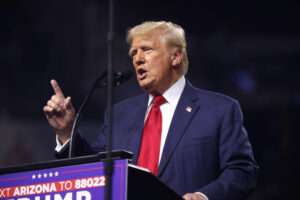
Donald Trump speaks at a rally in Glendale, Arizona
Donald Trump speaks at a rally in Glendale, Arizona. (Gage Skidmore/Zuma Press/Newscom)


Yesterday special counsel Jack Smith filed a revised, superseding indictment in the federal criminal case against Donald Trump for his attempts to overturn the results of the 2020 presidential election. The revised indictment attempts to address the Supreme Court's flawed decision in Trump v. United States, which ruled that presidents have broad immunity against criminal prosecution for "official acts," but was far from clear about exactly how far that immunity extends. On an e-mail list that we are both members of, Princeton legal scholar Kim Lane Scheppele posted a helpful summary of how the revised indictment differs from the original one, which she has kindly agreed to allow me to reprint here:

  • Complying with the SCOTUS immunity decision, Smith seems to have scrubbed all "official conduct" evidence from the case and presented it again before a new grand jury, which brought forth this indictment.   That move makes it more difficult for the Trump legal team to claim that the case should be dismissed because the evidence presented to the grand jury was tainted.   They've clean-teamed this all the way down.
  • The indictment charges the same four crimes as before.
  • But the indictment leaves out Jeffrey Clark as an unindicted coconspirator given what SCOTUS said about absolute immunity of the president in his conversations with the Justice Department.
  • The indictment emphasizes that the other unindicted coconspirators are all PRIVATE citizens working on the campaign or as consultants.   And it makes clear that the various other actors implicated and whose testimony will be called upon at trial are NOT talking with Trump in the scope of his duties as president.
  • Crucial elements of the case are now attributed to CANDIDATE Donald Trump and Candidate Mike Pence so that it is clear that they are not interacting as president and vice president in the relevant conversations.

The Just Security analysis by Norm Eisen, Matt Seligman and Joshua Kolb had flagged which parts of the indictment they thought would stand and which would not – and that analysis was pretty spot-on – see https://www.justsecurity.org/98457/immunity-january-6th-chutkan/ and https://www.justsecurity.org/wp-content/uploads/2024/08/united-states-v.-trump-dC-%E2%80%93-annotated-j6-eisen-seligman-kolb.pdf

For a line by line comparison of the new indictment and the original, see Allison Gill's post here. Lawfare and Jacob Sullum of Reason have also posted helpful analyses of the superseding indictment.

Will the superseding indictment survive inevitable immunity-based challenges? I think Smith makes a good case that the crimes Trump is charged with are private acts, not official ones, and that - even if official acts cannot be used as evidence (as the Supreme Court wrongly ruled), there is enough evidence against Trump to convict on all or most of the charges. Justice Amy Coney Barrett's concurring opinion in the Supreme Court decision provides additional analysis on why Trump's conduct here was private, not official (though it is notable that none of the other majority justices joined her). I also continue to believe that Trump is likely guilty on these charges and, if convicted, deserves severe punishment for reasons of both retribution and deterrence.

But the Supreme Court ruling is far from a model of clarity on several key points relevant to the case. Among other things, the line between private acts and official ones is a nebulous one. And when it comes to official acts outside the president's "core powers," it's not clear whether there is a mere presumption of immunity (which can potentially be overcome), or whether the immunity is absolute. The line between core powers and other official acts is also often unclear. Thus, it's hard to predict what will happen here, when the issues are reviewed by the trial judge, the DC Circuit and - potentially - the Supreme Court.

The one thing that is clear is that the issues are unlikely to be fully resolved before the election on November 5. If Trump wins, he will almost certainly find a way to get the charges dismissed after he takes office. If he loses, the case against him (or at least part of it) will proceed, unless courts rule that all the charges are barred by immunity. The latter scenario strikes me as unlikely, but not completely impossible.

Again, the Supreme Court's decision is vague on key points, and different judges are likely to interpret it differently. If the case returns to the Supreme Court, we may even find that the majority justices disagree among themselves on some of these questions. The ambiguities in the ruling may be a way to paper over these differences, at least for the time being. We may learn more about what the justices think on these issues, as this legal battle continues.

Guns

Fifth Circuit Won't Revisit Its Earlier Precedent Holding Illegal Aliens Lack Second Amendment Rights

|

From yesterday's decision in U.S. v. Medina-Cantu, by Judge Carolyn Dineen King and Kurt Engelhardt:

In U.S. v. Portillo-Munoz (5th Cir. 2011), this court held that 18 U.S.C. § 922(g)(5), which prohibits an illegal alien from possessing a firearm or ammunition, is constitutional under the Second Amendment. In the present case, Defendant-Appellant Jose Paz Medina-Cantu brings another Second Amendment challenge to § 922(g)(5), arguing that Portillo-Munoz has been abrogated by the Supreme Court's decisions in New York State Rifle & Pistol Ass'n v. Bruen (2022), and U.S. v. Rahimi (2024).

We agree with the Government and hold that the Supreme Court's decisions in Bruen and Rahimi did not unequivocally abrogate Portillo-Munoz's precedent. As such, under this circuit's rule of orderliness, we are bound to follow Portillo-Munoz….

We acknowledge that there are reasonable arguments as to why Portillo-Munoz should be reconsidered post-Bruen and Rahimi. For instance, Portillo-Munoz's textual interpretation of the Second Amendment notably did not include a historical analysis, relying instead on the Supreme Court's language in Heller. And Rahimi's discussion of the term "responsible" provides some indication that the Supreme Court may, in future cases, reject other arguments that the Second Amendment's reference to "the people" excludes certain individuals. But, absent clearer indication that Portillo-Munoz has been abrogated, only the Supreme Court—or this court sitting en banc—can overturn our precedent….

Judge Jim Ho concurred in the judgment, concluding that Portillo-Munoz was indeed consistent with Bruen and Rahimi:

The defendant here contends that Portillo-Munoz is no longer good law, in light of recent decisions from the Supreme Court. But there's no basis to question our precedent.

To begin with, no Supreme Court precedent compels the application of the Second Amendment to illegal aliens—and certainly not Bruen or Rahimi. That should be the end of the matter. We should not extend rights to illegal aliens any further than what the law requires. Cf. Young Conservatives of Texas Foundation v. Smatresk (5th Cir. 2023) (Ho, J., dissenting from denial of rehearing en banc) ("Our national objectives are undercut when [we] encourage illegal entry into the United States.").

Read More

Free Speech

State Bar's Ideological Statement May Violate First Amendment Rights of Dissenting Members, If It Purports to Speak for Lawyers Generally

"[M]uch of [the Oregon State Bar statement's] criticism of then-President Trump did not relate to the justice system at all—for instance, it criticized Trump for describing Haiti and African countries as 'shithole countries.'"

|

From Ninth Circuit Judge Michelle Friedland's opinion today in Crowe v. Oregon State Bar, joined by Judge John Owens and District Judge William Orrick:

To practice law in Oregon, an attorney must be a member of the Oregon State Bar ("OSB"). An attorney must also pay annual membership dues, which are used to fund OSB's activities. Those activities include administering bar exams, formulating and enforcing rules of professional conduct, and establishing minimum continuing legal education requirements for Oregon attorneys. OSB also lobbies the state legislature and publishes a magazine called the Bulletin..

In the April 2018 issue of the Bulletin, OSB published two statements on "White Nationalism and [the] Normalization of Violence." The two statements were published on facing pages, surrounded by a single dark green border that was not present on the other pages of the magazine. The first statement had OSB's dark green logo on the top of the page, and it was signed by six OSB officers, including the President and the Chief Executive Officer. That statement said:

Read More

Guns

Federal Ban on Gun Possession by Drug Users Is Often Unconstitutional

"[O]ur history and tradition may support some limits on a presently intoxicated person's right to carry a weapon ..., but they do not support disarming a sober person based solely on past substance usage."

|

An excerpt from today's opinion in U.S. v. Connelly, written by Judge Kurt Engelhardt, joined by Judges Jerry Smith and Irma Carrillo Ramirez:

Paola Connelly is a non-violent, marijuana smoking gunowner. El Paso police came to her house in response to a "shots fired" call. When they arrived, they saw John, Paola's husband, standing at their neighbor's door firing a shotgun. After arresting him, they spoke with Paola, who indicated that she would at times smoke marijuana as a sleep aid and for anxiety. {Paola [also] told officers that John and the neighbor used crack and powdered cocaine together ….} A sweep revealed that the Connellys' home contained drug paraphernalia and several firearms, including firearms owned by Paola. There was no indication that Paola was intoxicated at the time.

Paola was charged with violating: (1) 18 U.S.C. § 922(g)(3) by possessing firearms and ammunition as an unlawful user of a controlled substance, and (2) 18 U.S.C. § 922(d)(3) by providing firearms and ammunition to an unlawful user of a controlled substance. Paola argued in a motion to dismiss, and the District Court ultimately agreed, that §§ 922(g)(3) and 922(d)(3) were facially unconstitutional and that § 922(g)(3) was unconstitutional as applied to her under the Second Amendment.

This appeal asks us to consider whether Paola's Second Amendment rights were infringed, and the answer depends on whether § 922(g)(3) is consistent with our history and tradition of firearms regulation. The short of it is that our history and tradition may support some limits on a presently intoxicated person's right to carry a weapon (and for that reason Paola's facial challenges to §§ 922(g)(3) and 922(d)(3) fail), but they do not support disarming a sober person based solely on past substance usage. Nor, contrary to what the government contends, do restrictions on the mentally ill or more generalized traditions of disarming "dangerous" persons apply to nonviolent, occasional drug users when of sound mind….

[L]aws designed to disarm the severely mentally ill do not justify depriving those of sound mind of their Second Amendment rights. The analogy stands only if someone is so  intoxicated as to be in a state comparable to "lunacy." Just as there is no historical justification for disarming citizens of sound mind, there is no historical justification for disarming a sober citizen not presently under an impairing influence….

Read More

Federalism

Eighth Circuit Wrongly Struck Down Missouri's Gun Sanctuary Law - But Also Created a Roadmap for How Such Laws Can Escape Invalidation in the Future

The court indicates the law would be constitutional so long as it does not claim to declare a federal law "invalid."

|

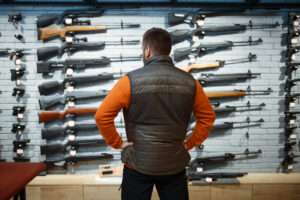
A man in an orange shirt and a vest stands with his back to the camera in front of a wall of long guns, for sale and on display.
Nomadsoul1 | Dreamstime.com

As co-blogger Jonathan Adler notes, on Monday the US Court of Appeals for the Eighth Circuit, upheld a trial court decision striking down Missouri's Second Amendment Preservation Act (SAPA), the state's "gun sanctuary" law. I think the court got the decision wrong. But, in the process, it also essentially laid out a road map by which SAPA and other similar laws could survive judicial scrutiny with only cosmetic changes.

SAPA, like other gun sanctuary laws, bars state and local officials from helping to enforce various federal gun regulations that the state considers to be unconstitutional violations of the Second Amendment. Like the district court, the Eighth Circuit ruling recognizes that  "Missouri may lawfully withhold its assistance from federal law enforcement." A long line of Supreme Court decisions has held that the federal government may not "commandeer" state and local governments into helping enforce federal law. In part on that basis, numerous federal court decisions struck down Trump Administration efforts to force liberal sanctuary cities and states to help enforce federal immigration law. Conservative gun sanctuary laws are an imitation of liberal immigration sanctuaries, albeit advancing a right-wing cause rather than a left-wing one.

Nonetheless, the Eighth Circuit struck down SAPA because the state statute says that the federal laws it targets are "invalid." While the state can refuse to help federal law enforcement, that "does not mean that the State may do so by purporting to
invalidate federal law."

This reasoning strikes me as wrong. All SAPA actually does is deny state assistance to federal efforts to enforce certain gun laws. I went over this point in detail in my analysis of the district court ruling. The law does not impede the federal government's own law enforcement efforts. The fact that the state's motive for denying assistance is a belief that the federal laws in question violate the Second Amendment and are therefore "invalid" should be immaterial.

There are situations where an otherwise permissible state law becomes unconstitutional due to illicit motivations (e.g. - if the law is motivated by racial or ethnic discrimination). But a belief that a given federal law is unconstitutional isn't one of them. That's true even if the state legislature is wrong to think the laws in question violate the Second Amendment. Even if these federal laws are perfectly constitutional, the state still has the constitutional authority to refuse to help enforce them.

Such denial of assistance is distinct from "nullification," with which it is often confused. When states try to "nullify" federal laws, as happened in conflicts over slavery, tariffs, and civil rights, they go beyond merely denying assistance to impending federal law enforcement efforts. SAPA and other gun sanctuary laws do not do that.

Another flaw in the Eighth Circuit decision is that it refuses to sever the part of SAPA it found unconstitutional from the rest of the statute, despite SAPA having an explicit severability clause: "We conclude that the law is not severable because the entire Act is founded on the invalidity of federal law." However, SAPA's statement of the reasons for the law ("invalidity") is severable from the operative portions of the statute (which bar state officials from helping to enforce the laws in question). I think the Eighth Circuit, like the district court, also ignored Missouri's requirement that state laws be interpreted to avoid unconstitutionality, where possible (federal courts must defer to state courts in interpreting state law). Here, that means the declaration of "invalidity" should be interpreted as only extending to state assistance to the feds, not any general invalidity of the laws within Missouri's border.

Despite these flaws, the Eighth Circuit ruling actually provides a road map for how Missouri can easily fix SAPA, and protect it against future legal challenges. It could bar state officials from helping to enforce the exact same federal laws, but do so without asserting that the laws are "invalid." Substantively, this revised SAPA would be exactly the same as the current version. But by avoiding references to "invalidity," the state can satisfy the test set up by the Eighth Circuit. After all, the court concedes (as it must) that Missouri has the right to "withhold its assistance from federal law enforcement." Other gun sanctuary states would be well advised adopt similar strategies, especially if they are within the Eighth Circuit's jurisdiction. The state can even still assert the laws in question violate the Second Amendment, so long as it recognizes that doesn't make them completely invalid until a court decision so holds.

If you think this is the kind of legal hair-splitting that makes people hate lawyers, I don't really disagree. But I'm not the one who created this somewhat silly distinction. The Eighth Circuit did.

In sum, this decision should not meaningfully impede state gun sanctuary laws, so long as state legislatures avoid references to the "invalidity" of the federal laws they want to stop state officials from helping to enforce.

Despite the legal and structural similarities between gun sanctuary laws and immigration sanctuaries, most who claim the former are illegal support the latter, and vice versa. I'm one of the relatively few people who support both. In my view, both types of sanctuaries protect valuable forms of liberty against federal overreach, and help empower people to vote with their feet. But, regardless of the policy merits, both are protected by constitutional restrictions on federal commandeering of state and local governments.

Free Speech

Sarah Palin Gets New Trial in Libel Lawsuit Against N.Y. Times

"[T]he district court’s Rule 50 ruling improperly intruded on the province of the jury by making credibility determinations, weighing evidence, and ignoring facts or inferences that a reasonable juror could plausibly have found to support Palin’s case."

|

From today's Second Circuit decision in Palin v. N.Y. Times Co., written by Judge John Walker and joined by Judges Reena Raggi and Richard Sullivan:

Plaintiff Sarah Palin appeals the dismissal of her defamation complaint against defendant The New York Times ("the Times") and its former Opinion Editor, defendant James Bennet, for the second time.

We first reinstated the case in August 2019 following an initial dismissal by the district court (Rakoff, J.) under Federal Rule of Civil Procedure 12(b)(6). Palin's claim was subsequently tried before a jury but, while the jury was deliberating, the district court dismissed the case again—this time under Federal Rule of Civil Procedure 50. We conclude that the district court's Rule 50 ruling improperly intruded on the province of the jury by making credibility determinations, weighing evidence, and ignoring facts or inferences that a reasonable juror could plausibly have found to support Palin's case.

Despite the district court's Rule 50 dismissal, the jury was allowed to reach a verdict, and it found the Times and Bennet "not liable." Unfortunately, several major issues at trial—specifically, the erroneous exclusion of evidence, an inaccurate jury instruction, a legally erroneous response to a mid-deliberation jury question, and jurors learning during deliberations of the district court's Rule 50 dismissal ruling—impugn the reliability of that verdict.

The jury is sacrosanct in our legal system, and we have a duty to protect its constitutional role, both by ensuring that the jury's role is not usurped by judges and by making certain that juries are provided with relevant proffered evidence and properly instructed on the law. We therefore VACATE and REMAND for proceedings, including a new trial, consistent with this opinion….

The opinion is long (but readable), and interested readers should review the whole thing. But here a few excerpts; first, the factual background:

On June 14, 2017, the Times' Editorial Board published the editorial challenged in this case, entitled "America's Lethal Politics" …, which compared two political shootings.  In the first attack, on January 8, 2011, Jared Loughner killed six people and injured thirteen others, including Democratic Congresswoman Gabrielle Giffords, during a constituent event held by Giffords in Arizona ("the Loughner shooting"). In the second, which took place in 2017 in Virginia on the day the editorial was published, James Hodgkinson seriously injured four people, including Republican Congressman Stephen Scalise, at a practice for a congressional baseball game ….

In comparing these two tragedies, the editorial made statements about the Loughner shooting that are the subject of this defamation action. It stated that there was a "clear" and "direct" "link" between the Loughner shooting and the "political incitement" that arose from a digital graphic published in March 2010 by former Alaska governor and vice-presidential candidate Sarah Palin's political action committee ("the challenged statements")…..

Read More

Second Amendment

The History of Bans on Types of Arms Before 1900

Restrictions on carry, minors, and misuse were the norm -- not bans

|

Controversial arms are nothing new in the United States. During the 19th century, there were widespread concerns about criminal use of arms such a Bowie knives, slungshots, blackjacks, and brass knuckles. The full history of state, territorial, and colonial laws about controversial arms is detailed in my recent article for Notre Dame's Journal of Legislation, The History of Bans on Types of Arms Before 1900, coauthored with Joseph Greenlee.

Because the article is thorough, it is enormous: 163 pages of text, and 1,563 footnotes. The student staff for volume 50 of the Journal of Legislation was spectacular. Not every law journal has staff who could handle such a megillah, let alone a staff that whose meticulous cite-check would improve the article.

The mainstream American approach to controls of the above arms were: 1. bans on concealed carry; 2. limits on sales to minors, such as requiring parental permission; and 3. extra penalties for misuse in a crime. Sales bans were the minority approach, and possession bans very rare.

From 1607 through 1899, sales bans for nonfirearm arms were:

  • Bowie knife. Sales bans in Georgia, Tennessee, and later in Arkansas. Georgia ban held to violate the Second Amendment. Nunn v. State, 1 Ga. 243 (1846).
  • Prohibitive transfer or occupational vendor taxes in Alabama and Florida, which were repealed. Personal property taxes at levels high enough to discourage possession by poor people in Mississippi, Alabama, and North Carolina.
  • Dirk (a type of fighting knife). Georgia (1837) (held to violate Second Amendment); Arkansas (1881).
  • Sword cane (a sword concealed in a walking stick). Georgia (1837), held to violate the Second Amendment. Arkansas (1881).
  • Slungshot or "colt" (most typically, a lead weight held in the tip of a flexible bludgeon). Sales bans in nine states or territories. The Kentucky ban was later repealed. Illinois also banned possession.
  • Sand club or blackjack. New York (1881), (1884), (1889), (1899).
  • Billy. New York (1881), (1884), (1889), (1899).
  • Metallic knuckles. Sales bans in eight states, later repealed in Kentucky. Illinois also banned possession.
  • Cannons. No bans. Restrictions on discharge without permission in a variety of municipalities.

American bans on possession or sale to adults of particular types of firearms were:

  • Georgia (1837), all handguns except horse pistols. Held unconstitutional in Nunn v. State, 1 Ga. 243 (1846).
  • Tennessee (1879) and Arkansas (1881). Bans on sales of concealable handguns. Based on militia-centric interpretations of the state constitutions, the laws did not ban the largest and most powerful revolvers, namely those like the Army or Navy models.
  • Florida (1893). Discretionary licensing and an exorbitant licensing fee for carry of repeating rifles. Extended to handguns in 1901. The law was "never intended to be applied to the white population" and "conceded to be in contravention of the Constitution and non-enforceable if contested." Watson v. Stone, 148 Fla. 516 (1941) (Buford, J., concurring).

Read More

Federalism

Eighth Circuit Rejects Missouri's Second Amendment Preservation Act

States cannot invalidate or refuse to recognize federal law.

|

Yesterday, a unanimous panel of the U.S. Court of Appeals for the Eighth Circuit rejected Missouri's attempt to nullify federal gun laws with which the state disagrees. Chief Judge Colloton wrote a remarkably brief opinion for the panel in U.S. v. Missouri, joined by Judges Loken and Kelly.

Here is the opinion's introduction:

Missouri's Second Amendment Preservation Act classifies various federal laws regulating firearms as "infringements on the people's right to keep and bear arms, as guaranteed by Amendment II of the Constitution of the United States and Article I, Section 23 of the Constitution of Missouri." The Act declares that these federal laws are "invalid to this state," "shall not be recognized by this state," and "shall be specifically rejected by this state."

The United States sued the State of Missouri, the governor, and the attorney general, alleging that the Act violates the Supremacy Clause of the Constitution of the United States. The district court denied Missouri's motions to dismiss for lack of standing and failure to state a claim, granted the motion of the United States for summary judgment, and enjoined implementation and enforcement of the Act. On this appeal by the State, we agree that the United States has standing to sue. Because the Act purports to invalidate federal law in violation of the Supremacy Clause, we affirm the judgment.

After concluding that the federal government has standing to sue to challenge the Missouri statute, Chief Judge Colloton addressed the merits.

The Supremacy Clause states that federal law is "the supreme Law of the Land, . . . any Thing in the Constitution or Laws of any State to the Contrary notwithstanding." U.S. Const. art. VI, cl. 2. "By this declaration, the states are prohibited from passing any acts which shall be repugnant to a law of the United States." McCulloch v. Maryland, 7 U.S. (4 Wheat.) 316, 361 (1819). The "Second Amendment Preservation Act" states that certain federal laws are "invalid to this state," Mo. Rev. Stat. § 1.430, but a State cannot invalidate federal law to itself. Missouri does not seriously contest these bedrock principles of our constitutional structure. The State instead advances two arguments.

First, the State argues that the United States cannot sue to enforce the Supremacy Clause because it lacks a cause of action. While there is no implied right of action under the Supremacy Clause, there is an equitable tradition of suits to enjoin unconstitutional actions by state actors. Armstrong v. Exceptional Child Ctr., Inc., 575 U.S. 320, 326-27 (2015). Based on that equitable tradition, the United States has sued in other cases to enjoin a state law's implementation and enforcement or for other appropriate relief. See, e.g., United States v. Washington, 596 U.S. 832, 837 (2022); United States v. Minnesota, 270 U.S. 181, 194 (1926); Sanitary Dist. of Chi. v. United States, 266 U.S. 405, 425-26 (1925). We see no reason why the United States cannot proceed similarly in this case.

Second, Missouri contends that the Act is constitutional because the State may constitutionally withdraw the authority of state officers to enforce federal law. The State argues that the reason why it withdrew its authority—i.e., because the State declared federal law invalid—is immaterial.

That Missouri may lawfully withhold its assistance from federal law enforcement, however, does not mean that the State may do so by purporting to invalidate federal law. In this context, as in others, the Constitution "is concerned with means as well as ends." Horne v. Dep't of Agric., 576 U.S. 350, 362 (2015). Missouri has the power to withhold state assistance, "but the means it uses to achieve its ends must be 'consist[ent] with the letter and spirit of the constitution.'" Id. (quoting McCulloch, 7 U.S. (4 Wheat.) at 421) (alteration in original). Missouri's assertion that federal laws regulating firearms are "invalid to this State" is inconsistent with both. If the State prefers as a matter of policy to discontinue assistance with the enforcement of valid federal firearms laws, then it may do so by other means that are lawful, and assume political accountability for that decision.

Free Speech

Participating in Black Lives Matter Protest Isn't Protected by Federal Labor Law

|

Federal labor law limits employers' ability to fire employees for "engag[ing] in other concerted activities for the purpose of collective bargaining or other mutual aid or protection." (It also limits unions' ability to discipline members for their speech on union matters.) But, unlike the laws in some states, it doesn't protect employees' broader political activities. The question then arises: What kinds of concerted activities are for purposes of employees' "mutual aid or protection"?

In NLRB v. SFR, Inc., the National Labor Relations Board (Members Kaplan, Prouty & Wilcox) affirmed Administrate Law Judge Arthur Amchan's decision that participating in Black Lives Matter protests wasn't sufficiently focused on employee rights:

Specifically, we agree with the judge that the employees' participation in Black Lives Matter (BLM) protests was not shown to be for mutual aid or protection in the context of the facts here and under extant law; therefore, we dismiss the allegations.

{Although Member Wilcox agrees that the evidence here does not establish that the employees' participation in outside BLM protests was for ""other mutual aid or protection" under Sec. 7 as defined in Eastex, Inc. v. NLRB (1978), she observes that the judge's articulation of the relevant standard was unduly narrow. Instead, as the Board explained in Home Depot USA, Inc. (NLRB 2024), "an employee's concerted actions are protected by Sec. 7 of the Act so long as an objective is protected. The fact that the employee's actions may have other objectives, or even that those objectives may predominate, is immaterial."}

And here's an excerpt from the decision that was affirmed (read the full document for more factual details):

Read More

Politics

"Accused Plaintiff of Calling Her the 'F-Word'"

|

In Winfree v. Warren County School Dist., decided last month by Judge Travis McDonough (E.D. Tenn.), plaintiff was a girls' high school basketball player, who "had been offered a full scholarship to play basketball at Trevecca Nazarene University":

On November 15, 2023, Defendant Mendy Stotts, the women's basketball coach, pulled Plaintiff out of practice to speak with her in the hallway. Stotts "yell[ed]" at Plaintiff, "saying she was tired of [Plaintiff's] disrespect towards her" and accused Plaintiff of calling her the "f-word" during practice. Stotts told Plaintiff that "[Stotts] no longer wanted her as part of the basketball team." That same night, Plaintiff emailed Phillip King, one of the school's athletic directors, to request a meeting.

The next day, on November 16, 2023, Plaintiff and her mother met with King and Assistant Principal Anna Geesling to discuss the incident. Plaintiff's mother explained that she had never heard about any disciplinary proceedings prior to Plaintiff being kicked off the team. Another meeting was held the next day, this time with King, Principal Chris Hobbs, Stotts, Plaintiff, her parents, her grandparents, and a family friend.

At the meeting, Stotts said she had evidence that Plaintiff said "the f-word," while Plaintiff stated that there were witnesses who would testify that she did not say the "f-word." Plaintiff was not allowed to present those witnesses. At the end of meeting, Stotts dismissed Plaintiff from the basketball team. Hobbs upheld Stotts's decision. Two weeks after Plaintiff was dismissed from the team, Trevecca Nazarene rescinded her scholarship offer. Plaintiff alleges she also "had anticipated" scholarship offers from Middle Tennessee State University and Tennessee Tech University, but these offers never came….

Read More

Free Speech

Plaintiff Who Sued Over Alleged Discrimination at the Public Radio Marketplace Show Allowed Retroactive Pseudonymity

|

Many plaintiffs—especially plaintiffs suing their employers—worry that, if their lawsuit becomes publicly visible, future employers will be reluctant to hire them. Few people want to be viewed as a litigious employee. Nonetheless, courts generally reject claims of pseudonymity that are based on such concerns about reputational or economic harm, see pp. 1457-60 of The Law of Pseudonymous Litigation.

But courts aren't entirely consistent on virtually anything related to pseudonymous litigation, and the same is true here. I've seen a few cases that allow pseudonymization, including retroactive pseudonymization, and even retroactive sealing at the behest of such plaintiffs. Here's one in which the court offered at least some degree of explanation, from the L.A. Superior Court.

In 2023, plaintiff had sued Minnesota Public Radio, American Public Media, Marketplace host Kai Ryssdal, and former Marketplace general manager Deborah Clark, alleging that

she [had] engaged in legally protected activities including but not limited to reporting and opposing employment and hiring practices she reasonably believed were discriminatory including but not limited to discrimination based on an individual's gender

and as a result was harassed and ultimately fired from Marketplace (in 2019). As best I can tell, the court filings offered few details on exactly what plaintiff did, though they "noted that Plaintiff was a female employee who opposed the unfair treatment against male employees by Defendants."

The case apparently drew no public attention; and, a bit under a year later, the parties settled, so the case is now in the process of being dismissed. For whatever it's worth, note that the plaintiff is now an editor in charge of certain kinds of investigations at a major American newspaper (and appears to have held that position when the lawsuit was filed).

Read More

More