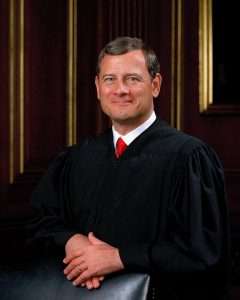
A very interesting exchange in the Autumn 2024 Sapir Journal; a short excerpt, just to give a flavor of the whole thing:
We've seen the same data, and I've been very concerned about the drop in approval and trust in higher education. The decline has been larger among people on the conservative side of the political spectrum, but it's across the board, from the Left and the Right. My sense is that it comes from two concerns. From the progressive side, the concern is that highly selective universities are perpetuating inequality. And the concern from the Right is that we're woke factories….
The question of the politicization of higher education has come into stark relief after what we've seen last year: the conflict in the Middle East and the drama on campus. These developments have elevated into the public consciousness concerns that have been present for years. They now are front and center, much more serious, and they require a course correction by many universities….
If you look back, there were three pillars of how a university thought about its role in society.
An interesting window into how courts sometimes think about such requests; this decision turned heavily on the fact that plaintiff had already gotten a state court harassment restraining order against the defendant.
Thomson alleges, in summary, that Richardson and other Defendants conspired to target Thomson and induce Thomson to invest in a certain cryptocurrency, and made a series of false statements to both Thomson and the public in furtherance of this. Richardson alleges in turn, via her counterclaims, that she and Thomson were friends, that Thomson demanded that Richardson invest in cryptocurrency on Thomson's behalf, that Thomson made rude statements to Richardson and called on Richardson at all hours with requests, and that Thomson eventually made defamatory statements about Richardson….
An order prohibiting a party from harassing another party is appropriate in at least some circumstances. Courts in this district and elsewhere have recognized that it may be permissible and necessary to enjoin a litigant from harassing another party. See, e.g., Beyond Blond Prods., LLC v. Heldman (C.D. Cal. 2022) (issuing an injunction against "threatening or harassing emails" and other conduct); United Artists Corp. v. United Artist Studios LLC (C.D. Cal. 2019) (issuing an injunction against certain conduct that "constitute[s] harassment and would be performed with the intention of intimidation"); see also Test Masters Educ. Servs., Inc. v. Singh (5th Cir. 2005) (upholding a portion of the district court's injunction prohibiting Defendant "from threatening or harassing" plaintiff, plaintiff's counsel, or other associated individuals). These courts generally recognize that injunctions against harassing conduct are, to some extent, in tension with the First Amendment's protections on free speech, but nevertheless hold that such injunctions are constitutional in some circumstances, as "courts have rejected arguments that the First Amendment allows a person to make harassing or threatening communications." Beyond Blond; see also United Artists ("even under the First Amendment, courts do have the power to enjoin harassing communication"); Test Masters ("Courts have made a distinction between communication and harassment … The difference is one between free speech and conduct that may be proscribed.").
Although these opinions are not binding, the Court is aware of no precedent pointing the other way on the general question of whether orders of the nature Thomson requested are at times permissible. The Court finds that if Thomson could show sufficient harassment, then it would be appropriate for the Court to grant the Application. But given the Ninth Circuit's guidance cautioning courts regarding injunctions that control litigants' behavior, and given the First Amendment concerns that such injunctions implicate, the Court will not grant such an injunction absent a strong showing.
In the 1970s, the discovery of the Tennessee snail darter in the Tellico River was used to halt completion of the Tellico Dam under the Endangered Species Act (a tale many law students learn in TVA v. Hill). The dam was only completed after Congress expressly exempted it from the ESA's dictates.
It has long been understood that the snail darter was the right species at the right time, as it gave dam opponents a powerful legal weapon. Now, the New York Times reports, it turns out the snail darter was not really the right species, as it is not a distinct species at all.
"There is, technically, no snail darter," said Thomas Near, curator of ichthyology at the Yale Peabody Museum.
Dr. Near, also a professor who leads a fish biology lab at Yale, and his colleagues report in the journal Current Biology that the snail darter, Percina tanasi, is neither a distinct species nor a subspecies. Rather, it is an eastern population of Percina uranidea, known also as the stargazing darter, which is not considered endangered.
Dr. Near contends that early researchers "squinted their eyes a bit" when describing the fish, because it represented a way to fight the Tennessee Valley Authority's plan to build the Tellico Dam on the Little Tennessee River, about 20 miles southwest of Knoxville.
"I feel it was the first and probably the most famous example of what I would call the 'conservation species concept,' where people are going to decide a species should be distinct because it will have a downstream conservation implication," Dr. Near said.
What Dr. Near is hinting at is the incentive structure created by the ESA--an incentive structure that encourages the distortion and politicization of scientific findings.
Under the ESA, the listing of a species (or subspecies or distinct species population) triggers regulatory restrictions, such as those that halted the Tellico Dam. Section 7 of the Act, for example, bars federal agencies from undertaking actions that could jeopardize a species' survival or destroy any of its critical habitat.
As I explained in this paper, this means that if an interest group wants to influence regulatory decisions under the ESA, they need to influence the scientific findings that trigger regulatory constraints. What should be policy fights over whether the benefits of a project justify harms or risks to particular species instead become fights over whether something is a species or is at risk of extinction. Thus political and ideological concerns infect what should be scientific disputes over how best to identify what constitutes a distinct species.
From the article:
Dr. Plater, who also argued successfully for the fish in the Supreme Court case, took issue with the Yale study. He said the approach favored by Dr. Near and colleagues makes them genetic "lumpers" instead of "splitters," meaning they reduce species instead of making more. He believes the findings also lean too heavily on genetics.
"Whether he intends it or not, lumping is a great way to cut back on the Endangered Species Act," Dr. Plater said of Dr. Near.
Dr. Near said being described as a "lumper" was a pejorative in his world, and he added that most of the research he and colleagues had performed had resulted in speciation splits, including a 2022 study.
While the intent of the ESA is to provide greater protection of species, it is not clear the hard regulatory trigger actually maximizes the effectiveness of species conservation efforts. As I noted in this paper on the ESA's 50th anniversary, the Act has been far less successful at recovering species than one would like, and its unforgiving regulatory structure may be part of the reason.
A brief excerpt from the 6500+-word opinion in Zikar Holdings LLC v. Ruhland, decided Dec. 26 by Judge Jeffrey Bryan (D. Minn.):
Plaintiffs allege that Defendant City of Lino Lakes … and two of its City Council members, Defendants Michael Ruhland and Christopher Lyden, enacted a one-year moratorium on development in a discrete area of the City where Plaintiffs had proposed to build a residential development that would include a masjid (mosque), and that they did so because of their discriminatory animus toward Islam and Muslims.
Plaintiffs assert that, in doing so, Defendants have violated the Fair Housing Act (FHA), the Free Exercise Clause …, the Equal Protection Clause …, and the Religious Land Use and Institutionalized Persons Act (RLUIPA). In their motion for a preliminary injunction, Plaintiffs ask the Court to enjoin the City from enforcing the moratorium, among other things….
A brief excerpt of the background factual allegations:
Ahmed and Mohammed took an interest in developing the Robinson Property. Ahmed and Mohammed are Muslims who worship at a masjid in nearby Blaine, a suburban city directly adjacent to Lino Lakes. Ahmed's and Mohammed's masjid in Blaine had more worshippers than capacity, and its services were regularly crowded. According to certain Islamic hadiths to which Ahmed and Mohammed subscribe, Muslims receive spiritual blessings if they are able to walk to their place of worship. Ahmed and Mohammed wished to develop a community that would permit Muslim community members to walk to their place of worship. In furtherance of this idea, they formed Zikar Holdings, LLC. In late 2023, Plaintiffs identified the Robinson Property as a workable location for their contemplated residential development, which they would call "Madinah Lakes."
The court pointed out that there was evidence of religious discrimination:
On the record before the Court on this motion, a factfinder would be presented with the following evidence: Ruhland admitted that he did not think of proposing a moratorium on development in the City's northwest corner until after Zikar posted its promotional video about Madinah Lakes; Lyden openly criticized the way non-native-English-speaking proponents of the Madinah Lakes project pronounced "Lino Lakes" and suggested that, given the events on October 7, 2023 in Israel, Muslims in general are not community-oriented people; Lyden expressed his enthusiastic approval and endorsement of an email that expressed vituperative and disparaging views of Islam and all Muslim people; Ruhland did not vote in favor of censuring Lyden for endorsing the email on grounds that Lyden was entitled to his opinion about the email; the City Attorney informed the City Council that the Moratorium was not legally necessary to undertake master planning; the City Council was aware of strong public opposition to Madinah Lakes and even received into the record more than eighty-two pages of posts made on social media by their constituents regarding their negative views of Islam, Muslims, and immigrants; the Mayor asked Zikar to remove its promotional video about Madinah Lakes due to the volume of public outcry against it; the comments of members of the public, the Mayor, and Lyden at the July 8 City Council meeting (during which the City Council voted on the Moratorium) often centered on Madinah Lakes, not the merits of conducting master planning.
Plaintiffs' sprawling allegations in the 150-page [Complaint] boil down to two types of claims: (1) First Amendment claims that focus on defendants' alleged speech-chilling activities against plaintiffs through third parties, and (2) defamation claims arising from defendants' various references to plaintiffs as anti-Semitic….
We agree with the district court that plaintiffs lack standing to assert their First Amendment claims…. To the extent plaintiffs assert claims against defendants because third parties—Morgan State University and Vimeo—denied or rescinded plaintiffs' access to speech platforms, those alleged First Amendment injuries are not fairly traceable to the defendants' actions. "Standing requires more than mere speculation about the decisions of third parties and must rely instead on the predictable effect of [defendants'] action on the decisions of third parties." Plaintiffs' allegations that ADL's general advocacy caused the third parties' decisions are unsupported by particularized factual assertions and, instead, rely on mere "[s]peculative inferences."
Plaintiffs' remaining First Amendment claims do not state any injuries in fact. The [Complaint] alleges that that ADL assisted in creating the "U.S. National Strategy [t]o Counter Antisemitism." However, such an allegation does not articulate a concrete and particularized injury. Although plaintiffs suggest that the National Strategy will provide a justification to arrest and prosecute Farrakhan, the [Complaint] does not sufficiently plead that such a threat is "actual or imminent, not conjectural or hypothetical."
Moreover, plaintiffs' claims that ADL's involvement with the New York government caused reputational harm to, and chilled the religious activities of, NOI and its members, and resulted in threatened sanctions from the state government, fail for similar reasons. At bottom, those claims rest on a tenuous chain of hypothetical events and do not show "an imminent threat of future harm or a present harm incurred in consequence of such a threat." See also Laird v. Tatum (1972) ("Allegations of a subjective 'chill' are not an adequate substitute for a claim of specific present objective harm or a threat of specific future harm.")….
We [also] conclude that plaintiffs fail to state any plausible defamation claims because the challenged statements are nonactionable opinions or, even if actionable, are not adequately alleged to be false or to have been made with actual malice….
An interesting article in Politico.eu (Laurie Clarke). A few excerpts:
"Everyone [following the 2016 Trump victory and the UK Brexit vote] was saying technology is to blame," said Reece Peck, associate professor of journalism and political communication at the City University of New York. "These algorithms are to blame."
What followed was almost a decade of alarm over disinformation, with legislators agonizing over which ideas social media platforms should allow to propagate, and hand-wringing at how this was all irrevocably corroding the foundations of society.
A vibrant cottage industry — dubbed "Big Disinfo" — sprang up to fight back against bad information. NGOs poured money into groups pledging to defend democracy against merchants of mistruth, while fact-checking operations promised to patrol the boundaries of reality.
Not everyone was convinced of the threat, however….
It should be noted that the most powerful misinformation isn't spread solely by anonymous internet trolls.
New on the Bound By Oath podcast: When a SWAT team blows up an innocent person's house, who should foot the bill for the damage? The public! Since 1872, the Supreme Court has consistently said that such damage is a taking requiring just compensation. Which was also the rule at common law. Plus, what might state constitutions have to say about the matter?
Federal law requires certain officials to submit financial disclosures. And under 28 U.S.C. §13106(a) the Attorney General can bring a civil action if a covered official "knowingly and willfully fails" to file such a report.
Section (b) permits agencies, including the Judicial Conference, to make referrals to the Attorney general:
(b) Referral to Attorney General.-The head of each agency, each Secretary concerned, the Director of the Office of Government Ethics, each congressional ethics committee, or the Judicial Conference, as the case may be, shall refer to the Attorney General the name of any individual which such official or committee has reasonable cause to believe has willfully failed to file a report or has willfully falsified or willfully failed to file information required to be reported. Whenever the Judicial Conference refers a name to the Attorney General under this subsection, the Judicial Conference also shall notify the judicial council of the circuit in which the named individual serves of the referral.
Does this statute permit the Judicial Conference to refer a Supreme Court to the Attorney General?
In a pair of letters, the Judicial Conference hints the answer is probably no, but announces it is studying the issue:
First, the Judicial Conference has never taken a position on whether its referral authority under 5 U.S.C. § 13106(b)—to refer judges to the Attorney General for investigation into whether they have "willfully" violated their reporting obligations—applies to Justices of the Supreme Court of the United States. The question, to be clear, is not whether the Ethics in Government Act applies to the Justices of the Court. It is whether the Judicial Conference's referral authority applies to the Justices. There is reason to doubt that the Conference has any such authority. Because the Judicial Conference does not superintend the Supreme Court and because any effort to grant the Conference such authority would raise serious constitutional questions, one would expect Congress at a minimum to state any such directive clearly. But no such express directive appears in this provision. The provision in fact contains a suggestion to the contrary. "Whenever the Judicial Conference refers a name to the Attorney General under this subsection," it says, "the Judicial Conference also shall notify the judicial council of the circuit in which the named individual serves of the referral." 5 U.S.C. § 13106(b). A Justice of the Supreme Court of the United States does not "serve[]" in a "circuit." The Conference has never addressed the meaning of this provision, and I write only to identify the issue, not to resolve it. In view of another referral request made with respect to Justice Jackson and her financial disclosure statements, however, the Conference plans to study this question in the months ahead.
This application of the clear statement rule, coupled with the reference to the "circuit," suggests the Justices are not covered. But we'll see what the Council comes up with.
By the way, these letters stem from complaints that Justices Thomas and Jackson failed to submit complete disclosures. Both Thomas and Jackson subsequently filed amended reports, and agreed to follow the rules. Nothing to see here. But the separation of powers issue is important.
Speaking of referrals, I think it was a mistake for the Judicial Conference to transmit an impeachment referral for Judge Kindred who had already resigned from office. The issue of late impeachment is a complicated one, on which people can reasonably disagree. And unlike with Trump, there is no argument that any articles of impeachment were approved before Trump left office. I recognize that the Committee on Judicial Conduct and Disability recommended that the referral be transmitted. I'm not sure that body has it within its ambit to make rulings about the federal Constitution. But the Judicial Conference could have simply declined to transmit the impeachment referral, in light of the important constitutional question at play. It would have been sufficient to simply release a public censure of former-Judge Kindred.
And speaking of censures, I have another unsolicited suggestion for the Judicial Conference. What should be done about judges like Judge Wynn who withdraw their senior status for overtly partisan reason? Issue a public censure. If Chief Justice Roberts wants us to believe there are no Obama judges and no Trump judges, then judges who act like Obama judges should be publicly called out. I suspect a swift and public rebuke from the Chief Justice would prevent any other judges from jumping ship. And unlike chastising members of the coordinate branches of government. the Chief Justice has an actual role to supervise the federal judiciary.
Enough about the Judicial Conference tonight. I'll get to the latest in the Judge Newman case in due course. I may have already exceeded my quota for 2025.
John Roberts fancies himself as a very smart person. The Chief's confidence and erudition flows through his prose. Except when it doesn't. His 2024 year-end report has proven to be something of a Rorschach Test. He wrote "Within the past few years, however, elected officials from across the political spectrum have raised the specter of open disregard for federal court rulings. These dangerous suggestions, however sporadic, must be soundly rejected." Who was he talking about?
In the Washington Post, Ruth Marcus wrote that it was clearly J.D. Vance, primarily based on some free-flowing comments the Senate candidate made in 2021. The Wall Street Journal Editorial page wrote that Roberts was talking about Joe Biden:
The Chief mentioned no names, but we can, and look no further than President Biden. When the High Court blocked his $430 billion student loan forgiveness plan, the President said "the Supreme Court blocked it, but that didn't stop me." He boasted of forgiving even more debt despite lacking authority from Congress.
Mr. Biden also boasted of defying the Court's warning on his illegal eviction moratorium. He admitted that "the bulk of the constitutional scholarship says that it's not likely to pass constitutional muster." But "by the time it gets litigated, it will probably give some additional time while we're getting that $45 billion out to people who are, in fact, behind in the rent and don't have the money."
Or could it be the forty-six Senate Democrats who urged President Biden to flout court orders, and certify the Equal Rights Amendment? Or was it Senator Ron Wyden of Oregon who called on the FDA to ignore the mifepristone decision?
If the Texas judge, Matthew Kacsmaryk, makes that decision, Wyden said, "President Biden and the FDA must ignore it."
Saying he'd never called for ignoring a court ruling before, Wyden said the harm that would be caused by this decision would be irreparable.
"The FDA should go on just as it has for the last 23 years since it first approved mifepristone," Wyden said. "The FDA needs to keep this medication on the market without interruption regardless of what the ruling says. Doctors and pharmacies should go about their jobs like nothing has changed."
Who was Roberts talking about? A bunch of Democrats who actually said that specific court rulings should be disregarded? Or a Senate candidate who speculated on a podcast about what happens in a hypothetical constitutional crisis. Me thinks there is a bit too much of both-sidesism?
Sometimes when I write a post, and make a subtle reference, I think it will be clear who I am referring to. As readers will attest, those references often fall flat, or create confusion. The Chief should know better, and not take vague swipes at unnamed politicians. People on both sides will simply use the Chief's attacks to support their political priors.
Let's try this with a reference everyone should get: The way to stop politicizing the Court is to stop politicizing the Court.
Roberts identifies genuine problems, but little in the way of good solutions. He also sometimes overlooks ways in which the Supreme Court is partly responsible for the challenges the judiciary faces.
Supreme Court Chief Justice John Roberts' 2024 Year End Report on the Federal Judiciary raises several genuinely serious issues that threaten the judiciary. But it offers little in the way of good solutions. In some cases, Roberts also overlooks ways in which the Supreme Court's own actions have helped exacerbate the problems he rightly flags.
Roberts highlights "four areas of illegitimate activity that…. threaten the independence of judges on which the rule of law depends: (1) violence, (2) intimidation, (3) disinformation, and (4) threats to defy lawfully entered judgments." These are all legitimate issues and the Chief Justice is right to call attention to them. But his analysis of them has some notable shortcomings.
When it comes to violence and intimidation, Roberts rightly condemns the "significant uptick in identified threats at all levels of the judiciary." Sadly, the rise of social media has made it easier to make such threats. Most of the people who make threats likely have little or no intention of acting on them. But it is often difficult to tell for sure, and threats of this kind are still painful and disturbing for those who get them. I know that from personal experience. And, as Roberts also points out, practices that stop short of direct violence, such as "doxxing," can also pose serious dangers.
Unfortunately, Roberts has little in the way of proposals for dealing with these threats. State and federal authorities can increase security for judges, and social media firms could do more to purge threats of violence from their platforms. But it is extremely difficult to truly stamp them out in our modern communications environment.
Moreover, increasing security has its own costs. Unlike the president and some other high-ranking executive officials, most judges live relatively ordinary lives. They aren't constantly accompanied by security guards, their homes are not fortress-like, and so on. Perhaps that will have to change. But living in a perpetual security bubble has serious downsides. I am not sure what the best approach to the threat of violence and intimidation is. Perhaps more security is needed. But I don't know how to strike the right balance between that and allowing judges and their families to live generally normal lives.
When it comes to misinformation, Roberts worries that "[d]isinformation, even if disconnected from any direct attempt to intimidate, also threatens judicial independence… At its most basic level, distortion of the factual or legal basis for a ruling can undermine confidence in the court system." He also complains about public officials "suggesting political bias in the judge's adverse rulings without a credible basis for such allegations."
Roberts is right about this. But, as he recognizes, both elected officials and the general public have a right to debate and criticize court decisions and judges. The line between legitimate criticism and disinformation is often a fuzzy one, and Roberts' report does little to clarify it.
Moreover, in a world of widespread political ignorance, and ubiquitous efforts to exploit it for political gain, I am skeptical that much can be done to reduce the spread of disinformation about contentious judicial decisions or other political issues. I also doubt that the Chief Justice's suggestion of promoting civic education is likely to work. There is no easy solution to the problem of voter ignorance and bias. But I review several possible approaches to mitigating the harm they cause in this article.
I agree with Roberts and other conservatives that much of the criticism of the Supreme Court's "politicization" is unfair and overblown. Among other things, it ignores many important decisions where the Court has ruled against right-wing causes and political leaders. At the same time, however, some of the Court's rulings have left it open to charges of bias and politicization. This is most clear in the case of this year's rulings on presidential immunity and Section 3 disqualification, where the conservative judges largely ignored their own preferred originalist methodology and instead based their decisions on dubious policy and pragmatic considerations, while ignoring weighty considerations of the same type on the other side.
Although I think the justices got these decisions badly wrong, I believe they were likely motivated by structural concerns about presidential power (in the immunity case) and conflicting state decisions (in the Section 3 case), rather than by narrow partisanship. In the Section 3 case, the conservative justices were, on some key issues, joined by the three liberal ones (though reliance on pragmatic and policy considerations is more consistent with the "living constitution" methodology of the liberals than with the conservatives' originalism).
But I can certainly see how other observers might reach a more cynical interpretation of the conservative justices' motives. Either way, if the justices want to avoid being perceived as political, they could start by being more consistent in sticking to their jurisprudential commitments. Doing so won't put an end to all criticism, or even all unfair accusations. And, obviously, critics who disapprove of originalism as such will (understandably) continue to oppose many of the Court's decisions. But well-informed observers would recognize that the justices are making a serious effort at consistency, and attempting to curb their own policy predilections.
Finally, the Chief Justice is right to call out "threats to defy lawfully entered judgments." Judicial independence - and judicial review - cannot survive for long if government officials can refuse to obey court decisions, and get away with it.
There has been much speculation on precisely who Roberts has in mind here. I suspect there are a number of different culprits, on different sides of the political spectrum. But the biggest elephant in the room is president-elect Donald Trump. After the 2020 election, courts - including in rulings by judges he himself appointed - consistently rejected Trump's bogus claims of electoral fraud. Yet instead of accepting these decisions, Trump tried to use a combination of force (instigating and leveraging the January attack on the Capitol), and fraud (the fake elector schemes and other shenanigans) to stay in power.
You can argue this isn't a refusal to obey judicial decisions, because the courts didn't specifically enjoin the particular illegal actions Trump attempted. But if courts consistently reject your claims that you have a legal right to X (here, victory in the election), and you resort to force and fraud to try to take X anyway, that's pretty clearly defiance of judicial rulings.
It is also the case that VP-elect J.D. Vance advocated defiance of judicial rulings in the event courts reject Trump's plans to pack the federal bureaucracy with loyalists:
I think that what Trump should do like if I was giving him one piece of advice, fire every single mid level bureaucrat, Every civil servant in the administrative state, replace them with our people. And when the courts, because you will get taken to court, and then when the courts stop, you stand before the country like Andrew Jackson did and say, the Chief Justice has made his ruling. Now let him enforce it….
The line about defying the Supreme Court was a quote from long-ago President Andrew Jackson, sickeningly justifying what became known as the Trail of Tears that forcibly moved and brutalized 60,000 Native Americans. But completely apart from that terrible context, the defiance itself is unconstitutional lawlessness, undiluted.
Elsewhere, I have explained why "judicial supremacy" on constitutional issues and legal interpretation is constitutionally required, and justified despite the fact that courts are far from perfect.
Josh Blackman contends Vance didn't really advocate defiance of judicial rulings because, later in the same podcast, he said that "the thing that you can do in the Senate is push the legal boundaries, as far as the Supreme Court will let you take it to basically make it possible for democratically accountable people in the executive, in the legislature to fire mid level, up to high level civil servants." I don't think this genuinely mitigates the statement advocating executive branch defiance of the judiciary. Significantly, Vance doesn't, in this passage, say what should happen if courts rule against the president's plans to "push the legal boundaries." He does, however, address that in the other passage.
Whether the new administration will actually defy judicial rulings remains to be seen. But Trump and Vance's track records create undeniable reasons for concern.
There have also been some left-wing calls for defiance of judicial rulings, and - for those keeping track - I have duly criticized them. But none of the left-wingers advocating such action are as powerful and influential as the incoming president and VP.
As with some of the other issues he raises, Roberts offers little in the way of suggested solutions. Ultimately, obedience to judicial decisions rests in large part on political norms. In the next four years, we may see those norms seriously tested.
In sum, Roberts' report effectively raises several important issues. It is much less effective as a guide to dealing with them.
The Chief Justice's year-end report continues to confound. Roberts wrote "Within the past few years, however, elected officials from across the political spectrum have raised the specter of open disregard for federal court rulings. These dangerous suggestions, however sporadic, must be soundly rejected." Who was he talking about?
Ruth Marcus thinks it was J.D. Vance. As Marcus tells it, Roberts took a swipe at the incoming Vice President. Is Roberts that dense? But in my view, Vance's full interview on the podcast reflects a sophisticated understanding of the limits of judicial supremacy. Ed Whelan made similar points.
A reader suggested that Roberts may have been talking about the 46 Democratic senators who recently signed a letter urging Biden to order the archivist to publish the ERA and recognize it as officially ratified. This move would be in defiance of several federal court rulings, as Ed Whelan also explained here and here. Was Roberts talking about nearly the entire Democratic membership in the United States? Could Roberts be so dense?
Who was Roberts talking about? None of us have any clue. We are only left to speculate. And that is a problem. The Chief Justice of the United States took a swipe at unnamed members of the coordinate branch of government, leaving people to attack politicians like the incoming Vice President and Senators with the imprimatur of the Chief Justice. Roberts tried to stay out of politics, but in the process, unduly injected the Court into politics. Sound familiar? Time and again, whenever Roberts tries to "depoliticize" the Court, he ends up making the Court more political. This episode teaches, once again, why Judges should simply stay out of politics, and politicized-judging.
Be a judge, and let the political chips fall where they may. I hope Roberts learns this lesson, and doesn't try to pick-and-choose which Trump actions deserve lectures. If you want to focus on fixing institutions, start at home. STOP THE LEAKS.
This morning, in its second opinion of 2025, the U.S. Court of Appeals for the Sixth Circuit has concluded that the Federal Communications Commission's so-called "Open Internet Order," a variant of what is often referred to as "net neutrality," is unlawful. The three-judge panel, consisting of Judges Griffin, Kethledge, and Bush, concluded that the FCC's regulation was inconsistent with the statutory text of the Telecommunications Act.
Here is how Judge Griffin's opinion for the panel summarizes the case and its background:
As Congress has said, the Internet has "flourished, to the benefit of all Americans, with a minimum of government regulation." 47 U.S.C. § 230(a)(4). The Federal Communications Commission largely followed this command from the Telecommunications Act of 1996 by regulating the Internet with a light touch for nearly 15 years after enactment. But since, the FCC's approach has been anything but consistent.
Beginning in the late 2000s, the FCC undertook several attempts to impose so-called "net neutrality policies," which prohibit Broadband Internet Service Providers from controlling users' Internet access—by varying speeds or blocking connections to third-party websites, for example—based on content, commercial agreements, and other reasons a provider might want to manage a user's Internet experience. Those efforts culminated in 2015, when the FCC concluded for the first time that Broadband Internet Service Providers offer to consumers a "telecommunications service" and thus are common carriers—and subject to extensive regulation (including net-neutrality restrictions)—under Title II of the Communications Act. Id. § 153(51).
Corresponding with a change in administrations, in 2018, the FCC rescinded its 2015 determination and instead reverted to its historical hands-off approach to Internet regulation by concluding that Broadband Internet Service Providers offered only "information service." Id. § 153(24). That change lifted the net-neutrality requirements.
The D.C. Circuit heard substantial challenges to the 2015 and 2018 orders. It applied the now-overruled Chevron doctrine in each case and upheld both wholly inconsistent regulations as "permissible" under the Act.
Today we consider the latest FCC order, issued in 2024, which resurrected the FCC's heavy-handed regulatory regime. Under the present Safeguarding and Securing the Open Internet Order, Broadband Internet Service Providers are again deemed to offer a "telecommunications service" under Title II and therefore must abide by net-neutrality principles. 89 Fed. Reg. 45404 (May 22, 2024) (to be codified at 47 C.F.R. pts. 8, 20) [hereinafter Safeguarding Order]. But unlike past challenges that the D.C. Circuit considered under Chevron, we no longer afford deference to the FCC's reading of the statute. Loper Bright Enters. v. Raimondo, 144 S. Ct. 2244, 2266 (2024) (overruling Chevron U.S.A. Inc. v. Nat. Res. Def. Council, Inc., 467 U.S. 837 (1984)). Instead, our task is to determine "the best reading of the statute" in the first instance. Id.
Using "the traditional tools of statutory construction," id., we hold that Broadband Internet Service Providers offer only an "information service" under 47 U.S.C. § 153(24), and therefore, the FCC lacks the statutory authority to impose its desired net-neutrality policies through the "telecommunications service" provision of the Communications Act, id. § 153(51). Nor does the Act permit the FCC to classify mobile broadband—a subset of broadband Internet services—as a "commercial mobile service" under Title III of the Act (and then similarly impose net-neutrality restrictions on those services). Id. § 332(c)(1)(A). We therefore grant the petitions for review and set aside the FCC's Safeguarding Order.
A few things are notable about the opinion. First, as it notes up front, while the legal fights over net neutrality have gone on for years, this is the first time an appellate court has considered this issue post-Chevron, which makes defending this broad rule more difficult for the FCC. Under Loper Bright Enterprises, the FCC's view of what constitutes an "information service," "telecommunications service," or "commercial mobile service" is due respect, but not deference.
Second, the panel concludes that the FCC's regulation is inconsistent with the statutory text without having to rely upon the "major questions" doctrine or any other interpretive dice-loading.
Third, as the Sixth Circuit was assigned the case in the multi-circuit lottery, this means the FCC's Open Internet Order is no more (and an appeal under the Trump Administration is quite unlikely).
The Plaintiff, The Reverend Dr. Timothy "Chaz" Stevens, is an ordained minister of The Church of Satanology and Perpetual Soiree. The Church "promote[s] religious plurality, secularism, and the separation of church and state through public expressions of minority viewpoints." As such, "displaying banners with messages advocating for religious freedom and First Amendment principles is a form of sacred observance, deeply and doctrinally rooted in The Church's belief that such advocacy is a moral and spiritual obligation." Displaying banners with phrases such as "Satan Loves the First Amendment" "are essential to fulfilling [the Church's] religious mission."
Between December 2023 and September 2024, the Defendant, the School Board of Broward County, Florida …, allowed religious organizations, such as Calvary Chapel and Potter's House, to display banners at West Glades Middle School, in Parkland, Florida, and Coral Springs High School, in Coral Springs, Florida, respectively. Such displays "carried religious messages and were permitted without issue." These banners were displayed despite the school board's policy "prohibit[ing] using school facilities to promote religious, commercial, or political interests without board approval and requir[ing] that signage not be 'sectarian in nature.'" Specifically, the policy states:
[F]acilities owned or leased by the School Board shall not be used for advertising or otherwise promoting the interests of any commercial, religious, political or other non-district agency or organization except as permitted through Board approved agreements, School Board policies, or State Statutes.
In October 2023, Stevens asked a high school and a middle school that they "display a 'Satan Loves the First Amendment' banner"; both refused, and removed banners for Calvary Church that had been displayed on the schools' property. The school board also "adopted a new policy that 'provide[s] better oversight' of the banner approval process by having '[a] regional superintendent [] approve requested banners,'" but the court held that "because Reverend Stevens has plausibly alleged an unofficial custom or policy of viewpoint discrimination (as the Court discusses below), the new policy does not affect the Court's analysis on the school board's motion to dismiss."
[2.] The court concluded that Stevens had adequately alleged that the school board's practices violated the Free Speech Clause:
From U.S. v. Uhlenbrock, decided Tuesday by Fifth Circuit Judge Jerry Smith, joined by Judges Carl Stewart and Kyle Duncan:
A jury convicted Mark Uhlenbrock of violating 18 U.S.C. § 2261A-(2)(B) for publishing [on Reddit] his ex-girlfriend's nude images and videos and exhibitionist and masturbatory stories that he wrote in her name…. Some of [the] images she had voluntarily sent to him during their romantic relationship, but some he surreptitiously recorded. She never allowed him to share any of the media or to post it online.
Accompanying those pictures and videos, Uhlenbrock shared stories that he drafted in the first-person using YT's maiden name. They further identified her by occupation, employer, and state of residence. Writing as YT, he claimed to be an "addicted" "exhibitionist." For example, he stated, "I am a real US Airline flight attendant…. Here, I share clothed to naked pics, 'G' and 'R' rated home videos and erotic stories that you can read about my exhibitionist fantasies." Another post read, "I enjoy stripping nude and masturbating for men I meet on my layovers. It's my favorite way of sexually expressing and satisfying myself." He invited men to look for YT on their flights and sexually to proposition her….
A grand jury indicted Uhlenbrock on one count of cyberstalking under 18 U.S.C. § 2261A(2)(B), which states, in relevant part,
Whoever … with the intent to … harass[ ] [or] intimidate … engage[s] in a course of conduct that … causes, attempts to cause, or would reasonably be expected to cause substantial emotional distress to a person … shall be punished as provided ….
A jury convicted Uhlenbrock, and the district court sentenced him to 60 months' imprisonment, three years' supervised release, and restitution….
The court concluded that Uhlenbrock could be punished under the cyberstalking statute because his speech fit within a First Amendment exception—in this case, defamation:
what the board finds to be willful violations of the law, bias against domestic violence victims, and, among other things, having "selfie while wearing a 'Defund Police' t-shirt ... on his Twitter feed."
An excerpt from Friday's more-than-9000-word-long opinion in In re Bynum, by the Texas Special Court of Review ("Robert Burns, Chief Justice of the Fifth Court of Appeals; Justice W. Bruce Williams of the Eleventh Court of Appeals, and Justice Jeff Rambin of the Sixth Court of Appeals"):
Before this Review Tribunal is an appeal de novo from a Public Reprimand issued by the Texas State Commission on Judicial Conduct (Commission) against the Honorable Judge Franklin Bynum (Petitioner), former judge of County Criminal Court at Law No. 8, Harris County, Texas. The Commission's Public Reprimand concluded that Petitioner
failed to comply with the law and maintain competence in it;
lent the prestige of his office to advance his private interest in his admitted agenda of extreme criminal justice reform;
failed to treat people with whom he dealt in his official capacity with patience, dignity, and courtesy;
performed his judicial duties with bias and prejudice, and/or manifested through words or conduct bias or prejudice in the performance of his judicial duties therewith;
failed to accord the State the right to be heard according to the law;
engaged in improper ex parte communications with defense attorneys and/or defendants while the State was not present;
made improper public comments regarding pending and impending criminal proceedings which suggested to a reasonable person Petitioner's probable decision in cases involving law enforcement officials and the Harris County District Attorney's Office; and
conducted extra-judicial activities that cast reasonable doubt on his capacity to act impartially as a judge and/or interfered with the proper performance of his judicial duties.
Based on the findings above, the Commission found that Petitioner engaged in "willful or persistent conduct clearly inconsistent with the proper performance of his duties, casting public discredit upon the judiciary and the administration of justice in violation of Canons 2A, 2B, 3B(2), 3B(4), 3B(5), 3B(6), 3B(8), 3B(10), 4A(1), and 4A(2) of the Texas Code of Judicial Conduct, Section 33.001(b)(5) of the Texas Government Code, and Article V, Section 1-a(6)(A) of the Texas Constitution." … [W]e conclude that the Commission met its burden of proving Petitioner willfully violated [those] Canons … and Article V, Section 1-a(6)A of the Texas Constitution and we issue a Public Reprimand to Petitioner….
Petitioner campaigned for Judge of County Criminal Court No. 8 in Harris County as a Democratic Socialist. At the time, he was known as an advocate for radical criminal justice reform. While in office, Petitioner made several posts on his social media accounts disparaging the Harris County criminal justice system and expressing his support for reforms.
During Petitioner's judicial tenure, the Harris County District Attorney's Office (HCDAO) filed numerous complaints with the State Commission on Judicial Conduct carefully detailing what it described as Judge Bynum's "incompetent," "willful," "persistent," "intentional or grossly indifferent" conduct. In July of 2020, the HCDAO filed a complaint against Petitioner, adding supplemental complaints in September 2020, November 2020, January 2021, and October 2021. While the detail is too voluminous to include here, in sum, the HCDAO alleged that, while on the bench, Petitioner "repeatedly and willfully ignored basic principles of criminal jurisprudence and conducted proceedings in his court with an unprofessional and irredeemable bias against the State of Texas and its prosecutors." …
As set forth below, the evidence demonstrates by a preponderance of the evidence that Petitioner refused to set aside his own personal views of what he wanted the law to be, failing to enforce Texas law as written.
What Vance actually said: "I think the thing that you can do in the Senate is push the legal boundaries, as far as the Supreme Court will let you take it."
Chief Justice Roberts's 2024 year-end report warned that "elected officials from across the political spectrum have raised the specter of open disregard for federal court rulings." When I read that claim, I had no idea who the Chief was referring to. I know that critics have talked about jurisdiction stripping, court expansion, term limits, and so on, but open defiance? Who has proposed that?
Ruth Marcus has a theory. She writes that Roberts was taking a swipe at J.D. Vance. She points out several things Vance has said over the years. (I had missed a piece in Politico Magazine that cited several of these sources.) I follow law and politics pretty closely, and I had never heard of any of these statements. Let's walk through them, one a time.
First, Marcus writes that in September 2021, candidate Vance appeared on the Jack Murphy Live podcast. You can listen to the entire podcast here, or read the transcript here. And here is a section (27:13) that Marcus quotes, in part. (She omits the "constitutional crisis level" bit.)
I think that what Trump should do like if I was giving him one piece of advice, fire every single mid level bureaucrat, Every civil servant in the administrative state, replace them with our people. And when the courts, because you will get taken to court, and then when the courts stop, you stand before the country like Andrew Jackson did and say, the Chief Justice has made his ruling. Now let him enforce it, because this is, I think, a constitutional level crisis if we continue to let bureaucrats control the entire country, even when Republicans win elections, then we've lost. We've just permanently lost. We've permanently given up.
Vance returns to that theme a few minutes later in the podcast (32:39):
And I guess to me, the fundamental problem here of the administrative state is that civil servants have no real consequence, and elected officials, specifically, the President, has no real recourse when the civil servants get out of line. Now, the left doesn't care about this, because the civil servants are all on their team. But we should really care about this, because the civil servants are like 90 to 10 not on our team. And so I think the thing that you can do in the Senate is push the legal boundaries, as far as the Supreme Court will let you take it to basically make it possible for democratically accountable people in the executive, in the legislature to fire mid level, up to high level civil servants, like that, to me, is the meat of the administrative state. Now, that doesn't mean you're going to have, like, civil servant turnover, like, every time you have a new president, they're going to fire everybody, but just the knowledge that they can be fired can actually bring a lot of these administrative bureaucracies to heal that is that is like the fundamental fact of the federal government is that the people who implement the policy are very often totally unaccountable to the the people that we elect to actually do policy like that is crazy. That's not a real constitutional republic when that happens. But that is, unfortunately where we are these days.
Here, Vance makes clear that he is not calling for the defiance of the Courts. He will see how far the courts will let the President take things--that is a strategy well in bounds.
I think if you consider the full podcast, Vance is not actually calling for defiance of the Supreme Court. The Andrew Jackson line is almost cliche at this point. It is apocryphal anyway--Jackson almost certainly didn't say it.
In the closing days of the Presidential campaign, Robert F. Kennedy Jr. announced that "the Trump White House will advise all U.S. water systems to remove fluoride from public water." Multiple newsreports pounced on the statement as another example of RFK Jr's fringe and potentially dangerous views about public health.
Often unmentioned in these news stories is that the next Secretary of Health and Human Services' views on fluoridation will likely matter less than the views of the next Environmental Protection Agency Administrator--and the views of both could matter less than those of federal judges.
This past September, in Food & Water Watch v. EPA, a federal district court judge in the Northern District of California concluded that recommended levels of fluoride in drinking water present an "unreasonable risk" to public health under the Toxic Substances Control Act (TSCA), and ordered the EPA to address this concern. And while it's Donald Trump who has nominated a fluoridation skeptic to HHS, this judge (Edward Chen) was appointed by President Obama.
Judge Chen's opinion begins:
In 2016, Congress amended the Toxic Substances Control Act ("TSCA"), empowering United States citizens to petition the Environmental Protection Agency ("EPA") to consider whether a chemical presents an unreasonable risk of injury to health. See Pub. L. No. 114-182, 114th Congress (Frank R. Lautenberg Chemical Safety for the 21st Century Act) (the "Act"). The Act addresses the modern day reality that "human beings and the environment are being exposed each year to a large number of chemical substances and mixtures," 15 U.S.C. § 2601(a)(1), and that, "among the many chemical substances and mixtures which are constantly being developed and produced, there are some whose manufacture, processing, distribution in commerce, use, or disposal may present an unreasonable risk of injury to health or the environment," id. § 2601(a)(2).
To this end, under TSCA, as amended by the Act ("Amended TSCA"), a citizen is entitled to judicial review of the EPA's denial of the citizen's petition, wherein a court considers whether the chemical poses an unreasonable risk de novo, i.e., without deference to the EPA's decision. See id. § 2620(b)(4)(B). Amended TSCA sets up a system of judicial review that is remarkably different from the usual scope of judicial review of administrative actions under the Administrative Procedure Act, which confers substantial deference to administrative agencies. See id. Under Amended TSCA, the Court owes no deference to the EPA in assessing the risk posed by chemical substances. See id. If the Court finds anew that the chemical at issue presents an unreasonable risk, it then orders the EPA to engage in rulemaking regarding the chemical. See id. The EPA is afforded in the first instance the authority to respond; regulatory actions can range from requiring a mere warning label to banning the chemical. See id. § 2605(a)(1)-(7). The EPA, in short, has options. See id.
The issue before this Court is whether the Plaintiffs have established by a preponderance of the evidence that the fluoridation of drinking water at levels typical in the United States poses an unreasonable risk of injury to health of the public within the meaning of Amended TSCA. For the reasons set forth below, the Court so finds. Specifically, the Court finds that fluoridation of water at 0.7 milligrams per liter ("mg/L") – the level presently considered "optimal" in the United States – poses an unreasonable risk of reduced IQ in children. It should be noted that this finding does not conclude with certainty that fluoridated water is injurious to public health; rather, as required by the Amended TSCA, the Court finds there is an unreasonable risk of such injury, a risk sufficient to require the EPA to engage with a regulatory response. This order does not dictate precisely what that response must be. Amended TSCA leaves that decision in the first instance to the EPA. One thing the EPA cannot do, however, in the face of this Court's finding, is to ignore that risk.
The court's judgment was delayed, the EPA reportedly has until January 21 to appeal. This means the incoming Trump Administration could decide how the EPA responds to the decision, and whether to take action that could limit water fluoridation. Note also, that while RFK Jr. promised to recommend that public water systems cut back or cease fluoridation, the EPA could adopt regulations that actually require such steps.
Sign up here to receive all of the new Volokh Conspiracy posts in a daily e-mail.
The All-Argentina Issue is Here
New from Reason: a look into what Javier Milei
has accomplished and what it will take to make the most of Argentina’s window for real change. Out now
for subscribers.