
My New Verfassungsblog Article On "The Nondelegation Case Against Trump's New Travel Ban"
It explains why a nondelegation challenge could work and deserves to win, despite Trump v. Hawaii.

It explains why a nondelegation challenge could work and deserves to win, despite Trump v. Hawaii.
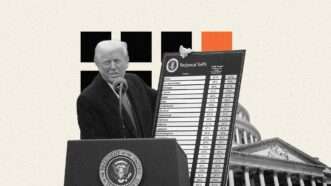
Yoo's criticisms are off the mark, for a variety of reasons. But, tellingly, he actually agrees Trump's IEEPA tariffs are illegal, merely disagreeing with the court's reasons for reaching that conclusion.
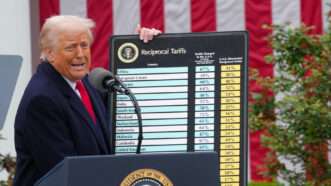
The CIT ruling is much stronger than Prof. Goldsmith contends. The same is true of a related ruling by federal District Court Judge Rudolph Contreras.
Trump v. Hawaii may block a challenge based on unconstitutional discrimination. But it does not preclude a nondelegation case. Other recent developments may actually bolster that approach.
He has banned nearly all new immigration and other entry by citizens of twelve countries, and imposed severe restrictions on seven more.
Links to my writings about our case against Trump's "Liberation Day" Tariffs and related issues.
The podcasts cover the case and its relationship to the more general problem of abuse of emergency powers.
It explains how the ruling is a win for separation of powers and the rule of law.
The decision by Judge Rudolph Contreras of the US District Court for the District Columbia holds IEEPA doesn't authorize the president to impose tariffs at all.
The Court of International Trade just issued a decision striking down Trump's "Liberation Day" tariffs and other IEEPA tariffs.
I spoke along with my Cato colleague Walter Olson.

Like that in the similar case filed by Liberty Justice Center and myself, this one indicated judicial skepticism of Trump's claims to virtually unlimited power to impose tariffs.

This is a key issue in cases seeking to limit executive branch power grabs, including Trump's tariffs. Judge Ryan Nelson (a conservative Trump appointee) explains why the president is not exempt from the doctrine.
I was interviewed by attorney/podcaster Irina Tsukerman.
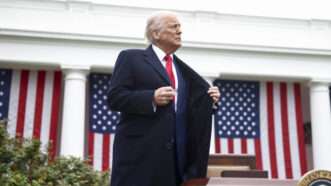
The president’s sweeping import levies have no basis in the statute he cites.
We also covered the issue of the administration's failure to properly obey court orders and the looming threat of a "constitutional crisis."
The suit resembles previous ones on the same subject filed by the state of California, and by the Liberty Justice Center and myself.
Signers include Steve Calabresi, Harold Koh, Richard Epstein, Michael McConnell, Alan Sykes, former Attorney General Michael Mukasey, and others.
The motion was filed today, and sets out our case in detail.
It explains why the IEEPA "Liberation Day" tariffs are illegal and how our case against them relates to the other three cases challenging Trup's tariffs.
The Liberty Justice Center and I filed the case on Monday.
I was interviewed by Caleb Brown of Cato.
They challenge both the "Liberation Day" IEEPA tariffs, and earlier ones imposed on Canada, Mexico and China.
It was filed today in the US Court of International Trade.
Even after Trump paused some of his new tariffs for 90 days, we still have the highest average tariffs in over a century and the biggest trade war since the Great Depression. Real relief will only come if Congress or the courts deny Trump the power to do this.
They violate the major questions doctrine set forth by the Roberts Court and must be stopped by a nationwide injunction.
The lawsuit raises nondelegation and major questions doctrine arguments.
They weren't authorized by Congress and go against the major questions and nondelegation doctrines.
The Liberty Justice Center and I are looking for appropriate plaintiffs to bring this type of case. LJC (a prominent public interest law firm) can represent them pro bono.
Georgetown law Prof. Jennifer Hillman explains why Trump's tariffs are vulnerable to challenge on this basis.
Recent Supreme Court precedent suggests such challenges might prevail, though success is not guaranteed.
The Court will only consider one of the issues in Braidwood Management v. Becerra
Another significant administrative law grant of certiorari (and a dog that didn't bark).
The private nondelegation doctrine is getting an increasing amount of attention from the courts.
A challenge to the FCC's Universal Service Fee could produce a major administrative law decision.
Donald Trump's plan for massive tariff increases is particularly dangerous because the White House could likely implement it without any new congressional authorization.
A majority of the judges concludes this fee constitutes a tax, the authority for which is improperly delegated.
In an interesting dissent, Judge Allison Eid argues it violates existing nondelegation doctrine precedent.
An important challenge to the use of agency adjudication to enforce federal regulations.

Survey data casts doubt on the textualist rationale for the major questions doctrine that I and others have advanced. But perhaps not as much doubt as it might seem.
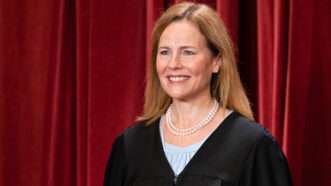
In today's student loan decision, Justice Barrett offers a textualist rationale for this controversial rule. I have made similar arguments myself.
The ruling is based on separation of powers and Religious Freedom Restoration Act grounds.
Legal scholar Ilan Wurman argues the controversial doctrine is justifiable on textualist and linguistic grounds.
Critics claim the doctrine is obviously at odds with textualism. But that isn't the case.
Justice Department regulations threaten people with prosecution for failing to register even when their state no longer requires it.
Despite a recent Fifth Circuit case, Carter v. Carter Coal Co. (1936) doesn't limit private delegations.
The Supreme Court has never held that private delegations have any special unfavorable treatment under the Article I Nondelegation Doctrine: quite the opposite!
Despite a recent Fifth Circuit case, there is no private nondelegation doctrine.
Celebrate your independence with a subscription to Reason magazine, your most trusted source of honest, insightful news and analysis.




