
Foot-Voting Nation
The seventh post in the Volokh Conspiracy symposium on "Our American Story: The Search for a Shared National Narrative" (ed. by Joshua Claybourn).

The seventh post in the Volokh Conspiracy symposium on "Our American Story: The Search for a Shared National Narrative" (ed. by Joshua Claybourn).

The federal hate crime charges against John T. Earnest are redundant and constitutionally problematic.
My new book chapter is now available for free on SSRN. It desccribes how "voting with your feet" played a central role in American history, how foot voting is at the heart of much of the nation's success, and the recent rise of dangerous new obstacles to foot-voting. Part of a new book, "Our American Story: The Search for a National Narrative."

The ruling, written by a Republican-appointed judge, is an important victory for federalism.
The decision is likely to be unpopular. But it is the right thing to do nonetheless, as the law is unconstitutional. Not every evil must be addressed by a federal law.

But that might be news to some Californians, and even more of the state's elected and appointed officials.
My newly posted article explains how the administration's efforts have had the unintended effect of strengthening judicial protection for state autonomy.
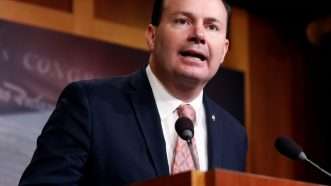
"This isn't a partisan issue," the Utah senator says. "This is a constitutional issue."

Years after the state legalized medical marijuana, Maricopa County's top attorney served as a barrier.
The event features Ilya Shapiro of the Cato Institute, and myself.

William Barr does not like legalization but says Congress has to resolve the "untenable" conflict between state and federal law.
Respect federalism and leave the states alone.
My book chapter on this subject from the "Cambridge Handbook of Classical Liberal Thought" is now available on SSRN.
The judge was right to conclude that the individual health insurance mandate is now unconstitutional, but wrong to rule that the rest of the ACA is now unlawful because it can't be severed from the largely toothless mandate left in place under the 2017 GOP tax bill.
The federal case against the Charlottesville murderer illustrates how hate crime laws punish people for their bigoted beliefs.
The ruling is the latest in a long line of setbacks for the administration's efforts to punish sanctuary jurisdictions by withholding federal law enforcement grants.

But losing taught libertarians how to win
FGM is a horrible crime. But banning it is one of many issues the Constitution leaves to the states, much like banning rape and murder. Yesterday's court decision striking down the law was correct.
Policing such behavior, the court concludes, is a matter for the states, because it isn't authorized as a regulation of commerce or as necessary and proper to comply with treaties.

Democratic control of the House, the passage of marijuana legalization referenda in three states, and the removal of Jeff Sessions presage a brighter future for legalized pot.
The federal case against the Pittsburgh shooter is redundant and constitutionally questionable.

A post based on my presentation at a panel on mandatory national service organized by the National Commission on Military, National, and Public Service.
The decision is the latest in a long line of legal setbacks for the administration's efforts to force sanctuary cities to help deport undocumented immigrants.
Responses to my lead essay by legal scholars John Eastman and Gabriel Chin have now been posted, along with my rejoinders to them.
Legal scholar and National Constitution Center President Jeffrey Rosen explains how many of the Constitution's safeguards against "mob rule" have frayed. His description of the problem is compelling, though he is less strong on possible solutions.
The lead essay on this month's Cato Unbound is my article outlining why the text and original meaning of the Constitution do not give the the federal government any general power to restrict immigration. There will be responses by critics, and ongoing discussion until October.
A White House policy committee is collecting information on "negative trends" and "threats" associated with legalization.
The Trump Administration is seeking to roll back federal automotive fuel economy standards and prevent California from maintaining more stringent standards of its own.
He deserves credit for being one of the very few national politicians to focus on this enormous problem. If enacted, his proposal would be a step in the right direction, though it is likely to have only a modest impact.
The ruling is notable in underscoring how the Supreme Court's sports-betting decision in Murphy v. NCAA helps sanctuary cities.
Economist Bryan Caplan reminds us that political decentralization has little value unless it is accompanied by mobility.
Tenants are challenging a HUD rule that requires local public housing authorities across the country to prohibit people from smoking in their homes.
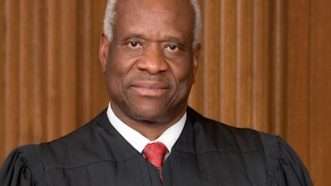
Cornell law professor Michael Dorf asks whether Clarence Thomas would vote to strike down federal laws restricting abortion, on federalism grounds. The answer might well be yes. But the issue would have to be presented to him in the right way.

The lawsuit contends that the Constitution requires a federal tax deduction for "all or a significant portion" of state income tax payments. It relies on badly flawed constitutional arguments to try to prop up a badly flawed policy.
The initiative could be reinstated for the 2020 election, however, if the Court concludes that its inclusion does not violate California law.
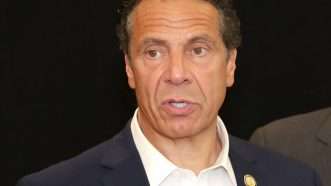
New York gets salty over new limits because now the rich will know they're being soaked.
The ruling is just the start of what may be a prolonged legal battle over immigration and federalism.

A blow against federalism, tax competition, and small businesses trying to expand.
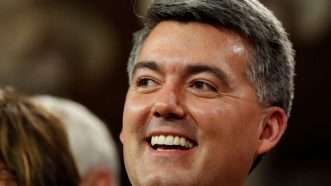
Cory Gardner used confirmation holds to force a potential breakthrough on marijuana federalism. There's a lesson there.
Most of the attention on the twenty state lawsuit against Obamacare understandably focuses on the "severability" issue, which could lead to the demise of the entire Affordable Care Act. But the individual mandate part could also set an important precedent.
A plan to divide California into three states will be on the state's referendum ballot in November. If it passes and is approved by Congress, it could potentially be a significant change for the better.
If it passes, this will be a major victory for both marijuana legalization and federalism.
The ruling is the latest in long line of defeats for the administration's efforts to cut federal grants to sanctuary jurisdictions. It breaks new ground by showing how the recent Supreme Court ruling in Murphy v. NCAA helps sanctuary cities.
The lopsided House vote for treating assaults on cops as federal crimes is a bipartisan portrait in cowardice.
Part II of my interview with Judge Jeffrey Sutton about his new book state constitutional law.
The first part of my interview with Judge Sutton about his important new book on state constitutions.
Commentators are right to suggest that Murphy v. NCAA will help sanctuary cities, but wrong to claim it is like to undermine federal laws restricting state taxes.
Celebrate your independence with a subscription to Reason magazine, your most trusted source of honest, insightful news and analysis.




