
Bloomberg and Forbes Podcast Interviews About our Lawsuit Challenging Trump's "Liberation Day" Tariffs
The Liberty Justice Center and I filed the case on Monday.

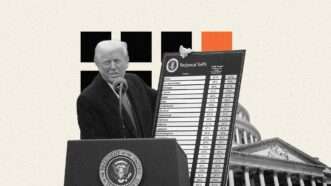
The Liberty Justice Center and I filed the case on Monday.
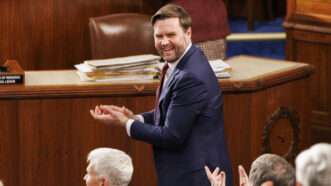
Vice President J.D. Vance is only the latest to indicate he sees due process, as guaranteed in the Constitution, as an unnecessary impediment to the administration's goals.

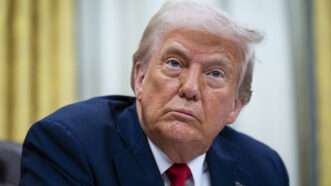
U.S. District Judge James Boasberg says the evidence indicates that the government "willfully disobeyed" his order blocking removal of alleged Venezuelan gang members.
I was interviewed by Caleb Brown of Cato.

They challenge both the "Liberation Day" IEEPA tariffs, and earlier ones imposed on Canada, Mexico and China.

Republicans often call for cutting off the funds but have never actually done the deed. Here's why this time might—might—be different.
A law meant to simplify government forms now blocks commonsense improvements, wastes taxpayer money, and slows life-saving services.
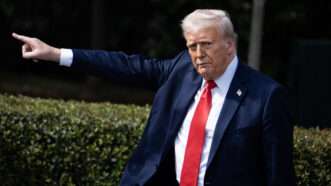
The Supreme Court unanimously rejected that claim, upholding the right to due process in deportation cases.
That's what could happen if undocumented immigrants decide not to file their taxes, according to an estimate by The Budget Lab at Yale.
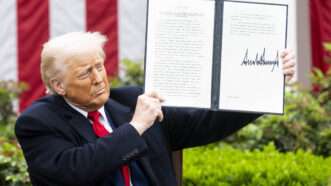
Several businesses harmed by Trump's "Liberation Day" tariffs have filed a lawsuit challenging his use of emergency economic powers.

Shahzaad Ausman has had to sue the county to confirm that he can continue to live in his own home.
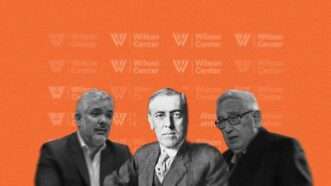
The taxpayer-funded think tank cloaked elite impunity and American interventionism in the language of liberalism.

Is the small-government Democrat beefing up state power?
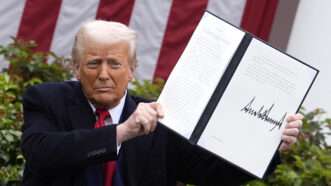
Richard Nixon infamously drafted an "enemies list" of people he wanted to go after. At least Trump conducts his corruption out in the open.
It was filed today in the US Court of International Trade.
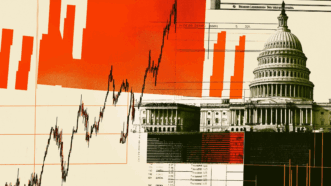
That's the highest total outside of the COVID-19 pandemic, and now Congress wants to borrow even more.
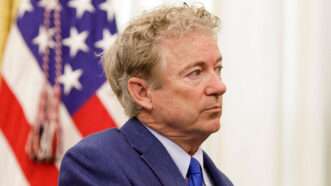
"I said now that they're banning it, I want to join, just because they're telling me I can't," the Kentucky senator tells Reason.

They argue the tariffs violate the constitutional separation of powers and their tribal treaty rights.
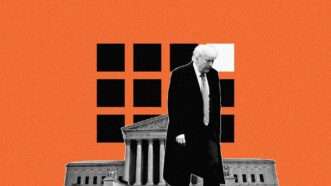
Trump lost on his most aggressive claims of executive power for the second time in a week.
"Nor is it taking a new approach."
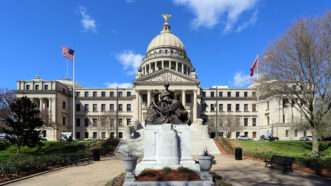
The poorest state in the nation just passed bold tax reform that empowers workers, attracts investment, and simplifies the system. It’s a model worth copying.

What America can learn from prisons in Norway and Sweden.
It’s not the reform we need, but it’s welcome relief from ravenous and unpopular tax collectors.

Unanimous ruling is a big win for immigrant rights. But it does have unfortunate ambiguities.
Even after Trump paused some of his new tariffs for 90 days, we still have the highest average tariffs in over a century and the biggest trade war since the Great Depression. Real relief will only come if Congress or the courts deny Trump the power to do this.
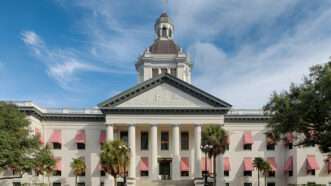
“I am here to break the law,” Marcy Rheintgen said after being given a trespass warning.
Families described not being told their loved one was in the hospital or even when they had died.

The president’s preferential treatment of fossil fuels will cost consumers.

The government currently collects revenue in an arbitrary and distortionary manner, with loopholes that benefit special groups.
We need a district judge to enter a nationwide injunction putting a stop to these huge unilateral, presidential tax increases on ordinary working-class people.

The Sunshine State is considering a bill that would expand protections for law enforcement officers who use deadly force or cause great bodily harm.
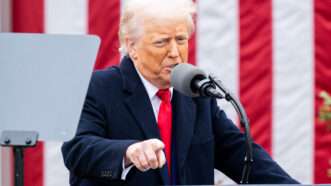
But 10% tariffs are still being imposed on nearly all countries, without any letup. And we are still moving ahead with our lawsuit challenging them.
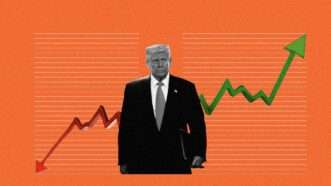
In the span of a week, Trump cratered the stock market and brought it much of the way back, with little more than public statements.
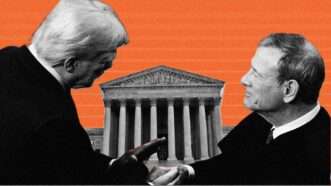
The Supreme Court did not answer two of the biggest legal questions raised by Trump’s invocation of the Alien Enemies Act.

Bills introduced Tuesday in the House and Senate would terminate the emergency declaration Trump issued last week.
The president is politically targeting those he says politically targeted him.
Lottery ticket buyers are disproportionately poor, and the odds are very bad. But governments want the money.
Although the Court lifted an order that temporarily blocked removal of suspected gang members, it unambiguously affirmed their right to judicial review.
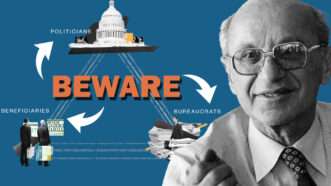
The Nobel Prize-winning economist says the Iron Triangle of Politics must be defeated to cut down the government for good.
The Supreme Court oveturns lower court decisions temporarily barring AEA deportations, but also emphasizes that detainees are entitled to due process, and that AEA deportations are subject to judicial review.
Voters said no to constitutional amendments on juvenile justice, government spending, and more.
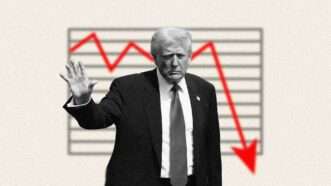
The president is raising taxes, hiking prices, and creating supply chain chaos. Congress should act quickly to stop this.
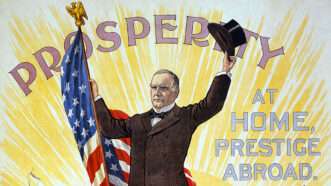
Did the 25th president really make America "very rich through tariffs"? William McKinley might have told you otherwise.
The Supreme Court seems likely to agree that a member of the National Labor Relations Board may be fired by the president at will.
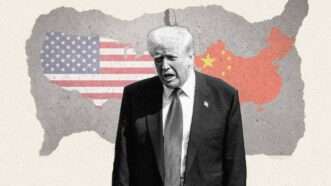
The International Emergency Economic Powers Act does not authorize the president's imposition of tariffs, a lawsuit alleges.
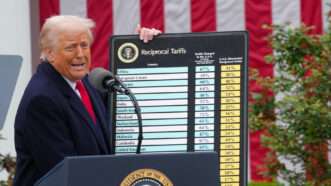
They weren't authorized by Congress and go against the major questions and nondelegation doctrines.
A small but growing bipartisan movement in the Senate is pushing back against the president's imposition of tariffs, but there's plenty of room to go further.
Celebrate your independence with a subscription to Reason magazine, your most trusted source of honest, insightful news and analysis.




