
Not Even the Moody's Downgrade Can Make Republicans Take the National Debt Seriously
Friday's announcement by Moody's and the House Budget Committee vote could have been a turning point.

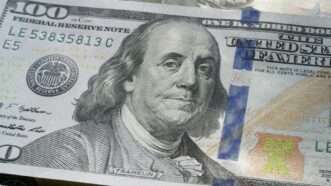
Friday's announcement by Moody's and the House Budget Committee vote could have been a turning point.

Kovarsky and Rave defend the use of class actions in AEA habeas cases. Vladeck highlights the significance of the Supreme Court's grant of an injunction to a "putative class" of AEA detainees.
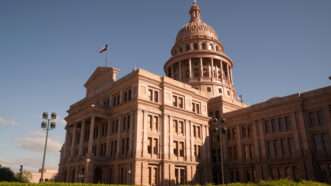
A bad bill inspired by European tech panic threatened to drive out Tesla, Meta, and Nvidia. Lawmakers in the House improved it—but now the bill is stalled in the Senate.

"We did a lot of field studies and got nothing to show for it," said one U.S. Naval Radiological Defense Laboratory researcher.
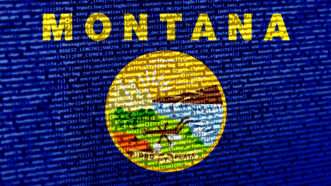
The Big Sky State becomes the first to close the "data broker loophole" allowing the government to get private information without a warrant.

The Department of Education doesn’t handle teaching, set curricula, or pay teacher salaries.

Tony Gilroy's series reminds us that an empire doesn't need dark magic to be evil.


President Donald Trump's executive order empowering local cops will create bad incentives that could prove costly for law-abiding citizens.

The article explains why these claims to emergency powers are illegal and dangerous, and how to stop them.
The Chief Justice is more consistent than his critics, left and right.


In a badly flawed decision, a federal district court ruled that Trump can invoke the AEA because the Tren de Aragua drug gang's activities amount to a "predatory incursion."
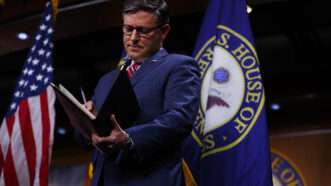
A new analysis from the Committee for a Responsible Federal Budget estimates that the national debt will equal nearly 130 percent of GDP by 2034.

All to shovel more money at wasteful and ineffective programs.
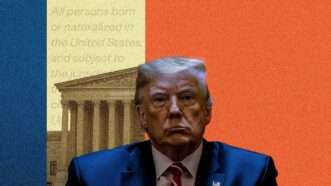
The text and history of the Fourteenth Amendment run counter to Trump’s executive order.
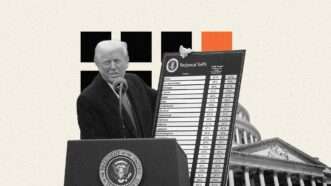
Greg Sargent of the New Republic interviewed me.
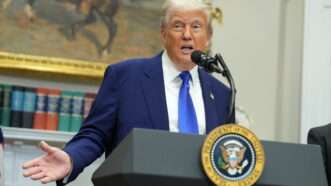
The White House calls it "the art of the deal," but a 30 percent tariff on imports from China is economically damaging and constitutionally dubious.

Trump rightly decries the "absurd and unjust" consequences of proliferating regulatory crimes.
Outcomes are hard to predict. But the judges seemed skeptical of the government's claim that Trump has virtually unlimited authority to impose tariffs.

Stephen Miller's understanding of the Constitution is dubious for several reasons.
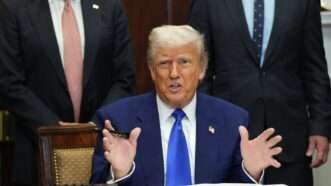
The president hopes to introduce even more government intervention into health care.
One of the justices wrote extensively about when and whether the writ of habeas corpus may be suspended.
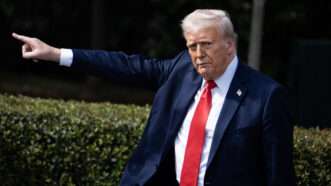
Briefs urging the Supreme Court to stay injunctions against the order challenge "the conventional wisdom" about the meaning of an 1898 decision interpreting the 14th Amendment.
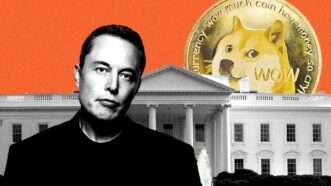
Elon Musk promised $2 trillion in cuts but delivered only a tiny portion of that total. We asked seven policy experts to explain what he got wrong.

A new bill would ban sharing visual content that might "arouse" or "titillate."
The late justice was appointed by a Republican but quickly established himself as a judicial liberal.

Biden's pardons for friends and Trump's blanket pardons for January 6 participants set terrible precedents.
From Qatar, with love, a "palace in the sky."

Some hospitals are even reporting women for testing positive for drugs that were given to them during labor.
How the phrase ended up in an opinion after it had been omitted.

Lawmakers passed the largest spending plan in state history, pushing costs higher without delivering results.
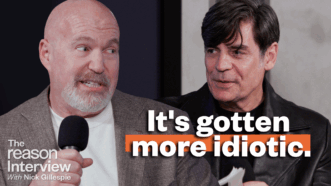
Co-founder of AQR Capital Management, Cliff Asness, discusses the decline of market efficiency, the dangers of populist economics, and his libertarian outlook on capitalism.
Democrats tried to alter unconstitutionally the membership of the Supreme Court; they extorted Facebook into censoring free speech; they issued presidential executive orders unsupported by statute; and they pushed unprecedented prosecutions of Biden's predecessor in office, and his 2024 opponent, in the presidential race.
We don't need more of the same. We need evidence of a serious turnaround.
The court instituted a preliminary injunction against the Administration's use of the Act to deport Venezuelans.

Protections apply even when the animal is on your property and getting closer.
Steve Inskeep of NPR interviewed me about the case against Trump's "Liberation Day" tariffs.

As he shifts his focus away from DOGE, he acknowledges the need for hard choices and congressional action.
Trump admits he could return migrant illegally deported to El Salvador. And an intelligence community report concludes the Tren de Aragua drug gang isn't controlled by the Venezuelan government.
The Southern District of New York rules Trump invoked the Act illegally, because there is no "invasion" or "predatory incursion."

Plus: Arkansas legalizes ADUs, activists sue to stop missing middle housing, and Trump's housing plans for federal lands
Celebrate your independence with a subscription to Reason magazine, your most trusted source of honest, insightful news and analysis.




