Civil Forfeiture Does Not Seem To Reduce Drug Use or Help Fight Crime
A new study provides further evidence that property seizures are driven by financial motives rather than public safety concerns.
A misdemeanor marijuana charge leads to an attempt to take $17,000.
It went all the way to the US Supreme Court, and is now back in the Indiana state Supreme Court for the third time.
The state used civil asset forfeiture to seize Tyson Timbs' car in 2013. His nightmare hasn't ended.
A recent flurry of legislative activity suggests why forfeiture reform succeeds—and why it fails.
The practice is plainly unconstitutional.
Efforts to push for substantial police reforms many people would support instead became a political battlefield.
The Institute for Justice wants the Supreme Court to rule that the Fifth Amendment requires a prompt post-seizure hearing.
Government bullies empowered by civil forfeiture laws often back down, but only when their victims can afford a fight.
The DEA dropped its attempt to keep the money roughly two months after the woman joined a class-action lawsuit challenging cash seizures at airports.
It's time to do something about police seizures of property from innocent people.
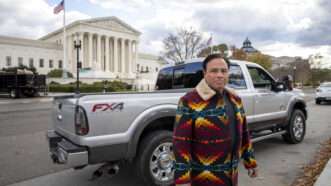
Gerardo Serrano, whose truck was seized over five forgotten handgun rounds, waited two years for a hearing he never actually got.
The lawsuit argues that the DEA is violating the Fourth Amendment by seizing money from travelers without evidence of criminal activity.
The cops seized Kevin McBride's $15,000 car because his girlfriend allegedly used it for a $25 marijuana sale.
Kevin McBride argues that Arizona's civil forfeiture law is unconstitutional.
Like other innocent owners, Manni Munir finds that fighting a civil forfeiture can cost more than the property is worth.
In two-thirds of those cases, there were no accompanying arrests.
Federal civil asset forfeiture bill reintroduced as police reform efforts hit a partisan wall.
These reforms would protect all Americans while reducing racial disparities in policing.
Reducing law enforcement requires more than merely cutting and shifting a budget.
Would you be surprised if you learned the former district attorney was caught leasing an SUV with asset forfeiture funds?
In Timbs v. Indiana, the US Supreme Court ruled that the Eighth Amendment's Excessive Fines Clause applies to state asset forfeiture seizures. But key issues were left for lower courts to resolve.

Indiana is still fighting to keep Tyson Timbs' SUV seven years after it first seized the car, but for now, it's back in Timbs' driveway.
It’s all about the revenue. Civil forfeiture brings in money, and lawmakers are more worried about their budgets than residents’ due process and property rights.

In "Operation Asian Touch," federal agents coerced suspected human-trafficking victims into sex acts. Local cops seized money and threw them in jail.

And he's far from the first prosecutor to be caught with his hand in the asset forfeiture cookie jar.
Neither Terry Rolin or his daughter were ever charged with a crime, but that didn't stop the DEA from trying to seize more than $82,000 from them through civil asset forfeiture.
The lawsuit says Wayne County police stop and seize cars simply for entering or leaving certain areas.
A class-action lawsuit is now challenging the DEA's habit of seizing large amounts of cash from travelers without evidence of any crime.
New Jersey took two major steps toward increasing transparency and strengthening protections for property owners against civil asset forfeiture.
St. Charles County law enforcement used shady practices to seize motorists' assets without convictions.
The drug wars will continue until the state gets its cut of the money.
The Institute for Justice asks the Supreme Court to block sneaky tactics that prevent victims of property grabs from recovering their legal costs.
Prosecutors are hiring private attorneys to pursue asset forfeiture charges against establishments that offer coin-operated gaming.
The bill, which the state House passed yesterday, says police may seize vehicles in which they find untaxed vaping products.
A state law allows counties to effectively steal homes over unpaid taxes and keep the excess revenue for their own budgets.
The ruling is a continuation of the same case in which the federal Supreme Court ruled that the Excessive Fines Clause of the Eighth Amendment is "incorporated" against state governments and applies to asset forfeitures.
Law enforcement and prosecutors have seized millions from people they’ve arrested. That might be coming to an end.
If the court that hears the cases stands to profit from the fines paid by defendants, that's a violation of the Due Process Clause of the Constitution. The rulings have potential implications for other, similar conflicts of interest in the criminal justice system.
Former DEA special agent Chad Scott has been convicted of perjury, obstruction of justice, and falsifying government records.
Sanders' plan takes aim at every part of the justice system, including typical Sanders targets like private prisons and corporate "profiteers."
It's a nasty mix of police militarization and civil asset forfeiture.
Aggressive asset forfeiture collides with First Amendment rights.
"Historically the answer to that question is yes, and we're sticking with that position here."
A provision of the Taxpayer First Act requires evidence of other illegal activity for seizures based on "structuring" and mandates prompt hearings.
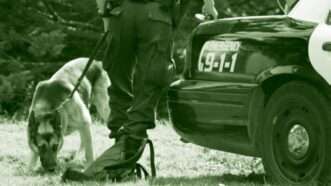
Surrender the Fifth Amendment or the dog dies.
A new study by the Institute for Justice says federal asset forfeiture funds have little to no impact on solving crimes, suggesting police are more interested in the revenue it generates
Celebrate your independence with a subscription to Reason magazine, your most trusted source of honest, insightful news and analysis.