Senators Push Sneaky Anti-Privacy Bill
The EARN IT is an attack on encryption masquerading as a blow against underage porn.


The EARN IT is an attack on encryption masquerading as a blow against underage porn.

Plus: Who's using Clearview AI?, court rules against Joe Arpaio, and more...

A congressional battle erupts over how much to reform the soon-to-expire USA Freedom Act—if they reform it at all.
Government officials keep trying to make us expose our data to them—and the criminals who ride on their coattails.
The findings shared by Inspector General Michael Horowitz revealed some rotten practices at the FBI and a major media blindspot.

Your cellphone is tracking your movements and, despite legal protections, federal, state, and local officials are finding new and disturbing ways to use that information.

It’s all part of the international push by officials to monitor the public. You’re next.

Online platforms would have to "earn" speech protections by compromising encryption—all in the name of fighting child porn.

Plus: Santa Cruz decriminalizes shrooms, the feds target medical marijuana in Michigan, "the growing threat to free speech online," and more...
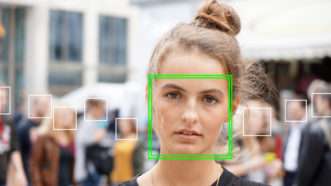
"Facial recognition represents a dystopic advancement of the police state."
E-Verify makes life harder on immigrants who want to work, but it doesn't make things better for anyone—-even those who want to see those immigrants leave.

A bipartisan coalition wants to restrain secret snooping and create more independent oversight of the secretive FISA Court.

Hundreds of police departments are using facial recognition technology without oversight.
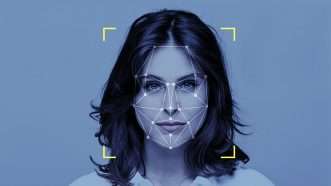
Some privacy activists say the bill still falls short.

Don’t worry—America’s ruling factions still disagree over who should be in charge of the snooping.

After seriously messing up its warrant applications with the FISA Court, can the FBI be trusted?
The Cato Institute wants Congress to investigate the FBI after it refused to confirm or deny the existence of files on dozens of political advocacy groups.
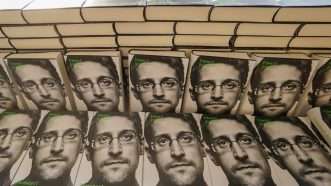
A judge rules whistleblower’s failure to subject Permanent Record to pre-publication review violates non-disclosure agreement.
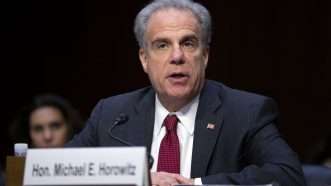
Judge demands to know what the agency will do prevent future “omissions” in the applications.
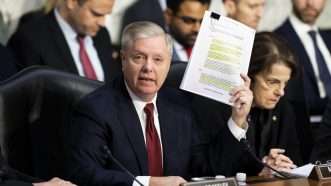
Privacy advocates have long warned about potential abuses. Will the mishandling of the Carter Page investigation change some minds?
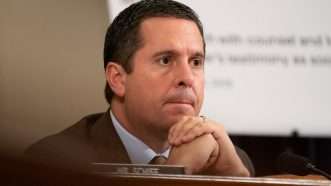
Nunes attacked those who wanted to restrain NSA’s snooping. Clearly he never considered whether his call records would be exposed.
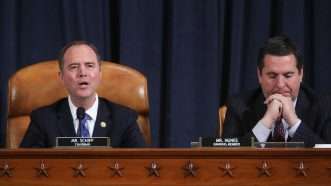
Plus: Trump might send 14,000 more troops to the Middle East, Pelosi wants to take free speech out of a trade deal, and more...

Plus: "Right to be forgotten" follies, research on direct cash aid, Elizabeth Warren on sex work, and more...

Cops can now request access to videos recorded by Ring, bypassing that pesky step of obtaining a search warrant first.
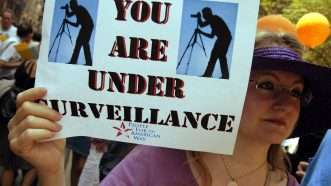
They simply disagree over who should be in charge of misusing and abusing those excessive powers.

Plus: Sondland worked "on Ukraine matters at the express direction of" Trump, why hospital prices are so screwy, D.C. gets pushback for ditching sex work bill, and more...
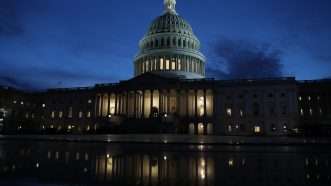
Rep. Justin Amash and some progressive lawmakers are trying to block it, but most Democrats seem happy to hand more spying powers to a president they are investigating for abusing his power.

The bureau has a long history of escaping accountability for intrusive and abusive action.
Some interesting words from Justice Douglas.
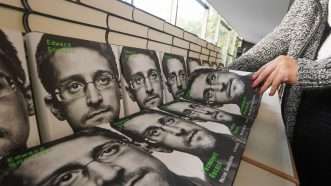
Freedom could never be imposed at the point of a gun, but perhaps it could be sown by the spread of silicon and fiber. Or so I thought.

Years after surveillance reforms, federal personnel can’t seem to comply with the Fourth Amendment.

The mostly young demonstrators are calling for autonomy and democracy—and won't be silenced like the NBA.

Encryption, other privacy measures, and decentralization have made the protest movement possible.

America's most famous whistleblower calls for restricting the power of government.

Whistleblower Michael German's new book exposes how the FBI failed us on 9/11 and continues to endanger us all through racism, incompetence, and institutional inertia.
Snowden didn’t subject his autobiography Permanent Record to pre-publication review by the federal government that’s also trying to throw him in prison.
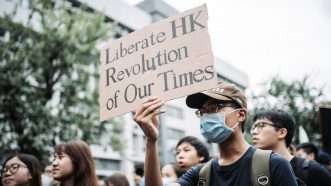
The brave idealism of the people of Hong Kong is enough to stir the heart of anyone who cherishes freedom.

You may be surprised how many different companies know whenever you use your credit card.

You can literally wear your principles on your sleeve while baffling facial recognition technology.

Science fiction writers have wondered for years what an all-encompassing surveillance state might look like. China decided to build it.

As Beijing develops a high-tech police state, Hongkongers develop ways to resist it.



If there’s one thing government types can agree on, it’s that nobody should be allowed to buy and sell stuff without permission.

State DMVs are building a vast national digital identification database for federal law enforcement.

Many digital payments can be tracked, potentially assisting an authoritarian crackdown.

Activist and celebrity musician Denise Ho discusses the Hong Kong protests, her 2014 arrest, and the future of Hong Kong's autonomy from China.

Don't blame him for any FISA abuses. He's been fighting it for years.

Help Reason push back with more of the fact-based reporting we do best. Your support means more reporters, more investigations, and more coverage.
Make a donation today! No thanks
Every dollar I give helps to fund more journalists, more videos, and more amazing stories that celebrate liberty.
Yes! I want to put my money where your mouth is! Not interested
So much of the media tries telling you what to think. Support journalism that helps you to think for yourself.
I’ll donate to Reason right now! No thanks
Push back against misleading media lies and bad ideas. Support Reason’s journalism today.
My donation today will help Reason push back! Not today
Back journalism committed to transparency, independence, and intellectual honesty.
Yes, I’ll donate to Reason today! No thanks
Support journalism that challenges central planning, big government overreach, and creeping socialism.
Yes, I’ll support Reason today! No thanks
Support journalism that exposes bad economics, failed policies, and threats to open markets.
Yes, I’ll donate to Reason today! No thanks
Back independent media that examines the real-world consequences of socialist policies.
Yes, I’ll donate to Reason today! No thanks
Support journalism that challenges government overreach with rational analysis and clear reasoning.
Yes, I’ll donate to Reason today! No thanks
Support journalism that challenges centralized power and defends individual liberty.
Yes, I’ll donate to Reason today! No thanks
Your support helps expose the real-world costs of socialist policy proposals—and highlight better alternatives.
Yes, I’ll donate to Reason today! No thanks
Donate today to fuel reporting that exposes the real costs of heavy-handed government.
Yes, I’ll donate to Reason today! No thanks