The Messy TikTok Sale Is What Happens When Governments Get Involved in Social Media
Plus: More red states may get legal weed, antitrust action against Google expected this week, the Cuties controversy, and more...


Plus: More red states may get legal weed, antitrust action against Google expected this week, the Cuties controversy, and more...
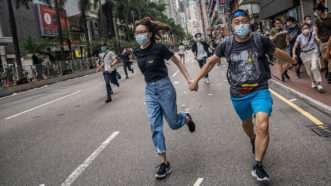
The escalation is part of a strategy to unmask China's abuses before the world.
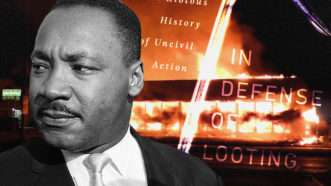
Martin Luther King explained why they are "socially destructive and self-defeating."
Plaintiffs claimed that defendants had libeled them to foreign officials—but didn't have enough evidence that the defendants had actually said anything to those officials.

As the pandemic rages on, nominally free countries are sliding down a path blazed by authoritarian regimes.

A week after being sued over his arbitrary COVID-19 policy, Gov. Charlie Baker says he will allow arcades to reopen.
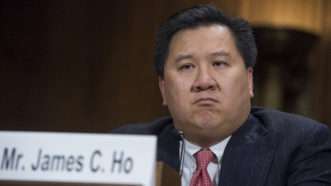
The 5th Circuit judge is a mixed bag from a libertarian perspective.

A country that was once making strides toward freedom slides further into oppression and authoritarianism.

A federal lawsuit argues that the distinction drawn by Massachusetts is unconstitutional.

"This current incident, and Marshall's response so far, seem disturbingly similar to prevalent behavior in China [during the Cultural Revolution]—spurious accusations against innocent people, which escalated into institutional insanity."
would they be likely to hire blacks for jobs in China, or anywhere where they might have to hear Mandarin?
More on the Mandarin "neige" controversy.
"In effect, Maffick contends that it is likely to succeed on the merits because its CEO says so. That is far from enough to establish a likelihood of success on the merits, particularly in light of the largely undisputed counter-evidence Facebook tendered."

Why do progressives who worry about unequal justice support policies that are bound to make that problem worse?
Fortunately, the N.Y. State Education Department has now reversed the decision, which had been made by the Valley Central School District (about 70 miles north of New York City).
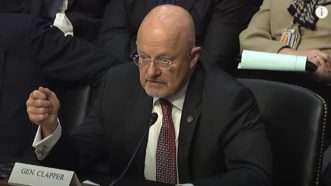
A federal appeals court concludes that the agency's mass collection of phone records was illegal and probably unconstitutional.

Plus: People have doubts about democracy, Washington state sues Juul, and more...

Last month, the 9th Circuit said the opposite. It's a question the Supreme Court might have to resolve.
From Prof. John McWhorter (Columbia) in The Atlantic.
“Just because the story and the photograph may be embarrassing or distressful to the plaintiff does not mean the newspaper cannot publish what is otherwise newsworthy.”
The Cincinnati Enquirer and I have just filed a petition seeking this, in the Ohio Court of Appeals.

Defeating surveillance is a powerful argument for covering your face.

Plus: Congress to vote on marijuana decriminalization, tech visas are getting turned down at high rates, and more...

A thought experiment that came to my mind; I'd love to hear what others think about it.
Plus a new draft law review article on the subject, by Prof. Randall Kennedy (Harvard Law School), a leading scholar of race and the law, and me.
Across the Atlantic from Amazonia lies ... Ambazonia.
There is enough evidence that the Times knew their allegations were false (or at least were likely false) to go to the jury.
Three interesting opinions: a sound majority, a plausible concurrence, and another concurrence focused on "hate speech" that I think is unsound.

The cops seized Kevin McBride's $15,000 car because his girlfriend allegedly used it for a $25 marijuana sale.
David Cole writes in defense of the National Rifle Association

Millions of new firearm owners who have lost faith in cops and government will be a tough audience for shopworn gun control schemes.
Dean Lidsky is a libel law scholar, and one of the two Reporters of the Restatement (Third) of Torts: Defamation & Privacy.
The Fourth Circuit decides a case involving defendants who violently participated in two white supremacist rallies in California and in the "Unite the Right" rally in Charlottesville, but the logic applies equally to rioters of all stripes.
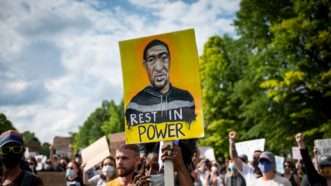
"I know what moral panics look like; they look kind of like this."
The new law features harsher penalties, 12-hour detentions, and other invitations to abuse government power
When can libel plaintiffs, suing over allegedly false claims of sexual misconduct, sue pseudonymously? When can defendants defend pseudonymously?

Kevin McBride argues that Arizona's civil forfeiture law is unconstitutional.


New from Reason: a look into what Javier Milei has accomplished and what it will take to make the most of Argentina’s window for real change. Out now for subscribers.