
It's Been 10 Years Since the IRS's Tea Party Scandal. Will Congress Finally Act?
The partisan and constitutional dangers of letting the IRS police speech are simply too great.

The partisan and constitutional dangers of letting the IRS police speech are simply too great.

"When the government picks and chooses among religions," the lawsuit reads, "religious liberty is threatened for all."

Uncowed, the protest organizer is suing.

Plus: Senate Judiciary Committee considers the EARN IT Act, the FTC has A.I. in its crosshairs, and more...

The Chinese app has become a magnet for every possible cultural concern.

A decade ago, online startups seemed poised to vanquish legacy media. That didn't happen.
Join Reason on YouTube Thursday at 1 p.m. Eastern for a discussion of Jacob Siegel's broadside against the "counter-disinformation complex" in Tablet magazine.
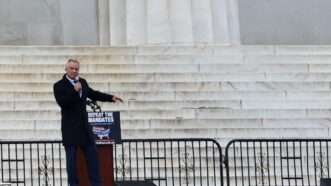
The enemy of your enemy is not your friend; he's a guy who might want to throw you in jail.

Plus: Missouri attempts to ban gender transition treatments for adults, another bad social media bill hits Congress, and more...

It's one small victory for free speech and due process, but similar battles continue to play out elsewhere.

The lawsuit says Disney has been subject to "a targeted campaign of government retaliation—orchestrated at every step by Governor DeSantis as punishment for Disney's protected speech."

"Criticism of the president is core political speech protected by the First Amendment," says the students' attorney.
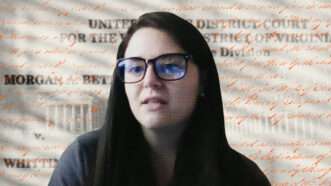
Morgan Bettinger might sue the University of Virginia for violating her First Amendment rights.

Plus: More details emerge on Fox News' firing of Tucker Carlson, Aubrey Plaza shills for Big Milk, Biden announces he's running for president, and more...
Plus: Should committed libertarians be opposed to pro-natalist policies?
The question turns on whether the politician's web page is seen as the politician's own speech as a citizen, or as a government page.
The Department of Justice emulates the Kremlin in smearing government critics as foreign agents.
What happens when anti-liberty zealots get the same powers?

The journalist and dissident, who was sentenced to 25 years in a penal colony for criticizing the Russian government, has not received the same attention.

The HBO movie muddies important distinctions.
Weaponization of the federal government, indeed

James Madison University's debate team says that "free speech should not extend to requiring us to platform or amplify ideas that are exclusionary, discriminatory, or hostile."
"Plaintiff was not informed by his legal counsel prior to filing suit of the potential for immediate disclosure of his name if his Motion to Proceed Under Pseudonym was denied."
The social worker had reported the parents for educational neglect; the parents argue this was knowingly false, because the social worker knew the parents "were in compliance with their statutory obligation to educate their child" by home schooling.
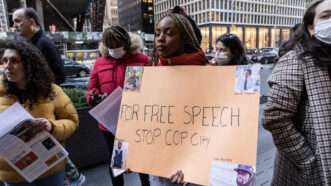
Plus: The EARN IT Act is back (again), SCOTUS postpones abortion pill decision until Friday, and more...
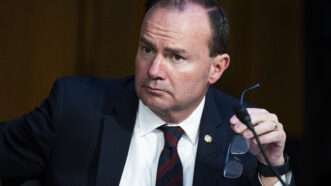
The 1964 Supreme Court decision New York Times Co. v. Sullivan makes it more difficult for public figures to prove defamation—but as we saw this week, not impossible.
allegedly "threaten[ing] ... administrators, ma[king] female instructors and students uncomfortable, and show[ing] signs of 'disjointed' thinking."
Plus: Graphic novels at forefront of library culture wars, monopoly myths, and more...
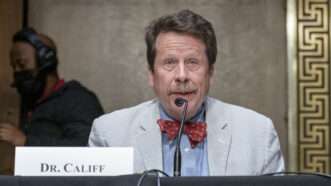
Officials who often get it wrong can’t be trusted to reliably decree what’s true.

Martha Pollack rejects the pernicious premise that universities should protect students from offensive ideas.
"Defendants accused of creating fake social media accounts to harass PRC dissidents, and working with employees of a U.S. telecommunications company to remove dissidents from company's platform."
Celebrate your independence with a subscription to Reason magazine, your most trusted source of honest, insightful news and analysis.




