
How the Right to Trial Became a Legal Fiction
Half a century after approving coercive plea bargaining, the Supreme Court is beginning to recognize its costs.

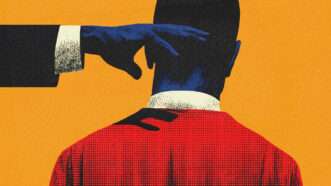
Half a century after approving coercive plea bargaining, the Supreme Court is beginning to recognize its costs.
Neil Gorsuch proposes an alternative to a Fourth Amendment standard that has proven to be an unreliable safeguard against government snooping.
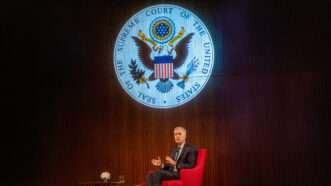
The justice criticizes the Court’s endorsement of coercive plea bargaining and its embrace of dubious Fourth Amendment doctrines.
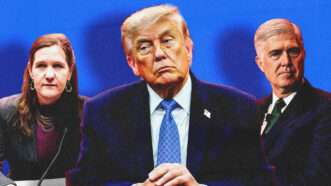
The Supreme Court has "no shortage of tools" to enforce the separation of powers, Justice Neil Gorsuch notes. "The only real question is whether we will use them."
The Supreme Court extended presidential control over federal agencies. What could go wrong?

If the laws requiring such agencies to be independent are unconstitutional, it may be that very existence of those agencies is also now illegal.
The justice argues that the "reasonable expectation of privacy" test and the third-party doctrine are indefensible in theory and unworkable in practice.
The Supreme Court ruled that "an agreement not to appeal a sentence is unenforceable when it would result in a miscarriage of justice."
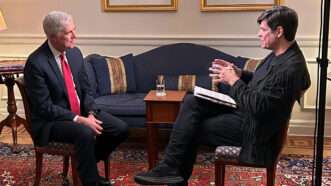
"There was nothing inevitable about it. Absolutely nothing," the Supreme Court justice tells Reason's Nick Gillespie.
Neil Gorsuch's new book reminds us that to accelerate progress, we must first acknowledge the progress that has already occurred.
The Dissident Right is furious with Neil Gorsuch for saying America is a creedal nation. That just goes to show how out of touch its obsessions are.

Plus: Trump announces “Project Freedom” in the Strait of Hormuz, King Charles visits the U.S., and a listener asks why voters keep rewarding bad politicians.
The Supreme Court justice discusses the Declaration of Independence, how unchecked power threatens liberty, and what the Founders can teach future generations.

"Geofence" searches illustrate the perilous combination of modern technology and deference to law enforcement.
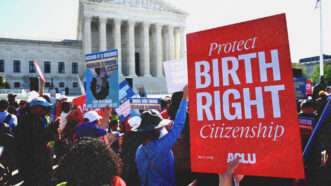
Understanding the Supreme Court’s oral arguments in Trump v. Barbara.
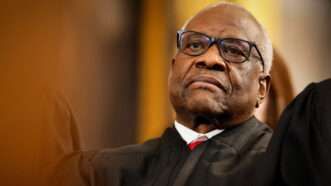
The conservative justice’s regrettable opinion in Learning Resources v. Trump.

Plus: The U.S. could be going to war with Iran, the 2026 Winter Olympic Games, and why AI surveillance is worrying civil libertarians
Justices Kagan and Sotomayor have signed on to at least one opinion that expressly relied upon the major questions doctrine.
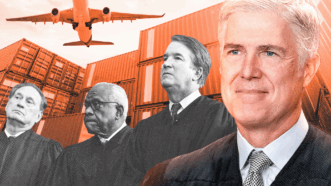
What explains the fracture in the Supreme Court's "conservative bloc"?
"There is no exception to the major questions doctrine for emergency statutes," wrote Chief Justice John Roberts.
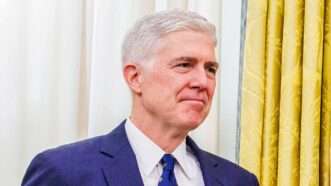
Plus: Still waiting on the tariffs case.
Plus: Outrage at Heritage, air traffic might get throttled, and more...
Professor Joel Alicea on how to understand what may be the most important jurisprudential divisions on the Supreme Court.

Unanimous rulings on discrimination, guns, and religion once again challenge the common media narrative that the Court is hopelessly polarized.

"I cannot profess the kind of certainty I would like to have about the arguments and record before us," writes Justice Gorsuch.
Justice Gorsuch shows more interest in property rights challenges than his colleagues on the Court.
Fewer laws and less government would be a better solution to judicial warfare.
In a new book, Supreme Court Justice Neil Gorsuch describes the "human toll" of proliferating criminal penalties.

When those on parole or probation are included, one out of every 47 adults is under “some form of correctional supervision.”
His criticism of President Joe Biden’s proposed Supreme Court reform is hard to take seriously.
Contrary to progressive criticism, curtailing bureaucratic power is not about protecting "the wealthy and powerful."
Plus: A disappointing first round of "Baby YIMBY" grant awards, President Joe Biden endorses rent control, and House Republicans propose cutting housing spending.
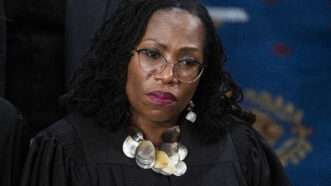
Her concurrence is a reminder that the application of criminal law should not be infected by personal animus toward any given defendant.

Justice Sonia Sotomayor called the Supreme Court ruling in SEC v. Jarkesy "a power grab." She's right, but in the wrong way.

There is a great deal of panic surrounding the "extreme" nature of the current Court. But that is often not based in reality.

Paul Erlinger was sentenced to 15 years in prison based largely on a determination made by a judge—not a jury.
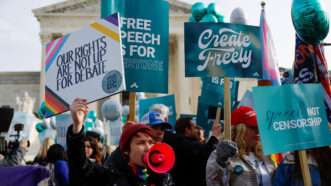
"The opportunity to think for ourselves and to express those thoughts freely is among our most cherished liberties," Justice Neil Gorsuch wrote in the majority opinion.
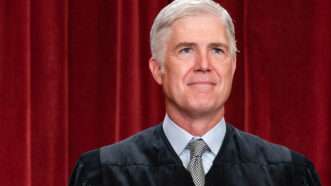
Justice Gorsuch has never voted against Native American interests in a Supreme Court case. But that probably isn't because he's biased in favor of Indians. He simply believes that much existing precedent in this field is biased the other way.
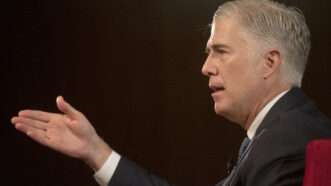
Supreme Court Justice Neil Gorsuch highlights a vital lesson from the COVID-19 pandemic.
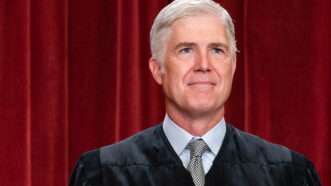
"Since March 2020, we may have experienced the greatest intrusions on civil liberties in the peacetime history of this country," Gorsuch wrote. That might be an exaggeration, but it isn't far off.
The Supreme Court issues five merits opinions, but there are still forty more waiting.
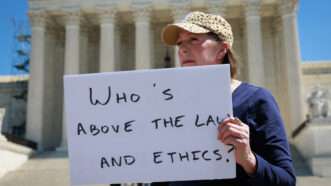
Plus: A look back at Rochelle Walensky's tenure as head of the CDC
Today's opinions are a requel to prior splits among the most recent Republican appointees to the Supreme Court.
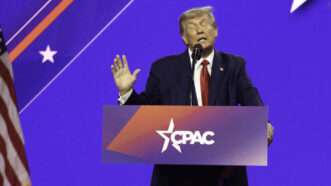
Contrary to the Supreme Court's First Amendment precedents, Donald Trump thinks harsh criticism of the president should be actionable.
The Bank Secrecy Act divides the justices in an unusual way, and Justice Barrett authors her fourth opinion in an argued case.
Why isn’t affirmative action in college admissions prohibited under the Civil Rights Act?

While other pandemic policies have ended, the migration measure has “outlived [its] shelf life,” Justice Neil Gorsuch wrote yesterday.
The link between Bostock v. Clayton County and Students for Fair Admissions v. University of North Carolina
Celebrate your independence with a subscription to Reason magazine, your most trusted source of honest, insightful news and analysis.




