The Volokh Conspiracy

Mostly law professors | Sometimes contrarian | Often libertarian | Always independent | Est. 2002

The Volokh Conspiracy

Politics

For Legal Conservatives, Six Decades Of Folding, Followed By Sixteen Years To Draw A Full House

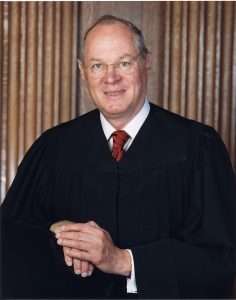
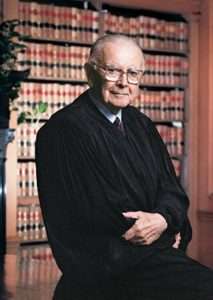
On the plus side, we had Rehnquist, Scalia, Thomas, Alito, Gorsuch, Kavanaugh, and Barrett. On the down side, we had Roberts, Souter, Kennedy, O'Connor, Powell, Blackmun, Burger, Stewart, Whittaker, Brennan, and Warren.

|

We are now roughly one month from Dobbs. I still cannot believe it happened. Indeed, I still can't believe the Court overruled Roe and Casey, expanded the Second Amendment, "abandoned" Lemon, and so much more--in the span of a week! It is worthwhile to reflect on all the things that had to go right over the past sixteen years for this moment to happen. But it is also useful to keep stock how many blunders were made over the prior sixty years. Ed Whelan and Ilya Shapiro flagged many of the high points and low points. Here is the relevant chronology from my perspective.

For judicial conservatives, there were sixty decades of famine, followed by sixteen years of feast.

President Eisenhower

Let's start with the bad times, which stretch all the way back to the Eisenhower administration--the first opportunity for a Republican President to remake the New Deal Court:

  • 1953 - After the sudden death of Chief Justice Fred Vinson, President Eisenhower recess-appoints California Governor Earl Warren as Chief Justice. One year later, the Senate confirms Warren. Eisenhower would later describe Warren's appointment as the biggest mistake he ever made.
  • 1956 - Shortly before the election, President Eisenhower made a recess appointment of New Jersey Supreme Court Justice William Brennan. He was confirmed the following year. Apparently, Eisenhower appreciated Brennan's Catholicism. If Warren was Eisenhower's biggest mistake, then Brennan must be a close second.
  • 1957 - Most people have never heard of Justice Charles Whittaker. He only served for five years. Meanwhile, Brennan served for three decades.
  • Eisenhower's other two nominees were conservative enough, at least for the day: Justices John Marshall Harlan II and Potter Stewart. But none would rival the influence of Warren and Brennan.

President Nixon

After eight years of democratic administrations, President Nixon comes to the White House with a golden opportunity to reshape the Court, that he largely wastes.

  • 1969 - As President Johnson's term drew to a close, Chief Justice Warren recognized that Richard Nixon may win. So Warren announced that he would step down upon the confirmation of his successor. President Johnson tried to nominate his crony, Justice Abe Fortas, as Chief Justice, but that selection blew up for many reasons. And the Democrats did not try to squeeze in another candidate before the election. (If only Mitch McConnell was their leader!) President Nixon was handed a miracle: the chance to replace the great Earl Warren. Who did he pick? Another Warren. Warren Burger to be precise. Burger turned out to be relatively uninfluential, and outside the area of criminal law, was not particularly conservative.
  • 1970 - Once Fortas's chicaneries became public, he resigned. And, Nixon had the chance to flip another seat. Who did he pick? The Minnesota Twin, Harry Blackmun, who would write Roe v. Wade, and become a solid liberal.
  • 1971 - The Black and Harlan seats became vacant. Nixon appointed Powell for the former vacancy who would turn out to be the new "swing" vote. And Harlan was replaced by Rehnquist, the only solid conservative Nixon would appoint.
  • In the span of three years, Nixon made four Supreme Court nominations. He batted about .250.

President Ford

President Ford, the accidental President, was in office for a short period. He would have one Supreme Court to show for it.

  • 1975 - Justice Douglas finally retired, and President Ford selected Judge John Paul Stevens. Like Harry Blackmun, Stevens would become a leader of the left-wing of the Court. Though, Ford would always defend his lone pick to the Supreme Court.

President Reagan

President Reagan tried to turn the tide on the Supreme Court. He did better than his predecessors, but still had a mixed record.

  • 1981 - President Reagan selected Sandra Day O'Connor to replace Justice Stewart. Like Justice Powell, O'Connor would become something of a swing vote. She marginally pushed the Court to the right in a few areas, like federalism.
  • 1986 - Chief Justice Burger stepped down, and Reagan made two excellent nominations: Rehnquist for Chief Justice and Scalia to fill the Associate Justice seat. Both were confirmed, and both were very successful. But had Reagan nominated Bork in 1985, he likely would have gotten through.
  • 1987 - Justice Powell announced he would step down. What happened next is the stuff of legends. Bork was borked. Ginsburg was never formally nominated. Instead, we got Justice Kennedy, who would be yet another swing vote.

President George H.W. Bush

The first President Bush was given two nominees his first term. He batted .500.

  • 1990 - Justice Brennan could hold no longer, and stepped down. Given the chance, Bush passed over his fellow Houstonian, Edith Jones, and selected David Souter. This pick is quite possibly the worst selection in modern Supreme Court history.
  • 1991 - One year later, Bush was given the chance to fill the seat of Justice Thurgood Marshall. To Bush's credit, he picked Clarence Thomas. Though I am convinced if Bush knew quite how conservative Thomas was, he would have picked someone else.

The six decades of famine would come to an end in 2005.

President George W. Bush

Bush had no Supreme Court nominations his first term in office, but got two in rapid succession during his second term.

  • 2005 -  First, Justice Sandra Day O'Connor announced her retirement. Second, Chief Justice Rehnquist suddenly passed away. According to reports, the top three candidates for the first seat were John Roberts, Mike Luttig, and J. Harvie Wilkinson. And we got Roberts. For many years, conservatives said "if only we had Luttig," but those voices have quieted since Trump left office.
  • 2006 - The bigger shift came with the second seat. Initially, President Bush nominated Harriet Miers, his White House Counsel, to fill Justice O'Connor's vacancy. (If he wanted a woman, Edith Jones was still available, but like father, like son). The conservative legal movement rebelled, and Bush selected Samuel Alito. Sixteen years later, Alito would write the majority opinion in Dobbs. We do not know how Miers would have voted in that case.

President Donald Trump

The tide would decisively turn between 2016 and 2020.

  • After Justice Scalia's death, Senate Republicans refused to consider whoever President Obama would have nominated. This was a momentous decision that altered the course of the Supreme Court's history.
  • But that strategy would only pay off if a Republican won the election. Had Clinton prevailed, someone far to the left of Garland would have been confirmed.
  • Trump was able to seize the nomination, in large part, by assuring conservatives that he could be trusted to fill the Scalia seat.
  • Against all odds, Trump prevailed. And he would nominate Neil Gorsuch for the seat.
  • The Democrats waged a quixotic filibuster against Gorsuch. At the time, the Republicans had enough votes to nuke the filibuster for Supreme Court nominations.
  • Each of the steps were essential to save the Scalia seat. And none of these steps were political certainties.
  • Justice Kennedy stepped down, and President Trump nominated a Kennedy clerk to fill the seat. Coincidence? I'll let you decide.
  • After Justice Kavanaugh's second confirmation hearing, there was every call for him to step down. But he refused.
  • After the hearings concluded, Kavanaugh's vote count was very much in doubt. Had the Democrats not wasted a filibuster against Gorsuch, I doubt Kavanaugh could have made it through. But, in the end, Kavanaugh was narrowly confirmed.
  • At this point, there was a solid five-member conservative Court. Yet, in June Medical (2019), Roberts stood by Roe. At the time, we thought Roberts's vote was perhaps limited to that case, where the question of overruling Roe was not squarely presented. But in hindsight, after Dobbs, Roberts was never prepared to take that step. One more vote was needed
  • Justice Ginsburg died in September 2020, and President Trump quickly nominated Judge Amy Coney Barrett. She was confirmed a few days before the election. Had Ginsburg passed even a few weeks later, it would likely have been impossible to complete the process before the election. And, with hindsight, the period after the election was a complete mess. Could a Supreme Court hearing have even been held and completed in that period?

To get to Dobbs, the conservative legal movement had to draw a full house over the course of sixteen years. And that winning hand--three of a kind and two of a kind--was preceded by six decades of simply folding. What a remarkable turn of events.
Administrative Law

West Virginia v. EPA: An Advisory Opinion?

Deciding the case might have been squarable with Article III, but not the way Court went about it.

|

West Virginia v. EPA will long be remembered as the decision in which the Supreme Court officially endorsed the "major questions doctrine," as Jonathan Adler has noted on this blog. In this series of five guest blog posts (this being the first), I will get to that in due course.

But the briefs and the oral argument were also concerned with whether the case was justiciable. The government argued that West Virginia and the coal producers had no standing, that the case was moot, and that the Court was being asked to render an advisory opinion. The majority opinion by Chief Justice Roberts spent little time in swatting these arguments aside, and Justice Kagan's dissent showed little interest in them—although at one point she casually referred to the Court's decision as an "advisory opinion."

It is tempting to dismiss these threshold issues as technicalities, and move on to the main controversy. But I think that the government was right that the Court was being asked to offer an advisory opinion, and that this is in fact what the Court did.

Read More

Administrative Law

Prof. Tom Merrill (Columbia) Guest-Blogging on West Virginia v. EPA

|

I'm delighted to report that Prof. Tom Merrill, of Columbia Law School, will be guest-blogging this week on West Virginia v. EPA, potentially one of the most important regulatory decisions by the Supreme Court in years.

In West Virginia, the Court holds that administrative agencies lack authority to render decisions of major economic and political significance unless Congress has made a clear statement authorizing them to do so. Prof. Merrill will discuss whether this was an advisory opinion; whether it was necessary for the Court to create a major questions doctrine given statutory limits on EPA's authority; how the major questions doctrine compares to the venerable Chevron doctrine; whether the major questions doctrine will prove to be workable; and whether a clear statement rule is needed, given that reviewing courts could simply determine, as a matter of independent judgment, whether Congress has delegated authority to the agency to decide the question at issue.

Let's talk about 8 U.S.C. § 1252(f)(1) and Justice Barrett's concurrence in Biden v. Texas

As (yet another) Texas v. U.S. slides from the shadow docket to the rocket docket

|

In Biden v. Texas, several states challenged President Biden's attempt to rescind the "Remain in Mexico" policy. Ostensibly, the Court ruled for President Biden by a 6-3 vote, but really the vote was 5-4. Justice Barrett agreed with Chief Justice Robert's majority opinion on the merits. But she dissented on jurisdictional grounds. And that disagreement turns on 8 U. S. C. §1252(f)(1). It provides:

Regardless of the nature of the action or claim or of the identity of the party or parties bringing the action, no court (other than the Supreme Court) shall have jurisdiction or authority to enjoin or restrain the operation of the provisions of part IV of this subchapter, as amended by the Illegal Immigration Reform and Immigrant Responsibility Act of 1996, other than with respect to the application of such provisions to an individual alien against whom proceedings under such part have been initiated.

The trial court in Biden v. Texas, and in related cases, determined that Section 1252(f)(1) was not a jurisdictional bar to enjoin President Biden's decision to rescind MPP. Is this decision correct? In Garland v. Aleman Gonzalez (2022), the Court held that Section 1252(f)(1) of the INA deprived district courts of jurisdiction to entertain a request for class-wide injunctive relief. So far as the injunction goes, the district court ran afoul of Aleman Gonzalez. But Aleman Gonzalez did not squarely decide if §1252(f)(1) deprives the district court of subject-matter jurisdiction.

In May 2022--shortly before Aleman Gonzalez was decided--the Court requested supplemental briefing on this issue for Biden v. Texas:

The parties are directed to file supplemental briefs addressing the following questions: (1) Whether 8 U. S. C. §1252(f)(1) imposes any jurisdictional or remedial limitations on the entry of injunctive relief, declaratory relief, or relief under 5 U. S. C. §706. (2) Whether such limitations are subject to forfeiture. (3) Whether this Court has jurisdiction to consider the merits of the questions presented in this case.

Chief Justice Roberts's majority opinion explained that Section 1252(f)(1) does not limit the Supreme Court's appellate jurisdiction:

As we recently held in Garland v. Aleman Gonzalez (2022), section 1252(f )(1) "generally prohibits lower courts from entering injunctions that order federal officials to take or to refrain from taking actions to enforce, implement, or otherwise carry out the specified statutory provisions." The District Court's injunction in this case violated that provision. But that fact simply presents us with the following question: whether section 1252(f )(1) deprives this Court of jurisdiction to reach the merits of an appeal, where the lower court entered a form of relief barred by that provision.

Moreover, Chief Justice Roberts held that Section 1252(f)(1) did not deprive the district court of subject matter jurisdiction--it only deprived the district court the power to issue an injunction.

The question, then, is whether section 1252(f)(1) strips the lower courts of subject matter jurisdiction over these claims. The parties agree that the answer to that question is no, and so do we. That is because section 1252(f )(1) withdraws a district court's "jurisdiction or authority" to grant a particular form of relief. It does not deprive the lower courts of all subject matter jurisdiction over claims brought under sections 1221 through 1232 of the INA. . . . Section 1252(f)(1) bears no indication that lower courts lack power to hear any claim brought under sections 1221 through 1232. If Congress had wanted the provision to have that effect, it could have said so in words far simpler than those that it wrote. But Congress instead provided that lower courts would lack jurisdiction to "enjoin or restrain the operation of " the relevant provisions, and it included that language in a provision whose title—"Limit on injunctive relief "—makes clear the narrowness of its scope.

Roberts clarifies in a footnote that the Court is not deciding whether the District Court has jurisdiction to enter other remedies, such as the power to "hold unlawful and set aside" under Section 706 of the APA:

At our request, the parties briefed several additional questions regarding the operation of section 1252(f )(1), namely, whether its limitation on "jurisdiction or authority" is subject to forfeiture and whether that limitation extends to other specific remedies, such as declaratory relief and relief under section 706 of the APA. We express no view on those questions.

During oral argument, the Solicitor General stated that Section 1252(f)(1) does bar APA review.

Roberts's majority opinion was joined by Justices Breyer, Sotomayor, Kagan, and Kavanaugh.

Justice Barrett wrote a dissent, which was joined--in relevant part--by Justices Thomas, Alito, and Gorsuch. Barrett faults the majority for splitting the baby, holding that the district court had subject matter jurisdiction, but lacked jurisdiction to issue an injunction:

Acting on a compressed timeline, it embraces a theory of §1252(f )(1) that—so far as I can tell—no court of appeals has ever adopted: that §1252(f )(1) limits only the lower courts' remedial authority, not their subject-matter jurisdiction.

First, Barrett observes that Congress could choose to link the court's subject matter jurisdiction to the court's remedial authority.

I would think that Congress is free to link a court's subject-matter jurisdiction to its remedial authority. That is not so different from an amount-in-controversy requirement, which conditions a district court's ability to address the merits on the relief that the plaintiff seeks. See, e.g., 28 U. S. C. §1332 (district courts have subject-matter jurisdiction over diversity cases only when the amount in controversy exceeds $75,000).

Second, Barrett highlights the redressability element of Article III. Generally, if a district court cannot issue a remedy, then there is no Article III jurisdiction.

And the redressability requirement of Article III itself establishes a tie between jurisdiction and remedies, because a court's inability to order effective relief deprives it of jurisdiction to decide the merits of a question otherwise within its competence. See, e.g., California v. Texas (2021) (slip op., at 7) (redressability "consider[s] the relationship between 'the judicial relief requested' and the 'injury' suffered"); Los Angeles v. Lyons (1983) (failure to allege sufficient likelihood of future injury deprives a federal courtof Article III "jurisdiction to entertain [the count] of the complaint" seeking injunctive relief ).

Recall that Barrett asked about redressability during oral arguments in California v. Texas. (I remember.) This issue is definitely on Barrett's radar.

Third, Barrett recognizes that Roberts's majority opinion did not decide the 706 "set aside" issue:

[The Court] avoids a position on whether § 1252(f)(1) prevents a lower court from vacating or setting aside an agency action under the Administrative ProcedureAct. See 5 U. S. C. § 706(2). Not that I fault the Court for holding back. Quite the contrary: The questions surrounding §1252(f )(1) are complex and deserve more attention than we can give them in this posture.

Fourth, Barrett explains that the majority's jurisdictional holding would affect several pending immigration cases:

This would all matter less if the jurisdictional question were easy or unimportant—but it is neither. The Court's opinion papers over difficult issues, as I will discuss below, and its jurisdictional holding is likely to affect many cases. See, e.g., Texas v. Biden, ___ F. Supp. 3d ___, ___, 2022 WL 658579, *14 (ND Tex., Mar. 4, 2022) (§1252(f )(1) does not bar Texas' claim that the Federal Government is wrongly refusing to detain noncitizens to determine if they have COVID–19); Defendants' Opposition to Plaintiffs' Motion for Temporary Restraining Order 8–9 in Arizona v. CDC, Civ. No. 6:22–cv–00885 (WD La., Apr. 22, 2022) (arguing that §1252(f )(1) prohibits a district court from constraining the Federal Government's removal discretion in litigation challenging termination of Title 42 order).

It would not take long for the Section 706 issue to be teed up before the Court.

On Thursday, the Court issued an order in United States v. Texas. Here, the plaintiff states challenged new DHS guidelines concerning enforcement of immigration laws. In this case, the District Court "set aside" the Biden Administration's new policy under Section 706. The Fifth Circuit panel (Jones, Clement, Engelhardt) declined to stay that order. The Solicitor General filed an emergency application for a stay. In the alternative, the SG asked the Court to treat the application as a petition for certiorari before judgment. (Sam Bray wrote about the application here.)

Five members of the Court voted to deny the application: Chief Justice Roberts, and Justices Thomas, Alito, Gorsuch, and Kavanaugh. As Jon Alder observed, for the first time, four female Justices were in dissent: Justices Sotomayor, Kagan, Barrett, and Jackson. By my count, this is the third time since Doe v. Mills, that Justice Barrett voted to grant emergency relief on the shadow docket. There is a single common-denominator in these three cases, Austin v. U.S. Navy Seals, NetChoice v. Paxton, and now United States v. Texas: Barrett voted to reverse a conservative Fifth Circuit panel on which Judge Edith Jones presided. When Judge Jones grants an injunction pending appeal, Justice Barrett stays the injunction; when Judge Jones declines to stay an injunction, Justice Barrett stays the injunction. Causation, or correlation, I'll let you decide. Justice Kavanaugh, by contrast, who joined Doe v. Mills, denied relief in United States v. Texas.

The Court did treat the Solicitor General's application as a petition for certiorari before judgment, granted the petition, and scheduled oral argument for December. And the Court ordered the parties to argue three issues:

1. Whether the state plaintiffs have Article III standing to challenge the Department of Homeland Security's Guidelines for the Enforcement of Civil Immigration Law;

2. Whether the Guidelines are contrary to 8 U.S.C. §1226(c) or 8 U.S.C. §1231(a), or otherwise violate the Administrative Procedure Act; and

3. Whether 8 U.S.C. §1252(f)(1) prevents the entry of an order to "hold unlawful and set aside" the Guidelines under 5 U.S.C. §706(2).

The first question is closely linked to the third question. And the third question presented is the precise issue that Chief Justice Roberts ducked, and Justice Barrett flagged: does Section 1252(f)(1) deprive the district court of jurisdiction to "set aside' the rule under Section 706 of the APA? And if the district court cannot issue any remedy--Aleman Gonzalez already ruled out injunctive relief--then the case must be dismissed. Or stated differently, can it be the case that district courts cannot issue nationwide injunctions, but they can issue nationwide vacaturs under Section 706? If the Court resolves the first or third questions, then there is no need to decide the second question.

Now five Justices already voted to deny a stay of the injunction. That vote could suggest that a majority of the Court thinks the plaintiffs do have standing. But it is not certain that we can draw this inference. The fact that the Court moved this case from the shadow docket to the rocket docket suggests we will soon have a ruling. And it would be chaotic for the administration to put this policy into effect while the case is pending.

Finally, any ruling here will not simply help the right or the left. If the Court holds that Section 1252(f)(1) deprives federal district courts in Texas of jurisdiction to set aside Biden-era immigration policies, then that provision would also deprive federal district courts in California of jurisdiction to set aside DeSantis-era immigration policies. Really, if the Court rules against Texas on the third question presented, then the ability of trial courts to issue nationwide vacaturs in many immigration cases fades. Moreover, if the Court scales back state-theories of standing--Massachusetts v. EPA is ripe for erosion--the number of nationwide injunctions would necessarily decrease. (I'm still amazed the Court made it through four years of Trump and almost two years of Biden without deciding the nationwide injunction issue.) This case is very important--not just for this term, but for many future cases.

Gun Control

California Enacts Gun Control Law Modeled on Texas' SB 8 Anti-Abortion Law

Both laws seek to evade judicial review by delegating enforcement exclusively to private parties.

|

California Governor Gavin Newsom. (Illustration: Lex Villena; Andrii Iarygin, Gage Skidmore)


Yesterday, California enacted SB 1327, a gun control law deliberately modeled on Texas' SB 8 anti-abortion law. The purpose of both is to evade judicial review by delegating enforcement exclusively to private "bounty hunter" litigants, thereby making it difficult to for people whose rights are targeted to file preenforcement challenges to the law:

The bill, SB 1327, allows Californians to sue those making, selling, transporting or distributing illegal assault weapons or ghost guns for at least $10,000 in damages. Gun dealers who illegally sell firearms to those under the age of 21 could also be liable for the same damages.

The law is modeled after the Texas "heartbeat act," SB 8, which prohibits abortions as early as six weeks into a pregnancy. That law relies on private citizens filing lawsuits to enforce it by placing $10,000 bounties on doctors, providers and others involved in providing abortion care.

Legal experts had predicted that the SB 8 formula could be used beyond abortion. After the U.S. Supreme Court declined to block the abortion law last year, Newsom called on his state's legislature to pass a similar bill around gun safety….

"If Texas is going to use this legal framework to essentially outlaw abortion and harm women, all with the Supreme Court's blessing, California is going to use it to save lives and take AR-15s off our streets," state Sen. Bob Hertzberg, who authored SB 1327, said in a statement.

Further driving home this point, Newsom ran full-page ads in several Texas newspapers Friday touting California's answer to the Texas bill.

Like SB 8, California targets a wide range of people. It doesn't simply authorize lawsuits against buyers and sellers of the weapons in question, but anyone who "within this state may manufacture or cause to be manufactured, distribute, transport, or import into the state, or cause to be distributed, transported, or imported into the state, keep for sale, offer or expose for sale, or give or lend" any of the weapons covered by the law. If, for example, you lend one of these guns to a friend or relative for an hour or two or "cause" someone else to do so, you might be liable. And, as with the Texas law, the liability here starts at $10,000 but could easily grow. This is meant to deter people from taking the risk of being sued in order to try to vindicate their rights in court. Even a small chance of defeat might carry a hefty expected price tag.

The California law is a direct result of the Supreme Court's murky December 2021 ruling blocking some possible pathways to challenge the Texas law, but potentially leaving others open against state officials that might play some role in enforcing it. As I and others have long predicted, if the Texas SB 8 ploy is not definitively repudiated by the Court, it could serve as a model for states seeking to undermine a wide range of constitutional rights, including those valued by conservatives, as well as liberals. California has now done exactly that.

To its credit, the ACLU - which is generally sympathetic to gun control, opposes SB 1327 because of the danger of extending the SB 8 model:

The American Civil Liberties Union California Action opposed the measure precisely because it is modeled after Texas' abortion law, warning that it "would set a dangerous legal precedent" and legitimize models like SB 8.

"The problem with this bill is the same problem as the Texas anti-abortion law it mimics: it creates an end run around the essential function of the courts to ensure that constitutional rights are protected," ACLU California Action said in a letter to the state legislature in May.

Conservative gun rights advocates may comfort themselves with the notion that SB 1327 isn't much of a threat because those threatened by it can feel confident of prevailing in court against "bounty hunter" plaintiffs, thanks to the Supreme Court's recent Bruen decision bolstering Second Amendment rights. Such confidence is misplaced. As my co-bloggers Eugene Volokh and Randy Barnett (both Second Amendment experts and longtime gun rights advocates), have explained, Bruen still permits a wide range of gun regulations and the boundaries of the right it protects are often fuzzy. Whether courts would uphold the restrictions in SB 1327 under Bruen is far from clear. Given the enormous potential costs of losing, gun owners and dealers might well be deterred from trying their luck, just as most abortion providers in Texas were deterred from testing SB 8, even before the Supreme Court abrogated nearly all judicial protection for abortion rights in the Dobbs decision.

What is true for gun rights is true for a wide range of other constitutional rights, including freedom of religion, some aspects of freedom of speech, property rights, and much else. All of these also have fuzzy boundaries that state governments could use SB 8-style laws to attack.

The best solution to this problem is a Supreme Court decision making it clear that at least some state officials involved in enforcing judicial decisions under SB 8-type laws can be sued in preenforcement lawsuits, which can then result in broad injunctions against future enforcement of these laws.

The advice I gave to opponents of SB 8 in March may no longer be of much use in challenging SB 8 itself, in the aftermath of Dobbs (as even a challenge that got around the procedural obstacles would now almost certainly lose on the merits). But it still applies to those seeking to challenge SB 1327:

As I have previously pointed out, [Justice] Gorsuch's reasoning [in the plurality Supreme Court opinion in the 2021 SB 8 ruling] may well permit lawsuits against state officials tasked with enforcing state court judgments, such as sheriffs. Such people are not judges, and therefore not subject to the Supreme Court's precedents limiting injunctions against state court proceedings. There may be other nonjudicial state officials involved in the enforcement of judgments, as well.

Opponents of SB 8 [and now SB 1327] would do well to search out all such potential defendants, and file cases against all of them. At least two of the justices who joined Gorsuch's opinion expressed grave concerns, in oral argument, about the threat SB 8 poses to constitutional rights (Kavanaugh and Barrett). Only one of the "Gorsuch four" needs to switch in order to defeat the SB 8 ploy in a future case. The three liberal justices and Chief Justice John Roberts have already indicated (in their opinions in the December ruling) that they are open to allowing lawsuits against state court clerks.

I am far from infallible when it comes to such predictions. But I think there's a strong likelihood that at least one of the four will indeed switch, if faced with a choice between modestly weakening the abstention and sovereign immunity doctrines underpinning SB 8, and imperiling judicial protection for a wide range of constitutional rights - and in the process significantly weakening the power of judicial review.

Perhaps a case brought against SB 1327 would be a good vehicle to get one of the Gorsuch Four to see the light on this issue!

Supreme Court

For the First Time, Supreme Court Splits 5-4 Along Gender Lines

The Court denied the Biden's request for a stay of a lower court injunction against new immigration enforcement guidelines.

|

On Thursday, the Supreme Court divided 5-4 over whether to stay a lower court injunction against a Biden Administration immigration enforcement guidance. A district court in Texas issued a nationwide injunction against the guidance that the U.S. Court of Appeals for the Fifth Circuit refused to stay.

This was the first published order in which Justice Kentanji Brown Jackson participated. It was also the first time the Court has ever split 5-4 along gender lines (and the first time that such a split was even possible). All four female justices voted to grant the stay in United States v. Texas. The five male justices did not. The Court did, however, grant certiorari in the case on the following questions:

1. Whether the state plaintiffs have Article III standing to challenge the Department of Homeland Security's Guidelines for the Enforcement of Civil Immigration Law;

2. Whether the Guidelines are contrary to 8 U.S.C. §1226(c) or 8 U.S.C. §1231(a), or otherwise violate the Administrative Procedure Act; and

3. Whether 8 U.S.C. §1252(f)(1) prevents the entry of an order to "hold unlawful and set aside" the Guidelines under 5 U.S.C. §706(2).

In another challenge to the same guidance, Arizona v. Biden, the U.S. Court of Appeals for the Sixth Circuit initially stayed and then overturned a district court injunction. The Sixth Circuit questioned the states' standing and whether the guidance is a reviewable final agency action. Chief Judge Sutton also wrote separately questioning whether the district court had jurisdiction to enjoin the guidance under 8 U.S.C. §1252(f)(1) and the propriety of a nationwide injunction. This conflicting opinion was no doubt one reason for granting certiorari, and argument will be heard in early December.

Justice Barrett's split with the more conservative justices here is reminiscent of her vote in last term's Biden v. Texas, in which she disagreed with Justices Thomas, Gorsuch, and Alito on the merits of the Biden Administration's claims.

In other news, the Court issued an order on Friday indicating that the two university affirmative action cases are no longer consolidated. The Court has separate the case against Harvard University from the case against the University of North Carolina, and the two cases will be argued separately. As anticipated, Justice Jackson has also recused from the Harvard case.

Second Amendment

Colorado U.S. District Court issues TRO against magazine and gun ban

Ruling against town of Superior's law is the first post-Bruen decision on arms bans

|

Today U.S. District Judge Raymond P. Moore issued a temporary restraining order against the ban on so-called "assault weapons" recently enacted by the town of Superior, Colorado, in Boulder County. The case is Rocky Mountain Gun Owners v. Superior.

Lead attorney for the plaintiffs was Barry Arrington, one of Colorado's top lawyers on education law, and now the victor in a major Second Amendment case. Arrington previously served in the Colorado House of Representatives, and as a trustee of the Independence Institute, where I work.

Judge Moore formerly was a corporate lawyer (Davis, Graham and Stubbs, Denver), and then head Federal Public Defender for Colo. and Wyoming. He was appointed to the bench by President Obama in 2013, and confirmed unanimously.

Like several other towns in Boulder County, Superior recently outlawed semiautomatic centerfire rifles that have at least one supposedly bad characteristic, such as an adjustable stock; various semiautomatic shotguns; various semiautomatic handguns; and magazines with a capacity of over 10 rounds.

It was obvious that such arms are "commonly used by law-abiding citizens for lawful purposes," which is the Supreme Court's rule from District of Columbia v. Heller (2008) for which arms are protected by the Second Amendment. First, the Colorado Attorney General and plaintiffs in an earlier case challenging the state of Colorado's ban on magazines over 15 rounds had so stipulated. Colorado Outfitters Ass'n v. Hickenlooper, 24 F. Supp. 3d 1050, 1068 (D. Colo. 2014), vacated in part on other grounds and remanded, 823 F.3d 537 (10th Cir. 2016). (I represented 55 Colorado Sheriff plaintiffs in the case, which ended up with the 10th Circuit declaring that neither the Sheriffs nor the many other individual and organizational plaintiffs had standing.) Commonality was also found in the undisputed facts set forth in Fourth Circuit Judge Traxler's dissenting opinion in Kolbe v. Hogan, 849 F.3d 114, 153-55 (4th Cir. 2017). The opinions of many other Circuit Courts provide additional, irrefutable proof of commonality; the banned firearms number in the millions, at least, and the banned magazines comprise over half of all magazines.

Pursuant to the Supreme Court's recent decision in New York State Rifle & Pistol Association v. Bruen, courts are supposed to decide Second Amendment cases on text, history, and tradition. Judge may not decide based on their own opinions about good policy, nor should they defer to legislative policy judgements. The policy  balancing was already conducted by the American people when they adopted the Second Amendment.

In Bruen's historical approach, the most important periods are the Founding Era and Reconstruction (when the Fourteenth Amendment made the Second Amendment enforceable against state and local governments). English history is relevant to the extent that is shows an unbroken tradition that was adopted in America and continued to the Founding. Colonial history is also relevant. So is 19th century history, and (Reconstruction excepted), the earlier the better. The late 19th century is weaker, and the 20th century is far too late to show a historical tradition that could override the text of the Second Amendment.

Judge Moore wrote: "the Court is unaware of historical precedent that would permit a governmental entity to entirely ban a type of weapon that is commonly used by law-abiding citizens for lawful purposes, whether in an individual's home or in public."

To be precise, there are a few precedents pre-1900, but none are valid any longer.

After incidents in which armed black people deterred lynch mobs, Florida in 1893 enacted a license requirement an exorbitant bond to carry or possess a "Winchester rifle or other repeating rifle." Fla. Laws 1893, ch. 4147, §1. In a 1941, a Florida Supreme Court Justice explained that the statute was enacted to control black laborers:

The statute was never intended to be applied to the white population and in practice has never been so applied…. [T]here has never been, within my knowledge, any effort to enforce the provisions of this statute as to white people, because it has been generally conceded to be in contravention of the Constitution and nonenforceable if contested.

Watson v. Stone, 4 So. 2d 700, 703 (1941) (Buford, J., concurring) (agreeing with majority holding that the statute does not apply to automobile carry).

Once "redeemed" white racist governments regained control over Tennessee and Arkansas after the end of Reconstruction, they banned concealable handguns, and the bans were upheld by state courts. State v. Wilburn, 66 Tenn. (7 Bax.) 57 (1872); Fife v. State, 31 Ark. 455 (1876). Given that Bruen affirms the right to carry a concealed handgun, these precedents are invalid.

The controlling case law of Bruen being clear, and the exercise of a constitutional right being suppressed, the appropriateness of a TRO was plain.

The Colorado plaintiffs also challenged Superior's ban on open carry of handguns. Judge Moore denied the TRO motion against the open carry ban. As he accurately stated, Bruen affirms the right to bear arms, but also allows governments to decide whether the mode of carry shall be open or concealed. Since 2003 in Colorado, concealed carry permits have been available to adults with safety training who pass a fingerprint-based background check. A system that bans open carry while allowing concealed carry does not violate the Second Amendment.

After Bruen, the Supreme Court granted, vacated, and remanded California and New Jersey cases on the confiscation of magazines over 10 rounds. Also GVR'd was a case about Maryland's ban on common rifles. Additionally, new cases on similar bans have been filed in a variety of jurisdictions.

The Superior case is the first one to result in a judicial opinion, and could be persuasive, albeit not binding, precedent in cases nationwide.


Free Speech

"MTN DEW RISE ENERGY" Doesn't Infringe "Rise Brewing" Nitro-Brewed Canned Coffee Trademark

|

From Riseandshine Corp. v. Pepsico, Inc., decided today by the Second Circuit, in an opinion by Judge Pierre Leval joined by Judges Denny Chin and Steven Menashi:

In a trademark dispute …, PepsiCo, Inc., the Defendant, which marketed a canned energy drink under the mark "MTN DEW RISE ENERGY," appeals from a preliminary injunction imposed on it … at the instance of the Plaintiff, RiseandShine Corporation, d/b/a Rise Brewing ("Rise Brewing"), which sells nitro-brewed canned coffee (and also canned tea) under the name RISE. It is undisputed that Plaintiff began using the RISE mark prior to Defendant's use of its mark.

The Second Circuit reversed the district court's grant of a preliminary injunction:

"[T]he strength of a mark depends ultimately on its distinctiveness, or its 'origin-indicating' quality, in the eyes of the purchasing public." The strength of a trademark is assessed based on either or both of two components: (1) the degree to which it is inherently distinctive; and (2) the degree to which it has achieved public recognition in the marketplace, sometimes called acquired strength.

We turn first to inherent strength. Inherent strength or weakness of a mark is frequently an important factor because strong marks command a wider scope of protection than weak marks. The trademark law allows every marketer to identify itself as a product's source by use of a distinctive mark, which will allow the public to recognize it as the source of the product, rewarding the marketer if it has earned a good public reputation and punishing it if the public's prior experience has been disappointing.

In this manner, the trademark law serves the purposes of both marketers and the consuming public. So long as marketers select words or signs that have no logical relationship to the products or services on which they are used, there will never be a shortage of marks. Trademark law favors the use of marks that are arbitrary or fanciful in relation to the products on which they are used. This is because such distinctive marks make it easier for the public to avoid confusion and because allowing the owner a broad exclusivity for such a mark detracts little from free expression, as other marketers of similar products have no justified interest in using such words to identify their products. In contrast, trademark law offers a much narrower scope of protection to marketers who seek to bar others from using words that describe or suggest the products or the virtues of their products.

To describe different degrees of inherent distinctiveness, the trademark law utilizes four categories. In order of ascending strength, they are: (1) generic, (2) descriptive, (3) suggestive, and (4) arbitrary or fanciful.

Read More

Free Speech

Authors Locked Out of Files Because of Their Ideological Content?

|

Today's post by Prof. Victor Mair (Language Log) also led me to this story, which is covered in the Wall Street Journal (Wenxin Fan) (paywalled) and also at Gizmodo (Passant Rabie) (unpaywalled) and MIT Technology Review (Zeyi Yang); I quite from Gizmodo:

A Chinese software developer is facing backlash after a writer accused its word processing software WPS of locking her out of a novel draft, claiming that the document contains "sensitive content." …

The Chinese novelist, who goes by the alias Mitu, was using WPS, which is similar to Google Docs, to write up her novel, when she suddenly could no longer access the document on June 25. Mitu spoke out about her experience through the Chinese literature forum Lkong, saying that WPS was "spying on and locking my draft," according to MIT Technology Review. Her plight was shared through different online platforms, with several people reporting that the same thing had happened to them before.

Meanwhile, WPS issued a statement on Weibo, denying that the software would lock one of its users out of a document. However, WPS went on to clarify that any online service in China is obligated by law to review the content on their platforms, but that they would protect the security of user information. Mitu said that she reported the issue to WPS, and was eventually granted access to the document, according to the South China Morning Post….

Related to this, recall that Google Drive (including both "Drive" and "Docs") is governed by Google's "abuse" policies, which provide, among other things:

Do not engage in hate speech. Hate speech is content that promotes or condones violence against or has the primary purpose of inciting hatred against an individual or group on the basis of their race or ethnic origin, religion, disability, age, nationality, veteran status, sexual orientation, gender, gender identity, or any other characteristic that is associated with systemic discrimination or marginalization.

To be sure, Google is a private company, but such an influential one that such policies, if invoked, may well have a serious effect. Fortunately, I'm unaware of Google actually using this policy to cancel people's access to their own documents, but then again ten years ago I hadn't expected AirBnb to cancel the accounts of people based on the ideological rallies to which they were apparently going, or Facebook or Twitter to block the accounts of prominent elected officials.

Free Speech

Arrest for World-War-Z-Inspired March 2020 Joke About Police Shooting "Infected" on Sight Was Constitutional

|

From Bailey v. Iles, decided Wednesday by Judge David Joseph (W.D. La.):

This matter arises out of an incident that began with a "posting" on Facebook during the early stages of the novel coronavirus (COVID-19) pandemic. On March 20, 2020, Waylon Bailey—allegedly "bored" due to the lockdown associated with COVID-19—posted the following message on his personal Facebook feed:

SHARE SHARE SHARE ! ! ! !

JUST IN: RAPIDES PARISH SHERIFFS OFFICE HAVE ISSUED THE ORDER, IF DEPUTIES COME INTO CONTACT WITH "THE INFECTED" SHOOT ON SIGHT….Lord have mercy on us all. #Covid9teen #weneedyoubradpitt

Bailey claims he made the post because he thought it was "a funny and timely joke in light of the COVID-19 lockdowns." {This second "hashtag" allegedly refers to the science fiction movie "World War Z" which features the actor Brad Pitt "shooting zombies."}

Detective Randell Iles ("Detective Iles" or "Iles"), then an investigator with the Rapides Parish Sheriff's Office, was asked by his supervisors to investigate the post to determine if it was a threat to public safety. Detective Iles testified that after investigating the post, he believed "it was an attempt to get someone hurt." Eventually, Iles located Bailey and several officers went to Bailey's home.

According to Bailey, a "SWAT team descended on [him]" with their guns drawn and pointed at him, ordering him to get on his knees. Bailey was then handcuffed and told he was under arrest at which point, he claims an officer told him that the next thing he posts on Facebook, "should be not to fuck with the Police." Detective Iles disputes this narrative and testified that he did not have his weapon drawn when he approached Bailey, but rather introduced himself and shook Bailey's hand—at which point Bailey indicated that he knew Iles was there because of his Facebook post. Iles attests that he then advised Bailey of his rights, interviewed him, informed him that he was being arrested for terrorizing, and took him into police custody.

Read More

Free Speech

Challenge to N.C. Statute That Bans Lies About Candidates

|

Grimmett, Ralston Lapp Guinn Media Group & Josh Stein for Attorney General Campaign v. Circosta (M.D.N.C.), filed yesterday, seeks to invalidate N.C. Gen. Stat. § 163-274(a)(9), which makes it a crime:

For any person to publish or cause to be circulated derogatory reports with reference to any candidate in any primary or election, knowing such report to be false or in reckless disregard of its truth or falsity, when such report is calculated or intended to affect the chances of such candidate for nomination or election.

Note that this is limited to lies about candidates, so it's similar to a criminal libel statute, albeit one enforced through the N.C. State Board of Elections rather than through the normal criminal justice process; according to the News & Observer (Will Doran), Attorney General Stein claims that the law "is nearly a century old and yet no one had been prosecuted under it," at least until the complaint against his campaign.

Here's the argument supporting the request for a temporary restraining order against the enforcement of the statute (I also plan on posting the response, when it's filed):

After U.S. v. Alvarez, courts are required to consider First Amendment challenges recognizing that even false speech is entitled to constitutional protection, particularly in the context of political speech. Thus, in Susan B. Anthony List v. Driehaus (6th Cir. 2016), the Sixth Circuit …, following Alvarez, ultimately struck down the Ohio laws [that are similar to the N.C. law] as "content-based restrictions that burden core protected political speech and [which] are not narrowly tailored to achieve the state's interest."

In so holding, the Sixth Circuit found that "Ohio's political false-statements laws target speech at the core of First Amendment protections—political speech." The laws reached "not only defamatory and fraudulent remarks, but all false speech regarding a political candidate, even that which may not be material, negative, defamatory, or libelous." … [T]he court found that the Ohio laws did not "pass constitutional muster because they are not narrowly tailored in their (1) timing, (2) lack of a screening process for frivolous complaints, (3) application to non-material statements, (4) application to commercial intermediaries, and (5) over-inclusiveness and under-inclusiveness."

Read More

Politics

Short Circuit: A Roundup of Recent Federal Court Decisions

So no one got qualified (or absolute) immunity this week. No kidding.

|

Please enjoy the latest edition of Short Circuit, a weekly feature from the Institute for Justice.

Friends, civil forfeiture turns cops into robbers. How else to explain the actions of FBI agents who misled a court to obtain a search warrant and then violated the express limitations in the warrant, seizing property they had no business taking from hundreds of people? Click here to learn more about the case. Or click here for the latest brief, which alert readers may notice is somewhat redacted . . . for now. This plot will thicken.

  • Army veteran attempts to go through security at Tampa International Airport to pick up his two minor children who are traveling alone. When a swab of his hands detects possible explosive materials, he's told he must undergo a pat-down. The man objects, citing PTSD and Military Sexual Trauma. He's escorted away from security and hit with a $2k fine for interfering with TSA screening personnel. Veteran: I didn't interfere; I was medically incapable of submitting to the pat-down. D.C. Circuit: You voluntarily entered security where you knew it could happen, and then you didn't let it happen; that's interference enough.
  • Circuit split alert: Can governments discharge Fifth Amendment just compensation awards in bankruptcy just like any other debt? The First Circuit, splitting with the Ninth, says no because, just maybe, there's something special about debts the Constitution specifically says you have to pay.
  • Nicodemo "Nicky" Scarfo is a made man among the Lucchese La Cosa Nostra (and the son of the former mob boss of Philadelphia). Together with associate Salvatore Pelullo, Nicky stumbles on the "golden vein of deals"—a recently bankrupt mortgage company that was receiving periodic payments from its bankruptcy trust without doing any actual business. They strongarm the company's leadership into resigning, take over, and bleed the company of $14 mil via bogus trusts, shell companies, and "consulting" arrangements—leaving 1,200 public stockholders with nothing. But then the feds found out. Nicky and Pelullo are sentenced to 30 years; two brothers they installed as special counsel and CEO are sentenced to 20 and 10 years, respectively; and all four are ordered to pay $14 mil in restitution and held jointly and severally liable for a $12 mil criminal forfeiture order. Third Circuit: All of which is fine, except for including the former CEO in the forfeiture order as he was a figurehead more than the mastermind.
  • Future historians may be interested in the following line: "Plaintiff-Appellant Michael Avenatti is a celebrity lawyer who rose to public prominence in early 2018 by representing Stephanie Clifford (a/k/a Stormy Daniels), a woman with whom then-President Trump had allegedly had an extra-marital affair." But they'll probably skip over the rest of this Third Circuit case, which says it was okay for the district court not to let Avenatti add a defendant just to defeat diversity jurisdiction after the suit—alleging Fox News and various Fox News personalities defamed him—was removed to federal court.
  • Remember Matthew Whitaker, that dude Trump installed as attorney general even though it was contrary to the Vacancies Reform Act and he hadn't been confirmed by the Senate? Well, during his brief tenure he promulgated a rule redefining "machinegun" to include a rifle with a bump stock, thus making the possession of bump stocks illegal. Was Whitaker invalidly appointed, thus making the rule itself invalid? Who cares, says the Third Circuit, because Senate-confirmed AG Bill Barr subsequently ratified Whitaker's promulgation.
  • In which the Fourth Circuit shows itself once again to be the bête noire of Younger abstention. A smashing read, for those interested in either abstention or the inherently transitory exception to the mootness doctrine. (Also, the opinion contains a horror show of allegations about West Virginia's foster care system.) Not interested in Younger abstention or the inherently transitory exception? There's still time to turn your life around. Read the opinion. Check out IJ's semicentennial podcast on Younger. Skim a recent IJ brief about the inherently transitory exception. Treat yourself.
  • In 2017, owners of Sunset, S.C. farm clear 20 acres to build a wedding venue without proper attention to soil erosion and stormwater management, which adversely affects nearby properties and waterways. Can a conservation group sue to enforce the Clean Water Act even though the owners agreed to remediation measures imposed by the state in 2019? The Fourth Circuit says yes. While citizen suits are barred if a state "has commenced and is diligently prosecuting an action," the conservation group filed suit before the action commenced. Dissent: The state had sent notice of an alleged violation before the suit was filed—that's enough to say an action had commenced.
  • Fifth Circuit (motions panel, 2021): The FDA pulled a "surprise switcheroo" on manufacturers of nicotine vaping devices, denying them premarket approval based on the lack of longitudinal studies that the agency had previously suggested were optional, so we're staying that order. Fifth Circuit (merits panel, 2022): There was no "surprise switcheroo"; the agency always said such studies "might" be helpful. Dissent: This is "a mockery of 'reasoned' administrative decision-making."
  • Allegation: Police and jail officers assume Yazoo County, Miss. man who was hit with a metal pipe during an altercation is faking injury. So they carry him to the patrol car when he won't walk and pepper spray him along the way. At jail, they ignore medical screening procedures, even as he urinates on himself and is in and out of consciousness during booking. They ignore his pleas for help. They ignore his family who come to the jail and tell a group of jail officers that his blood doesn't clot normally and he could die. And they ignore other inmates who bang on cell doors for two-plus hours, trying to get him medical attention. He dies. Fifth Circuit: No qualified immunity.
  • Allegation: Unarmed, 5-foot-6-inch, 150ish-pound octogenarian raises empty hands and walks toward Michigan state troopers who pulled him over for failure to signal. (He says that's bogus.) Without warning, a trooper takes him to ground, breaking his nose, arm, and ribs and knocking him unconscious. Sixth Circuit (unpublished): No qualified immunity. Dissent: "When faced with an unrestrained, disobedient, and aggressive (both verbally and physically) driver during a traffic stop, any reasonable officer would have been justified in using [defendant]'s arm-bar takedown—a maneuver that we have repeatedly blessed."
  • In 2016, Columbus, Ohio officer responding to report of an armed robbery confronts two suspects and shoots one of them, a 13-year-old, dead. Officer: He was pulling a gun. Witnesses: He was not. He was turning to run. Sixth Circuit (unpublished): No qualified immunity.
  • In 2015, 5-foot, 100ish-pound teen screams at Sonoma County, Calif. officer, steps in his way as he tries to question her sister, tries to leave despite being ordered to stay, and yanks away from the officer as he tries to cuff her. A jury convicts her of resisting, obstructing, or delaying the officer. Can she still sue him for tackling her (which resulted in facial bruising, lacerations)? Ninth Circuit (2021): Nope. Ninth Circuit (2022, en banc): Yup. The Heck bar does not apply.
  • Plaintiff, a victim of a violent crime at the age of 12, successfully obtains a "U visa" because she assisted law enforcement. In 2020, an en banc panel of the Ninth Circuit holds that her husband, whom she married after applying for the visa, is eligible for derivative status—a big win on the merits. Does that mean she gets attorney fees under the Equal Access to Justice Act? Ninth Circuit (2022): Only if the gov't position wasn't "substantially justified." And since a lot of judges ruled in favor of the gov't along the way, no equal access for her.
  • Tenth Circuit: A jury might reasonably find that a Bryan County, Okla. officer was trying to incite a man when he slapped a cigarette out of the man's hand and that the "shortage of personal space" that developed between the two after that did not justify the officer punching, tackling, and choking the man. No qualified immunity.
  • In 2018, the feds opened the Rocky Flats National Wildlife Refuge (near Denver) to the hiking public, who can now enjoy the pristine wilderness and also circumnavigate a former nuclear weapons manufacturing facility that the FBI raided in 1989, revealing some unfortunately lax practices concerning the handling of radioactive material. It's all good now, though. Environmental groups: Is it? The Tenth Circuit says some recent changes to some trail routes are fine.
  • Plaintiffs: The Army promised our Federal Tort Claims Act deadlines would be tolled while it completed an administrative process, so we're safe to wait until that's done. Tenth Circuit: But your claim turns out to arise under the Suits in Admiralty Act, not the FTCA, so you're not safe. You're out.
  • Allegation: After trial, prosecutor fails to take steps to cancel material witness warrant she'd obtained to compel the victim of an attempted armed robbery to testify. Several months later, the victim, an Atlanta cab driver who did indeed show up to testify voluntarily, is arrested on the outstanding warrant and spends six days in jail (during which he suffers life-threatening blood clot). Can he sue the prosecutor? District court: Nope, absolute immunity. Eleventh Circuit: Reversed.
  • Eleventh Circuit (2018): "Some people . . . consider the term ['abortionist'] pejorative. . . . Some people, however, view [the] terms ['physician' and 'doctor'] as inapposite, if not oxymoronic, in the abortion context. . . . We will take a middle course and use the term 'practitioner.'" Eleventh Circuit (2022): Abortionist, abortionist, abortionist, abortionist, abortionist, abortionist, abortionist, abortionist, abortionist, abortionist, abortionist, abortionist, abortionist, abortionist, abortionist, abortionist, abortionist, abortionist, abortionist, abortionist, abortionist.
  • And in en banc news, the Eleventh Circuit will not reconsider its decision that a prohibition on talk therapy intended to alter minors' sexual orientation or gender expression unconstitutionally burdens speech. Curiously absent from the concurral and dissentals is any mention of the Eleventh Circuit's recent ruling that unlicensed dietary advice receives no First Amendment protection.

In 1982, when the Supreme Court created the modern version of its qualified immunity doctrine in Harlow v. Fitzgerald, the Court relied on the work of one and only one scholar, Yale Law professor Peter Schuck. And this week, Prof. Schuck filed an amicus brief urging the Court to grant cert to correct the Eighth Circuit's misapplication of the doctrine to shield from suit a county engineer who was playing at traffic cop. As spelled out in Harlow and reaffirmed regularly since, qualified immunity does not protect officials who are acting outside the scope of their authority, like a county engineer pulling people over without any legal authority to do so. The Star Tribune has the details.


Electoral Count Act

A Breakthrough on Reforming the Electoral Count Act [Updated]

The bipartisan Senate bill would be a major improvement over the status quo, and has attracted widespread support from experts in the field.

|

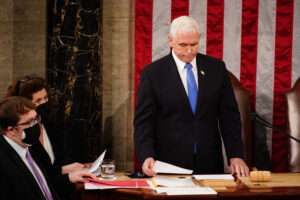
Then-Vice President Mike Pence oversees electoral vote count in Congress, January 6, 2021. (Jim LoScalzo - Pool via CNP/picture alliance / Consolidated News Photos/Newscom)


Earlier this week, a bipartisan group of 16 senators put forward a bill intended to fix the Electoral Count Act, the archaic 1887 law whose ambiguities Donald Trump and others sought to exploit in order to overturn the results of the 2020 election. The bill has a good chance of getting through Congress. If it does, it would go a long way to fixing the flaws in the ECA.

In a recent post, building on the work of Andy Craig of the Cato Institute, I summarized the three main goals ECA reform should achieve:

1. Preventing state governments from, in effect, changing the rules after election day, in order to reverse election results they don't like.

2. Preventing Congress from throwing out electoral votes for bogus reasons (as some GOP members of Congress sought to do after the 2020 election).

3. Making it more clear that the Vice-President does not have the power to invalidate electoral votes (a step then-VP Mike Pence rightly refused to take in January 2021, despite the urging of Donald Trump).

The bipartisan proposal would be a big step forward on all three points. That's why it has attracted broad, cross-ideological support from experts in the field. In a recent post at the Election Law blog,  prominent election law and constitutional law scholars Ned Foley, Michael McConnell, Derek Muller, Rick Pildes, and Brad Smith, summarize the bill's strengths and urge Congress to swiftly pass it:

Here are the main features of the draft, which are a vast improvement on the existing Act from 1887. These features appropriately respond to the need to update the Act to protect the integrity of future presidential elections.

First, and most importantly, in its revisions to the current provisions of U.S. Code, the draft bill reflects the philosophy that disputes over which presidential candidate won the popular vote in a state should be settled according to that state's law, adopted in advance of the popular vote, subject, as required by the Constitution, to the supremacy of applicable federal law. As revised by the draft bill, 3 U.S.C. § 1 would now read: "The electors of President and Vice President shall be appointed, in each State, on election day, in accordance with the laws of the State enacted prior to election day." The italicized language is new, and may not be a lot of words, but it embraces the key point that the appointment of electors must be pursuant to the rule of law, and not the partisan whim of state officials disgruntled with the outcome of the popular vote….

Second, and relatedly, the draft bill would delete the existing so-called "failed election" provision in 3 U.S.C. § 2, which dangerously empowers state legislatures to choose a new method of appointing their state's electors if the election has "failed"–a term undefined in current law–in that state. Instead, the draft bill would permit states to extend the period of holding the popular vote itself in very limited circumstances: "as necessitated by extraordinary and catastrophic events as provided under laws of the State enacted prior to such day." But state legislatures have no power whatsoever for changing the rules for appointing their electors after the congressionally designated Election Day in November…

Third, the bill eliminates uncertainty about the results of a state's election or the risk of competing slates of presidential electors. Under the bill, there is only one official outcome of a presidential election in each state, and the courts have a role in ensuring that only one certificate of election is sent to Congress. The bill clarifies who has the authority to certify a slate of electors for a state, and a certification according to that process is conclusive when presented to Congress….

Fourth, the bill repairs several procedural weaknesses in how the existing Electoral Count Act structures the joint session of Congress that occurs on January 6, two weeks before Inauguration Day. It clarifies that the President of the Senate (usually, the Vice President) has a ministerial role and no unilateral power to reject election results. The bill also raises the threshold for objecting to counting electoral votes. One-fifth of the members of each chamber must sign an objection to counting electoral votes, up from the present rule that just one member of each chamber can object. This reduces the likelihood of a small number of Representatives and Senators delaying the count or interfering in results. It also specifies and limits the kind of objections that members of Congress can raise, most especially to incorporate—as spelled out in 3 U.S.C § 5—that Congress is not permitted to second-guess the results of elections after states have certified the results.

For readers who may not know, the authors of the Election Law blog post span the jurisprudential and ideological spectrum, ranging from progressive (Foley and Pildes) to conservative (McConnell), and libertarian (Smith). McConnell is also a well-known former federal judge, at times seen as a likely GOP Supreme Court nominee. I am less familiar with Muller's views than the others [update: he seems to be a moderate conservative].

The bipartisan proposal has also gotten praise from Andy Craig (whose work I mentioned above), conservative political commentator Yuval Levin in a National Review article, and others.

This is the rare bill that is not only "good enough for government work," but actually good! It won't, by any means, fix all the problems that ail American democracy. But it can fix some key vulnerabilities revealed by aftermath of the 2020 election.

UPDATE: Andy Craig has a detailed post about the bipartisan bill here:

Overall, it is a very solid proposal and would represent an immense improvement over the status quo. It tracks with many of the recommendations we've made at Cato, the work of other scholars and organizations, and includes some of the suggestions made in a Committee on House Administration staff report commissioned by Rep. Zoe Lofgren (D‑CA) earlier this year.

The whole exercise is largely one of Madisonian checks and balances: setting up guardrails to make sure the states, the courts, and Congress can each check the other two, while ensuring that each is also empowered in their proper spheres, to minimize the risk of partisan malfeasance at any stage of the process.

Craig does suggest some improvements to the current draft. And, as he notes, it may well get revised as it goes through. The most important part that needs improvement is this one:

One thing ECRA does not do is clearly limit the valid grounds for objections [to state electoral votes by members of Congress]. Instead, with a slight stylistic restructuring, it retains the language from the 1887 ECA allowing objections on the basis that electors were not "lawfully certified" or that their votes were not "regularly given." This is unfortunate and should probably be the main focus of any possible amendments.

Hopefully, Congress will fix this provision.

More