District courts may wish to consider the wisdom of allowing individual judges to regulate practice in any manner, "[n]otwithstanding the local civil rules." Federal Rule of Civil Procedure 83(b) provides that individual judges may regulate practice in any manner "consistent with … the district's local rules." Federal Rule of Criminal Procedure 57(b) provides the same. That at least suggests the inverse, that judges may not regulate practice in a manner inconsistent with the district's local rules….
District courts may wish to implement a formal procedure for "reviewing single-judge standing orders," as encouraged by the rules advisory committee. Some JSOs may warrant consideration for inclusion in the district's local rules….
Judges may wish to consider the benefits and drawbacks of regulating practice through case-management orders posted to the docket automatically at the beginning of a case as opposed to standing orders posted online. That would ensure docketed notice to the parties and archival for any appellate review. It could also reduce a litigant's hesitation to ask the judge to modify a standing order based on the needs of a particular case….
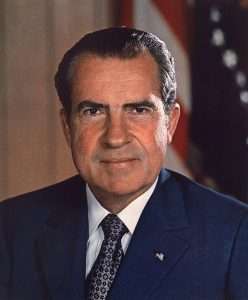
5/9/1974: Resolution to impeach President Nixon introduced in the House of Representatives. On 7/24/1974, the Supreme Court would decide U.S. v. Nixon.
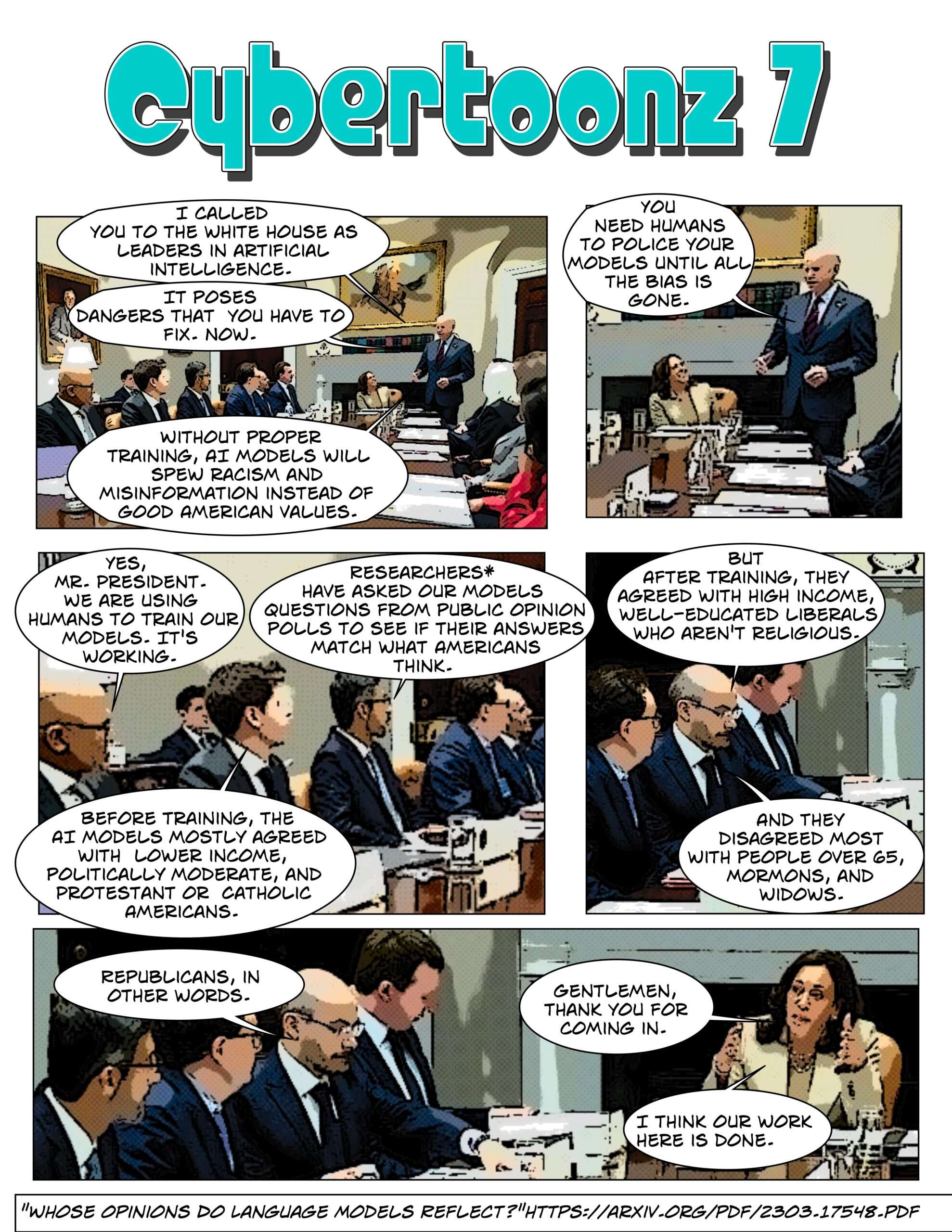
The "godfather of AI" has left Google, offering warnings about the existential risks for humanity of the technology. Mark MacCarthy calls those risks a fantasy, and a debate breaks out between Mark, Nate Jones, and me. There's more agreement on the White House summit on AI risks, which seems to have followed Mark's "let's worry about tomorrow tomorrow" prescription. I think existential risks are a real concern, but I am deeply skeptical about other efforts to regulate AI, especially for bias, as readers of Cybertoonz know. I revert to my past view that regulatory efforts to eliminate bias are an ill-disguised effort to impose quotas, which provokes lively pushback from both Jim Dempsey and Mark.
Other prospective AI regulators, from the FTC's Lina Khan to the Italian data protection agency, come in for commentary. I'm struck by the caution both have shown, perhaps a sign they recognize the difficulty of applying old regulatory frameworks to this new technology. It's not, I suspect, because Lina Khan's FTC has lost its enthusiasm for pushing the law further than it can reasonably be pushed. This week's example of litigation overreach at the FTC include a dismissed complaint in a location data case against Kochava, and a wildly disproportionate 'remedy" for what look like Facebook foot faults in complying with an earlier FTC order.
Jim explains the state appellate court decision ruling that the NotPetya attack on Merck was not an act of war and thus not excluded from its insurance coverage.
Nate and I recommend Kim Zetter's revealing story on the SolarWinds hack. The details help to explain why the Cyber Safety Review Board hasn't examined SolarWinds – and why it absolutely has to. The reason is the same for both: Because the full story is going to embarrass a lot of powerful institutions.
In quick hits,
Mark makes a bold prediction about the fate of Canada's law requiring Google and Facebook to pay when they link to Canadian media stories: Just like in Australia, he predicts, the tech giants and Canadian media will reach a deal.
Jim and I comment on the three-year probation sentence for Joe Sullivan in the Uber "misprision of felony" case -- and the sentencing judge's wide-ranging commentary.
And for those who missed it, Rick Salgado and I wrote a Lawfare article on why CISOs should support renewal of Foreign Intelligence Surveillance Act (FISA) section 702, and Metacurity has now named it one of the week's "Best Infosec-related Long Reads."
You can subscribe to The Cyberlaw Podcast using iTunes, Google Play, Spotify, Pocket Casts, or our RSS feed. As always, The Cyberlaw Podcast is open to feedback. Be sure to engage with @stewartbaker on Twitter. Send your questions, comments, and suggestions for topics or interviewees to CyberlawPodcast@gmail.com. Remember: If your suggested guest appears on the show, we will send you a highly coveted Cyberlaw Podcast mug! The views expressed in this podcast are those of the speakers and do not reflect the opinions of their institutions, clients, friends, families, or pets.
I rarely agree with prominent liberal legal scholar and blogger Eric Segall (see, e.g., our debate over originalism and my 2022 appearance on his podcast). But in a recent blog post, he makes some valuable suggestions on improving cross-ideological dialogue and reducing the harmful effects of polarization in the legal world:
[R]eflecting society-at-large, America's law schools are becoming increasingly divided along political lines with both sides retreating to their respective corners. This development is troubling because echo chambers produce, well echoes, not meaningful attempts at compromises and solutions palatable to broad constituencies. But if there's no one in the room arguing for different positions, compromise becomes much more difficult and stubbornness runs rampant.
Evidence of this polarization is all around us….
As to legal education specifically, there are a number of factors increasing polarization inside law schools making it more difficult to break through the echo chamber. One of the the largest causes of this problem is the binary choice offered by the Federalist Society and the American Constitution Society. These two organizations, one conservative/libertarian, the other liberal/progressive, reflect the divisions in our larger society as well as our two-party system of politics. Although at the student level, these two organizations often work together to put on panels and debates, at the national level where it counts the most, both organizations put on highly partisan programs that increase polarization where the two sides barely speak to each other….
Some will respond that both groups invite a few folks from the other side to their national conventions. For example, I was invited to Fed Soc this year for a panel on affirmative action. But these folks are usually a distinct minority and rarely make an appearance at the galas and other big celebrations. Moreover, my understanding is that both conventions are attended almost exclusively by folks whose values are consistent with the leadership of both organizations so that neither convention provides a good environment for across-the-aisle talk.
In addition to the polarization caused by Fed Soc and ACS students, professors, and judges generally staying in their own lanes, the unwillingness of law students (of all people) to hear from people with different views than their own is getting worse every year. At the University of California at Berkeley, nine student groups said they would not invite any speaker who supports Zionism (regardless of the topic of the event). At numerous law schools there have been controversies over who can speak, to whom, and under what conditions. Students retreating to their own corners is not good for legal education, the broader legal community, or society as a whole.
So, I have a few proposals. They are not likely to go very far but, as they say, nothing ventured, nothing gained.
1) Both Fed Soc and ACS should invite justices from the other side to speak at their national conventions, and those justices should show up. Symbolically, this intersection would be of great value and substantively it would be good for each group to pay close attention to how they are perceived by the other side and to hear arguments they do not normally hear. It would also be a positive development for the justices to be exposed to the different ideas and values held by folks who disagree with them.
2) The leadership at every school with Fed Soc and ACS chapters should strongly encourage and incentivize these groups to co-sponsor as many events as possible. We do this at Georgia State and the results are usually wonderful. Not only do students hear more varied arguments but they get to know and even like students in the other group. Such connections can have positive long-term effects.
3) Both groups should sponsor local and national events where they invite one or two people representing the other group to speak with opposing responses coming exclusively from the audiences. This would help people wrestle with opposing arguments in a direct way rather than through a third party.
4) Federal judges, especially the justices, should hire at least one law clerk every year with politics different from their own. I'll never forget my clerkship with a conservative, GOP judge who was genuinely interested in my views on the few highly political cases he faced while I was his clerk. He once told me that it was in those cases specifically where he liked me pushing him to make sure he was making the right decisions. Sadly, on both sides, that attitude is fading fast.
5) The leading legal blogs, including this one…. should reach out to folks on the other side and invite them to write posts with different perspectives than the blog usually offers. Years ago, I presented this idea in person to Eugene Volokh and Jack Balkin, who both run highly visible and successful blogs. They rejected the idea out-of-hand saying that legal bloggers do this now simply by responding to experts on other blogs. But that response missed the point of my idea. It is the sharing of space, both physical and virtual, among folks with different views that is important because being in the other side's house reduces both extremism and dogmatism.
I agree with pretty much all of these suggestions! Here are a few additional thoughts and ideas.
First, the situation at some of the institutions Eric mentions is less bad than he suggests. The standard practice in organizing panels at the Fed Soc National Lawyers Convention is to try to have at least two left-liberal speakers on each one (out of a total of four or five participants). I know because I am a longtime member of two of the Executive Committees that organize such panels. But it is true, as Eric notes, that these "oppositional" speakers rarely stay much beyond the time they are on stage for their panel, or participate in other convention events. My impression is that the ACS national convention (where I have been a speaker twice - see, e.g., my talk on race, zoning, and property rights at the 2017 convention) usually has only one oppositional speaker per panel.
Before speaking at the 2017 ACS convention, I happened to mention I was planning to participate to longtime Fed Soc President Gene Meyer. He said he was happy I was doing it, but asked me to make him one promise: "Don't just give your presentation and then leave," he said, "stay and talk to the people afterwards." I did exactly that, and Meyer was right to suggest it makes a difference. ACS and Fed Soc might think about how to expand opportunities for these kinds of informal interactions.
When it comes to blogs, the Volokh Conspiracy has in fact often had left-liberal scholars as guest bloggers (notable examples include Akhil Amar and Cass Sunstein) or participants in symposia. Most recently, prominent liberal election law specialist Edward "Ned" Foley took part in the symposium I organized for participants in the National Constitution Center "Guardrails of Democracy" project (see his posts here and here). Jack Balkin's Balkinization blog often has conservative or libertarian guest-bloggers as participants in symposia. I have been one of them myself (e.g. here and here). Jack also interviewed me on his blog about my books Free to Move: Foot Voting, Migration, and Political Freedom and The Grasping Hand: Kelo v. City of New London and the Limits of Eminent Domain (see here and here). Way back in 2013, Jack even took me up on the suggestion to do a series of guest-blogger posts on my then-new book Democracy and Political Ignorance: Why Smaller Government is Smarter. I reached out to Jack then (and on some later occasions) precisely for the purpose of engaging in cross-ideological outreach, so that I would not just be presenting my ideas to people likely to already agree with them.
That said, Fed Soc, ACS, and various legal blogs (this one included!) can certainly do more to foster cross-ideological dialogue. For example, as noted above, oppositional speakers at the ACS and Fed Soc national conventions should be more fully integrated into the event as a whole, including informal interactions. It is also true they should make a point of inviting judges opposed to their preferred judicial philosophy.
Like Eric, I too clerked for a conservative federal judge (in this case, one who also has some libertarian leanings) who sometimes has liberal clerks, including one the year I clerked. There is definitely value to having at least one clerk in the chambers who holds significantly different views from those of the judge. Such a person is more likely to catch certain types of errors than more ideologically aligned staff would be. Judges would do well to engage in more such hiring. Supreme Court justices and prominent circuit court "feeder" judges should try to lead by example on this front.
When it comes to law schools, perhaps the single most important thing they can do to improve cross-ideological dialogue is curb ideological discrimination in faculty hiring. There is extensive evidence of hiring discrimination against conservative and libertarian legal academics. As a result, many top institutions have very few, if any, faculty who aren't on the political left. This is particularly true of public law fields, and others that are ideologically contentious. For obvious reasons, faculty play a major role in setting the terms of intellectual debate in any educational institution. Greater ideological diversity on the faculty would improve the quality of discussion at law schools, and increase the range of ideas that get meaningful consideration.
This is not a call for affirmative action for conservative or libertarian academics, which is a terrible idea. Simple nondiscrimination is all that is needed to simultaneously increase ideological diversity and improve faculty quality. Like racial and ethnic discrimination, ideological discrimination predictably reduces quality, as less-qualified candidates with the preferred views often get hired in preference to better-qualified dissenters.
I also do not claim that, absent discrimination, we would have law school faculties that "look like America" when it comes to the distribution of ideologies. Far from it, most likely. For a variety of reasons, left-liberals would still be overrepresented relative to their percentage of the general population. But the proportion of conservatives and libertarians would likely be significantly higher than is currently the case.
Eric's list and my added suggestions are far from an exhaustive catalogue of all that elite legal institutions can do to improve dialogue and curb the harmful effects of polarization. Hopefully, we can stimulate a broader discussion on this issue, including additional suggestions by others.
Lieutenant Governor Dan Patrick has been set on killing tenure at Texas state universities ever since the University of Texas faculty senate had the temerity to object to his proposed ban on critical race theory. SB 18 fulfills that mission. It passed the Texas state Senate, but is expected to fail in the House.
The House Education Committee is set to take up the bill today, but a new version the bill is now making the rounds. The substitute version of SB 18 would still destroy any meaningful tenure system in Texas, but it would do so more subtly. So subtly, in fact, that the Texas Tribune characterizes it as keeping tenure in Texas. The Texas Tribune has been suckered, and the Texas House might be as well. They should take a second look at the proposed substitute.
It is true that the new bill says that there will be tenure in system, but the details seriously subvert existing tenure protections. In particular, Section 3(c) defines the property interest in tenure as a single year salary. This is designed to allow university to fire tenured faculty without good cause so long as it pays out a single year salary. This is a mockery of a meaningful tenure system.
The bill also makes some significant modifications in what would qualify as good cause for terminating a faculty member at a state university in Texas. Section 3(c-1)(2)(A)(iv) allows professors to be fired for "moral turpitude." This is not an uncommon contractual provisions, but I do not believe that it is common in university tenure systems. I am extremely leery of how this might be used by university officials unhappy with a member of the faculty.
Part (v) of that section of the bill allows professors to be fired for violating laws or university policies. This kind of language has been popping up in tenure revision proposals in several Republican states, and is often part of the effort to ban the teaching of "divisive concepts" in university classrooms. It is intended to facilitate firing professors for teaching forbidden ideas. It would allow professors to be fired for minor policy violations, and encourage future policies to hem in faculty with restrictive rules backed by draconian penalties.
Part (vii) allows professors to be fired for "unprofessional conduct." This is much more sweeping than how university policies are generally written. I would not be confident about how this might be used by university officials looking to rid themselves of a disfavored member of the faculty.
It is no accident that this subsection concludes by saying that professors can also be fired for any "good cause as defined in the institution's policies." It both recognizes that the legislature is here creating unusual understandings of good cause, and invites future tinkering with tenure protections by university governing boards.
The section also authorizes universities to fire faculty when "thereisactualfinancialexigency," which is a normal AAUP-recognized reason for laying off even tenured faculty. But then it adds, "orthe phasingoutoftheinstitution'sprogramsrequiringeliminationof the faculty member's position" One can imagine reasonable applications of such language, but one can also easily foresee abuses. There is no provision here for seeing whether tenured professors in defunct departments can be moved to other positions in the university, which is the standard practice endorsed by the AAUP. Moreover, the possibility that programs might be phased out but for reasons other than financial exigency invites political meddling with universities. Don't like the tenured faculty in Women's Studies? Just eliminate the department, and then the tenured faculty members can all be fired. Eliminating departments is more controversial than firing individual professors, but in the current environment this is an easy loophole to exploit.
This version of SB 18 is not as awful as earlier versions, but it would leave Texas state university faculty with a much weakened tenure system full of holes that could empower university officials to rid themselves of troublesome professors. The Texas Tribune seems to have been suckered by the new bill. The Texas state House should not.
Words from the Seventh Circuit, in Singh v. Amar, 2023 WL 3267851, handed down Wednesday. One can debate the merits of these conclusions, or argue that they are somewhat overstated (e.g., perhaps there might be some basis for sealed appeals in some extraordinary national security cases); and the Seventh Circuit is somewhat more skeptical of pseudonymity and sealing than some other courts are. But in any event, I expect they may be helpful to lawyers opposing sealing or retroactive anonymity (or pseudonymity, which is synonymous in this context).
A very interesting article by Penn law professor (and leading criminal law scholar) Paul Robinson, together with Jeffrey Seaman and Muhammad Sarahne; here's the bulk of the Table of Contents, which I think offers a good perspective on what the article covers:
II. Citizen Non-Cooperation
A. Witness Intimidation
1. Types of Witness Intimidation
2. Case Example: Latasha Shaw
3. The Nature and Extent of the Problem
4. Public Complaints
5. Reforms Attempting to Reduce Witness Intimidation
6. Recommendation: Protect Witness Identities in Cases of Likely Intimidation
B. The Stop Snitching Movement and Codes of Silence
1. Case Example: Israel Ramirez
2. The Nature and Extent of the Problem
3. Public Complaints
4. Reforms Addressing the Stop Snitching Movement
5. Recommendation
C. Cynicism about Criminal Justice Effectiveness
1. Case Example: Alec Cook
2. The Nature and Extent of the Problem
3. Reforms to Reduce Legal Cynicism
4. Recommendation
D. Community Upset Over Police Use of Force: The False Narrative Problem
1. Case Example: The Shooting of Michael Brown in Ferguson, Missouri
2. The Nature and Extent of the Problem
3. Pushing Back against Community Misperceptions Regarding Police Use of Force
4. Reforms Addressing Community Upset Over Police Use of Force
5. Recommendation
III. Police Non-Intervention
A. Anti-Police Rhetoric and Physical Attacks on Police
1. Case Example: Al Sharpton
2. The Nature and Extent of the Problem
B. De-Policing: Defunding Police and Police Exclusion Zones
1. Case Example: Police-Free Zone in Minneapolis
2. Case Example: De-Policing in Portland
3. The Nature and Extent of the Problem
4. Changing Views on De-Policing
C. Police Demoralization: Early Retirements, Increased Hiring Difficulties, Decreased Hiring Standards, and Understaffing
1. Case Example: Minneapolis Police Shortages and Demoralization
2. The Nature and Extent of the Problem
D. Voluntary Police Non-Intervention: The Ferguson Effect
1. Case Example: The Ferguson Effect in Baltimore
2. Case Example: Police Disengagement in Atlanta
3. The Nature and Extent of the Problem
E. Reforms to Reduce Police Non-Intervention
IV. Recommendation: Create a Police-Community Oversight Commission That Will Help Police Earn Credibility with the Community and That Will Itself Earn Credibility with the Police
A. Improving Police Credibility with the Community
B. The Commission Must Establish Its Own Credibility with the Police
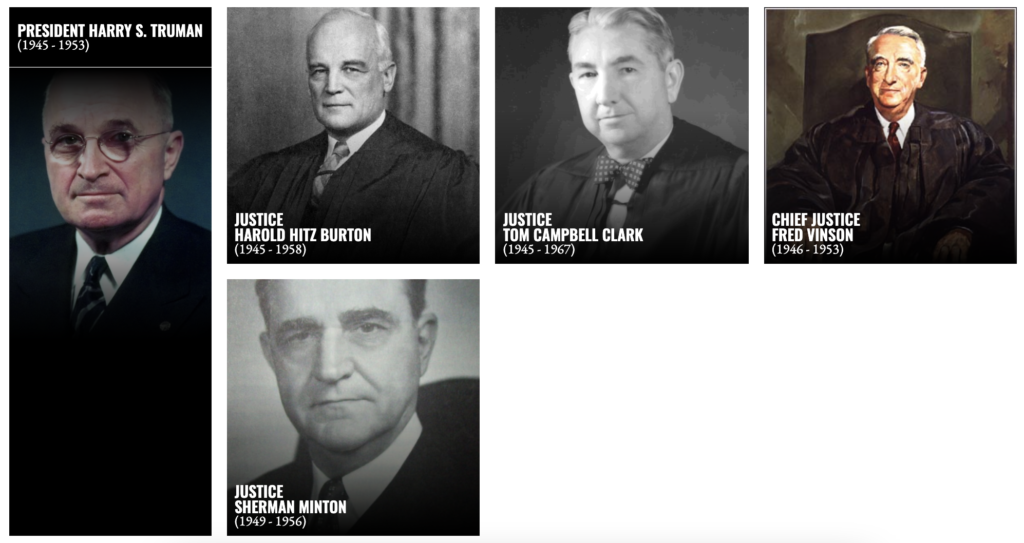
5/8/1884: President Harry S. Truman's birthday. He would make four appointments to the Supreme Court: Chief Justice Vinson, and Justices Burton, Clark, and Minton.
A judge's standing orders generally include various instructions to lawyers about procedural matters; here's an item from p. 4 of the 10-page standing orders from Judge Ana Reyes, newly appointed to the U.S. District Court for the District of Columbia; I include some of the preceding material for context:
f. Pre-Motion Conference. If a party wishes to file a dispositive motion, it must request that the Court schedule a pre-motion conference. To so request, the moving party shall submit a short notice via ECF, not to exceed six double-spaced pages in length, setting forth the basis for the anticipated motion, including the legal standards and the claims at issue. Other parties shall respond by filing, within one week, a document of similar length setting forth their anticipated responses to the proposed motion. The Court will review and discuss with counsel any anticipated summary judgment motions at the premotion conference. This requirement shall not apply to incarcerated pro se litigants.
g. Oral Argument.
i. A party may include a request for oral argument in its motion, opposition, or reply papers and, if this request is granted, counsel will be advised of the argument date. See LCvR 7(f). See supra ⁋ 6(d) for further information concerning oral argument.
ii. The Court understands that, for reasons passing understanding, not all counsel are fans of the Boston Red Sox. Counsel should be aware, however, that the Court may reference key moments in Red Sox history during oral argument. References may include: (a) Dave Roberts's steal; (b) Carlton Fisk's walk-off homerun; (c) Ted Williams's final at-bat; and, inter alia, (d) David Ortiz's "this is our [bleep] city" speech. Any reference to Game 6 of the 1986 World Series is strictly prohibited….
A new development project may finally build new housing on on property whose condemnation for purposes of "economic development" was upheld by the Supreme Court in a controversial 2005 decision.
The former site of Susette Kelo's house, May 2014. Photo by Ilya Somin.
The recent release of Justice John Paul Stevens' papers have attracted new attention to the Supreme Court's controversial 2005 ruling in Kelo v. City of New London, the 5-4 decision in which the justices ruled that the condemnation of homes for "private economic development" is permissible under the Takings Clause of the Fifth Amendment, which only allows takings that are for a "public use." Notoriously, the development project that supposedly justified the condemnations fell through, and nothing was actually built on the property where the dispossessed owners' homes previously stood. Since the last homeowners were forced out and their houses torn down, the only regular users of the condemned land were a colony of feral cats.
Feral cat on the site of one of the properties condemned in the Kelo case, 2011 (photo by Jackson Kuhl).
That may now be in the process of changing. While I missed the news at the time, in January the Renaissance City Development Association (the private nonprofit development firm formerly known as the New London Development Corporation, which took ownership of the property after it was taken by eminent domain) sold the condemned land to a developer, which may plan to build new housing on it. The New London Day reported some details on January 19:
[A]ll the properties on the Fort Trumbull peninsula are slated for development.
Parcels on the peninsula, which also is home to Fort Trumbull State Park, have been vacant for almost 20 years. The land was cleared for development in a move by the city that led to the landmark 2005 U.S. Supreme Court decision, Kelo v. New London, about the use of eminent domain….
The land is owned and marketed by the city's development arm, the Renaissance City Development Association.
According to a development agreement between RCDA and RJ Development, parcels labeled 1A and 3C were sold for $500,000 and parcel 4A was sold for $1. The developer agreed to pay a $30,000 deposit to show its commitment.
The agreement states the projects on the property will primarily consist of, but will not be limited to, "the construction of residential units to be offered for market rate sale or rent/lease," with the associated parking and other improvements.
Parcels 3C (formerly part of a larger unit called Parcel 3) and 4A are the former sites of the residential properties condemned in the Kelo litigation. Susette Kelo's famous "little pink house," which became a nationally known symbol of the case, was on 4A.
A later story, published on February 3, provides some additional information, including that the low price of Parcel 4A was because of the "cost of remediating the remaining contamination of soil and groundwater." That contamination apparently developed during the long period when the parcel lay empty.
I have not been able to find any further information on what exactly RJ Development plans to build and when construction will be completed. The project is not listed on their website, which does however describe in detail another project they are doing in the area. I have contacted RJ Development to see if they are willing to provide any details. If I learn anything of interest, I will post it right here at the Volokh Conspiracy blog!
Since 2005, several efforts to redevelop the condemned land have fallen through. Hopefully, this one will succeed. But even if it does, I don't think it will somehow vindicate the Kelo condemnations. The new development initiative is obviously different from the badly misconceived plan that led to the use of eminent domain over twenty years ago. Moreover, by the time any construction is completed, the land will have lain unused (except by feral cats!) for nearly twenty years. From the standpoint of promoting development, that's an enormous waste.
The region would almost certainly have been better off economically if the original owners had been allowed to keep living there, paying property taxes, and contributing to the local economy. And that doesn't even consider the enormous pain and suffering the original development project inflicted on those who lost their homes (including some who sold them "voluntarily" as a result of harassment and the threat of eminent domain). I describe the history of the condemnation process and the harm it inflicted in much more detail in The Grasping Hand: Kelo v. City of New London and the Limits of Eminent Domain, my book about the Kelo case and its aftermath.
As I have previously emphasized in the book and elsewhere, the flaws in the New London development project don't necessarily prove that the Court got the Kelo decision wrong. Plenty of unjust and ill-conceived government policies are still legal. But there are in fact compelling reasons to reject the Court's reasoning, from the standpoint of both originalism and living constitutionalism. At least four current Supreme Court justices have expressed interest in revisiting and possibly overruling Kelo, and I hope it will indeed eventually be overruled. In the meantime, I will do what I can to find out what, if anything, is going to be built on the two parcels.
Biden v. Nebraska, the legal challenge to the Biden Administration's student loan forgiveness program, is likely to be decided on standing. If the justices reach the merits, there is little question they will conclude that Congress did not authorize this sort of wholesale loan forgiveness by executive branch decree. But it is not clear that the justices will reach the merits, as it is not clear the plaintiffs have standing.
This week, the Roosevelt Institute and the Debt Collective issued a new report purporting to challenge the factual basis for state standing in Nebraska v. Biden. Specifically, the report purported to show that Missouri's argument that it has standing because student loan forgiveness will cause MOHELA -- a student loan servicer created by Missouri -- "to lose financial revenue, thereby harming the state" is "fundamentally false."
Progressive commentators rushed to proclaim that the report blew a hole in the arguments for state standing to challenge student loan forgiveness. Tori Otten of The New Republicproclaimed that the report shows "the main argument at the heart of the lawsuit is utterly false." University of Texas law professor Steve Vladeck tweeted that the study revealed "MOHELA won't be injured by the program at all" (emphasis in original).
The entire (untested) theory of standing in the red state challenge to President Biden's student loan debt relief program is based on a claimed injury to MOHELA. Even if that would be enough (and it shouldn't be), it turns out that MOHELA won't be injured by the program *at all.* https://t.co/ZNmTV1jBex
Yet if one reads the study, one sees that it shows no such thing. To the contrary, it demonstrates quite conclusively that the Biden Administration's student loan forgiveness plan will result in MOHELA receiving millions of dollars less in revenue than it would have otherwise. Whether or not harms to MOHELA should be considered harms to Missouri, there is no way to read the report as showing that MOHELA "won't be injured at all" by student loan forgiveness.
… [Plaintiffs allege] that the defendant Bais Yaakov D'Chasidei Gur ("the School") improperly disciplined the infant plaintiff through alleged suspension because of her "family's allegiance to Rabbi Shaul Alter", who the defendants considered to be an illegitimate rival to the established Rabbi of Gur, Rabbi Y.A. Alter. The School is operated by the adherents of Rabbi Y.A. Alter. [UPDATE: Note that "infant" here is simply legalese for "minor"; the plaintiff was 12 years old when the Complaint was filed.]
The lawsuit claims the defendants' actions constituted statutorily prohibited religious discrimination and negligently inflicted emotional distress, but the court disagreed:
In support of the motion, the defendants submitted the affidavits of Abraham Schmidt and Yehuda Segal, both of whom sit on the educational board of Bais Yaakov, explaining the reasons for the infant plaintiff's suspension. They both state that Bais Yaakov is an educational institution of the Ger Community whose educational philosophy is premised upon the importance of teaching their students in the religious teachings and tenants of the Ger movement. They state that one of these tenants is respect and reverence for the one and only Ger Rabbi, Rabbi Y. A. Alter, who they claim is the one true spiritual leader of the Ger movement and who is recognized as such by all the Ger Chassidim worldwide.
They state that some of the parents of the students of Bais Yaakov, including the infant plaintiff's legal guardian, have decided to shift their allegiance and loyalties to Rabbi Shaul Alter, who leads a dissident group of the Ger community who have disparaged Rabbi Y. A. Alter in numerous ways. They maintain that this has caused enormous problems for the School because a vast majority of the parents of the girls who attend the school continue to support Rabbi Y. A. Alter.
They state that many of the parents have threatened to stop sending their daughters to Bais Yaakov if the girls from the families loyal to Rabbi Shaul Alter are permitted to remain at the school because these parents do not want their daughters exposed to the ideas espoused by Rabbi Shaul Alter. They maintain that these ideas undercut and mock the way they want their daughters educated. They maintain that allowing the dissident students to remain at school will make it impossible for Bais Yaakov to inculcate traditional Ger values to the other students, the very reason that the parents have enrolled them in Bais Yaakov.
In Bernstein v. Nossel, decided yesterday by New Jersey intermediate appellate court (Chief Judge Carmen Messano and Judges Katie Gummer and Lisa Perez-Friscia), plaintiff was bitten by Ringo, defendants' dog, while plaintiff was visiting defendants' house for about an hour. Plaintiff had been invited to visit by the defendants' dogsitter, Ms. Shore, who was staying in the house at defendants' invitation for two weeks.
Now under New Jersey's strict liability dog bite statute, defendants wouldn't be liable if plaintiff was a trespasser; and defendants argued that plaintiff was a trespasser for an unusual reason:
Defendants … argued … [that] based on plaintiff's faith and his knowledge of defendants' faith, he could not reasonably have believed he belonged in their home alone with Shore or in the upstairs bedroom…. [D]efendants asserted … that the parties and Shore were "all observant Orthodox Jews" and "Orthodox Jewish Law strictly prohibits unrelated single men and single women, like [p]laintiff and Ms. Shore, from being alone together in a secluded location, like [d]efendants' home, unchaperoned." [This prohibition is apparently called the law of Yichud. -EV] …
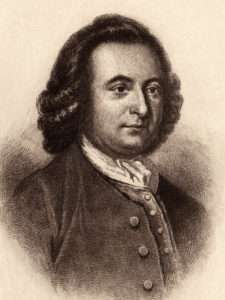
5/6/1776: Virginia Declaration of Rights by George Mason is published. Thomas Jefferson relied on this document when drafting the Declaration of Independence.
Yesterday, the Court asked the parties for further briefing in light of these developments. The order reads:
The parties and the Solicitor General are invited to file supplemental letter briefs addressing the following question: What is the effect on this Court's jurisdiction of the April 28, 2023 order of the North Carolina Supreme Court? The briefs, not to exceed 10 pages, are to be filed simultaneously with the Clerk and served upon opposing counsel on or before 2 p.m., Thursday, May 11, 2023.
Muller also notes another jurisdicitonal wrinkle in this case (also raised by Will Baude): How do North Carolina courts retain jurisdiction over a case that is already subject to Supreme Court review?
Either way, the latest developments in North Carolina would give the justices an excuse to remove another case from the docket. Whatever the legal merits of such a move, it would make time for the justices to catch up on releasing opinions from argued cases.
In my last post, I summarized what I learned from Justice John Paul Stevens' papers on Kelo v. City of New London, the controversial 5-4 decision in which the Supreme Court ruled that the condemnation of homes for "private economic development" is permissible under the Takings Clause of the Fifth Amendment, which only allows takings that are for a "public use." The papers were opened to the public earlier this week.
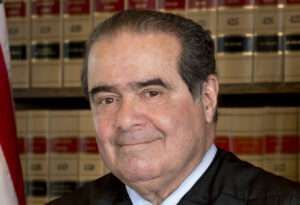
As noted in my previous post, one of the most interesting revelations in Stevens' files is that Justice Antonin Scalia wrote a dissent in the case, which he eventually chose not to publish. In this post, I reprint Scalia's dissent in its entirely (it's short!), and then offer some comments. Here's the dissent:
As JUSTICE O'CONNOR well explains, ante, at 1-2, 7-8 (dissenting opinion), the Court's decision today goes far beyond the holdings of our prior cases, and renders part of the Takings Clause a virtual nullity. Under the precedent set today, the Public Use requirement is effectively nonjusticiable. The political branches in the Federal Government and each State are left to administer it on the honor system.
It is hard to endure the Court's hymn of praise to "the best tradition of our federalist system," which permits "different communities" to use "political processes" to "strike the balance of costs and benefits in different ways." Ante, at 19. Why is it appropriate to sing that song in a case involving a real-live constitutional text clearly designed to constrain "political processes"; but to leave it unsung in the many cases involving phantom rights that the Court has summoned up from nowhere? The same Court that could fashion an enforceable constitutional entitlement out of every individual's "'right to define"' his or her '"own concept of existence, of meaning, of the universe, and of the mystery of human life,"' Lawrence v. Texas, 539 U.S. 558, 574 (2003) (quoting Planned Parenthoodof Southeastern Pa. v. Casey, 505 U.S. 833, 851 (1992) (plurality opinion)), today proclaims that the deeply felt "limits of [its] authority," ante, at 19, preclude it from enforcing a right that has been in the text of the Bill of Rights for more than two hundred years. The Court erects citadels in ultima Thule while leaving the Vandals unattended in Rome itself. This foolish disparity should not go unnoticed, nor (in the long run) uncorrected.
I respectfully dissent.
The Stevens files show that Scalia circulated this dissent on June 15, 2005, eight days before the Kelo decision was issued. He then withdrew it on June 21, after Justice Stevens removed the passages in his majority opinion that most incensed Scalia. Most notably, Stevens cut the references to "the best tradition of our federalist system" and allowing "different communities" to use "political processes" to "strike the balance of costs and benefits in different ways."
For the most part, Justice Scalia's dissent echoes themes from Justice Sandra Day O'Connor's lead dissent, which he had already agreed to join. For example, both emphasize that the majority essentially gutted public use restrictions on takings.
The main distinctive point Scalia makes is the contrast between the majority's unwillingness to enforce an explicit enumerated constitutional right (the Public Use Clause of the Fifth Amendment) and its far greater solicitude for unenumerated "substantive due process" constitutional rights such as those enforced in Lawrence v. Texas (striking down laws banning same-sex sexual relations), and Planned Parenthood v. Casey (abortion). The latter was a longtime major concern of Scalia's (who forcefully dissented in both Lawrence and Casey).
It is interesting that Scalia withdrew the dissent after Stevens made changes to the wording of the majority. Although Stevens removed the specific phrases Scalia complained about, the substance of the opinion did not meaningfully change. It still treats the Public Use Clause much less favorably than various unenumerated rights. And it still cites federalism and diverse local needs as a justification for deferring to local authorities on public use issues:
Viewed as a whole, our jurisprudence has recognized that the needs of society have varied between different parts of the Nation, just as they have evolved over time in response to changed circumstances. Our earliest cases in particular embodied a strong theme of federalism, emphasizing the "great respect" that we owe to state legislatures and state courts in discerning local public needs.
Ironically, just 17 days before Kelo was issued, and nine days before Scalia circulated his dissent, the Supreme Court issued its decision in Gonzales v. Raich, which held that Congress' power to regulate interstate commerce was so broad that it allowed it to ban the possession of medical marijuana that had never crossed state lines or been sold in any market, even within a state. Justice Stevens was the author of the majority opinion in Raich, just like in Kelo. Raich was a deeply flawed ruling that expanded federal power further than any previous Supreme Court decisions, and ran roughshod over state diversity and autonomy. There is an obvious tension between Stevens' paeans to state and local autonomy in Kelo and his endorsement of extraordinarily broad federal power in Raich.
Scalia could and should have called out Stevens and the four other justices who were in the majority in both Raich and Kelo on this contradiction. But he was ill-positioned to do so, because he himself had also voted for the federal government in Raich, albeit in a concurring opinion that used different reasoning than the majority. In my view, this was one of Scalia's worst opinions.
In sum, Scalia was right to highlight the flaws in Stevens' appeal to federalism and local diversity. But his own role in the Raich case prevented him from pointing out the full extent of the contradiction in the majority's position.
There are two interesting unanswered questions surrounding Scalia's unpublished dissent. First, it is not clear why Scalia withdrew the dissent in response to what were largely rhetorical revisions to the majority opinion that failed to address his substantive concerns. Second, as noted in my last post, it is hard to explain why Scalia - the Court's leading champion of originalism - said virtually nothing about the original meaning of "public use" in his opinion, and chose not to join Justice Clarence Thomas' strong originalist dissent.