
12/14/1964: Heart of Atlanta Motel v. U.S. and Katzenbach v. McClung are decided.

Mostly law professors | Sometimes contrarian | Often libertarian | Always independent | Est. 2002
12/14/1964: Heart of Atlanta Motel v. U.S. and Katzenbach v. McClung are decided.
From a Dec. 1 Justice Department press release:
According to court documents, Hridindu Sankar Roychowdhury, 29, of Madison, pleaded guilty to attempting to cause damage by means of fire or an explosive. On Sunday, May 8, 2022, at approximately 6:06 a.m., law enforcement responded to an active fire at an office building located in Madison. Once inside the building, police observed a mason jar under a broken window; the jar was broken, and the lid and screw top were burned black. The police also saw a purple disposable lighter near the mason jar. On the opposite wall from the window, the police saw another mason jar with the lid on and a blue cloth tucked into the top; the cloth was singed. The jar was about half full of a clear fluid that smelled like an accelerant.
Outside of the building, someone spray painted on one wall, "If abortions aren't safe then you aren't either" and, on another wall, a large "A" with a circle around it and the number "1312." During the investigation, law enforcement collected DNA from the scene of the attack.
In March 2023, law enforcement identified Roychowdhury as a possible suspect. Local police officers observed Roychowdhury dispose of food in a public trash can; the officers recovered the leftover food and related items, and law enforcement collected DNA from the food. On March 17, law enforcement advised that a forensic biologist examined the DNA evidence recovered from the attack scene and compared it to the DNA collected from the food contents. The forensic biologist found the two samples matched and likely were the same individual.
Code is law, they say.
I wrote last week about an oral argument in the Fourth Circuit involving geofence warrants. Geofence warrants are warrants to obtain the location data that Google users let Google collect if they opt in to Google's location history service, which about a third of Google users do. Geofence warrants have been possible because, if you opt in, Google keeps a copy of the location history. And records are kept can be compelled, at least if the legal process is valid.
All of which makes this Google announcement from yesterday of great interest. Google will no longer keep location history even for the users who opted in to have it turned on. Instead, the location history will only be kept on the user's phone.
The Timeline feature in Maps helps you remember places you've been and is powered by a setting called Location History. If you're among the subset of users who have chosen to turn Location History on (it's off by default), soon your Timeline will be saved right on your device — giving you even more control over your data. Just like before, you can delete all or part of your information at any time or disable the setting entirely.
If you're getting a new phone or are worried about losing your existing one, you can always choose to back up your data to the cloud so it doesn't get lost. We'll automatically encrypt your backed-up data so no one can read it, including Google.
Additionally, when you first turn on Location History, the auto-delete control will be set to three months by default, which means that any data older than that will be automatically deleted. Previously this option was set to 18 months. If you want to save memories to your Timeline for a longer period, don't worry — you can always choose to extend the period or turn off auto-delete controls altogether.
These changes will gradually roll out through the next year on Android and iOS, and you'll receive a notification when this update comes to your account.
Unless I'm missing something, this will entirely defeat geofence warrants— which, I would speculate, was probably the point of Google's policy change. If Google doesn't keep the records, Google will have no records to turn over. If the government comes to Google with a court order for geofence data, Google will just say, sorry, we don't keep that stuff anymore.
My very tentative sense, from a public policy standpoint, is that this seems like a bit of a bummer. Geofencing was being used to solve some really serious crimes—like murders, rape, and armed robberies—when there were no known suspects or leads and the case had gone cold. Having governments be able, with sufficient cause, to go to a court, get a court order, and then obtain potentially responsive location records that could provide a lead to investigate was, on the whole, a good thing.
Of course, that public interest has to be balanced with the public interest in privacy. But my sense is that geofence warrants have been implemented (and could be implemented in the future) in ways that provide far greater privacy protection than normally exist with warrants. Every technique raises risks of abuse. But if you had to look at all the pluses and minuses of different techniques, a court order regime to access geofence records had more pluses and fewer minuses than those records not existing.
It will be interesting to see if we learn why Google made this change. Google is a private company. It has to answer to its shareholders, not to the public interest. And it's totally plausible that this was just a sensible business decision. If Google can provide location history for those who want it without keeping the records, Google presumably benefits by not having to deal with the privacy headaches of responding to geofence warrants.
If this is what drove Google' decision, it's an example of a less-appreciated way that the market regulates privacy. If you're providing a data service, responding to court orders for user data is not part of your business model. It's a costly hassle. And it can only lead to bad press. So you might look for ways to avoid keeping records, as records never kept are records that cannot be turned over.
As always, stay tuned.
From Thursday's decision by Judge Randolph Moss (D.D.C.) in U.S. v. Sterlingov, which holds that defendant Roman Sterlingov should be barred from "personally reviewing" "the sensitive, supplemental heuristic information that was created by the government's expert (for the benefit of the defense) and provided to the defense in September 2023," which is to say that only his lawyers should have access to it:
Here, good cause exists for limiting access to the sensitive, supplemental heuristic material in the manner that the government proposes. As government counsel persuasively explained at the November 13, 2023 hearing, the material at issue is neither evidence against the defendant nor is it exculpatory evidence. Instead, the information is best understood as a supplemental expert disclosure. It was provided to the defense, at the Court's urging, to ensure that the defense was fully apprised of the heuristics used in Chainalysis's Reactor software, which the government's experts, Luke Scholl and Elizabeth Bisbee, used to cluster certain blockchain transactions at issue in the case. This supplemental expert disclosure did not exist at the time either of the government experts prepared their reports, and the government itself came into possession of the material from Chainalysis only as an intermediary, before passing it along to defense counsel.
The government also explained that the sensitive, supplemental heuristic information provides a more granular account of the behavioral heuristics that Reactor employs than the account previously disclosed to Sterlingov, defense counsel, and an array of defense experts in Bisbee's expert report and appendices. That additional detail includes "exactly how" specific behavioral heuristics are "implemented and weighed," and, significantly, it "includes information about the kickouts"—that is, "what behavior would cause Chainalysis not to cluster" a given address. Armed with this information, those bent on preventing the government (or its expert) from clustering addresses, and thereby identifying their owners and connecting them to potentially illicit transactions, could readily adjust their conduct to evade detection.
By way of analogy, consider criminal enterprises that engage in sophisticated bank robberies. Imagine that the government can identify those enterprises by tracking down shell companies that have engaged in certain behaviors—say, opening a new bank account within x hours of a robbery and making deposits into that account between one and y hours post-robbery and then never again. Imagine further that the government has studied the behavior of particular criminal enterprises and knows that for Enterprise A, "x" equals 48 hours and "y" equals 12 hours, but that for Enterprise B, "x" equals 24 hours and "y" equals 6 hours. Armed with details about their behavioral patterns, the government would be able to identify which criminal enterprise likely robbed a particular bank. And were that information ever to be made public, both Enterprise A and Enterprise B would be able to evade detection by changing their distinctive behaviors.
I have a new piece at The Dispatch on the antisemitism hearing in the House Committee on Education and the Workforce and the poor performance of the presidents of the University of Pennsylvania, Harvard University, and MIT.
From the piece:
The presidents' bad hand in the hearings did not stem from a lack of hate speech regulations. Rather, it was due to the terrible track record that American universities have regarding principled free speech positions on campus. Harvard ranked dead last in the Foundation for Individual Rights and Expression's (FIRE) annual campus free speech rankings, and Penn was just one slot above them. Universities all too often have a double standard when it comes to protecting free speech. It is all too apparent that, regardless of their written policies, many universities would not tolerate hateful speech directed toward other, more favored groups on campus. But they have faced more conflicting pressures when it comes to antisemitic speech and the October 7 attack on Israeli civilians. While legitimate time, place, and manner regulations on campus speech are strictly enforced against some, violations are frequently ignored when university officials think that the violators have their hearts in the right place.
As a result, appeals to principles of robust academic freedom and free speech principles from Gay, Kornbluth, and Magill ring hollow. If universities uphold double standards, then there is a strong incentive to make sure that your constituency is on the right side of the double standard. The political scientist Ted Lowi famously wrote of the "end of liberalism," in which classical commitments to neutral principles in constitutional governance had been replaced in the 20th century with an "interest-group liberalism" that simply implemented the results of bargains among competing political interests. In such a world, your interests would be unprotected if you did not have a seat at the table and sufficiently strong leverage in the negotiations.
To a worrisome degree, universities have embraced an interest-group liberalism model of governing. The diversity, equity, and inclusion apparatus is both an outcome and a reflection of that kind of internal spoils system. Jewish students and faculty are now insisting that their interests get a better piece of the pie, and universities know how to respond to such demands. Don't hate the player; hate the game.
Read the whole thing here. Behind a paywall, but if you don't subscribe to The Dispatch, you should!
It's the twelfth case I've seen this year in which something like this apparently happened.
From yesterday's order by Judge Jesse Furman (S.D.N.Y.) in U.S. v. Cohen:
On November 29, 2023, David M. Schwartz, counsel of record for Defendant Michael Cohen, filed a motion for early termination of supervised release. In the letter brief, Mr. Cohen asserts that, "[a]s recently as 2022, there have been District Court decisions, affirmed by the Second Circuit Court, granting early termination of supervised release." He then cites and describes "three such examples": United States v. Figueroa-Florez, 64 F.4th 223 (2d Cir. 2022); United States v. Ortiz (No. 21-3391), 2022 WL 4424741 (2d Cir. Oct. 11, 2022); and United States v. Amato, 2022 WL 1669877 (2d Cir. May 10, 2022). Id. at 2-3.
As far as the Court can tell, none of these cases exist. 64 F.4th 223 refers to a page in the middle of a Fourth Circuit decision that has nothing to do with supervised release. See United States v. Drake, 64 F.4th 220 (4th Cir. 2023). 2022 WL 1669877 corresponds to a decision of the Board of Veterans Appeals. See (Title Redacted by Agency), Bd. Vet. App. A22004268, 2022 WL 1669877 (Mar. 11, 2022). 2022 WL 4424741 appears to correspond to nothing at all. Moreover, the Court contacted the Clerk of the Court for the United States Court of Appeals for the Second Circuit, who found no record of any of the three decisions and reported that the one listed docket number (for Ortiz) is not a valid docket number.
So holds the Second Circuit today, in an opinion (Carroll v. Trump) by Judge José Cabranes, joined by Judges Denny Chin and Maria Araújo Kahn. The defense, the court held, isn't one of the rare subject-matter-jurisdiction-based defenses that can be raised at any stage of the case, and thus aren't waivable. And, the court continued, Trump's failure to raise the defense early in the litigation (as an affirmative defense in his Answer to Carroll's Complaint) did indeed waive the defense.
None of this resolves whether the defense, if raised promptly, would have indeed precluded the civil lawsuit against Trump, nor does it speak to the merits of the lawsuit.
The Court granted two petitions for certiorari seeking review of a controversial lower court decision limiting federal approval of mifepristone.
Today the Supreme Court granted certiorari in several cases to be heard later this term. Among the petitions granted were two seeking review of the U.S. Court of Appeals for the Fifth Circuit's decision in Alliance for Hippocratic Medicine v. Food & Drug Administration, which challenged the FDA's approval and subsequent regulation of mifepristone, a drug that is widely prescribed to terminate pregnancies (i.e. to perform a "medication abortions").
Specifically, the Court granted petitions filed by the Solicitor General and Danco Laboratories (the maker of Mifeprex, a brand of mifepristone). Interestingly enough, the Court did not grant the cross-petition for certiorari filed by AHM.
Based upon the questions presented in the two granted petitions, here is what will be before the Court.
First, and quite significantly, is the threshold question of standing. As I have blogged repeatedly (see posts below), I do not believe that the plaintiffs can satisfy the requirements of Article III standing under current doctrine. Both granted petitions ask the Court to consider standing--and even if they hadn't, because standing presents a threshold jurisdictional question, it would be a part of the case. The centrality of standing to this litigation is particularly interesting because (as happened in the California v. Texas ACA litigation) traditional Article III standing arguments cut strongly against litigants seeking a conservative policy outcome.
The petitions also ask the Court to consider whether the Fifth Circuit was correct to uphold the district court's injunction against the FDA's 2016 and 2021 decisions to revise and relax the conditions placed on the prescription of mifepristone. As framed in the petitions, the questions encompass both the conclusions reached on the merits (that the FDA's actions were arbitrary and capricious) and the relief ordered (a preliminary injunction).
What is not included in the cert grant is whether the Fifth Circuit was correct to reject AHM's attempts to challenge the FDA's initial approval of mifepristone in 2000 as untimely. As I have noted previously, I think this part of the Fifth Circuit's decision was definitely correct, as AHM's arguments relied upon an unduly aggressive reinterpretation of the "reopener" doctrine. The Supreme Court will also not review AHM's substantive argument that the FDA improperly approved mifepristone in 2000.
The bottom line is that the Supreme Court will consider whether the plaintiffs had standing to bring this case and, if so, whether the FDA properly relaxed its regulation of mifepristone in 2016 and 2021. The decision here will undoubtedly affect the availability of mifepristone, but the case no longer includes the question of whether the FDA should have approved mifepristone for the purpose of terminating pregnancies in the first place.
I have blogged a fair amount about the issues in this litigation, and plan to do more. Accordingly, I am indexing my posts here, and will update this list as I blog additional posts.
"A group of eBay employees devised and engaged in a campaign of harassment, stalking, and threats to stop the Steiners from reporting about eBay" in their ECommerceBytes trade publication.
From yesterday's decision by Judge Patti Saris (D. Mass.) in Steiner v. eBay, Inc. (see this post for more on the criminal prosecution):
In 2019, Ina and David Steiner, a married couple living in Natick, Massachusetts, became the target of a months-long harassment and intimidation scheme. The Steiners own and operate a trade publication, ECommerceBytes, which reports on e-commerce companies such as eBay. A group of eBay employees devised and engaged in a campaign of harassment, stalking, and threats to stop the Steiners from reporting about eBay. The conduct carried out by the group included: sending the Steiners threatening online messages; arranging for the delivery of disturbing packages, including fly larvae, live spiders, cockroaches, a Halloween mask of a bloody pig face, a funeral wreath, and a book entitled "Grief Diaries: Surviving Loss of a Spouse"; signing the Steiners up for unwanted email subscriptions; publicly posting the Steiners' address inviting strangers for parties and yard sales; and traveling to Massachusetts and surveilling the Steiners' home.
The government subsequently brought criminal charges against seven individuals involved in the conspiracy. All seven have pled guilty. The Steiners bring this civil suit against those seven individuals, in addition to six other parties: eBay, three former eBay executives, and a separate company and its CEO. The Steiners assert fourteen different claims. Several Defendants move to dismiss the claims brought against them.
The court dismissed some of the claims, but allowed the intentional infliction of emotional distress and negligent infliction of emotional distress claims to go forward. It also allowed the negligent supervision and retention claims to go forward:
"[T]he wide-ranging conspiracy Doe posits, one that tormented an ordinary law student for months on end using actors, poison, and a weapon that can send electricity wirelessly through brick walls, is too far beyond the pale of human experience to credit without supporting evidence, of which Doe has provided none."
From yesterday's opinion by Judge P.K. Holmes, III in Doe v. Bd. of Trustees for Univ. of Ark.:
The Court concludes that the Law School's need to certify its students' character and fitness is a "business necessity" which is "vital to the business" of running a law school. As discussed above, the fundamental "business" of a law school is to produce lawyers. When a law graduate seeks to become a lawyer, a law school must certify that graduate's character and fitness to the relevant state bar in order for the bar admissions process to go forward. Therefore, the Law School's ability to certify the character and fitness of its graduates is integral to its central purpose of allowing those graduates to become lawyers—in other words, "vital to the business."
Further, the Law School had "legitimate, non-discriminatory reasons to doubt" whether Doe's apparent mental instability would be compatible with her chosen profession. The record in this case discloses that Doe assertively pressed her claims of harassment with many professors and administrators at the Law School, including a federal judge, demanding that they use their authority to intervene in the harassment. This is a legitimate basis for [Law School Associate Dean of Student Success] Pollvogt's concern that Doe might not be able to interact professionally with court personnel, especially if she perceived this harassment in a courthouse.
Perhaps more importantly, Doe's mention of the weapon manipulating her cognitive state and impairing her ability to study would have been legitimate grounds for concern about Doe's ability to soundly advise her clients and perform legal research tasks. Given the foregoing, the examination was job-related and consistent with business necessity.
An excerpt from Doe's allegations:
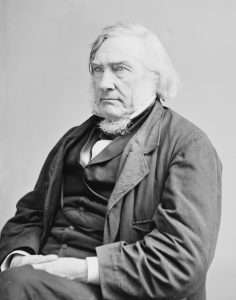
12/13/1873: Justice Samuel Nelson died.
Chemerinsky and Gillman are the co-authors of Free Speech on Campus, and have long defended free speech and academic freedom. (For another recent item from the two of them, see here ["Free speech doesn't mean hecklers get to shut down campus debate"].) I don't always agree with them on such matters, and I tend to disagree with them even more on other matters; but their thoughts on the subject are always interesting, and based on deep academic expertise. Here's an excerpt from their Yahoo! News piece yesterday:
We applaud the efforts of the Department of Education to require that campuses deal with anti-Semitism and Islamophobia after a recent uptick in incidents following the Hamas terrorist attack in Israel on Oct. 7. In response, [Secretary of Education Miguel Cardona and Assistant Secretary of Education Catherine Lhamon] have issued statements saying schools that fail to adequately deal with these incidents can be deemed in violation of Title VI of the 1964 Civil Rights Act, which provides that recipients of federal funds cannot discriminate on the basis of race or ethnicity.
We have no quarrel with the proposition that campuses have a duty to act when there is speech that constitutes discriminatory harassment within the meaning of federal law. The official standard promulgated by the Education Department is that campuses must respond when the speech "is subjectively and objectively offensive and is so severe or pervasive that it limits or denies a person's ability to participate in or benefit from the recipient's educational program or activity."
The problem is that universities have been advised in briefings by the Department of Education that protected speech, including speech that would not meet the definition of harassment, can create a hostile environment that universities are obligated to address.
This puts universities in a very difficult position as the entire point of a university education is to protect the expression of all ideas and prepare students to encounter — and, if necessary, rebut — those ideas….
Universities have been advised that statements from protesters such as "From the river to the sea, Palestine will be free" — which are clearly constitutionally protected — likely create a hostile environment for Jewish students which undermines their equal opportunity to an education, thus requiring investigations and mitigation efforts. But this is speech protected by the First Amendment, and we know that some Muslim, Arab and Palestinian students similarly feel threatened by protesters who chant "We stand with Israel." Do they also require investigations and mitigation efforts?
"The progressive coalition is splitting over Israel and identity politics."
A very interesting post, characteristically calm and thoughtful; and Silver's track record in understanding American politics is certainly better than most people's (and surely better than mine). An excerpt, though you should read the whole thing:
A New York Times headline, for instance, expressed surprise that "many on the left" were sympathetic to Stefanik. But this isn't properly described as a battle between left and right. Rather, it's a three-way tug-of-war between the left, the right, and liberals….
Proponents of SJL usually dislike variations on the term "woke", but the problem is that they dislike almost every other term as well. And we need some term for this ideology, because it encompasses quite a few distinctive features that differentiate it both from liberalism and from traditional, socialist-inflected leftism. In particular, SJL is much less concerned with the material condition of the working class, or with class in general. Instead, it is concerned with identity — especially identity categories involving race, gender and sexuality, but sometimes also many others as part of a sort of intersectional kaleidoscope. The focus on identity isn't the only distinctive feature of SJL, but it is at the core of it.
SJLs and liberals have some interests in common. Both are "culturally liberal" on questions like abortion and gay marriage. And both disdain Donald Trump and the modern, MAGA-fied version of the Republican Party. But I'd suggest we've reached a point where they disagree in at least as many ways as they agree. Here are a few dimensions of conflict:
The analogy between Russia's invasion of Ukraine and illegal migration to the US is nonsensical. And many of the GOP's demands are intended to make legal migration more difficult, a policy likely to actually increase the illegal kind.

Congressional Republicans are linking extension of US aid to Ukraine to the imposition of more restrictionist immigration policies. They claim the two issues are connected because both involve border security. Thus, for example, House Speaker Mike Johnson says "If we're going to protect Ukraine's border, and we have to do what is necessary there,…. we have to take care of our own border first." This analogy is ridiculous. There is no comparison between a military invasion and undocumented migration. In addition, many of the GOP demands aren't actually about "border security" at all; they are proposals to make legal immigration harder, thereby predictably exacerbating disorder at the border rather than alleviating it.
Russia's invasion of Ukraine includes the mass murder of thousands of civilians, large-scale rape and torture, kidnapping of tens of thousands of children, and an attempt to forcibly annex much of Ukraine's territory and replace its democracy with a brutal dictatorship. Nothing even remotely comparable is happening at the US southern border. The main issue there is immigrants seeking freedom and opportunity in the United States. Unable to do so legally because of immigration restrictions, many find that illegal border-crossing is their only way to escape a lifetime of poverty and oppression. Many are escaping repressive communist regimes that conservative Republicans themselves condemn.
Conservatives rightly deride left-wingers who analogize any policies they don't like to fascism. The equation between the Russia's invasion of Ukraine and US border issues is a right-wing version of this trope. They are equating migration they dislike with invasion and mass murder by a neo-fascist regime (there are many obvious parallels between Vladimir Putin's expansionist authoritarian nationalism and early-twentieth century fascism).
It can be argued the analogy makes sense because illegal migrants might commit acts of terrorism. But the risk of terrorism at the southern border is negligible. Between 1975 and 2022, the total number of Americans killed in terrorist attacks by illegal migrants who crossed the southern border was zero. Immigrants do commit ordinary crimes, of course. But the crime rate of immigrants - including illegal ones - is actually lower than that of native-born Americans.
Some also claim that illegal migration qualifies as an "invasion" under the Constitution. That claim is false, and would have dangerous implications if it were ever accepted by the courts. Similar points apply to claims that fentanyl smuggling across the border qualifies as an invasion. Most such smuggling is actually conducted by US citizens coming through legal points of entry; it is a predictable side effect of the US War on Drugs.
Elsewhere, I have argued that Western support for Ukraine is the right thing to do on for both moral and strategic reasons, ones analogous to those conservatives advance for backing Hamas against Israel. It's possible to argue against that on various grounds, such as that Ukraine's cause is supposedly hopeless, or that possible strategic costs outweigh the benefits. But those who want to abandon Ukraine for such reasons should at least stop hiding behind bogus analogies to the US southern border.
The analogy is also misleading because many of the GOP's demands are not really about stopping illegal migration, but about making the legal kind even more difficult than it already is. For example, Republicans seek to severely curtail executive parole authority that can be used to grant entry to migrants fleeing war, oppression, and other humanitarian catastrophes. As shown in a study by the conservative Manhattan Institute, Biden's use of parole to grant entry to migrants from four Latin American nations actually greatly reduced illegal migration across the southern border from those countries, because it enables would-be migrants to enter legally, often without even coming to the southern border at all. That progress has stopped in recent months because arbitrary caps on the number of parole admittees have created a massive backlog, leaving illegal migration once again the only option for most migrants from those nations.
GOP demands to make it harder for migrants to get asylum are similar. The harder it is to enter legally, the greater the incentive to do so illegally. The Biden administration has already adopted a harsh "Trump-lite" asylum policy, a move that hasn't succeeded in reducing illegal migration (the policy is currently the subject of legal challenges, but judges have allowed it to remain in place as litigation over it continues).
Trying to reduce illegal migration by making legal entry harder is much like trying to fight Prohibition-era bootlegging by making it harder to obtain alcohol legally. Such policies predictably promote the very thing they are supposedly seeking to combat. Most of the disorder at the border is a predictable result of the fact that legal entry is nearly impossible for most would-be migrants, combined with horrible conditions in migrants' countries of origin and strong demand for labor in the US. Restricting legal immigration even more would predictably exacerbate these problems, not alleviate them.
There is much Congress and the president could do to genuinely reduce disorder at the border. Among other things, they could drop arbitrary numerical and country limits on parole admission. They could also make it easier for immigrants to get work visas. Similarly, they could empower state governments that want more immigrants to issue state-based visas, as advocated by the Republican governors of Utah and Indiana. These moves and others like them would channel people away from illegal migration. Many would not even need to come to the southern border at all, instead entering by ship or plane.
Obviously, there are a variety of rationales for reducing legal migration that are unrelated to conditions at the border. For example, restrictionists argue that immigrants overburden the welfare state, spread harmful cultural values, damage the environment, and degrade American political institutions. It may be hard to believe. But if we get too many of the wrong kinds of immigrant voters, we might even elect a president of the United States who has so little respect for liberal democratic values that when he loses an election, he tries to use force and fraud to stay in power.
Jokes aside, these kinds of restrictionist arguments are worth taking seriously. I try to do just that in my book Free to Move, and other writings. But those whose real goal is reducing legal immigration should not hide behind the mantra of "border security." Still less should they analogize immigration policies they dislike to armed invasions like Russia's assault on Ukraine.
There's an interesting summary of the issues related to this practice from Magistrate Judge Peter Kang's decision last week in U.S. v. Meta Platforms, Inc. (N.D. Cal.). A South Korean court issued what is essentially an international subpoena ("a Letter of Request under the Hague Convention on the Taking of Evidence Abroad in Civil or Commercial Matters requesting international judicial assistance") aimed at getting Meta to disclose the identity of the authors of several pseudonymous Instagram accounts. The request was for a civil insult case being litigated in Korean court. Here's part of the court's analysis:
In its evaluation of the third discretionary factor [for deciding whether Meta should be ordered to turn over in the information], the Court also must consider the extent to which the application conceals an attempt to circumvent any policies of the United States. The Court notes that the instant application seeks to unmask an anonymous online speaker and subject them to legal action for their speech. At least two courts within this District have suggested that such requests may raise First Amendment concerns. See In re Planning & Devel. of Educ., Inc., No. 21-mc-80242-JCS, 2022 WL 228307, at *4 n.3 (N.D. Cal. Jan. 26, 2022) (positing that the third discretionary factor "may [ ] weigh against granting an application that conceals an attempt to contravene the First Amendment's purpose without justification[,]" and noting that "[e]ven where the speakers appear to be foreign citizens outside U.S. territory who do not possess rights under the U.S. Constitution, the principles underlying the First Amendment may counsel a court of the United States against exercising its discretion to aid in punishing speech that would be protected in this country"); In re Tagami, No. 21-mc-80153-JCS, 2021 WL 5322711, at *3 n.1 (N.D. Cal. Nov. 16, 2021) (same).
"The job of academia is the discovery of truth. Universities should not be in the bullshit business."
It's in The Hill today; an excerpt, though all of it is much worth reading:
The war between Israel and Hamas has led some university administrations to realize the virtues of institutional neutrality, as advocated by the famous Kalven Report. Accustomed to pontificating on current events, they have suddenly discovered that they couldn't say anything without making somebody angry.
Worse, having established that practice, they found that even silence sent a nasty message, apparently signifying invidious comparative judgments about which deaths mattered. (More likely it signified comparative judgments about which groups to pander to.)
It turns out — who knew? — that it is politic for officials to avoid taking sides on contentious issues. But there is another reason why administrators ought to remain silent on such matters: anything they say is almost certainly bullshit, and the mission of the university is antithetical to the production of bullshit.
Episode 485 of the Cyberlaw Podcast
This is 2023's last and probably longest episode. To lead off, Megan Stifel takes us through a batch of stories about ways that AI, and especially AI "alignment" efforts, manage to look remarkably fallible. Anthropic has released a paper showing that race, gender, and age discrimination by AI models is real but could be dramatically reduced simply by instructing the model to "really, really, really" avoid such discrimination. (The Techcrunch headline writers had fun snarking on the idea that "racist" AI could be cured by asking nicely, but in fact the discrimination identified by Anthropic was severe bias against older white men, and so was the residual bias that asking nicely didn't eliminate.) The bottom line from Anthropic seems to be, "Our technology is a really cool toy, but it can't be used for for anything that matters.") In keeping with that theme, Google's highly touted OpenAI competitor Gemini was released to mixed reviews; the model couldn't correctly identify recent Oscar winners or a French word with six letters (it offered "amour"). There was good news for people who hate AI's ham-handed political correctness; it turns out you can ask another AI model how to jailbreak your model, a request that can make the task go 25 times faster.
This could be the week that determines the fate of FISA section 702, David Kris reported. When we recorded, it looked as though two bills would go to the House floor, and only one would survive. (Since then, that plan has been dropped, at least for now, in favor of a short-term extension of 702 into April.) The two bills reflect a split between the two committees overseeing the program. Judiciary's bill is a grudging renewal of 702 for a mere three years, full of procedures designed to cripple the program. The intelligence committee's bill also harries the FBI for its past failures but preserves the core of 702.
Gus Hurwitz looks at the FTC's last-ditch appeal to stop the Microsoft-Activision merger. The best case for the Commission, he suspects, is that the appeal will be rejected without actually repudiating the pet theories of the FTC's hipster antitrust lawyers.
Megan and I examine the latest HHS proposal to impose new cybersecurity requirements on hospitals. David, meanwhile, looks for possible motivations behind the FBI's procedures for companies who want help in delaying SEC cyber incident disclosures. Then Megan and I consider the tough new UK rules for establishing the age of online porn consumers. I argue that, if successful, they'll undermine Pornhub's litigation campaign against American states trying to regulate children's access to porn sites.
The race to 5G is over, Gus notes, and it looks like even the winners lost. Faced with the threat of Chinese 5G domination and an industry sure that 5G was the key to the future, many companies and countries devoted massive investments to the technology, but it's now widely deployed and no one sees much benefit. There is more than one lesson here for industrial policy and the unpredictable way technologies disseminate.
23andme gets some time in the barrel, with Megan and I both dissing its "lawyerly" response to a history of data breaches – namely changing its terms of service to make it harder for customers to sue over data breaches.
Gus reminds us that the Biden FCC, which only gained a working majority in the last month or two, is apparently determined to catch up with the FTC in advancing foolish and doomed regulatory initiatives. This week's example, remarkably, isn't net neutrality. It's worse. The Commission is building a sweeping regulatory structure on an obscure and laconic section of the 2021 infrastructure act that calls for the FCC to "facilitate equal access to broadband internet access service…": If you think we're hyperventilating, read Commissioner Brendan Carr's eloquent takedown of the whole initiative.
Senator Ron Wyden (D-OR) has a bee in his bonnet over government access to smartphone notifications. Megan and I do our best to understand his concern and how seriously to take it.
Wrapping up, Gus offers a quick take on Meta's broadening attack on the constitutionality of the FTC's current structure. David takes satisfaction from the Justice Department's patient and successful pursuit of Russian Hacker Vladimir Dunaev for his role in creating TrickBot. Gus notes that South Korea's law imposing internet costs on content providers is no match for the law of supply and demand.
And finally, in quick hits we cover:
You can subscribe to The Cyberlaw Podcast using iTunes, Google Play, Spotify, Pocket Casts, or our RSS feed. As always, The Cyberlaw Podcast is open to feedback. Be sure to engage with @stewartbaker on Twitter. Send your questions, comments, and suggestions for topics or interviewees to CyberlawPodcast@gmail.com. Remember: If your suggested guest appears on the show, we will send you a highly coveted Cyberlaw Podcast mug! The views expressed in this podcast are those of the speakers and do not reflect the opinions of their institutions, clients, friends, families, or pets.
The Court agreed to the special counsel's request for expedited briefing on whether to grant certiorari.
Yesterday, Special Counsel Jack Smith filed a petition for certiorari before judgment in United States v. Trump. Smith also filed a motion to expedite briefing on the petition and, should the petition be granted, on the merits as well.
Also yesterday, the Court granted the motion to expedite briefing on the petition for a write of certiorari before judgment, albeit on a slightly looser schedule than the special counsel had recommended. The Court has directed Trump's attorneys to file their response no later than December 20.
The question presented by the petition focuses on the question of presidential immunity, which is an issue in the special counsel's investigation, as well as other litigation arising out of the former President's efforts to prevent certification of the 2020 election results. The QP reads:
Whether a former President is absolutely immune from federal prosecution for crimes committed while in office or is constitutionally protected from federal prosecution when he has been impeached but not convicted before the criminal proceedings begin.
In my view, the Court should answer this question in the negative--which was also the conclusion of a 2000 memo from the Office of Legal Counsel--but serious questions may remain about which of Trump's actions can appropriately considered to be illegal.
Celebrate your independence with a subscription to Reason magazine, your most trusted source of honest, insightful news and analysis.




