The Volokh Conspiracy

Mostly law professors | Sometimes contrarian | Often libertarian | Always independent | Est. 2002

The Volokh Conspiracy

DEI Still Has An Anti-Semitism Problem

University of Michigan DEI Official alleged to have said "wealthy and privileged” Jewish students do not need DEI services.

|

In the wake of October 7, college students across the country responded by praising the resistance against settler colonialism. These elites accused Jewish people of being Zionist oppressors. And leading thinkers justified acts of violence against Jewish students as a proportional response to "genocide" in Gaza.

Should any of these reactions have been surprising? No. These principles have been espoused in CRT and DEI ideologies for decades. Students were merely implementing what they were taught.

When Judge Kyle Duncan was shouted down in the most vile terms at Stanford, Tirien Steinbach, the DEI apparatchik, asked whether his juice was worth the squeeze. But Steinbach was not acting out of turn. She was following DEI teachings. Indeed, two years earlier, DEI programs at Stanford espoused overt anti-semitism.

Through its DEI committee, weekly seminars and racially segregated affinity groups, the CAPS DEI program has maligned and marginalized Jews on the basis of religion, race and ethnic identity by castigating Jews as white, powerful and privileged members of society who contribute to systemic racism and denying and attempting to erase Jewish ancestral identity. In addition, the DEI program has denigrated the concept of Jewish victimhood and deliberately excluded anti-Semitism from the program's agenda.

Again, this sort of dogma is at the center of DEI intersectionality. As I wrote in 2023, such teaching are not outliers; they are the rotten core of college campuses. I have no doubt there are well-meaning DEI officials who are not anti-semitic. But the entire enterprise is irreparably tainted by these teachings.

Perhaps now DEI officials are laying low and staying quiet. Across the country, DEI programs are being rebranded to eliminate references to diversity, equity, and inclusion. But when no one is listening, they can speak their minds.

The New York Times offers this report from the University of Michigan:

The University of Michigan is considering firing an administrator who works on diversity initiatives over accusations that she made antisemitic comments, according to her lawyer.

The administrator, Rachel Dawson, is director of the university's office of academic multicultural initiatives. She was accused of saying in a conversation at a conference in March that the university was "controlled by wealthy Jews," according to documents obtained by The New York Times through a freedom of information request.

She was also accused of saying that Jewish students were "wealthy and privileged" and not in need of her office's diversity services, and that "Jewish people have no genetic DNA that would connect them to the land of Israel," according to the documents, which were part of a complaint from the Anti-Defamation League of Michigan.

Dawson has a different recollection:

According to the Covington & Burling memo, Ms. Dawson confirmed that she spoke to the two professors, but she gave a different version of the conversation. Rather than claiming Jews had no ancestral claim to Israel, for example, she said she had pointed out that Jews and Palestinians shared an ancestral connection to the region.

If Dawson made the alleged comments, it would be utterly unsurprising. This is exactly the sort of pablum that has been taught at DEI programs for decades.

Dawson has a JD. (I am not sure if she is an active member of the bar). Had these comments been made at a legal conference, would they trigger liability under ABA Model Rule 8.4(g)? Would a DEI official "reasonably know" that these comments could constitute "harassment" in "conduct related to the practice of law"?  Here is more reporting from the Times:

The allegations arose in March at a diversity conference in Philadelphia, sponsored by the American Association of Colleges and Universities. Two professors who attended the event, Naomi Yavneh Klos, who teaches at Loyola University New Orleans, and another Jewish professor said they had heard about the "negative experience" of a University of Michigan Jewish student, Dr. Yavneh Klos said in an interview.

When they learned that a Michigan D.E.I. administrator was at the conference, they decided to approach her, Dr. Yavneh Klos said.

"I think my colleague wanted to know, 'Does the D.E.I. office work with these students?'" Dr. Yavneh Klos said. "'Should the student go to the D.E.I. office?' She said no. Jewish students are all rich. They don't need us. That was the gist of what she said. It was really horrifying."

She said she was so upset after the conversation that she called a friend who works for the Anti-Defamation League, who encouraged her to file a report, which Dr. Yavneh Klos did that same day.

Conservatives have long worried that Rule 8.4(g) could be weaponized against conservative speech. Progressives should have similar worries. Good thing the Second Circuit allowed a challenge to Connecticut's rule go forward.

Dr. Klos worries that DEI does not protect Jewish students:

Dr. Yavneh Klos said she was a "tremendous advocate for D.E.I." But one of her frustrations with colleges, she added, was that "the current D.E.I. narrative very often excludes Jews" even as "antisemitism is still very much present."

"D.E.I. offices very frequently fail to serve the needs of Jewish students, and don't really recognize Jewish students as under their purview," she said.

We don't need their help. Jewish students should recognize that DEI offices at places like Michigan and Stanford are not their allies. And the Department of Education should respond accordingly.
Guns

Firearms Law Works-in-Progress Conference 2025

Present your paper for review by diverse scholars

|

This June, the University of Wyoming Firearms Research Center and the Duke Center for Firearms Law will host their seventh annual joint Works-in-Progress Conference. These two Centers are the only firearms law/policy centers in the United States that are open to and that publish papers from diverse viewpoints. I am a Senior Fellow at the Wyoming Center

If your paper is accepted for the Wyoming/Duke Conference, you are of course free to eventually publish it in any journal you want; however, there is an expectation that you will write a summary of the paper for publication on the blogs of the Wyoming and Duke Centers.

To present a paper, you do not need to be a professor. Past conferences have included, from example, some fine presentations from practicing lawyers. (Or muggles, as law professors secretly call them.)

The conference is also an excellent opportunity for friendly interactions with scholars from other disciplines, and with diverse viewpoints on arms issues. At last year's conference, Minnesota Law prof. Megan Walsh publicly humiliated me by presenting me in a Minnesota Timberwolves jersey, to commemorate Minnesota's defeat of the reigning champion Denver Nuggets in the NBA Conference semifinals, including a 115-70 obliteration in game 6.

Below is the call for papers:

DATE: June 5-6, 2025

LOCATION: Laramie, WY

ABSTRACTS DUE: February 17, 2025

The University of Wyoming Firearms Research Center and the Duke Center for Firearms Law invite applications to participate in the seventh annual Firearms Law Works-in-Progress Conference. The conference will be held at the University of Wyoming College of Law in Laramie, Wyoming, on June 5 & 6, 2025. We ask all those interested in presenting a paper at the conference to submit an abstract by February 17, 2025.

At the Firearms WIP Conference, scholars and practitioners present and discuss works-in-progress related to firearms law and policy broadly defined, including Second Amendment history and doctrine, federal and state gun regulation, and the intersection between firearms law and other areas of law. The Firearms WIP Conference is the only legal works-in-progress event specifically focused on firearms law and policy. Summaries of past conferences, including paper titles and attendees, are available here: 2019, 2020, 2021, 2022, 2023, and 2024.

Conference sessions are lively discussions among authors, discussants, and participants. Each accepted paper is assigned to a panel of three to four scholars with a moderator who will summarize the papers and then lead a discussion. Sessions run from Thursday afternoon through Friday afternoon. There will be a casual dinner and social event Thursday evening following the afternoon session. All conference participants are expected to read the papers in advance and to attend the entire conference.

We accept papers on a wide array of topics related to firearms, including from scholars who are new to the field and interested in exploring the interaction between firearms law and other disciplines. Although participation at the conference is by invitation only, we welcome paper proposals from scholars and practitioners all over the world. Please feel free to share this call for submissions widely.

Submission Details

  • Titles and abstracts of papers should be submitted electronically to frc@uwyo.edu no later than February 17, 2025. Abstracts should be no longer than one page, and should be submitted as a PDF file saved under the file name "[last name, first name] – [paper title]." Please use the subject line "WIP Paper Submission" in your email.
  • Authors will be informed whether their paper has been accepted no later than March 10, 2025.
  • Workshop versions of accepted papers will be due in mid-May, so that they can be circulated to moderators and other conference participants in advance of the conference.

We expect that participants' home institutions will cover travel expenses to the extent possible. However, the Wyoming FRC and Duke CFL are able to cover some costs of lodging and travel expenses for authors who would not otherwise be able to attend. This support is intended to encourage submissions from junior faculty, especially those who are new to the field.

Guns

Silencers Aren't "Arms" Protected by Second Amendment, Fourth Circuit Holds

|

From U.S. v. Saleem, decided today by Judges J. Harvie Wilkinson, Steven Agee, and Allison Rushing:

The Supreme Court in Heller defined "arms" as "any thing that a man wears for his defence, or takes into his hands, or useth in wrath to cast at or strike another." Therefore, "the Second Amendment extends … to all instruments that constitute bearable arms, even those that were not in existence at the time of the founding." While a silencer may be a firearm accessory, it is not a "bearable arm" that is capable of casting a bullet.

Moreover, while silencers may serve a safety purpose to dampen sounds and protect the hearing of a firearm user or nearby bystanders, it fails to serve a core purpose in the arm's function. A firearm will still be useful and functional without a silencer attached, and a silencer is not a key item for the arm's upkeep and use like cleaning materials and bullets. Thus, a silencer does not fall within the scope of the Second Amendment's protection.

Julia K. Wood represents the government.

Judiciary

Congress Passes Legislation to Create Needed Judgeships, but Biden May Veto

There was bipartisan support for the JUDGES Act, but the election results appear to have changed that.

|

The Judicial Conference has called for the creation of additional judgeships -- primarily district court seats in parts of the country plagued by judicial backlogs. The Federal Bar Association has joined the call for more judgeships, and endorsed the JUDGES Act, which would authorize 66 new district court judgeships over the next decade, staggered so as to spread the nominations across presidential administrations.

The Senate passed the JUDGES Act earlier this year, before the August recess. Some hoped it would pass before the election, when it was still unknown who would get the first opportunity to fill new seats, but that did not happen.

Earlier this week, the FBA and Federal Judges Association issued a statement urging adoption of the JUDGES Act. It reads in part:

Our federal courts observed over 30 percent growth in their caseloads since the last comprehensive judgeship legislation three decades ago and the lack of new judgeships has contributed to profound delays in the resolution of cases and serious access to justice concerns. It is the litigants and residents of the Nation who suffer when there is a delay in deciding cases, and the enactment of the JUDGES Act would have a substantial positive impact on the efficient administration of justice for all Americans.

Now, more than ever, our judicial system needs enactment of the JUDGES Act. It adds judges in a non-partisan manner and through its creative staggered approach to creating these new judgeships, offers the best chance in three decades for addressing the increasing judicial caseload crisis. Failure to enact the JUDGES Act will condemn our judicial system to more years of unnecessary delays and will deprive parties in the most impacted districts from obtaining appropriate justice and timely relief under the rule of law.

The statement is signed by FBA President Glenn McMurry and FJA President Judge Michelle Childs (a Biden appointee to the U.S. Court of Appeals for the D.C. Circuit).

Today, the House passed the JUDGES Act with bipartisan support, 236-173.

The White House, however, is threatening to veto the bill, claiming that additional judgeships are unnecessary, even though the Judicial Conference and FBA claim otherwise.

According to the National Law Journal, judges are discouraged by the White House veto threat, with one Obama appointee calling it "really deflating." From that report:

Federal judges must prioritize criminal matters, and as a result of heavy caseloads, civil cases in particular can drag on. According to the Administrative Office of the U.S. Courts, the number of civil cases pending more than three years rose from 18,280 to 81,617 over the last 20 years.

Chief U.S. District Judge Marcia Morales Howard of the Middle District of Florida said the court's Ocala division currently has no judges assigned there and has the busiest docket in the district.

At least six senior judges and one active judge take on the division's docket, she said. But she said many aging senior judges are beginning to roll back the number of cases they take on, which could pose a problem.

"The Middle Florida is huge. It's 35 of the 67 counties in the state. It's 60% of the population of the state," said Howard, a George W. Bush appointee. "So we desperately need these judgeships."

Howard said the bill would add five judges to the court over a decade: one in 2025, one in 2027, one in 2031, one in 2033, one in 2035.

There is no question that partisans prefer to authorize new judgeships when they know a president of their own party will get to fill the seats. That is one reason the JUDGES Act staggers vacancies over the next decade. The reality remains that more district court judgeships are needed, and it would be unfortunate if partisan concerns prevented these seats from being created.

Kindle Version of "The Digital Fourth Amendment" Is Now Available

You have to wait until January for the physical book, but you can read the electronic version now.

|

I'm very pleased to say that the Kindle version of my new book, The Digital Fourth Amendment: Privacy and Policing in Our Online World, is now available for sale.  The print version comes out January 10th, but the electronic version is out today.

This is the first regular-audience book I have written—it's about law, but I've targeted it for general audiences in addition to lawyers and other law types—and here's the dust-jacket blurb:

When can the government read your email or monitor your web surfing? When can the police search your phone or copy your computer files? In the United States, the answers come from the Fourth Amendment to the Constitution and its ban on 'unreasonable searches and seizures.'

The Digital Fourth Amendment: Privacy and Policing in Our Online World takes the reader inside the legal world of how courts are interpreting the Fourth Amendment in the digital age. Computers, smartphones, and the Internet have transformed criminal investigations, and even a routine crime is likely to lead to digital evidence. But courts are struggling to apply old Fourth Amendment concepts to the new digital world. Mechanically applying old rules from physical investigations doesn't make sense, as it often leads to dramatic expansions of government power just based on coincidences of computer design.

Written by a prominent law professor whose scholarship has often been relied on by courts in the field, The Digital Fourth Amendment shows how judges must craft new rules for the new world of digital evidence. It explains the challenges courts confront as they translate old protections to a new technological world, bringing the reader up to date on the latest cases and rulings. Informed by legal history and the latest technology, this book gives courts a blueprint for legal change with clear rules for courts to adopt to restore our constitutional rights in the computer age.

And here's some advance praise for the book:

Orin Kerr is the nation's leading expert on how to safeguard the Constitution's guarantee of individual rights in a world of technological change unimaginable to the Framers. Everyone from journalists to Supreme Court justices turn to Kerr for clear-eyed, even-handed analysis, and this thoughtful book shows why. The Digital Fourth Amendment is a call to action for the Supreme Court to protect the Constitution's guarantee of individual privacy. I expect this incisive guide will be invaluable to the justices as they chart the path forward. —Robert Barnes, former Supreme Court reporter for The Washington Post

Orin Kerr is the law professor you wish you'd had-whether you're a lawyer or not. His case to update our search and seizure laws in the era of iPhones and Snapchat is an illuminating and fun ride for nerds of all stripes! —Sarah Isgur, ABC News legal analyst and host of Advisory Opinions

Kerr is the most thoughtful and thought-provoking thinker we have about the Fourth Amendment. In clear and accessible language for non-lawyers, Kerr explains the notoriously uneven road the Supreme Court has travelled, and offers lucid ways out of the thicket caused by the digital revolution resulting in our most personal information being in the hands of big tech companies. —Andrew Weissmann, MSNBC legal analyst and former General Counsel of the Federal Bureau of Investigation

Ensuring that the law remains relevant in the face of rapidly changing technology is a complex and critically important topic-and this is especially true when it comes to the Fourth Amendment. In his insightful and nuanced new book, Orin Kerr, a preeminent scholar of this crucial constitutional provision, articulates a powerful, ultimately optimistic vision for maintaining the vitality of the Fourth Amendment in the digital age.— David Lat, founder of Original Jurisdiction

I'll plan to put up some posts about the argument of the book and why I wrote it when we get closer to the official print publication date, but for now you can get the Kindle version if that's your thing.

Administrative Law

The DOGE Daze of Regulatory Reform

Why Elon Musk and Vivek Ramaswamy are overestimating the extent to which the administrative state can be brought to heel through Presidential fiat.

|

The new "Department of Government Efficiency" (aka "DOGE"), led by Elon Musk and Vivek Ramaswamy, aims to downsize the federal government and tame the federal bureaucracy. DOGE (which is not actually a government department) is seeking help identifying regulations that should be rescinded or repealed. As detailed in a Wall Street Journal op-ed, they aim to achieve these goals through presidential directives, not legislation.

I am skeptical DOGE can fulfill its ambitious objectives through unilateral executive action, particularly without exquisite attention to relevant administrative law constraints. As I explain in an essay for the new Civitas Outlook (where I am a contributing editor), there are few deregulatory shortcuts. Absent legislative action, reforming and undoing rules is typically a long slog.

From my Civitas Outlook article:

It is a core principle of administrative law that amending or revoking a regulation generally takes the same amount of time and effort that it took to adopt the regulation in the first place. If rules governing the amount of energy a dishwasher may use or requiring specific corporate disclosures went through notice-and-comment rulemaking, rescinding such rules will have to go through the same process, even if the agency believes it should never have adopted the rule in the first place. As the Supreme Court explained in 1983 in its landmark Motor Vehicle Manufacturers Association v. State Farm Mutual Automobile Insurance Co. decision (commonly referred to as State Farm) "the direction in which an agency chooses to move does not alter the standard of judicial review established by law." In doing so, it expressly rejected the argument that it should be easier to rescind regulations than to impose them in the first place. To the contrary, the Court explained "an agency changing its course by rescinding a rule is obligated to supply a reasoned analysis for t change beyond that which may be required when an agency does not act in the first instance." . . .

Musk and Ramaswamy suggest they can get around this problem because the President "can, by executive action, immediately pause the enforcement" of regulations DOGE concludes lack adequate statutory authorization, to "liberate individuals and businesses from illicit regulations never passed by Congress" and buy time for agencies to formally rescind them. If only it were that simple. Many regulations impose burdens on the private sector without requiring direct enforcement. Banks and financial institutions, for instance, must certify compliance with applicable rules, whether they believe an enforcement action is likely. Until existing regulations are repealed, those who refuse to comply act at their own risk. Even in the face of executive branch non-enforcement, regulatory penalties may accumulate, and firms would remain at risk of later enforcement actions by subsequent administrations. Some regulations can also be enforced through citizen suits, such as those filed by environmental and consumer groups and litigious state attorneys general. The President has no authority to "pause" such suits, even if he believes the underlying rules lack legitimate legal authority.

As I note in the article, the first Trump Administration made these same mistakes, particularly at the Environmental Protection Agency (which I wrote about at the time).

Musk and Ramaswamy think their efforts will be aided by the Supreme Court's recent decisions in West Virginia v. EPA and Loper Bright Enterprises v. Raimando, but I am skeptical here too.

These decisions were significant rebukes to self-aggrandizing agencies. Both reaffirmed the foundational principle that federal agencies lack the power to do much of anything until Congress delegates power to them—what we might call a "Delegation Doctrine." The EPA, National Marine Fisheries Service, Consumer Financial Protection Bureau, and all of the other alphabet soup agencies were created by Congress and solely imbued with that power Congress sought to bestow. That any of these agencies see a problem and has an idea for a fix, does not license unilateral action absent legislative authorization, nor may agencies rummage around in the U.S. Code seeking previously undiscovered sources for newly sought authority. Pouring new wine out of old bottles is not faithful execution of the laws.

Yet West Virginia, by its terms, is limited to "extraordinary cases," such as those implicating major economic or political significance. It is not a universal trump card. Loper Bright Enterprises will actually make it more difficult for the executive branch to revise some longstanding interpretations of agency authority because courts will have no obligation to accept the new interpretation. (In this regard it is worth remembering that Chevron deference was born out of Reagan administration efforts to deregulate.) Moreover, as The Chief Justice explained in his opinion for the Court, prior agency interpretations upheld by courts remain good law, protected by statutory stare decisis, even if they relied upon Chevron. Both decisions can be deployed against recent agency power grabs, but neither is a simple antidote to long-entrenched regulatory programs.

Musk and Ramaswamy are correct that agencies (and courts) have not always adhered to the principle that they may only exercise the power Congress delegated to them. The Council on Environmental Quality is a case in point, having long asserted the authority to issue regulations implementing the National Environmental Policy Act that Congress never authorized. The Federal Trade Commission is another. Insofar as these and other agency programs, regulations, and initiatives were never properly authorized, the Trump administration should be able to unwind these programs if it so chooses. But this cannot be done immediately through executive edict or without attention to legal niceties.

Deregulation and regulatory reform are worthy goals, but efforts to achieve these ends without attention to legal constraints are likely to do more harm than good. Substantial effort will be expended with little to show for it. The bottom line is quick and dirty efforts will not achieve much deregulation. In future posts, I will try to outline some strategies that might bear more fruit.

In 2019, I Proposed that SCOTUS Should Use a Lottery To Distribute Tickets. In 2024, SCOTUS Proposes Pilot Lottery Program.

The court moves deliberately, but in the right direction.

|

For more than a decade, I have been complaining about how the Court distributes tickets. There are paid line waiters, line cutters, and general chaos when there are disagreements. In November 2019, I offered a series of recommendations of how the process could be improved. One of my ideas was to adopt a lottery:

Attorneys should be able to enter a lottery to obtain a ticket for a specific argument date. There should be a random drawing. Depending on demand, attorneys could request one argument per year, or one argument per sitting. Ideally, the requests should be made after the calendar for a given sitting has been announced. (It does not make sense to reserve a session before you know what case will be argued.) The requests should be made online through a system that verifies an attorney is in good standing. Confirmation can be sent by email.

Attorneys who lose the lottery, or do not make a timely request, can still show up the same day and wait on the bar line. They would be able to listen to the arguments from the lawyer's lounge. In the event that a lottery winner does not show up, one of the attorneys from the lounge can be upgraded to the chamber.

This process would eliminate most of the unfairness of waiting outside, including line-cutting. The lottery would also ensure that people do not travel at great expense for an argument they cannot attend in person.

If the lottery process is successful for members of the bar, it should be extended to the general public. It will be more difficult to implement a lottery for members of the general public, who are not vetted. But the process would be feasible. Adding a degree of randomness would ensure that people do not have to wait in the cold and rain for days outside the Court. Moreover, a lottery would ensure that a range of people from different backgrounds with different interests can attend--not just those who have the means to camp out for days on First Street.

In May 2020, Amy Howe promoted my idea at SCOTUSBlog:

The court has traditionally been reluctant to get involved in policing the public line: Officers normally don't do much beyond handing out tickets at around 7:30 a.m. But other small steps by the officers could help to increase the perception of fairness – for example, handing out tickets or wristbands much earlier in the process (a step that many lawyers in the bar line might also welcome) to ensure that later arrivals don't join the line and take a spot that should belong to someone who has spent many hours waiting. Blackman has recommended a much more dramatic step: Scrap the line system altogether in favor of a lottery. Such a system would not only address some of the social-distancing issues that the court is likely to face for many months to come, but (even if it included only some of the public seats) it would also give some members of the public more certainty – especially if they plan to travel to the court from out of town – that they will actually get a seat.

Today, the Court announced a new lottery pilot program:

The Supreme Court is implementing a pilot program in which members of the public may apply for Courtroom seating through a fully automated online lottery. Individuals who receive tickets through the lottery will be able to come to the Court knowing that they have reserved seating for a particular argument or non-argument session.

The pilot program will begin with the February 2025 argument session. Starting today, members of the public can access the lottery for the February 2025 session through a link on the Court's website. The deadline to submit an application to the lottery is 5 p.m. Eastern time, four weeks before the particular argument or non-argument session. Three weeks before the session, the Court will notify applicants by email as to whether they have received tickets, have not received tickets, or are on a wait list. Applications for future lotteries will open shortly after a particular monthly argument calendar is released.

During the pilot program, the Court will continue to provide some seating for the public on a first-come, first-seated basis. Before a session begins, a line will form on the sidewalk on East Capitol Street adjacent to the Court building. Seating for the Bar section will remain on a first-come, first-seated basis during the pilot.

Additional information about the online ticketing system is available via the "Courtroom Seating" quick link on the Court's website: https://www.supremecourt.gov.

Bravo! What an elegant, and needed solution to the chaos on the Supreme Court line.

The Courtroom Seating section offers some more information on the FAQ. The ticket is only for a single case. You cannot attend both arguments. This is a very smart move, and ensures that tickets are only allocated for a particular case. More seats will now be open. You can request up to four tickets. There is also a wait list, which seems extremely useful if a guest has to cancel. Notifications for the wait list are provided up to three days in advance. That would be most useful to people who are local in DC, but not those who have to make travel arrangements. Also, the lottery system applies to non-argument sessions, such as opinion hand-downs. I'm not sure how it will work in June when hand-down dates are added with a few days notice. Lotteries may not be available for those dates. For now, at least, members of the bar still have to wait on line.

The system is very easy to use and elegant.

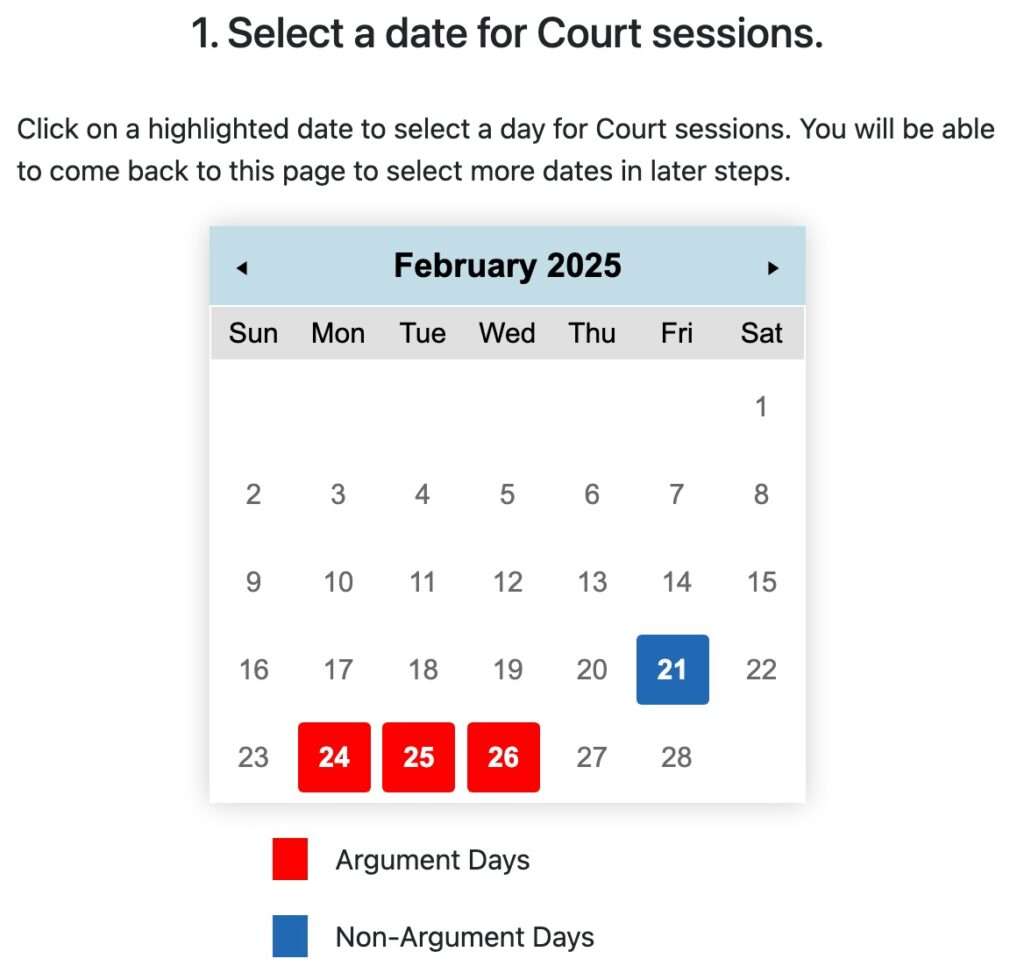
First, you select a date of a session:

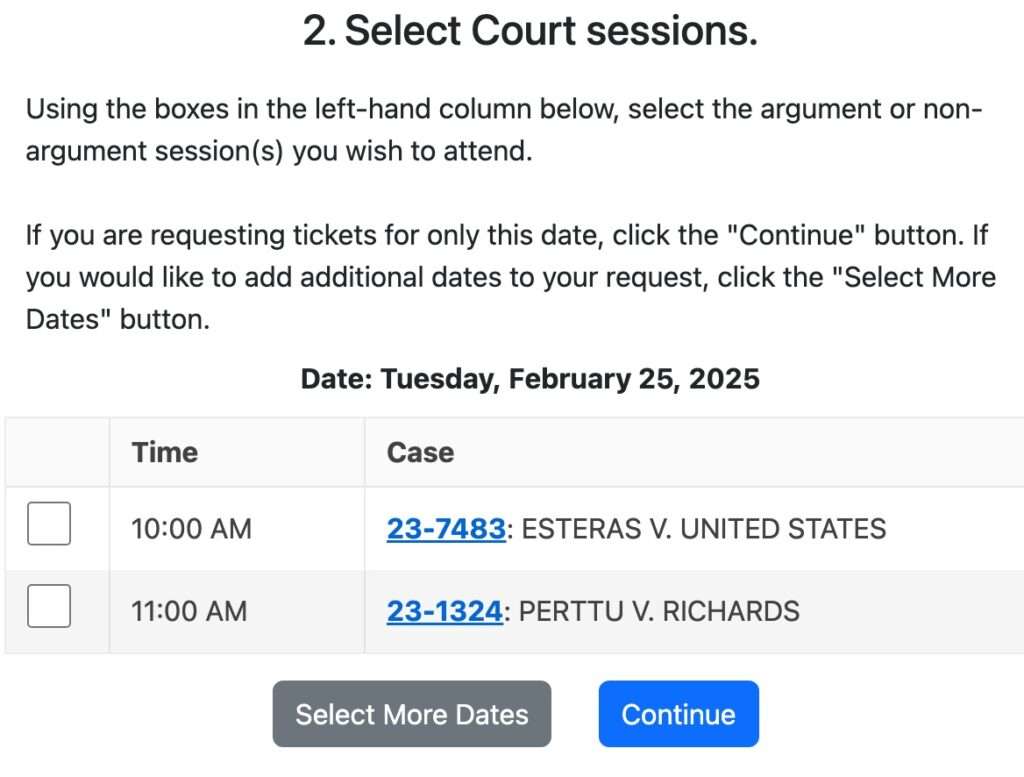
Second, you can select one or more cases to enter the lottery for:


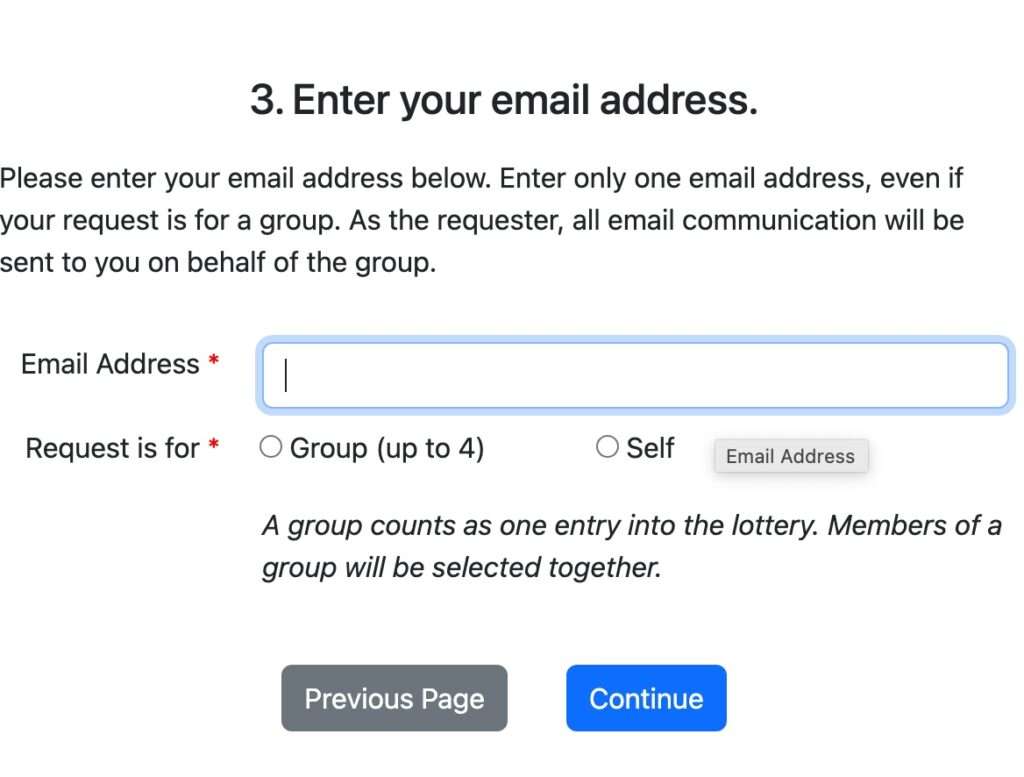
Third, enter your contact information, to select up to four tickets per argument.


Again, bravo to the Court. They got this one exactly right. And it should be expanded. As someone who arrived to the Bar Line around 5 AM for an argument this term, I think the lottery should be extended to bar members. For big cases, the parties often gobble together many tickets for their colleagues, leaving other lawyers stuck in the lounge. A bit of randomness would be useful here.

Free Speech

$230K Defamation Award in N.Y. #TheyLied Case Against Apartment Owner Who Alleged Manager Sexually Assaulted Her

|

From a decision Friday by Manhattan trial judge Judy Kim:

Plaintiff, [a] resident building manager … brings this defamation action alleging that defendant Jean Mamakos, who owns an apartment in the Building, defamed him by falsely stating, repeatedly, that he had sexually assaulted her. Plaintiff alleged … [that] defendant informed the police officers who reported to the Building that she wished to file a complaint against plaintiff for sexual harassment and sexual assault (though no complaint was ever filed). Later, at a meeting of the Building's board …, defendant stated that plaintiff had threatened to shut off her water unless she performed "sexual favors." {Plaintiff also testified that a plumber who provided services in the Building told him that defendant had repeated these allegations ….} Thereafter, … defendant distributed a flyer to every apartment in the Building stating as follows:

I was sexually attacked/assaulted by super, Joseph Coutelier, in August. I'm the owner in the Colonnade, apartment 32-F for 35 years. If you have anything to add regarding the behavior of this person, I'd be interested in your contacting me. Jean Mamakos

Plaintiff sued; eventually, defendant's lawyer withdrew, defendant didn't hire a new lawyer, and then failed to appear at a conference and otherwise comply with court rules. The court therefore, in effect, granted plaintiff default judgment:

Read More

Politics

Should Defendants Be Allowed to Subpoena Rape Victims and Force Them to Testify at Rape Shield Hearings?

The Utah Supreme Court will hear arguments on this question on Friday.

|

In the federal system and all states, "rape shield" rules require pre-trial hearings on whether evidence relating to a rape victim's prior sexual history is admissible at trial.  For example, Utah's Rule of Evidence 412 (which parallels Federal Rule of Evidence 412) requires a defendant who intends to introduce a victim's prior sexual history evidence to make a detailed proffer of the relevance and purpose of the proposed evidence. The trial judge then holds a hearing and determines the admissibility of the evidence. But what if the defendant wants to subpoena a victim to the hearing and question her about prior sexual history as part of that determination? Is forcing a rape victim to testify consistent with the rule?

Tomorrow, the Utah Supreme Court will hearing argument on this question. Along with the Utah Crime Victim's Legal Clinic, I represent a minor victim of rape. I will argue that forcing rape victims to testify at rape shield hearings is inconsistent with the structure and purpose of such hearings. A Utah decision on this issue could be influential, since the text of Utah's rape shield rule is similar to many others.

Here is the opening paragraph from my brief for the victim, T.T.:

This appeal involves an important question regarding the proper operation of Utah's "rape shield" rule, Utah R. Evid. 412. The appeal is brought by T.T. from a district court order denying T.T.'s motion to quash a defense subpoena, which seeks to force her to testify at a rape shield hearing to be held under Utah Rule of Evidence 412. Because Utah's rape shield rule is designed to prevent rape victims from being forced to testify about sexual issues, the district court order forcing T.T. to testify should be overturned.
The underlying facts in the criminal case involve a rape charge alleging that fifteen-year-old T.T. was too intoxicated to consent to intercourse—intercourse Defendant concedes occurred. But Defendant seeks to force T.T. to be questioned by defense counsel at a rape shield hearing about her prior sexual behavior. The district court held that Defendant had made a sufficient "threshold" showing to force T.T. to testify at the rape shield hearing—but did not find specifically that the sexual behavior evidence was admissible at trial. This ruling stands Rule 412 on its head, converting it from a rule designed to protect victims from being examined about their presumptively inadmissible prior sexual history into a rule that requires such questioning. This Court has repeatedly held that a rape victim's prior sexual history is protected by "a presumption of inadmissibility," State v. Beverly, 2018 UT 60, ¶56 n.58 (quoting State v. Boyd, 2001 UT 30, ¶41). And this Court has recognized that the purpose of a Rule 412 hearing is not "to attempt discovery of evidence." State v. Blake, 2002 UT 113, ¶7. This Court should give effect to these principles and reverse the order forcing T.T. to testify at the rape shield hearing.

And here is the defendant's opening argument:

This appeal presents the question of whether an alleged sexual assault victim may be subpoenaed to testify at an in camera hearing conducted pursuant to Utah Rule of Evidence 412 (Utah's "Rape Shield" law) for the purposes of determining the admissibility of evidence proposed to be admitted under an exception to Rule 412's general prohibition against evidence of an alleged sexual assault victim's past sexual conduct. The victim in this matter unduly relies on the "presumptive inadmissibility" of the proposed evidence to argue that she should not be required to testify in a closed, in camera under Utah Rule of Evidence 412 regarding her past sexual conduct with Defendant. In response, Defendant shows that the evidence is not prohibited by Rule 412, is relevant and admissible under applicable case law, and that the district court properly determined that it should hear the testimony proposed to be elicited from the alleged victim prior to making a final ruling on its admissibility. In declining to grant the alleged victim's motion to quash the subpoena issued for her testimony at the Rule 412 in camera admissibility hearing, the district court properly balanced the alleged victim's constitutional and privacy protections as a crime victim with the Defendant's right to present a defense.

The problem with the defense position is that, if accepted, it would essentially mean that in every rape case where a defendant is seeking to introduce prior sexual history evidence, he would subpoena a victim and then examine her about the details of the prior sexual history. This would convert rape shield rules designed to keep rape victims from testifying about sensitive sexual issues into engines that would force them to testify. Interestingly, the federal rape shield rule (Fed. R. Evid. 412) originally contained a provision authorizing trial judges to take testimony on admissibility issues in rape shield hearings. But in 1994, this language in the federal rules was stripped out. Like the current version of the federal rule, the Utah rule contains no language authorizing a victim's testimony at the rape shield hearing. Instead, the rule simply gives the victim "a right to attend and be heard" at a rape shield hearing. Utah R. Evid. 412(c)(3) (emphasis added). In extending a "right" to victims and an opportunity to "be heard," the Rule's structure  provides victims an opportunity to address the potential admissibility of such evidence—not suffering the potential indignities associated with being questioned by defendants accused of raping them.

If you're interested in all the briefing, I link here the victim's brief, the State's (supporting) brief, the defendant's brief, and the victim's reply. Obviously, I hope that the Utah Supreme Court agrees with my arguments tomorrow.

P.S. In referring to rape "victims" in this post, I am (of course) aware that defendants are presumed innocent of the charges against them. But Utah's rape shield rule (like many others) sweep within its protections the alleged victim in a rape case (see Utah R. Evid. 412(d)), since otherwise the rule would essentially have no effect.

Making Sense of the 7-1-1-8 Split in Environment Texas Citizen Lobby v. ExxonMobile

Does a judge have an obligation to render a judgment to ensure that the court renders a judgment?

|

On Wednesday, the en banc Fifth Circuit decided Environment Texas Citizen Lobby v. ExxonMobil. The procedural posture of this case resides in the ninth circle of Dante's Inferno. I won't even try to explain it here. Instead, I will try to make sense of the extremely unusual split.

Reuters reported the case as a 9-8 split. Not quite.

The case was heard before seventeen members of the en banc court: Elrod, Davis, Jones, Smith, Stewart, Richman, Southwick, Haynes, Graves, Higginson, Willett, Ho, Duncan, Engelhardt, Oldham, Wilson, and Douglas. (Judge Ramirez joined the court after the case was submitted so she did not participate). Simple math would suggest that a majority of a seventeen member court would require nine votes. But there is no actual nine member majority.

Seven members of the court would have affirmed the District Court's decision from April 2017: Davis, Stewart, Southwick, Haynes, Graves, Higginson, and Douglas.

One member of the court would have reinstated a panel majority opinion from 2022: Chief Judge Elrod.

Eight members of the Court would have reversed the District Court's decision: Jones, Smith, Richman, Willett, Duncan, Engelhardt, Oldham, and Wilson.

For those of you counting at home, you will notice I've listed sixteen judges so far. Who is #17? Judge Ho. He did not vote to affirm or reverse. Instead he voted to dismiss rehearing en banc as improvidently granted--a DIG in the parlance. The Supreme Court will often DIG a case, but on rare occasion, an individual Justice will vote to DIG. Justice Gorsuch has individually DIG'd a few cases.

As I count things, the split is 7 votes to affirm the district court, 8 votes to reverse the district court, and 2 votes to do something else. Is your head spinning? Well then turn to 2 of the PDF. There is a paragraph labelled "Per Curiam." That paragraph concludes, "We accordingly AFFIRM the judgment of the district court, dated March 2, 2021." I use scare quotes quite deliberately. Per Curiam is Latin for "by the Court." But there is not a single thing that nine members agreed upon. Who exactly is the "We" in that final sentence. I can only count to seven. This paragraph labelled "Per Curiam" cannot possibly be "by the Court." Who assembled the second page of the PDF? I have more questions than answers.

Is your head still spinning? Well, check the docket.  Immediately after the opinion was filed, a judgment was entered. It states:

IT IS ORDERED and ADJUDGED that the judgment of the District Court is AFFIRMED.

IT IS FURTHER ORDERED that Appellants pay to Appellees the costs on appeal to be taxed by the Clerk of this Court.

W. Eugene Davis, Circuit Judge, concurring, joined by Stewart, Southwick, Haynes, Graves, Higginson, and Douglas, Circuit Judges.

James C. Ho, Circuit Judge, in support of dismissing rehearing en banc as improvidently granted.

Edith H. Jones, Circuit Judge, joined by Smith, Richman*, Willett, Duncan, Engelhardt, Oldham, and Wilson, Circuit Judges, dissenting.

Priscilla Richman, Circuit Judge, dissenting.

Andrew S. Oldham, Circuit Judge, joined by Jones, Smith, Willett, Duncan, Engelhardt, and Wilson, Circuit Judges, dissenting.

By what authority did the Court issue that the judgment of the District Court should be affirmed, if only seven out of seventeen judges voted to affirm the judgment of the District Court?

If you've followed this far, hang on. This will get messy.

Read More

Supreme Court DIGs NVIDIA

The Court seems uninterested in resolving at least some securities fraud disputes.

|

This morning the Supreme Court dismissed NVIDIA v. E. Ohman J:or Fonder AB as improvidently granted. This was the Supreme Court's second DIG of the term. Indeed, it was the Court's second DIG in a securities fraud case. Two weeks ago, the justices DIGged Facebook v. Amalgamated Bank.

For those keeping track, here are the questions presented that the Court will no longer resolve this term.

The Private Securities Litigation Reform Act (PSLRA) imposes "[e]xacting pleading requirements" on plaintiffs who file securities fraud class actions. Tellabs, Inc. v. Makor Issues & Rights, Ltd., 551 U.S. 308, 313 (2007). To state a claim, plaintiffs must "state with particularity all facts" supporting their allegations of falsity and must also allege "facts giving rise to a strong inference" of the required mental state. 15 U.S.C § 78u-4(b)(1), (2)(A); see also Fed. R. Civ. P. 9(b). Plaintiffs frequently try to meet these requirements by claiming that internal company documents contradicted the company's public statements. This petition presents two questions that have divided the circuits about how the PSLRA's requirements apply in this common and recurring context:

1. Whether plaintiffs seeking to allege scienter under the PSLRA based on allegations about internal company documents must plead with particularity the contents of those documents.

2. Whether plaintiffs can satisfy the PSLRA's falsity requirement by relying on an expert opinion to substitute for particularized allegations of fact.

contract law

Can You Sue Over Assurances Made by Company's Customer Service AI Chatbot?

Maybe, but not in this particular case, a federal court rules.

|

From Magistrate Judge Alex Tse's opinion today in Smith v. Substack, Inc. (N.D. Cal.):

Prior to the filing of this case, there was a series of interactions between Smith and the Doe defendant. Smith alleges that this unknown defendant posted unflattering statements about Smith on Cancel Watch, a blog site hosted by Substack. Smith initiated contact with Substack, including twenty to thirty "complaints and queries by email" between July and September 2023, all to no avail. Substack did not respond to any of Smith's emails regarding Cancel Watch.

In February, March, April, and May of 2024, Smith asked a series of questions to a chatbot found in the support section of Substack's website. Smith asked, "do you respond to complaints," and the chatbot responded, "Yes, we respond to all complaints." He also asked, "do you respond to every complaint," and "do you always [all of the time], respond to complaints?," to which the chatbot responded with the same answer or a very similar one. Id. Smith then asked, "does Substack respond to emails?" and "Will you certainly respond to emails?," the chatbot said, "Yes, Substack responds to emails" in response to both inquiries. Smith alleges that the answers from the chatbot are the same for "queries," and that Substack says it will respond to reports. However, regardless of its chatbot's replies, Substack itself never did respond to Smith's inquiries, or to his follow-up inquiries asking why the company was ignoring him….

Smith sued Substack under a promissory estoppel theory, which is related to breach of contract. No, said the court:

Read More

Sports

Ohio Legislator Proposes Criminalizing Planting a Flag at Midfield

A new type of sore-loser law.

|

Ohio Rep. Josh Williams is proposing a new law to make planting a flag at midfield after winning a football game a felony in the state of Ohio. The bill appears to have been inspired by the tussles between Ohio State and University of Michigan players after their most recent game, which Michigan won and at which a Michigan player sought to plant a Michigan flag on the OSU field.

From the ESPN report:

Ohio state Rep. Josh Williams introduced a bill Tuesday that would classify flag planting at Ohio Stadium around Buckeyes football games as a felony.

The O.H.I.O. Sportsmanship Act, authored by Williams, comes in response to Michigan's attempt to plant its flag after a Nov. 30 win at Ohio State, which set off a brawl between the teams. Police employed pepper spray to separate players and other team personnel. Ohio State University police are investigating the incident, which involved multiple law enforcement agencies and resulted in an injury to an officer.

According to Williams' bill, "No person shall plant a flagpole with a flag attached to it in the center of the football field at Ohio stadium of the Ohio State University on the day of a college football competition, whether before, during, or after the competition. Whoever violates this section is guilty of a felony of the fifth degree."

A fifth-degree felony is the least severe in Ohio and carries a penalty of six to 12 months in prison, up to a $2,500 fine and up to five years' probation.

According to Williams, the point of the bill is to prohibit conduct that could incite violence. That may be the intent, but this seems a bit much. The idea that planting a flag is tantamount to incitement is, frankly, the sort of argument one expects to hear from those who claim offensive language is inherently violent. Elite athletes, of all people, should be able to control themselves in such situations, and criminalizing expressive conduct out of concern for how others might respond seems to be enabling a heckler's veto. Are Buckeyes really not made of sterner stuff?

It seems to me there is a much easier way to prevent an opposing team from planting their flag at midfield: Win the game.

Free Speech

French Court Finds Writer "Guilty of Denying the 1994 Rwandan Genocide"

|

I've long opposed Holocaust denial bans, partly because of the slippery slope / censorship envy problem: Unsurprisingly, such bans tend to lead to broader policing of historical claims, such as the French fine imposed on noted historian Bernard Lewis for his views on the Armenian genocide. N.Y. Times (Adam Nossiter) reports the latest:

The French-Cameroonian writer, Charles Onana, author of "Rwanda, the Truth about Operation Turquoise — When the Archives Speak," and the publisher, Damien Serieyx, were fined nearly $15,000 and ordered to pay more than $11,000 to three human rights group that had sued them.

Mr. Onana, who could not be immediately reached for comment, and his publisher have appealed.

The court on Monday found Mr. Onana and the publisher guilty for their "public challenge to the existence of a crime against humanity." In his book, Mr. Onana denied there had been a genocide and denied France's responsibility.

The court cited some 19 passages it said violated French law making it illegal to deny a genocide that has been officially recognized by France or international jurisdictions. Notably, Mr. Onana wrote that the "conspiracy theory of a Hutu regime that planned a 'genocide' in Rwanda constitutes one of the biggest scams of the 20th century." …

Mr. Onana, for his part, maintained in his book that there was killing on both sides, by Tutsis and Hutus, but that there was no genocide. "Certainly, Tutsis were massacred, targeted, but they were not the only ones," he wrote. In his introduction, he wrote that he was "above all trying to make a break with 'official history.'"

Read More

More