

The Volokh Conspiracy
Mostly law professors | Sometimes contrarian | Often libertarian | Always independent | Est. 2002
"Regulation of Algorithms" Panel at Federalist Society Faculty Conference,
featuring Prof. Saurabh Vishnubhakat (Yeshiva), Profs. Gregory Dickinson (Nebraska), Prof. Christina Mulligan (Brooklyn), Dhruva Krishna (Kirkland & Ellis), and me.
I much enjoyed participating, and I hope some of you will enjoy watching. Here's the panel description:
Opaque algorithms shape what news stories you see on social media, dictate how artificial intelligence answers prompts, and can even decide whether applicants get a mortgage or a job interview. Amidst claims of algorithmic race, gender, and viewpoint discrimination, more and more individuals of all political affiliations are calling for greater government regulation of algorithms, while regulatory skeptics worry that government intervention will impede important technological innovation. This panel will explore the wisdom of efforts to regulate algorithms and how best to frame concerns about algorithmic errors and bias.
"How Not to Decide TikTok: U.S. Press Freedom Hangs in the Balance"
An interesting analysis by Prof. David Cole (Georgetown), the former National Legal Director of the ACLU, at Just Security; an excerpt:
After more than two hours of argument Friday morning in TikTok v. Garland, the Supreme Court appears likely to allow the U.S. government to force divestiture or shuttering of the platform on January 19…. In my view, that's the wrong result…. [But] how the Court reaches its result may now be more important than the bottom line.
In particular, the Court should reject the government's principal argument, namely, that the TikTok law is "content-neutral" because it is concerned only with who controls the platform, not the content the platform features. Accepting that rationale would not only harm TikTok, but would weaken First Amendment law across the board….
The Protecting Americans from Foreign Adversary Controlled Applications Act singles out a particular communication platform out of concern about its content, and exempts other platforms based on their e-commerce content, even though they pose similar data security concerns. The government justifies the law as a response to the risk of "covert content manipulation" by China…. That justification is inescapably related to the content on the platform, and under longstanding First Amendment law, should trigger strict scrutiny….
Boston Police Officer's Tweets from "Stop the Steal" Rally Protected by First Amendment Against Government Employer Retaliation
An excerpt from the >16,000-word opinion written by Commissioner Paul Stein in Abasciano v. Boston Police Dep't, decided last month by the Commonwealth of Massachusetts Civil Service Commission, though just posted on Westlaw:
The substantive issue presented in this appeal is whether certain tweets sent by the Appellant on January 6, 2021, while attending the so-called "Stop the Steal" rally in Washington, D.C., constituted substantial misconduct that warranted his termination as a Police Officer in the Boston Police Department (BPD). It was undisputed that, when the tweets were sent, the Appellant was off duty, they were sent from a private Twitter account and they did not identify the Appellant or his employment with the BPD. It was also undisputed that the Appellant did not participate in any way in the violent insurrection that day at the Capitol following the rally.
The BPD conducted two thorough internal investigations—one by the Anti-Corruption Division (ACD) completed in May 2021 and another by the Internal Affairs Division (IAD) completed in November 2021. The ACD investigation confirmed that the Appellant had not personally participated in the violent insurrection or committed any criminal acts. As to the Appellant's tweets, the IAD investigation concluded that they were not intended to incite or condone violence and they did not impact the Appellant's ability to do his job. Overall, these investigations concluded that the Appellant had not engaged in any misconduct that violated the BPD's Rules and Procedures.
More than a year later, in December 2022, newly appointed BPD leadership reopened the Appellant's IAD file and, this time, reached a starkly different conclusion that charged the Appellant with "conduct unbecoming" for sending the January 6, 2021 tweets and recommended that the Appellant be terminated, which recommendation the new Police Commissioner adopted.
The Commission held in Abasciano's favor:
Supreme Court Denies Certiorari in Climate Tort Suits
The justices are not persuaded to intervene in state-law climate litigation.
Today the Supreme Court denied certiorari in Sunoco LP v. Honolulu and Shell PLC v. Honolulu, two petitions from oil companies seeking High Court intervention in a state-law-based climate case in Hawaii. Unlike with prior cert denials in climate tort cases, no justice indicated that he or she supported certiorari.
On the one hand, this cert denial should not be surprising because, as I have explained, the legal arguments for federal court intervention in these cases is exceedingly weak. The oil company defendants advance a preemption-by-penumbra argument that cuts against existing precedent and the broader direction of relevant doctrines. The Supreme Court has expressly held that the Clean Air Act does not preempt state-law-based tort claims for air pollution, and the federal common law of interstate nuisance (for good or ill) has been completely displaced. Thus, these suits are not preempted. There may be limits on the specific conduct that can be sanctioned and the scope of relief, but that's not something the Supreme Court has any reason to address on the front end.
The Court had asked for the views of the Solicitor General, and the SG also recommended against cert. The Trump Administration would almost certainly have disagreed, having supported certiorari in related cases before. Today's cert denial means that the Trump Administration will have no opportunity to express a contrasting view.
The one real argument for certiorari is that there is something of a split on the preemption question as one court -- the U.S. Court of Appeals for the Second Circuit in a decision I discuss here -- has accepted the preemption arguments, albeit in a different posture. I suspect this argument was not enough because the justices recognized that it would nonetheless be premature to review the Hawaii suit, and that there will be ample opportunity for judicial review should Hawaii courts (and other state courts hearing similar claims) impose judgements that exceed their proper authority or otherwise raise constitutional questions.
The Court did not take action on a related filing in which several states are seeking to invoke the Supreme Court's original jurisdiction to prevent state-law-based climate suits filed by other state attorneys general. I think this petition is utterly meritless, but it did attract amici that would like the Court to address whether it is proper to deny a state's bill of complaint seeking to invoke the Court's original jurisdiction without addressing the merits. As I noted here, multiple justices oppose this common practice (and they have a point).
For more on these questions, here are a teleforum and a panel in which I debated others on these questions.
Here are my prior posts on climate-related tort litigation:
- Why State Common Law Nuisance Claims Against Fossil Fuel Companies Are Not Preempted, Oct. 27, 2021;
- Third Circuit Rejects Oil Company Efforts to Remove Climate Claims to Federal Court, Aug. 17, 2022;
- Oil Companies Fail to Convince the Eighth Circuit Climate Cases Should Be Removed to Federal Court (Updated), Mar. 25, 2023;
- Is Climate Change Going Back to the Supreme Court? (Minnesota Edition) [UPDATED], Dec. 11, 2023;
- D.C. Circuit Rejects Oil Company Attempt to Remove District's Climate Suit to Federal Court, Dec. 19, 2023;
- William Barr Responds on American Petroleum Institute v. Minnesota, Dec. 26, 2023;
- Supreme Court Takes a Pass on Minnesota Climate Change Case, Jan. 8, 2024;
- Are State Law Climate Change Tort Suits Preempted by Federal Law?, May 3, 2024;
And here is my longer paper on the subject.
Supreme Court Denies Certiorari for Braidwood Nondelegation Claim
The Court will only consider one of the issues in Braidwood Management v. Becerra
As I noted on Friday, the Supreme Court accepted certiorari to hear an appointments clause challenge to the U.S. Preventive Services Task Force in Becerra v. Braidwood Management. This task force is the entity that determines which preventative treatments must be covered by health insurance without requiring any co-payment by the insured under the Affordable Care Act. The U.S. Court of Appeals for the Fifth Circuit had concluded that its structure is unconstitutional. The Court did not take any action on Braidwood Management's cross-petition, however, which raised other constitutional challenges.
As I anticipated it might, today the Supreme Court denied the cross-petition without comment. The justices apparently have no interest in considering the nondelegation argument against the task force.
Braidwood Management remains a very significant case, both for administrative law as well as for health law. It is just not the nondelegation case some were hoping for.
While we should not read too much into the Court's action, it is yet another sign that the justices are not prepared to fully engage with nondelegation doctrine arguments, let alone to revive the doctrine.
Prosecutor Disbarred for Forged Texts Apparently Aimed at Framing Co-Worker for Sexual Harassment
The Denver Post (Shelly Bradbury) was apparently the first to report on the story:
Yujin Choi falsely accused Dan Hines, a criminal investigator in the district attorney's office, of sexually harassing her, according to the Tuesday ruling from the Office of Presiding Disciplinary Judge, which handles professional discipline for Colorado attorneys.
Choi created fake text messages, altered her cellphone records and ultimately destroyed her laptop and phone to try to sell her deceit, the 26-page ruling found.
You can read more in the article, or in the decision, People v. Choi (thanks to ArsTechnica for posting it). The most serious of the purported texts (which alluded to a complaint Choi made about Hines a year before), read:
Yujin, please stop talking about what I didn't do to our colleagues. You are using your looks against innocent people. If you want to act like a sex doll to get a sugar daddy … fine, but that will not be me.
Eventually the facts emerged, through forensic investigation by the DA's office (forensic investigation that Choi apparently tried to stymie by causing water damage to her phone and laptop). The decision of the Colorado Supreme Court Office of the Presiding Disciplinary Judge stated, among other things,
Sage Steele Loses Claim That Her Agents Didn't Properly Protect Her Free Speech Rights
From the California Department of Industrial Relations Labor Commissioner in Creative Artists Agency v. Steele, handed down in August but just posted on Westlaw (for more on Steele's lawsuit against ESPN, see this post and this later article about the case being settled):
Creative Artists Agency, LLC ("CAA") filed a Petition on September 14, 2022. CAA alleges that … Sage Steele … failed to pay commissions for a procured multi-year television hosting contract with ESPN….
This case involves whether CAA did enough to protect Steele's interests in a public relations crisis. Steele appeared on a podcast and stirred controversy through her comments. CAA stepped in to negotiate with her employer. After a week of back-and-forth, CAA secured an optimal result: Steele kept her lucrative job, without suspension or dock in pay, for the remaining 32 months on her contract. But it came at a cost: she apologized to make peace.
Steele then learned about her free speech rights and saw a missed opportunity. She contends that CAA failed her at this critical moment by not exploring a way forward that avoided an apology. In her view, CAA walked away from both its promise and its duty to her. She concludes that CAA should have done better, so she did not have to pay what she promised to pay. Accordingly, she stopped paying commissions.
But CAA met Steele's stated goal at the time—to preserve her job. And Steele's retrospective view of what CAA should have done stretches beyond the deal they made.
Steele is not excused from her end of the bargain….
Lawless I: The Illiberal Takeover of Legal Education
My "lived experience" at Georgetown gave me a unique perspective on the higher-ed crisis.
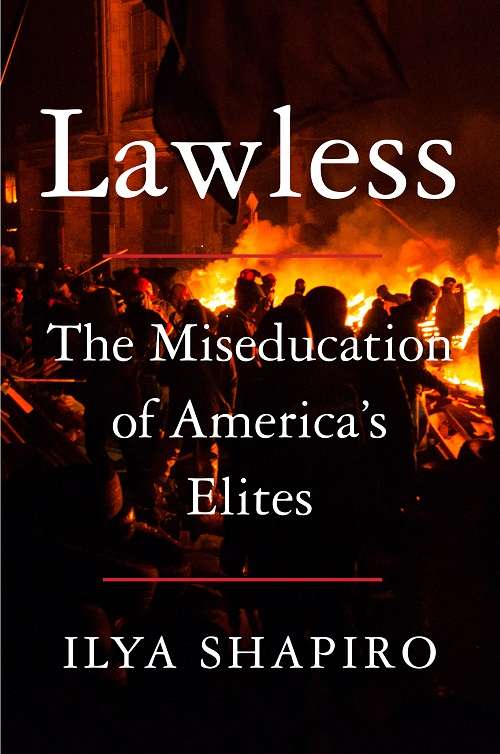
Thanks to Eugene for inviting me to participate in the Volokh Conspiracy's venerable tradition of the author's weeklong guest-blog. I'm particularly excited for the opportunity not only to preview my new book, Lawless: The Miseducation of America's Elites, but to dispel some Ilya Confusion. Then again, it may also make Ilya Confusion harder to discern, because the most common way I recognize interlocutors who are thinking of "the other Ilya" (Somin) is when they reference my blogging on this site. Well, now we're both VC bloggers.
In any event, my new book Lawless uses my "lived experience"—what one friend called "the Troubles"—as a jumping-off point for diving into the illiberal takeover of law schools and the legal profession. It discusses failures in (1) bureaucracy, (2) ideology, and (3) leadership, and (4) proposes reforms. My remaining posts will cover each of those numbered items.
VC readers no doubt know my story. When I accepted Randy Barnett's offer to become executive director of Georgetown's Center for the Constitution, I thought it would be a chance to have a different kind of impact on public affairs. After nearly 15 years at the Cato Institute, having become a vice president and published a critically acclaimed book on the Supreme Court, I was looking for a new challenge. Well, that's what I got, but not quite how I'd imagined it.
In late January 2022, when news of Justice Stephen Breyer's retirement broke, I tweeted in opposition to President Biden's decision to limit his nominee pool by race and sex. I argued that Sri Srinivasan, the chief judge of the D.C. Circuit—who also happens to be an Indian-American immigrant—was the best candidate for a Democratic president, meaning that everyone else was less qualified. So if Biden kept his promise, he would pick what, given Twitter's character limit, I characterized as a "lesser black woman." Then I went to bed.
Today in Supreme Court History: January 13, 2014
1/13/2014: NLRB v. Noel Canning argued.
Easing Zoning Restrictions Can Facilitate Rebuilding After the LA Fires
The destruction of numerous homes exacerbated the city's already severe housing crisis. Curbing exclusionary zoning is crucial to addressing the problem.
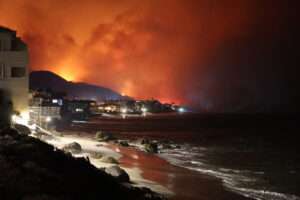
Much of the debate over the horrible wildfires afflicting the Los Angeles areas focuses on issues outside my expertise. Thus, I'm not going to opine on such questions as the role of climate change in causing the fires, and whether federal, state, and local governments, have done a good job of running the LA fire department and managing wildfire risk more generally. There is enough ill-informed pontification on these issues already. One relevant issue, however, is within my expertise: zoning and housing policy. Easing zoning restrictions on housing construction could help the city rebuild faster and find new homes for those displaced by the fires. It could also help alleviate the area's longstanding housing crisis.
Even before the fire, the LA region had a serious housing shortage, caused in large part by exclusionary zoning. Some 78% of the residential land in LA is zoned for single-family residences only, which makes it extremely difficult to build new housing in response to demand, especially multifamily homes affordable for working and lower-middle class people.
The fires have destroyed an estimated 12,000 structures, a figure that is likely to rise before the conflagration ends. Not all these structures are homes. Some are garages, commercial buildings, and other nonresidential facilities. Nonetheless, there is no doubt the fires have wiped out thousands of homes, displacing tens of thousands of people. And while much media attention has focused on the losses suffered by wealthy Hollywood celebrities, most of those displaced are less affluent folk who cannot easily find new homes.
Zoning and housing expert M. Nolan Gray (in the Atlantic), and Reason writer Jack Nicastro have helpful articles summarizing how exclusionary zoning rules have contributed LA's housing crisis, and how easing them will make it easier to rebuild. They also explain how zoning restrictions made the region more vulnerable to wildfires, by pushing development into more dangerous areas, and making it difficult or impossible to build more fire-resistant housing.
California Gov. Gavin Newsom recently issued an executive order suspending some types of regulatory obstacles to housing construction in areas affected by the fire, such as burdensome review under the California Environmental Quality Act (CEQA). That's a step in the right direction. But its impact will be very limited unless state and local governments also suspend zoning restrictions that make it difficult or impossible to build multifamily housing throughout much of the region.
Moreover, Newsom's order also extends enforcement of anti-"price gouging" restrictions in the affected area. Such laws prevent sellers - including providers of construction materials - from raising prices in regions affected by natural disasters. As economists have long pointed out, such restrictions make reconstruction more difficult by reducing incentives for suppliers to increase delivery of needed goods.
In the aftermath of the fires, construction supplies will be more needed in LA than in most other regions. We want prices in the area to rise, so that producers will get the signal to send more of these types of goods there. Price controls will only exacerbate shortages, and make rebuilding take longer.
In a recent Texas Law Review article my coauthor Josh Braver and I have argued that exclusionary zoning restrictions on housing construction are unconstitutional violations of the Takings Clause of the Fifth Amendment. For a more succinct summary of our argument, see our June article in the Atlantic.
Ilya Shapiro Guest-Blogging About "Lawless: The Miseducation of America's Elites"
I'm delighted to report that Ilya Shapiro (Manhattan Institute) will be guest-blogging this week about this new book of his. From the publisher's summary:
In the past, Columbia Law School produced leaders like Franklin Delano Roosevelt and Ruth Bader Ginsburg. Now it produces window-smashing activists.
When protestors at Columbia broke into a building and created illegal encampments, the student-led Columbia Law Review demanded that finals be canceled because of "distress." At Stanford, chanting activists, egged on by an associate dean, drove away a federal judge. Yale's hostility to free speech led more than a dozen federal judges to boycott the school for clerkship hiring.
Law schools used to teach students how to think critically, advance logical arguments, and respect opponents. Now those students cannot tolerate disagreement and reject the validity of the law itself. And yet, rioting Ivy Leaguers are the same people who will hold important government positions, fight constitutional lawsuits, and advise Fortune 500 companies.
Today in Supreme Court History
Today in Supreme Court History: January 12, 1932
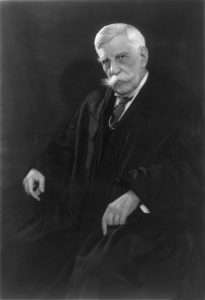
1/12/1932: Justice Oliver Wendell Holmes resigns from the Supreme Court.
Another Study on Flavored Vaping Products the FDA Can Ignore
Evidence continues to accumulate that non-tobacco-flavored vaping products can help reduce or discourage smoking.
The Food and Drug Administration has been particularly resistant to approving the sale of vaping products that are not flavored like cigarettes. The vast majority of the vaping products approved to date have been tobacco flavored. A small handful, approved more recently, have been menthol flavored. The thousands of marketing applications for products with other flavors have been denied. Thus, there are no FDA-permitted vaping products on the market that provide consumers with a flavor different from that provided by cigarettes.
There is a growing body of evidence that restrictions on non-tobacco-flavored vaping products can increase smoking rates, including among youth. There is also growing evidence that non-tobacco-flavored vaping products may help smokers cut back on cigarette consumption or quit. Yet the FDA has shown little interest in this research, maintaining what appears to be a de facto ban on alternative vaping flavors.
A new peer-reviewed study in Addictive Behaviors provides additional evidence of that the availability of alternative flavors can help smokers reduce or cease their cigarette consumption. In this study, smokers were given vaping products with a choice of flavors with the aim of identifying "the impact of e-cigarette flavoring choice on e-cigarette uptake and changes in cigarette smoking." And what did it find?
Compared to participants who exclusively received the tobacco flavor, participants who received any other flavor combination had greater e-cigarette uptake at the end of product provision (74 % vs. 55 %), were more likely to reduce cigarette smoking by at least 50 % at the end of product provision (34 % vs. 14 %) and at the final 6-month follow up (29 % vs. 5 %), and numerically, but not statistically, more likely to be abstinent from cigarettes at the end of product provision (11 % vs. 5 %) and the final 6-month follow-up (14 % vs. 5 %).
From the paper:
Although only a small percentage of participants exclusively selected tobacco flavored e-cigarettes, the convergence of findings across multiple outcomes in this study suggest that non-tobacco flavors may be more appealing than tobacco flavors, and may better promote uptake and reduce cigarette smoking among adults who smoke. The FDA is currently issuing PMTA [premarket tobacco product application] decisions for individual e-cigarette products, and thus far, these decisions have included many MDOs [marketing denial orders] for non-tobacco flavors based on a lack of evidence that these flavors provide a benefit to adult smokers above and beyond the benefit provided by tobacco flavors. The data presented in this secondary analysis suggest that non-tobacco flavors may indeed provide a benefit to adults beyond the benefit provided by tobacco flavors, insofar as non-tobacco flavors better promote switching away from combustible cigarettes.
While this study is limited, it provides yet more evidence that the FDA's myopic approach to vaping product flavors may be undermining efforts to further reduce smoking and its associated public health consequences. It is also further evidence that the FDA's current approach to evaluating vaping product applications, and requiring those seeking approval of non-tobacco-flavored products to demonstrate that such products provide added benefits to public health as compared to tobacco-flavored products, is quite arbitrary. (And that this approach has been adopted without any sort of notice-and-comment process in which the FDA would have to defend this policy choice is just icing on the cake.)
N.H. Court Rejects Attempt to Impose Hate Crime Liability on Neo-Nazis for Hanging "Keep New England White" Sign on Overpass
The right result, I think, but I don't think the court's reasoning is quite right.
From yesterday's N.H. Supreme Court decision in Attorney General v. Hood:
[According to the State's complaints,] a group of approximately ten people associated with NSC [National Socialist Club]-131, an unincorporated association that describes itself, in part, as a "pro-white, street-oriented fraternity dedicated to raising authentic resistance to the enemies of [its] people in the New England area," gathered on a highway overpass in Portsmouth. The group hung banners, one of which read "KEEP NEW ENGLAND WHITE," from the overpass.
Shortly thereafter, officers from the Portsmouth Police Department responded to the scene and informed Hood, whom they identified as the group's leader, that the group was violating a Portsmouth municipal ordinance that prohibited hanging banners from the overpass without a permit. Hood then instructed his associates to remove the banners from the overpass, although some individuals continued to display the banners by hand. The officers interacted with the group on the overpass for approximately twenty to twenty-five minutes before the group departed. NSC-131 subsequently took credit for the episode on social media.
The State filed complaints against the defendants seeking civil penalties and injunctive relief for their alleged violation of RSA 354-B:1. The State alleged that Hood and Cullinan violated and/or conspired to violate the Act when they led or aided a group of individuals to trespass upon the property of the State of New Hampshire and the City of Portsmouth by hanging banners reading "Keep New England White" from the overpass without a permit because their conduct was "motivated by race and interfered with the lawful activities of others." The State alleged that NSC-131 violated the Act when its members developed and executed a plan to commit the aforementioned act….
N.H. Stats. 354-B:1 provides,
Today in Supreme Court History: January 11, 1830
Friday Open Thread
What's on your mind?
Attorneys May Have to Ask Expert Witnesses "Whether They Have Used AI in Drafting Their Declarations and What They Have Done to Verify Any AI-Generated Content"
From Kohls v. Ellison, which I quoted more extensively in an earlier post:
To be sure, Attorney General Ellison maintains that his office had no idea that Professor Hancock's declaration included fake citations, and counsel for the Attorney General sincerely apologized at oral argument for the unintentional fake citations in the Hancock Declaration. The Court takes Attorney General Ellison at his word and appreciates his candor in rectifying the issue.
But Attorney General Ellison's attorneys are reminded that Federal Rule of Civil Procedure 11 imposes a "personal, nondelegable responsibility" to "validate the truth and legal reasonableness of the papers filed" in an action. The Court suggests that an "inquiry reasonable under the circumstances," Fed. R. Civ. P. 11(b), may now require attorneys to ask their witnesses whether they have used AI in drafting their declarations and what they have done to verify any AI-generated content.
Thanks to Prof. Anthony Bushnell for pointing out the significance of this particular passage.




