
The War on Self-Driving Cars Will Kill People
Data show that Waymo has far fewer bodily injury and property damage claims. So why do some politicians oppose it?

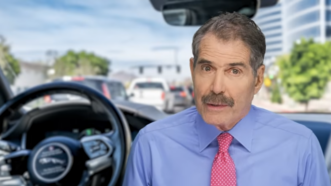
Data show that Waymo has far fewer bodily injury and property damage claims. So why do some politicians oppose it?

Neil Gorsuch's new book reminds us that to accelerate progress, we must first acknowledge the progress that has already occurred.
Globalization helped make everyone else much richer, too.
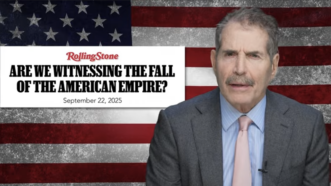
Past societies tried to regulate their way to stability. But it came at a great cost.

The portion that Americans spend on food has fallen steeply over the last century.

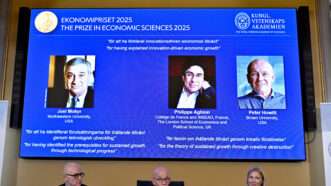
Joel Mokyr has long made the case against technophobia, including in the pages of Reason.
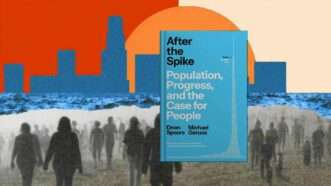
What if the challenge for humanity’s future is not too many people on a crowded planet, but too few people to sustain the progress that the world needs?

Nominees include stories on inflation breaking brains, America's first drug war, Afghans the U.S. left behind, Javier Milei, and much more.

Our manufacturing output, even adjusted for inflation, is near all-time highs.
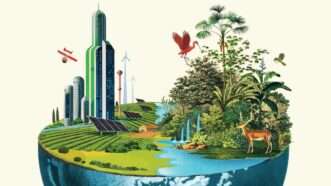
"Supply-side progressives" like Ezra Klein and Derek Thompson are ultimately technocrats, not libertarians. But they recognize that more is better than less and that a good society is not zero-sum.

Knitting's evolution from necessity to leisure activity is a testament to economic progress.

Dorr Legg saw the government as homosexuals' enemy.
A new movement promoting scientific, technological, and economic solutions to humanity's problems emerges.

AEI's Tony Mills and British biochemist Terence Kealey debate whether science needs government funding.
Americans are wealthier today than in the 1960s. That's not because of Bidenomics; it's because of six decades of progress.
AEI's Tony Mills and British biochemist Terence Kealey debate whether science needs government funding.

A positive vision for America's future at the Republican debate
This progress has been widely shared, to the great benefit of the people at the bottom of the distribution.

But Patrick Deneen’s “common-good conservatism” almost certainly would be.

His bold new exhibition draws on the work of Steven Pinker, Our World in Data, and Human Progress to document how much life has improved since the good old days.

The legendary graphic designer juxtaposes 18th- and 19th-century paintings with visualizations of how much life has improved over the centuries.
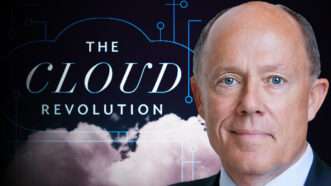
Pessimism is everywhere, but the author of The Cloud Revolution says we're entering a golden age of abundant, ubiquitous, and liberating technology.

A review of the new book Tickets For The Ark, by Rebecca Nesbit
The Superabundance authors make a compelling case that the world is getting richer for everyone.
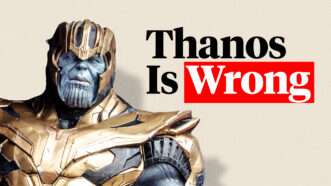
Superabundance explains why a world of 8 billion people is infinitely richer than one with 1 billion.
Richard V. Reeves documents terrible trends and suggests solutions that don't come at the expense of women.
The EconTalk host and Wild Problems author talks about the limits of cost-benefit analyses.
The host of EconTalk and author of Wild Problems says our biggest decisions don't submit to easy cost-benefit analyses.
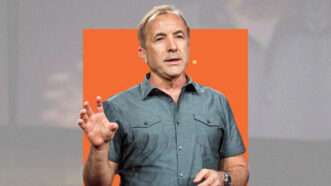
The best-selling author of Why People Believe Weird Things sees a fundamental clash between wokeness and scientific inquiry.

And yet infinitely recyclable plastics are on the horizon.
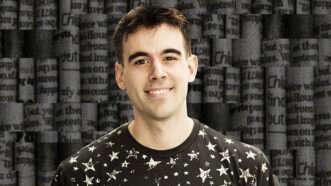
The Founders Fund vice president and Pirate Wires author on supporting heretics as a means of social and economic innovation.

Princess Leia shows us why hope is crucial for a liberty-oriented way of life.
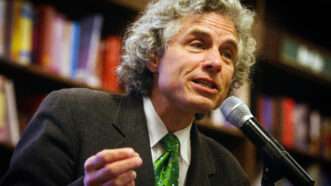
The Harvard linguist says Enlightenment reasoning is central to both material and moral progress.

"What has gotten materially better in America in, say, the last twenty years?" So! Much!
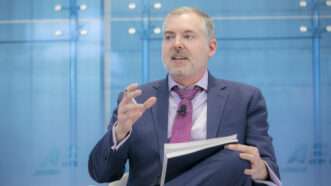
Americans have a reputation for being cockeyed optimists, but we're suckers when it comes to "declension narratives" about the fallen state of our world.

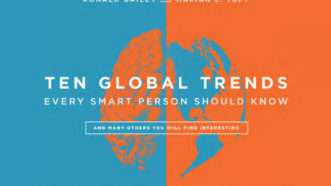
Ten Global Trends Every Smart Person Should Know documents progress and explains why it happens.
Ten Global Trends Every Smart Person Should Know documents the immense, ongoing progress that politicians and media refuse to acknowledge.
Sometimes, it's good to take a step back

Those smitten by John Wayne, Robert E. Lee, or even Joseph Stalin should commission statues on their own property. The rest of us have more important issues to debate.

We should celebrate our fandom on our own dime, and on our own property.

Jason Feifer's podcast explores "why we resist new things" and tells great stories about panics over the novel, the elevator, the waltz, margarine, and more.

Thanks to the ultimate resource: the human mind

Mark the 49th anniversary of Earth Day by celebrating human ingenuity.

Political theorist Jacob Levy reminds us that the arc of history doesn't always bend towards justice. Moral retrogression has happened before, and could well occur again.
If Times editors don't want to learn about their genetics, then they simply shouldn't take the tests.
Celebrate your independence with a subscription to Reason magazine, your most trusted source of honest, insightful news and analysis.




