
Trump's Self-Promotion Is Always Shameless and Sometimes Illegal
The president tramples the rule of law in his rush to glorify himself.

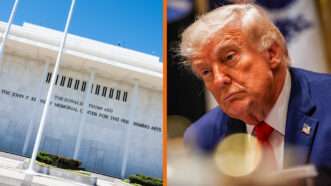
The president tramples the rule of law in his rush to glorify himself.

The Justice Department signals a retreat from defending the blatantly corrupt scheme, which provoked vigorous objections from Republican lawmakers.
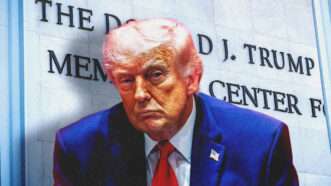
The decision is a modest but welcome victory for the rule of law.
One order temporarily blocks money for the president's "Anti-Weaponization Fund." The other asks whether the agreement is a fraudulent "product of collusion."
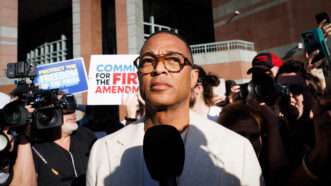
After a magistrate judge said a DHS investigator had failed to establish probable cause, the government decided it did not need the YouTube and iPhone records after all.

The courts have an opportunity to legalize small-scale distillation, but taxes remain a problem.

Vicki Baker is more fortunate than several other similarly situated victims. But it took a very long time to get there.
The president has fought to make sure alleged victims of government misconduct cannot get compensation. What changed?
In one lawsuit after another, the president has claimed damages in amounts completely disconnected from reality.

Perry County Sheriff Nick Weems preposterously claimed that Larry Bushart had threatened "mass violence" at a school.

That defense applies only when an officer "reasonably" believed he was acting within his federal authority.

Most federal appeals courts have recognized the right to record police. DHS employees nevertheless seem to view it as a crime.
Three Second Amendment groups say the law violates the right to own arms in common use for self-defense and other lawful purposes.

The Trump administration accused Francesca Albanese of “lawfare that targets U.S. and Israeli persons.” But a court said that’s not ground to seize her property.

A court granted qualified immunity to all 11 deputies accused of violating John Griswold’s 14th Amendment rights.

The 6th Circuit upheld that 158-year-old law, while the 5th Circuit concluded it could not be justified as a revenue measure.

Even as the Justice Department files lawsuits aimed at vindicating gun rights, it undermines them in other cases.
The civil liberties group, which long maintained that there is no constitutional right to arms, sang a different tune at the Supreme Court this year.
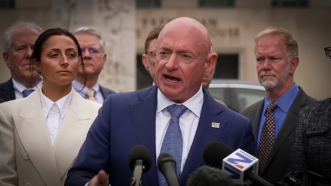
The defense secretary argues that military retirees like Sen. Mark Kelly are not allowed to say things he unilaterally deems "prejudicial to good order and discipline."
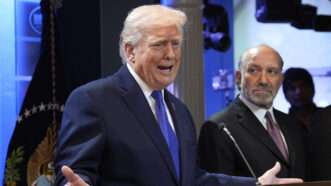
Trump's use of Section 122 ignored the plain language of the law and invoked a broad executive power where Congress clearly provided a narrow one.

Assistant Attorney General Harmeet Dhillon argues that both laws violate the Second Amendment by banning arms in common use for lawful purposes.
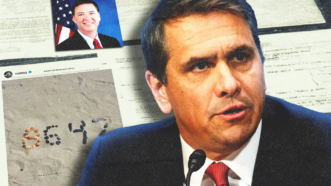
Acting Attorney General Todd Blanche implausibly claims prosecutors can prove Comey "knowingly and willfully" threatened to murder the president.
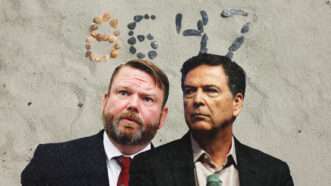
The case defies more than half a century of rulings on the “true threat” exception to the First Amendment.

The brief, which asks a federal judge to reconsider an injunction blocking the project, reads like it was transcribed from the president's Truth Social account.
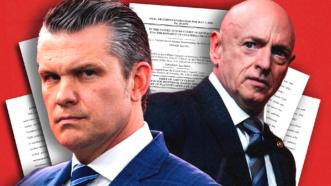
To justify punishing a legislator for his speech, a FIRE brief notes, Defense Secretary Pete Hegseth relies on a Supreme Court precedent that is clearly inapposite.
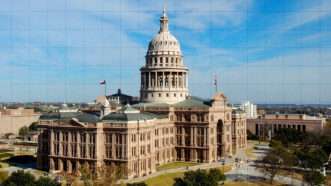
Separation of Church and State
The 5th Circuit upheld a controversial law requiring Texas schools to display the Ten Commandments.

The platform creators filed a lawsuit claiming their First Amendment rights were violated after the Trump administration convinced Apple and Facebook to remove their content.

The defense secretary's asserted authority to control the speech of retired military officers "would chill public participation by veterans," a brief supporting Mark Kelly warns.
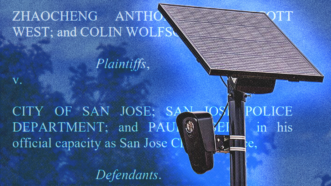
The city has created a network of nearly 500 cameras that routinely monitor innocent people as they go about their daily lives.
In the guise of investigating "potentially unlawful advertiser boycotts," the commission is punishing the organization for its views.
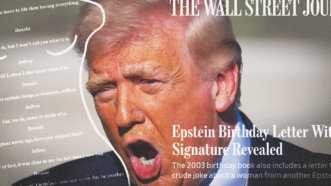
Trump's failure to properly allege "actual malice" is consistent with his long history of filing shaky legal claims against people who say things he does not like.
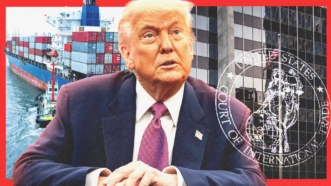
The Court of International Trade is weighing the legality of the import taxes that the president wants to impose under Section 122 of the Trade Act of 1974.

Two petitions ask the Supreme Court to uphold the remedy required by the Fifth Amendment.

"No statute comes close to giving the President the authority he claims to have," U.S. District Judge Richard Leon concluded when he enjoined the project.
Both Donald Trump and Joe Biden asked the Supreme Court to abolish nationwide injunctions, which allow federal judges to stop a federal policy from going into effect.

The jurors concluded that the officers violated the Fourth and 14th amendments when they seized a 14-year-old without evidence that she was in danger.
Two different pieces of legislation aim to create state workarounds to the procedural quagmire of federal civil rights litigation.
Despite its rejection of the Biden administration's interference, the Trump administration is still asserting authority over online speech.

But for a fraudulent and misleading warrant affidavit, Taylor would not have been killed during a fruitless late-night drug raid.
The administration insists it can only deport him to Africa. It's not clear why, other than to be vindictive.
The president says federal courts should not make decisions based on partisan considerations unless it benefits him.

Under Kennedy's oversight, HHS has "undermined the integrity of its actions" with respect to its immunization recommendations, the court ruled.
"Freedom of speech and of press is accorded aliens residing in this country," according to a 1945 Supreme Court ruling.
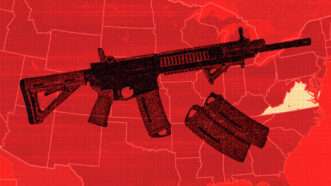
The ban, which targets guns based on criteria that make little sense, seems vulnerable to a challenge under the Supreme Court's Second Amendment precedents.
The president’s invocation of Section 122 conflates a trade deficit with a balance-of-payments deficit.
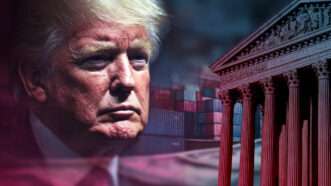
The lawsuit, filed by attorneys general and governors from 24 states, claims that Trump is once again trying "to usurp the taxing power that the Constitution vests in Congress."
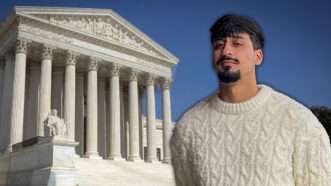
A Supreme Court case illustrates the potential for trans-partisan alliances between critics of gun control and critics of the war on drugs.
Celebrate your independence with a subscription to Reason magazine, your most trusted source of honest, insightful news and analysis.




