
A Brief, Biased History of the Culture Wars
Kliph Nesteroff's book Outrageous turns into a screed against conservatives.

Kliph Nesteroff's book Outrageous turns into a screed against conservatives.
The first treasury secretary's plans would have created cartels that mainly benefited the wealthy at the expense of small competitors.

From Alice Roosevelt to Hunter Biden, we've never been sure how to reconcile American democracy with American dynasties.

DARE to Say No details the history of an anti-drug campaign that left an indelible mark on America.

Jonathan Haidt’s clever, insufficient case against smartphones.

In Fragile Neighborhoods, author Seth Kaplan applies his Fixing Fragile States observations domestically.
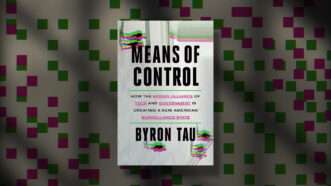
Byron Tau's Means of Control documents how the private sector helps government agencies keep tabs on American citizens.
Linda Upham-Bornstein's "Mr. Taxpayer versus Mr. Tax Spender" delivers an evenhanded view of American tax resistance movements.
In The Experience Machine, philosopher and scientist Andy Clark offers an updated theory of mind.

Social media influencer Caroline Calloway might not be a reliable narrator, but Scammer is an honest memoir nevertheless.
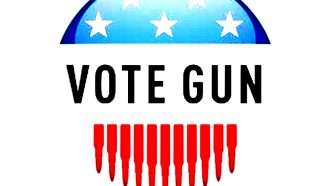
The book Vote Gun criticizes the NRA’s rhetoric but pays little attention to gun control advocates' views.
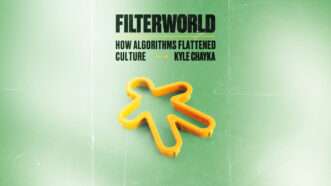
It's Super Size Me for internet intellectuals.

Your Face Belongs to Us documents how facial recognition might threaten our freedom.

Jordan S. Rubin's Bizarro tells the story of the men who tried and failed to challenge the government's arbitrary rules on synthetic drugs.
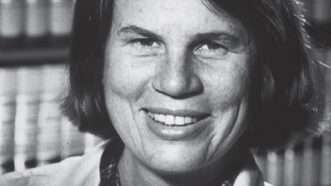
A new biography by Judith Hicks Stiehm ignores Janet Reno's many failures as attorney general.

When government relief efforts fail, individuals step up.
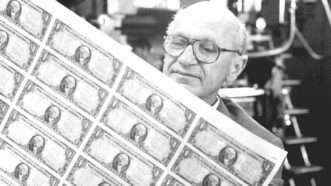
A new Friedman biography ably explores the economist's ideas but sidesteps the libertarian movement he was central to.

The Riders Come Out at Night frames it as a hopeful sign that police reform is possible.
Author Kevin J. Mitchell makes a neuroscientific case against determinism.

An undercurrent of the book is that common people want whatever progressive intellectuals want them to want.
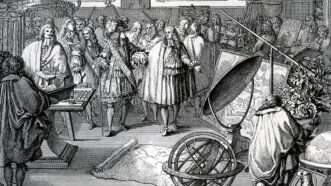
Author Jacob Soll's commitment to an untenable historical thesis distorts the facts.
Unwired makes an unconvincing argument for heavy-handed tech regulation.

The Chile Project surveys neoliberalism's most polarizing experiment.
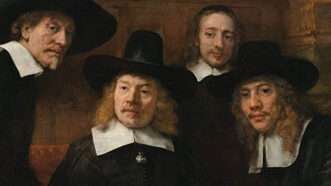
Pioneers of Capitalism chronicles centuries of bottom-up economic evolution in the Netherlands.
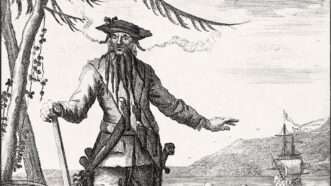
Pirate Enlightenment documents an interracial experiment in stateless self-governance.
Freedom's Dominion argues Southern history was animated by "racialized radical anti-statism." The case is lacking.
The Case for Christian Nationalism advocates for an ethnically uniform nation ruled by a "Christian prince."

Pierre-Joseph Proudhon's most controversial book has finally been fully translated into English.
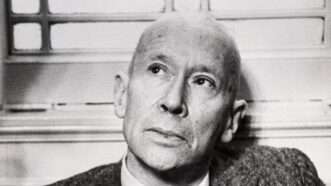
His most popular book, The Enormous Room, was recently reprinted for its 100th anniversary.
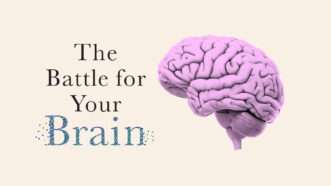
Nita A. Farahany's The Battle for Your Brain shows how neurotech can help, or hurt, human liberty.

Historian Jeff Guinn's account focuses on the ATF's oft-overlooked fiasco in the 1993 affair rather than the FBI's widely reported involvement.

A new entrant in the anti-neoliberalism genre fails to land any blows.

War by Other Means tells the story of those conscientious objectors who did not cooperate with the government's alternative-service schemes.

Libertarian History/Philosophy
Freedom's Furies tells how three women offered their own unique defenses of individual liberty and how their disagreements anticipated the differences among libertarians and classical liberals today.
Elected leaders come and go, but public unions just say no.

The Lords of Easy Money argues that the Fed created an economy with nearly irresistible incentives for foolish choices.
A call for restricting immigration in The Culture Transplant accidentally makes the case for radical liberalization.

Sebastian Mallaby's The Power Law explores how venture capital and public policy helped shape modern technology.

The mysteries of the mind are harder to unravel than psychiatrists pretend.

Robots don't get cabin fever, develop cancer from cosmic radiation, miss their families, or go insane.

What does "longtermism" offer those of us who favor limited government and free markets?

It's the superpolitical vs. everyone else.

The Stolen Year acknowledges public school COVID failures but refuses to hold anyone responsible.
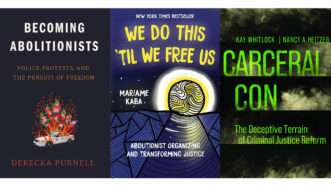
Libertarians have some common ground with the abolitionists—but if they insist on anti-capitalism as a litmus test, abolitionists will find themselves isolated and marginalized.

It's the economics of energy production that make petrostates more trigger-happy, Emma Ashford argues in Oil, the State, and War.
Lincoln's wartime governance had dire, and longstanding, economic consequences.
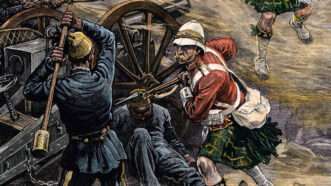
Caroline Elkins' book raises an important question for people today, particularly liberals—an issue that Elkins herself sidesteps.
Celebrate your independence with a subscription to Reason magazine, your most trusted source of honest, insightful news and analysis.




