
Bipartisan JAWBONE Act Targets Government Censorship Threats
Government agencies would have to report communications and could be sued for bullying.


Government agencies would have to report communications and could be sued for bullying.
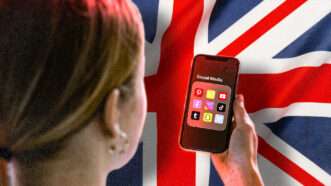
Britain is following Australia into a policy that has already struggled to keep children off social media, while forcing adults through intrusive age checks.
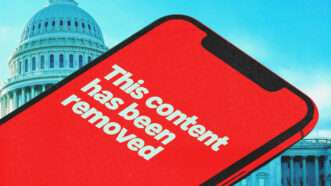
The JAWBONE Act would let Americans sue government officials who try to restrict their speech by pressuring social media platforms, broadcasters, or AI companies.

A lack of comprehension and sloppy language make a mess of a new tax scheme.



Perry County Sheriff Nick Weems preposterously claimed that Larry Bushart had threatened "mass violence" at a school.


Fertility rates started falling centuries before the iPhone was introduced.
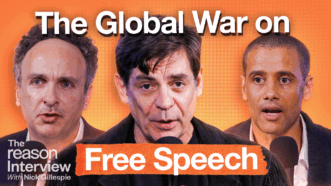
Jacob Mchangama and Jeff Kosseff discuss the global decline of free speech, why democracies are embracing censorship, and what can be done to protect open debate.
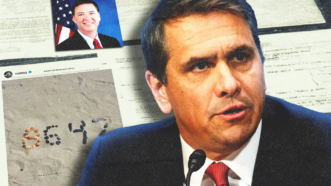
Acting Attorney General Todd Blanche implausibly claims prosecutors can prove Comey "knowingly and willfully" threatened to murder the president.
A new bill would compel Meta, Google, and TikTok to pay for Australian journalism.

A MrBeast post is going viral on X, and the correct answer is obvious.

Screens have become less passive, more participatory, and more open to all kinds of moving pictures.

The feds have been demanding that tech companies identify the administration's anonymous online critics. That violates the First Amendment.
The anxious generation is proving more tech savvy than regulators.

After withdrawing a summons in the face of a legal challenge, the government is seeking a grand jury subpoena.
In the guise of investigating "potentially unlawful advertiser boycotts," the commission is punishing the organization for its views.
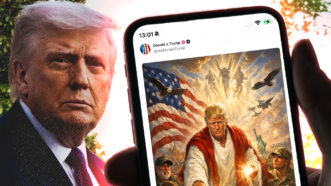
The president claims he was oblivious to the picture's blasphemous implications, which is troubling if true.
Tech companies that create social media apps should not be blamed for the complex mental issues of everyone who might use them.
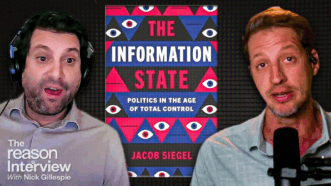
Jacob Siegel discusses how the internet reshaped political power, the rise of technocratic rule, and why information control keeps failing.
Plus: Hollywood is over, the war in Iran is not, Democrats are fighting about affordability, and more...
Plus: The Pentagon prepares for possible ground troops in Iran, a listener asks how libertarians should answer the appeal of collectivism, and ICE descends on airports.

Nick Fuentes and his followers compete to see who can be most offensive.
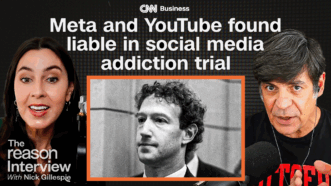
Tech journalist Taylor Lorenz discusses the Meta trial, the moral panic around social media, and the risks of regulating online speech.

Total anonymity plus revenue sharing seems to be rewarding extremely low-quality posting.

Plus: Meta and Google found liable, what the verdict means, an OnlyFans-style campaign website, and more...
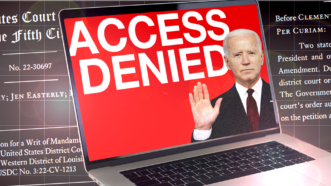
Despite its rejection of the Biden administration's interference, the Trump administration is still asserting authority over online speech.
Meta's loss in a New Mexico "product design" case could also be a blow against Section 230, free speech, and online privacy.
Plus: Trump declares victory over Iran again, Afroman trial reflections, and more...

"We are not in the mood to discuss the matter further, and have not been in the mood for 250 years."

The actor previously pushed to repeal Section 230. Now, he is taking his advocacy to the global stage.

Gov. Mikie Sherrill called Big Tech worse than Big Tobacco before proposing measures to regulate social media platforms.

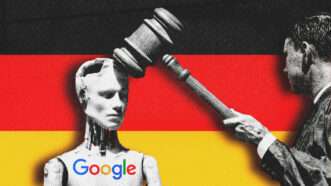
Germany’s law against Nazi symbolism "is being misused to silence people with dissenting views," Rainer Zitelmann tells Reason.

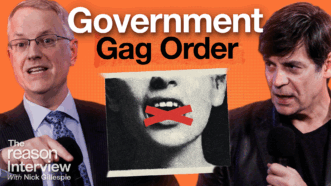
Mark Chenoweth discusses the SEC’s gag rule, the power of the administrative state, and the legal battle over whether regulators can silence their critics.

The Trump administration will start collecting social media account information on immigration forms.

Tara Palmeri insinuated that Michael Tracey disagrees with her because he's paid by Epstein associates. That's a lie.

Plus: The FCC targets Disney and Comcast, new Epstein associates revealed, and Trump’s tariffs cause growing rifts with U.S. allies.

"My wife and I have received many threatening and malicious emails, texts, and voicemails the past several days."
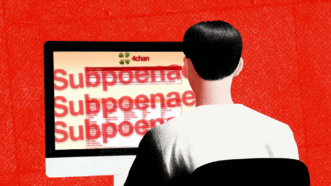
The Department of Justice released subpoenas for personal information on two anonymous commenters claiming to have inside knowledge about Jeffrey Epstein's death.

Australia’s experience shows what happens when governments play online parent

The commission has targeted the news rating company with onerous record demands and a merger condition aimed at cutting off its revenue.

“Both abstinence and excessive use can be problematic,” researchers suggest.
Celebrate your independence with a subscription to Reason magazine, your most trusted source of honest, insightful news and analysis.




