
Two Ironic Legacies of Ken Starr's Investigation of Bill Clinton
Starr's role in the impeachment of Clinton may have cost him a seat on the Supreme Court. And the biggest beneficiary of Starr's failure was probably George W. Bush.


Starr's role in the impeachment of Clinton may have cost him a seat on the Supreme Court. And the biggest beneficiary of Starr's failure was probably George W. Bush.

Plus: The authoritarian convergence, inflation up and stocks down, and more...
When it comes to gender identity issues, some conservatives make a mockery of liberty and parental rights.
Plus: Backdoor censorship on social media, how the airline bailouts failed, and more...

Their case for the seizure is full of holes.
Plus: The editors respond to a question about the Forward Party.
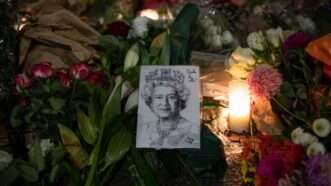
The real danger to citizens is the use of coercive government power, no matter how it’s named.

You don't have to prove to a government official that you have “proper cause” to exercise your constitutional right, the Court ruled.

The community fridge is a civic model that regulators should encourage, not seek to shut down.
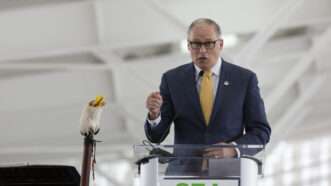
Gov. Jay Inslee says Washington state's COVID-19 emergency will finally come to an end on October 31.
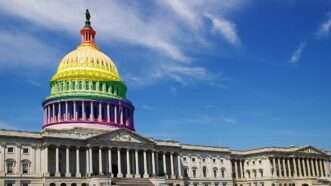
A compromise to protect religious freedom may bring on more Republican support.

A judge sided with a plaintiff who objects to procuring coverage for HIV-prevention medications. Rightly so.
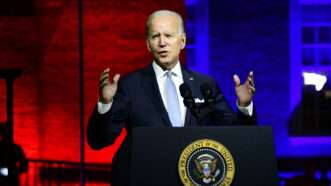
Biden says Republicans are plotting a repeat of 2020 in 2024. Maybe Congress should do something to prevent that?

Why should the government care if massage therapists can speak English?
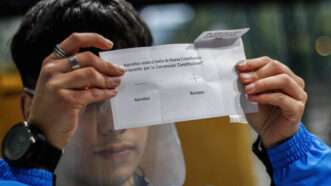
Whether voters will approve of whatever draft the government writes next remains to be seen.

Blaming the ballot system ignores the fact that many Alaskans simply did not think the former governor really represented them.
The likely answer is "yes." There are three types of potential litigants who probably qualify.
Relying on Section 432(a) of the Higher Education Act of 1965, as some propose, has many of the same flaws as the Administration's emergency powers theory.
I keep hearing the same (pointless, I think) claims that America is a republic, not a democracy. It's both a republic and a democracy.
Noted environmental law scholar Richard Revesz will be nominated to head the White House Office of Information and Regulatory Affairs
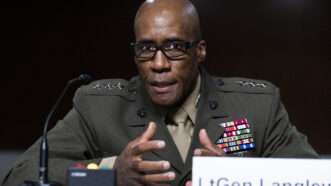
U.S. counterterrorism action in Somalia hasn’t been approved by Congress, but it rages on anyway.

Republicans are losing ground in the wake of the Supreme Court overturning Roe v. Wade.
Tyler Cowen explains why it's a mistake to conflate democracy with what is good and just.
An effort to ban sales of two books to minors ended with a Virginia judge saying that the state’s obscenity statute is “unconstitutional on its face."
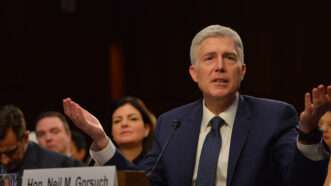
The Insular Cases “rest on a rotten foundation,” Gorsuch wrote.
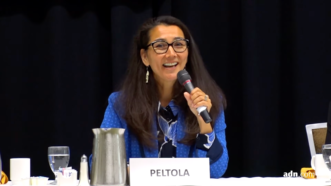
Mary Peltola will only be the third Democrat, as well as the first Native Alaskan, to represent Alaska since it became a state.
A new ordinance in Franklin will restrict evening and weekend protests and subject violators to misdemeanor charges.
Plus: California "Kid's Code" bill could mean face scans to visit websites, Michael Horn on reinventing schools, and more...
UPDATE (see end of post): Perhaps this is just an example of the "chilling effect," where a law deters even behavior that it may not actually cover (perhaps in part because of how the law's own backers had initially described it).
Third post in the symposium on the National Constitution Center "Restoring the Guardrails of Democracy" project. Walter Olson presents the Team Libertarian Report.

Canadian legal scholar Leonid Sirota outlines some reasons why.

Plus: "Reparations" for the news industry, the disappearance of starter homes, and more...
From cronyist subsidies to an unfair tax code, there are several key fixes Congress could make to better serve the public.
Celebrate your independence with a subscription to Reason magazine, your most trusted source of honest, insightful news and analysis.




