
Another Judge Rules That Ohio's COVID-19 Lockdown Is Illegal
The decision says the "unbridled and unfettered consolidation of authority in one unelected official" violates due process and the separation of powers.


The decision says the "unbridled and unfettered consolidation of authority in one unelected official" violates due process and the separation of powers.

Airborne transmission is the dominant route for the spread of COVID-19.

Plus: "fictional pleas," COVID-19 in migrant detention centers, and more...

Plus: Protest updates, a small blow against qualified immunity, a lesson in not feeding the trolls, and more...

Should we intentionally expose willing participants to the coronavirus?

Plus: Netflix out-trademarks the U.S. government, contraception shortages, and more...

Physician Marty Makary vs. epidemiologist Knut Wittkowski on whether "the lockdown saved hundreds of thousands, if not millions, of lives."

The phased reopenings happening around the country are becoming increasingly arbitrary.

Sometime in 2021, the American people will be presented with a reorganized and newly empowered federal public health bureaucracy. As time passes, it will grow in size and scope.

Since meager testing resources left officials ignorant of crucial facts about the epidemic, they made policy decisions without the evidence necessary to assess their proportionality.

Physician Marty Makary vs. epidemiologist Knut Wittkowski on whether "the lockdown saved hundreds of thousands, if not millions, of lives."

The observational dataset on which it was based could not be properly audited.

The episode illustrates the perils of confirmation bias on both sides of the debate about disease control measures.

Two models suggest that broad restrictions had less impact on the epidemic than commonly thought.
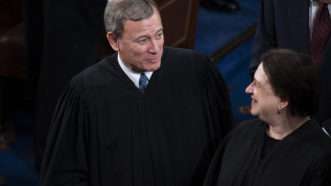
As SCOTUS declines to issue an injunction, the chief justice says the state's COVID-19 control measures seem consistent with the First Amendment.

Top-down, one-size-fits-few mandates are recipes for conflict.

Two models generate strikingly different estimates.

Supreme Court precedent suggests COVID-19 restrictions that discriminate against churches are presumptively unconstitutional.

Doing so can potentially save many thousands of lives. And moral objections to this practice are weak. The issues here are very similar to the longstanding debate over whether we should legalize organ markets.

In some states, the total is as high as 65 percent. It's a stunning statistic that might force policy makers to reconsider their approach to fighting the coronavirus.

The health crisis revealed red tape that hobbles our lives even in good times.

Control measures should be based on emerging evidence about the danger posed by the virus.

The World Health Organization pauses clinical trials in light of disturbing new results.

Competent responses to the crisis have come from people and organizations voluntarily helping each other and themselves.

That rate is much lower than the numbers used in the horrifying projections that shaped the government response to the epidemic.

All of it, The New York Times assumes.

Studies from several countries find low infection rates.

The disease control agency is a poster child for bureaucratic incompetence.

But if a shot becomes available, there's a good chance more people will choose to vaccinate without a government mandate.

The ruling says the state's top health official exceeded her statutory authority by ordering "nonessential" businesses to close.

When mask-wearing and social distancing rules are legally enforceable, the potential for violence cannot be avoided.

Plus: "Jane Roe" in Roe v. Wade says she was paid to lie about abortion, sailors who recovered from COVID-19 test positive again, and more...

Courts are beginning to recognize that public health powers, while broad, are not a blank check.

Plus: Trump tries hydroxychloroquine, France bans drone surveillance of COVID-19 confinement, and more...
The infection fatality rate probably varies from one place to another.

When will Americans learn?

Plus: Justin Amash's quick reversal, Ronan Farrow's flaws, and more...
Sensible social distancing does not require staying in your house.

Staying inside forever and going back to normal today aren't the only choices.


Tracing where people have been and who they’ve met can be effective for battling disease. But, oh boy, does it lend itself to abuse.
We submitted another strange bedfellows amicus brief on severability in the Texas ACA case.

A seemingly arcane dispute about administrative law has profound implications for the limits of public health authority.

Spending nearly 14 times as much on the CDC as we did in 1987 did not, apparently, help the agency combat the biggest disease threat America has faced in a century.

Is COVID-19 bringing the mythology of America as a nation of immigrants to an end? Q&A with The New York Times' Jia Lynn Yang

Unless you are especially dedicated to seeing the world and willing to run a gauntlet of hassles to do so, travel is poised to become a more local activity.

An Illinois resident obtained a TRO by citing a 30-day limit, while a New Hampshire hair salon owner says the goal of her state's lockdown has been achieved.

If you think much about the epidemic remains uncertain, The New York Times warns, you might be part of "the virus 'truther' movement."


New from Reason: a look into what Javier Milei has accomplished and what it will take to make the most of Argentina’s window for real change. Out now for subscribers.

