
Trump's 'National Security' Steel Tariffs Are Just Old Fashioned Protectionism. Here's the Data To Prove It.
The department has granted just 1 percent of the tariff exemption requests that were challenged by domestic steel producers.


The department has granted just 1 percent of the tariff exemption requests that were challenged by domestic steel producers.

If politicians really want to help citizens, they should brush up on the laws of supply and demand.

The Federalist's Ben Domenech is fighting the government in court.
The NLRB's prosecution of a conservative journalist should be worrisome.
Plus: Justin Amash seeking L.P. nomination, pandemic hasn't halted FDA war on vaping, and more
It's time to push back on arbitrary classifications that punish businesses and customers alike without clearly helping public health.

But testing remains a key issue in some of those states.

The economy is broadly healthy and that it's benefiting nearly everyone—including the lower-income households who need it most.

Amid growing unrest, oil-dependent nations may have no choice but to open their economies.

Unless we cause one by overreacting to Asia's changing political and economic landscape
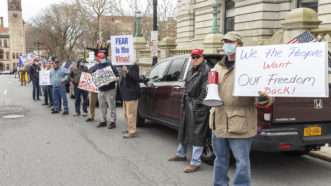
The strict stay-at-home order received a great deal of backlash for its more arbitrary prohibitions.
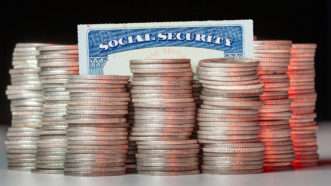
A new report from the Social Security Administration expects the program to hit insolvency by 2035. Some experts say it could happen as soon as 2028 if there is a serious recession.
Economists David Henderson and Justin Wolfers debate whether the coronavirus lockdowns are doing more harm than good.
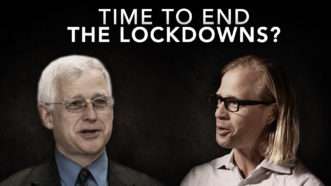
Hoover Institution's David Henderson vs. University of Michigan's Justin Wolfers

The coronavirus shutdown might alter buying patterns, as more people flee tightly packed cities for suburban, exurban, and rural areas.
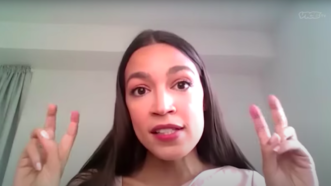
"I think a lot of people should just say, 'No. We're not going back to that.'"
Restaurants and shops are already suffering enough.

The kill switch to the economy was easy to find. The "on" button may be impossible to locate.
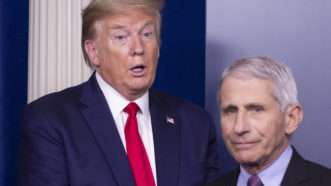
Plus: protecting privacy while contact tracing, first YouTube video turns 15, and more...
The Trump-era GOP lends credence to the idea that Obama-era Republicans cared about deficits only as a means of hampering a Democratic president.

The private sector has proven to be more resilient and flexible than the government.

The libertarian-leaning congressman says the Paycheck Protection Program for small businesses discriminates against those that most need it.

Health care expert Avik Roy says that even without widespread testing, it's time to reopen schools and allow healthy, younger employees to go back to work.
It's obvious that there will be more government spending in response to the coronavirus, but distinguishing the essential from the nice-to-have is more important than ever.
"The more we lock down the economy, the more we harm those individuals who are most vulnerable, who don't have the cash cushions or the white-collar jobs that allow them to keep going."
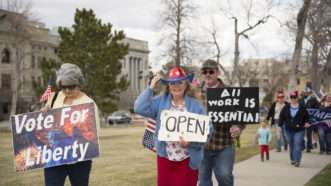
The war between Openers and Closers shouldn't be seen as a fight between idiot death-worshippers and unnecessarily frightened tyrants.
"The more government gets involved, or the more government regulation, the greater are the increases in prices over time."

And Georgia will reopen select businesses beginning April 24.
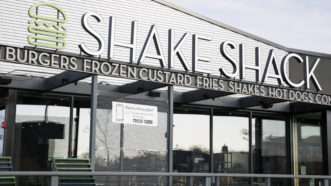
The company says it will return the money after it was announced that the Paycheck Protection Program ran out of funding.

This proposal might work, but it's doubtful that our politicians and president are competent enough to pull it off.

The White House announced a temporary suspension of tariff payments as a way to stimulate the American economy, but the relief will not apply to tariffs on steel, aluminum, or imports from China.
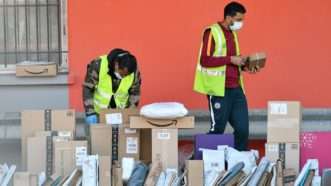
The congresswoman claimed that Amazon is "refusing to provide basic protective equipment to workers." That's not true.

Plus: sensitive cellphone data swept up in coronavirus containment efforts, and more...
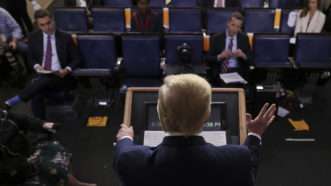
"A national shutdown is not a sustainable long-term situation," Trump said Thursday evening. "We are not opening all at once, but one careful step at a time."

The $349 billion loan program is meant to help small companies hit hard by social distancing.
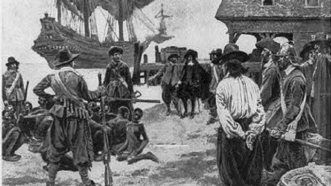
In a new collection, the economic historian documents how classical liberals pushed for abolition and equality in 19th-century America.
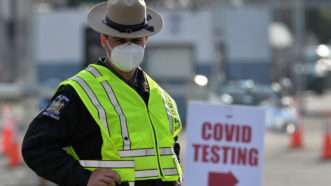
It's not the politicians who have the power to reopen America, or at least the parts that are now closed. It's individuals, families, businesses, and religious congregations.
And more coronavirus stimulus spending could send that number soaring higher.

Don't let states and cities get away with onerous rules that in no way help to contain COVID-19.

A New York Times Magazine forum highlights the moral implications of suppressing economic activity.
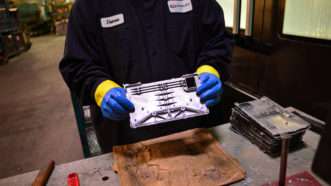
General Motors is being charged import taxes on parts it needs to build ventilators. Its requests for relief have gone unanswered.
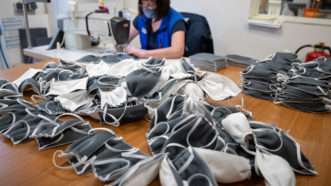
Export restrictions only make sense if you're unable to understand the obvious consequences of that policy.
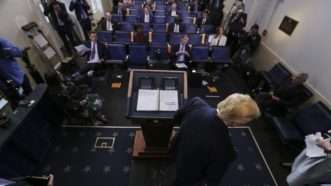
From March 26 to April 8, the number of projected deaths from coronavirus dropped from 81,000 to 60,000. What should we do with such information?
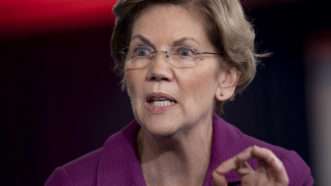
In two separate op-eds yesterday, the senators pitch central planning as the best response to the coronavirus pandemic.

Unclear terms, unrealistic loan forgiveness, a site unprepared for launch, and a bottomless demand for cash
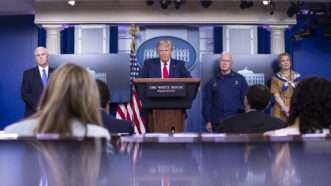
The president's daily press briefings are disturbing because of what they reveal, not what they obscure.
The COVID-19 crisis has resuscitated some seriously bad ideas.

The CARES Act gives the federal government the power to take large ownership stakes in the airlines and dictate much of their operations.
Celebrate your independence with a subscription to Reason magazine, your most trusted source of honest, insightful news and analysis.




