
House Republicans Vote Ilhan Omar to Foreign Affairs Committee Just To Kick Her Off the Next Day
Plus: Judge strikes down Super Bowl censorship law, report details how much inflation was driven by stimulus spending, and more...


Plus: Judge strikes down Super Bowl censorship law, report details how much inflation was driven by stimulus spending, and more...


They both share in their authoritarian desires to censor online speech and violate citizen privacy.

Why is Gov. Ron DeSantis acting just like his opposition by attempting to dictate what students are permitted to learn?



"If you don't like a book, don't read it. The First Amendment's guarantee of the freedom of speech and the right to access information has created a beautiful marketplace of ideas in our country," said one ACLU representative opposing the bill.

Plus: FOSTA in court, challenges to Illinois' assault weapon ban, and more...

Join Reason on YouTube and Facebook on Thursday at 1 p.m. ET for a discussion of the Facebook Files with Robby Soave.

Throughout the pandemic, the CDC was in constant contact with Facebook, vetting what users were allowed to say on the social media site.
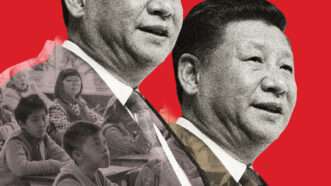
An op-ed in The New York Times tries to make the case that the Chinese Communist Party is a worthy partner in raising children.

Tech firm operators may face criminal charges if children who use their platforms encounter too much “harmful content.”

Good intentions, bad results

Researchers: Moscow’s social media meddling had little impact on the 2016 election.
Plus: House votes to rescind IRS funding, the FDA is putting unnecessary strings on pharmacies filling abortion pill prescriptions, and more...

The internal company documents offer a behind-the-scenes glimpse at how the federal agencies distorted the public debate on one of the world's largest social media platforms.

New mechanisms to threaten liberty are brought to bear on those who need the government's permission to do their jobs.


"When it comes to problems happening in America, [the NBA is] the first organization saying, 'This is wrong,'" says the former professional basketball player. But then they're silent for victims of torture.

People in power lean on private businesses to impose authoritarian policies forbidden to the government.
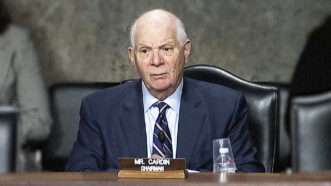
This week, a clip of Maryland Sen. Ben Cardin claiming that speech that espouses "hate" and "violence" is not protected by the First Amendment made the rounds on Twitter, sparking sharp backlash.

When I was young, I assumed government would lift people out of poverty. But those policies often do more harm than good.

"It's stories and songs and films cut apart and written over, leaving no trace and no remnant of whatever used to be," writes novelist and cultural critic Kat Rosenfield.

Social media, streaming, and a new era of digital self-censorship

Demands by lawmakers and government officials for locally produced content may lead to online censorship.
Join Reason on YouTube and Facebook at 1 p.m. Eastern for a live analysis of the internal Twitter documents recently published by Matt Taibbi, Bari Weiss, and Michael Shellenberger.

The most disturbing aspect of the “Twitter Files” is the platform’s cozy relationship with federal officials who demanded suppression of speech they considered dangerous.

Instead of debating whether the platform has been flooded by bigotry, Elon Musk should tell the congressman to mind his own business.



A website designer asks SCOTUS to let her eschew work that contradicts her opposition to gay marriage.
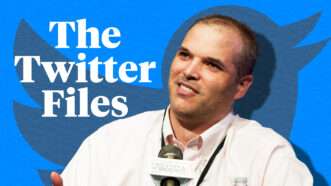
Plus: The editors consider a listener question on the involuntary hospitalization of the mentally ill.

The Twitter Files are interesting but contain few true surprises. A mix of incompetence and partisanship got the site in trouble.

At a dangerous moment for the free exchange of ideas, civil libertarians can tally a win.
Elon Musk's rescission of the platform's prior policy, which forbade dissent from official guidance, is consistent with his promise of lighter moderation.

Given the harms caused, lessons should be learned from China’s people, not its government.

Too many Western governments want to follow in the footsteps of authoritarians when it comes to tech privacy.

While "the 26 words that created the internet" have been under fire from both sides, two groups argue that the 1996 law is essential to the future of abortion rights.

EU officials threaten to make their restrictive content rules a global standard.

The state is threatening to punish doctors whose advice deviates from the "scientific consensus."



Thanks, but we lived through the lies of their administrations that they used to sell us war and intrusive government meddling in health care.

Collin College fired Suzanne Jones in 2021, after she voiced support for union activity and the removal of Confederate monuments.

Plus: Congress remains too cautious about marijuana, myths about independent contractors, and more...
Livestream with Nick Gillespie, Robby Soave, and Zach Weissmueller

Plus: For Halloween, the editors describe what scares them most about politics and government right now.
Celebrate your independence with a subscription to Reason magazine, your most trusted source of honest, insightful news and analysis.




