
12 Good Things That Might Happen Today, None of Which Involve Trump or Biden
American voters have the chance to usher in a few libertarian policies this election, courtesy of these state ballot measures.


American voters have the chance to usher in a few libertarian policies this election, courtesy of these state ballot measures.
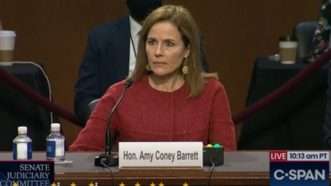
Democrats and Republicans agree on that point, although they disagree about what it means in practice.
The Sixth Circuit joins the Eighth Circuit in recognizing the import of Chief Justice Roberts' controlling opinion in June Medical Services

Such theories are not based in fact.

Plus: Trump says he plans to hold rallies despite lack of negative COVID-19 test, Biden won't answer question on court-packing, and more...

What's next for SCOTUS?

The 5th Circuit judge is a mixed bag from a libertarian perspective.

The presumptive Democratic vice presidential nominee offers a highly circumscribed notion of the role of faith in public life.

The hip-hop star's wild, disjointed presentation offers both red meat and poison for right, left, and libertarian.

Plus: "Heartbeat law" ruled unconstitutional, introducing the Atlas of Surveillance, Brave New World reimagined, and more...
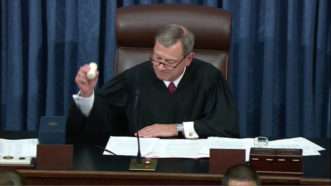
The chief justice has managed to infuriate every major political faction.

Plus: More (bad, weird, and occasionally good) new state laws that start taking effect today.

Can the government compel speech? For Supreme Court justices, that seems to depend on the content of that speech.

Plus: More states pause reopening, Oregon measure to legalize psilocybin moves forward, and more...
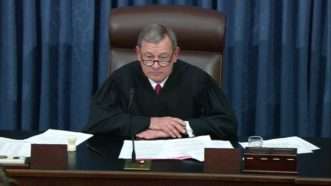
Roberts dissented in 2016 when SCOTUS struck down an abortion law. What changed this time around?
The Chief Justice provides the pivotal vote in the June Medical Services abortion case and Seila Law v. CFPB.
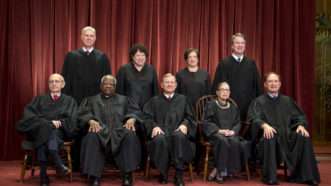
The justices weigh abortion, school choice, and federal anti-discrimination law.

The Supreme Court will consider the constitutionality of a Louisiana law that requires physicians who perform abortions to have admitting privileges at local hospitals.
But the ban might still be blocked as to women who are far enough along in their pregnancies that delaying an abortion would make it illegal.

Legal scholars Lindsay Wiley and Steve Vladeck explain why courts should not give special deference to the government in cases challenging the constitutionality of anti-coronavirus policies.
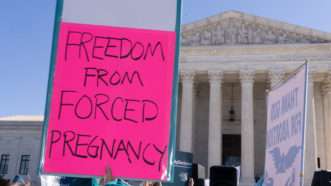
"Delaying abortions by weeks does nothing to further the State's interest in combatting COVID-19," they say.
"any patient who, based on the treating physician's medical judgment, would be past the legal limit for an abortion in Texas ... on April 22, 2020" (the date until which the Texas restrictions suspend abortions) remains able to get an abortion, despite the restrictions.
But the ban might still be blocked as to women who are far enough along in their pregnancies that delaying an abortion would make it illegal.
On appeal, Ohio interpreted the limit (part of a temporary ban on all "non-essential" surgeries and procedures) as not banning abortions when "any delay will jeopardize the woman's right to obtain an abortion," but only as delaying earlier-term abortions that can be delayed—but it apparently hadn't made that argument in the trial court.

Plus: "Netflix for 3-D guns," viral authoritarianism, COVID-19 behind bars, and more…
Can it justify temporarily forbidding people to buy guns?

Plus: the pandemic in prisons, pushback on Trump's prescription for economic rebound, and more...
The Illinois Appellate Court's decision interprets the Illinois version of the RFRA, and the separate Illinois Health Care Right of Conscience Act (which bans all discrimination "because of [a] person's conscientious refusal to receive, obtain, accept, perform, assist, counsel, suggest, recommend, refer or participate in any way in any particular form of health care services contrary to his or her conscience").
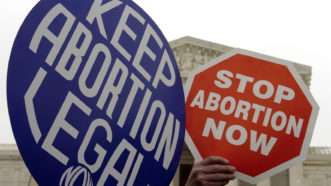
The Supreme Court weighs abortion regulation in June Medical Services v. Russo.
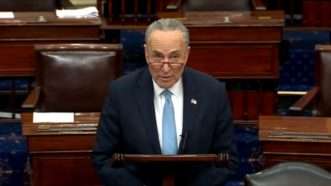
The Senate minority leader threatened two justices by name, and then he lied about it.

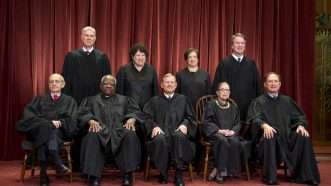
A new abortion case raises an old question.

Walter Block and Kerry Baldwin debate whether women should have the legal right to terminate their pregnancies.
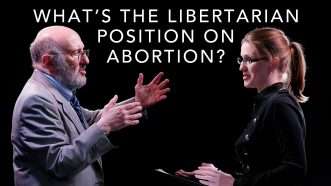
Walter Block and Kerry Baldwin debate whether pregnant women should have the legal right to evict a fetus.
Ohio prohibits doctors from performing abortions if Down Syndrome is the reason. Does such a law impose an "undue burden" on the abortion right?
A strange, if understandable, form of abstention from Judge Easterbrook

History provides a window into how abortion bans will play out if re-instituted.
That's what a California bill (passed 76-0 by Assembly and 6-0 and 5-2 by Senate committees) would ask film tax credit seekers to provide in their tax credit application.

Plus: North Carolina sues eight more e-cig companies, Tulsi Gabbard fails to meet debate threshold, and more...

Ursula Wing sold abortion drugs to U.S. customers and is now charged with conspiracy to defraud the United States.

Plus: Planned Parenthood's CEO is terminated, the Trump administration drains the swap, and Chelsea Manning is hit with more fines.

And don't even try to pin Elizabeth Warren down on whether the procedure should be legal in the third trimester.

Justice Natalie Lieven ruled it was in the woman's "best interests" because she has learning disabilities.

Restrictionists once again discover that draconian rules aren’t enough to overcome people unwilling to obey.
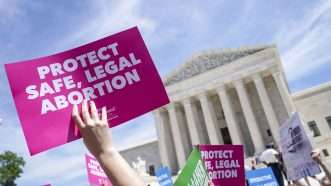
SCOTUS sidesteps the hard questions in Box v. Planned Parenthood of Indiana and Kentucky.
Celebrate your independence with a subscription to Reason magazine, your most trusted source of honest, insightful news and analysis.




