
South Dakota Can't Stop Website From Informing Women About Abortion Pills
And it can't ban a former state lawmaker from wearing a sweatshirt that advertises that website, either.


And it can't ban a former state lawmaker from wearing a sweatshirt that advertises that website, either.

Nobel Prize-winning economist Alvin E. Roth discusses the moral limits of markets, how bans create black markets, and why harm reduction often works better than prohibition.

Plus: Chinese relations, far-right extremists, Yale discriminated, and more...
The Court stayed a lower court order that would have blocked FDA rules allowing the prescription of mifepristone to terminate pregnancies via telemedicine.
The justices will consider what to do with the Fifth Circuit's mifepristone order for a few more days
It appears the Supreme Court will decide the fate of telemedicine prescriptions for mifepristone without the benefit of an FDA filing.
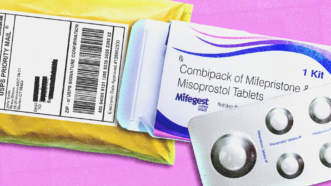
Mail-order mifepristone is how countless women bypass abortion bans. That could soon change if Louisiana gets its way before the Supreme Court.
The Court responds to the mifepristone shadow docket filings.
Drug makers seek interim relief after the U.S. Court of Appeals for the Fifth Circuit blocks FDA rule allowing mifepristone prescriptions via telemedicine. (With Update Below.)
The Court dispatches with an easy case the lower courts should have gotten right.
Most matters enjoy too little moral agreement to make fertile ground for government intervention.

His push relies on dubious data about the pills' safety.
The court also draws an interesting analogy to self-defense rights.

Mayday.Health ads that direct people to an informational website about abortion access are deceptive advertising and must be banned, the state argues. That’s unconstitutional, counters Mayday.
Such speech by the National Institute of Family & Life Advocates in this case, the court concluded, was noncommercial speech that was subject to broad First Amendment protection, rather than less protected "commercial speech."

GOP lawmakers in Wisconsin and elsewhere are pushing the idea that abortions are a water quality issue.

Every political issue ultimately becomes a zoning issue.

Home Secretary Shabana Mahmood is moving to ban protests that annoy the public.
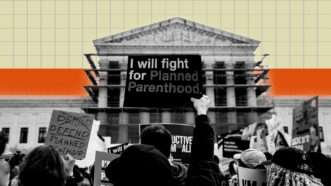
Plus: An impressive book by a Supreme Court justice.

So a federal judge held yesterday, acknowledging that the government may refuse to fund abortions, but concluding that the exclusion of funding to affiliates unconstitutionally violates their rights of expressive association.
A mifepristone manufacturer is unsuccessful in evading West Virginia's prohibition on abortion, even when performed by medication.
The true superpower of the lawyer is to turn all questions into questions about procedure—often, about procedure about procedure.
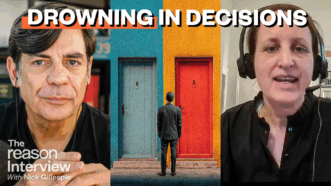
Sophia Rosenfeld joins Nick Gillespie to discuss how personal choice became central to modern ideas of freedom and why that shift carries political, cultural, and psychological consequences.

Strict abortion bans do not seem to be seriously stopping abortions.

Plus: The Supreme Court upholds a state ban on transgender care for minors.

Fusionism holds that virtue and liberty are mutually reinforcing, and that neither is possible in any lasting or meaningful way without the other.

Two protesters in Wales were convicted for handing out pamphlets and filming an argument with their member of Parliament.
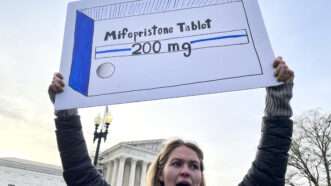
In a Monday legal filing, lawyers for the Trump administration argue that an effort by red states to ban mail-order abortion drugs lacks standing.
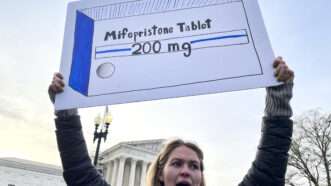
A new study being used to call for mifepristone restrictions relies on vague and dubious definitions of drug-related complications.
Longtime surgeon and Cato Institute fellow Jeffrey Singer argues that government overreach in health care undermines patient autonomy.

Plus: Texas midwife arrested for violating abortion ban, JFK files, Gaza bombings, astronauts finally rescued, and more...
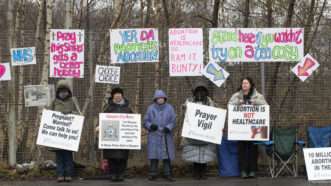
Rose Docherty was arrested over her sign, which read: "Coercion is a crime, here to talk, only if you want."

Transporting "an unborn child" from Montana to another state "with the intent to obtain an abortion that is illegal" in Montana, or assisting anyone in doing so, would be illegal under House Bill 609.


Prosecutors claim the case is about coercion. So why isn’t that the charge they are bringing?
That's because it apparently covers only grants to foreign organizations operating abroad, and a 2020 Supreme Court decision generally held that the First Amendment doesn't apply in such situations.
The settlement of the civil case follows guilty pleas or convictions in related criminal cases.

These bills—in Indiana, North Dakota, Oklahoma, and South Carolina—could also imperil IVF practices and threaten care for women with pregnancy complications.

A new lawsuit alleges that, after failing to treat a placental abruption, medical staff conspired to have Brittany Watts arrested for her miscarriage.
Celebrate your independence with a subscription to Reason magazine, your most trusted source of honest, insightful news and analysis.




