

A Texas News Vlogger Asks SCOTUS To Decide Whether Criminalizing Journalism Is 'Obviously Unconstitutional'
This is Priscilla Villarreal’s second trip to the Supreme Court, which last year revived her First Amendment lawsuit.
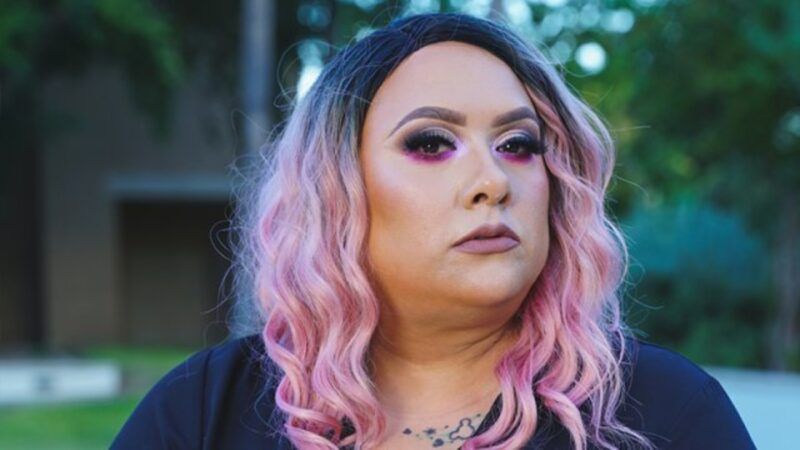
Priscilla Villarreal was not arrested for "merely asking questions," Texas Attorney General Ken Paxton insists in a brief urging the Supreme Court to reject the Laredo news vlogger's petition for review of her First Amendment case. Yet that is literally what happened to Villarreal in 2017, and the precedent set by that incident poses a threat to journalists across the country.
Villarreal, who operates a locally popular news outlet on Facebook, alleges that local officials, annoyed by her "unfiltered style" and periodic criticism of them, conspired to punish her by treating her journalism as a crime. After months of looking for "any excuse" to arrest her, she says, they settled on an obscure, rarely used Texas law, located in a chapter targeting "Abuse of Office," that makes it a felony to "solicit" nonpublic information from a government official "with intent to obtain a benefit."
Laredo police had never before arrested anyone under that law, which originally was aimed at curtailing official corruption by punishing the use of inside information for financial gain. But they claimed Villarreal had violated the statute twice by asking a police officer to confirm details of a public suicide and a fatal car accident.
According to police and prosecutors, the "benefit" that Villarreal sought was increased Facebook traffic. Since reporters routinely aim to attract readers or viewers by obtaining and publishing information from government sources, that interpretation of the law effectively criminalized basic journalism.
After police obtained arrest warrants for Villarreal, she turned herself in. According to her petition, "police officers took cell phone pictures of [her] in handcuffs while mocking and laughing at her."
A judge later dismissed the felony charges against Villarreal, concluding that the law underlying the case was unconstitutionally vague. After Villarreal sued Laredo officials for violating her First Amendment rights "under color of law," a three-judge panel of the U.S. Court of Appeals for the 5th Circuit rejected the defendants' argument that they were shielded by qualified immunity, a doctrine that blocks such claims unless they allege violations of "clearly established" law.
"Priscilla Villarreal was put in jail for asking a police officer a question," the majority noted. "If that is not an obvious violation of the Constitution, it's hard to imagine what would be."
After rehearing the case, however, a sharply divided 16-judge panel disagreed, seeing no "obvious violation" of the First Amendment. That 2024 ruling provoked four vigorous dissents written or joined by seven judges.
The decision also generated alarm among journalists and civil libertarians. When Villarreal asked the Supreme Court to intervene, her petition attracted support from an ideologically diverse set of organizations and individuals (including me).
Last year, the Supreme Court granted Villarreal's petition and vacated the 5th Circuit's ruling. The justices instructed the appeals court to reconsider the case in light of a June 2024 Supreme Court decision that made it easier for victims of retaliatory arrests to back up their First Amendment claims.
In April, the 5th Circuit again blocked Villarreal's lawsuit. Five judges dissented from that decision, complaining that the majority had decided to "reinstate what [it] mistakenly said before, just in different packaging," despite "nearly six years of tenacious First Amendment litigation that culminated successfully in the High Court."
Now Villarreal is back at the Supreme Court, asking it to decide "whether it obviously violates the First Amendment to arrest someone for asking government officials questions and publishing the information they volunteer." Her lawyers at the Foundation for Individual Rights and Expression also want the justices to resolve a circuit split on the question of whether "public officials who use a state statute in a way that obviously violates the First Amendment" can claim qualified immunity.
Both questions are important, especially since "criminal laws have grown so exuberantly" that "almost anyone can be arrested for something," as Justice Neil Gorsuch observes. The 5th Circuit's position makes freedom of the press contingent on the legal creativity of vindictive cops and prosecutors.
© Copyright 2025 by Creators Syndicate Inc.




