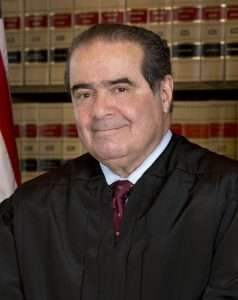
2/16/1833: Barron v. City of Baltimore decided.
The Volokh Conspiracy
Mostly law professors | Sometimes contrarian | Often libertarian | Always independent | Est. 2002
Judge James Ho Defends Ilya Shapiro and Color Blindness at GULC
"And so, if Ilya Shapiro is deserving of cancellation, then you should go ahead and cancel me too."
On Tuesday, Judge James Ho was scheduled to speak to the Georgetown Federalist Society Chapter about fair-weather originalism. But in light of recent events, Ho decided to talk about another topic: Ilya Shapiro, cancel culture, and color blindness. National Review wrote about Ho's remarks, which a Georgetown student kindly shared with me. Here, I will offer a few highlights.
First, Ho vigorously defends the freedom of speech, not just on constitutional grounds, but on pragmatic grounds. The best way of knowing your own position is to confront those who disagree with you.
So cancel culture is not just antithetical to our constitutional culture and our American culture. It's completely antithetical to the very legal system that each of you seeks to join. . . .
If you disagree with Ilya Shapiro—if you think his understanding of the law is absurd—if you think his vision for our country is awful—here's what I say: Bring him onto campus—and beat him!
Second, Ho explains that the people lobbing charges of racial discrimination are often the very people who are engaging in racial discrimination. Ilya, who advocates for color-blindness and equality, vigorously opposed racial discrimination.
So make no mistake: If there is any racial discrimination in statements like these, it's not coming from the speaker—it's coming from the policy that the speaker is criticizing. That's the unfortunate irony in this whole discussion. If you asked Ilya, I am sure he would say that he's the one standing up for racial equality, and that his opponents are the ones who are supporting racial discrimination. You don't have to agree with him—but it's obvious that's where he's coming from. And yet I don't hear Ilya trying to punish others for taking a different view on racial equality.
Third, Ho lines up with Shapiro. If Ilya gets cancelled, so should Ho.
Ilya has said that he should have chosen different words. That ought to be enough. . . . I stand with Ilya on the paramount importance of color-blindness. And that same principle should apply whether we're talking about getting into college, getting your first job, or receiving an appointment to the highest court in the land. Racism is a scourge that America has not yet fully extinguished—and the first step in fighting racial discrimination is to stop practicing it. That's all Ilya is trying to say. That's all he has ever tried to say. And so, if Ilya Shapiro is deserving of cancellation, then you should go ahead and cancel me too.
I understand that Ho's remarks will be published. They warrant a careful read.
Case Can't Be Sealed Just Because Party Alleges There Are False Statements in Pleadings
From Continental Indemnity Co. v. Timothy Coffey Nursery/Landscape, Inc., decided yesterday by Magistrate Judge James Wicks (E.D.N.Y.):
Defendant Timothy Coffey is the owner, founder and president of Defendant Coffey Nursery/Landscape ("Coffey Landscape") and Defendant Ann Amiaga is Coffey Landscape's office manager. Defendant Isaac Orellana was performing tree trimming and tree removal services for Coffey Landscape when a branch fell on him, causing paralysis of his lower extremities.
Plaintiff [insurance company] alleges that leading up to and including the date of the accident, Defendants had not disclosed Defendant Orellana as an employee in the weekly payroll reports submitted to Plaintiff, nor did Defendants pay premiums for Defendant Orellana. Plaintiff further alleges that a week after the accident, Defendants submitted a payroll report stating that Defendant Orellana was hired two days before the accident, when in reality he had been working for the company for 25 years and was paid in cash. Based on this alleged materially false representation, Defendants submitted a claim to Plaintiff for workers' compensation insurance coverage for the accident. Plaintiff also asserts that in order to escape paying a higher premium, Defendants did not disclose that Coffey Landscaping performed tree removal services in addition to landscaping services. …
Now, almost a year after the action was commenced, Defendants move "to seal the entire record of this case." Plaintiff has taken no position on this application. Notwithstanding that the motion is uncontested, the court is obligated to consider whether public access to the court records should be denied….
Perhaps the S. Ct. Will Reconsider the "Actual Malice" Libel Test -- but Not in Palin v. N.Y. Times
[UPDATE 3/11/2022: A new New York state intermediate appellate decision suggests the chance of the U.S. Supreme Court taking Palin is higher than I thought, though I think still very low; see here for details.]
Sarah Palin will doubtless appeal the verdict against her, and will almost certainly lose. Under existing libel law, she could only prevail if she could show so-called "actual malice," which basically means that the Times knew that the statement about her was false (knowing falsehood), or at least published it with a "high degree of awareness of … probable falsity" or "entertain[ing] serious doubts as to the truth of his publication" (reckless disregard of the risk of falsehood). Mere negligence or even gross negligence isn't enough. The jury has resolved against Palin this factual question about the Times editors' mental state, and the Second Circuit Court of Appeals is highly unlikely to overturn such a factual ruling.
In principle, of course, Palin could then petition the Supreme Court, asking it to exercise its discretion to review the case, and perhaps reconsider whether the "actual malice" test really should apply—the Supreme Court could reverse that precedent, even though the Court of Appeals can't. (Technically, the precedent isn't New York Times v. Sullivan, which required the actual malice test for public officials, but follow-on cases, such as Curtis Publishing v. Butts, which extended that to so-called "public figures.")
But it seems to me extremely unlikely that the Court would agree to hear Palin's case, because it arises under New York law—and a recent New York statute adopts the "actual malice" test as a matter of state law, whether or not it applies as a matter of First Amendment law.
Are Public Ignorance and Misinformation Getting Worse?
The answer, as Tyler Cowen and Matthew Yglesias, argue, is probably not. But political ignorance is still a serious problem.
Many believe that political ignorance and misinformation have gotten worse in recent years, with the rise of the internet and social media, and its exploitation by populist political movements, conspiracy theorists, and others. But evidence supporting the idea that the public is more ignorant and more prone to misinformation today than in earlier eras is actually quite weak.
Recent articles by libertarian-leaning economist Tyler Cowen and liberal political commentator Matthew Yglesias provide helpful overviews of much of the available evidence on this. On the whole, they are right to conclude that these problems haven't gotten significantly worse in recent years than was true in the past. But that doesn't mean we can breathe a sigh of relief about public ignorance and misinformation. Rather, we should understand that political ignorance and biased evaluation of information have been serious problems all along - even when pundits and academics were less focused on them than today.
Cowen pushes back on the idea that the Covid era has seen an unusually great degree of misinformation by reminding us of past history when things were as bad or worse:
It's hard to measure misinformation over time. But the premise that there was ever a golden age of accurate information, especially about public health, is suspect.
I just turned 60, so my youth is now fairly distant. Still, I can recall debates about smoking: not so much whether it was bad for you — that science was established, and the federal government had already initiated an anti-smoking campaign — but whether it was really all that bad. And I'm not talking about the occasional cigarette, but one or two packs a day. The scientific knowledge wasn't nearly as socially salient as it is today, and there were many millions more smokers. That meant social opinion was invariably somewhat split….
Overall, I am genuinely unsure that misinformation about public health has become worse in my lifetime. My uncertainty is only strengthened when I do a reality check of how much general public misinformation there has been over the last six decades. A lot of experts and members of the public used to think the economy of the Soviet Union was just fine. They thought the Vietnam War was OK. They saw Nixon's wage and price controls as justified.
Cowen's list of examples can easily be extended. For example, there is a long history of anti-vaxxerism on both left and right. Yglesias notes some examples in his article.
Moving beyond public health, voter ignorance and misinformation have been serious problems for as long democracy has existed, all the way back to ancient Greece. Trump's "Big Lie" about the 2020 election is a notable and dangerous example of the power of misinformation today. But it is no worse than widespread belief in the "stab in the back" myth of World War I, which played a major role in the Nazis' rise to power during the Weimar Republic.
More generally, fascism and communism both achieved widespread popularity in the age of what we now consider traditional print and broadcast media; and advocates of both effectively exploited public ignorance in a variety of ways. Nothing that has happened in the age of Twitter and Facebook has - so far, at least - been anywhere near that bad.
Yglesias goes over some evidence indicating that political knowledge levels have remained roughly stable over the last two to three decades. He also points out (correctly) that many believers in conspiracy theories actually follow political issues more closely than most, and thus may in some ways be better-informed than others. But he goes wrong in arguing that people are likely actually better-informed than in the past, and that increasing political knowledge would do little good, because it cannot resolve difficult policy issues.
It is true, as Yglesias notes, that the internet has made accurate information on many issues more easily available than ever. But most voters have made little or no effort to take advantage of that. As Yglesias himself concedes elsewhere in the article, public knowledge of basic facts about politics has changed very little in recent decades, remaining at stably low levels. Most of the public continues to be ignorant even about very simple things, like the structure of government, how the federal government spends its money, and much else, besides.
Yglesias is right to emphasize that there are some difficult issues where increasing public knowledge may not do much to improve policy, because even the most knowledgeable of experts are deeply divided on what to do. But it is also the case that there are important issues where the evidence is strongly on one side or another, and there is considerable cross-ideological agreement among experts. Examples include exclusionary zoning (where evidence overwhelmingly supports the conclusion that cutting back would greatly increase economic growth and expand opportunity for the poor), and immigration - where it similarly supports the position that greatly expanded immigration would have huge benefits, including for natives.
In both areas, the potential gains are huge and there is broad expert agreement on that point. And, on both, public ignorance is one of the main obstacles to beneficial change. Most of the public is either unaware of the huge gains that can be achieved, or (in some cases) actually believes that liberalization would be harmful (e.g. - falsely believing that immigration increases crime rates, or that dropping zoning restrictions would only benefit rich gentrifiers).
I hasten to add that there is not an expert consensus on going as far with these issues as I would (all the way to near-total abolition of zoning, and a presumption in favor of open borders immigration policy). But there is broad expert agreement on the direction of change - the need to significantly liberalize both zoning restrictions and barriers to migration - even if there is much less consensus on the optimal place to stop. To his credit, Yglesias himself has done much to focus attention on both issues, including in his recent book One Billion Americans. But he overlooks the role of public ignorance in making the situation much worse than would otherwise be the case.
And these are far from the only issues where public ignorance causes serious trouble. Other examples include our looming fiscal crisis (where most of the public doesn't understand where federal money goes), free trade (where public opinion often backs protectionist policies at odds with centuries of evidence and basic economic theory), and much else.
We can think of such issues as "low-hanging fruit" where policy can be greatly improved if only public ignorance were not such a serious problem. Even if there would still be disagreement over the ideal policy in these areas, we could at least eliminate a lot of currently popular options that cause great harm.
Yglesias is also only partly right in suggesting that knowledgeable voters aren't necessarily better, because conspiracy-mongers are often highly knowledgeable, in a sense. It is true that such people know a lot, in the sense of learning large amounts of facts. But they also tend to be highly biased in their evaluation of political information. The problem of political ignorance actually has two dimensions: what scholars call "rational ignorance" and "rational irrationality." I recently summarized these dynamics and their relationship to conspiracy theories here:
Because there is so little chance that any one vote will make a difference to the outcome of an election, most people are "rationally ignorant" about politics and government policy. They spend little time seeking out relevant information, and are often ignorant of even basic facts about the political system They thus underestimate the extreme difficulty of planning, coordinating, and covering up large-scale conspiracies. Birtherism, trutherism, and Covid conspiracy theories are all more prevalent among people with relatively low levels of education and political knowledge. The less you know about government, the easier it is to believe that events are controlled by a shadowy cabal of ultra-competent evil-doers who can skillfully cover up their misdeeds.
But the popularity of conspiracy theories is also boosted by partisan and ideological bias. In assessing political information, most people act not as objective truth-seekers, but as "political fans" who tend to overvalue any claims that cohere with their preexisting views, and downplay or ignore any that cut against them. Much like sports fans, who tend to be biased in favor of their preferred team and against its rivals, political fans are highly biased in favor of their preferred party and ideology, and against its opponents.
Most conspiracy-mongers are extreme examples of "political fans," who learn about politics more for the purpose of enhancing their fan experience, than to get at the truth. Such fan behavior is often rational; given the low odds of any one vote making a difference, many of those who seek out political knowledge do so for reasons other than figuring out the truth. And when truth-seeking isn't the goal, it is perfectly rational to be highly biased in your evaluation of information - a phenomenon economist Bryan Caplan dubbed "rational irrationality."
Most successful politicians are well aware of the problems of ignorance and irrationality, and work hard to exploit it. Donald Trump's victory in the 2016 election owed much to his exploitation of public ignorance and bias on immigration and trade. But more conventional politicians, such as Barack Obama, also often exploit ignorance for their benefit. As I have stressed many times (most recently here), political ignorance and biased evaluation of evidence are not limited to one side of the political spectrum, or to the supporters of a few especially egregious politicians. They systematically reduce the quality of government all round, on both left and right.
After controlling for other relevant variables, such as partisanship, ideology, race, income, and others, scholars such as Caplan and Scott Althaus find large differences in policy views between more knowledgeable voters and more ignorant ones. Controlling for factors like partisanship and ideology suggests that much of this difference reflects real effects of increased knowledge, not cognitive biases.
The fact that the problems of ignorance and bias are not new, and may not be much worse now than in the past, is no reason to discount them. Moreover, in two significant respects, things are worse than in the past. First, the growing size, scope, and complexity of government increases the knowledge burden on voters, and expands the range of issues on which public ignorance could have a negative impact. I discuss this in more detail in my book Democracy and Political Ignorance. Second, people may be more susceptible to bias in the evaluation of information in periods of high partisan polarization, like the present.
I do not mean to suggest that increased political knowledge is always good. In Chapter 2 of my book, I discuss some unusual scenarios where it actually causes harm. Examples include situations where increased knowledge enables people with evil values to accomplish their nefarious ends more fully, or when ignorance on one issue happens to offset the potentially harmful effects of ignorance on another. But, on the whole, such cases are relatively unusual exceptions that prove the rule.
In sum, there is good reason to worry about public ignorance and its influence even if the problem isn't significantly worse than in the past. The harder question is what to do about it.
That difficult subject must be left for another time. But, for those interested, I have written about it in detail in many previous writings, including my book, and this recent article in National Affairs. There is, of course, also a large literature on it by other scholars, many of whom advocate very different approaches from mine.
UPDATE: I made some related points in a 2019 post on "Why the Demand for Fake News is a Far More Serious Problem than the Supply."
SSRN Restores Academic Publication Despite Threat of Defamation Claim
Professor Lipton's article, "Capital Discrimination" is back up on SSRN, despite the efforts of Philip Shawe's attorneys.
Last week, I reported on SSRN's decision to remove a draft paper by Professor Ann Lipton, "Capital Discrimination," after receiving a cease-and-desist letter from attorneys representing Philip R. Shawe, who alleged the article defames him by recounting his role in a high profile business dispute.
Good news! As Professor Lipton noted yesterday on Twitter, SSRN has now restored the article. Even better, SSRN announced that is reviewing its internal practices on how to respond to threats of defamation suits and other actions designed to deplatform or cancel academic manuscripts.
The Houston Law Review, which had previously accepted the article for publication, issued its own statement, clarifying that it had not withdrawn its offer of publication, and that it is working through the traditional cite-checking and substantiation process that is typically part of legal academic publishing.
Meanwhile, as a consequence of his lawyers' actions, many more people are familiar with Philip R. Shawe and his alleged behavior. The Streisand Effect in action!
Speech-Based Expulsion from Private Club Doesn't Violate Massachusetts Civil Rights Act
From yesterday's Report and Recommendation by Magistrate Judge Donald Cabell (D. Mass.) in Koppel v. Moses:
[According to the Complaint,] Koppel and Moses at one point were friends and fellow MIT graduate students. Both belonged to a student-run computer science club called the Student Information Processing Board ("SIPB"), which Moses was the Chair of at all relevant times.
On February 10, 2020, a "keyholder" SIPB member stated during a meeting "that Koppel should not be made keyholder because he had made a political comment in a chatroom the preceding September, stating something that [this individual] disliked." {A keyholder in SIPB is a member recognized for significant participation and contributions to SIPB. Keyholders are nominated and elected by existing keyholders. Keyholder status is desirable because it entitles one to be elected to the executive committee and to other positions of responsibility. Koppel had been working toward keyholder status since 2018.} Consequently, on February 27, 2020, Moses told Koppel that he "was being expelled" from SIPB because his public political statements had made some SIPB members "uncomfortable."
Moses sent an email the same day to a group of approximately 140 SIPB keyholders from at least the preceding twenty years and indicated in it that Koppel was being removed from SIPB for reasons of sexual harassment. Then, on March 2, 2020, Moses sent another email to a larger distribution list of between 500 and 700 SIPB-affiliated persons, stating that Koppel had made many keyholders "deeply uncomfortable" and for that reason had been requested to no longer participate in SIPB activities.
Koppel sued for defamation and for violation of the Massachusetts Civil Rights Act, which reads (bullets added, and combining the two relevant provisions):
- Whenever any person or persons, whether or not acting under color of law,
- interfere [or attempt to interfere] by threats, intimidation or coercion, …
- with the exercise or enjoyment by any other person or persons of rights secured by the constitution or laws of the United States [or Massachusetts], …
- any person whose exercise or enjoyment of rights … has been interfered with, or attempted to be interfered with, …
- may [sue] for injunctive [relief, and] … compensatory money damages … [and] the costs of the litigation and reasonable attorneys' fees ….
Moses moved to dismiss the MCRA claim (the motion didn't deal with the defamation claim), and the Magistrate Judge recommended that the District Court indeed dismiss it:
Koppel contends here that Moses defamed him and had him removed from SIPB "to punish and intimidate" him for his speech, and this conduct in turn interfered with Koppel's right to engage in protected speech, because it caused him to exercise "near-total self-censorship" and "disrupt[ed] his freedom to speak and his ability to engage in associations for protected activity." As apparent examples, Koppel alleges that he was hesitant to "like" a "slightly political statement by a friend on social media," and "declined an invitation to appear on the Fox News show The Ingraham Angle to speak about a matter of public interest." Koppel contends that Moses' conduct could be viewed as either a threat or an act of intimidation or coercion….
[But] the complaint (as framed) fails to allege sufficient facts to show a threat, intimidation, or coercion within the meaning of the MCRA, and fails as well to allege facts showing that the natural effect of the defendant's conduct was to interfere with the plaintiff's right to thereafter engage in the referenced protected speech activities.
Today in Supreme Court History: February 15, 1790
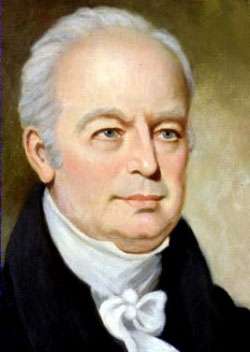
Yale's Motion to Dismiss the Yale Law School DinnerPartyGate Lawsuit
I wrote about the Complaint in November, and included this excerpt (which is of course just the plaintiffs' side of the story):
[1.] Two Yale Law School deans, along with Yale Law School's Director of Diversity, Equity & Inclusion, worked together in an attempt to blackball two students of color from job opportunities as retaliation for refusing to lie to support the University's investigation into a professor of color.
[2.] Gerken, Yale Law School's Dean, and Cosgrove, the Associate Dean, approached an esteemed law professor and expert in constitutional law, and discouraged the professor—who already employed Jane and John as long-term research assistants—from hiring Jane and John as so-called "Coker Fellows," prestigious teaching assistant positions that often lead to federal clerkships and other lucrative career opportunities.
[3.] Defendants Gerken and Cosgrove approached the professor as retaliation for Plaintiffs Jane and John's reporting a harassing and defamatory report (the "Dossier"), which was compiled and circulated by another law student and related to Plaintiffs' private interactions with a high-profile Yale Law School Professor, Amy Chua ….
Cyberlaw cringe-casting since 2016
Episode 394 of the Cyberlaw Podcast
The Cyberlaw Podcast has decided to take a leaf from the (alleged) Bitcoin Bandits' embrace of cringe rap. No more apologies. We're proud to have been cringe-casting for the last six years. Scott Shapiro, however, shows that there's a lot more to the bitcoin story than embarrassing social media posts. In fact, the government's filing after the arrest of Ilya Lichtenstein and Heather Morgan paints a forbidding picture of how hard it is to actually cash out $4.5 billion in bitcoin. That's what the government wants us to think, of course, but it's persuasive nonetheless, and both Scott and David Kris recommend it as a read.
Like the Rolling Stones performing their greatest hits from 1965 in 2021, U.S. Senator Ron Wyden of Oregon is replaying his favorite schtick from 2013 – complaining that the government has an intelligence program that collects U.S. person data under a legal theory that would surprise most Americans. Based on the Privacy and Civil Liberties Oversight Board staff recommendations, Dave Aitel and David Kris conclude that this doesn't sound like much of a scandal, but it may lead to new popup boxes on intel analysts' desktops as they search their databases.
In an entirely predictable but still discouraging development, Dave Aitel points to persuasive reports from two forensics firms that an Indian government body has compromised the computers of a group of Indian activists and then used its access not just to spy on the activists but to load fake and incriminating documents onto their computers.
In the EU, meanwhile, crisis is drawing nearer over the EU General Data Protection Regulation (GDPR) and the European Court of Justice decision in the Schrems cases. David Kris covers a surprising trend. The Court may have been aiming at the United States, but its ruling is starting to hit European companies; they may soon have to choose between getting free Silicon Valley services and incurring serious GDPR liability. That's the message in the latest French ruling that websites using Google Analytics are in breach of GDPR. Next to face the choice may be European publishers who rely on data-dependent advertising; the structure that supports such ads has seen its legality gravely undercut by the Belgian data protection authority.
Scott and I dig into the IRS's travails in trying to use facial recognition to authenticate taxpayers seeking access to their records. I reprise my defense of face recognition in Lawfare. Nobody is going to come out of this looking good, Scott and I agree, but I predict that abandoning facial recognition technology is going to mean more fraud as well as more costly and lousier service for taxpayers.
I cover the only field where Silicon Valley still seems to be innovating – new ways to tell conservatives that they should just die already. Airbnb has embraced the Southern Poverty Law Center, whose business model is smearing mainstream conservative groups as "hate" mongers. Airbnb told Michelle Malkin that her speech to a SPLC-designated "hate" group meant that she was forever barred from using Airbnb – and so was her husband. By my count that's guilt by association three times removed. Equally remarkable, Facebook is now telling Bjorn Lomborg that he cannot repeat true facts if he's using them to support the Wrong Narrative. Silicon Valley isn't in content moderation land any more: Truth is not a defense, and firms that control access to real things in real life are denying those things to people whose views they don't like.
Scott and I unpack the EARN IT (Eliminating Abusive and Rampant Neglect of Interactive Technologies) Act, again reported out of committee to a chorus of boos from privacy NGOs. At the same time, anti-child-abuse campaigners aren't waiting for EARN IT. A sex trafficking lawsuit against Pornhub has survived a section 230 challenge.
Download the 394th Episode (mp3)
You can subscribe to The Cyberlaw Podcast using iTunes, Google Play, Spotify, Pocket Casts, or our RSS feed. As always, The Cyberlaw Podcast is open to feedback. Be sure to engage with @stewartbaker on Twitter. Send your questions, comments, and suggestions for topics or interviewees to CyberlawPodcast@steptoe.com. Remember: If your suggested guest appears on the show, we will send you a highly coveted Cyberlaw Podcast mug!
The views expressed in this podcast are those of the speakers and do not reflect the opinions of their institutions, clients, friends, families, or pets.
Justice Barrett's Keynote Address at Notre Dame
The Justice spoke about the federal equity power, and her transition to the Supreme Court.
Today, Justice Barrett delivered the keynote address at the Notre Dame Law Review symposium. I ran the speech through Otter, which generated a (rough) transcript.
The focus of the talk was on the federal equity power. I knew Barrett had clerked for Justice Scalia the year Grupo Mexicano was decided, but I did not know that it was her case. Barrett confirmed that fact.
During the Q&A session, Barrett was asked about her transition from academia to the Seventh Circuit to the Supreme Court. She replied that one of the most "difficult" parts of the transition is that she is now "very much in the public eye."
I would say that in the main the bread and butter of the job is the same. You know, you're reading briefs, and you're thinking through cases, and you're writing opinions. There are many other things about the Supreme Court's docket and the way that it works. I mean, cert petitions being an example of emergency applications being another that are not things that you confront on the Court of Appeals. I think the biggest changes are the context in which all of this is happening in which you do the cases. I mean, as a as a circuit judge, you know, the courts of appeals have mandatory jurisdiction and so not every case is one that people were watching. There's no, you know, Seventh Circuit blog, like there is SCOTUSblog, you know, picking apart every case on the docket. So I think the visibility of the cases and feeling like you know, I'm learning a new job. It's like learning to ride a bike with everybody watching you. I think that being a public figure is a lot to get used to. And it's a pretty big shift. I mean for being, you know, a law professor, and then a seventh circuit judge. And then, you know, being very much in the public eye is a big shift from my former life, or when I was in this building every day. It is a big shift. And that's also a shift from the time when I clerked on the court. I think that's just the internet did exist when I corrected the court. But social media did not. And I think just the rise of the use of the Internet for the consumption of news and social media. Judges and justices pictures are much more out there. When I was clerking at the court, I was once in the great hall where tourists walk through when there are displays. And I was with a friend who clerked for Justice O'Connor and Justice O'Connor herself, was in the main hall, and a tourist went up to Justice O'Connor and asked her for directions. Absolutely no idea that they were talking to Justice O'Connor. And I think that would be much more unlikely today, it's just much more difficult to be anonymous, just because of the dissemination of pictures everywhere. So I have found it difficult to get used to that aspect of the job.
A few moments later, someone else asked if she or her clerks read SCOTUSBlog. Barrett goes on a bit of a digression about what sorts of news she reads. She seemed to be thinking out loud; this wasn't the sort of question she had fielded before. Frankly, I'm not sure what her policy is.
Let's say I have not ever talked to my clerks about whether they read SCOTUS blog. I would be surprised if most of the law clerks in the building did not. I have a policy of not reading. I read news. I'm not an uninformed person, but I have a policy of trying not to read any coverage that addresses me. I mean, I kind of generally want to know about the court. But I do try not to read like whether they're positive or negative, I think it's not a very good idea to read and consume media, that's about me, because, you know, I think there are personal and institutional reasons for that, you know, the institutional reason is that judges have life tenure, so that they can be insulated from fear of public opinion. And so to read criticisms of the court, I think, undermines that. So you know, you shouldn't be playing to anyone in the public or any kind of constituency, you know, being happy if you make one segment of the public happy, or, you know, reluctant to anger another.
Then she identifies a risk that people in the limelight know all too well--all that negative press can get to your head!
And then on a personal level, you know, it's just not good to have any of that in your head. Certainly not if it's critical and mean. But even if it's high praise, I mean, like, why should you be reading a steady diet? Or my case, it wouldn't really be a steady diet. But why should you be consuming, you know, flattering, you know, articles about yourself, because on a personal level, I mean, the day that I think I am, you know, better than the next person in the grocery store, checkout line, and you know, is a bad day. So, I would say that I really tried to bracket and put aside, you know, anything, you know, to the extent that I can avoid reading, and if it addresses me in particular,
She admits that coverage of her is not a "steady diet" of "flattering" coverage. Well, no kidding. Still, this remark harkens back to the "partisan hacks" speech. She apparently said that she was "concerned about public perception of the Supreme Court." I say apparently, because no recording exists.
The fact that Barrett is even thinking about this public scrutiny means, well, that the press gets to her head--and that's one of the reasons she chooses not to consume the media. But abstaining from press coverage is tough. There are so many temptations to click. (I, personally, have not checked my Twitter mentions in two years; it is hard). The better answer is to simply say, "I don't care what they write." Period. Full stop.
I am still fond of Justice Scalia's remarks to New York Magazine:
What's your media diet? Where do you get your news?
Well, we get newspapers in the morning."We" meaning the justices?
No! Maureen and I.Oh, you and your wife …
I usually skim them. We just get The Wall Street Journal and the Washington Times. We used to get the Washington Post, but it just … went too far for me. I couldn't handle it anymore.What tipped you over the edge?
It was the treatment of almost any conservative issue. It was slanted and often nasty. And, you know, why should I get upset every morning? I don't think I'm the only one. I think they lost subscriptions partly because they became so shrilly, shrilly liberal.So no New York Times, either?
No New York Times, no Post.And do you look at anything online?
I get most of my news, probably, driving back and forth to work, on the radio.Not NPR?
Sometimes NPR. But not usually.
Or, Justice Barrett can echo her other former boss, Judge Silberman:
Two of the three most influential papers (at least historically), The New York Times and The Washington Post, are virtually Democratic Party broadsheets. . . . Nearly all television—network and cable—is a Democratic Party trumpet. Even the government-supported National Public Radio follows along.
Will Justice Barrett she read this post, for example? It addresses her, but it also addresses the Court. Who knows?
Justice Barrett should be more aggressive at screening out questions in advance. The dedicated professor she is, Barrett has a commitment to answer every question carefully. And when Barrett goes off script, she offers a real stream-of-conscience. And she stumbles into flubs. Remember, the "partisan hacks" line arose during Q&A.
On the plus side, Justice Barrett is the only Justice who listened to the Encanto soundtrack.
Well, first women, so justice Cavanaugh has school aged children. And when the Chief Justice started, he had school aged children. Not sure about anybody else. I'm sure there probably were others too. I am the first woman with school aged children. Well, I was telling a friend recently that I feel sure that the other day before I came into court, I was the only one of the justices who was listening to the Encanto soundtrack. The only one who was walking into the courtroom with like, you know, Bruno, no, no.
Points for singing Bruno.
Court Bars Mother from Exposing "Child to an Activity That Violates" "Child's Orthodox Jewish Chasidic Faith";
N.Y. appellate court reverses the order.
From Weichman v. Weichman, decided in November by the N.Y. Appellate Division (in an opinion by Judges Mark C. Dillon, Sylvia O. Hinds–Radix, Linda Christopher, and Joseph A. Zayas):
The parties were married in 2005. There is one child of the marriage, born in 2006. The child was raised in accordance with the parties' Orthodox Jewish Chasidic faith and attended an Orthodox Chasidic yeshiva from the age of two. In March 2015, the plaintiff commenced this action for a divorce ….
The plaintiff identifies as a member of the LGBTQ community, and considers herself an Orthodox Jew. Following a trial on the issues of custody and parental access, the Supreme Court issued a decision awarding the defendant sole custody of the child, with the plaintiff to have specified periods of parental access. The court imposed certain restrictions on the plaintiff's periods of parental access, including a requirement that: "The [plaintiff] shall not take the child to a place or expose the child to an activity that violates rules, practices, traditions and culture of the child's Orthodox Jewish Chasidic Faith. Thus, the [plaintiff] shall ensure that the child is able to abide by the laws and rules of the Shabbat, Jewish Holidays, Kosher Chasidic and Glatt Kosher food requirement, and the rules of the Mosdos Chasidic Square." …
Ordinarily, absent an agreement, the custodial parent has the right to make educational decisions for a child. Nevertheless, "it may be appropriate, depending upon the particular circumstances of the case, to award some custodial decision-making authority to the noncustodial parent." Here, there was a sound and substantial basis for the Supreme Court's determination to award the defendant decision-making authority on the issue of the child's education. The child had been enrolled in the same yeshiva since he was two years old, where he was doing well socially and academically, and the plaintiff failed to establish that her desired plan of enrolling the child in a different type of yeshiva or a public school would be in the child's best.
However, we agree with the plaintiff that the Supreme Court's direction that, during her periods of parental access, she "shall not take the child to a place or expose the child to an activity that violates rules, practices, traditions and culture of the child's Orthodox Jewish Chasidic Faith" must be vacated.
Good Government Plan: Urge People to Get Revenge on Their Ex-Lovers
Not unconstitutional, to be sure, or illegal; and indeed genuinely bad guys (ones who sell guns to violent felons, for instance) are likely sometimes caught because someone is trying to get their revenge. Still, turning it into an overt advertising campaign, on Valentine's Day yet, is not exactly a way to promote the better angels of our nature, it seems to me.
Valentine's Day can still be fun even if you broke up. Do you have information about a former (or current) partner involved in illegal gun activity? Let us know, and we will make sure it's a Valentine's Day to remember! Call 1-888-ATF-TIPS or email ATFTips@atf.gov. pic.twitter.com/OdDIPdIzkr
— ATF HQ (@ATFHQ) February 14, 2022
Thanks to Robert Shibley (FIRE) at InstaPundit for the pointer.
Harlan Institute-Ashbrook Virtual Supreme Court Semifinalists
25 Teams of HS Students presented oral argument in NYS Rifle & Pistol Association v. Bruen
The topic for the 10th Annual Harlan Institute-Ashbrook Virtual Supreme Court competition is NYS Rifle & Pistol Association v. Bruen. This past weekend, twenty-five teams of high school students presented oral arguments in the semifinal round. The teams were superb. Truly, these high school students could compete in any law school moot court competition. The Round of 8 will be held in two weeks.
Semifinal Match #1
Semifinal Match #2
Team #8715 v. Team #8977
Sealing Kinda Sus
From Judge Ronald A Guzmán's decision in Doe v. Sandler(N.D. Ill. 2011), which I just came across—as I read it, the judge began the case being open not just to pseudonymity but to sealing (the original TRO, for instance, is sealed, which is very rarely done for court orders), but ultimately seemed to sour on that:
Plaintiff, Jane Doe, has filed a Verified Complaint asserting a claim for invasion of privacy based on public disclosure of private facts under Illinois law.
In summary, plaintiff, a self-described married woman, civic and church leader, became embroiled in an affair. During the course of the affair she and her partner made photographic and video recordings of an intimate sexual nature. These recordings subsequently fell into the hands of her sexual partner's "girlfriend" who has threatened to publish the video and photographic evidence of their sexual conduct in different ways, including through the Internet for all the world to see, expose her behavior to her friends and social and religious groups, and has even attempted to extort money from plaintiff, her husband and the parties' mutual sexual partner—whose identity plaintiff also seeks to protect by using the pseudonym "Richard Roe."
On February 25, 2011, the Court granted an ex parte temporary restraining order prohibiting the defendant from distributing or causing to be distributed any photographs or video of the plaintiff in the defendant's possession. {The Court denied plaintiff's request to restrain defendant from communicating knowledge of plaintiff's conduct to others.} At that time, the Court advised plaintiff's counsel that in considering any subsequent motion for a preliminary injunction, the issue of the appropriateness of the defendant's continued use of a pseudonym, "Jane Doe," in place of her real name as well as the issue of keeping filings under seal would have to be more fully addressed.
Subsequently, plaintiff's counsel moved for entry of a consent decree to be filed under seal. The proposed consent decree purports to be signed by the defendant, though the defendant has never appeared, by counsel or otherwise, and there is no indication in the record that she has been at any point in time represented by counsel in any capacity.
Today in Supreme Court History: February 14, 1845
2/14/1845: Justice Samuel Nelson takes judicial oath.
Why Efforts to Throw Rep Cawthorn Off the Ballot Are Likely Unconstitutional
Prof. Derek Muller explains why states cannot invoke Section 3 of the 14th Amendment to exclude those who sought to overturn the 2020 election results from the ballot.
Some folks have argued that Section 3 of the 14th Amendment bars those who supported the January 6 assault on the Capitol or other efforts to overturn the 2020 election results from running for public office. Democratic party lawyer Marc Elias, for instance, has suggested that Section 3 should bar some Republican members of Congress from running for reelection, Some voters in North Carolina have even filed a complaint to keep Rep. Madison Cawthorn off the ballot.
North Carolina voters may have good reasons to not want Rep. Cawthorn as one of their representatives in Congress. (I sure wouldn't.) Yet the effort to force him off the ballot is ill-advised and, as Professor Derek Muller explains in the Wall Street Journal, likely unconstitutional.
From Prof. Muller's piece:
The U.S. Constitution doesn't allow states to invent qualifications for serving in Congress and exclude candidates from the ballot for failing to meet them. Yet that is precisely what the North Carolina State Board of Elections is trying to do to Rep. Madison Cawthorn. . . .
It would be unconstitutional if the [North Crolina state election] board attempted to take Mr. Cawthorn off the ballot. In 1995 the Supreme Court held in U.S. Term Limits Inc. v. Thornton that a term-limits amendment in Arkansas couldn't apply to congressional candidates. The qualifications enumerated in the Constitution, the court explained, are "fixed and exclusive." When a state tries to enforce an existing constitutional qualification, it may believe it is acting appropriately, but when it does so months ahead of Election Day, it often adds a qualification that the Constitution forbids. . . .
Even if Mr. Cawthorn were an "insurrectionist"—a matter of legal and factual debate—it wouldn't be a permanent bar to holding office. The Constitution provides that "Congress may by a vote of two-thirds of each House, remove such disability." We don't know whether Congress will decide before Election Day to bar from the House all who were involved in the events of Jan. 6 riot, but the Constitution is clear: The decision isn't North Carolina's to make.
States can't review a candidate's qualifications because the Constitution reserves that power to Congress itself. If voters elect a rascal who is constitutionally ineligible to serve, the people's representatives must decide whether or not to throw him out of the House.
For more from Prof. Muller on why lawsuits and other efforts to keep "insurrectionists" off the ballot are likely unconstitutional, see here.
Today in Supreme Court History: February 13, 2016
2/13/16: Justice Antonin Scalia died.