Please enjoy the latest edition of Short Circuit, a weekly feature written by a bunch of people at the Institute for Justice.
CERT GRANTED! Friends, we are excited to share that the Supreme Court has just taken up Gonzalez v. Trevino, an IJ case about officials who spent months scheming to have our client jailed on bogus charges after she criticized them—and whether the First Amendment might protect against such a thing.
New on the Short Circuit podcast: Special guest Prof. Daniel Epps joins the show to talk about the Fourth Amendment and general law.
For many, this past weekend's terrorist attacks on people in Israel and the resulting war between Israel and Hamas raises profound questions about the role of the academy in wartime.
In the midst of the Covd-19 pandemic, I had reason to recall C.S. Lewis' sermon, "Learning in Wartime," and I blogged about it. The events of the past week have caused me to revisit the essay and my comments, as they are both quite relevant to our current situation, so I am reposting my comments from March 2020.
* * *
The 9/11 attacks occurred when I was still a brand-spanking-new law professor, and they provoked quite a crisis of conscience. What was I doing ruminating about the finer points of administrative law or property-based environmental protection when so much more was at stake? What was I doing to help keep people safe and secure?
A colleague recommended I read "Learning in Wartime," a sermon delivered by C.S. Lewis in the fall of 1939. It was an excellent suggestion. Although I do not share Lewis' faith, I found it to be simultaneously comforting and inspiring—just what I needed at that moment.
The current situation prompted me to revisit the Lewis sermon, and I thought I would recommend it to our readers. Like Lewis' thought generally, the sermon is steeped in his faith, but I believe it has something to offer for theists and non-theists alike—or at least I hope so.
Here is how it begins:
A University is a society for the pursuit of learning. As students, you will be expected to make yourselves, or to start making yourselves, in to what the Middle Ages called clerks: into philosophers, scientists, scholars, critics, or historians. And at first sight this seems to be an odd thing to do during a great war. What is the use of beginning a task which we have so little chance of finishing? Or, even if we ourselves should happen not to be interrupted by death or military service, why should we -- indeed how can we -- continue to take an interest in these placid occupations when the lives of our friends and the liberties of Europe are in the balance? Is it not like fiddling while Rome burns?
And here is a brief portion of Lewis' answer.
. . . I think it important to try to see the present calamity in a true perspective, The war creates no absolutely new situation: it simply aggravates the permanent human situation so that we can no longer ignore it. Human life has always been lived on the edge of a precipice. Human culture has always had to exist under the shadow of something infinitely more important than itself. If men had postponed the search for knowledge and beauty until they were secure the search would never have begun. We are mistaken when we compare war with "normal life". Life has never been normal. Even those periods which we think most tranquil, like the nineteenth century, turn out, on closer inspection, to be full of cries, alarms, difficulties, emergencies. Plausible reasons have never been lacking for putting off all merely cultural activities until some imminent danger has been averted or some crying injustice put right. But humanity long ago chose to neglect those plausible reasons. They wanted knowledge and beauty now, and would not wait for the suitable moment that never come. Periclean Athens leaves us not only the Parthenon but, significantly, the Funeral Oration. The insects have chosen a different line: they have sought first the material welfare and security of the hive, and presumable they have their reward. Men are different.They propound mathematical theorems in beleaguered cities, conduct metaphysical arguments in condemned cells, make jokes on scaffold, discuss, the last new poem while advancing to the walls of Quebec, and comb their hair at Thermopylae. This is not panache; it is
our nature.
A Texas court holds that only self-defense—not defense of property—is excluded from such orders (which can also temporarily strip defendant of Second Amendment rights). And the same logic applies to force, even nonlethal force, used to defend your family members against another family member as well.
From Brast v. Brast, decided yesterday by the Texas Court of Appeals (Houston), in an opinion by Justice Margaret "Meg" Poissant, joined by Justices Frances Bourliot and Meagan Hassan.
[Plaintiff] David [Brast] and [Defendant] Randy [Brast] are brothers and neighbors, and [Defendant] Ryan [Brast] is Randy's son. David and his wife, Janet, and on behalf of their son Matthew, sought a protective order from Randy and Ryan for a minimum of two years, arguing that they were in grave fear of serious bodily injury. Appellees asked that the trial court prohibit Randy and Ryan from possessing a firearm during the term of the protective order….
[The order stemmed from] an altercation that arose over a dog on March 27, 2022. The dog, which Randy said was a stray and then Ryan claimed belonged to them, wandered onto David's property. David said that he was going to shoot it or haul it off before picking the dog up and taking it inside his home. When Randy and Ryan trespassed onto David's property to retrieve the dog, the men "got into a scuffle." David testified that Randy and Ryan hit him. Randy and Ryan claimed that they were defending their property when they trespassed onto David's property to retrieve the dog.
For the next four days, Randy and Ryan fired firearms outside of their property and adjacent to David's property, including after midnight. David testified that on the third day, one of the men drove his truck to the side of the property line with David, rolled down his window, and fired gunshots into the ground while facing in David's direction. Finally, David testified that he feared for his life and he feared Randy and Ryan will "come in [and] kill me one night or one evening-me and my family." Janet also testified that she feared for her and her family's life during the events of March 27 and in the future.
[Ryan's friend] Grayson testified about the scuffle and about ownership of the dog that led to the incident, confirming that he had given the dog as a puppy to Randy's daughter. When Ryan testified, he denied striking his uncle David, threatening David or his son, or later discharging a firearm in the middle of the night. Instead, he claimed that on March 27 he was only retrieving his family dog after David threatened repeatedly to shoot it.
The court issued one-year protective orders against Randy and Ryan, which included a ban on their "possessing firearms or ammunition." They defended in part on the grounds that "the[ir] actions were justified under Texas Penal Code § 9.41(b), concerning actions taken in the defense of property":
I'm going to serial-blog the article over the next few days; today I'll give you the abstract and introduction. (The article obviously has a lot of footnotes -- go to the article itself if you want to see those.)
* * *
Abstract
In recent years, states have passed "pole taxes," i.e., taxes targeting nude dancing at adult entertainment establishments. Such taxes generally target establishments where alcohol is consumed, and the proceeds generally fund programs that benefit victims of sex crimes (or similar). Some of these taxes are "erotic-expression taxes" that specifically target sexual dance or other expressive conduct, while others are more general "nudity taxes" that are not defined by reference to expressive conduct.
State governments have defended such taxes against First Amendment attack on the theory that (1) such taxes combat negative secondary effects and (under City of Renton v. Playtime Theatres, Inc.) should be analyzed under intermediate scrutiny as though they were content-neutral, and (2) such taxes survive intermediate scrutiny, given sufficient evidence of the link between the establishments and the secondary effects.
I make two independent claims here. First, erotic-expression taxes are subject to strict scrutiny because they are content-discriminatory. The Renton framework has never been applied to taxes (as opposed to regulations). Nor should it be extended to taxes: on the contrary, a strict-scrutiny approach is more consistent with modern First Amendment caselaw.
Second, for both erotic-expression taxes and nudity taxes, even if courts apply intermediate scrutiny, these targeted taxes are constitutionally vulnerable. A number of possible governmental interests are impermissible because they are themselves speech-suppressive or discriminatory; some other interests are potentially valid, but the targeted taxes do not further those interests more than general taxes. The interest in fighting a secondary effect can be valid, but only under stringent conditions that are often not met in practice.
[W]hen L.A. Superior Court Judge Ian Fusselman took a closer look, he spotted a major problem. Two of the cases cited in the brief were not real. Others had nothing to do with eviction law, the judge said.
"This was an entire body of law that was fabricated," Fusselman said during the sanction hearing. "It's difficult to understand how that happened."
The court never got to the bottom of exactly how the filing was prepared. But six legal experts told LAist they could think of a likely explanation: misuse of a generative AI program.
Every year, I post a remembrance of September 11, 2001. It is also worth remembering what happened on September 12, 2001. Around the globe, there was unified support for the United States, and the victims of atrocious acts of horror. Everyone was willing to stand in solidarity with Americans. Virtue signaling is always easy enough.
But that uniform support faded rather quickly. As it became clear that the United States was on a war footing, the opposition began. On September 14, the ANSWER Coalition formed. (The acronym stood for "Act Now to Stop War and End Racism.") By September 29, ANSWER and others organized protests against military intervention in Afghanistan. And on October 7, 2001, the United States invaded Afghanistan. (That day I was doing a campus visit of NYU, a school I was admitted to, but decided not to attend, in part, because I didn't want to be so close to lower-Manhattan--in hindsight, the absolute right decision that had nothing to do with terrorism.)
Over the next few years, the memories of 9/11 vanished. All of the tattered American flags were removed and the "thank you for your services" ended. There was a constant, never-ending series of public protests against the Afghanistan war, and later against the Iraq war. Students held "die-ins" on campus where they would pretend to be dead in coffins. President Bush was called Hitler over and over again. Musicians would weave in anti-war themes into their songs. (For years, I couldn't listen to Green Day.) And so on. Thank the lord there was no social media in the day.
There may be some sense of unity now, only a few days after the October atrocities in Israel. But it will fade very, very quickly. And we all know how things will go--especially since this war will involve the Jewish state. There is nothing new under the sun.
My initial view that Trump was covered by Section 3 of the Fourteenth Amendment was formed because I believed then, and do still now believe, that the events of January 6, 2021 were an "insurrection." Daniel Webster's 1st edition of his Dictionary of American English, which had been published in 1828, and would have been authoritative to the Framers' of the Fourteenth Amendment, defines the word "insurrection" as follows:
"INSURREC'TION, noun [Latin insurgo; in and surgo, to rise.]
A rising against civil or political authority; the open and active opposition of a number of persons to the execution of a law in a city or state. It is equivalent to sedition, except that sedition expresses a less extensive rising of citizens. It differs from rebellion, for the latter expresses a revolt, or an attempt to overthrow the government, to establish a different one or to place the country under another jurisdiction. It differs from mutiny, as it respects the civil or political government; whereas a mutiny is an open opposition to law in the army or navy. insurrection is however used with such latitude as to comprehend either sedition or rebellion.
It is found that this city of old time hath made insurrection against kings, and that rebellion and sedition have been made therein. Ezra 4:19.
A rising in mass to oppose an enemy. [Little Used.]"
An instructor at Stanford University has been suspended for what the president and provost called "identity-based targeting" of students in connection with the Israel-Gaza war.
Rabbi Dov Greenberg, director of the Chabad Stanford Jewish Center, said he was told by three students who were in the room that the instructor asked Jewish and Israeli students to identify themselves during a session for a required undergraduate course called "Civil, Liberal and Global Education."
The teacher told the Jewish students to take their belongings, stand in a corner, and said, "This is what Israel does to the Palestinians," Greenberg said, citing the student accounts. The instructor then asked, "How many people died in the Holocaust?" When a student answered, "Six million," the lecturer said, "Colonizers killed more than 6 million. Israel is a colonizer."
This appears to be the incident referred to by the Stanford President and Provost here:
Just published in the Journal of Free Speech Law, and available here; here's the Abstract:
In recent years, states have passed "pole taxes," i.e., taxes targeting nude dancing at adult entertainment establishments. Such taxes generally target establishments where alcohol is consumed, and the proceeds generally fund programs that benefit victims of sex crimes (or similar). Some of these taxes are "erotic-expression taxes" that specifically target sexual dance or other expressive conduct, while others are more general "nudity taxes" that are not defined by reference to expressive conduct.
State governments have defended such taxes against First Amendment attack on the theory that (1) such taxes combat negative secondary effects and (under City of Renton v. Playtime Theatres, Inc.) should be analyzed under intermediate scrutiny as though they were content-neutral, and (2) such taxes survive intermediate scrutiny, given sufficient evidence of the link between the establishments and the secondary effects.
I make two independent claims here. First, erotic-expression taxes are subject to strict scrutiny because they are content-discriminatory. The Renton framework has never been applied to taxes (as opposed to regulations). Nor should it be extended to taxes: on the contrary, a strict-scrutiny approach is more consistent with modern First Amendment caselaw.
Second, for both erotic-expression taxes and nudity taxes, even if courts apply intermediate scrutiny, these targeted taxes are constitutionally vulnerable. A number of possible governmental interests are impermissible because they are themselves speech-suppressive or discriminatory; some other interests are potentially valid, but the targeted taxes do not further those interests more than general taxes. The interest in fighting a secondary effect can be valid, but only under stringent conditions that are often not met in practice.
This case arises from the use of a photograph of Plaintiff Taylor Hazlewood in the film The Hatchet Wielding Hitchhiker ("the Film"), published by Defendant Netflix, Inc. in early 2023. The Film is a true crime documentary about Caleb McGillvary, a hitchhiker who achieved viral media attention after rescuing a woman from an attack but was later convicted of the murder of a man named Joseph Galfy.
The Film includes the use of a photograph of Hazlewood holding a hatchet. Hazlewood alleges that the photograph was taken from his personal Instagram page without his knowledge or permission. Hazlewood also alleges that the photograph is unrelated to McGillvary and is used out of context in the Film…..
Hazlewood has met his burden to make out a plausible claim of defamation…. Hazlewood alleged that Netflix published a film including his image. The image was accompanied by audio and text stating "Is this a guardian angel or a stone-cold killer?" and "You can never trust anyone." Hazlewood alleged that the use of his image in this context paints him in a "sinister and defamatory light" and implies a connection between Hazlewood and McGillvary that does not exist. Hazlewood included in his complaint a sample of messages from individuals expressing concern and confusion over his involvement in the Film and his connection to the incident involving McGillvary. This includes an instance in which a friend's mother believed, based on Hazlewood's appearance in the film, that he was connected to McGillvary or was himself a murderer….
Hazlewood's complaint also alleged that Netflix "exercised no due diligence procedures" regarding the context of the photograph and did not ask his permission to use the photograph. This allegation goes to whether Netflix acted with the requisite degree of fault for a defamation claim. If the plaintiff is a private individual, the degree of fault that must be shown is mere negligence. The allegation that Netflix failed to determine the context and ownership of the photograph before using it is sufficient to establish a plausible claim that Netflix was negligent with regard to the use of the photograph and the truth of the statement associated with it in the film.
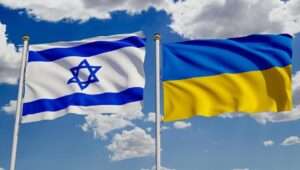
Hamas' shocking terrorist attack against Israel has galvanized bipartisan support for Israel's cause in the US. But many conservative Republicans who back Israel simultaneously oppose continued support for Ukraine in its struggle against the very similar assault by Russia. GOP Sen. Josh Hawley says "[a]ny funding for Ukraine should be redirected to Israel immediately." This pro-Israel/anti-Ukraine stance is incoherent. The moral and strategic rationales for backing Israel also apply to Ukraine, in some cases with even greater force. Both states are liberal democracies threatened by authoritarian mass murderers who seek to destroy them. And Russian atrocities are strikingly similar to those of Hamas, except on a much larger scale. There is no good moral justification for supporting Israel's cause that does not also apply to Ukraine's. The strategic rationale for backing Israel also applies to Ukraine, with at least equal force.
I fully recognize that pro-Israel/anti-Ukraine and support for both aren't the only possible combinations of views on these issues. Some Western leftists are pro-Ukraine and anti-Israel. And some people (e.g. right-wing anti-Semites, anti-American far leftists, consistently dovish/isolationist libertarians) oppose aid to both Ukraine and Israel. But, at least in the US, these latter two positions are relatively marginal. From President Biden on down, mainstream liberal Democratic supporters of Ukraine overwhelmingly back Israel against Hamas, as well, with rare exceptions such as members of the "Squad." Those who oppose aid to both Israel and Ukraine are, if anything, even more marginal. By contrast, pro-Israel/anti-Ukraine is the position of a large part of the political right.
Thus, in this post, I focus on critiquing the pro-Israel/anti-Ukraine position. It's the most politically significant alternative to supporting both.
Hamas's atrocities are now well-known to anyone who has followed this conflict, or just watches the news. They have slaughtered innocent civilians, including numerous women, children and even babies. Hamas terrorists have also taken numerous hostages, including kidnapping small children for that purpose. And it is likely they have engaged in widespread rape and sexual assault.
Russia is also similar to Hamas in seizing civilian hostages - including Americans - to exchange for its criminal operatives. For example, they detained US basketball player Brittany Griner, and eventually exchanged her for Viktor Bout, a Russian intelligence asset and arms supplier to terrorists. The latest such Russian hostage-taking is the detention of Wall Street Journal reporter Evan Gershkovich. Russia's hostage-taking operations have more of a veneer of legality than Hamas's, usually including trumped-up charges of one kind or another. But that should not mislead us about their true nature.
Just as Hamas seeks to destroy Israel entirely and impose a brutal despotism over the conquered land, so Putin seeks to establish Russian rule over all of Ukraine (which he denies has any right to exist as a separate nation), and impose the same sort of tyrannical regime that he established in Russia itself, and previously occupied Ukrainian territories. Neither's ambitions are confined to marginal territorial adjustments.
While Russia's atrocities are similar to those of Hamas, there is an enormous difference in scale. Hamas's recent onslaught has killed over 1000 Israeli civilians (a figure likely to rise as the victims are counted more fully). Innocent civilian victims of Putin's war number in the tens of thousands. The Russian military have also raped and tortured far more people, and kidnapped vastly more children than Hamas.
This difference is not because Hamas is more ethical than Putin. If they could kill as many Israeli civilians as Russia has Ukrainian ones, they would surely do it. But the difference in scale matters when it comes to assessing the moral urgency of the situation. Other things equal, larger-scale atrocities deserve higher priority. They certainly cannot be assigned a lower one.
Hamas' radical Islamist ideology is not only at odds with Israel, but with Western liberal democratic values more generally. They seek to establish a brutal medieval despotism, suppressing dissent, religious minorities, and LGBT people, among other victims. Putin's Russia is a similarly brutal tyranny. It too suppresses dissent, persecutes minorities, and oppresses gays and lesbians. And, like the radical Islamists, Putin has repeatedly made clear he is an enemy of Western liberal democracy, not just Ukraine. His anti-liberal crusade long predates the current Ukraine war. Like Hamas, the Putin regime is an enemy of the West generally, not just of its immediate opponent on the battlefield.
Russia is a far larger and more potent enemy than Hamas could ever be - even in combination with its Iranian sponsors. And it's worth noting that those Iranian sponsors back Russia, as well. All of that strengthens the purely strategic case for helping Ukraine against Russia, even aside from moral considerations. That case is at least as strong as the strategic rationale for backing Israel against Hamas.
The Israeli and Ukrainian governments are not perfect paragons of virtue. There are genuine wrongs in Israeli policy towards the Palestinians, including violations of civil liberties, and unjust seizures of private property (partly curbed by the Israeli Supreme Court). The present right-wing government's effort to neuter the judiciary (now suspended as a result of the war) threatens to create a dangerous tyranny of the majority, if it were to pass. Ukrainian government policy also has illiberal aspects, which I have condemned.
But, despite very real flaws, there is a vast moral chasm between Ukraine and Israel on the one hand, and their respective enemies on the other. The former are functioning, if highly imperfect, liberal democracies. The latter are horrific tyrannies. In each conflict, one side systematically targets civilians, rapes and tortures the innocent, kidnaps children, and takes hostages, while the other does not.
As always, there is a risk that even liberal states with a just cause will engage in unjust policies during wartime. America's own history has all too many examples, such as the internment of Japanese-Americans during World War II. We should not give either Israel or Ukraine a blank check in this regard. But there is an enormous difference between a state that has liberal values, yet sometimes fails to live up to them, and one that utterly rejects those values, as Russia and Hamas do.
Just as we should not overlook Israeli and Ukrainian shortcomings, we should also be careful to avoid undifferentiated demonization of Russians and Palestinians. In previous writings about the Russia-Ukraine War I have criticized imputations of collective guilt to Russians, and made the case for opening Western doors to Russians fleeing Putin's regime. Most of this reasoning is readily applicable to Palestinians, too. But recognizing that Putin's dictatorship and Hamas don't stand for all Russians and Palestinians is entirely compatible with recognizing that we should back efforts to defeat both of these evil regimes. If defeat leads to the collapse of one or both of them, so much the better! Recognizing the humanity of Russians and Gaza Palestinians entails recognition that they deserve to be free of the tyrants that currently rule them.
On all these moral dimensions, there is no good reason to back Israel, but not Ukraine. Both have flaws, but are vastly preferable to their adversaries.
A final possible reason to back Israel, but not Ukraine, is resource constraints. Perhaps we just don't have enough money to help both. But the US aid given to Ukraine since February 2022 (about $77 billion), is barely a rounding error in the federal budget (an annualized rate of less than 1% of the $6.27 trillion in federal expenditures in fiscal year 2022). And the resulting massive damage to the Russian military - one of our principal adversaries - could well actually save us more more money in the future. The Pentagon projects Ukraine will need a similarly modest amount over the next year (about $60 billion).
Israel, which faces a far weaker enemy than Ukraine, can likely make do with much smaller amounts of US aid. If necessary, aid to Ukraine and Israel can easily be offset with elsewhere. There is no shortage of wasteful and harmful federal expenditures! If we really want to deal with our looming fiscal crisis, we should focus on the gargantuan entitlement spending that is its principal cause.
If there nonetheless is a resource tradeoff, the ally facing a more powerful opponent - Ukraine - deserves priority. Israel can, if need be, defeat Hamas with little or no US aid, beyond diplomatic support and intelligence-sharing. Israel's forces are vastly superior to Hamas's in both quantity and quality. That will remain true even if the Lebanese terrorist group Hezbollah enters the war. Ukraine's position relative to Russia is far more difficult. From the standpoint of US geopolitical interests, Russia is a far more important enemy to curb than Hamas, precisely because of its greater power. At the very least, there is no good reason to assign it a lower priority.
I have not, in this piece, sought to outline anything like a comprehensive US strategy for these two conflicts. Each poses a variety of tactical and strategic issues that I cannot hope to cover here. But the points made do serve the more limited purpose of showing how there is no good rationale for the position of backing Israel against Hamas, but not Ukraine against Russia. The moral and strategic rationales for the former apply with equal or even greater force to the latter.
UPDATE: The original version of this post included an incorrect calculation of the percentage of the federal budget going to aid to Ukraine. I apologize for the mistake, which I have corrected.
It's part of the University of the Pacific (McGeorge Law School) Law Review symposium on Israel, Palestine, and the First Amendment, and it's based on amicus briefs that I had filed together with Profs. Michael Dorf and Andrew Koppelman. You can read the article here; here's the opening paragraph and the Introduction:
Anti-BDS laws, which bar government contractors from boycotting Israel, are generally constitutional—for the same reason that anti-discrimination laws are generally constitutional: Refusals to deal are, outside some narrow situations, generally unprotected by the First Amendment.
Decisions not to buy or sell goods or services are generally not protected by the First Amendment. That is the necessary implication of Rumsfeld v. Forum for Academic & Institutional Rights, and it is the foundation of the wide range of anti-discrimination laws, public accommodation laws, and common carrier laws throughout the nation.
Thus, for instance:
A limousine driver has no First Amendment right to refuse to serve a same-sex wedding party, even if he describes this as a boycott of same-sex weddings (or part of a nationwide boycott of such weddings by like-minded citizens).
A store has no First Amendment right to refuse to sell to Catholics, even if it describes this as a boycott of people who provide support for the Catholic Church.
An employer in a jurisdiction that bans political affiliation discrimination has no First Amendment right to refuse to hire Democrats, even if it describes such discrimination as a boycott.
An employer that is required to hire employees regardless of union membership has no First Amendment right to refuse to hire union members on the grounds that it is boycotting the union.
A cab driver who is required to serve all passengers has no First Amendment right to refuse to take people who are visibly carrying Israeli merchandise.
"Kettle Moraine School District is enjoined from allowing or requiring staff to refer to students using a name or pronouns at odds with the student's biological sex, while at school, without express parental consent."
From T.F. v. Kettle Moraine School Dist., decided last week by Judge Michael Maxwell (Wisc. Cir. Ct. Waukesha County) (some numbering omitted):
The Complaint alleges that the Kettle Moraine School District (hereinafter "Kettle Moraine") violated parental rights by adopting a policy to allow, facilitate, and affirm a minor student's request to transition to a different gender identity at school without parental consent and even over the parents' objection….
Findings of Fact
T.F. and B.F. had a daughter ("A.F.") that attended Kettle Moraine Middle School ("KMMS") in the Kettle Moraine School District. A.F. began questioning her gender identity and T.F. and B.F. moved her to a mental health center and that center focused on "affirming" this new gender identity.
A.F. then returned to the school with some parental support for the identity, but T.F. and B.F. ultimately changed course and went to the school informing them they wished to refer to A.F. by her legal name and female pronouns. The District replied by saying they will follow the guidance of A.F. in what pronouns to use, even over parental objections.
In response T.F. and B.F. withdrew A.F. from the District and shortly thereafter A.F. concluded that she did not want to transition genders….
Social transitioning of one's gender is a decision that should usually be preceded by a mental health professional ("MHP") conducting a psychological assessment in order to see the benefits and challenges of such a transition. Social transitioning represents "one of the most difficult psychological changes a person can experience." …
Social transitioning is a "powerful psychotherapeutic intervention" that likely reduces the number of children desisting from their transgender identity and can lead them to using puberty blockers and cross-sex hormones, which carry known risks. Thus, informed consent from the parents must be obtained before socially transitioning a child. Social transitioning without full support of one's parents can result in the child living a double life which can be "psychologically harmful."
From Judge Edgardo Ramos's decision Tuesday in Jacob v. Lorenz (S.D.N.Y.) (the underlying allegedly libelous article appears to be the one here):
Plaintiffs Ariadna Jacob and her company, Influences, Inc., brought this defamation action against Defendants Taylor Lorenz and the New York Times. Plaintiffs allege that a New York Times article authored by Lorenz included several defamatory statements about Jacob….
[T]he Court granted in part and denied in part Defendants' motion to dismiss the second amended complaint … on June 21, 2023. The Court held that Plaintiffs had sufficiently alleged a claim with respect to one statement in the article suggesting that Jacob had leaked an individual's nude photographs. Defendants now move for reconsideration and ask the Court to dismiss the surviving claim based on that statement…. [T]he motion is DENIED….
[The] lone surviving statement—referred to here and in the Court's prior opinions as Statement 12—concerns Jacob's alleged distribution of nude photographs of influencer Devion Young.
On August 11, 2020, Lorenz emailed Jacob and her team with a list of details that she was "planning to report." That list included the assertion that "Ms. Jacob distributed illicit photos of Mr. Young to others (Note: we have screen recordings showing these messages)." Jacob's representative responded with a statement from Jacob's attorney that said: "Illicit photos of Mr. Young were brought to Ms. Jacob's attention. As Influences was working on multiple business transactions with Mr. Young, Ms. Jacob informed an internal consultant of the pictures [sic] existence, but at no point did she publicly 'leak' the photos, as Mr. Young has claimed."
In Moore v. United States, the Supreme Court will decide this year whether the Ninth Circuit was right in upholding as constitutional taxes on unrealized capital gains and wealth taxes. Ed Meese, Gary Lawson, and I have written an amicus brief filed by Philip Williamson urging the Supreme Court to overrule the Ninth Circuit on both points. Our brief presents the original public meaning of the Sixteenth Amendment and of the requirement that direct taxes be apportioned among the States. We urge the Supreme Court to ignore bad caselaw and to stick to the original public meaning of the constitutional text.