

1/21/2010: Citizens United v. Federal Election Commission decided.
The Volokh Conspiracy
Mostly law professors | Sometimes contrarian | Often libertarian | Always independent | Est. 2002

Today in Supreme Court History: January 20, 1953
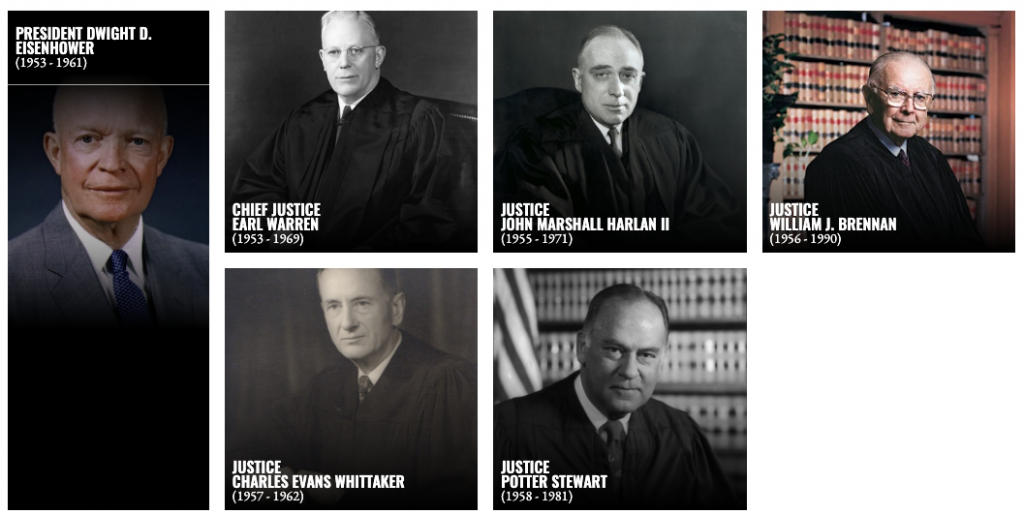
1/20/1953: President Eisenhower takes the inaugural oath on January 20. He would make five appointments to the Supreme Court: Chief Justice Earl Warren, and Justices John Marshall Harlan II, William J. Brennan, Charles Evans Whittaker, and Potter Stewart.
Today in Supreme Court History: January 10, 1842
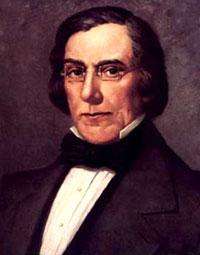
1/10/1842: Justice Peter Daniel's takes the judicial oath.
Short Circuit: A Roundup of Recent Federal Court Decisions
Instagram foxes, kosher Pickles, and maritime riches.
Please enjoy the latest edition of Short Circuit, a weekly feature written by a bunch of people at the Institute for Justice.
New on the Bound By Oath podcast: We journey back to a lost world, the world before zoning. Specifically, a trio of historic property rights cases, including an attempt to wipe San Francisco's Chinatown off the map.
Oklahoma Bill Would Specially Target Hispanic Gang Members
No, you can't do that.
From HB 3133, introduced Tuesday by Oklahoma state Rep. Justin Humphrey:
Any person who:
1. Is of Hispanic descent living within the state of Oklahoma;
2. Is a member of a criminal street gang as such term is defined in subsection F of Section 856 of Title 21 of the Oklahoma Statutes; and
3. Has been convicted of a gang-related offense enumerated in paragraphs one (1) through sixteen (16) of subsection F of Section 856 of Title 21 of the Oklahoma Statutes, shall be deemed to have committed an act of terrorism as such term is defined in Section 1268.1 of Title 21 of the Oklahoma Statutes.Any and all property, including real estate and personal property, conveyances, including aircraft, vehicles or vessels, monies, coins and currency, or other instrumentality used or intended to be used, in any manner or part, by said person shall be subject to forfeiture as provided in Section 1738 of Title 21 of the Oklahoma Statutes.
Though I don't think it's particularly helpful to conflate "criminal street gang" membership (bad as it is) with terrorism, a state may indeed do so, and may authorize forfeiture of instruments of crime as well (subject to the usual procedural constraints applicable to forfeiture). But a state certainly may not set up different rules for criminal street gangs run by Hispanics, by whites, by blacks, by Asians, or by any other ethnic or racial group.
Rep. Humphrey has apologized, and said he would change the language to "undocumented illegals." But it's hard to see the explicit ethnic classification in the original bill as just an innocent mistake.
High School Football Coach Isn't a "Public Official" or "Public Figure" For Libel Law Purposes,
even when he "adopted a controversial 'no punt' strategy."
From Cruce v. Berkeley County School Dist., decided Wednesday by the South Carolina Supreme Court, in an opinion by Justice Hill:
Petitioner Jeffrey L. Cruce became the head football coach and athletic director for Berkeley High School in 2011. For the 2015 season, he adopted a controversial "no punt" offensive scheme for the football team. This strategy stirred intense debate among followers of the team and was covered in local and even national sports pages. The controversy deepened as the team suffered lopsided defeats. In December 2015, the Deputy Superintendent of the Berkeley County School District (the District) sent Cruce a letter advising him he was being relieved as coach and athletic director and reassigned to a position as a middle school guidance counselor because he had failed to meet certain performance goals….
On January 7, 2016, Berkeley High athletic trainer Chris Stevens sent an email to forty-five people, including administrators, athletic department employees, and volunteer coaches, questioning the integrity and completeness of student athlete files Cruce had maintained. In the email, Stevens remarked the filing issues were a potential "liability" to the District….
Cruce sued and was awarded $200K in actual damages; the District appealed, and the S.C. intermediate appellate court concluded that "Cruce was a public official for purposes of defamation law and the District was therefore entitled to immunity because § 15-78-60(17) of the South Carolina Tort Claims Act (2005) (SCTCA) immunizes the District from losses caused by employee conduct amounting to 'actual malice.'" (If Cruce were a public official, then First Amendment libel law would bar him from recovering in the absence of "actual malice," and South Carolina government tort immunity law would bar him from recovering from the government if "actual malice" was shown.) No, said the S.C. supreme court:
Ideologically Mixed Amicus Brief Stresses Need for S. Ct. to Resolve Merits of the Trump Disqualification Case
"The Court has the power to resolve the question presented, and it must do so now."
From an amicus brief by Prof. Ned Foley, Ben Ginsberg, and Prof. Rick Hasen in Trump v. Anderson; for more on the amici, see the end of the post:
Amici often do not see eye to eye on matters of law or policy. But they join together in this brief to make a single, urgent point: A decision from this Court leaving unresolved the question of Donald Trump's qualification to hold the Office of President of the United States under Section 3 of the Fourteenth Amendment until after the 2024 election would risk catastrophic political instability, chance disenfranchising millions of voters, and raise the possibility of public violence before, on, and after November 5, 2024. And the grounds for avoiding the merits are not credible: Colorado manifestly had the authority to determine Mr. Trump's legal qualification for the office he seeks, and this Court has jurisdiction to review that federal-law decision on its merits.
To punt on the merits would invite chaos while risking great damage to the Court's reputation and to the Nation as a whole. The country is more polarized today than at any other time in living memory—certainly more than in December 2000, when this Court last decided a case with a direct impact on the outcome of a presidential election. Controversy over the 2020 election led millions of Americans to doubt the integrity of the electoral system and ultimately culminated in the storming of the U.S. Capitol on January 6, 2021. Political tensions have not eased in the time since. Quite the opposite: political discourse has stoked further public skepticism of the electoral system since January 2021. Amici thus file this brief, not only to demonstrate that the Court can reach the merits of Mr. Trump's qualification under Section 3, but that it should do so, or else risk political instability not seen since the Civil War.
The possible scenarios if the Court fails to resolve the Section 3 question once and for all are alarming. If Mr. Trump wins an electoral-vote majority, it is a virtual certainty that some Members of Congress will assert his disqualification under Section 3. That prospect alone will fan the flames of public conflict. But even worse for the political stability of the Nation is the prospect that Congress may actually vote in favor of his disqualification after he has apparently won election in the Electoral College. Neither Mr. Trump nor his supporters, whose votes effectively will have been discarded as void, are likely to take such a declaration lying down.
Even if Mr. Trump did willingly stand aside, it is wholly unclear who would be inaugurated as President on January 20, 2025—would it be Mr. Trump's running mate, pursuant to the Twentieth Amendment? Would it be Mr. Biden, pursuant to a Twelfth Amendment election in the House? Or would it be some alternate candidate thrown into the mix in the heat of the political battle? The chance that there would be no clear answer come Inauguration Day 2025—and that the country thereby would be thrown into a possibly catastrophic constitutional crisis—is disturbingly high….
Amici take no position on the question whether Mr. Trump is disqualified from the presidency under Section 3 of the Fourteenth Amendment. Reasonable arguments can be made on both sides of that question, and those issues are amply briefed by the parties and other friends of the Court. Amici offer their views here for a more basic point: The Court has the power to resolve the question presented, and it must do so now….
Today in Supreme Court History: January 19, 1990
1/19/1990: Justice Arthur Goldberg dies.

Three Former Attorneys General File Amicus Brief in Trump v. Anderson
Other amici include me, law professor Gary Lawson, and Citizens United.
Three former Attorneys General, Edwin Meese III, Michael B. Mukasey, and William P. Barr, together with me and B.U. law professor Gary Lawson, and with Citizens United, joined an amicus brief that was filed yesterday on Donald Trump's side in Trump v. Anderson. This is the case which the Supreme Court is hearing on whether former President Donald J. Trump is disqualified from being re-elected as President by Section 3 of the Fourteenth Amendment. The brief was written and filed by Gene C. Schaerr and Kenneth A. Klukowski (of Schaerr, Jaffe LLP) working with a first draft written by me.
The brief argues that, whatever one thinks about the events that occurred on January 6, 2021, Section 3 of the Fourteenth Amendment does not apply to the office of President of the United States. The brief also argues that Section 3 is not self-executing and requires congressional legislation to take effect. Finally, the brief argues that upholding the ruling of the Colorado Supreme Court would lead to chaos as multiple candidates for office would be excluded from running for office by judges and state election officials.
The three Attorneys General, on behalf of whom the amicus brief was filed, served under four different Republican Presidents: Ronald Reagan, George H. W. Bush, George W. Bush, and Donald J. Trump. This is a striking level of consensus among Attorneys General for Republican Presidents, who served at some point between 1985 to 2020, in favor of overturning the Colorado Supreme Court decision barring Donald Trump from being on the ballot in the current presidential election under Section 3 of the Fourteenth Amendment.
Overview of Amicus Briefs Supporting Petitioner in Trump v. Griswold
About 30 amicus briefs were filed to reverse the Colorado Supreme Court’s ruling that disqualified President Trump from the ballot.
[This post is co-authored with Professor Seth Barrett Tillman]
Trump v. Anderson is scheduled to be argued on February 8, 2024. The deadline for topside briefs was yesterday, January 18, 2024. President Trump filed his merits brief. And more than forty amicus briefs were filed. Most of them were filed in support of Petitioner, but a handful were filed in support of neither party. In this post, we will provide an overview of about thirty of the amicus briefs. And we will do so in a fairly expeditious fashion: by reproducing the tables of contents. A good tip for law students: skimming the TOC should provide a precise overview of how a brief will proceed. Of these thirty-odd briefs, about a dozen expressly argue that the President is not an "Officer of the United States." We list the amicus brief in the order in which they were filed.
President Trump's Merits Brief
I. The president is not an "officer of the United States"
II. President Trump did not "engage in insurrection"
III. Section 3 should be enforced only through Congress's chosen methods of enforcement
IV. Section 3 cannot be used to deny President Trump access to the ballot
V. The Colorado Supreme Court violated the Electors Clause and the Colorado Election Code
Filed on 1/9/24
Brief amicus curiae of Professor Seth Barrett Tillman
I. Plaintiffs' Requested Relief is Barred by Griffin's Case (1869)
A. Griffin's Case is persuasive authority that settled the meaning of Section 3
B. Decisions from Louisiana and North Carolina are consistent with Griffin's Case
C. The Colorado Supreme Court engaged in improper speculation about Chief Justice Chase's motives
D. Griffin's Case is consistent with the deeply rooted sword-shield dichotomy in federal courts' jurisprudence
II. In 1788, 1868, and today, "Officer of the United States" in the Constitution extends exclusively to appointed positions and not to elected positions
A. In the Constitution of 1788, the President did not hold an "Office … under the United States"
B. In the Constitution of 1788, the President was not an "Officer of the United States"
C. In 1868, the President was not an "Officer of the United States" in the Constitution
D. There is a tradition of authority from the Judicial and Executive Branches demonstrating that the President is not an "Officer of the United States"
Remedies Casebook Revision: Chapter 1 ("Introduction")
This is the second in a series of posts about the revision that is in the works for Ames, Chafee, and Re on Remedies. (The previous post is here.)
Chapter 1 offers a kind of microcosm of the revisions in Ames, Chafee, and Re on Remedies. The introduction lays out different types of remedies, the goal of remedies (the plaintiff's rightful position), and equity as a central idea in the law of remedies.
There are four cases in the first chapter. The first case has the job of introducing the central question of remedies--how do we put the plaintiff in the position he or she would have been in without the legal violation? The last three cases work through different senses of "equity" (Riggs v. Palmer, Cardozo's dissent in Graf, and Weinberger v. Romero-Barcelo).
On the whole, it's a very effective chapter, putting key concepts front and center while leaving the details for later chapters. But the first case, Valco Cincinnati, Inc., needed to be changed. It's a trade secret case, and the remedy is an injunction. That means that all four cases in the introductory chapter are about equity, in one sense or another. (And that was true before I joined the book three editions ago.) So the first case really should be about damages.
I substituted Standard Oil Co. of New Jersey v. Southern Pacific Co., a 1925 U.S. Supreme Court decision in admiralty. It's all about the the value of a ship. In paragraph two it lays out some basic principles: "It is fundamental in the law of damages that the injured party is entitled to compensation for the loss sustained. Where property is destroyed by wrongful act, the owner is entitled to its money equivalent, and thereby to be put in as good position pecuniarily as if his property had not been destroyed."
It has an incisive quotation from Dr. Lushington, the great admiralty judge: "It is the market price which the court looks to, and nothing else, as the value of the property. It is an old saying, 'The worth of a thing is the price it will bring.'" And Standard Oil introduces some of the main themes of damages--the rightful position, evidence that is good enough and not perfect, case-specific evaluation, and the emphasis on pecuniary injuries.
I ran across this case in McCormick's Cases on Damages, published by Foundation in 1935, and think it will be a terrific teaching case. (By the way, litigators, even though there are good recent treatises, like Dobbs and Roberts, don't overlook the value even today of McCormick on Damages, which is the hornbook accompanying McCormick's casebook.)
What else is new in chapter 1? There's a paragraph defining a "remedy" on page 1. There are four sets of "Analysis" notes, guiding the student through the main points on each of the four cases. There is a new topical note on Cardozo and equity, which quotes from work by Jeff Powell and Henry Smith. The note that draws from Learned Hand's student work on remedies is sharpened. The note on the three meanings of "equity" is expanded and refined. And there's a new note on how to explain Riggs v. Palmer, especially since most state courts at the time went the other way (that note quotes from an article in the American Journal of Legal History by William Meyer, who has a very interesting forthcoming book on Riggs v. Palmer).
The bottom line: the structure and aspirations of the chapter remain the same, but there is one new case, which is meant to allow the instructor to more directly teach fundamental principles of remedies; and lots of refinements in the notes to guide students and make the cases as effective as possible.
---
Interested in more? Here's the note on the meanings of equity:
Note on Three Meanings of Equity
Aristotle famously described equity as follows:
So when the law speaks universally, and a particular case arises as an exception to the universal rule, then it is right—where the lawgiver fails us and has made an error by speaking without qualification—to correct the omission. This will be by saying what the lawgiver would himself have said had he been present, and would have included within the law had he known. What is equitable, therefore, is just, and better than one kind of justice. But it is not better than unqualified justice, only better than the error that results from its lacking qualification. And this is in the very nature of what is equitable—a correction of law, where it is deficient on account of its universality.
Aristotle, Nicomachean Ethics bk. v, ch. 11, 1137b (Roger Crisp ed., 2000).
The word equity has other senses, too. It can refer to a moral reading of the law and its demands. Or, more technically, the word can refer to the doctrines and remedies developed by the English courts of equity. There are thus at least three main senses in which equity is used in this casebook and in other legal sources.
First, equity can refer to the correction of an error that results from the generality of a legal rule, often in a case not anticipated by the maker of the legal rule. This can be called the Aristotelian sense of equity, and it is, more or less, the sense in which the word is used in the excerpt just given.[1]
Second, equity can refer to a moral reading of the law, such as interpreting the law to prevent a person from abusing a legal right against someone else. This moral reading may not be required by, or may even be inconsistent with, the positive law. This can be called the general sense.
Third, equity can refer to the doctrines and remedies originating in the English courts of equity, especially the Court of Chancery. This is the technical sense.
These three senses are not mutually exclusive, for as courts of equity decided cases (equity in sense three), they were influenced by the idea of correcting errors from general rules (equity in sense one) and the idea of preventing opportunistic abuse of legal rights (equity in sense two).
How important is equity in each of these senses? Can a legal system get by without equity in the technical sense? Presumably so, since civil law jurisdictions never had separate courts of equity, and most common law jurisdictions no longer have them.
But can a legal system get by without equity in the Aristotelian sense? Can any legal system that aims for justice really flourish without equity in the general sense? But what problems can you predict will arise if judges are trying to apply equity in the Aristotelian and general senses? Keep these questions in mind throughout this course, as we consider both legal and equitable remedies.
[1] There is more to Aristotle's discussion of equity than presented here, including equity as a virtue. The equitable person, Aristotle says, is someone who is not a stickler for his rights.
Thursday Open Thread
What's on your mind?
Third Circuit: No Pseudonymity for Challenge to Health System's "Tracking Pixel" System
Plaintiff argued (with no opposition from the defendant),
Proceeding under a pseudonym is appropriate in this appeal because the facts of the underlying case directly relate to Plaintiff's sensitive health information. Specifically, Plaintiff alleges that Capital Health installed a tracking pixel on its website that transmits its patients' names and protected health information (PHI) to third parties, including Facebook and Google, without its patients' consent. This PHI is highly sensitive and includes confidential information that patients communicated to Capital Health's website, such as the types of medical appointments they made, the date of their appointments, and the specific doctors who treated them.
While this appeal focuses solely on Capital Health's conduct and whether it meets the test for federal officer jurisdiction, information regarding Plaintiff's PHI will necessarily be disclosed during the litigation of the appeal. Accordingly, it is necessary to continue proceeding with the use of a pseudonym to protect the confidentiality of Plaintiff's medical information.
Plaintiff[ has] a strong privacy interest in proceeding under a pseudonym as this case implicates her medical privacy. Indeed, the very core of Plaintiff's claims is that Capital Health is unlawfully disclosing information regarding her identities and medical treatment to third-parties. If Plaintiff were required to publicly disclose her name in connection with this lawsuit, she would therefore suffer the very harm for which they seek redress….
Today in Supreme Court History: January 18, 1873
1/18/1873: Bradwell v. Illinois argued.
Can the Government Say: If You Want to Sell Us These Products, You Must Answer Our Questions About Them?
No, said the Fifth Circuit, at least when the products were library books, and the questions were about whether the books included sexual content.
From today's Fifth Circuit decision in Book People, Inc. v. Wong, written by Judge Don Willett and joined by Judges Jacques Wiener and Dana Douglas:
In an effort to keep material deemed inappropriate off Texas public- school bookshelves, the Texas Legislature in 2023 passed the Restricting Explicit and Adult-Designated Educational Resources Act (READER). In short, the Act requires school book vendors who want to do business with Texas public schools to issue sexual-content ratings for all library materials they have ever sold (or will sell), flagging any materials deemed to be "sexually explicit" or "sexually relevant" based on the materials' depictions of or references to sex….
The Act requires vendors to give all library material a rating of "sexually explicit," "sexually relevant," or "no rating." …
"Sexually explicit material" means any … material, … other than library material directly related to the curriculum required under Section 28.002(a), that describes, depicts, or portrays sexual conduct, … in a way that is patently offensive ….
"Sexually relevant material" [is defined the same way, but without the "patently offensive" requirement -EV].
The Penal Code, in turn, defines "sexual conduct" as "sexual contact, actual or simulated sexual intercourse, deviate sexual intercourse, sexual bestiality, masturbation, sado-masochistic abuse, or lewd exhibition of the genitals, the anus, or any portion of the female breast below the top of the areola."And it defines "patently offensive" as "so offensive on its face as to affront current community standards of decency."
Once the vendors have rated the material, they must then submit to the Texas Education Agency (TEA) a list of the material rated as sexually explicit or sexually relevant. Material rated sexually explicit may not be sold to school districts and must be removed from library bookshelves. And vendors must issue a recall for all material that is rated sexually explicit and in active use by a school district. Material rated sexually relevant may not be "reserve[d], check[ed] out, or otherwise use[d] outside the school library" without written parental consent…. TEA must … post "each list submitted … in a conspicuous place on the agency's Internet website as soon as practicable." …
READER provides the following "rating guidelines" for vendors to follow in determining whether material is sexually explicit or sexually relevant. [Details omitted. -EV] … Once vendors submit their ratings, TEA "may review" the "material sold by a … vendor that is not rated or incorrectly rated by the vendor." If TEA undertakes this review and determines that a different rating, or no rating at all, should be applied to certain material, … the vendor then [must] "… rate the library material according to the agency's corrected rating …." ….
The court upheld a preliminary injunction blocking the law. It began by concluding that READER compels private speech, and doesn't just involve government speech (the way a government-administered rating system likely would); an excerpt:
Blackman & Baude Debate Section 3 in Chicago
A civil and insightful exchange at the Union League Club.
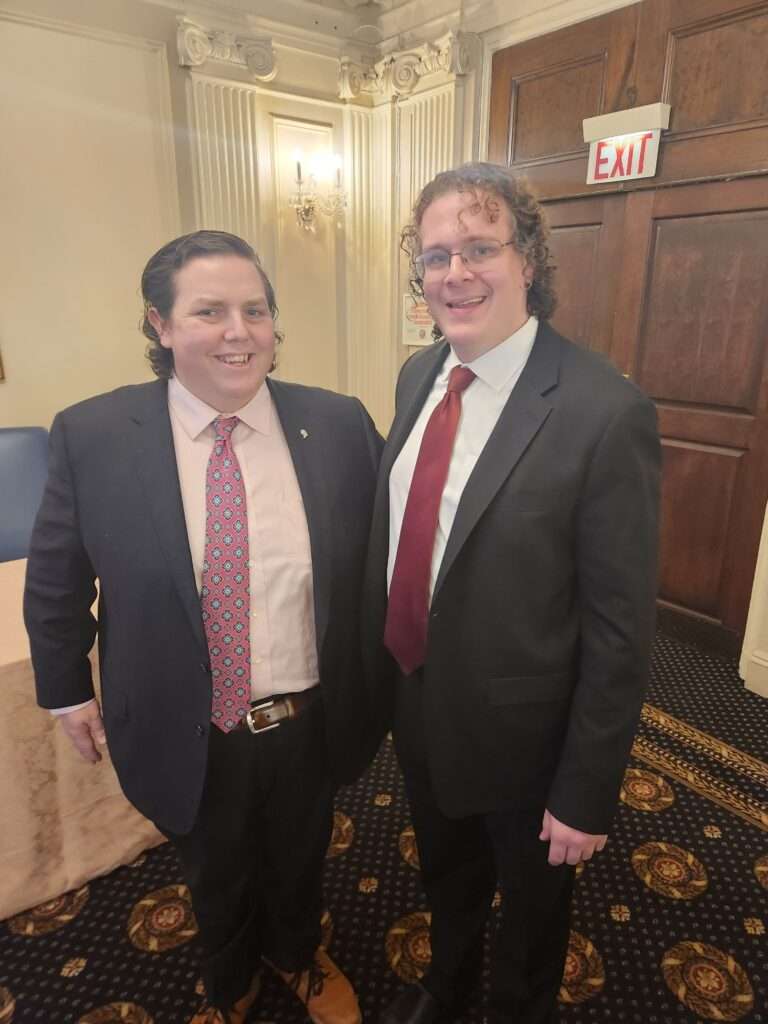
Some readers may recall that at the Federalist Society National Lawyers Convention, I challenged Will Baude to a debate on Section 3. He graciously accepted my challenge, and we held the debate today at the Chicago Lawyers Chapter of the Federalist Society. I thought our exchange was both civil and insightful. I hope the oral arguments at the Supreme Court next month reflect this level of discourse. The video is below, and you can download my slides here.
Fifth Circuit Grants En Banc Rehearing to Case Where Texas Claims Immigration and Drug Smuggling Qualify as "Invasion"
The court could potentially resolve the case without addressing the invasion arguments.

Earlier today, the US Court of Appeals for the Fifth Circuit granted rehearing en banc in United States v. Abbott, a case where the federal government is suing the state of Texas for installing floating buoy barriers in the Rio Grande River to block migration and drug smuggling, thereby creating safety hazards and possibly impeding navigation. The Biden Administration claims this violates the Rivers and Harbors Act of 1899. Texas has a different interpretation of the Act, but also argues that one of the "invasion" clauses of the Constitution gives it the power to install the buoys even if a federal statute forbids it. Article I, Section 10, Clause 3 of the Constitution states that "[n]o state shall, without the Consent of Congress, . . . engage in war, unless actually invaded, or in such imminent Danger as will not admit of delay."Texas contends that illegal migration and drug smuggling qualify as "invasion," and therefore the Constitution gives the state the power to take military action in response in defiance of federal statues, and even in the absence congressional authorization for war.
Both the trial court and the Fifth Circuit panel ruled against Texas on statutory grounds, and also rejected the "invasion" argument. The case will now be reconsidered by the full Fifth Circuit, including all 17 active judges on the court (a majority of whom are conservatives). En banc rehearing usually - but not invariably - means that the full court wants to overturn or at least significantly modify the ruling of the initial three-judge panel.
Texas' petition for rehearing en banc largely focuses on the statutory question. But the en banc court could potentially consider the "invasion" issue, as well. The latter is the main focus of my concern with the case, as it has broad implications that go far beyond the water buoy issue.
In previous writings about the case, and claims that illegal migration and drug smuggling qualify as invasion, I have explained why such contentions are badly wrong as a matter of text and original meaning, and why accepting them would set a dangerous precedent empowering states to engage in war without congressional authorization, and the federal government to suspend the writ of habeas corpus at virtually any time it wants. Whatever the en banc court decides on the statutory question, I hope it will not go down this dangerous road.
The Giraffe's Speech
An address to the American Chemical Society.
On the subject of ChatGPT, per Eugene's post on AI libel:
As an originalist delivering the keynote address to a Common Good Constitutionalism symposium, I mentioned that I felt "somewhat like a giraffe being asked to address a meeting of the American Chemical Society."
I'm aware that giraffes sometimes have trouble composing such addresses on their own, so a few months back I asked ChatGPT for its suggestions, and I wasn't at all disappointed by what it produced:
Ladies and Gentlemen of the American Chemical Society,
While it may seem out of the ordinary for a giraffe like myself to address a prestigious gathering of chemists, it serves as a testament to the boundless curiosity and innovative spirit that you all represent. I may not be a chemist myself, but I believe my presence here is symbolic of the unity that comes from exploring the richness and diversity of life on this planet, an exploration that your field greatly contributes to.
If there's one thing that life has taught me, it's that nature is the greatest chemist of all. From the swirling galaxies above to the intricate networks of life beneath our feet, chemistry is everywhere. As a giraffe, I am a beneficiary of chemistry's fascinating workings, whether it's the complex cocktail of compounds responsible for my spotted coat or the intricate dance of molecules that enables me to digest acacia leaves in my four-chambered stomach.
Through me, you can see the effects of your work. You dissect and understand the natural phenomena that allow life to thrive. You uncover the mechanisms that, for millions of years, have guided evolution's hand to craft creatures as diverse as the microscopic tardigrade to towering creatures like myself.
From my unique vantage point, I also offer a reminder. Every time I stretch my long neck to nibble the highest leaves of an acacia tree, I'm reminded of how delicate our ecosystems are. Each being plays a part, each chemical interaction matters. As chemists, you have the power to ensure that the actions we take today are sustainable and safe for the planet that sustains us all.
I encourage you to continue your brilliant and necessary work, to dig deeper into life's chemical code. I urge you to use your expertise, your curiosity, and your creativity to create solutions that will lead us towards a healthier, more sustainable future. I invite you to not only study the chemistry of life but also to understand and appreciate the life within chemistry.
With each molecule you manipulate, with each reaction you observe, and with every equation you solve, remember that you're not just exploring abstract concepts. You're delving into the heart of life itself. And from up here, it's a view worth appreciating.
Thank you for your time, and keep reaching for those metaphorical acacia leaves. The future of our world and its wondrous creatures depends on your continued efforts.
If you're not impressed by AI's abilities, or think it just copy-and-pastes from whatever it's seen before, I don't know what to say.




