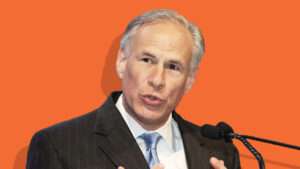
Los Angeles County will pay [Eugene Yu,] the owner of Michigan-based election management software company[, Konnech,] $5 million to settle a lawsuit that alleged the LA County District Attorney's Office violated his rights when he was arrested and charged in 2022 with a criminal case that was dropped 37 days later.
"Plaintiffs alleged Mr. Yu's arrest and the seizure of Konnech's property was without probable cause and a violation of Mr. Yu's civil rights causing damage to Konnech's business and Mr. Yu's reputation," county lawyers wrote to the Board of Supervisors in a letter urging approval of the settlement….
LA District Attorney George Gascón announced at a news conference [in Oct. 2022] that Yu and his firm had criminally violated the terms of the company's $2.6 million contract with LA County, under which the company provided election logistics software to voting officials.
Gascón accused Yu and the company of conspiracy and embezzlement, by allegedly storing some data about poll workers on servers in China, rather than on servers in the U.S., but specified that there was no evidence voting or voter data had been stored offshore….
For Konnech and Yu's complaint, see here. My first reaction, I regret to say, was that the prosecutors were likely to have solid evidence behind their charges, in part because the prosecution was contrary to what one might have politically expected from Gascón, and in part because in my experience prosecutors usually (though not always) do have solid evidence. But in this instance it appears that the prosecutors erred; I'd love to know more about how all this came about.
From the Complaint filed Thursday in Avodah Farms v. O'Hara-Rusckowski (D. Colo.):
Avodah was formed in February 2020. It works to restore and reintegrate women survivors of sex trafficking ("survivors") through comprehensive, Christ-centered care provided by Catholic religious sisters and faith-filled community. Avodah conducts its non-profit missionary work across the United States….
During the relevant times giving rise to this action, Rusckowski was a member of the Board of Councillors for the American Association of Malta, a Delegate and Special Advisor on Human Trafficking to the Ambassador for the Order of Malta at the United Nations….
In 2021, Rusckowski connected Avodah and Fitzpatrick to the Oblates, a religious order seeking to sell to Avodah certain real property located … (the "Lowell Home"). The Lowell Home was intended to be used as safe housing for survivors, their children, and religious Sisters who had contracted with Avodah to care for the survivors….
Despite having donated significant funds to Avodah for the specific purpose of supporting Avodah's mission, Defendants possessed no legal right or property interests which would permit them to exert control or decision-making authority over the development of the Lowell Home. Despite this, Defendants through their actions, words, and conduct undertook substantial efforts to illegally force the Plaintiffs to abandon the project so Defendants could implement their new vision…..
Rusckowski and the Malta Defendants initiated a smear campaign against Plaintiffs.
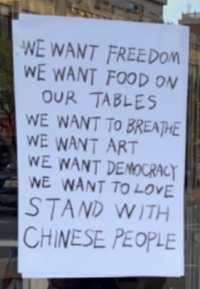
A Berklee College of Music student, who is a citizen of the People's Republic of China (PRC), was convicted by a federal jury in Boston today of stalking and threatening an individual who posted fliers in support of democracy in China around the Berklee campus area.
Xiaolei Wu, 26, was convicted following a four-day jury trial of one count of cyberstalking and one count of interstate transmissions of threatening communication. U.S. District Court Judge Denise J. Casper scheduled sentencing for April 24, 2024. Wu was arrested and charged by criminal complaint in December 2022 and subsequently indicted by a federal grand jury in January 2023….
Please enjoy the latest edition of Short Circuit, a weekly feature written by a bunch of people at the Institute for Justice.
New case! Last year, at the request of large dairy producers, Oregon agriculture officials decided to force small dairies to comply with the same regulations that apply to big dairies. Which means, for instance, installing ruinously expensive equipment to manage health concerns that simply don't exist when you have three cows in a pasture versus hundreds in confined spaces. Click here to learn more.
What made the congressional hearing so sad was not merely the accusatory quality of the committee's questions, or even the evasive quality of the presidents' answers. It was that the presidents were being asked to interpret their own rules on campus speech — and couldn't.
They're not alone. Existing campus speech rules have led to all sorts of horror stories. Many are true. Because the regulations tend to be standardless — often, deciding what's hateful based on the response of the listener, a so-called "heckler's veto" — they give no fair warning of what's forbidden, leading to such absurdities as stopping a student from passing out copies of the Constitution on Constitution Day; or investigating a professor for the sin of stopping to watch a "Back the Blue" rally; or rebuking an untenured lecturer who in a discussion about race showed a documentary that included graphic images of lynching, and read aloud from the Rev. Dr. Martin Luther King Jr.'s "Letter from Birmingham Jail." Evidently the film, like the letter, included what we're now supposed to call the N-word. (Full disclosure: I've used the word often in my books — fiction and nonfiction alike — and, seemingly only yesterday, I used it in the pages of The Times.)
But even were the rules crystal clear, they'd have both students and faculty looking over their shoulders, wondering which of their ideas might bring forth not disagreement — the mother's milk of academic life — but condemnation from their fellows and, most dreaded of all, investigation. The inculcation of fear as part of daily work on campus is very McCarthyist; more McCarthyist, even, than hauling college presidents before Congress to try to force them to place even more speech off limits. Because having to look over your shoulder is something you contend with every day….
“The safest course of action in terms of a possible violation of the NCO would be to refrain from writing or to be interviewed for articles that mention the name of the student with whom you have an NCO (or to retract them if that’s possible).”
From today's letter by FIRE and the Anti-Defamation League, send to Princeton University:
Princeton is stifling … discussions [about the Israeli-Palestinian conflict] and newsgathering by its student press, by permitting students who dislike certain speech to be granted no-communication or no-contact orders against other students. While no-contact protocols are important tools to keep students safe from properly defined discriminatory harassment, and threatening, intimidating, or assaultive conduct, Princeton appears to be granting these orders for any student who requests one, so long as minimal procedural prerequisites are satisfied.
These orders are being issued by administrators with disciplinary authority, under threat of punishment, without a modicum of due process, and—most unconscionably—where the student-speaker is not even alleged to have violated any university policy. This practice is deeply chilling, in blatant violation of Princeton's laudable free expression policies, and must end immediately….
Princeton … [has issued a] no-contact order against a [Princeton] Tory journalist who reported on a student demonstration against Israel. A Tory journalist covered a November 9 protest held by Students for Justice in Palestine. While she was recording footage of the protestors' chants and signs, a graduate student attempted to block her camera. The graduate student followed the journalist, and remained in close physical proximity to her, despite the journalist voicing her discomfort.
When the journalist reported this to an on-duty Public Safety officer, the officer informed the journalist that she was "inciting something." Following the officer's inaction, the graduate student continued to attempt to physically obstruct the journalist from filming, eventually pushing her and stepping on her foot. {The recitation here reflects our understanding of the pertinent facts. We appreciate that you may have additional information to offer and invite you to share it with us.}
After the protest, the graduate student who pushed the journalist obtained a no-contact order against her. The journalist met with her Assistant Dean for Student Life to discuss the order and asked the dean whether she could publish articles written before the issuance of the no- contact order that mention the graduate student's name. The dean later informed the journalist via email {on file with author} that the university "cannot determine if they would be a violation of the NCO—it is possible that some statements may be interpreted by the other student as an indirect or direct attempt to communicate. The safest course of action in terms of a possible violation of the NCO would be to refrain from writing or to be interviewed for articles that mention the name of the student with whom you have an NCO (or to retract them if that's possible)." …
State and federal agencies routinely issue "guidance" in the form of public statements and private letters that are actually veiled commands and threats of adverse consequences for failure to obey. Interpretive regulations, which supposedly only express an agency's opinion and are non-binding, may serve the same function. Such communications may be beyond the agency's legal authority or may be a way to circumvent required notice and comment procedures for formal legislative regulations. This type of coercion may violate rights under the Second Amendment and other constitutional rights, not to mention required administrative procedures.
This post assesses two cases pending in the Supreme Court in which agency guidance is being used to threaten Second Amendment rights. National Rifle Ass'n v. Vullo concerns how New York officials threatened commercial entities not to do business with the NRA in an effort to suppress Second Amendment advocacy. Garland v. Cargill involves the extent to which the executive branch may expand gun crimes beyond what Congress has enacted through supposedly non-mandatory interpretive regulations.
In addition, because agencies often insist that courts defer to their legal and factual conclusions, it is relevant to discuss the pending Loper and Relentless cases in which the Supreme Court will decide whether to tank the Chevron deference rule.
I recently completed a swing through Boston, with three events on Section 3.
First, I debated Jed Shugerman at Boston University, moderated by Gary Lawson.
Second, I had a panel with Jeff Pokorak at Suffolk Law School. The event was styled as a Supreme Court roundup, but most of the discussion gravitated to Trump v. Anderson:
Third, I gave a lecture on Section 3, with extended Q&A, at Boston College:
In response to a recent Supreme Court ruling allowing federal law enforcement officials to cut through razor wire Texas placed at parts of its southern border, Texas Gov. Greg Abbott issued a statement doubling down on claims that undocumented migration qualifies as an "invasion" empowering Texas to ignore federal laws to the contrary:
Under President Biden's lawless border policies, more than 6 million illegal immigrants have crossed our southern border in just 3 years. That is more than the population of 33 different States in this country. This illegal refusal to protect the States has inflicted unprecedented harm on the People all across the United States.
James Madison, Alexander Hamilton, and the other visionaries who wrote the U.S. Constitution foresaw that States should not be left to the mercy of a lawless president who does nothing to stop external threats like cartels smuggling millions of illegal immigrants across the border. That is why the Framers included both Article IV, § 4, which promises that the federal government "shall protect each [State] against invasion," and Article I, § 10, Clause 3, which acknowledges "the States' sovereign interest in protecting their borders." Arizona v. United States, 567 U.S. 387, 419 (2012) (Scalia, J., dissenting).
The failure of the Biden Administration to fulfill the duties imposed by Article IV, § 4 has triggered Article I, § 10, Clause 3, which reserves to this State the right of self-defense. For these reasons, I have already declared an invasion under Article I, § 10, Clause 3 to invoke Texas's constitutional authority to defend and protect itself. That authority is the supreme law of the land and supersedes any federal statutes to the contrary.
The argument that immigration is "invasion" is badly wrong and has dangerous implications that go far beyond the specific details of the razor wire case.
Abbott and his lawyers would do well to stop citing James Madison to buttress their invasion argument. As I explained in a previous piece on this issue, Madison specifically rejected the idea that immigration qualifies as invasion:
Those who cite Madison in support of equating immigration and invasion ignore the one time he directly addressed this very question: the Report of 1800, which rebutted claims that the Alien Friends Act of 1798 (which gave the president broad power to expel non-citizens) was authorized by the Invasion Clause. There, Madison explicitly rejected the idea that immigration qualifies as invasion, emphasizing that "Invasion is an operation of war."
Claims that other statements by Madison support the theory do not withstand scrutiny for reasons I summarized here.
If courts were to endorse the idea that illegal immigration qualifies as "invasion," it would have absurd and dangerous implications. Here's my brief summary of a key reason why:
[I]f illegal immigration or drug smuggling really do qualify as an "invasion," then [Article I, § 10, Clause 3 of] the Constitution [the provision cited by Abbott] authorizes states to "engage in War" as a response. In other words, Texas would be authorized to take such actions as sending its National Guard to invade Mexico, in order to attack drug cartels or forestall undocumented migration…. This absurd—and dangerous—implication of Texas's argument is an additional reason to reject it.
And Texas could then "engage in war" without any congressional authorization, and - if Abbott is right - in defiance of federal statutes to the contrary.
In the water buoy case, federal district Judge David Alan Ezra (a Republican Reagan appointee) described Texas's position as a "breathtaking" assertion of unilateral state power. If anything, he understates the point.
I would add that Texas and other states could use that claimed authority anytime they want. Since the US began to enact severe restrictions on migration across the southern border, there has never been a time when there wasn't large-scale undocumented migration across it. No president - Donald Trump included - has ever even come close to stopping it. Large-scale illegal migration is a natural consequence of the combination of severe restrictions on legal migration, job opportunities in the US, and terrible conditions in the countries most migrants are fleeing. It can potentially be reduced by making legal migration easier. But Abbott and most other Republicans are opposed to that.
Much the same point applies to cross-border drug smuggling, which is a natural consequence of the War on Drugs. Since that ill-advised metaphorical war began, there has never not been extensive cross-border trafficking in illegal drugs - including under Trump.
If illegal migration and drug smuggling count as "invasion," we are always in a state of "invasion" and affected states can "engage in war" anytime they want. Even if there is relatively more illegal migration now than a few years ago, there have long been hundreds of thousands of cases per year. If illegal migration qualifies as an "invasion" at all, it does so all the time, not just when a Democratic president is in office or when there is a spike compared to previous years.
The writ of habeas corpus protects people from being detained by the government without trial. If federal or state officials detain you, the writ gives you the right to challenge the legal basis for that detention in court. But the Suspension Clause of the Constitution (Article I, Section 9, Clause 2) states that "The Privilege of the Writ of Habeas Corpus shall not be suspended, unless when in Cases of Rebellion or Invasion the public Safety may require it" (emphasis added).
If illegal migration and drug smuggling qualify as "invasion" for purposes of triggering state and federal authority to resist invasion under the invasion clauses, they surely also qualify as such under the Suspension Clause. And there is a significant amount of illegal migration and smuggling of contraband goods going on at virtually all times in modern history. Thus, presto! The federal government can suspend the writ of habeas corpus virtually any time it wants!
Do Gov. Abbott and other Republicans want Joe Biden to be able to claim the power to detain people without charges anytime he wants? That's where their logic leads! I expand on this point in greater detail here.
If the framers and ratifiers of the Constitution had expected the invasion provisions of the Constitution to have such radical implications, one would expect them to note it at some point during prolonged debate over ratification. But there is no evidence that they did. The habeas corpus issue, in particular, is one that would have raised hackles in the Founding era, as British abuses of habeas corpus were a major grievance during the American Revolution.
Legal issues aside, the drumbeat of rhetoric equating drug smuggling and immigration and invasion has dangerous policy implications. An invasion is the kind of thing to which governments usually respond with overwhelming force. The more people think immigration and drug smuggling are equivalent to an invasion, the greater the likelihood there will be political pressure for such draconian measures as killing migrants, family separation (which Trump may seek to revive if he returns to power), and the idea of turning the War on Drugs into a real war by invading Mexico (a dangerous proposal increasingly popular in GOP circles). At the very least, "invasion" rhetoric moves the Overton Window on such ideas in the wrong direction.
For the moment, Abbott's invasion statement is likely to have only very limited effect. The Supreme Court ruling merely lifts the lower court injunction barring federal officials from cutting the razor wire installed by Texas. It does not actually order Texas itself to do anything, or even to refrain from installing additional wire. Thus, were are left with a weird situation where the feds can cut the wire, Texas can install more, the feds can cut it again, and so on. That may continue unless and until the courts resolve the case more fully.
But Texas's invasion arguments have dangerous implications for both legal and political reasons. Courts would do well to continue to reject them.
Last week, the Supreme Court heard nearly four hours of argument about the Chevron doctrine—including whether it should be cast aside. Not surprisingly, much of the argument consisted of different conceptions of what Chevron means. The nub of the problem is to specify what must happen for a court to depart from ordinary statutory interpretation (Chevron's step one) and defer to a reasonable agency interpretation of the statute (Chevron's step two). The argument (in Loper Bright Enterprises, Inc. v. Raimondo and Relentless, Inc. v. Department of Commerce) largely proceeded on the assumption that a court must turn to step two if it concludes the statute is "ambiguous" or includes a "gap." At some points, however, the advocates and the Justices thought that the critical question was whether Congress has implicitly "delegated" interpretive authority to the agency.
If we attempt to solve the problem by parsing what was said in the 1984 Chevron case, we quickly encounter the difficulty that Justice Stevens said both things. He wrote, on the one hand, that the court should employ "traditional tools of statutory construction" to determine whether a statute is "silent or ambiguous with respect to the specific issue." In other words, ambiguity is the key.
But, on the other hand, he also wrote that if Congress makes "an express delegation of authority to the agency to elucidate a specific provision of the statute by regulation," the agency's interpretation will prevail unless it is "arbitrary, capricious, or manifestly contrary to the statute." He immediately added: "Sometimes the legislative delegation to an agency on a particular question is implicit rather than explicit," in which case also the court should accept "a reasonable interpretation made by the administrator of an agency." In other words, explicit or implicit delegation to the agency to interpret is the key.
In 1968, Sen. Eugene McCarthy (D-Minn.) stunned the nation by getting 42% of the vote against incumbent President Lyndon B. Johnson. President Johnson ended up withdrawing from the presidential race. On Tuesday, Nikki Haley, who has never been elected to any national office before, just pulled in 43.3% of the vote running against a former Republican President with universal name id who is, in effect, an incumbent. This is an extremely strong showing, which suggests that Donald Trump cannot beat Joe Biden in November 2024. Seventy percent of the voters who backed Haley were unregistered, independent voters. These are the kinds of voters Republicans would need to win if they are to beat Joe Biden. Nikki Haley is getting those voters, and Donald Trump is losing them big time.
Nikki Haley should stay in this race until every state in the nation has voted just as George Herbert Walker Bush did in 1980 when he ran against Ronald Reagan. At the moment, we do not even know if the Supreme Court is going to allow Donald Trump's name to be printed on the ballot! And, no matter how the Court rules in Trump v. Anderson, do not expect Senate President Kamala Harris or a Democratic majority in the House of Representatives, on January 6, 2025, to count electoral votes cast for Donald Trump who all Democrats believe is disqualified from being re-elected as President by Section 3 of the Fourteenth Amendment. The President of the Senate and a Democratic majority in the House of Representatives will not feel bound to follow the ruling of a Republican Supreme Court. And, that is even without factoring in the likelihood that Trump will be convicted of at least some of the 91 charges on which he has been indicted and that he may lose the popular vote even if he wins in the Electoral College.
Do I think this would be unfair and wrong as a matter of constitutional law? Of course, I do! I, after all, signed a brief by three former Republican Attorneys General in Trump v. Anderson saying that Donald Trump is not barred from being re-elected by Section 3 of the Fourteenth Amendment. But, if you want to know what Democrats think about this, and what they will do on January 6, 2025, take the time to read Yale Sterling Professor of Law Akhil Reed Amar's amicus brief, co-written with his brother Vikram, in Trump v. Anderson. The Amar brothers think a Democratic President of the Senate and a Democratic majority in the House are not bound by the Republican Supreme Court's ruling in Trump v. Anderson. I would be stunned if all of legal academia and the press did not end up agreeing with them along with some conservative legal academics. So, even if Donald Trump were to win in the Electoral College in 2024, Kamala Harris and the House of Representatives would not count his electoral votes. There is simply no way that Donald Trump can win the 2024 presidential election.
What that means is that there is only one person who is running for the Republican nomination for President in 2024 whose electoral votes will be counted and who will pardon Donald Trump if she is elected: Nikki Haley. Republicans should pray for Haley to stay in this race until all fifty states have voted in the Republican primaries and caucuses.
An interesting and, I think, sound analysis by Greg Lukianoff (FIRE), responding to ACLU National Legal Director (and Georgetown law professor) David Cole's review of Lukianoff & Rikki Schlott's The Canceling of the American Mind in the New York Review of Books. An excerpt:
[A]fter 9/11 only about three professors lost their jobs for speech related to the attacks or the subsequent wars, and all three were fired for reasons that extended well beyond protected speech. Meanwhile, since the dawn of Cancel Culture in 2014 there have been more than 1,000 professor cancelation attempts, with two-thirds resulting in some form of sanction and one-fifth resulting in termination ….
It's also important to note that the problem will only get worse as older faculty, who are generally far better on free speech, begin to retire in large numbers. In our 2022 survey of faculty, we saw that the younger the faculty were, the more acceptable they found anti-speech activity ….
What about students, though? Using data from UCLA's Higher Education Research Institute, Jean Twenge has shown that support for censoring extreme speakers on campus has spiked in recent years: "While only 1 out of 4 students wanted to ban extreme speakers during the 1970s and 1980s, the majority wanted to do so in 2019." …
I'm not sure where I stand on qualified immunity—I haven't looked at its history closely enough—but I thought this was well put, in Judge Willett's dissent yesterday in Villarreal v. City of Laredo (en banc):
[O]ne of the justifications so frequently invoked in defense of qualified immunity—that law enforcement officers need "breathing room" to make "split-second judgments"—is altogether absent in this case. This was no fast-moving, high-pressure, life-and-death situation. Those who arrested, handcuffed, jailed, mocked, and prosecuted Priscilla Villarreal, far from having to make a snap decision or heat-of-the-moment gut call, spent several months plotting Villarreal's takedown, dusting off and weaponizing a dormant Texas statute never successfully wielded in the statute's near-quarter-century of existence. This was not the hot pursuit of a presumed criminal; it was the premeditated pursuit of a confirmed critic.
Also, while the majority says the officers could not have "predicted" that their thought-out plan to lock up a citizen-journalist for asking questions would violate the First Amendment—a plan cooked up with legal advice from the Webb County District Attorney's Office, mind you—the majority simultaneously indulges the notion that Villarreal had zero excuse for not knowing that her actions might implicate an obscure, never-used provision of the Texas Penal Code. In other words, encyclopedic jurisprudential knowledge is imputed to Villarreal, but the government agents targeting her are free to plead (or feign) ignorance of bedrock constitutional guarantees.
In the upside-down world of qualified immunity, everyday citizens are demanded to know the law's every jot and tittle, but those charged with enforcing the law are only expected to know the "clearly established" ones. Turns out, ignorance of the law is an excuse—for government officials. Such blithe "rules for thee but not for me" nonchalance is less qualified immunity than unqualified impunity. The irony would be sweet if Villarreal's resulting jailtime were not so bitter, and it lays bare the "fair warning" fiction that has become the touchstone of what counts as "clearly established law."
From In re Guardianship of J.H., decided today by the New Hampshire Supreme Court (in an opinion by Justice Anna Barbara Hantz Marconi):
J.H. is a six-year-old child. His father has been incarcerated since December 2017 and has a history of criminal charges involving domestic violence and drug possession. J.H.'s mother died in 2019 when J.H. was less than three years old. His grandmother was appointed guardian of J.H.'s person and estate shortly thereafter, and J.H. has remained in her care since.
The guardian and the father have been at odds throughout this case. When the guardianship petition was filed, the father was subject to a no-contact order barring communications with J.H. Subsequently, the father sought contact and visitation with J.H. Over the guardian's objections, the court ordered that the father could communicate with J.H. by mail and eventually progress to video visits. Both parties have accused the other of violating the court's orders. Adding to the conflict, the guardian has petitioned to terminate the father's parental rights. In an April 2022 order, the court expressed its frustration that "[d]espite [J.H.'s] tragic young life that has seen him lose both of his parents before his third birthday, both sides of [J.H.'s] extended family are not able to put their differences aside and cooperate for [J.H.'s] benefit."
The court placed restrictions on both parties, including limiting the content of father's communications with J.H. The court also imposed restrictions on the guardian. In an October 2022 order, the court ordered that the guardian and her husband "are enjoined from testifying against father's release at any parole or similar hearing without first seeking leave of this court." The guardian moved for reconsideration, arguing that this restriction violated her right to freedom of speech. The court denied her motion, reasoning that "[J.H.'s] best interests outweigh the guardian['s] free speech rights to keep father incarcerated if he becomes eligible for a parole hearing."
The order wasn't authorized by New Hampshire statutes, the court held, and thus avoided the need to decide whether the order also violated the First Amendment (as I think it did):