My article with Michael Stokes Paulsen about the continuing legal force and broad substantive sweep of Section Three of the Fourteenth Amendment has now been published in final form in the Penn Law Review.
As a reminder, here is the abstract:
The Sweep and Force of Section Three
Section Three of the Fourteenth Amendment forbids holding office by former office holders who then participate in insurrection or rebellion. Because of a range of misperceptions and mistaken assumptions, Section Three's full legal consequences have not been appreciated or enforced. This Article corrects those mistakes by setting forth the full sweep and force of Section Three.
First, Section Three remains an enforceable part of the Constitution, not limited to the Civil War, and not effectively repealed by nineteenth century amnesty legislation. Second, Section Three is self-executing, operating as an immediate disqualification from office, without the need for additional action by Congress. It can and should be enforced by every official, state or federal, who judges qualifications. Third, to the extent of any conflict with prior constitutional rules, Section Three repeals, supersedes, or simply satisfies them. This includes the rules against bills of attainder or ex post facto laws, the Due Process Clause, and even the free speech principles of the First Amendment. Fourth, Section Three covers a broad range of conduct against the authority of the constitutional order, including many instances of indirect participation or support as "aid or comfort." It covers a broad range of offices, including the Presidency. And in particular, it disqualifies former President Donald Trump, and potentially many others, because of their participation in the attempted overthrow of the 2020 presidential election.
(My recent blog posts with Mike Paulsen on "Fighting the Meaning of Section Three" are collected at the end of this post.)
Professor Shugerman's argument that the 1793 Hamilton Document, that is, a list of "every person holding any civil office or employment under the United States, (except the judges)," was intended to ensure compliance with the Constitution's Sinecure Clause lacks support.
Around the same time that debates arose about which of two competing documents Alexander Hamilton, in fact, signed in 1793, Professor Jed Shugerman and Professor Gautham Rao also wrote a Slate article explaining why Hamilton would not have listed President Washington as a person holding "any civil office or employment under the United States." Their argument was premised on the Constitution's Sinecure or Ineligibility Clause. The clause provides: "No Senator or Representative shall, during the Time for which he was elected, be appointed to any civil Office under the Authority of the United States, which shall have been created, or the Emoluments whereof shall have been [i]ncreased during such time." U.S. Const. Art. I, Sect. 6, Cl. 2. In short, Shugerman and Rao explained that since there was no concern that the presidency could trigger a violation of the Sinecure Clause, Hamilton did not list the presidency and the president's compensation.
We reviewed that argument at the time, but we chose not to respond. Why? In September 2017, Shugerman, Rao, and their three co-authors (collectively the "Legal Historians") retracted their claims about which purported Hamilton-signed document was authentic. We had thought that had ended the matter. This is not to say that we did not have other complaints and grievances against them. We did. We had hoped that they'd review their writings for completeness and accuracy and make coordinate changes and retractions. We did not wish to engage in overreach by embarrassing them with each and every error they had made. And we rightly feared that our making other demands, after they retracted on the issue of authenticity, would put us in a bad light. Their argument in Slate was just one such argument—an argument that they should have retracted in 2017.
Another was their claim, in an amicus brief, that presidential electors hold an office of trust under the United States, and for that reason, electors are subject to the Foreign Emoluments Clause. The Legal Historians made this claim in their brief at n.59 which was filed in the Southern District of New York, but they quietly dropped this claim in subsequent briefs. See Seth Barrett Tillman, The Foreign Emoluments Clause--Where the Bodies are Buried: "Idiosyncratic" Legal Positions, 59 S. Tex. L. Rev. 237, 248 (2017) ("How could five academics tell a federal court, without citing any supporting authority or noting any contrary authority, that presidential electors hold an 'office "of trust" under the United States' and that electors fall under the scope of the Foreign Emoluments Clause?").
But the most basic reason we did not respond to their Sinecure Clause argument was that we (Blackman and Tillman) are not their unpaid editors whose task it is to perfect their publications. Again, back in 2017, Shugerman, Rao, and three other academics mistakenly identified a document from the 1830s as one from 1793, and then said, we (Blackman and Tillman) failed to put this purported Alexander-Hamilton-signed document before the courts. The situation was surreal. Who ever dreamed that Shugerman or any of his colleagues would willingly return to this minefield of error and hyperbole?
Now, roughly seven years later, Shugerman has resuscitated his (and Professor Rao's) 2017 Slate argument based on the Sinecure Clause. We will respond to Shugerman here. (Rao has not resuscitated his prior position in Slate, or said anything else about the Hamilton document of late, so we will only mention Rao in passing in order to lay the facts before the reader.)
From Judge Paul Engelmayer's order Thursday in J.G. v. N.Y. City Dep't of Ed. (S.D.N.Y.), deciding on attorney fees to be awarded under the Individuals with Disabilities Education Act:
The Cuddy Law Firm also states that its requested hourly rates are supported by feedback it received from the artificial intelligence tool "ChatGPT-4."
In fairness, the Cuddy Law Firm does not predominantly rely on ChatGPT-4 in advocating for these billing rates. It instead presents ChatGPT-4 as a "cross-check" supporting the problematic sources above. As such, the Court need not dwell at length on this point.
It suffices to say that the Cuddy Law Firm's invocation of ChatGPT as support for its aggressive fee bid is utterly and unusually unpersuasive. As the firm should have appreciated, treating ChatGPT's conclusions as a useful gauge of the reasonable billing rate for the work of a lawyer with a particular background carrying out a bespoke assignment for a client in a niche practice area was misbegotten at the jump.
The Google Gemini fiasco (one of the outputs I got when I heard about is reproduced above) reminded me: If there ever is a female Pope (a term that is a derivative of the Latin Papa), shouldn't she be called a Mome?
POLAD OMAROV, a/k/a "Araz Aliyev," a/k/a "Polad Qaqa," a/k/a "Haci Qaqa," [has been extradited] from the Czech Republic on murder-for-hire and money laundering charges contained in a Superseding Indictment…. OMAROV was arrested in the Czech Republic on January 4, 2023, at the request of the United States, arrived in the Southern District of New York on February 21, 2024, and will be arraigned on the charges in the Superseding Indictment before U.S. Magistrate Judge Sarah L. Cave later today.
U.S. Attorney Damian Williams said: "Polad Omarov is alleged to have brazenly attempted to murder an outspoken critic of Iran's human rights abuses—right here on American soil. The audacious alleged plot to kidnap and murder the victim are indicative of Iran's policies of aggressive suppression and violence against anyone who speaks against them. Today's extradition makes clear our unwavering resolve to charge and bring to justice any individuals attempting to stifle free speech in the U.S., especially at the behest of a malign foreign regime." …
The press release describes the allegations (while noting they are just allegations):
OMAROV, a leader within an Eastern European organized crime group (the "Organization"), worked with other members of the Organization to attempt to murder a U.S. citizen of Iranian origin (the "Victim") on instructions from individuals in Iran. The Victim previously has been the target of plots by the Government of Iran to intimidate, harass, and kidnap the Victim. The Victim is a journalist, author, and human rights activist who has publicized the Government of Iran's human rights abuses and suppression of political expression, including in connection with continuing protests against the regime across Iran. As recently as 2020 and 2021, Iranian intelligence officials and assets plotted to kidnap the Victim from within the United States for rendition to Iran in an effort to silence the Victim's criticism of the regime.
It has been a while since my last post on the Volokh Conspiracy. In 2021, I became associate dean at George Washington and did not have time to write. Last year, I switched associate dean roles and my portfolio became smaller, so I was fortunate to have some time to return to scholarship and to complete several articles. I'll begin my return to blogging by writing a series of posts offering shorter versions of the key arguments in a recently completed article that I have now submitted to law reviews, entitled The Cost of Justice at the Dawn of AI.
The article explores how changes in the productivity of lawyers affect the legal system and how legal actors should prepare for a future that may feature lawyers who are either more or less productive than today, depending in part on how artificial intelligence develops. The article's simplest claim is that the legal literature ought to pay more attention to the productivity of the legal sector, because changes in legal productivity directly affect the cost of legal services. Legal costs in turn affect how successfully the legal system can perform the core mission of ensuring that like cases are treated alike while cases are treated differently when applicable legal principles so demand.
The preeminent economic model for considering changes in the costs of goods and services over time is WilliamBaumol'scostdisease. This model is perhaps best known as providing an explanation for why the costs of college education and of health care have increased faster than inflation in recent decades. The essential story is that those sectors have enjoyed lower productivity increases than productive sectors like agriculture, textiles, or technology, and so products have become more expensive. Arguments that any given market is afflicted with the cost disease can be contested. Maybe, one might argue, educational costs have risen in large part because the core educational product—a professor lecturing in a classroom—has been bundled with increasingly lavish complementary services, such as ever-improving food and ever-increasing numbers of administrators to help students navigate their way through college.
Whatever the case for any given market, however, the cost disease story is practically tautological. When markets enjoy technological advances that increase productivity per worker, costs decrease relative to the costs in industries where technology has been relatively stagnant. If costs in productive sectors are falling relative to costs in stagnant sectors, then costs in stagnant sectors must be rising relative to costs in productive sectors. If we thus control for the overall price level, which depends primarily on macroeconomic policy, relatively stagnant sectors must become relatively more expensive over time. We can debate in any given market, including the legal sector, whether stagnation is occurring, whether apparent relevant inflation is attributable to the cost disease or to improvements in quality. But the very definition of productivity implies that if an industry stagnates, its products will become more expensive than other industries.
The article considers the implications of legal productivity both retrospectively and prospectively. The retrospective question is whether lawyers' productivity has stagnated, and if so, how has that affected the legal system. The prospective question is whether we should expect artificial intelligence to increase the productivity of lawyers and thus reduce the costs of legal services relative to other goods and services in the economy. These inquiries frame the ultimate question of how legal actors might prepare for a world in which legal services might be considerably more or less expensive in relative terms than they are today.
These arguments will unfold in future blog posts (and of course are developed in full in the article). For now, I will note two points from different parts of the article that highlight how considering productivity changes, past and future, may matter for understanding the future of the legal system.
In the past few decades, lawyers and legal scholars have observed a great reduction in the number of cases brought to trial, in both civil and criminal courts. This transformation has been referred to as the "vanishing trial," and the name is not hyperbole. The proportion of federal cases ending in trial has fallen by more than half in the twenty years since academics began discussing the vanishing trial in earnest, and declines have also occurred in state courts and in other countries. John Langbein argued in the Yale Law Journal that the vanishing trial is attributable to changes in procedural rules, and while that may be a partial explanation, it fails to answer why trial rates have declined so systematically, rather than only at times of procedural reform. Although commentators certainly understand that the high cost of legal services helps explain why cases settle, they have not considered whether increases in costs over time, potentially attributable to the cost disease, may explain the historic trends. Vanishing trials are precisely what one would expect from simple models of settlement bargaining in an environment in which costs are increasing.
The prospective point is that if the legal system has developed based on implicit assumptions about the cost of legal services, changes in legal productivity may change the balance of power in legal regimes. For example, legislators may allow for longer maximum criminal sentences than the legislators would think justice requires, if the legislators think that long potential sentences are necessary to give prosecutors leverage in an environment in which it is not practical for prosecutors to bring many cases to trial. Suppose, however, that AI greatly reduces the time that pretrial work takes, for example by efficiently sifting through evidence, creating trial plans, and assisting in the drafting of pleadings. Armed with a credible threat to take more cases to trial, prosecutors should be expected to exact higher sentences in plea bargaining. Judges will disagree about whether such a change is salutary or pernicious, but awareness of how changes in productivity may revitalize or upset established legal regimes is the first step toward conscious consideration of how the legal system should evolve following productivity changes.
But has law really been stagnant? And if so, will AI reverse this trend? I'll address these questions in the next two blog posts.
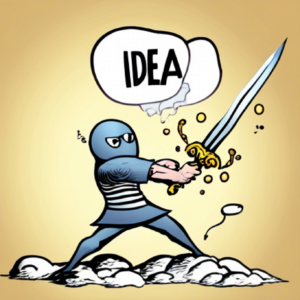
Contrary to popular belief, ideas can in fact be killed. And that reality has important implications for how we should handle various conflicts, including those involving Israel and Ukraine.
It is often said that "you can't kill an idea." Those who quote the saying usually do so to suggest you cannot defeat an ideology through the use of force. Thus, if the ideology has broad enough support, you have to accommodate it - at least to some significant extent.
This truism has recently been invoked in regards to Israel's war against Hamas. For example, top European Union diplomat Joseph Borrell warns that "Hamas is an idea and you don't kill an idea." John Sawers, former head of Britain's MI6 intelligence agency, similarly claims "you can kill individuals, you can't kill an idea." I have occasionally seen this trope invoked with respect to Russia. Even if Putin suffers a defeat in Ukraine, it is said, we can't kill the idea of Russian imperialist nationalism.
Such claims are false, or at least greatly overblown. Coercion can and often does kill ideas! But before going further, I should emphasize I do not mean to suggest that all ideological conflicts can and should be settled by force. Within liberal democracies, the best response to evil ideologies is usually a combination of constitutional constraints on government power, and nonviolent suasion.
Even when large-scale force is both effective and necessary (as is sadly often true in dealing with terrorists and authoritarian regimes), it may work better if combined with other tools - sticks complemented by carrots. Finally, nothing in my argument suggests that "anything goes," even in conflicts with the most abhorrent of ideologies. Minimizing harm to innocent civilians is a moral imperative, even in cases where it may not be strategically necessary.
Taken literally, the claim that you cannot kill an idea is undeniably true. Ideas have no physical existence, and therefore cannot be destroyed by physical force. But force can and often does play a decisive role in ensuring that an idea doesn't get implemented. And that has important implications for how we should handle various conflicts, including those facing Ukraine and Israel. Overwhelming force can be a crucial tool.
Most obviously, implementation of an ideology can often be forestalled by killing its adherents. Dead fascists, communists, or radical Islamists cannot do much to implement their ideas. Perhaps their deaths will inspire others to take their places. But that is far from a given - especially, as we shall see, if the cause they espouse suffers a shattering defeat. Moreover, new recruits may lack the experience and skills of their predecessors. If, for example, Israel wipes out the best Hamas fighters or Ukraine decimates the most effective frontline Russian units, their replacements are likely to be less potent. And fear of being killed or wounded like their predecessors may deter many potential recruits from joining up at all.
In addition to personnel, effective implementation of an ideology usually requires institutions. The use of force can destroy those institutions. When the Nazi state was destroyed by the Allies, that made it extremely difficult for surviving Nazis to keep on implementing their ideas. The same goes for the destruction of the nascent Confederate state by the Union, the destruction of the ISIS regime by a US-led coalition, and many other cases. Ideologies whose implementation itself requires large-scale coercion - including fascism, communism, and Hamas' radical Islamism - are particularly in need of institutional support. Thus they are particularly likely to be stymied by the destruction of their institutions.
Sometimes, institutions can be rebuilt. But doing so is a difficult task. And that rebuilding can itself be blocked by the use of force, or the threat of it.
So far, I have outlined ways in which the use of force can kill ideas by blocking their implementation even without changing anyone's mind. The dead cannot carry on the fight for their cause, even if they remained true believers to the end. And even living true believers often have little ability to do so if they lack the necessary institutions.
But history shows catastrophic defeat can greatly reduce the appeal of an ideology, as well. Conversely, victory can boost it. I outlined some of the reasons why in an earlier post on the Russia-Ukraine war:
Historically, victory in war has often boosted support for the ideology of the winners. The triumph of the American Revolution increased support for Enlightenment liberalism on both sides of the Atlantic, in the process advancing causes such as democratization and the abolition of slavery. The Bolshevik Revolution and subsequent Communist victories in the Russian Civil War and World War II greatly increased worldwide support for Marxism. Similarly, Mussolini and Hitler's early successes won new adherents for fascism.
By contrast, the crushing defeat of the Axis in World War II led to a collapse of support for fascist ideology, including even in Germany and Italy. The Soviet Union's defeat in the Cold War (admittedly only partly military) and subsequent collapse greatly weakened the appeal of communism….
Throughout human history, ideologies have risen and fallen in part based on success and failure in military and geopolitical conflict.
Much of this reflects irrational factors in public opinion formation. Victory in war doesn't actually tell us much about the merits of the winner's ideology. Might does not make right…
But in a world where public opinion is heavily influenced by ignorance and bias, people routinely use crude information shortcuts to make political judgments. One such shortcut is the presumption that it's good to be on winning side. If adherents of an ideology prevail in a high-profile war, there must be something to their ideas! Such biases may be reinforced by the fallacious, but widespread assumptions that it's necessarily good to be "on the right side of history" and that the "arc of the moral universe bends towards justice." If so, one way of telling which side has a just cause is by looking to see who wins!
Another notable example from American history is the defeat of the Confederacy. The ideas of slavery and secession were crushed by coercion more than persuasion. Before and during the war, Confederates openly and proudly avowed their commitment to these ideals. Crushing defeat led most to accept that secession was impossible, and many to pretend they had not actually been fighting for slavery at all, but rather for "states rights."
Defeat is particularly likely to drain support from ideologies that rely heavily on projecting an image of strength and power. That's true of many forms of nationalism, including that of Vladimir Putin's Russia. Projecting strength is a major theme of Putin's propaganda, even including such things as depicting Putin himself as a virile macho hunter and athlete. If a regime that boasts of its strength suffers a crushing defeat and is thereby revealed to be weak, that is likely to reduce support for its ideology. Just ask the Nazis and Italian and Japanese fascists!
Furthermore, crushing defeat undermines hope that the cause will ever ultimately triumph. In principle, adherents can retain their commitment to their cause, even if they believe it has little or no chance of success. But fighting on without hope is painful and depressing. So, many one-time believers - especially less committed adherents - will instead turn their backs on the ideology and even try to persuade themselves and others they never really supported it in the first place. Consider the way many Germans, after World War II, claimed they never supported Hitler (even though all too many had in fact backed him).
Such dynamics may not affect the most fanatical adherents of an ideology. But hard-core ideologues can't win without the aid of a much larger group of less committed adherents. No ideological movement has ever prevailed without the backing of large numbers of the latter.
In sum, the use of force - especially in the form of inflicting crushing defeats - can and often does kill ideas. As we consider how to counter enemies of Western liberal democracy, we would do well to keep in mind the persuasive power of victory.
That does not mean we should rely on force alone. To the contrary, it often helps to couple force with positive ideological appeals, promising a better life to those who reject the ideology of our adversaries. For that reason, among others, I have advocated opening Western doors to both Russian and Gaza Palestinian refugees fleeing their respective horrific regimes and the wars they started.
We should also incentivize Russian troops to surrender, reach out to Russian opposition leaders like Vladimir Kara-Murza and Ilya Yashin, and emphasize that a future, more liberal Russia will get good treatment, like that accorded to Germany, Italy, and Japan after World War II. For their part, Israeli leaders would do well to consider how to more effectively appeal to and reward Palestinians willing to reject Hamas's ideology.
Ideally, we should use the big stick of force to crush and demoralize adherents of the enemy's ideology, while simultaneously offering carrots to those who repudiate it, or sometimes (as in the case of Russian military deserters) even just simply refuse to support the enemy regime. In any given case, finding the optimal balance between the two can be difficult. I certainly don't claim this post is anything like a definitive guide to how to do it. But I hope it may achieve the much more modest goal of explaining how and why the use of force often plays a key role in killing ideas.
A compilation of my work on this topic, on the two-year anniversary of the start of Vladimir Putin's full-blown attempt to conquer Ukraine. Almost all of it remains relevant.
Russian armored vehicle in Ukraine. March 2022. (NA)
Today is the second anniversary of the start of Vladimir Putin's brutal effort to conquer Ukraine. While Russian aggression against Ukraine dates back to the seizure of Crimea and parts of the Donbass in 2014, the February 2022 invasion vastly escalated the conflict, led to large-scale death and destruction, and - even worse - extensive atrocities committed by Russian forces.
This is an update of last year's February 24 post, compiling my writings about the conflict up to that time. There have been many more over subsequent year. I ended last year's post with the hope that Ukraine might win a decisive victory soon, but also stating "I fear I may be compiling another list like it a year from now." Sadly, that fear has come to pass.
In this post, I compile links to my writings about the conflict over the last two years. Many focus on the enormous refugee crisis it has triggered, as that is the aspect most closely related to my areas of expertise. But I have also written on a variety other issues related to the conflict.
Since the early days of the conflict, I have advocated that the US and other Western nations should open their doors to both Ukrainian refugees and Russians fleeing Vladimir Putin's increasingly repressive regime. Over time, I have become more and more convinced that the West should give Ukraine as much weaponry and supplies as possible, in order to push for the largest possible Ukrainian victory. The Ukrainians have done well militarily; their recent problems are largely a result of ammunition and supply shortages caused by slowdowns in US and other western aid. Russia's forces, for their part, have suffered heavy losses, are only modestly competent, and have poor morale and discipline. They can be beaten, if only the West is willing to make a fairly modest investment, much of which can be funded by confiscating Russian government assets in Western nations.
There are also large moral and strategic benefits to Ukrainian victory. The moral aspect is obvious - saving millions of people from oppression, atrocities, and mass murder at the hands of a brutal authoritarian regime. In addition, Ukrainian victory would give a boost to liberal democracy in its ideological struggle against authoritarian nationalism. Strategically, Putin's regime is one of the main enemies of the United States and the West. Any Russian forces damaged or destroyed in Ukraine are ones we don't have to face elsewhere. And a defeat for Russia is also the best hope for a more liberal, or at least hostile, government in that country.
Those who claim helping Ukraine is a diversion from countering China in the Pacific would do well to remember that our Asian allies - including Taiwan - believe helping Ukraine is in their strategic interest. They know that weakening Russia also weakens China (for whom Russia is a key ally), and that showing resolve in Ukraine helps deter China, as well.
I discuss many of these points - and others - in greater detail in various pieces linked below.
In the first part of this post, I compile links to writings on refugee and immigration issues. In the latter part, I compile links to other pieces. Unless otherwise noted, all of these pieces were published right here at the Volokh Conspiracy blog, hosted by Reason.
I list them in chronological order. If you just want to look at more recent pieces, simply scroll down!
"Learning From People Who Vote with their Feet," Oct. 5, 2022. This piece explains what we can learn about the quality of Russia's government from the fact that large numbers of people are voting with their feet against it.
"We Sponsored Refugees Under a New Biden Program. The Results Were Astonishing," Washington Post, Jan. 3, 2023 (non-paywall version here). This was probably my second-most influential piece on issues related to the war. It apparently led over 100 people to sign up as refugee sponsors in the Uniting for Ukraine program, according to data compiled by the Welcome.US sponsor matching site. I have since sponsored several additional Ukrainian migrants myself, and have helped other people become sponsors.
I have also done a variety of podcasts and broadcast media interviews on migration and refugee issues arising from the war. For examples, see here,here, here, and here.
II. Writings on Other Issues Related to the War
"Law, Justice, and the Russia-Ukraine Conflict," Feb. 23, 2022 (post written just as the Russian attack began; I think it's still a helpful summary of the moral and legal issues at stake in the war).
"Two Illiberal and Unjust Zelensky Policies the West Should Force Him to End," April 1, 2022. This drew more negative reactions than anything else I have written about the war. Still, I stand by it. Zelensky's government is vastly better than Putin's and deserves Western support in the war. But that doesn't justify overlooking its wrongs.
"Fund Ukraine's War Effort by Confiscating Russian Government Assets," Nov. 17, 2023. The importance of this issue is underestimated. The $300 billion in Russian government assets currently frozen in the West could, by itself, fund Ukraine's war effort for a long time to come.
"Alexei Navalny, RIP," Feb. 16, 2024. Russia's most prominent opposition leader - recently murdered by Putin - understood the evil of Putin's war on Ukraine.
I hope the US and its allies bolster support to Ukraine, and the war reaches a successful resolution soon. But, once again, I fear I may end up posting another list like this in 2025.
It is law review submission season, so I have had many conversations lately both on and off of social media about the student-run law review system. This recent poll by Professor Derek Muller was interesting, for example.
The quality of law review articles in top law journals is ___ it was ten years ago.
I think it is a given that everybody thinks scholarly journals should publish better scholarship, and not publish worse scholarship. But as I thought about Professor Muller's question it seems to me that it's important to distinguish between the two different kinds of mistakes a journal can make: false positives (i.e., publishing something bad) and false negatives (i.e. declining to publish something good).
Given that no system is perfect, there is obviously some tension between these two goals. If you want to emphasize avoiding false positives then you should probably want a field in which there are a small number of highly-regarded journals with rigorous peer review on the basis of rigorous methods. Many potentially "good" pieces may get screened out of this system, but if something is published in the field's top journal you can basically take it to the bank.
On the other hand, if you want to emphasize avoiding false negatives then you should probably want a system closer to the current law review system, with many journals applying a much more pluralistic conception of merit, chasing pieces quickly through simultaneous submission. Most pieces that are significant and relevant can find a decent home.
Now neither system is perfect even at the goal it is trying to maximize -- there are rumors of corruption in even the most rigorously peer-reviewed fields, and there are still excellent pieces of legal scholarship that somehow don't fit the fashions of student editors. (And for that latter case may I again recommend the Journal of Legal Analysis, a peer-reviewed law review at Harvard Law School where I serve as a co-editor, especially for public law pieces?).
But I think it's helpful to articulate this distinction and these tradeoffs, and to remember that some changes that would fix one of these problems would make the other much worse. (For instance, returning to Muller's poll question, my hypothesis is that the law review system, taken as a whole, has perhaps gotten slightly better at avoiding false negatives (i.e. finding a home for good pieces) even if it has perhaps gotten slightly worse at avoiding false positives (i.e. letting bad pieces into good fora).
[For previous posts on law reviews, see here and here.]
UPDATE: An important and interesting corollary is the role of so-called specialty journals —the University of Chicago Business Law Review, the Harvard Journal of Law and Public Policy, the Yale Journal of Law and the Humanities, the Yale Journal of Law and Feminism, and so on. It seems to me that such journals are important for any areas where the flagship law reviews do have an unusually high number of false negatives.
For instance, one hears claims that the flagship law reviews do not accept (perhaps because they cannot adequately appreciate) even excellent pieces about tax law, private law, etc. Similarly, journals that focus on conservative thought, feminist thought, etc. may reflect a view that the flagship journals are insufficiently appreciative of good work with those attributes. These specialty journals provide another useful backstop against the false-negative problem in law review publishing.
At the same time, there might be specialty journals in areas that once had a great false-negative problem but where flagship journals as a whole have since started to self-correct. The Duke Journal of Gender Law and Policy, which ceased publishing in 2020 after 25 years may be an instructive example. In the Foreword to the final issue, Dean Kerry Abrams observed:
Unlike other journals that we have launched and then decommissioned, however, the gender journal has an additional, equally positive thread in its story . . . Gender, once a subject ignored or outright avoided by mainstream law journals, has now become a much more common subject for law reviews. In fact, in the last ten years, flagship law reviews have published the most influential and highly cited articles on gender and antidiscrimination law,[7] criminal law,[8] family law,[9] religion,[10] citizenship,[11] and abortion.[12]
7. See, e.g., Cary Franklin, The Anti-Stereotyping Principle in Constitutional Sex Discrimination Law, 85 N.Y.U. L. REV. 83 (2010).
8. Melissa Murray, Marriage as Punishment, 112 COLUM. L. REV. 1 (2012).
9. Clare Huntington, Postmarital Family Law: A Legal Structure for Nonmarital Families, 67 STAN. L. REV. 167 (2015).
10. Douglas Nejaime & Reva B. Siegel, Conscience Wars: Complicity-Based Conscience Claims in Religion and Politics, 124 YALE L.J. 2516 (2015).
11. See, e.g., Kristin A. Collins, Illegitimate Borders: Jus Sanguinis Citizenship and the Legal Construction of the Family, Race, and Nation, 123 YALE L.J. 2134 (2014).
12. Linda Greenhouse & Reva B. Siegel, Before (and After) Roe v. Wade: New Questions About Backlash, 120 YALE L.J. 2028 (2011).
If specialty journals are sufficiently successful in generating and demonstrating the importance of excellent scholarship in their domain, it is possible they will become less necessary to the next generation of scholars.
Overall, specialty journals have an important role to play especially in areas of scholarship with systematic false negatives.
From Judge Roger Benitez's decision in Fouts v. Bonta(S.D. Cal.):
This case is about a California law that makes it a crime to simply possess or carry a billy. This case is not about whether California can prohibit or restrict the use or possession of a billy for unlawful purposes…. Historically, the short wooden stick that police officers once carried on their beat was known as a billy or billy club. The term remains vague today and may encompass a metal baton, a little league bat, a wooden table leg, or a broken golf club shaft, all of which are weapons that could be used for self-defense but are less lethal than a firearm….
The court struck down the law on Second Amendment grounds (citing, among other cases, Caetano v. Massachusetts (2016), which suggested that stun guns were constitutionally protected arms). The historical analysis is long and detailed (read it here), but here's the conclusion:
Orin Kerr has published a thought-provoking response to my post several days ago critiquing the New York State $450 million civil fraud verdict against Donald Trump. Orin pointed out that New York State Attorney General Letitia James has brought other civil fraud actions against businesses, as well as the action that she brought against Donald Trump, which is helpful to know. But, in my view, the action civil fraud action brought against former President Donald Trump was a case of selective prosecution of a victimless crime brought because of Trump's political views, and because he is the de facto nominee of the Republican Party in the 2024 presidential election. Selective prosecution raises both due process and equal protection clause issues of the kind that led the Framers to ban Bills of Attainder and Ex Post Facto laws, which clauses are also relevant here.
Orin takes issue with my claim that New York Banks do not rely on borrowers' claims as to the amount of wealth that they own, but they do their own independent assessment of a borrowers' wealth so Trump's alleged fraud was a victimless crime. No harm no foul. Orin gives as a hypothetical the example of a person who drives home, legally drunk, arrives safely at his house, and then is arrested, and deprived of his driving license because he endangered the public. Orin argues this is perfectly appropriate behavior by the police because the drunk driver endangered the general public in violation of the law. By analogy, Orin argues that Trump endangered the New York real estate market by borrowing money while offering inflated valuations of his real estate assets, even though lenders were discounting his valuations and making their own independent valuations before issuing him loans all of which he repaid.
First, there is a fundamental difference between Orin's hypothetical and what Donald Trump actually did in this civil fraud case with no victim. Donald Trump signed contracts to borrow money from particular lenders who then did their own due diligence about the value of his real estate assets. There was privity of contract between Trump and the wealthy banks he borrowed from. Trump paid back all the money he borrowed, and there was no victim in the New York State civil fraud case who claimed he had been defrauded. But, when a person drives home legally drunk and makes it safely to his house and living room, there is no consent to his action by the other drivers and pedestrians on the road who the drunk driver endangered. There is no privity of contract to undertake the risk in Orin's hypothetical, whereas there was privity of contract between Trump and those who loaned him money. Witnesses testified that they would gladly lend Trump money in the future, and no one appeared who accused Trump of fraud except for the politically ambitious New York State Attorney General who was probably seeking to win over Democratic primary voters who pathologically hate Trump in a future gubernatorial or senatorial primary.
Second, while Orin is right that driving home drunk is a crime even if you safely arrive home, there is no prosecutor in the world who would seek to deprive such a person of their driver's license, as Orin would, or enter their property. In Edwards v. Police, 2 New Zealand Law Review 194 (1994), Edwards was driving his motor cycle home and was followed by a police officer who believed Edwards was inebriated. Edwards reached his house, turned off and parked his motorcycle in his driveway, and then the police officer who had been following Edwards arrested him on his own property and brought him to the police station against his will, and a breath exam indicated the presence of alcohol.
On appeal, the conviction of Edwards was reversed with the court saying "Edwards was subjected to unlawful restraint and detention amounting to assault and false imprisonment. *** [I]t is important in a case such as this that the Court vindicate and give tangible recognition to the substantial breach of rights which has occurred. The only way in which that can be done is by excluding the evidence which resulted in a direct and material way from the breach." Steven Got Calabresi et al., The U.S Constitution and Comparative Constitutional Law: Texts, Cases, and Materials at 1325 (Foundation Press 2016). We strongly suspect that most American juries or judicial fact-finders or district attorneys would have the same reaction to Edwards v. Police, which the New Zealand appellate court arrived at. Technically, Edwards broke the law by riding his motor cycle home while inebriated, but the police officer who arrested Edwards once he had safely reached his own property was found to have committed "assault and false imprisonment."
Third, Orin puts great weight on the fact that in New York State you need a license from the State to conduct business and such licenses, once obtained, require ethical conduct. In Germany, Japan, South Africa, and Israel, in contrast, there is a right to pursue whatever occupation you want to, subject to the government's power by just laws, enacted for the general good of the whole people, to adopt regulations. Most American States regulate over 100 different occupations most of which pose no harm to the general good of the whole people. Among the occupations regulated are being: a butcher, a florist, the owner of a tanning salon, a barber, a plumber, or an optician. These laws would all be unconstitutional in Germany, Japan, South Africa, or Israel. The Constitutions of those four countries all explicitly protect freedom of occupation. Such laws exist in the United States, however, only because Justice Stephen Field's dissent in The Slaughter-House Cases, 83 U.S. 36 (1873) garnered only four votes and not five. The Supreme Court doubled-down on its support for the unlimited regulation of occupational freedom in Williamson v. Lee Optical Co., 348 U.S. 483 (1955) where it applied the rational basis text to claims of occupational liberty. In my view, these Supreme Court decisions are profoundly wrong and ought to be over-ruled. To be sure, there are occupations where licensing should be required as for: medical doctors, or airplane pilots, or engineers, or lawyers. State regulation of your freedom to run a business in New York State should be allowed when just laws are enacted for the general good of the whole people. Corfield v. Coryell, (6 Fed. Cas. 546, no. 3, 230 C.C. E. D.Pa. 1823 (opinion of Justice Bushrod Washington). Otherwise, there should be a presumption of liberty; not a presumption of serfdom.
Fourth, the view that some take, not necessarily Orin, that we are all born subjects to be regulated conflicts profoundly with the view of both the Framers of the Declaration of Independence and of the Fourteenth Amendment, which Speaker of the House of Representatives, Schuyler Colfax, thought applied the rights under the Declaration of Independence to the States. "We hold these truths to be self-evident, that all men are created equal, that they are endowed by their Creator with certain unalienable Rights, that among these are Life, Liberty, and the pursuit of Happiness." Donald Trump has a constitutional right to do business in New York State, free of regulation, except by just laws enacted for the general good of the whole people.
I stand by my position that New York State has violated Donald Trump's First Amendment freedom of expression rights; his rights under the due process, equal protection, excessive fines, and Bill of Attainder Clauses; and that he has been stripped of the liberty of occupation that is necessary to protect his "Life, Liberty, and the pursuit of Happiness. Because New York State's civil fraud verdict interferes with Former President Donald Trump's right to run for President, the U.S. Supreme Court should hear this case as fast as possible.
It has been awhile since I've had a piece in a print issue of Reason, and I'm particularly delighted that this time I get cool cover art. The article is now available digitally (but of course you should also subscribe to the print magazine, if you do not already do so).
From the article:
It is a decent bet that none of his criminal trials will reach a conclusion before November. But there is a genuine possibility that one or more of his trials could reach a verdict by Election Day. No doubt some of these prosecutions were brought with the hope of knocking Trump off the ballot, or at least damaging his candidacy, and some resemble more of a political Hail Mary than an ordinary criminal prosecution, but Trump faces a serious risk of conviction in at least some of them.
. . . .
There is nothing in the Constitution that prevents a current inmate of a state or federal penitentiary from running for or winning the presidency. Unsurprisingly, the constitutional framers did not anticipate the possibility that the American electorate might make such a choice, and so did not think to account for the possibility. Thus, we must now consider what would happen were Trump to be both criminally convicted and elected president.
In the wake of Students for Fair Admissions, Inc. v. President & Fellows of Harvard College, affirmative-action proponents should pursue a First Amendment approach. Private universities, which are speaking associations that express themselves through the collective speech of faculty and students, may be able to assert an expressive-association right, based on Boy Scouts of America v. Dale, to choose their faculty and students. This theory has been recently strengthened by 303 Creative LLC v. Elenis.
I discuss various complexities and counterarguments: (1) Race is not different than sex or sexual orientation for purposes of the doctrine. (2) The market context may not matter, especially after 303 Creative. (3) The conditional-federal-funding context does give the government more power than a simple regulatory context: the government will still be able to induce race-neutrality by the threat of withdrawing federal funds. But the unconstitutional conditions doctrine precludes draconian penalties like withdrawing all funds from the entire institution based only on affirmative action in some units. (4) This theory doesn't apply to public institutions.
I also explore the potential flexibilities of this theory, based on recent litigation. The scope of the Boy Scouts exception might vary based on (1) what counts as substantial interference with expressive organizations, (2) what counts as a compelling governmental interest, and (3) most importantly, what it takes for activity to be expressive. Because the test for expressiveness relies largely on social expectations about what particular actions "mean," there is some chance that behavior beyond the university context—like affirmative action in charitable donations—might be brought within the Boy Scouts exception.
Here's the introduction:
June is always a big month for Supreme Court watchers, but the last two days of June 2023 were more interesting than usual for constitutional and civil-rights law. In one case, the Court made race-conscious affirmative action—which had long been only grudgingly accepted—even more difficult. But the decision in another case paves the way for an argument that private universities actually have a strong First Amendment-based right to engage in affirmative action.
On June 29, 2023, the Supreme Court decided Students for Fair Admissions, Inc. v. President & Fellows of Harvard College, cutting back on the legality of race-conscious affirmative action in universities, and all but overruling Grutter v. Bollinger. This was both a statutory and a constitutional opinion: all universities that accept federal funds are governed by Title VI of the Civil Rights Act of 1964; public universities are also governed by the Equal Protection Clause. But the two have been interpreted to impose identical standards, so the distinction didn't make much practical difference.
The very next day, the Court decided 303 Creative LLC v. Elenis. Lorie Smith, a website designer, decided to enter the wedding-website business; she didn't want to create websites promoting gay weddings or otherwise contradicting her beliefs; but that would open her up to prosecution under the Colorado Anti-Discrimination Act. The Supreme Court held that the statute couldn't be applied to force her to create websites she disagreed with. A website is just words and images—"pure speech." If the state made Smith create a website for a gay marriage—just because she was willing to create one for a straight marriage—that would be compelled speech, which would violate her First Amendment rights.
These two lines of doctrine don't usually talk to each other, but they should—especially now.
Suppose you're a private-university president who wants to have affirmative action for faculty hiring or student admissions (or both). You've tried to fit your program within the confines of Grutter. You've steered clear of impermissible interests like racial balancing or remedying societal discrimination, avoided illegal methods like quotas or inappropriately numerical targets, and stuck to approved interests like the value of diversity. Now, on June 29, your general counsel has said such efforts should be curtailed or abandoned. After sleeping on it—you sleep late the next morning, so you don't wake up until after the Supreme Court has released its opinions—is there anything you can do on June 30?
Yes, there is.
Lorie Smith's websites were pure speech. But so is virtually all your university's activity. Everything significant that universities do—lectures, homework, exam-taking, paper writing—boils down to talking and writing. That includes the all-important transcript and diploma, which are just the university speaking to certify what the student has accomplished. If this isn't pure speech, what is?
You think back to an older case: Boy Scouts of America v. Dale, where the Supreme Court upheld the Boy Scouts' exclusion of a gay assistant scoutmaster even though this violated an antidiscrimination statute. The Boy Scouts engaged in expression, part of which included a position against homosexuality. Given this position, forcing the organization to accept a gay person in a leadership position "would, at the very least, force [it] to send a message, both to the youth members and the world, that [it] accepts homosexual conduct as a legitimate form of behavior."
Boy Scouts built on a previous case—the unanimously decided Hurley v. Irish-American Gay, Lesbian & Bisexual Group of Boston, which upheld the right of parade organizers to exclude an LGBT Irish-American organization from the parade even though this violated an antidiscrimination statute. The state courts interpreted this as an exclusion of LGBT people, but the Court recognized that this was an attempt to alter the parade organizers' message. Organizations have the right to choose their message, and sometimes the speaker's identity is the message. This is why you can limit yourself to actors of color for Hamilton or cisgender female contestants for a beauty pageant.
The First Amendment includes a right of "expressive association": people have the right to group together to express their views. But freedom of speech implies a right against compelled speech: the right to speak includes the right to choose what to say, i.e., the right not to say certain things. In the expressive-association context: the right to speak in groups includes the right to choose whom to speak with, i.e., the right to choose whom not to associate with in speaking. We can call this principle—the marriage of the expressive-association right with the right against compelled speech—the principle of "expressive discrimination."
What does this mean for your university's affirmative-action programs? Your university is a speaking organization, whose "message" may include teachings about diversity. The university speaks through its administration, but also through its entire scholarly community, which includes faculty and students (perhaps also some staff). Using an antidiscrimination law like Title VI or 42 U.S.C. § 1981 to force the university to speak through people not of its choosing—which could mean a faculty and student body that don't match the university's notions of diversity—could impede the university's ability to speak. The university's expressive-association right can include the ability to take race into account to create a university community with the desired amount or type of diversity.
Previously, one could have argued that the Boy Scouts expressive-discrimination principle was limited to noncommercial, volunteer organizations like parades and the Boy Scouts, and wouldn't protect the discrimination in contracting required for affirmative action for faculty and students. But this is where 303 Creative helps: the Court reaffirmed the right against compelled speech in an economic, for-profit context. Lorie Smith "offers her speech for pay and does so through . . . a company in which she is the sole member-owner. But none of that makes a difference."
The legal landscape on June 30 is thus more promising than it was on June 29. You can assert an expressive-association right to choose your faculty and students, because those are the speakers in your pure-speech organization. And this right can trump mere statutory antidiscrimination policies.
And just in time! The day before yesterday, you could simply rely on your affirmative-action programs' legality. You've never before needed a constitutional theory that would let you ignore the statutes, but now you do. The expressive-association theory can give you what you need, and more: if this works, not only can you go back to running your previous programs, but now you can run any affirmative-action program you like, even one that would have been illegal under Grutter. If you like, you can use quotas and pursue outright racial balancing or try to remedy societal discrimination, rather than be limited to the single rationale of the educational benefits of diversity. If the government can't force the Boy Scouts to have a gay assistant scoutmaster or force Lorie Smith to design a pro-gay-marriage website, what right does it have to tell your university what speakers to choose?
If only Harvard's lawyers had argued this First Amendment theory. This should be the next frontier in private-university affirmative-action litigation—or the basis of a private university's defense next time it gets sued.
This is an action for damages against the railroad company for running over and killing three geese of the value of $1.50. The owner of the geese lived about one mile from the railroad, but permitted them to run at large, and they went upon the railroad track near a public crossing. The engineer blew the whistle and rang the bell for the crossing, but there is no proof that he rang the bell or sounded the alarm for the geese. Whether the geese knew of this failure to whistle for them does not appear.
We think there is no evidence of recklessness or common-law negligence shown in the case, and the only question is whether a goose is an animal or obstruction in the sense of the statute, which requires the alarm whistle to be sounded, and brakes put down, and every possible means employed to stop the train and prevent an accident when an animal or obstruction appears on the track. It is evident that this provision is designed, not only to protect animals on the track, but also the passengers and employés upon the train from accidents and injury. It would not seem that a goose was such an obstruction as would cause the derailment of a train, if run over.
It is true, a goose has animal life, and, in the broadest sense, is an animal; but we think the statute does not require the stopping of trains to prevent running over birds, such as geese, chickens, ducks, pigeons, canaries, or other birds that may be kept for pleasure or profit. Birds have wings to move them quickly from places of danger, and it is presumed that they will use them (a violent presumption, perhaps, in the case of a goose, an animal which appears to be loath to stoop from its dignity to even escape a passing train). But the line must be drawn somewhere, and we are of the opinion that the goose is a proper bird to draw it at. We do not mean to say that in the case of recklessness and common-law negligence there might not be a recovery for killing geese, chickens, ducks, or other fowls, for that case is not presented.
Snakes, frogs, and fishing worms, when upon railroad tracks, are, to some extent, obstructions; but it was not contemplated by the statute that for such obstructions as these trains should be stopped, and passengers delayed….






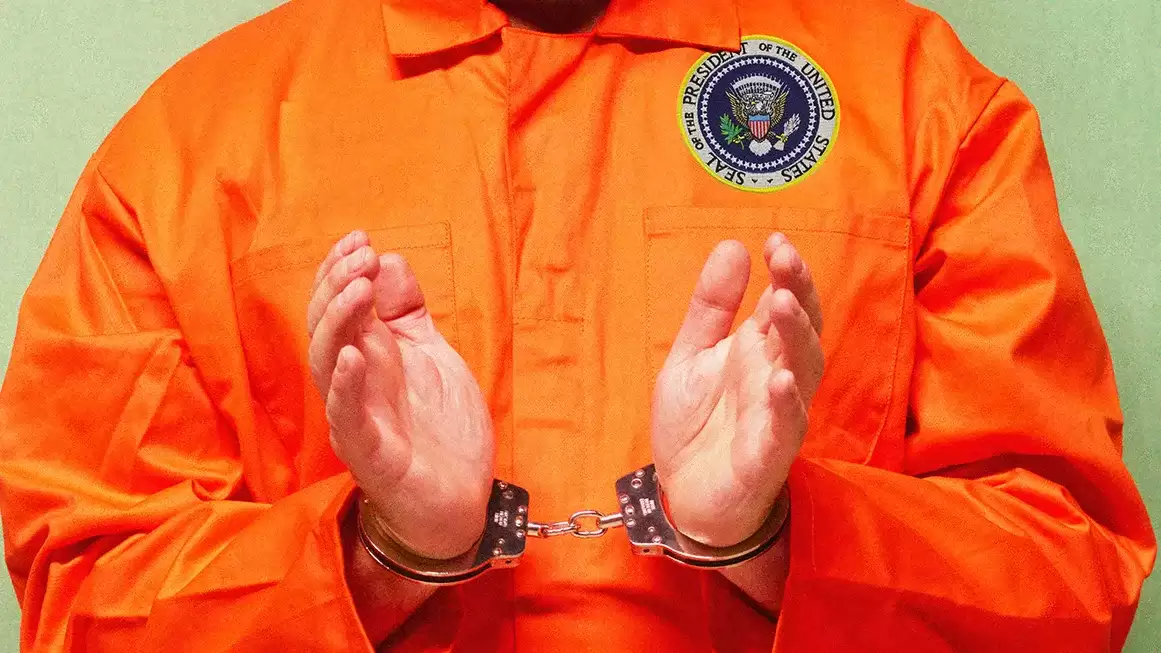 It has been awhile since I've had a piece in a print issue of Reason, and I'm particularly delighted that this time I get cool cover art. The article is now available digitally (but of course you should also subscribe to the print magazine, if you do not already do so).



