The Supreme Court issued nine opinions in two days this week as the justices work to finish up October Term 2023. The justices have decided forty-seven cases thus far, with fourteen left to go (though these fourteen may be decided in as few as twelve opinions). Wednesday, June 26 will be the next opinion day. If the justices are ready to issue four or five opinions per day, they could meet the traditional-if-informal deadline of ending their work before July.
As I have noted before, the justices have shown a surprising degree of unanimity thus far this term. (See also this post by Adam Feldman at Empirical SCOTUS.) The Court has been unanimous in the judgment in 55 percent of the cases decided this term. Note, however, that in some of these cases the justices have diverged sharply in their reasoning, and not all of those cases featured a unanimous opinion for the Court. Today's opinion in Smith v. Arizona is a case in point, as are Trump v. Anderson and Vidal v. Elster. Given the cases left for the justices to decide, the overall proportion of unanimous decisions is likely to drop.
Among those cases that were not unanimous, two were 8-1, three were 7-2, thirteen were 6-3, and three were 5-4. Of note, only five of the Court's 6-3 decisions thus far this term divided the justices along traditional ideological lines. Some of those cases have also featured quite surprising line-ups, such as today's decision in Erlinger v. United States, in which Justice Gorsuch wrote for the Court, joined by the Chief Justice and Justices Thomas, Sotomayor, Kagan, and Barrett, while Justices Alito, Kavanaugh and Jackson dissented.
In terms of individual opinion authorship, here is where we stand.
Sotomayor: 7
Thomas: 7
Kagan: 6
Kavanaugh: 5
Jackson: 5
Alito: 4
Barrett: 4
CJ Roberts: 3
Gorsuch: 3
There have also been three per curiam opinions, and some cases are likely to be merged into a single opinion (e.g. the two Chevron cases, Relentless and Loper-Bright will almost certainly be decided in a single opinion; we'll see if that happens with the two NetChoice cases).
Thus far this term, the "liberal" justices have written thirty-eight percent of the opinions for the Court, despite representing only one-third of the Court. This leads me to think we will few (if any) additional decisions authored by Justices Sotomayor, Kagan, or Jackson -- though I think one more Jackson opinion is likely.
Now, for what you've all been waiting for, my purely speculative predictions for what we may see for the balance of the term.
SEC v. Jarkesy - Gorsuch
Purdue Pharma - Roberts
Loper Bright/Relentless - Roberts
Corner Post - Gorsuch
Ohio v. EPA- Barrett (a change from prior prediction of Kavanaugh)
NetChoice - Alito (though likely a splintered mess across the two cases)
Murthy - Barrett (a change from prior prediction of Gorsuch)
Snyder - Jackson
Fischer - Gorsuch
Grants Pass - Alito
Moyle v. U.S. - Kavanaugh
Trump v. U.S. - Roberts
As always, these predictions are worth no more than you paid for them, though I will note that I correctly calledRahimi, Texas v. New Mexico and Smith but not Erlinger.
In this, the court agrees with the Florida Attorney General and the Governor’s office, and disagrees with the challengers who are trying to get the statute struck down on First Amendment grounds.
From DeSantis v. Dream Defenders, decided today by the Florida Supreme Court, in an opinion by Justice John Couriel, joined by all his colleagues other than Judge Jorge Labarga:
Today we answer a certified question from the United States Court of Appeals for the Eleventh Circuit about the meaning of Florida's law prohibiting riot, section 870.01(2), Florida Statutes (2021). At bottom, the question is whether that law applies to a person who is present at a violent protest, but neither engages in, nor intends to assist others in engaging in, violent and disorderly conduct. And the answer is: no, it does not….
In 2021, the Legislature passed the "Combatting Violence, Disorder, and Looting, and Law Enforcement Protection Act," or Florida House Bill 1 (HB 1). See ch. 2021-6, § 15, Laws of Fla. Among other things, HB 1 amended section 870.01(2), Florida Statutes (2020), to define the crime of "riot":
A person commits a riot if he or she willfully participates in a violent public disturbance involving an assembly of three or more persons, acting with a common intent to assist each other in violent and disorderly conduct, resulting in:
(a) Injury to another person;
(b) Damage to property; or
(c) Imminent danger of injury to another person or damage to property.
Soon after HB 1 took effect, a group of plaintiffs—the appellees here {Dream Defenders, Florida State Conference of the NAACP, Black Collective Inc., Chainless Change Inc., and Black Lives Matter Alliance Broward}—sued Governor Ron DeSantis, three Florida sheriffs, and Attorney General Ashley Moody … to enjoin them from enforcing section 870.01(2)….
Two public university professors were disciplined for posting fliers saying a colleague was racist, and that a student group (Turning Point USA) was a racist "national hate group" with "ties to white supremacy."
Dr. Julia Gruber and Andrew Smith … are professors at Tennessee Technological University (TTU). They … [sued Dr. Lori] Bruce, who is TTU's provost and vice president for academic affairs, … alleg[ing] claims of First Amendment retaliation … based on discipline that Bruce imposed on Gruber and Smith after they distributed flyers on campus. The flyers included a photograph of another professor, Dr. Andrew Donadio, and stated that (1) Donadio is a racist who was helping start a chapter of Turning Point USA at TTU, (2) Turning Point USA is a national hate group that allows racist students to unite to harass, threaten, intimidate, and terrorize minorities and other groups, and (3) Donadio and Turning Point USA are not welcome at TTU….
To establish a First Amendment retaliation claim, a plaintiff must show that she engaged in private, constitutionally protected speech or conduct, the defendant took an adverse action against her that would deter a person of ordinary firmness from continuing to engage in that conduct, and the adverse action was motivated at least in part by the protected conduct.
When deciding whether the plaintiff engaged in protected activity, we first determine whether the action constitutes speech on a matter of public concern, and if it does, we apply the "Pickering balancing test" to determine whether the plaintiff's interest in commenting outweighs the defendant's interest as an employer in promoting the efficiency of the public services it performs through its employees. The balancing test considers the manner, time, and place of the expressive action, and the pertinent considerations include whether the action (1) impairs discipline by superiors or harmony among coworkers, (2) negatively affects close working relationships for which personal loyalty and confidence are necessary, (3) impedes performance of the speaker's duties or interferes with the employer's regular operations, and (4) undermines the employer's mission….
TTU does not dispute that the district court properly concluded that the plaintiffs' speech was a matter of public concern. Even so, as the district also properly concluded, the plaintiffs' distribution of the flyers was not protected speech because their speech interest was outweighed by TTU's interest in preventing a disruption to its pedagogical and collegial environment….
Judge Jerry Smith of the United States Court of Appeals for the Fifth Circuit has responded to my June 19th post on this blog by e-mail with a critique. My earlier blog post said that the fact that 90% of federal court of appeals decisions are designated as "unpublished" is a growing threat to the rule of law.
Judge Smith does point out correctly that Federal Rule of Appellate Procedure 32.1 states that (for federal courts only): "[a] court may not prohibit or restrict the citation of federal judicial opinions [or] orders designated as 'unpublished' ***"." Rule 32.1, by the way, applies only to decisions issued after 2007 -- two years after I had stopped teaching Federal Jurisdiction. Before that judges in some jurisdictions could prohibit or restrict the citation of federal judicial opinions or orders by calling them "unpublished".
I am happy to hear that the aspiration of many inferior federal courts not to prohibit the citation of their "unpublished" precedents or orders has now been rendered unlawful as well, as its having always been unwise. Note that this rule does not say that federal courts of appeals are bound by stare decisis to follow their prior "unpublished" opinions. The fact remains, as I stated in my June 19th post, that the federal court of appeals judges are rendering 90% of their decisions in cases that do not bind them as precedent in future cases.
Admittedly most "unpublished" opinions address an issue that has been, as Judge Smith puts it, "definitively decided." If so, all future unpublished opinions should be binding precedent on future panels, which Judge Smith essentially agrees is not the case today. Otherwise, their issuance is, as I said on June 19th, a growing threat to the rule of law.
Judge Smith notes that I erred in suggesting that the Supreme Court never issues a writ of certiorari on an unpublished opinion. I stand corrected on that point.
But, I still think that a U.S. Supreme Court that hears only 60 appeals from the 42,000 decisions issued annually by the federal courts of appeals, not to mention the federal questions decided annually by the State Supreme Courts, see Trump v. Anderson, 601 U.S. 100 (2024) (reversing the Colorado Supreme Court), is much less likely to grant certiorari on an opinion that is not a precedent, than they are to grant certiorari on cases that do create a precedent. After all, the Supreme Court does not sit as a court to correct errors anymore. It only grants certiorari in 3% of the cases before it where there is either: 1) a circuit split; or 2) a question of law of general and public importance. A non-binding unpublished opinion is unlikely to be of general and public importance and should never be issued where there is a circuit split.
An earlier version of this post included material that I now regret posting and that I now retract.
The importance of questions was in this ratio: first, costs; second, pleading; and third, very far behind, the merits of the case.
That's quoted in Ben Kremer, The Origin of the Usual Undertaking as to Damages When Obtaining Interlocutory Injunctive Relief, 17 J. Equity 211, 225 (2024). Kremer's paper is outstanding and shows the history and normative basis for injunction bonds. And if you aren't reading the Journal of Equity, you should be!
The Supreme Court has nineteen remaining cases to be decided. There will likely be fewer majority opinions as Loper Bright/Relentless and the NetChoice cases will probably be consolidated. To make the math easier, there will probably be seventeen actual opinions handed down.
The Court has scheduled an opinion day for tomorrow, Friday, June 21. Next week there will probably be days added for Tuesday, Thursday, and Friday. One wrinkle is that there will be a presidential debate the evening of Thursday, June 27.
The last time the Supreme Court intersected with a presidential debate was on February 13, 2016. That afternoon, Justice Scalia's death was announced, and that evening, Donald Trump told us he would fill the seat with Judges Pryor or Sykes. (For those keeping track at home, neither judge was placed on the Supreme Court.)
Does the Court really want the debate to turn into a free-for-all on presidential immunity. Methinks not. In the past, I've speculated that the Court (really the Chief) tries to stagger out opinions to minimize the press scrutiny--combining some conservative and some liberal opinions on a given day. If so, then the biggest cases all may come down on Friday, June 28--after the debate. And, if my math is right, Chief Justice Roberts may write each of them Rahimi, Loper-Bright/Relentless, and Trump. And they would be announced back-to-back. I think it is very unlikely that Roberts would allow any of those cases to mar the debate.
Here we go. Seventeen opinions spread over four hand-down days. The next week will be busy.
Today the Supreme Court decided Gonzalez v. Trevino. The case was argued in March. One would expect that the Court would issue a regular signed opinion that notes the authorship of the majority opinion. But the Court did something different. It issued a five page per curiam opinion, reversing the Fifth Circuit. The upshot of a PC opinion is that we do not know for sure who joined it. Justice Alito wrote a sixteen-page concurrence, Justice Kavanaugh wrote a two-page concurrence, and Justice Jackson wrote a two-page concurrence joined by Justice Sotomayor. For sure, Alito, Kavanaugh, Jackson, and Sotomayor joined the majority. But who was the fifth vote? It was not Justice Thomas, since he dissented.
We do not know how Chief Justice Roberts and Justices Kagan, Gorsuch, and Barrett voted.
Why is this a per curiam opinion? It is possible that Justice Alito was assigned the majority opinion, but lost it, and the Chief came in to salvage the majority with a narrow per curiam. At present, Alito does not have any assignments from the March sitting.
Another possibility: at least one of those four did not want to signal their joining of the majority, but also did not want to join Justice Thomas's dissent. My guess is on Justice Gorsuch, who tends to be very skeptical of law enforcement matters, but one cannot be sure of these things. This case fractured the Fifth Circuit in an usual way:
In the en banc poll, six judges voted in favor of rehearing (Smith, Higginson, Ho, Duncan, Oldham and Douglas), and ten voted against rehearing (Richman, Jones, Stewart, Elrod, Southwick, Haynes, Graves, Willett, Engelhardt and Wilson).
Judge Ho wrote a dissent from denial of rehearing en banc. I'm sure Judges Ho, Duncan, and Oldham will be feted with praise.
On the whole, today was a very slow day. There is an opinion day scheduled for tomorrow, Friday. Next week we will probably have 2 or 3 decision days. That is only a few slots to hand down about twenty opinions! It will be busy.
I will not be by my computer tomorrow morning during hand-down time, so any updates will come later.
Courts sometimes adopt highly counterintuitive interpretations of words. In 2022, a California court notoriously ruled that bees qualify as fish. Today, in Sojenhomer v. Village of Egg Harbor, the Supreme Court of Wisconsin ruled that a sidewalk is not a "pedestrian way." They thereby enabled local governments to use eminent domain to condemn property to build sidewalks, despite a state law forbidding the use of eminent domain to take property for "pedestrian way[s]." The close 4-3 decision might become a staple of law school textbooks.
It may seem obvious that a sidewalk is, in fact, a pedestrian way. Indeed, as the court notes, the relevant statute defines a "pedestrian way" as "a walk designated for the use of pedestrian travel." That seems to pretty obviously include sidewalks! You don't have to be a property scholar like me to see that.
But the majority opinion by Justice Rebecca Frank Dallet emphasizes that "[t]he ordinary meaning of a statute is dictated by more than the literal meaning of a single phrase, read in isolation." She argues that the statute uses "pedestrian way" and "sidewalk" in ways that indicate the two are supposed to be separate and distinct concepts:
Reading the text of this section as a whole, we find several indications that the definition of pedestrian way does not include sidewalks. For starters, both § 346.02(8)(a) and (b) use the terms "sidewalk" and "pedestrian way" in ways that signify that each term has a separate, non-overlapping meaning….
Section 346.02(8)(b) states that pedestrian ways shall be treated "as if" they were sidewalks for utility installation and assessment purposes. The phrase "as if" signals that one category (pedestrian ways) should receive the same treatment as a different category (sidewalks)….
The language of § 346.02(8)(a) also suggests that sidewalks are not pedestrian ways. That paragraph makes the rules of the road pertaining to sidewalks also applicable to pedestrian ways. But if sidewalks are pedestrian ways, then the rules of the road applicable to sidewalks would already apply to pedestrian ways. The point here, to be clear, is not that reading the term "pedestrian way" to include sidewalks would result in surplusage….
These arguments are clever. But I don't think they overcome the definition of "pedestrian ways" spelled out in the text of the statute: "a walk designated for the use of pedestrian travel." When the legislature specifically defines a term, that definition trumps any indirect contextual inferences that judges can extract from other passages in the law.
Sometimes, a term might have a specialized technical meaning in a statute that is different from its ordinary language meaning. But that isn't the case here. The legislature specifically defined the term in a way that precludes interpreting it as a convoluted "term of art."
In addition, the seeming anomalies identified by the majority are effectively dealt with in Chief Justice Annette Kingsland Ziegler's dissent:
The plain language of the statute demonstrates that the term "pedestrian way" is broadly defined, and includes sidewalks. A sidewalk — that portion of the highway created for the travel of persons on foot — is clearly a subset of pedestrian ways —walks set apart or assigned for the use of pedestrian travel. It is a straightforward, common sense interpretation of the statutory language that a "walk designated for the use of pedestrian travel" necessarily includes that part of the highway "constructed for the use of pedestrians…"
[I]n other words, a closer look at the plain meaning of the statutes reveals that all sidewalks are pedestrian ways, but that not all pedestrian ways are sidewalks….
I acknowledge that Wis. Stat. § 346.02(8) employs both the term "sidewalk" and the term "pedestrian way" in two separate sentences, in close proximity. And under some circumstances, these things might suggest that the terms have wholly distinct meanings. But a logical answer exists to this assumption: A sidewalk is always a pedestrian way, but the term "pedestrian way" is broader than solely being a sidewalk….
Once you recognize that "all sidewalks are pedestrian ways, but that not all pedestrian ways are sidewalks," then there is no mystery created by statutory language that, for example, says pedestrian ways must be treated "as if" they are sidewalks. The meaning of that section is that the rules applying to sidewalks also apply to pedestrian ways, even those that are not sidewalks. And, as the Chief Justice points out, that latter category includes a lot of things, such as "a skywalk or a walking path in a public park not adjacent to the highway."
I would add that the eminent domain context is also notable here. In Wisconsin, as in many other states, statutes granting the power of eminent domain must be "strictly construed" against the government. As a previous Wisconsin Supreme Court decision put it, courts must "strictly construe the condemnor's power . . . while liberally construing provisions favoring the landowner." If the government is going to use the "despotic power" of eminent domain, property owners should at least be given clear indication about the purposes for which their land might be taken.
The majority refused to apply this rule here, because it claimed that the relevant statutes are "not ambiguous" and clearly indicate the government can use eminent domain to condemn property to build sidewalks. That assertion is obviously wrong. It takes hyperconvoluted legal reasoning to reach the conclusion that a sidewalk is somehow not a "pedestrian way": the kind of legalistic mumbo-jumbo that leads people to hate lawyers!
Counterintuitive technical legal reasoning has its place. But the Wisconsin Supreme Court was wrong to deploy it here.
While the decision reaches a dubious result, it could be a useful teaching tool for law professors. To get around the obvious import of the text, the majority deploys a variety of complex arguments, not all of which I have covered here. And the dissent has good answers to them. The case can help students see various ways in which judges can use context to get around a seemingly clear textual meaning. But I think the majority opinion is ultimately an example of what not to do.
The government alleges that Nikhil Gupta was involved in a "plot, directed by an employee of the Indian government, to target and assassinate a U.S. citizen for his support of the Sikh separatist movement in India."
Nikhil Gupta, also known as Nick, 53, an Indian national, was arrested and detained in the Czech Republic on June 30, 2023, and extradited pursuant to the bilateral extradition treaty between the United States and the Czech Republic. Gupta arrived in the United States on June 14 and was presented on the charges today.
"This extradition makes clear that the Justice Department will not tolerate attempts to silence or harm American citizens," said Attorney General Merrick B. Garland. "Nikhil Gupta will now face justice in an American courtroom for his involvement in an alleged plot, directed by an employee of the Indian government, to target and assassinate a U.S. citizen for his support of the Sikh separatist movement in India…."
"This murder-for-hire plot — allegedly orchestrated by an Indian government employee to kill a U.S. citizen in New York City — was a brazen attempt to silence a political activist for exercising a quintessential American right: his freedom of speech," said Deputy Attorney General Lisa Monaco….
Juneteenth celebrates a great American achievement, and a triumph for the nation's Founding principles. Also, the culture war over the holiday is lame, and hopefuly coming to an end.
Today is Juneteenth, the holiday commemorating the abolition of slavery in 1865—established as an official federal holiday in 2021. In 2021 and 2023, I wrote posts on the meaning of Juneteenth, and why culture war-driven attacks on it are lame, and should stop (they seem less common this year). Most of the points made then remain relevant, and I reprint them in this post with some modifications and additions:
Juneteenth commemorates the abolition of slavery in 1865. Some conservatives who opposed its establishment as a national holiday argued it might somehow detract from Independence Day on July 4, or promote left-wing identity politics. For their part, some on the left may view it as a condemnation of America's history of slavery and racism, or even a celebration of black nationalism.
In reality, however, the abolition of slavery was the greatest achievement of the universal principles underlying the American Revolution, and a rebuke to ethnic nationalism and separatism. Slavery was America's worst injustice, and its abolition is obviously worthy of celebration.
Abolition was only achieved thanks to a multiracial movement that emphasized the universality of the right to liberty, and the moral arbitrariness of distinctions based on race.
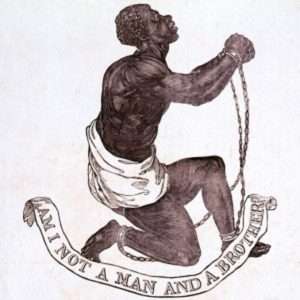
Josiah Wedgewood's famous 1787 image created for the antislavery movement.
It is no accident that the antislavery movement was also accompanied by what historian Kate Masur calls "America's First Civil Rights Movement," which sought equal rights for blacks that went beyond simply abolishing slavery.
While the hypocrisy and contradictions were very real, so too is the fact that Revolution and Founding made abolition possible, in part by giving a boost to universalistic Enlightenment liberalism on both sides of the Atlantic. Among other things, the Revolution inspired the First Emancipation in the US (the abolition of slavery in the North that became the first large-scale emancipation of slaves in modern history). Without the First Emancipation, we could not have achieved the second and greater one.
Those principles are at the root of most of America's achievements, of which the abolition of slavery was among the most important. They are also what enabled America, at its best, to offer freedom and opportunity to people from a wide range of racial and ethnic backgrounds from all over the world.
But the Juneteenth holiday is nonetheless meant to commemorate the end of slavery as a whole, and that is in fact how it has been understood for many decades, long before it became a federal holiday. June 19 is the traditional date for commemoration of abolition, even if it is not the anniversary of the day on which the last vestiges of slavery were actually banned. Similarly, we celebrate Independence Day on July 4, even though July 2, 1776 was the date when the Continental Congress actually voted for independence, and independence was not fully achieved until the Treaty of Paris ended the Revolutionary War in 1783. Until that latter date, large parts of the US remained under British control.
Ultimately, the holiday commemorates a great achievement, even if that achievement was not fully completed on any one day, and in some ways remains incomplete even now. The struggle for freedom is ongoing, and never fully won. But there can still be great milestones along the way, of which the abolition of slavery was likely the most important.
Abraham Lincoln, the president who issued the Emancipation Proclamation whose belated enforcement Juneteenth celebrates, put it best in his famous speech on the Declaration of Independence and its implications for slavery:
I think the authors of that notable instrument intended to include all men, but they did not mean to declare all men equal in all respects…. They did not mean to assert the obvious untruth, that all were then actually enjoying that equality, or yet, that they were about to confer it immediately upon them…
They meant simply to declare the right, so that the enforcement of it might follow as fast as circumstances should permit.
They meant to set up a standard maxim for free society which should be familiar to all: constantly looked to, constantly labored for, and even, though never perfectly attained, constantly approximated, and thereby constantly spreading and deepening its influence and augmenting the happiness and value of life to all people, of all colors, every where.
The success of the antislavery movement's appeal to liberal universalism has been a model for later expansions of freedom, as well - including equal rights for women, the Civil Rights Movement of the twentieth century, and the struggle for same-sex marriage. It is a model that advocates of migration rights would do well to emulate today.
The work of fully living up to the ideals of the Founding wasn't completed in Lincoln's time, and it remains seriously incomplete even now. But Juneteenth commemorates perhaps our greatest step in the right direction. And it reminds us that further progress towards liberty and equal rights depends on applying the same principles that made abolition possible.
As noted in earlier posts here, here, and here, I represent some of the families who lost loved ones in the crashes of two Boeing 737 MAX aircraft. This short post provides a quick update on the latest developments, as in the next few weeks the Justice Department will make important decisions about Boeing's prosecution. My families seek aggressive prosecution of what has properly been described as the deadliest corporate crime in U.S. history.
Here's a quick recap of the current situation: Following a criminal investigation by the Justice Department, in January 2021, Boeing admitted that it concealed safety issues with the aircraft from the FAA—and negotiated a secret deferred prosecution agreement (DPA) apparently resolving its criminal liability for its deadly conspiracy to defraud the FAA. In the DPA, Boeing committed to undertaking efforts to improve its corporate compliance with regulatory and safety obligations.
But since then, in October 2022, the district judge handling the case (Judge Reed O'Connor in the Northern District of Texas) has concluded that the 346 families who lost family members in the crashes represent "crime victims" and that their Crime Victims' Rights Act (CVRA) rights were violated by the Department secretly negotiating the DPA.
And then last month, the Justice Department concluded that Boeing had breached its commitment in the DPA to improve safety at the company—a conclusion that seems supported by an almost daily barrage of news about safety concerns at Boeing and with its aircraft. The Department is currently considering how to move forward with prosecuting Boeing and has asked the victims' families for their views.
Notably, a criminal charge has already been filed against Boeing in the Fort Worth Division of the Northern District of Texas. That pending charge alleges that Boeing conspired to defraud the FAA about safety issues associated with the 737 MAX. Under the DPA, the criminal prosecution of Boeing was deferred. But now that Boeing has breached its DPA obligations, the pending criminal charge against it needs to move forward through the ordinary criminal justice process.
Under the DPA, the Speedy Trial clock for proceeding with the conspiracy charge against Boeing was tolled until July 7, 2024. So it seems likely that the Justice Department—and Judge O'Connor—will want to have a schedule in place for moving forward with the case before that date.
Earlier today, I sent the linked 32-page letter to the Department, outlining the position of my families as to how the Department's prosecution of Boeing should proceed. Here are some of the opening paragraphs from the letter, which seeks aggressive prosecution of Boeing:
As explained in more detail below, Boeing's crime produced losses in excess of $12,390,000,000, meaning the maximum possible fine is $24,780,000,000. Because Boeing's crime is the deadliest corporate crime in U.S. history, a maximum fine of more than $24 billion is legally justified and clearly appropriate, although it might be partially suspended if funds that would otherwise be paid are devoted to appropriate quality control and safety measures. This letter explains the calculations underlying this conclusion and further sets out the families' views more broadly on how Boeing and responsible corporate executives should be prosecuted.
In overview, as explained in greater detail in my letter to you of June 4, the families continue to believe the appropriate action now is an aggressive criminal prosecution of The Boeing Company. The Justice Department should promptly ask Judge O'Connor to schedule a date for a jury trial within seventy days of July 7, 2024—as required by the Speedy Trial Act. In requesting a quick jury trial, the Department should note the families' right, as embodied in the Crime Victims' Rights Act (CVRA), to proceedings free from unreasonable delay. If Boeing requests plea negotiations, the
Department should not offer Boeing any concessions. If the Department seems likely to reach a tentative agreement with Boeing on plea concessions, the families request an opportunity to exercise their right under the CVRA to confer with the Department about any possible concessions. See 18 U.S.C. § 3771(a)(5) & (9).
Once Boeing is convicted at trial (or by pleading guilty "straight up" to the pending conspiracy charge), then it should receive a sentence reflecting its guilt for the deadliest corporate crime in U.S. history. It should be fined the maximum—$24,780,000,000—with perhaps $14,000,000,000 to $22,000,0000,000 of the fine suspended on the condition that Boeing devote those suspended funds to an independent corporate monitor and related improvements in compliance and safety programs as identified below. And Boeing's Board of Directors should be ordered to meet with the families.
The families also believe that the Department should launch criminal prosecutions of the responsible corporate officials at Boeing at the time of the two crashes, including in particular former Boeing CEO Dennis Muilenburg. Because time is of the essence to avoid any statute of limitations from running, the Department should begin these prosecutions promptly.
My letter today to DOJ follows on the heels of yesterday's high-publicized hearing by the Senate Permanent Subcommittee on Investigations. During the hearing, Boeing's CEO Dave Calhoun apologized to the families who lost loved one in the crashes. Calhoun was grilled by Senator Blumenthal (D-CT) and Senator Josh Hawley (R-MO). Senator Blumenthal called for prosecution of the Boeing executives who were responsible for the conspiracy, while Senator Hawley called for current CEO Calhoun's resignation. The video of the hearing is well worth watching, as it demonstrates bipartisan concensus that something is terribly wrong at Boeing.
I hope that the Justice Department will read my letter carefully and follow the steps that I recommend. Right now, Boeing's safety problems are harming its status as one of America's (formerly) great companies. A criminal prosecution that sets Boeing on a new and improved course is an important reform—for Boeing to restore its reputation.
Not because it's "scandalous" or "immoral," since the Supreme Court struck down that trademark restriction on First Amendment grounds in Iancu v. Brunetti(2019); rather, because it is so "commonplace" that people would just view it as the common phrase instead of an indicator of who is manufacturing the products (here, clothing).
We find, on the basis of the record as a whole, that FUCKSHITUP "does not create
the commercial impression of a source indicator, and does not function as a trademark
to distinguish Applicant's goods … and indicate their source." "Consequently, Applicant cannot appropriate the term exclusively to [himself], denying others the ability to use it freely," including as the three-word phrase FUCK SHIT UP.
The (heavily illustrated) case is In re Gatsby, decided by the Trademark Trial and Appeal Board on June 7, in an opinion by an Administrative Trademark Judge Christopher Larkin, joined by Judge Robert Coggins. The Urban Dictionary is cited heavily, though with a cautionary note:
From U.S. ex rel. Oberg & Camoin v. Nelnet, Inc., decided yesterday by the Fourth Circuit, in an opinion by Judge Julius Richardson, joined by Judge Barbara Milano Keenan and District Judge Elizabeth Dillon (W.D. Va.):
In 2007, Jon Oberg filed a lawsuit under the False Claims Act against various student-loan companies, including Nelnet, Inc., Nelnet Education Loan Funding, Inc., Brazos Higher Education Services Corporation, and Brazos Higher Education Authority, Inc. (together, Nelnet and Brazos). Oberg alleged that the companies submitted false claims to the Department of Education to inflate their loan portfolios eligible for interest subsidies. The parties consented to a magistrate judge deciding the case….
The parties filed various documents under seal, and he case ultimately settled while summary judgment motions were pending. Then, "[o]n March 31, 2023, Michael Camoin—a documentary filmmaker who covers the student-loan industry—filed a pro se letter in the district court requesting access to the materials that Oberg filed under seal in connection to his opposition to summary judgment." The Fourth Circuit ruled that the First Amendment provided a presumptive right of access to the documents:
So holds a federal court, also concluding that earlier sexual discussions could likewise justify restriction in the open public comment period (treated by the law as a “limited public forum,” in which reasonable and viewpoint-neutral restrictions are constitutional).
This case arises from a disruption at a Las Vegas City Council meeting. Stein, a Texas resident, traveled to Las Vegas and attended a City Council meeting on August 17, 2022. The complaint provides that Stein frequently speaks at municipal meetings and is known for using "humor to bring attention to serious social and political issues."
Stein alleges that he planned to bring attention to the exploitative practices of Las Vegas casinos and that he incorporated a humorous anecdote while speaking to City Council members. Before Stein's allotted time had expired, Mayor Goodman interrupted Stein, whose microphone was subsequently cut off. Fiore then ordered the marshals to remove Stein from chambers….
Nevada law allows for the ejection of a speaker from a public meeting if he "willfully disrupts a meeting to the extent that its orderly conduct is made impractical." …
Although the question of whether a person's actions are disruptive appears inherently subjective on the surface, Stein's conduct, combined with the totality of the circumstances, was in violation of both Nevada law and the City Council Code of Conduct.
Defendants points to Stein's language as disruptive. Stein stated the following before his microphone was muted: "I end up meeting a nice Filipino girl. I take her back to my hotel room … I ended up having a good time. We started kissing. We take off our clothes. She has male genitalia. She's a transgender." Subsequently, Mayor Goodman interrupted Stein and reminded him "[w]e're in a public venue" and asked if he could remain calm.
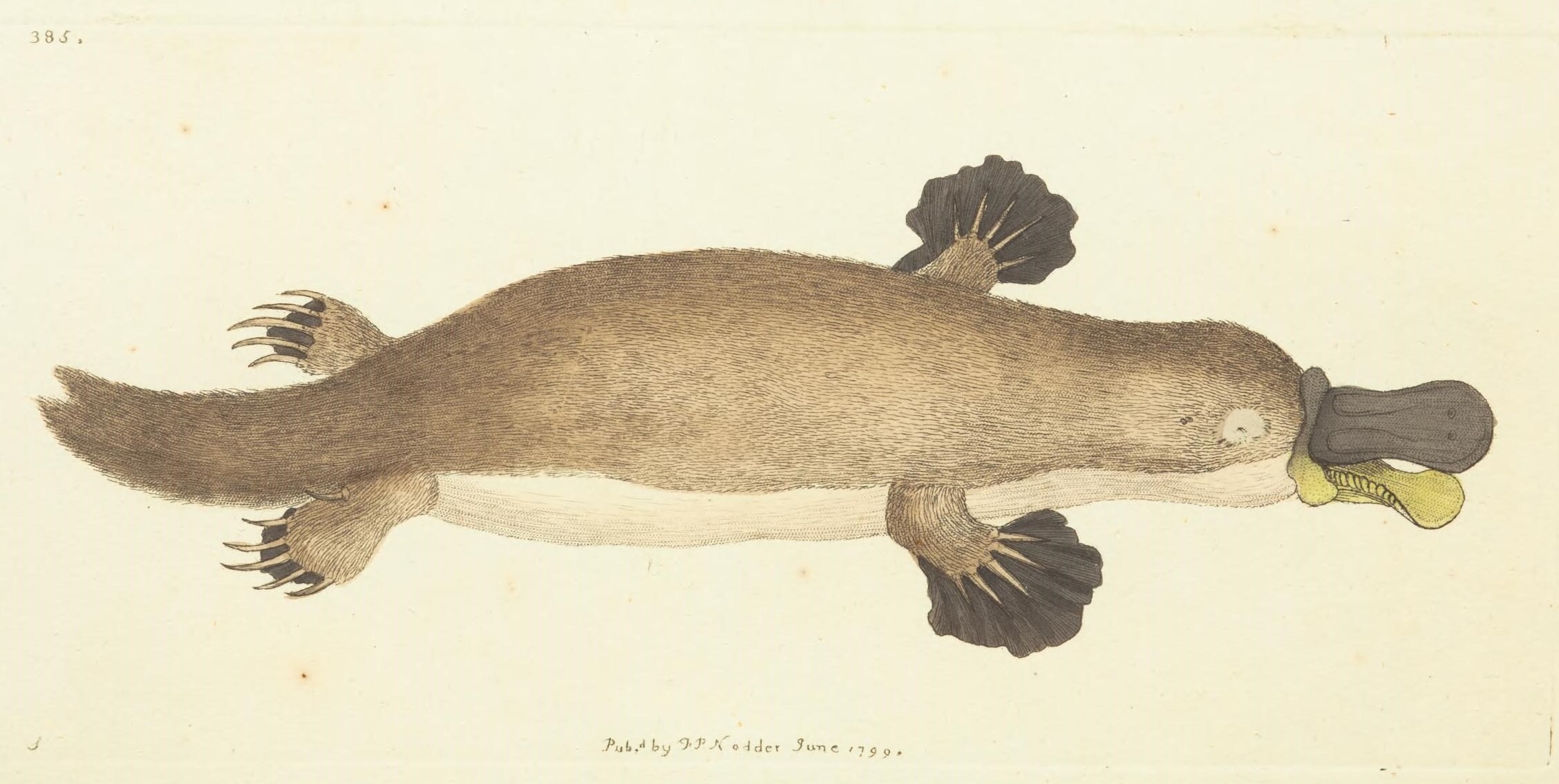
…I see a duck-billed platypus. Cf. Garland v. Cargill (Sotomayor, J., dissenting) ("When I see a bird that walks like a duck, swims like a duck, and quacks like a duck, I call that bird a duck."). Alas, a platypus does not quack.
But it is not pleasant when a duck meets the single function of a trigger.