The Volokh Conspiracy

Mostly law professors | Sometimes contrarian | Often libertarian | Always independent | Est. 2002

The Volokh Conspiracy

Free Speech

The First Amendment and the Social Media Dilemma

Social media poses problems far more serious than misinformation campaigns, but solutions consistent with the First Amendment are not clear.

|

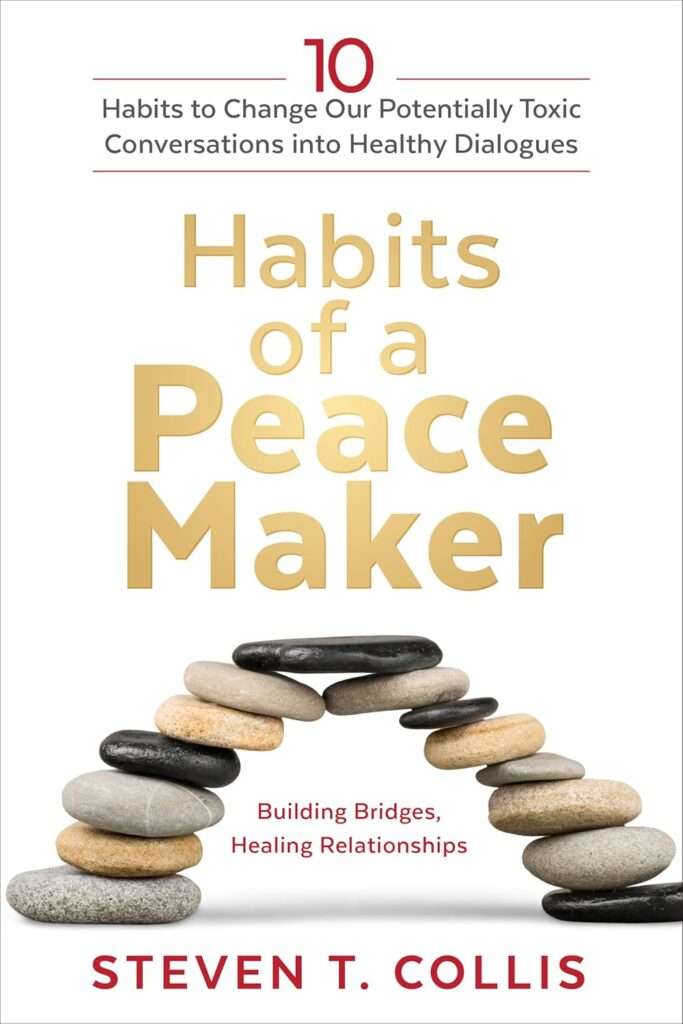
We have heard much lately from folks like Jonathan Haidt and Jean Twenge regarding the harms of smartphones and social media. These include a rise in anxiety, suicidality, and depression among young people, especially girls. They also include addiction for most adults and an increased polarization of society generally. But many of the solutions offered for these problems are questionable under existing First Amendment doctrines. We need continued scholarly effort into finding solutions, and that requires fully understanding the problem. What follows is an excerpt from Chapter 2 of my book Habits of a Peacemaker, "Seek Real Learning," and it provides just a brief introduction into part of what all of us are up against in the smartphone and social media era:

When we encounter something that brings us stimulation, our brains release dopamine. The effect of dopamine is usually pleasure, euphoria, the thrill of anticipation, and the desire to want to pursue the stimulant. When we eat a sugary treat, or have sex, or drink alcohol, or take drugs, or do anything else that stimulates us, our brains create dopamine. As Stanford addiction researcher Doctor Anna Lembke explains, "The more dopamine a [particular stimulant] releases in the brain's reward pathway … , and the faster it releases dopamine, the more addictive the drug." And once our brains release dopamine, they immediately begin to rebalance themselves by reducing the amount of dopamine they are creating. This is why we often feel additional cravings for something after enjoying it. As soon as the effect of the dopamine wears off, we find ourselves in a dopamine deficit, which causes us to want to seek out another hit of dopamine.

This is an important component to addiction. We experience something, our brains release dopamine, we feel euphoric (high), we crash, then we seek it again. This process becomes even worse if what we are addicted to is easily available. Research has proven this again and again. From drugs, to digital addictions, to alcohol, to pornography—the easier we can access a high dopamine-producing substance, behavior, or content, the more likely we are to become addicted to it.

All of this relates to smartphones and social media and their interference with our ability to engage in real learning and to be peacemakers. Every time we see a notice—of a like, a text, a comment, some interesting piece of news, a million other things—our brains release a shot of dopamine. It feels good. So we look for the next one, and the next one, and the next one. Give anyone a smartphone, and within a short period of time, you will see them regularly grabbing and checking it. They are seeking, often subconsciously, that next hit of dopamine. So much so that many of us cannot go more than a few minutes without at least glancing at our phones to see if something is waiting for us. We see drivers do it at every red light. We see people do it during movies at the theater.…

Read More

Politics

New Essay: Coping With a Court One Disagrees With

"The time is ripe for liberal and progressive professors, especially those who are having trouble coping with the current Supreme Court, to consider adopting our narrative approach to the constitutional canon and anticanon."

|

Randy Barnett and I have written a new essay, titled Coping With a Court One Disagrees With. This essay was inspired, in part, by a recent New York Times article that identified a "crisis" in teaching constitutional law. In our view, there is no crisis. But we can relate with professors who are having difficulty teaching decisions they disagree with. We've done it for the entirety of our careers. We suggests that our method of teaching may be useful for liberal and progressive professors who are having trouble coping with the current court.

Here is the abstract:

Is there a "crisis" in teaching constitutional law? In our view, there is not. Still, we can empathize. As libertarian-conservative-ish law professors, for years we taught Supreme Court decisions that we disagreed with. We teach constitutional law as a historical narrative that began at the founding and continues to this day. The narrative approach underscores the contingent nature of what at any given time appears to be fixed and unchangeable. The narrative also remains remarkably stable from year to year even as new cases are added. This approach also makes preparing one's syllabus relatively easy to do each year, regardless of what the Supreme Court may have decided in its most recent term.

The pedagogy we developed was premised on a Supreme Court jurisprudence we largely disagreed with. Indeed, we still disagree with much of this jurisprudence, especially the cases that were decided right before, during, and after Reconstruction. While some of these cases, like Prigg, Dred Scott, and Plessy are now in the anti-canon, others like Slaughter-House, Cruikshank, and the Civil Rights Cases remain good law. This pedagogy worked before 2016 and it will continue to work no matter what happens in the future. We submit that the time is ripe for liberal and progressive professors, especially those who are having trouble coping with the current Supreme Court, to consider adopting our narrative approach to the constitutional canon and anticanon.

Part I of this essay focuses on our approach to teaching the constitutional cannon. Part II traces the evolution of our casebook from the First Edition to the Fourth Edition, and previews the forthcoming Fifth Edition. We demonstrate that the narrative about the development of the constitutional canon has remained remarkably stable. Even after accounting for the recent terms, our syllabus will be about 90% the same as it was in 2019. Part III addresses how we, and other like-minded law professors, managed to teach decisions that we fundamentally disagreed with. For those professors who are pained by the Supreme Court's current doctrines, our narrative approach provides succor. Such professors can, for example, teach what they believe to be "the good old days" of the Warren and Burger courts in contrast to what now exists. Students can then decide for themselves which era they prefer.

We welcome comments. And if any professors are interested, we are happy to provide review copies of our casebook for adoption.

We are also pleased to report that the twelve-hour video library from An Introduction to Constitutional Law will soon be posted on YouTube at no-cost, courtesy of the Foundation for the Constitution.

Second Amendment

Malcolm Gladwell's Invented Facts Make Good Stories

His "Revisionist History" podcast can amount to historical fiction

|

Being the son of two lawyers, I encountered cultural differences when I married into an Irish-American family. My new relatives were excellent story-tellers, and to them, the quality of the story was independent of its literal veracity. After a few years, I learned that when my wife is telling a story, even a story which I was a character, I should not interrupt her to correct any detail. The factual accuracy of any given detail was much less important — in fact, unimportant — compared to what the detail could contribute to an interesting yarn. So too with Malcolm Gladwell, host of the Revisionist History podcast. His tales are well-told; just don't confuse his revised narrations with actual history.

A case in point is the first episode of his 2023 gun control series, The Sudden Celebrity of Sir John Knight. To see how he revises facts to improve a story, consider a tale of his that makes me look better than in real life.

In 1686, Sir John Knight, of Bristol, England, was charged with violating the 1328 Statute of Northampton. The statute forbade the English "to go nor ride armed by night nor by day" under listed circumstances. According to the indictment, Knight "did walk about the streets armed with guns, and that he went into church of St. Michael, in Bristol, in the time of divine service, with a gun, to terrify the King's subjects."

Knight was acquitted by the jury. The presiding judge was the Chief Justice of King's Bench. His statements on the legal interpretation of the Statute of Northampton were reported by two reporters. Sir John Knight's Case, 87 Eng. Rep. 75, 3 Modern Rep. 117 (K.B. 1686); Rex v. Sir John Knight, 90 Eng. Rep. 330; Comberbach 38 (K.B. 1686).

How did this 1686 case become known to Americans? First, it was cited in William Hawkins' famous criminal law treatise, A Treatise of the Pleas of the Crown (1716, with 8 editions through 1824), for Hawkins' explanation of when carrying arms is and is not legal. The Hawkins treatise is tied for first as the most-owned imported criminal law book in colonial American law libraries. Herbert A. Johnson, Imported Eighteenth-Century Law Treatises in American Libraries 1700-1799 (1978). (Matthew Hale's The History of the Pleas of the Crown tied Hawkins for first.)

Hawkins' point that carrying arms is generally legal was cited by two American Justice of the Peace Manuals around the time of the Second Amendment. William Waller Hening, The New Virginia Justice 17-18 (1795); James Parker, Conductor Generalis; Or the Office, Duty and Authority of Justices of the Peace 11 (1st ed. 1764).

Besides the Hawkins treatise, another way that Knight's case likely became known was via George Wythe, of William and Mary. He was the first American law professor, and his large library included volume 3 of Modern Reports, and Comberbach, both of which reported the Knight case. Here is what Gladwell says:

David Kopel, once combed through the library of an 18th century law professor named George Wythe, who taught law to a supreme court justice, a couple of presidents, some founding fathers, and he found that John Knight's name was all over law books back then.

The part about Wythe is true. He did teach the law to John Marshall, Thomas Jefferson, and many other Founders. The rest is false.

I have never been on the campus of William and Mary. The closest I ever came was chaperoning a school field trip at Colonial Williamsburg. If I had gone to the William and Mary campus, I could not have "combed through" Wythe's library, because it no longer exists. Wythe gave his library to Thomas Jefferson, who later donated it to the Library of Congress, which the British burned on August 19, 1814, during the War of 1812.

Because neither I nor any man alive have ever seen any of the physical books in Wythe's library, I never said that Wythe's library shows that "John Knight name was all over law books back then." To the contrary, Knight's name isn't even mentioned in the Hawkins treatise; rather, Hawkins just cites "3 Mod. 117, 118" as part of his support for the statement "That no Wearing of Arms is within the Meaning of the Statute [of Northampton] unless it be accompanied by such Circumstances as are apt to terrify the People . . . " 1 Hawkins at ch. 63, page 136.

What I actually did was spend a few minutes on William & Mary Law Library's website, Wythepedia: The George Wythe Encyclopedia, which catalogues all the books of Wythe's library. Finding out that Wythe owned the Hawkins book and the two reporters who covered the John Knight case took me just a few minutes. (Here are the William and Mary Library cites for Wythe's ownership of Hawkins, 3 Modern Reports, and Comberbach.)

Gladwell's invention of the library tale makes for better story-telling. It exaggerates the importance of Gladwell's own story about John Knight, with his name "all over the law books back then." Likewise, the invented story about me having "combed" through Wythe's library is more interesting than the actual facts of my doing a few minutes of Internet research into an online catalog for a library that ceased to exist over two centuries ago.

Read More

Frederick Douglass Praises the "Courage" Of Justice John Marshall Harlan

“In these easy going days [Harlan] should find himself possessed of the courage to resist the temptation to go with the multitude”

|

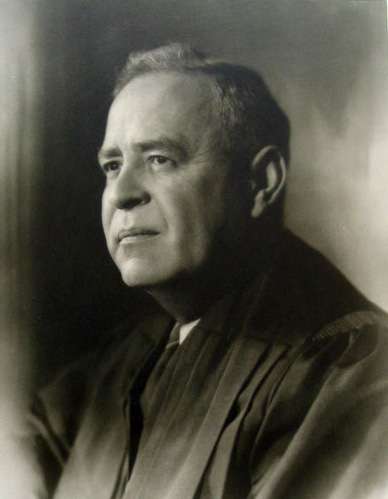
On Tuesday, I spoke at the Louisville Federalist Society Chapter about presidential immunity. After the debate, I was fortunate enough to visit the Library's special collections. The collection includes papers from Justice Louis Brandeis, the namesake of the law school, who is actually buried outside the building. The collection also includes papers from Justice John Marshall Harlan I. I have spent some time with Justice Harlan's papers at the Library of Congress. In 2013, I published a paper with Brian Frye and Michael McCloskey that transcribed Harlan's constitutional law lecture notes. (To this day, I use some of Harlan's lines in class--for example, when I tell my students that the Supremacy Clause is the most important provision in the Constitution; without it, everything else would fall apart.) Over the years, I've corresponded with Peter Scott Campbell, a librarian at Louisville. Campbell was kind enough to show me around the room.

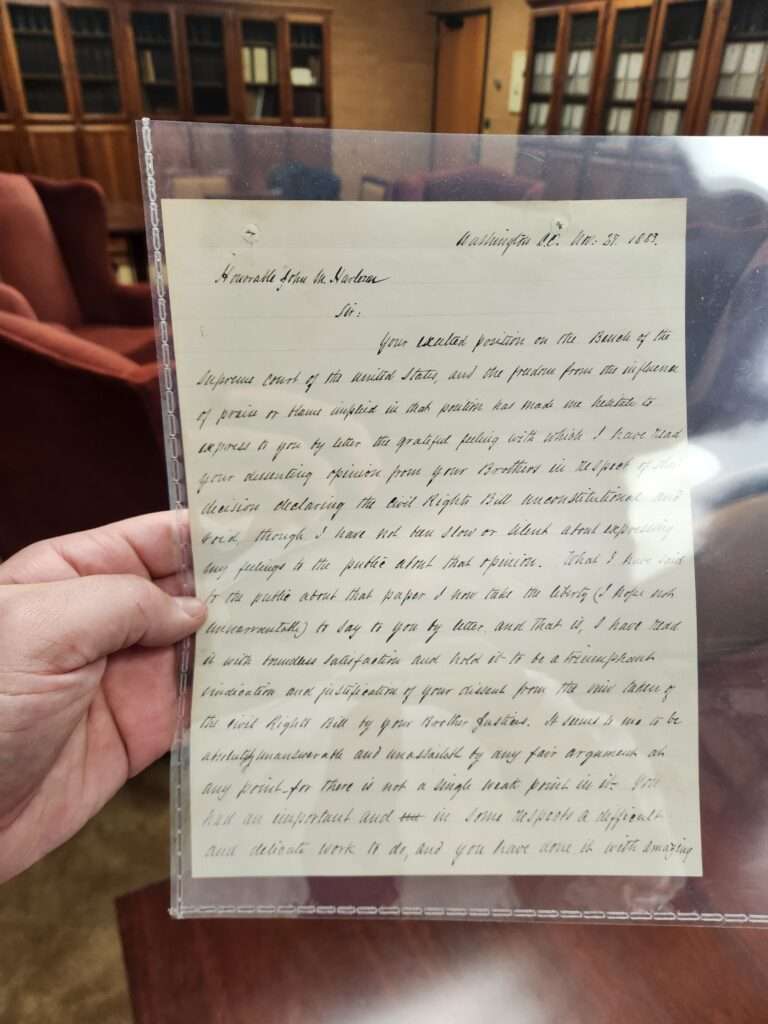
One of the coolest pieces I saw was a letter that Frederick Douglass wrote to Justice Harlan shortly after the Civil Rights Cases (1883) was decided. I encourage you to read the entire letter, which Campbell helpfully transcribed. Here is an excerpt:

[Harlan's dissent] seems to me to be absolutely unanswerable and unassailable by any fair argument at any point for there is not a single weak point in it. You had an important and in some respects a difficult and delicate work to do, and you have done it with amazing ability skill and effect. . . . I have nothing bitter to say of your Brothers on the Supreme Bench, though I am amazed and distressed by what they have done. How they could at this day and in view of the past commit themselves and the country to such a surrender of National dignity and duty, I am unable to explain. I have read what they have said, and find no solid ground in it. Superficial and [???], smooth and logical within the narrow circumference beyond which they do not venture, that is all.

To this day, I remain convinced that Justice Harlan was correct in the Civil Rights Cases. Had his view prevailed, the Court would have never needed to contort the Commerce Clause is Katzenbach and Heart of Atlanta Motel. And cases like United States v. Morrison would have come out differently. Moreover, if the Civil Rights Act of 1875 had been upheld, we never would have had Plessy, because a segregation law on a public conveyance would have been preempted by the federal bill. Everyone focuses on Plessy, but truly the root cause of the problem was The Civil Rights Cases, and if you want to go back a decade earlier, The Slaughter-House Cases.

Douglass also included an article he wrote in The American Reformer newspaper about Harlan's dissent. The first paragraph defends Harlan's decision on its own terms:

[Harlan] has felt himself called upon to isolate himself from his brothers on the Supreme Bench, and to place himself before the country as the true expounder of the Constitution as amended, and of the duty of the National Government to protect and defend the rights of citizens against any infringement of their liberty. The opinion which he has given to the country, as to the constitutionality of the Civil Rights Bill, places his name among the ablest jurists who have occupied the Supreme Court. No utterance from that Bench, since the celebrated and splendid opinion given by Judge Curtis against Judge Taney's infamous Dred Scott decision, has equaled this opinion in ability, thoroughness, comprehensiveness and conclusive reasoning. Compared with it the decision of the eight judges was an egg shell to a cannon ball. We are told in Scripture that one shall chase a thousand, but one opinion like this could put to flight ten thousand of such decisions as the thin, gaunt and hungry one which denies the constitutionality of the Civil Rights Bill, and the duty of the Federal Government to protect the rights and liberties of its own citizens. No man, unless blinded by passion, prejudice, or selfishness, can read this opinion without respect and admiration for the man behind it. Where the decision of the Court is narrow, superficial and technical, the opinion of Judge Harlan is broad and generous, and grapples with substance rather than shadow, with things as they are rather than with abstractions…

Read More

Free Speech

Attempt to Entirely Seal Title IX Complaint on Privacy Grounds Rejected

|

From Judge Dale Ho's decision today in Doe v. Columbia Univ. (S.D.N.Y.):

[T]hese cases concern allegations of sexual assault and that the events in question occurred from 2012 to 2014 or 2015, around the time that Plaintiff was an undergraduate student at Columbia University…. Plaintiff … filed identical letters seeking to proceed pseudonymously in each case …. In his letter motions seeking pseudonymous status, Plaintiff noted that his "Complaint includes sensitive health information regarding a sexual assault, and medical and psychiatric treatment for these assaults, which could have deleterious consequences if this information became public record." Plaintiff did not request that the Complaints be sealed altogether, but the Clerk of Court, as a precaution given Plaintiff's motions to proceed under a pseudonym, limited electronic docket access to Plaintiffs' Complaints to "court users and case participants."…

I moved to intervene and unseal the Complaint "with any necessary redactions of various people's personally identifying information" (but didn't oppose pseudonymity), and the court agreed; an excerpt:

First, there is no doubt that complaints are judicial documents. "A complaint, which initiates judicial proceedings, is the cornerstone of every case, the very architecture of the lawsuit, and access to the complaint is almost always necessary if the public is to understand a court's decision."

Second, a strong presumption of public access attaches to complaints. "Complaints have historically been accessible by default, even when they contain arguably sensitive information" and "public access to the complaint and other pleadings has a significant positive role … in the functioning of the judicial process." Under common law, because complaints are "highly relevant to the exercise of Article III judicial power," "the presumption of access is at its zenith."

Third, the Court … agrees that there are important countervailing privacy interests identified by Plaintiff, but concludes that these concerns can be accommodated via pseudonymity rather than through complete sealing of the Complaints. Indeed, Plaintiff publicly filed his Complaints and did not affirmatively request sealing of them, but rather sought only pseudonymity to protect his privacy interests. It was only in an abundance of caution that the Court, following a decision in the previous case brought by the Plaintiff, Doe I, ordered sua sponte that the Complaints be sealed. But the Second Circuit and district courts within it have generally addressed the type of serious privacy concerns raised by the Plaintiff by permitting pseudonymity and other limited redactions to protect personal information, while otherwise leaving the relevant judicial documents publicly available in redacted form….

Nevertheless, Plaintiff—despite having affirmatively sought only pseudonymity and not complete sealing of the Complaints—now argues that pseudonymity is insufficient to protect his interests, because (1) "[u]nsealing the complaints detailing my abuse would likely trigger a relapse of [my] symptoms and retraumatize me all over again"; and (2) even with pseudonymity, unsealing the details "of these allegations themselves could lead to the identification of plaintiff."

Read More

Free Speech

Psych Professor's Lawsuit Over Alleged Contract Nonrenewal Based on Speech About Gender Dysphoria Can Go Forward

Prof. Allan Josephson (formerly of the University of Louisville medical school) claims his contract wasn't renewed because "he expressed his thoughts on treating childhood gender dysphoria during a panel discussion sponsored by a conservative think tank [the Heritage Foundation]."

|

From Josephson v. Ganzel, decided yesterday by Sixth Circuit Judge Andre Mathis, joined by Judges Ronald Lee Gilman and Richard Allen Griffin:

The First Amendment protects popular and unpopular speech alike. Allan Josephson worked as a professor of psychiatry at a public university's [University of Louisville's] medical school. After developing an interest in the medical treatment of childhood gender dysphoria, he began publicly discussing his views on that topic.

In October 2017, he expressed his thoughts on treating childhood gender dysphoria during a panel discussion sponsored by a conservative think tank [the Heritage Foundation]. His commentary was unpopular with his coworkers and supervisors. Josephson believes that his superiors retaliated against him for the views he expressed during the panel discussion, ultimately culminating in the nonrenewal of his contract with the university after more than fifteen years of employment….

Josephson sued, and the Court of Appeals allowed the case to go forward:

Josephson argues that Defendants violated his First Amendment rights when they retaliated against him based on his remarks at the Heritage Foundation event….

Read More

Free Speech

Prof. Francesca Gino's Libel Claims Against Harvard Business School and Data Colada Dismissed

|

From today's decision by Judge Joun (D. Mass.) in Gino v. President & Fellows of Harvard College:

Professor Gino is an internationally renowned behavioral scientist, prolific author, researcher, and teacher who has received many awards and considerable media attention for her academic research regarding people's decision-making. She is currently employed by Harvard, as a tenured professor at the Harvard Business School ("HBS")….

The Data Colada Defendants are a trio of male professors and behavioral scientists who, since 2013, have published a blog called "Data Colada." In July 2021, the Data Colada Defendants approached HBS with concerns about perceived anomalies and alleged fraud in the data of four studies in academic articles authored by Professor Gino….

On June 13, 2023, …  [HBS] Dean Datar informed Professor Gino that she was being placed on unpaid administrative leave for two years, that she would receive no salary or benefits after July 31, 2023, and that he would request the commencement of tenure revocation proceedings ….

Gino sued Harvard for breach of contract, defamation and related torts, and invasion of privacy, and also sued the Data Colada Defendants for defamation and related torts. The court allowed the breach of contract claim to go forward, based on allegations of various procedural irregularities in the way the Harvard investigation was conducted.

But the court rejected Gino's defamation claim. It concluded that Prof. Gino is a public figure, based on the Complaint's stating "that Professor Gino is an 'internationally renowned behavioral scientist, author, and teacher' who 'has authored or co-authored countless journal publications, business articles, and books,' 'has regularly presented her work at conferences and has been invited to speak at some of the most prestigious colleges and universities in the world,' 'has received numerous honors and awards' internationally, and has had her work 'covered in numerous media outlets.'" It then went to analyze the libel claims this way:

Read More

Free Speech

#TheyLied Libel Claim Brought by N.Y. Mayoral Candidate Accused of Sexual Assault Can Go Forward

|

The case is Stringer v. Kim, decided Monday by N.Y. trial court judge Richard Latin; Scott Stringer is a former New York Assemblyman, New York City Comptroller, Manhattan Borough President, and prominent candidate for New York Mayor in 2021, and is apparently running for Mayor again.

Under New York's "anti-SLAPP statute," plaintiff had to show a "substantial basis" for his lawsuit in order for the case to go forward, and the court said that he did (though of course without deciding the facts):

Plaintiff has adequately plead a substantial basis for his claim of defamation. Plaintiff alleges that, on April 28, 2021, Defendant held a press conference in which she falsely accused plaintiff of sexually assaulting her 20 years earlier, while she worked for Plaintiff's campaign. Defendant also allegedly stated that Plaintiff groped her and put his hands down her pants without her consent. Plaintiff further alleges that Defendant repeated these accusations to the press and on social media throughout 2021 and that the accusations were repeated by Congresswoman Maloney in August 2022. These statements, if false, are defamatory per se.

Plaintiff has also adequately pled a substantial basis for actual malice. Plaintiff alleges Defendant engaged in a campaign to ruin his political career after he declined to give her a position in his campaign, and she went to work for his opponent. Plaintiff further alleges that, despite the alleged sexual assault having occurred 20 years earlier, Defendant first raised her allegations during Plaintiff's campaign for mayor, when Plaintiff was gaining momentum in his campaign and the allegations would be widely circulated[.] The defamatory statements were then repeated to the press by Congresswoman Maloney on August 20, 2022, shortly after Defendant attended a campaign event with Maloney, who was running against defendant's mentor.

Read More

Free Speech

Probation Condition Requiring Defendant to Remove "F Officer Rose" from His Car

|

From Monday's decision in City of Conneaut v. Wick, decided by the Ohio Court of Appeals, in an opinion by Judge Robert Patton, joined by Judge Mary Jane Trapp:

Appellant, Francis J. Wick ("Wick"), appeals the decision of the Conneaut Municipal Court, sentencing him to five years of unsupervised community control, a fine of $150, payment of court costs, and 30 days of suspended jail time on the condition that he complete an anger management course and remove "defamatory language" from the back of his vehicle….

This case arises from events that occurred on October 27, 2023. Wick was on Conneaut High School property using vulgar and offensive language in the presence of High School staff members and students. Wick admitted to the trial court that he used profanity towards staff and officials that day. Wick was on the property because he had dropped off his daughter but was later told to return and pick her up.

Wick was angry that his daughter had been suspended from school, and there was some confusion about when she was able to return. After shouting profanities at teachers and officials, Wick squealed his tires and left the High School. When Wick arrived at his nearby home, officers were there waiting for him. Wick continued to shout profanities at officers out the windows of his home. On October 30, 2023, Wick again was at Conneaut High School, where Officer Rose was also present, and he shouted profanity at faculty and Officer rose, and again drove off.

Officer Timothy Rose ("Officer Rose") was present during the October 27, 2023, incident. During Sentencing, Officer Rose advised the trial court that sometime after the incident at the High School and Wick's home, he discovered the words "F Officer Rose" written in metal paint pen on the back of Wick's vehicle. Wick stated at sentencing that his daughter had written the statement on a 1996 Ford Explorer that he owned….

Wick entered a plea of no contest to the Aggravated Disorderly Conduct and Disorderly Conduct charges, and [a] Reckless Operation [of a Motor Vehicle] count was dismissed. On the Disorderly Conduct charge, the trial court fined Wick $100. On the Aggravated Disorderly Conduct count, the trial court sentenced Wick to thirty days in jail, suspended, five years of unsupervised community control, and a $150 fine. The trial court further added the conditions that Wick attend anger management treatment and remove the "defamatory" statement regarding Officer Rose from his vehicle. Wick's appeal to this Court only pertains to the sentence imposed for the Aggravated Disorderly Conduct charge….

Read More

An Extraordinary Music-Streaming Scam

A glimpse into the grim AI-inflected future - and a possible answer to the question "Why does so much music suck on Spotify?"

|

Some of you may recall that several months ago the band I play in ("Bad Dog") was embroiled in a rather unpleasant copyright infringement episode (see my earlier blog posting here) in which recordings from an album we had recently released had been copied and distributed to all of the major music-streaming platforms (Spotify, Apple Music, Amazon Music, etc.) without our permission and under new song titles and new (and pretty obviously fictitious) "artist" names.

David Segal of the NY Times picked up the story and published an (excellent) article about it that ran on the front page of the Sunday Times Business Section, which generated a fair bit of buzz in music industry circles.

Shortly after the article came out, I was contacted by someone in the US Attorney's office in NYC, and I was subsequently interviewed for an hour or so by an investigator from that office, to whom I gave as many details as I could about what had happened to us, and to our files.  He didn't say - and I didn't ask - what his purpose was in gathering all this information, but I had the impression that they were engaged in some sort of ongoing investigation involving the music-streaming business, and wanted to see if our problem was possibly related somehow to something that they were already looking into.

It turns out there was indeed an ongoing investigation, which has now yielded an indictment, released last week, alleging that Michael Smith, a musician from North Carolina, "orchestrated a scheme to steal millions of dollars of musical royalties by fraudulently inflating music streams on digital streaming platforms such as Amazon Music, Apple Music, Spotify, and YouTube Music."

The DOJ announcement of the unsealing of the indictment is available here; the full-text of the indictment is here.

The indictment contains some pretty astonishing details; I urge anyone interested in how the music industry works these days to look it over.

Here's how Smith's scam allegedly worked (all quotations are from the indictment):

First, he contracted with an AI firm specializing in music production (unnamed, and referred to as "Co-Conspirator 3" in the indictment) to deliver newly-created "songs" to him, and to transfer all the rights in those songs to him. The quality of this material may be inferred from the fact that the contract obligated CC-3 to deliver up to 10,000 "songs" to Smith every month, and the indictment alleges that between 2019 and 2024, CC-3 produced hundreds of thousands of songs for Smith.

SMITH then "created randomly generated song and artist names for audio files so that they would appear to have been created by real artists rather than artificial intelligence."

The indictment gives these examples.  First, an "alphabetically consecutive selection of 25 of the names of the AI songs SMITH used:

"Zygophyceae," "Zygophyllaceae," "Zygophyllum," "Zygopteraceae," "Zygopteris," "Zygopteron," "Zygopterous," "Zygosporic," "Zygotenes," "Zygotes," "Zygotic," "Zygotic Lanie," "Zygotic Washstands," "Zyme Bedewing," "Zymes," "Zymite," "Zymo Phyte," "Zymogenes," "Zymogenic," "Zymologies," "Zymoplastic," "Zymopure," "Zymotechnical," "Zymotechny," and "Zyzomys."

Second, an alphabetically consecutive selection of 25 of the names of the "artists" of the AI songs SMITH used :

"Calliope Bloom," "Calliope Erratum," "Callous," "Callous Humane," "Callousness," "Callous Post,"(Uncle Callous!!) "Calm Baseball," "Calm Connected," "Calm Force" "Calm Identity" "Calm Innovation" "Calm Knuckles" "Calm Market" "Calm The ' ' , ' ' Super," "Calm Weary," "Calms Scorching," "Calorie Event," "Calorie Screams," "Calvin Mann," "Calvinistic Dust," "Calypso Xored," "Camalus Disen," "Camaxtli Minerva," "Cambists Cagelings," and "Camel Edible."

To get his songs posted to the music-streaming platforms, Smith contracted with at least two different music distribution companies - a "Manhattan-based music distribution company ("Distribution Company-1") [and] a Florida-based music distribution
company ("Distribution Company-2")."

Meanwhile, Smith created several thousand fake email accounts which he then used to create fake "bot" user accounts at the major streaming platforms. At one point he had over 10,000 active bot accounts on the major platforms. He then programmed the bots so that they would stream "his" songs, over and over again, 24/7.

"After registering the Bot Accounts, MICHAEL SMITH, the defendant, then caused the Bot Accounts to continuously stream songs he owned using the following methods:

a. SMITH used cloud computer services so that he could use many virtual computers at the same time.

b. SMITH used some of the Bot Accounts on each virtual computer at the same time. SMITH typically used the web players for each of the Streaming Platforms, and had a number of Bot Accounts simultaneously streaming music on separate tabs in internet browsers on the virtual computers.

c. SMITH purchased-and subsequently modified-"macros," or small pieces of computer code that automatically continuously played the music for him."

As a result, Smith "obtained millions of dollars in royalties based on the artificially inflated streams of his music."

"On October 20, 2017, MICHAEL SMITH, the defendant, emailed himself a financial breakdown of how many streams he was generating each day and the corresponding royalty amounts. In the email, SMITH wrote, in substance and in part, that he had 52 cloud services accounts, and each of those accounts had 20 Bot Accounts on the Streaming Platforms, for a total of 1,040 Bot Accounts. He further wrote that each Bot Account could stream approximately 636 songs per day, and so in total SMITH could generate approximately 661,440 streams per day. SMITH estimated that the average royalty per stream was half of one cent, which 7 would have meant daily royalties of $3,307.20, monthly royalties of $99,216, and annual royalties of $1,207,128."

Nice work if you can get it!

Smith has been charged with wire fraud, conspiracy to commit wire fraud, and money laundering.  Notice: no copyright infringement here, unlike in our Bad Dog example, because whatever else Smith might have been doing, he did own the copyright in the "songs" that were composed for him.

Needless to say, I have absolutely no idea whether these allegations against Smith are true, let alone whether they can be proved beyond a reasonable doubt.

But it's pretty clear that whether or not Smith is guilty as charged, someone could have done - and may still be doing - what he's been charged with. That is, as a technical matter, nothing in what Smith is alleged to have done strikes me as impossible, or even particularly difficult, at least for someone who has substantial programming chops - like, say, your clever teenage nephew.  And given the money that can be made by a scam like this, it's hard to believe that nobody else is in on the game.

And that, I have to say, bums me out.  It's like Gresham's law: bad music will chase out good music. If the streaming services are clogged up with garbage, real musicians will be less inclined to use them to distribute their music.  And that, I would say, is a real loss.

Free Speech

On the Responsibilities That Come with the Freedom to Speak Freely

The best practitioners of the freedom of speech are those who do not assume that everyone who disagrees with them operates from bad motives.

|

In my continuing series related to my new book Habits of a Peacemaker, this next post seems especially apropos since today is the anniversary of the September 11 attacks. Peacemakers—defined for my purposes as those among us who can have productive conversations about hard topics—generally assume the best about the people with whom they are conversing, regardless of their identities or even deeply held beliefs about controversial issues. Below is an excerpt from Habits Chapter 3, "Assume the Best About People":

Some time ago, I received an unusual email. It was from two high-level federal judges.…  One had been appointed by President Barak Obama, the other by President Donald Trump. They informed me that once a month, they and a group of other … judges met together in their private capacities for a prayer breakfast. This was not a public event, not a spectacle where politicians and media showed up to try to garner favor with the voting public.

It was private. Most people never learn of it. The judges—of different faiths and very different political and judicial ideologies—met together throughout the year to enjoy breakfast and pray with one another, usually about people in their lives who were suffering. They were wondering if I would be willing to come and talk with them about one of my books [one not directly related to law].

I agreed. I … met them … early one morning. Outside, several news outlets were setting up cameras for a story about a case some of these jurists would hear later in the morning.

As soon as I entered the building, one of the judicial assistants lead me through security, down a narrow hall, and into a small conference room, where the judges eventually joined. To see them all sitting together, people who are often portrayed as being at one another's throats, was touching to me. Despite their very real differences, they recognized the good in one another and the parts of their identities they had in common, and they shared those over a bite to eat. Like everyone else in our world, they worried over their loved ones, they expressed concern over people they personally knew who were suffering, and they shared empathy with each other over their very human struggles.

I wish everyone could see people like this in that setting.

Read More

Politics

9/11/2001 in Staten Island, New York

My annual remembrance of September 11, 2001

|

I post this essay every year in honor of September 11th, 2001 (see 2010, 2011, 2012, 2013, 2014, 2015, 2016, 2017, 2018, 2019, 2020, 2021, 2022, 2023).

Every generation has a defining moment. For my generation, it was 9/11/2001.

Here are my memories of 9/11/2001. It was a Tuesday.

I was a Senior at Staten Island Technical High School, which is about 20 miles from ground zero. We were about 1 week into the school year. I was sitting in Ms. Endriss's 2nd Period A.P. Political Science class. We were going over some NYC Public School discipline policy, and discussing what kinds of weapons were forbidden in schools (brass knuckles were a no-no). A student walked into the classroom late. He had heard a rumor that a Cessna airplane had hit the World Trade Center. A girl in my class exclaimed that her father worked in the World Trade Center. I could see the look of fear in her eyes, even though none of us had any clue what was going on. She wanted to call her dad. I was the only student in the class with a cell phone, which I promptly gave her. The call did not go through–he worked on one of the upper floors of the tower, and passed away.

We finished second period, apprehensively. I logged onto a computer, and attempted to check the news. I recall one friend told me to check MTV.com for news. At that point, the reports were unclear, and no one knew what was going on. We proceeded to 3rd period A.P. Calculus with Mr. Curry. At that point, someone told us that it was not a Cessna, but in fact a passenger jet. We were all getting nervous, and didn't quite know what was going on. Later in class, a student came into the class and said a second plane had crashed into the other tower. We also heard that there was an explosion at the Pentagon. At that point, we knew it was not an accident.

I remember leaving the class (something I never did) and walked up to the library where I knew there was a T.V. Just as I arrived in the library, I saw the first tower collapse. I watched it live. I was stunned and could not believe what was happening before my eyes. I grabbed my cellphone to call home, and almost immediately after the tower collapsed, I lost all service. I was not able to call my mom in Staten Island, though I could call my dad who was working in Long Island. Long distance calls seemed to work, but local calls were not working. I remember my dad told me that this was a life-changing event, and he had no idea what would happen. I heard some rumors on TV that there were 15 planes that were hijacked, and unaccounted for in the skies.

By lunch time, the school guidance counselor set up a conference room where students could go to talk. I remember seeing student after student who had a family member or friend who worked in the World Trade Center or in Manhattan. A large number of firefighters and police officers reside in Staten Island. Tragically, many of the emergency responders who perished were from Staten Island. What could we even tell those students?

After that, the day become a blur. I remember hearing that the second tower had collapsed, though I did not see it.  I remember watching the entire United States Congress sing God Bless America on the steps of the Capitol. I had never been so afraid in my life. Later that night, I took a bus home. The New York City public buses were still running, and I remember the driver was not collecting fares.  On the bus, people were talking about the imminent war (against whom,  no one knew) and the imminent draft. Some were saying that students were exempt from the draft.

The next morning, September 12, 2001, I woke up and smelled this horrible smell. The air had this pungent odor, that reminded me of burned flesh at a BBQ. I went to school that morning, and attendance was low. In all of my classes, we were talking about war. I asked whether the US would need to use nuclear weapons. My teacher explained that carpet bombing–a phrase I had never heard of–could wreak plenty of damage in Afghanistan. Later that week students began making sandwiches for the relief workers, and collecting goods to donate to the relief effort.

From Staten Island, I could see the smoldering Ground Zero. It was surreal. The skyline looked so very empty. To this day, whenever I look at the Skyline, a sight I had seen thousands of times, I have the most bizarre feeling. Additionally, whenever we saw an airplane fly overhead, we all freaked out. This lasted for months.

For days, weeks, and months after 9/11, people in Staten Island were waiting for their loved ones to come home. Many patients were alive, but were so badly burned that they could not be identified. People prayed that these unnamed patients would soon come home. One woman whose husband was a firefighter waited outside her home every single night for months. She eventually put a candle in her window every night. Later, she put a memorial lamp in her window. He never came home. Others were simply waiting for remains of their loved ones to be returned. Many were never identified.

I ordered a gas mask from eBay, which I kept in my car, fearing a biological weapon attack on New York City. I remember I tried it on once and I almost suffocated. I wanted to order some Cipro for an anthrax attack, but I could not locate any.

It is hard to encapsulate what a New Yorker went through on 9/11. Thinking back on that day, when I was just 17 years old, I realized that I had to grow up awfully quick. It was a new world we were living in.

Never forget. Ever.

Politics

The Lesson From Supreme Court Justices Changing Their Minds

For all of the commentary West Virginia Bd. of Ed. v. Barnette has received over the years, perhaps one of the more stunning aspects of that case was two Supreme Court Justices changing their minds.

|

The following is an excerpt from Chapter 6, "Be Open to Change," of my book Habits of a Peacemaker:

In the introduction, I mentioned the 1943 Barnette case, in which the Supreme Court ruled that school districts could not force Jehovah's Witness children to say the Pledge of Allegiance. I return to that now to illustrate an important principle. The case is remarkable for a number of reasons. It represents the foundation and, arguably, the founding of our modern understanding of freedom of speech and thought. It included what is often considered to be some of the most powerful language regarding the limits of government action in the modern era. In addition to what I shared in the introduction, it includes some of these important gems:

If there is any fixed star in our constitutional constellation, it is that no official, high or petty, can prescribe what shall be orthodox in politics, nationalism, religion, or other matters of opinion or force citizens to confess by word or act their faith therein. If there are any circumstances which permit an exception, they do not now occur to us.

Or this, when talking about our constitutional system and how it limits government from having power in certain areas of our lives:

Government of limited power need not be anemic government. Assurance that rights are secure tends to diminish fear and jealousy of strong government, and by making us feel safe to live under it makes for its better support. Without promise of a limiting Bill of Rights it is doubtful if our Constitution could have mustered enough strength to enable its ratification. To enforce those rights today is not to choose weak government over strong government…. Observance of limitations of the Constitution will not weaken government in the field appropriate for its exercise.

And, finally, this sentence, explaining the purposes of the Bill of Rights:

The very purpose of a Bill of Rights was to withdraw certain subjects from the vicissitudes of political controversy, to place them beyond the reach of majorities and officials and to establish them as legal principles to be applied by the courts. One's right to life, liberty, and property, to free speech, a free press, freedom of worship and assembly, and other fundamental rights may not be submitted to vote; they depend on the outcome of no elections.

It may come as a shock to those not trained in the law, but the above quotations were not well established as part of the American experience until around the time of the Barnette decision, in the middle of the twentieth century. Prior to that, government, and particularly state and local governments, enjoyed tremendous power over people's lives. The primary reason we don't often hear about that is because lawmakers for the first one hundred years of our country's existence were less inclined to pass as many laws as they do today.

The Barnette decision represented an important shift in American constitutional law and one that paved the way for much of the success and growth—with its accompanying discomfort—of the twentieth century.

But it was almost not to be.

Read More

More