The Volokh Conspiracy

Mostly law professors | Sometimes contrarian | Often libertarian | Always independent | Est. 2002

The Volokh Conspiracy

Sixth Circuit

Justice Thomas Is Not Happy with the Sixth Circuit (Again)

A dissent from the denial of certiorari in another Sixth Circuit Habeas case.

|

It may have been easy to overlook with all that's going on this week, but on Monday Justice Thomas (joined by Justice Alito) dissented from the denial of certiorari in Davis v. Smith, a case from the U.S. Court of Appeals for the Sixth Circuit in which a divided panel granted a petition for a writ of habeas corpus in an unpublished opinion.

As I have noted many times before, the Sixth Circuit has had something of a tradition of being more generous in granting habeas petitions than the Supreme Court would like. This seems to happen less than it used to, largely due a change in the court's composition, but still happens occasionally when there is an unrepresentative panel, and that appears to have been the case here.

Justice Thomas, for his part, thinks the Sixth Circuit should corral outlier habeas decisions through rehearing en banc. Short of that, he would like the Supreme Court to act. His dissent begins:

The Antiterrorism and Effective Death Penalty Act of 1996 (AEDPA) sharply limits the power of federal habeas courts to review state criminal convictions. The statute permits relief only when there is "no possibility fair-minded jurists could disagree that the state court's decision conflicts with this Court's precedents." Harrington v. Richter, 562 U. S. 86, 102 (2011). Unfortunately, some Sixth Circuit judges have "acquired a taste for disregarding AEDPA" and our cases on how to apply it. Rapelje v. Blackston, 577 U. S. 1019, 1021 (2015) (Scalia, J., dissenting from denial of certiorari). The decision below is the latest example of this practice. Because I would not overlook the Sixth Circuit's blatant and repeated disrespect for the rule of law, I respectfully dissent.

After detailing the facts of the case and explaining why he believes Judge Thapar's dissent was correct, Justice Thomas concludes:

The decision below is the latest in a long line of Sixth Circuit AEDPA errors. This Court has reversed the Sixth Circuit at least two dozen times for misapplying AEDPA. See Shoop v. Twyford, 596 U. S. 811 (2022); Brown v. Davenport, 596 U. S. 118 (2022); Cassano v. Shoop, 10 F. 4th 695, 696–697 (CA6 2021) (Griffin, J., dissenting from denial of rehearing en banc) (collecting 22 earlier cases in which this Court reversed the Sixth Circuit "for not applying the deference to state-court decisions mandated by AEDPA"). And, these reversals only scratch the surface of the Sixth Circuit's defiance. See, e.g., Shoop v. Cunningham, 598 U. S. ___ (2022) (THOMAS, J., dissenting from denial of certiorari); Shoop v. Cassano, 596 U. S. ___ (2022) (THOMAS, J., dissenting from denial of certiorari); Blackston, 577 U. S. 1019 (opinion of Scalia, J.). "That court's record of 'plain and repetitive' AEDPA error is an insult to Congress and a disservice to the people of Michigan, Ohio, Kentucky, and Tennessee." Cunningham, 598 U. S., at ___ (opinion of THOMAS, J.) (slip op., at 13) (citation omitted). The Sixth Circuit can and must do more to correct its own errors. See ibid.

Some "reluctance in deploying en banc review is understandable," but "only to a point." Id., at ___ (slip op., at 14). "The Sixth Circuit's habeas problems are well past that point—as evidenced by the depressing regularity with which petitions like this one reach us." Ibid. When wayward panels refuse to apply AEDPA, hopefully, the Sixth Circuit will correct its errors by rehearing the case en banc. See 28 U. S. C. §46(c); Fed. Rule App. Proc. 40(c).

This Court also has a job to do. While "primary responsibility for the Sixth Circuit's errors rests with the Sixth Circuit," we too must "correct classic AEDPA abuses, especially when a lower court brazenly commits errors for which we have repeatedly reversed it." Cunningham, 598 U. S., at ___ (opinion of THOMAS, J.) (slip op., at 13). I would have summarily reversed the judgment below to ensure that federal courts do not exceed their very limited role in collateral review of state criminal convictions. I respectfully dissent from the denial of certiorari.

Judiciary

D.C. Circuit Website Update

There's now a basic search feature for opinions.

|

Last fall, and again earlier this year, I complained about how the U.S. Court of Appeals for the D.C. Circuit's website upgrade actually downgraded the site's usability. In particular, I raised concerns about the elimination of opinion search capacity.

Since then, the website has been modified. There is now a basic Google search function on the website's opinion locator. This is still inferior to what the site had before, and far inferior to the search capacity on some other circuit court websites (such as that of the Sixth Circuit), but it is an improvement and does enhance public access to the work of this important appellate court.

Conditional Spending

Trump's Attempt to Usurp Congress's Spending Power

The White House's withholding of federal grants, impoundment plans, and other actions, are a major attack on the separation of powers.

|

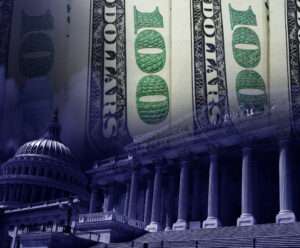
The U.S. Capitol is seen underneath $100 bills
Photo 181642336 © Zimmytws | Dreamstime.com

The Trump Administration is undertaking what amounts to a wide-ranging assault on Congress's power of the purse, seeking instead to usurp authority over federal spending. Today, the Office of Management and Budget issued a memo mandating a "temporary pause" on the disbursement of nearly all federal grants allocated by Congress, with the important exception of those going "directly to individuals" (as opposed to organizations and state and local governments). As in his first term, Trump is again planning to deny federal funds to sanctuary jurisdictions unless they accept his dictates on immigration policy. Earlier, he suspended nearly all foreign aid programs, except those for Israel and Egypt. Trump also recently threatened to withhold disaster relief funds from California, unless they adopt his preferred changes to state election law. More generally, he and his underlings have far-reaching plans to "impound" federal spending they disapprove of.

In combination, this is a massive assault on Congress' power over federal spending. The Spending Clause of the Constitution is clear in giving Congress, not the president, the power to allocate federal spending. When it comes to conditions imposed on grants to state and local governments, the Supreme Court has long made clear that they too must be imposed by Congress, and meet a number of other requirements, as well. Such conditions must, among other things, 1) be enacted and clearly indicated by Congress (the executive cannot make up its own grant conditions), 2) be related to the purposes of the grant in question (e.g. - grants for health care or education cannot be conditioned on immigration enforcement), and 3) not be "coercive." Thus, for example, even Congress could not condition disaster aid on changes in state election law, because the two issues are not related.

Some might argue that many of the Administration's actions on spending are no big deal because they are only "temporary." But if the White House can "temporarily" withhold congressionally allocated funds for a month, why not for two months, or for two years? There is no logical stopping point here. And, indeed, Russell Vought, Trump's nominee to head the Office of Management and Budget, has argued that the president has a general power to "impound" congressionally authorized spending for as long as he wants.

Trump isn't the first president to impinge on Congress's spending power. Joe Biden, for example, did so by trying to forgive hundreds of billions of dollars in federal student loans, without proper congressional authorization. I condemned his action, and supported the Supreme Court's decision invalidating it. But Trump's assault on congressional spending authority is distinctive in its sweeping, all-encompassing nature. Previous presidents, at least since Richard Nixon, didn't claim any such limitless power to impound any and all federal funds.

In some cases, of course, Congress delegates some discretion to the president, on how to allocate particular types of funds. There is a longstanding debate about how broad such delegations can be before they start to violate constitutional nondelegation constraints. But that is distinct from claiming a sweeping power to withhold - even temporarily - any and all federal funds.

I believe there is way too much federal spending, and have long argued it would be good to make both states and many private organizations less dependent on various federal grants. But that goal cannot and should not be accomplished by the unconstitutional means of giving the president unilateral control over federal spending. It is dangerous to give such vast power to any single man.

Moreover, in many cases, the Trump Administration's objective is not to save money, but to use the threat of withholding pressure grant recipients into obeying the White House's dictates - as in the case of sanctuary cities and California. The goal is to further centralize power over many areas of public policy, not to put the federal government's fiscal house in order. A broad impoundment power would give the president enormous potential leverage over state and local governments, and many private organizations. In this way, Trump's impoundment and withholding plans are a threat to federalism, as well as separation of powers.

Legal scholar Zachary Price has published an excellent critique of the (weak) case for the constitutionality of impoundment. Georgetown law Prof. Steve Vladeck has a more thorough analysis and critique of the "temporary" grant funding freeze. As he notes, the measure violates the Impoundment Control Act of 1974, as well as the Constitution:

The question of whether a President can refuse to spend—to "impound"—funds Congress has appropriated for a designated purpose is one that has come up every so often in American history, albeit not on this scale. Sometimes, Congress passes statutes that give at least some spending discretion to the President. But absent such authorization, the prevailing consensus has long been that Congress's power of the purse (the Spending Clause is the very first enumerated regulatory power that the Constitution confers upon the legislature) brings with it broad power to specify the purposes for which appropriated funds are to be spent—and that a broad presidential impoundment power would be inconsistent with that constitutional authority….

Even the Justice Department's Office of Legal Counsel, which tends to err on the side of the President in these kinds of separation-of-powers disputes, concluded in 1988 [under Ronald Reagan] that the overwhelming weight of authority "is against such a broad power in the face of an express congressional directive to spend…"

Thus, even without the Impoundment Control Act, the kind of across-the-board impoundment the OMB memo is effectuating, even temporarily, should pretty plainly be unconstitutional.

But the Impoundment Control Act appears to resolve the illegality of this move beyond dispute. Enacted in response to an unprecedented volume of impoundment efforts by President Nixon, the Act creates a procedural framework within which the President can attempt to impound certain appropriated funds. Specifically, the ICA creates a fast-track procedure for Congress to consider a President's request (a "special message") to rescind funds he identifies for reasons he specifies.

Under the statute, the President may defer spending those funds for up to 45 days following such a request (which, it should be noted, he hasn't made yet). But if Congress does not approve the President's rescission request within 45 days of receiving it, then the funds must be spent….

Vladeck goes on to explain why the ICA is constitutional and why the Supreme Court should (and in his view likely will) rule against the administration if this issue comes before them.

UPDATE: A federal court has temporarily blocked Trump's grant spending freeze. This is just an "administrative" stay, so does not - so far, at least - signal the judge's position on the merits.

Immigration

My New Just Security Article On Trump's "Invasion" Executive Order and its Dangerous Implications

The article explains why the order is unconstitutional and why letting it stand would be very dangerous, including for the civil liberties of US citizens.

|

Today, Just Security published my article on "The 'Invasion' Executive Order and its Dangerous Implications." Here is a brief excerpt:

A number of crucial issues in immigration law and policy now turn on the meaning of a previously little-noticed term in the Constitution: "invasion." The Trump administration and some red state governments claim that illegal migration and drug smuggling across the southern border qualify as "invasion" under the Constitution and the Alien Enemies Act of 1798. If this ill-founded argument is not rejected by the courts, it would have dangerous and far-reaching implications. Among other things, it would empower the federal government to detain people without charge or trial, and open the door for states to engage in war with neighboring foreign nations without congressional authorization.

The rest of the article explains in detail why the theory that illegal migration and drug smuggling qualify as "invasion" is wrong, why allowing it to stand would have a variety of dangerous implications, and why courts should not punt the issue by ruling that the definition of "invasion" is a "political question." See also my March 2024 Lawfare article and Fifth Circuit amicus brief on related issues.

Free Speech

Devin Nunes Loses Defamation Appeal Against Ryan Lizza and Esquire

Nunes and his family's farm can't sufficiently show damages, so the court doesn't have to reach any of the other elements of defamation.

|

From Nunes v. Lizza, decided yesterday by Eighth Circuit Chief Judge Steven Colloton, joined by Judge James Loken and Bobby Shepherd:

Devin Nunes, a former Member of Congress from California, sued journalist Ryan Lizza and Hearst Magazine Media, Inc., for defamation…. On September 30, 2018, Esquire (then owned by Hearst) published an online article, written by Lizza, entitled "Devin Nunes's Family Farm Is Hiding a Politically Explosive Secret." Viewed in the light most favorable to the plaintiffs, the article implicitly accused Nunes and his family of conspiring to hide the fact that NuStar Farms employed undocumented labor. The article was republished in the November 2018 print edition of Esquire magazine, this time entitled "Milking the System."

The article included statements about Nunes and his family hiding that the family farm moved from California to Iowa over a decade earlier. The article suggested that the family concealed the move in part because "Midwestern dairies tend to run on undocumented labor."

The article quoted two sources asserting firsthand knowledge that NuStar farms hired undocumented labor. One source personally sent undocumented workers to the farm. The other source, an undocumented immigrant, claimed to have worked at NuStar. Viewed in the light most favorable to the plaintiffs, the article left the reader with the impression that Nunes and his family were conspiring to hide a "politically explosive secret" that the farm had moved to Iowa and employed undocumented labor….

Nunes sued Lizza and Hearst … alleg[ing] express defamation based on eleven assertedly false statements in the article. The lawsuit also claimed defamation by implication, alleging that the article falsely implies that Nunes "conspired or colluded with his family and with others to hide or cover-up" that NuStar Farms "employs undocumented labor." … {This court [in 2021] affirmed the district court's dismissal of the express defamation claim but reversed and remanded for further proceedings on the claim for defamation by implication. [See this post. -EV]}

[As to the implied defamation claim,] Nunes presented insufficient evidence that he is entitled to damages, so we need not address other elements of his claim.

Read More

One-Man Rule

What happens when a President doesn't care whether his actions comply with the law? We are about to find out.

|

So President Trump has fired a whole host of federal agency Inspectors General without providing either the 30-day notification to Congress or the "substantive rationale, including detailed and case-specific reasons" why an Inspector General was removed, both of which are, unambiguously, required by law. Josh Blackman asks:

"What is Trump's justification for not providing the notification? Maybe the restriction can't be applied to a new President who has just come into office? Does Trump think that the thirty-day clock infringe on his Article II removal power? Is he daring one of the IGs to sue him, to set up a Supreme Court test case?"

Let me respectfully suggest that Josh has overlooked the most obvious answer to the question, which is:  He [Trump] couldn't care less.  He has figured it out: He can do whatever he wants, and nobody can stop him. Unilaterally impose 25% tariffs on Colombian imports? Do it.  Withhold federal disaster relief to cities that don't assist ICE agents carrying out their raids? Absolutely. Halt all payments due for dispersal under NIH research grants until grantees dismantle their DEI programs? Sure.

Does anyone actually believe that, during the discussion in the Oval Office concerning those moves, Trump asked: "Are we sure we have statutory and constitutional authority to do this?"?

He knows, and we know, exactly how this plays out.

1. There's a fair bit of outrage, from reasonable people, about the illegality of the action.

2. Some of the fired IGs sue in federal court to void their dismissals on the ground that they were unlawful.

3. Considerable tangential discussion about "standing" and "mootness" ensues, but in the end - we're talking maybe May or June at the earliest - they win!

4. Judgment is stayed while Trump appeals.

5. The appeals court takes a look at all the complicated removal clause/Article II arguments and issues its judgment . . . .

Meanwhile.  By this time, of course, pretty much everyone has forgotten what the case was about.

But much more importantly: when Trump finally loses the case and the court issues its order - "Your actions were unlawful. You must reinstate the IGs effective immediately" -- what happens then?

6. We all know what happens then. What happens then is that he says "Go f*** yourself."

The End.

I guess there are just a lot of people who think one-man rule is just what we need at the moment. I hope they're right, because it is what we've got.

Politics

First Liberty Institute Is Hiring

|

I am happy to pass along this announcement from my friends at First Liberty Institute, one of the premier religious liberty organizations around:

First Liberty Institute is seeking intelligent, passionate, driven team members to help us advance First Amendment rights across the nation. Our organization is the largest law firm in the nation dedicated exclusively to defending religious freedom for all Americans. Our firm has won multiple landmark cases at the U.S. Supreme Court and is positioned for unprecedented impact in 2025.

Open positions include:

  • Associate Counsel, Counsel, and Senior Counsel
    • Locations: Various, with a concentration in our Washington, D.C. and Plano, TX offices.
    • Commitment: Full-time positions.
    • Requirements: J.D. required.
  • Judicial Fellowship
    • Location: Plano, TX office.
    • Commitment: Full-time position; one-year fellowship.
    • Requirements: Must have completed at least one federal clerkship; J.D. required.
    • Learn more here.
  • Judicial Research Director
    • Location: Washington, D.C. office.
    • Commitment: Full-time position.
    • Requirements: J.D. required.
  • Judicial Researcher
    • Locations: Various, with a concentration in our Washington, D.C. and Plano, TX offices.
    • Commitment: Full- or part-time positions available.
    • Requirements: J.D. preferred.
  • Public Interest Legal Fellowship
    • Location: Plano, TX office.
    • Commitment: Summer 2025.
    • Requirements: Rising 2L or 3L law student.
    • Application process: Available here.

You are welcome to forward this information to your contacts. If you are interested in learning more about these opportunities, please contact Lori Ross at lross@firstliberty.org and cc Kassie Dulin at kdulin@firstliberty.org. Job descriptions are available upon request.

Due Process

What Process Is Due Before Property Is Destroyed?

The Sixth Circuit finds a city failed to provide adequate process before demolishing a condemned mobile home.

|

The McIntoshes own a mobile home park in Madisonville, Kentucky. After a tenant complained, the city found mold and mildew in one of the homes, condemned it, and ordered it demolished. The McIntoshes challenged the city's action (albeit after the home was destroyed) on several legal grounds, but the trial court was unmoved. The U.S. Court of Appeals for the Sixth Circuit, however, found the trial court was too quick to dismiss the procedural due process claim.

Chief Judge Sutton summarized the case.

The City of Madisonville condemned one of several mobile homes that Michael and Rebecca McIntosh own in their Kentucky town. The City demolished the property a month later. The McIntoshes filed this § 1983 action in response, alleging that the City deprived them of their due process rights to notice and the opportunity to be heard before tearing down the mobile home, among other claims. The district court granted the City's motion for summary judgment. Because triable issues remain over whether the City provided the McIntoshes an adequate opportunity to be heard, we reverse its disposition of this claim and affirm its handling of the other claims.

On the McIntoshes' procedural due process claim, the city may have provided them with adequate notice, but they do not appear to have given them an adequate opportunity to be heard to contest the condemnation and prevent the property's destruction. In particular, the city had no process n place to provide the hearing called for by the city's own municipal code. (Apparently city officials preferred to "sit down and have a conversation with" affected property owners.)

Judge Murphy offered an additional concurrence that is worth a read. It explores how the expansion of Due Process protections to a broader category of claims created countervailing pressure to lessen the degree of protection provided. I've posted the text after the break.

Read More

Will Trump Make An Article II Override Argument To Justify Firing IGs Without Providing 30 Days Notice?

Does Trump think the 30 day notice requirement infringes his Article II powers? Will he cite President Obama's refusal to provide notice of the Bowe Bergdahl transfers?

|

On Friday, President Trump fired about a dozen Inspectors General. These inspector generals are nominated by the President, and confirmed by the Senate. But the President's removal power is restricted through a notification requirement. 5 U.S.C. § 403(b) provides:

(b) Removal or Transfer.-An Inspector General may be removed from office by the President. If an Inspector General is removed from office or is transferred to another position or location within an establishment, the President shall communicate in writing the reasons for any such removal or transfer to both Houses of Congress, not later than 30 days before the removal or transfer. Nothing in this subsection shall prohibit a personnel action otherwise authorized by law, other than transfer or removal.

Trump clearly did not provide thirty days notice--doing so would have been impossible, since his term began only five days earlier. (Has it only been five days, feels like forever!?) Senator Chuck Grassley of Iowa, a champion of IGs, stated the obvious:

"There may be good reason the I.G.s were fired," Mr. Grassley said, referring to the inspectors general. "We need to know that, if so. I'd like further explanation from President Trump. Regardless, the 30-day detailed notice of removal that the law demands was not provided to Congress."

What is Trump's justification for not providing the notification? Maybe the restriction can't be applied to a new President who has just come into office? Does Trump think that the thirty-day clock infringe on his Article II removal power? Is he daring one of the IGs to sue him, to set up a Supreme Court test case?

Trump's refusal to provide notification brings to mind the Bowe Bergdahl situation. The National Defense Authorization Act required the executive branch to provide Congress with thirty-days advance notice before transferring certain detainees from Guantanamo Bay. But in 2014, President Obama did not provide advance notice before he transferred detainees in exchange for Bowe Bergdhal, an American POW. At the time, these released detainees were part of a trade to bring back Bowe Bergdahl. The Government Accountability Office concluded that the transfer violated "clear and unambiguous Law" and violated the "Antideficiency Act." How did Obama get around this statute?

The Obama Administration offered several defenses for the decision. Initially, at least, the Executive Branch said that the thirty-day restriction infringed on the President's Article II powers. I wrote about the constitutional issues with the release in an unpublished article:

Initially, Secretary of Defense Chuck Hagel justified the release on the President's inherent Article II powers, as a rationale for his failure to comply with the law: "we believe that the president of the United States is commander in chief, [and] has the power and authority to make the decision that he did under Article II of the Constitution." White House National Security Adviser Susan Rice—a Sunday-morning show stalwart—similarly alluded to the President's inherent powers during an interview on This Week, "We had reason to be concerned that this was an urgent and an acute situation, that his life could have been at risk. We did not have 30 days to wait. And had we waited and lost him, I don't think anybody would have forgiven the United States government."

Alas, the anti-Article II Obama Administration walked back that statement.

Shortly thereafter, the Administration attempted to walk back that position, and the National Security Council released a more refined statement, not based on inherent powers: the "Administration determined that the notification requirement should be construed not to apply to this unique set of circumstances." Further, "Because such interference would significantly alter the balance between Congress and the President, and could even raise constitutional concerns, we believe it is fair to conclude that Congress did not intend that the Administration would be barred from taking the action it did in these circumstances." The White House Press Secretary likewise explained, "The administration determined that given the unique and exigent circumstances, such a transfer should go forward notwithstanding the notice requirement of the NDAA, because of the circumstances."

At the time, Jack Goldsmith eviscerated this rationale.

We will see what positions Trump put forward for disregarding the 30-day notice requirement.

Update: In 2022, Congress amended the statute to also require the President to provide "substantive rationale, including detailed and case-specific reasons" why an Inspector General was removed. This isn't quite a "for cause" removal standard, but it comes close. The President cannot say "I lost confidence" or some such general statement.

Trump did not comply with the 30-day notice requirement, and did not provide any rationales, let alone substantive rationales.

This issue was also a hot topic on the Sunday news programs:

Sen. Adam Schiff, D-Calif., on Sunday blasted President Donald Trump for his decision to fire 18 inspectors general late Friday night and accused the president of breaking the law.

"To write off this clear violation of law by saying, 'Well,' that 'technically, he broke law.' Yeah, he broke the law," Schiff told NBC News' "Meet the Press."

His comment was responding to Sen. Lindsey Graham, R-S.C., who earlier in the program told "Meet the Press" moderator Kristen Welker that "technically, yeah," Trump had violated the Inspector General Act, which Congress amended to strengthen protections from undue termination for inspectors general.

"I'm not, you know, losing a whole lot of sleep that he wants to change the personnel out. I just want to make sure that he gets off to a good start," Graham added.

In a later interview on CNN, Graham defended Trump more forcefully, saying, "Yes, I think he should have done that."

"He feels like the government hasn't worked very well for the American people. These watchdog folks did a pretty lousy job. He wants some new eyes on Washington. And that makes sense to me," he added.

But Schiff pushed back on that notion, warning that "if we don't have good and independent inspector generals, we are going to see a swamp refill."

He added, "It may be the president's goal here … to remove anyone that's going to call the public attention to his malfeasance."

The White House has not yet commented on the justification for the removal:

On Saturday, a White House official told NBC News that a lot of the firing decisions happen with "legal counsel looking over them." But they added they were checking with the White House counsel's office, though they didn't think the administration had broken any laws.

It's not clear how Congress can address this apparent violation of the law, but on Sunday, Schiff said, "We have the power of the purse. We have the power right now to confirm or not confirm people for Cabinet positions that control agencies or would control agencies whose inspector generals have just been fired."

Further Thoughts on Justice Barrett's Recusal in Oklahoma Statewide Charter School Board v. Drummond

|

On Friday afternoon, the Supreme Court granted certiorari in Oklahoma Statewide Charter School Board v. Drummond, and the companion case, St. Isidore of Seville Catholic Virtual School. Shortly before sundown, I dashed off a fairly-rushed post that considered why Justice Barrett may have recused. After some reflection, I will provide further thoughts.

St. Isidore of Seville Catholic Virtual School is represented by lawyers from Dechert, Perri Dunn (an Oklahoma Law Firm), and the Notre Dame Religious Liberty Clinic. Justice Barrett is an adjunct professor at Notre Dame Law School. In 2023, she earned nearly $15,000 from the law school. If Notre Dame University was a party, Barrett's affiliation with the University would trigger a recusal. (Justice Jackson, for example, sort-of-recused from the Harvard affirmative action case because she was on the Harvard Board of Overseers.) In theory at least, a ruling for, or against Notre Dame University could affect Barrett's employer's bottom line. But I do not think that a clinic affiliated with the school is sufficient to trigger a recusal. Moreover, Justice Kavanaugh was also an adjunct at Notre Dame in 2023, earning $25,000. And Kavanaugh did not recuse from the Oklahoma case. Many others judges also adjunct at Notre Dame; I do not think they have recused when the clinic has filed briefs in the circuit courts.

But we're not quite done with the clinic. Nicole and Rick Garnett are both faculty fellows to that clinic, but their names do not appear anywhere on the briefs. It is possible that the Garnett's connection to the clinic might not trigger Kavanaugh's recusal, but would trigger Barrett's recusal.

It is public knowledge that the Barretts and Garnett are extremely close friends. Barrett is the godmother of one of the Garnett's children. Indeed, in 2023 ABC News made a fuss that Barrett co-hosted a baby shower for Nicole Garnett at the Supreme Court in the Justices' spouses' dining room. ABC News raised this point in the context of the Notre Dame Clinic's amicus brief in Groff v. Dejoy, with the suggestion that Barrett had close ties. The suggestion was that Barrett should have recused from the case.

Did Barrett recuse because her dear friends were advisors to the clinic? If so, that recusal risk would pervade every single case the clinic works on. I deeply respect the clinic, and the work that they do. But it needs to be said that in any religious liberty case that could make it to the Supreme Court, Justice Barrett's vote is likely needed. And there is no way to know, ex ante, which case may go upstairs. Indeed, there are already many such cases in the pipeline that could trigger Barrett's recusal.

Then again, maybe the Garnett's affiliation with the clinic was not the cause of the recusal. The clinic has filed several Supreme Court amicus briefs, including in Groff v. DeJoy and Kennedy v. Bremerton, without triggering Barrett's recusal. On the lower courts, the filing of an amicus brief will generally trigger a recusal. FRAP 29(a)(2) permit striking a brief that could cause a recusal. I do not think the filing of an amicus brief would trigger recusal. If so, it would be too easy for malicious parties to file conflicting amicus briefs to knock a justice off the case.

The other possibility is that Barrett recused because Nicole Garnett has advised St. Isidore's. The New York Times stated that Garnett "helped advise St. Isidore's organizers." And Reuters stated that Garnett "has provided legal representation to the school's organizers." The Clinic also helped to organize the charter school in 2023:

In an interview with The Observer, Nicole Garnett, the Associate Dean for External Engagement at the Law School and a Professor of Law, explained that, "every state that has charter schools – there's 45 – prohibits them from being religious."

At this point St. Isidore reached out to the Notre Dame Religious Liberty Clinic for legal aid and for help organizing the school, Farley said.

"The dioceses in Oklahoma knew about the Clinic … so they reached out and said, 'We're thinking about this. What do you think?'" Garnett recounted. "I had already been writing quite a bit about religious charter schools, so it was a natural fit for us to take that work on." . . .

Farley specifically pointed to Nicole Garnett and John Meiser, Notre Dame Law Professor and Director of the Religious Liberty Clinic, as being crucial to helping the school's legal case. "We really wouldn't have been able to do what we've done without their assistance."

None of this information was in the briefs. Garnett's name does not appear in the "parties to the proceeding" section. Nor was this information in the corporate disclosure statement. Barrett must have known about this because Barrett had personal knowledge.

Recusal is triggered if a close family member is a party in the case, but I do not think "Godmother" to a person's child would count. Recusal is a very personal decision. My guess is that Barrett recused because her best friend was one of the people who advised St. Isidore's, even if Garnett is not a party, and was not involved in the current litigation. I don't think any rule or canon would have required Barrett to recuse. But she herself may not have thought she could adjudicate this case fairly in light of her relationship with the Garnetts. That is, could she rule fairly concerning the institution her best friend organized and has publicly defended? (Before cert was granted, I predicted that the cautious Barrett would vote to affirm the Oklahoma Supreme Court.) Barrett's participation may have also attracted some public scrutiny, in light of the ABC News story after Groff. And Barrett has now avoided that scrutiny

At bottom, we do not know why Justice Barrett recused, as she did not explain the reason for her recusal. The unexplained recusal is really the worst of all worlds, because of the uncertainty it creates for the future. What is this uncertainty, you may ask? So long as the Garnetts are affiliated with the clinic, clients may fear hiring the clinic to avoid risking Barrett's recusal. I think the clinic's participation as an amicus is fine, but client representation is a different matter. Worse still, any legal work that the Garnetts have already touched, or will touch, may trigger Barrett's recusal down the road. Rational clients then may decide to not involve the Garnetts in order to ensure a full complement of Justices on the bench. None of these options are good.

This is not a pleasant post for me to write. I hold Nicole and Rick Garnett in the highest esteem. They have always been so gracious to me, and to everyone else in academia. Unlike most professors, who try to stay out of the limelight, the Garnetts lean into it. Their scholarship is not esoteric, but is impactful. I wish more professors could follow the model set by the Garnetts. And their work on St. Isidore is so important. This charter school, in particular, could be a paradigm shifting institution for religious instruction. Yet, there is a perverse tradeoff now. Any case that intimately involves the Garnett, should it reach the Supreme Court, might trigger a recusal risk. Maybe Justice Barrett will recuse, maybe she will not. But when planning a case ex ante, there is no way to know for certain what will happen. The rational course would be to avoid any possible recusal risk, even if that means walling off the Garnetts. Again, this is not a pleasant post for me to write, because we would all be poorer for not having the Garnetts influence cases of public concern. Justice Barrett's recusal, and failure to explain why, has allowed this uncertainty to percolate.

Finally, Barrett's recusal will create some uncomfortable situations for Justices Thomas in particular. He has not recused from cases tangentially connected to Harlan Crow, because Crow was not a party, and there is no rule that you must recuse because a friend may be affected by a case. Justice Scalia's non-recusal in the Dick Cheney case speaks to this issue. But now Justice Barrett has put forward a new standard that recusal is required if a close friend may be affected by a case, even if that friend is neither counsel nor a party to this case. This rule was novel, and potentially sets a new precedent.


Free Speech

"Inside State-Run 'Bias-Response Hotlines,' Where Fellow Citizens Can Report Your 'Offensive Joke'"

|

An interesting story by Aaron Sibarium in the Washington Free Beacon. It offers a good deal of fairly concrete detail, always helpful in such analyses.

Such hotlines aren't themselves First Amendment violations, of course, unless they lead to coercive or discriminatory action against constitutionally protected speech, or at least the threat of such action. Even if they create something of a chilling effect on some people who don't want to get reported (or don't want to get reported again), that by itself isn't enough to violate the First Amendment.

Still, they do create possibilities for abuse, for instance if the resulting data is indeed at some point used to threaten the accused speakers (or deny them jobs or other opportunities). And I think they tend to create unrealistic expectations: After all, if the state says it wants you to report certain behavior, and tells you that it's bad behavior and that you're the victim of such bad behavior, wouldn't you expect that the state will actually try to do something about it?

Read More

More