Ranked Choice Voting Worked in Alaska. Sarah Palin Came to CPAC To Complain About It.
According to a recent report, the system Palin once said was "so weird" that it "results in voter suppression" worked just as well as intended.


According to a recent report, the system Palin once said was "so weird" that it "results in voter suppression" worked just as well as intended.

Mark Brnovich left office without issuing a final report, according to documents released by his successor.

Plus: Ex-felons and the right to vote, Gavin Newsom's plan to cap oil company profits collides with reality, and more...

On a ranked choice ballot, voters can rank every candidate in a given race. Over time, that could lead more voters to consider candidates outside the two parties.

The proposal is "about behavior modification," argued state Sen. Patty Kuderer, likening the government's role in promoting voting to that of a parent.

Brad Raffensperger compares President Joe Biden and Sen. Raphael Warnock to Donald Trump.

After a bruising Senate loss, Secretary of State Brad Raffensperger is open to alternatives.

"At this point, it is pretty much a fact that Puerto Rico is a colony of the United States," says one observer.

Partisan outrage over Sarah Palin's defeat shouldn't obscure the obvious benefits of better voting systems.

And is this a good precedent to be setting?

Abolishing party-specific primary elections makes a lot of sense, and might help steer American democracy back towards the center.

GOP politicians lied in order to exploit public ignorance. That dynamic is just one particularly egregious example of the broader danger widespread voter ignorance and bias.

If we go through one election cycle after another and every loser unjustifiably cries fraud, eventually the claim will cease to impress.
Many opponents, including the president, criticized the law in misleading terms, obscuring its very real issues.
Despite the state's law allowing no third-party House candidates to get on the ballot in 60 years, the Court declined to hear the case.
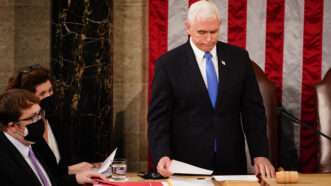
The bill is similar to that drafted by a bipartisan group of senators. Either version, or a reconciliation between the two, would be a major step forward relative to the status quo.

New Hampshire Republican candidates get a leg up from expensive Democratic ad buys.
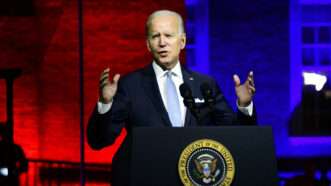
Biden says Republicans are plotting a repeat of 2020 in 2024. Maybe Congress should do something to prevent that?

Blaming the ballot system ignores the fact that many Alaskans simply did not think the former governor really represented them.
Sixth post in the symposium on the National Constitution Center "Restoring the Guardrails of Democracy" project. Edward Foley of Team Progressive highlights some points of agreement between the three reports.

The measure will be on the ballot, but depending on how the state Supreme Court rules, the votes may just not be counted.
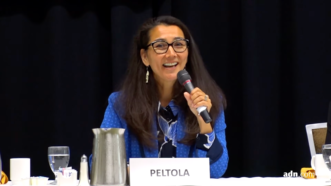
Mary Peltola will only be the third Democrat, as well as the first Native Alaskan, to represent Alaska since it became a state.

It is now available for download on SSRN. The chapter is part of a forthcoming volume on "The Epistemology of Democracy," edited by Hana Samaržija and Quassim Cassam.
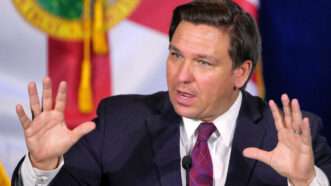
The messy rollout of a constitutional amendment restoring voting rights to felons is now creating more felony crimes.

Despite an overwhelming sense that the country is headed in the wrong direction, the only way most voters will fire an incumbent is by voting for a different incumbent instead.

Murkowski was likely saved by the state's new open primary, while Palin may have to depend on voters who picked her as their second choice.

The Spanish text contains inaccurate translations of technical tax language and direct translations of phrases like "school resource officers," which could confuse voters.

Matthew DePerno is under investigation by his opponent's office for allegedly illegally seizing and "testing" voting machines from several Michigan counties.

Reporter Eric Boehm unpacks the batty requirements confronting third party candidates in a Georgia congressional race.

The ruling has been hailed as a fraud-reducing measure. The only problem? A vanishingly low incidence of fraud in the first place.
Video of presentations by the leaders of the Conservative, Libertarian, and Progressive Teams. Plus, my thoughts on a comparison of the three reports by Progressive Team leader Ned Foley.

I coauthored the report with Clark Neily and Walter Olson, both of the Cato Institute.

We can make our voting systems just a bit dumber and a whole lot safer.
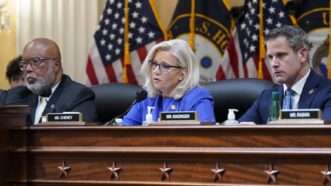
Most of those open to evidence already know that Trump tried to reverse the outcome of an election he legitimately lost. Reaching the rest is likely to be extremely difficult, at best.

There is bipartisan support to reform the Electoral Count Act to prevent another January 6th.

The election serves as a trial run for Alaska's new voting process, which could be a boon for third-party candidates.

After bracing for a supposed return of Jim Crow, Georgia saw a major increase in early votes in this week's primaries.
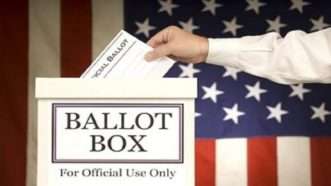
In an important new article, political philosophers Jason Brennan and Christopher Freiman explain why standard justifications for paternalistic restrictions on consumers also apply to voters.

Politicians who benefit from divisive election politics resist reforms that threaten the status quo.

Georgia Secretary of State Brad Raffensperger claimed that over 1,000 people voted more than once. He now admits that number is far lower.

Larry David isn't afraid to lay bare how much of politics is about appeasing the masses.

Not by changing the filibuster rules, but by stressing them.

The defeat of Democrats' voting rights legislation could lead to meaningful progress on election integrity.

They were a bit of both.

"We need to break up the duopoly, and the mechanical way to break up the duopoly is by shifting to open primaries and ranked choice votings so that every perspective has a shot."

The bills call for reforms that would be nearly impossible to implement and will not prevent a repeat of 2020.

British political scientist David Runciman says the answer is "yes." And he makes a stronger case than you might think.

"Outside activities that may pose a conflict of interest to the executive branch of the State of Florida create a conflict for the University of Florida," said the university in a statement.
Celebrate your independence with a subscription to Reason magazine, your most trusted source of honest, insightful news and analysis.