
William Barr Responds on American Petroleum Institute v. Minnesota
The former Attorney General disagrees with me on whether state and local government climate change lawsuits belong in federal court.

The former Attorney General disagrees with me on whether state and local government climate change lawsuits belong in federal court.
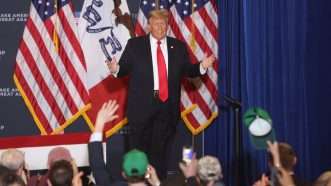
His lawyers say no jury can ever consider charges based on his "official acts" as president, which include his efforts to reverse Joe Biden's election.

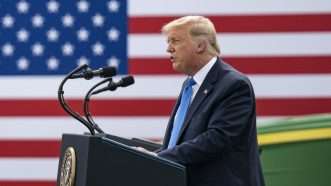
You're not going to save democracy by kicking people out of elections.

Ralph Petty's "conflicted dual-hat arrangement" as an advocate and an adjudicator was "utterly bonkers," Judge Don Willett notes.

The ACLU will represent the gun rights group in a case with widespread relevance for free speech.

The Court announced today that it would take up a case involving access to the abortion-inducing drug mifepristone.

The court upheld several other location-specific gun bans, along with the state's "good moral character" requirement for a carry permit.
The Court granted two petitions for certiorari seeking review of a controversial lower court decision limiting federal approval of mifepristone.
The Court agreed to the special counsel's request for expedited briefing on whether to grant certiorari.

Plus: Austin and Salt Lake City pass very different "middle housing" reforms, Democrats in Congress want to ban hedge fund–owned rental housing, and a look at GOP presidential candidate's housing policy positions.
The justices are considering whether to grant certiorari in Minnesota's lawsuit against energy companies.
Justice Jackson notes her objection to the Court's standard practice of vacating lower court decisions rendered moot by the prevailing party below.

The Court has been asked to intervene in cases involving abortion pills and criminal prosecution of abortion doctors.

The late Supreme Court justice eloquently defended property rights and state autonomy.
The Supreme Court's first decision of the term does not decide very much.
More than you might think—and it’s getting better all the time.

By banning firearms from a long list of "sensitive places," the state is copying a policy that federal judges have repeatedly rejected.

She was the first woman Supreme Court justice, and played a key role in changing the Court's jurisprudence for the better on several issues.

The political push behind the law was well-meaning. But it will backfire on many prospective renters.
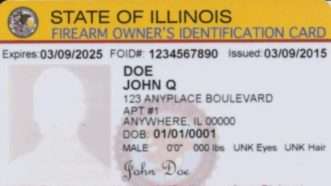
The 4th Circuit’s rejection of Maryland’s handgun licensing system suggests similar schemes in other states are unconstitutional.

The Supreme Court mulls how to apply a mandatory minimum for gun possession by people convicted of drug felonies.
An important challenge to the use of agency adjudication to enforce federal regulations.
The Supreme Court will consider whether federal agencies’ administrative judges violate the Seventh Amendment.

Before buying a handgun, residents had to obtain a "qualification license," which could take up to 30 days.
The amicus brief is on behalf of the Cato Institute and myself.

The case highlights the broad reach of a federal law that bans firearm possession by people with nonviolent criminal records.

The Trump administration’s unilateral ban on bump stocks turned owners of those rifle accessories into felons.
The provisions seem sensible, though there are legitimate concerns about enforcement.
That prosecutors in the Hoosier State successfully denied people this due process is a reflection of how abusive civil forfeiture can be.

Solicitor General Elizabeth Prelogar falsely claims a federal gun ban "requires individualized findings of dangerousness."
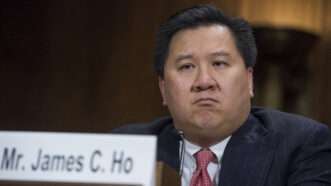
In an upcoming Supreme Court case, the Cato Institute argues that the "threadbare procedures" required by federal law provide inadequate protection for constitutional rights.

The U.S. Supreme Court keeps putting off deciding whether to take up a challenge to New York's rent control scheme.
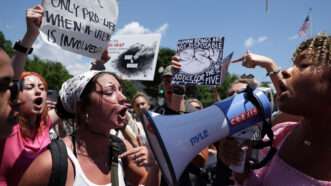
A wave of ballot measures reminds us most Americans are moderate on abortion.
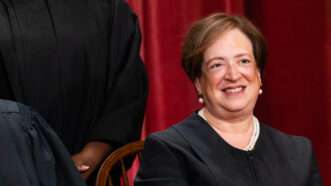
The Supreme Court considers whether and when banishing irksome constituents violates the First Amendment.

Without a prompt post-seizure hearing, people can lose their property for months or years even when they ultimately get it back.
with implications for the pending Supreme Court case of United States v. Rahimi

The appeals court is reviewing an injunction by a judge who concluded that the law is inconsistent with the Supreme Court's Second Amendment precedents.

School officials in three states are effectively immune from lawsuits over excessive corporal punishment. A Louisiana mother is asking the Supreme Court to step in.

Democrats and Republicans are united in thinking their political agendas trump the First Amendment.

Aside from narrowly defined exceptions, false speech is protected by the First Amendment.
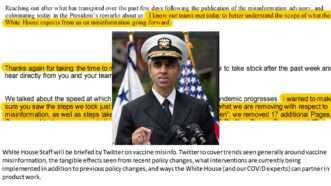
The justices agreed to consider whether the Biden administration's efforts to suppress online "misinformation" were unconstitutional.

Sylvia Gonzalez, an anti-establishment politician, spent a day in jail for allegedly concealing a petition that she organized.
The Court is taking more cases from the Fifth Circuit, and its decisions do not appear to be faring well.

A lawsuit against a Black Lives Matter activist could have a chilling impact on constitutionally protected activity.
The Court saw no reason to consider the Eighth Circuit's conclusion that the states lacked standing.
Celebrate your independence with a subscription to Reason magazine, your most trusted source of honest, insightful news and analysis.




