
The A.I. Defamation Cases Are Here: ChatGPT Sued for Spreading Misinformation
Plus: Age-verification laws threaten our First Amendment right to anonymity, New York bill would set minimum prices for nail services, and more...


Plus: Age-verification laws threaten our First Amendment right to anonymity, New York bill would set minimum prices for nail services, and more...

A more flexible model of oversight avoids hyper-cautious top-down regulation and enables swifter access to the substantial benefits of safe A.I.

His licensing proposal would slow down A.I. innovation without really reducing A.I. risks.

Meanwhile, content creators and corporations want copyright regulations for artificial intelligence.

Federal A.I. regulation now will hinder progress, consumer choice, and market competition.

Possibly changing the way we live just as profoundly as the internet did.
As artificial intelligence advances, how worried should we be about the rise of the machines?
Mastodon might not be the future of decentralized social media, but it can’t hurt to check it out as Twitter implodes.

Meet the new hype cycle about new tools for online decentralization.

Say what you will about the U.S., but its financial reporting rules are at least consistent.


Technological innovation makes gathering visual land data easier and cheaper—and threatens an industry’s status quo.

Non-fungible tokens for art can seem a lot like Tulipmania. But distinct digital tokens have real use cases for things like online address management.

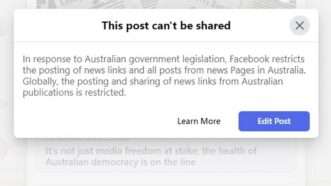
This tech/media fight down under is not about democracy or monopolies. It’s about ad revenue.

Some of them like the stock, but all of them think our financial system is broken.
The former Reason editor discusses her new book, The Fabric of Civilization, and why she's optimistic about the future.

The most important parts of life happen outside of politics.

How can we build a culture that welcomes alternative tech?

Transcending consciousness is presented as a consumer good in a sharp new Amazon Prime series.

In Facebook: The Inside Story, even Steven Levy’s most generous conclusions about the tech giant are still pretty damning.
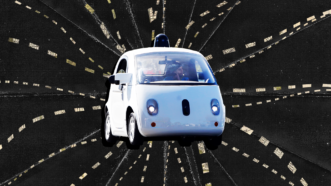
The hacking wunderkind thinks Big Tech's approach won't work. He built a $999 autonomous driving system that runs on a smartphone.

Clayton Christensen, father of the theory of "disruptive innovation," predicted that half of high school classes would be delivered online by 2018. What went wrong?

Media theorist Marshall McLuhan's work best explains how the world changed in the 2010s—and what we can expect in the decade ahead.

We’re going to need a lot more sensing equipment—and fast. Here’s how to do it.

Deepfakes don't pose a novel threat, and they have many exciting applications that would be stymied by legal restrictions.
Amazon, Google, Facebook, and Twitter are in the federal government's crosshairs, but the technology necessary to undermine their dominance may already exist.

"Everything that's bad is politics; everything that's good is the market."


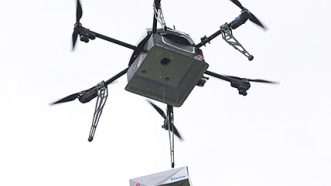
Get food, coffee, medicine, and golf balls (if your aim is just that bad).

The future we've fantasized about really is coming, and soon.

Gun owners can now enjoy First and Second Amendment safeguards.

The Silicon Valley entrepreneur says cryptocurrencies, virtual reality, and mobile devices are helping individuals escape failed institutions.

Urbit seeks to distill computing into its lightest and purest possible form, leaving the user in control of more processes than previously afforded.
Even worse, CEO Holmes evidently wants the FDA to regulate competing products

Bitcoin and other disruptive technologies are having an important impact on developing countries.
Celebrate your independence with a subscription to Reason magazine, your most trusted source of honest, insightful news and analysis.




