
The Major Questions Doctrine Constrains Presidential Power Over Elections
It limits executive power grabs in this field, as well as others.

It limits executive power grabs in this field, as well as others.
Legally, Trump must either cease operations or ask Congress for approval. He did neither, and Congress just went on recess.
Conservative legal commentator Gregg Nunziata outlines reasons why conservatives should reject broad views of executive power.

The plan is not completely terrible. But many importers may still have difficulty getting the refund money owed to them.
The outcome is unclear. But the judges seemed skeptical of the Trump Administration's claims that Section 122 grants them sweeping tariff powers.
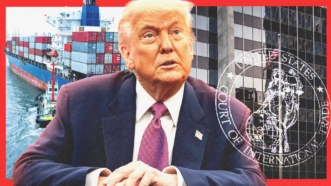
The Court of International Trade is weighing the legality of the import taxes that the president wants to impose under Section 122 of the Trade Act of 1974.
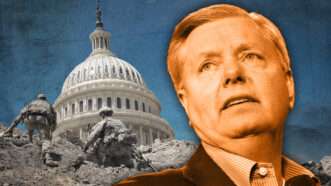
The feeling is perfectly consistent: Graham feels it should be as easy as possible for the U.S. to start a war, and as hard as possible to end one.
I submitted the brief on behalf of the Cato Institute and myself.

"No statute comes close to giving the President the authority he claims to have," U.S. District Judge Richard Leon concluded when he enjoined the project.
Plus: Fox and Sinclair go crying to the FCC over sports streaming, and the Masters ticket lottery makes it too hard to get in
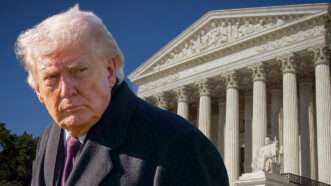
Both Donald Trump and Joe Biden asked the Supreme Court to abolish nationwide injunctions, which allow federal judges to stop a federal policy from going into effect.
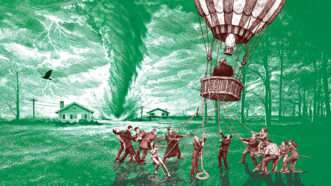
There are far too few checks left on executive power.

A new book revisits this 50-year-old Watergate report as President Donald Trump pursues his own politically motivated investigations.
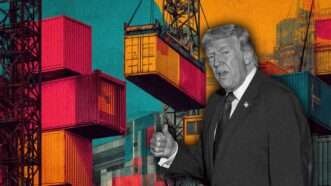
The Trump administration keeps trying to find legal loopholes, but the will of the people is the final judge of any major policy.
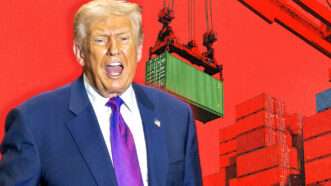
There was little rhyme or reason to the president's "emergency" tariffs, which fluctuated wildly depending on his mood.
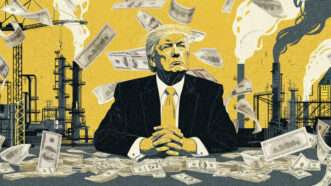
The bill would not only codify Trump's actions into law, it would establish a framework for both this and future administrations to do it too.
A war by any other name must still be authorized by Congress.
Plus: a pause on power plant bombing, an executive order to fund the TSA, a tentative plan to end the DHS shutdown, and more…
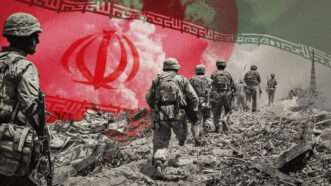
From Korea to Iran, the United States has employed countless euphemisms that not only obscure the true nature of its wars but also the constitutional limits designed to constrain them.
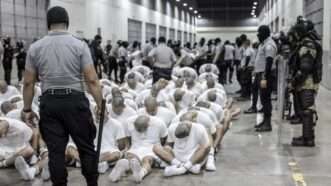
His work further demonstrates that the AEA cannot be used in response to illegal migration or drug smuggling, but only when there is a military attack.
The president’s invocation of Section 122 conflates a trade deficit with a balance-of-payments deficit.
LJC is the group with which I worked on the IEEPA tariff case decided by the Supreme Court.


The massive new tariffs are illegal, just like the IEEPA tariffs previously invalidated by the Supreme Court.
The article explains why the war requires congressional authorization,and why this requirement is important.
The Court's law-declaration approach not only departs from its dispute-resolution premise but risks yielding a faulty product.
Importantly, the Court ordered payment of refunds even to those businesses who have not filed a lawsuit to claim them.
The "three buckets" picture of the federal government, in combination with the unitary executive thesis, gives extravagant power to the President.
In the "three buckets" picture of the structure of the federal government, a federal entity that is not part of Congress or part of the judiciary must inevitably be in the Executive Branch.
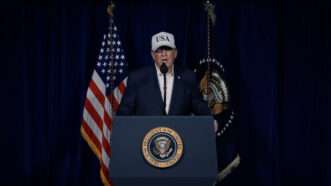
Trump's attack on Iran is obviously unconstitutional. The moral and policy issues are a closer call.
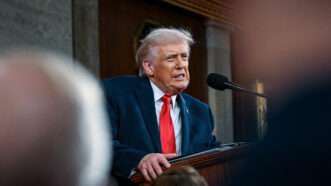
The president's wildly inaccurate ideological labels are no more meaningful than his other ad hominem attacks on people who disagree with him.
I was one of the participants, along with Zach Shemtob (SCOTUSblog) and Julie SIlverbrook (NCC).
Gregg Nunziata interviewed me.
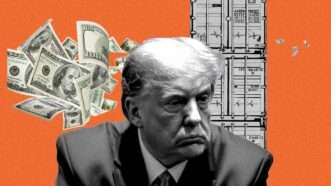
Only time will tell how great the impact of the ruling will really be. But, at this point, it seems like a very significant decision.
The article explains why the new Section 122 tariffs are illegal, and courts should strike them down, when (as is likely) lawsuits are filed against them.
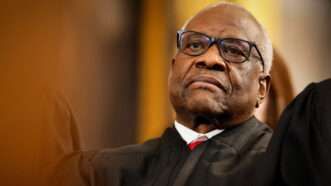
The conservative justice’s regrettable opinion in Learning Resources v. Trump.
The president is relying on a provision that the government's lawyers said had no "obvious application" to his goal of reducing the trade deficit.
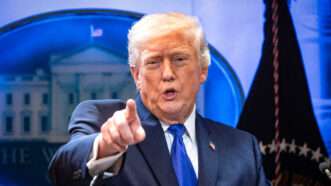
The president neither understands nor appreciates the vital role of judicial independence in upholding the rule of law.
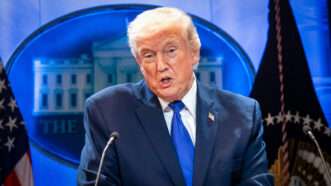
President Trump will undoubtedly keep trying to impose protectionism, but his options are limited.
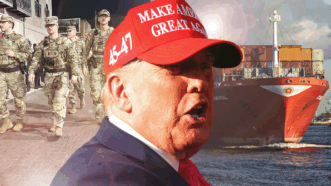
The prominent conservative legal commentator outlines the case against Trump's latest tariff power grab.
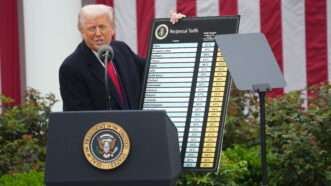
It covers many issues raised by the decision.
Thanks to our victory in the tariff case before the Supreme Court, businesses that paid billions of dollars in illegally collected tariffs can seek refunds. But the process may be difficult.
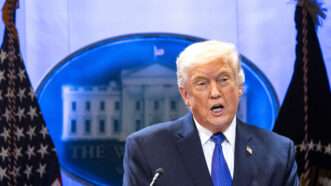
The new tariff will be implemented under a 1974 law that gives the president authority to impose tariffs for up to 150 days.
"will appreciate the legislative process for the bulwark of liberty it is."
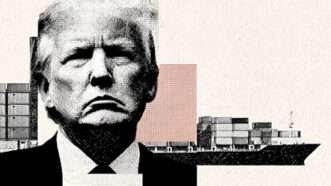
There are many laws that explicitly authorize the president to impose taxes on imports, but they include limits that Trump was keen to avoid.
"There is no exception to the major questions doctrine for emergency statutes," wrote Chief Justice John Roberts.
In a 6-3 decision, the Court ruled that the International Emergency Economic Powers Act does not authorize tariffs.
Celebrate your independence with a subscription to Reason magazine, your most trusted source of honest, insightful news and analysis.




