
Fresh Starts on Starter Homes
Lawmakers in Arizona and California are attempting to overcome local resistance to meaningful starter home reforms.


Lawmakers in Arizona and California are attempting to overcome local resistance to meaningful starter home reforms.

Harvard historian Serhii Plokhy's book tells the stories of soldiers, stalkers, and squatters in Chernobyl during Russia's invasion of Ukraine.

Giving more power to states is good for the environment.

Subsidizing American farmers is not a valid justification for the U.S. Agency for International Development.

"This really is one of the dumbest things we could be doing."

From gasoline to nuclear power, tariffs will hurt America's energy sector.

The European Union doesn’t need a five-year plan—it needs free markets.
The stark disconnect not only runs the risk of choking off much of the global commerce the president claims to welcome but threatens to stick U.S. consumers and businesses with higher costs.

A proposed state bill would allow individuals and insurers to sue oil companies for wildfires damages.

Trump may not be able to revoke the rules outright, but polls show that most Americans don't support a mandate.
The incoming administration is grappling with uncomfortable political consequences of the tariffs Trump wants to impose.
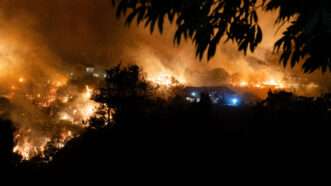
Decades-old, voter-approved restrictions on insurers raising premiums have created a regulatory disaster to match the natural one.
The justices are not persuaded to intervene in state-law climate litigation.

Most researchers report the global temperature last year was more than 1.5 degrees Celsius above the pre-industrial average.
The D.C. Circuit adopts a suitably constrained view of FERC's legal obligations when conducting environmental impact assessments.

The outgoing president's signature legislative achievements spent tens of billions of dollars with little to show.

The U.S. already has a base in one of the territories Trump covets. Here’s how the Americans stationed there are told to deal with the people who are actually from there.

If successful, the lawsuit could be a significant first step in reducing the red tape that has plagued American nuclear power.

The president’s ban on offshore oil and gas drilling perfectly encapsulates his top-down legacy on energy.

Is the Climate Superfund Act unconstitutional?

Isodope founder Isabelle Boemeke discusses the ongoing potential renaissance of nuclear energy.
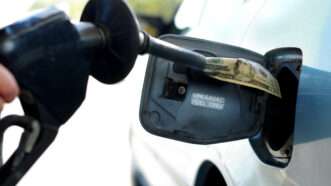
Residents of California, Minnesota, and Wisconsin will get hit with the higher taxes.

Increasing energy costs in New York will not significantly address climate change.
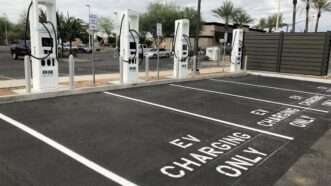
Despite the wasteful spending, E.V.s remain unpopular with large portions of the country.

The Juliana plaintiffs are again seeking Supreme Court review of their case.
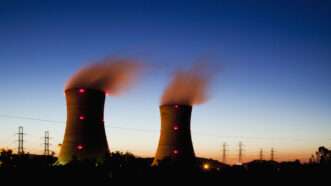
As tech companies reboot nuclear energy, the site of the famous meltdown represents both the industry’s demise and its rebirth.
A state Supreme Court gives environmental activists an important symbolic victory that will not do much of anything to mitigate the threat of climate change.

For decades, federal rules punished good Samaritans who tried to tackle toxic mine pollution. A new program removes barriers to restoring waterways across the West.

By one account, regulations cost American households over $15,000 per year. Here's hoping DOGE can help.

While $1 billion is a drop in the wasteful spending bucket, fiscal irresponsibility of all sizes must be eradicated.

Despite its enormous budget and vast regulatory powers, the agency has failed to detect major frauds while wasting time and money on relatively useless disclosures.

Economists estimate that each nuclear plant built could save more than 800,000 life years.

California's governor is considering revamping wasteful state rebate programs for low-emitting vehicles.

They are instead promised $300 billion, but the Trump administration will not likely pony any international climate finance.

Cultivated meat is getting better and better. That's why states keep trying to ban it.


The U.S. now ranks second to last in the time it takes to develop a new mine—roughly 29 years. Only Zambia is worse.

If confirmed, Chris Wright and Gov. Doug Burgum will have the opportunity to prioritize innovation and deregulation to the benefit of taxpayers and the environment.

Even with burgeoning private sector support, nuclear can’t thrive without regulatory reform.

The nominee for attorney general passes the Trump loyalty test, but he lacks relevant experience and has repeatedly demonstrated poor judgment.
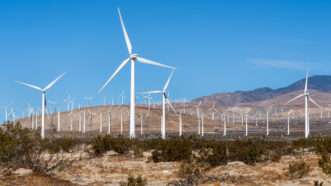
Ending the government’s preferential treatment of energy technologies is the best way to ensure long-term economic and environmental sustainability.

Climate change is a serious environmental concern, but it is not clear how the EPA helps.
Unsurprisingly, no justice showed any interest in reviving a lawsuit that should have died long ago.

Environmental Protection Agency
Lee Zeldin’s legal prowess may lead to a shrinking of the administrative state.

Will the mercurial tech mogul put his thumb on the scale to help his own companies, or will he push for a broader deregulatory agenda?

Expect the incoming Trump administration to withdraw from the Paris Climate Change Agreement on Day 1.

Federal regulators have rejected a proposal to increase electricity generation from a nuclear power plant to a large data center in Pennsylvania.


New from Reason: a look into what Javier Milei has accomplished and what it will take to make the most of Argentina’s window for real change. Out now for subscribers.

