
Georgia Has Arrested At Least 20 Officials for Misusing the Flock Surveillance Database
Michael Soyfer, an attorney at the Institute for Justice, calls it “just the tip of the iceberg.”

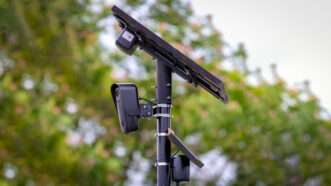
Michael Soyfer, an attorney at the Institute for Justice, calls it “just the tip of the iceberg.”

The Kansas Justice Institute argues that Wichita's "warrantless ALPR dragnet surveillance program" violates the state constitution's privacy protections.

The department plans to triple the number of surveillance towers along the U.S.-Mexico border over the next decade.
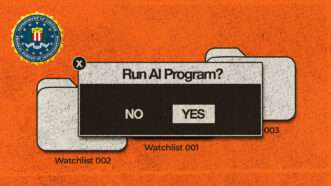
Documents show the FBI seeking AI tools to flag Americans before they act, as the terror watch list's focus moves toward domestic dissent.
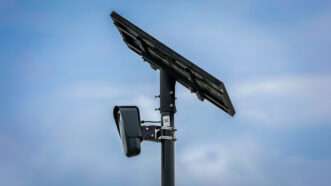
Although Flock Safety’s auditing tools have helped catch the bad actors, more is needed to protect Americans’ privacy.
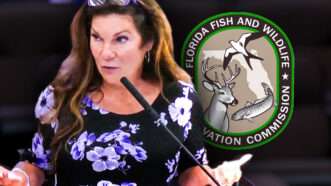
The Florida Fish and Wildlife Conservation Commission says it followed the law when it pulled the driving records of more than a dozen critics of the agency.

The justices said the "open fields" doctrine, a sweeping exception to constitutional privacy protections, does not apply in the Keystone State.

Wearable bright patterns, infrared lights, and reflective coatings challenge the surveillance state.
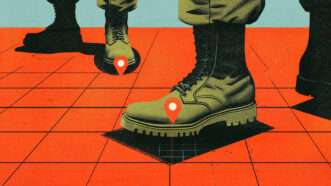
The U.S. government has used private ad data to get around the Fourth Amendment. Now foreign enemies are turning it into a weapon.

It's coming faster than you might think.

They can also search it without a warrant if you're flying abroad. Yes, even if you're an American citizen.

Firing a toy gun out of a camera-covered robotaxi while underage drinking was never going to end well.
Newly published dashcam footage shows a sheriff’s deputy driving recklessly to pull over an actress he’d met while working on the set of the TV show Bad Monkey.
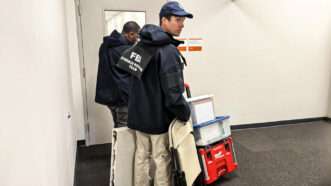
The decision rebukes the DOJ for demanding "private and sensitive" information about Georgia election workers "with no legitimate law enforcement purpose."
Neil Gorsuch proposes an alternative to a Fourth Amendment standard that has proven to be an unreliable safeguard against government snooping.

Plus: The Democrats' Project 2029 would ban minors from social media, the Supreme Court protects private data in geofence warrant ruling, and more...
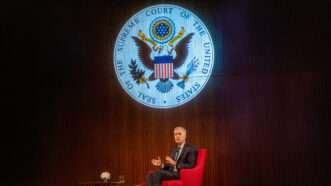
The justice criticizes the Court’s endorsement of coercive plea bargaining and its embrace of dubious Fourth Amendment doctrines.
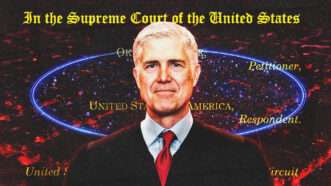
The justice argues that the "reasonable expectation of privacy" test and the third-party doctrine are indefensible in theory and unworkable in practice.
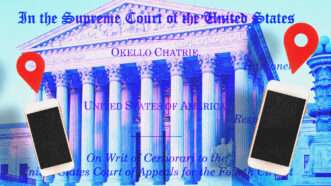
Understanding Chatrie v. United States.
The Supreme Court could be poised to decide whether it's you or Big Tech companies.

The court said the law—which would require age verification for everyone—constitutes only a “marginal burden” and "does not raise meaningful concerns about muting valuable protected discourse."

The U.K. says tech companies have three months to stop minors from sending or receiving nude images—and universal identity checks for phone users may be the only way forward.

A proposed FCC rule would require Americans to share more personal information with phone service providers. Bye, bye burner phones?
Jane Bambauer and I explore the uneasy collision between free speech and privacy law—from anonymous pamphlets and wiretaps to revenge porn, hidden cameras, Hulk Hogan, and whether anyone truly owns their own name or life story.

The documents reveal BusPatrol’s plan to equip tens of thousands of school buses with license plate readers and share the data with law enforcement.
The federal government is still fighting to collect nonprofit donor information despite Supreme Court warnings that such demands chill free speech.
The ruling is a victory not just for one Texas title company, but for the principle that agencies like FinCEN can only do what Congress actually authorized.

U.S. citizens are being monitored and punished with technology meant to battle illegal immigration.

Plus: Supreme Court pauses ban on mail-order abortion pills, TikTok's artistic merit, a defense of pickup artists, and more...
Plus: The Supreme Court says “demands for a charity’s private member or donor information” raises First Amendment problems.
"Geofence" searches illustrate the perilous combination of modern technology and deference to law enforcement.

The government wants access to millions of cell phone location histories. The Supreme Court will decide what the Fourth Amendment allows.
But the judge suspends his decision pending appeal, so that the appellate court has "time to consider and decide the merits of this case, absent unnecessary procedural deadlines."
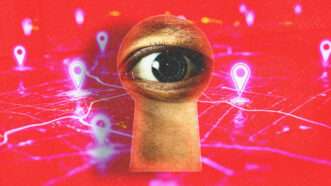
Sen. Ron Wyden warns that Americans would be “stunned” at how officials have used the law.

Plus: The war with Iran is raising condom prices, increased legal liability for chatbot advice could backfire, and more...
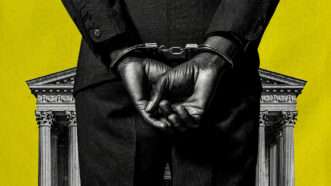
The court ruled that police can demand a physical ID under the state's stop-and-identify law.
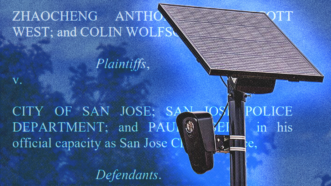
The city has created a network of nearly 500 cameras that routinely monitor innocent people as they go about their daily lives.
"Russell insisted that he didn't know how his credentials had been used to run the 'Gins' and 'Ginston' searches. But he theorized that 'potentially his cat had run across the keyboard and typed in those letters.'"
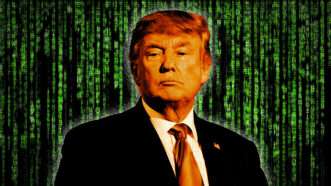
The president once said he wanted to kill warrantless electronic spying. So much for that.

After withdrawing a summons in the face of a legal challenge, the government is seeking a grand jury subpoena.

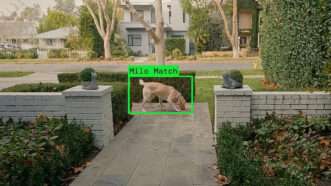
Following a backlash to its Super Bowl commercial, Ring owner Amazon announced that it was canceling a planned partnership with Flock Safety.
"We thought we were on the right side of the law," the Samourai Wallet co-founder tells Reason.
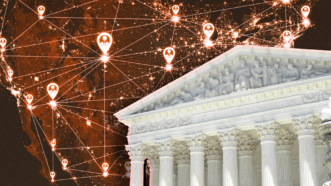
How the digital privacy rights of millions are at stake in Chatrie v. United States.

Plus: Wisconsin governor vetoes porn age-check bill, more charges for penis protester, the Komodo dragon theory of social media, and more...
Who cares if Bryon Noem likes pretending to have giant breasts?
Celebrate your independence with a subscription to Reason magazine, your most trusted source of honest, insightful news and analysis.




