
Gavin Newsom Vetoed California Crypto Regulations—and Invited Even Worse Federal Intervention
Any new rules for the crypto market should protect entrepreneurs and investors from overzealous intervention, not subject them to it.


Any new rules for the crypto market should protect entrepreneurs and investors from overzealous intervention, not subject them to it.

The state can't really banish ideas, and it's dangerous to try.
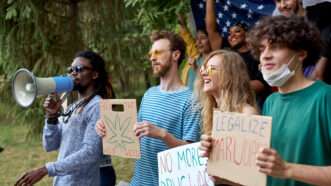
Cannabis has long been classified as having "high potential for abuse" and "no currently accepted medical use." That makes it harder to study and, therefore, harder to reclassify.

A federal judge wrote that the Bureau of Prisons should be "deeply ashamed" of medical delays that resulted in a man dying from treatable cancer.
[This is a guest post by Prof. Jack Goldsmith of the Harvard Law School.]

The war on drugs conspires with the war on guns to make a mockery of justice.
“We conclude no reasonable person would believe Plummer created a website describing himself as vexatious, incompetent, or dishonest.”
The decision is a warning to states that impose vague permit standards or sweeping bans on guns in "sensitive locations."

The return of the trollish forum demonstrates the futility of bans on bad speech.


While the California Age-Appropriate Design Code Act was hailed as a victory for digital privacy, critics warn of a litany of unintended consequences.
"The allegedly defamatory nature of this statement is the implication that Plaintiff holds itself out as a local business when it is not. But truth is an affirmative defense to defamation under Delaware law, and the ... Declaration [submitted by Avas] does not deny that Plaintiff maintains call centers abroad in locations such as Mexico or Asia."
A federal court held that Prince was a public figure, and hadn't offered enough plausible allegations that the defendants knew the statements were false or likely false (the so-called "actual malice" showing).
The podcast is a debate between legal scholar Brad Smith and myself.

In Criminal (In)Justice, the Manhattan Institute scholar argues that most reforms favored by social justice activists—and many libertarians—make life worse for communities of color.

Students for Life at George Mason University claims that another student organization defamed the group by criticizing its event that compared abortion to slavery and segregation.
"Plaintiff has sought to avail herself of the protections of anonymity (without prior Court order), all the while single-handedly precluding the Named Defendant from the ability to avail himself of similar protections."

A First Amendment case prompts The Onion to explain how parody works.

Does Section 230 shield YouTube from lawsuits about recommendations? Can Twitter be forced to pay damages over the terrorists it hasn’t banned?
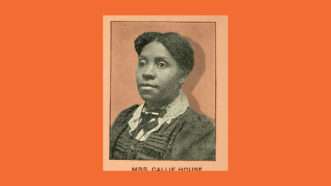
A new petition seeks a posthumous pardon for Callie House.
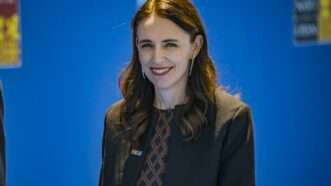
The world’s politicians offer a friendly reception to attacks on free speech.
How, if at all, should we try to be nice in an inherently not-nice occupation?
My argument: "Petitioner Jane Doe—a frequent unsuccessful litigant—is asking this Court to impose unconstitutional prior restraint to prevent a law professor from writing about important, publicly available cases about pseudonymity."
A former guidance counselor served six years of a 25-year sentence thanks to a public defender's incompetence.

A deeply flawed documentary by the gray lady unwittingly makes the case for why the CDC shouldn't be studying gun violence.

Judge Gary Klausner admits that the FBI probably hid their true motives in rifling through the contents of hundreds of safe deposit boxes, but says that's fine.

The policy, released this week, places unconstitutional prohibitions on faculty speech.
The professor, Joseph Michael Phillips, had spoken about Confederate memorials, race relations, a shooting, and masks.
"Upon careful review, we determined this video is not violative of our Community Guidelines and have reinstated it," said a YouTube spokesperson.

The 6th Circuit ruled that qualified immunity prevented Anthony Novak from vindicating his First Amendment rights.
An appeal a day late (even if not a dollar short). [UPDATE: But there may be a lifesaving treatment!]

Amidst official hysteria over “misinformation,” the president continues to willfully misrepresent the facts on firearms.

Justice Scalia, to the rescue.
I think the letter's analysis as to contraceptives is inconsistent with the statutes, and with a binding Supreme Court precedent.
"[A] prisoner's right to be free from highly invasive intrusions on bodily privacy by prison employees of the opposite sex—whether on religious or privacy grounds—does not change based on a guard's transgender status."


New from Reason: a look into what Javier Milei has accomplished and what it will take to make the most of Argentina’s window for real change. Out now for subscribers.