

3/13/1963: Ernesto Miranda is arrested.
The Volokh Conspiracy
Mostly law professors | Sometimes contrarian | Often libertarian | Always independent | Est. 2002
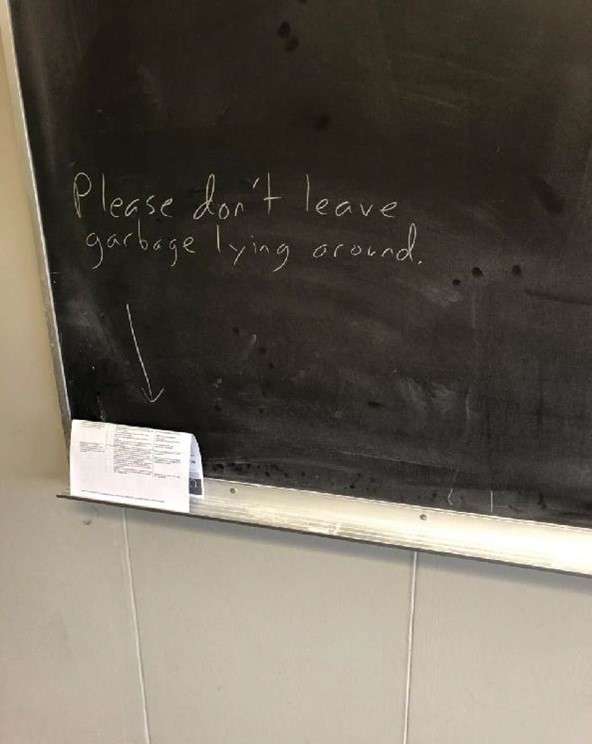
University Adjunct Prof Fired for Labeling Flyers About "Microaggressions" as "Garbage"
may have had his First Amendment rights violated, if the facts are as he alleges them to be, says a federal court.
From Hiers v. Board of Regents, released today by Judge Sean Jordan (N.D. Tex.):
Writing for himself and Justice Brandeis nearly a century ago, Justice Oliver Wendell Holmes extolled what he viewed as a foundational tenet of freedom of expression in our country: "[I]f there is any principle of the Constitution that more imperatively calls for attachment than any other it is the principle of free thought—not free thought for those who agree with us but freedom for the thought that we hate." Since that time, the Supreme Court has consistently recognized that the Founders "believed that freedom to think as you will and to speak as you think are means indispensable to the discovery and spread of political truth."
This case implicates these bedrock constitutional principles protecting freedom of thought and expression. The setting is a public university, the University of North Texas ("UNT"), and the speaker is [an untenured] mathematics [adjunct] professor at that university, and a public employee, Nathaniel Hiers. Amidst a slew of constitutional claims asserted by Hiers following his departure from UNT, a single question is paramount: What can a public employee say, and what can he choose not to say, without fear of reprisal from his employer? …
Tibet's Armed Resistance to Chinese Invasion
Part 1: The feckless Tibetan government fails to prepare.
March 10 is Tibetan Uprising Day, commemorating the heroic Tibetan resistance against Chinese Communist imperialism. Over the next several days, I will tell the story of the Tibetans' fight against an evil empire, leading to the Dalai Lama's escape on March 20, 1959 and the founding of the Tibetan government in exile. Today's post describes the political and military history of Tibet in the first decades of the twentieth century, before the invasion of Mao Zedong's army in 1949.
These posts are excerpted from my coauthored law school textbook and treatise Firearms Law and the Second Amendment: Regulation, Rights, and Policy (3d ed. 2021, Aspen Publishers). Eight of the books' 23 chapters are available for free on the worldwide web, including Chapter 19, Comparative Law, where the Tibet materials appear at pages 1885-1916. The Tibet sections are part of a larger section on the most murderous regime in history, the 1949-76 dictatorship of Mao Zedong. In this post, I provide citations for direct quotes. Other citations are available in the online textbook chapter.
Although history rarely repeats itself precisely, the history of the Tibetan resistance does provide some useful lessons about factors that impede or hinder armed resistance to tyranny.
During the 1950s, the greatest armed resistance to Mao's rule was in Tibet. "The Tibetan Revolt was a major international embarrassment for the Chinese and for Mao; it must be considered one of the factors in Mao's eclipse and in the retrenchment polices of the early 1960s." Warren W. Smith, "The Nationalities Policy of the Chinese Communist Party and the Socialist Transformation of Tibet," in Resistance and Reform in Tibet 53, 67-68 (Robert Barnett & Shirin Akiner eds. 1994).
In other words, the Tibetan resistance helped to force Mao to end his Great Leap Forward, a policy that had forced the Chinese peasantry into communal slave labor, and caused the worst famine in human history, killing tens of millions. By indirectly helping to terminate the so-called Great Leap Forward, the Tibetan resistance saved millions of Chinese lives.
Today in Supreme Court History: March 12, 1889
3/12/1889: Justice John Campbell dies.
DC Circuit Issues Mixed Decision in Title 42 "Public Health" Expulsion Case
The court ruled the CDC can continue to use its public health power to expel migrants, but not to countries where they are likely to face persecution or torture.
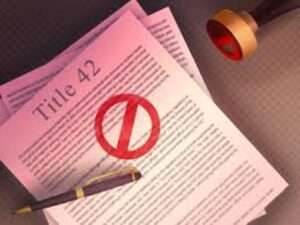
Last week, the US Court of Appeals for the DC Circuit issued its decision in Huisha-Huisha v. Mayorkas, the Title 42 public health expulsion case. As I explained in previous posts about the case, in March 2020, the Centers for Disease Control (CDC) issued an order mandating immediate expulsion of most migrants entering from Canada or Mexico, including many who would otherwise have the legal right to apply for asylum in the US. The DC Circuit in large part upheld the policy, but imposed significant limits on where migrants can be expelled to. It also pointed out that the expulsions likely serve no useful purpose, even as they subject expelled migrants to "death, torture, and rape."
The Trump Administration claimed the expulsion order was necessary to prevent the spread of the Covid-19 virus into the US. The Biden administration has so far maintained this Trump policy, though they have exempted unaccompanied minors.
A group of immigrants' rights organizations, led by the ACLU filed a lawsuit on behalf of migrants subject to expulsion under the order, arguing that the CDC exceeded its authority. In September, a federal district court ruled in the plaintiffs' favor. The case is enormously important because of the vast number of migrants expelled under the CDC order (over 1 million and counting), and because of the broader implications for the power of the executive branch over immigration policy. As I explained in an amicus brief on behalf of the Cato Institute, if the government had prevailed on all points in this case, CDC would have virtually unlimited power to expel any migrants from anywhere, anytime it wants.
Last week, the US Court of Appeals for the DC Circuit issued a kind of split decision in the case. The court ruled that the CDC did have the authority to expel migrants, but not to countries where they are likely to face torture or be subject persecution on account of their "race, religion, nationality, membership in a particular social group, or political opinion."
The legal authority cited by Trump and Biden to justify the Title 42 expulsions is 42 USC Section 265, which gives the CDC Director the following powers:
Whenever the Surgeon General determines that by reason of the existence of any communicable disease in a foreign country there is serious danger of the introduction of such disease into the United States, and that this danger is so increased by the introduction of persons or property from such country that a suspension of the right to introduce such persons and property is required in the interest of the public health, the Surgeon General, in accordance with regulations approved by the President, shall have the power to prohibit, in whole or in part, the introduction of persons and property from such countries or places as he shall designate in order to avert such danger, and for such period of time as he may deem necessary for such purpose.
The DC Circuit rejected the plaintiffs' argument and the district court's conclusion that the power to prevent "introduction" of persons does not include the power to expel those already in the United States. Even if this reasoning is correct (which I have doubts about), it ignores the point that Section 265 only gives the CDC the power to prevent "introduction" of persons if doing so is necessary to prevent the "introduction" of a disease. As explained in my amicus brief (and here), it is impossible to prevent "introduction" of a disease that is already widely present in the US, as Covid-19 has been throughout virtually the entire time the CDC order has been in force.
Giving the CDC the power to block and expel migrants any time doing so might reduce the spread of disease - including one already massively present in the US - would effectively give the agency unconstrained authority over all of immigration and border control policy, thereby violating the "major question" and nondelegation doctrines, and creating serious constitutional problems. As discussed in my brief, the Title 42 expulsion policy has much in common with the CDC eviction moratorium, which the Supreme Court and several lower court rulings invalidated precisely because it violated major question and nondelegation constraints.
However, while upholding the Title 42 expulsions in one sense, the DC Circuit to a large extent neutered them, by barring expulsions to countries where the migrants in question are likely to face persecution or torture:
We find it likely that aliens covered by a valid § 265 order have no right to be in the United States, and the Executive can immediately expel them.
But § 265 does not tell the Executive where to expel aliens. Another statute does that. Section 1231 of Title 8 lists several possible destinations. 8 U.S.C. § 1231(b)(1)-(b)(2). It adds that the Executive cannot remove aliens to a country where their "life or freedom would be threatened" on account of their "race, religion, nationality, membership in a particular social group, or political opinion." Id. § 1231(b)(3)(A). And it prohibits the Executive from expelling aliens to a country where they will likely be tortured….
Consider first what § 1231(b)(3)(A) does not say. It does not prohibit the Executive from immediately expelling aliens. And it does not provide them with the lawful status that § 265 forecloses. So applying § 1231(b)(3)(A) and § 265 to an alien would not make that alien's presence both legal and illegal at the same time.
Now consider what § 265 does not say. It says nothing about where the Executive may expel aliens. Neither does § 1227(a)(1)(B). Section § 1231(b) governs that aspect of aliens' expulsions. See 8 U.S.C. § 1231(b) ("Countries to which aliens may be removed"). In particular, § 1231(b)(3)(A) says the Executive cannot expel them to a place where they will likely be persecuted.
As a result, we can give effect to both statutes. And because we can, we must. See Epic Systems Corp. v. Lewis, 138 S. Ct. 1612, 1624 (2018). That leaves the Executive with the power to expel the Plaintiffs (per § 265) to any place where the Plaintiffs will not be persecuted (per § 1231(b)(3)(A)).
Closely related to § 1231(b)(3)(A), the Convention Against Torture provides aliens with protections that Congress codified in a note to § 1231. Under those protections, the Executive cannot expel an alien to a country in which the alien "demonstrates that he likely would be tortured." Nasrallah v. Barr, 140 S. Ct. 1683, 1687 (2020).
Like § 1231(b)(3)(A), those protections are mandatory. Id. Like § 1231(b)(3)(A), they limit only where aliens can be expelled… And like § 1231(b)(3)(A), they grant aliens no lawful status in the United States.Our earlier analysis of § 1231(b)(3)(A) thus applies equally to the protections that Congress has enacted to implement the Convention Against Torture.
The Court goes on to affirm the district court injunction against expelling the plaintiffs to countries where they might be persecuted or tortured. This ensures that they (and, eventually, others in the same position), will be able to adjudicate the question of whether the country to which the government wants to expel them is one where torture or persecution is likely to occur.
As a practical matter, therefore, many - perhaps even most - of the people currently targeted for Title 42 expulsions cannot be expelled immediately. This, I think, is why the ACLU and other organizations representing the plaintiffs have hailed the DC Circuit decision as a victory, even though the court rejected many of their key arguments.
The Title 42 expulsion system isn't completely gone. But it has been weakened. Yet the relaxation only goes so far. As the DC Circuit opinion notes, those protected from deportation are still not allowed to petition for asylum, or get any kind of permanent legal status in the US, at least not so long as the CDC's Title 42 order remains in force.
The court's also somewhat mitigates the major question and nondelegation problems with the government's position. The CDC no longer can claim near-total power to bar and deport migrants at will. But it still has very broad authority under a vague statutory delegation. So it's far from clear that the DC Circuit's approach to the case fully avoids these problem.
The DC Circuit has remanded the case to the district court for final disposition. It's fairly clear which way the appellate panel wants the district court to go on most of the key issues: whether Section 265 allows expulsion (yes), and whether there are any limits on that power (also yes). However the DC Circuit did not address the question of whether the CDC order is "arbitrary and capricious," and thereby in violation of the the Administrative Procedure Act (an issue that also was not previously resolved by the trial court).
Normally, the "arbitrary and capricious" standard is very difficult for plaintiffs to meet. But there are some indications that the DC Circuit judges believe this may be one of the rare cases where such a claim can succeed. The court pointedly notes that the "[t]he CDC's § 265 order looks in certain respects like a relic from an era with no vaccines, scarce testing, few therapeutics, and little certainty," and casts doubt on its usefulness in stopping the spread of Covid. It further indicates that "we would be sensitive to declarations in the record by CDC officials testifying to the efficacy of the § 265 Order. But there are none." Even more damningly, the court writes that "from a public-health perspective, based on the limited record before us, it's far from clear that the CDC's order serves any purpose."
Indeed, as pointed out in our amicus brief, CDC public health experts believed from the start that the Title 42 expulsions have few, if any public health benefits. CDC and other administration experts - including Dr. Fauci - have admitted that the expulsion policy is essentially worthless. Trump and Biden initiated and continued the policy for political reasons having little to do with public health (an anti-immigration agenda in the former case; the need to forestall the appearance of disorder on the southern border in the latter).
If the government's own experts can't offer any proof that the expulsion policy promotes public health, that may be enough for a court to conclude that it is "arbitrary and capricious." It is blatantly obvious that the Title 42 expulsions failed to prevent the original Covid and later variants from becoming established in the United States. It didn't even meaningfully delay their arrival.
Meanwhile, a federal district court in Texas has ruled that the Biden administration's exception for unaccompanied minors is "arbitrary and capricious," rather than the underlying Title 42 policy. I doubt this ruling will hold up on appeal, because there are obvious, nonarbitrary reasons to avoid expulsion of lone children, given their extreme vulnerability. I will have more to say about the district court ruling in the future.
In sum, the DC Circuit would have done better to strike down the Title 42 expulsions in their entirety. That may yet happen if the district court concludes that the whole thing is "arbitrary and capricious" and that ruling stands up on appeal.
But, for the moment, the policy remains in place in weakened form, and the legal battle over it will continue.
Legal issues aside, the Biden Administration would do well to put an end to this extraordinarily cruel policy, which has already blighted the lives of many thousands of people for no discernible benefit. The DC Circuit notes that the government admits "admits it is "aware of . . . the quite horrific circumstances that non-citizens are in in some of the countries that are at issue here….'"And for covered aliens who have already been forced to walk the plank into those places, the record is replete with stomach-churning evidence of death, torture, and rape."
EU Orders Google to Vanish Russian Government Sites (RT and SputnikNews) from European Search Results
This happened last week, but I just learned about it today. Here's what appears to be the EU order, from a takedown request archived in the Lumen Database; I used a VPN to do searches from Belgium and France, and indeed saw that no search results from those sites come up, and Google gives the takedown request as a justification.
I'm appalled by Putin's invasion of Ukraine, and I appreciate that the information war is a big part of the war (though a war in which, officially, the EU is not a combatant). But restrictions on the availability of one side's views also obviously limit the European public's ability to get a full picture of the war, for instance in deciding what to think and do about the European reaction to the invasion. (Even the Kremlin's lies say something important about the Kremlin's perspectives and attitudes; plus the sites are blocked in their entirety, including their long-ago archives and other materials that aren't part of at least this information war.) And of course it might be worth trying to game out whether this is likely to lead to pressure to similarly vanish content from other countries that are accused of misconduct (whether justifiably or not), such as China, Israel, etc.
In any event, I'd love to hear people's views on the subject; I include at the end of this post one reaction from a colleague, sent when I posted a query to a law professor discussion list.
Here's the takedown demand:
From: <@ec.europa.eu>
Date: Fri, Mar 4, 2022, 6:57 PM
Subject: Ukraine
Dear Signatories,
I am sending you the below email on behalf of [redacted], in order to provide clarifications related to the sanctions, following up on questions received.
Kind regards, [redacted]
Disclaimer: please note that this is an informal position, which does not bind the Commission. Please also note that it is for national judges and ultimately for the European Court of Justice to rule on the interpretation of Union law.
Internet search services
In the Regulation the legislator intends to set out a very broad and comprehensive prohibition. Internet search services are provided by "operators" for the purposes of the Regulation. The Regulation prohibits both the broadcasting (which is a very broad concept in this Regulation) and the fact that operators "enable, facilitate or otherwise contribute to broadcast".
The Fourth Amendment and Geofence Warrants: A Critical Look at United States v. Chatrie
The first Article III opinion on a novel question.
Judge Lauck of the Eastern District of Virginia recently handed down the long-awaited opinion in United States v. Chatrie, on how the Fourth Amendment applies to geofencing warrants. I believe this is the first Article III judicial opinion on the subject. Geofence warrants raise some really interesting Fourth Amendment issues, and we're likely to hear more about those issues. Given that, I thought I would offer my take on the opinion.
My reaction, unfortunately, is pretty critical. I really appreciate the care Judge Lauck put into the case, including building an extensive record. But I also think the reasoning of the decision has some major problems. In particular, I am not sure the execution of geofence warrants involve a Fourth Amendment search at all. And if they do, then I think the Fourth Amendment standard is a lot less strict than Judge Lauck concludes it is.
This post explains my concerns. I'll start with a general background on geofence warrants and then turn to the facts of the case. I'll next cover the court's reasoning, and explain why I think key parts of the opinion are not persuasive. How the Fourth Amendment applies to geofence warrants raises some tricky issues. But I don't think this opinion points in the right direction to help find the answers.
I. Background on Geofence Warrants
First, some context. Most cell phones are logged into Google these days. And Google users often have their phones set to enable Google, by a range of means, to track their phones' location. This can be a useful tool for law enforcement. If a crime was known to have occurred in a particular place and time, Google may have records about which phones were there.
Access to Google location data is especially important to create leads when none exist. If the criminal had his phone on when he committed the crime, if his phone was logged into Google, and if his phone was set to let Google generate location information, Google will have a record of it that can be traced directly back to him.
Of course, you can't be sure that's the case. And it's unlikely that the criminal's phone will be the only one around. Other people will likely be nearby, and Google may have records of their phones in the area, too. But as a means of generating leads, Google location records are a potentially useful way of going from a cold case to a list of possible suspects.
Some details of how Google's location service works are relevant. As I understand the record in Chatrie, Google users need to opt-in to have Google services keep location records for their phone. Users who opt-in to location services can also later pause the creation of the records, or delete past records created, although they need to make a point of doing that. It's not entirely clear, though, how easy this is to do at any given time, or how widely understood it is that users can do this.
Users can also just turn their phones off, or put them in airplane mode, if they otherwise want their location tracking on when the phone is in use. Also, Google location information can be very precise and dynamic, showing where a phone was and where and how quickly it moved, But the records can also be uncertain. Google is sometimes unsure of exactly where a phone was, and it only has location estimates with confidence intervals rather than certain information.
It has not been clear that the government's obtaining Google location records is a Fourth Amendment search that requires a warrant. But Google has required warrants to obtain this information, and it has specified a three-step process that it requires investigators to follow to try to protect the privacy of Google users. In theory, an investigator could challenge this process in court rather than comply with Google's warrant requirement and process. But there are some practical reasons why investigators haven't done this, at least yet. So at least for now, Google's process has effectively become the current way geofence warrants are carried out.
Because Google requires a warrant for these location records, the legal issues raised by government access to the records has led to judicial decisions only in the warrant context. There have been a handful of opinions written by federal magistrate judges explaining why they did or did not agree to sign a geofencing warrant. And now Chatrie is the first case where the legal issues are being actually litigated in the normal course before an Article III judge. A geofence warrant was issued, a suspect was found, and the suspect has moved to suppress evidence from the geofence warrant.
II. The Facts of This Case
This particular case involves a bank robbery in 2019 in Virginia. The suspect entered the bank, handed the teller a note explaining that this was a robbery, and then showed the teller his gun. The robber took $195,000. Law enforcement had no leads. But the suspect had a cell phone with him, and the government obtained a geofence warrant from a state magistrate judge to try to identify him. The warrant sought to identify each phone logged into Google within a 150-meter radius of the bank from 30 minutes before the robbery to 30 minutes after the robbery.
A state magistrate judge signed the warrant, and Google informed law enforcement that 19 phones were responsive to the warrant. Google's production to the government also revealed the location patterns of the 19 phones during the hour window, showing the area the phones were thought to be in, and when, over the hour. The government then asked for expanded location information on the 19 phones, and Google told the government the whereabouts of the 19 phones for a full hour before and a full hour after the time of the robbery. At this point, the government had detailed tracking information on 19 phones, but no information about who had the phones.
The government then asked for the actual identity of three of the phone owners according to Google's records, reflecting the phones that investigators believed, based on the patterns of location over the two hours, were the bank robber and possible co-conspirators in the area. Google disclosed that information, and it revealed that the phone believed to belong to the robber was registered to Okello Chatrie. Chatrie was eventually charged with the robbery, and now has moved to suppress the fruits of the geofence warrant in his criminal case.
III. Does Obtaining Geofence Information Constitute a "Search" At All?
The first legal issue raised is whether obtaining geofence information is a search at all. As this issue is litigated in the context of a motion to suppress, the legal issue is whether the defendant has standing: Were his records searched as a matter of Fourth Amendment law? For a motion to suppress to succeed, the defendant has the burden of showing that his interests were "searched." See Rakas v. Illinois, 439 US 128, 130 n.1 (1978).
This is a tricky issue. Under the third-party doctrine, voluntary disclosure of information relinquishes a reasonable expectation of privacy. Granted, the Supreme Court limited that principle in Carpenter v. United States for the creation of cell-site records on the ground that creating such records was not truly voluntary. You need to use a cell phone to participate in modern life, the Court reasoned, and you can't opt out of creating cell site location records as they are automatically and necessarily created by using a cell phone.
The question is how does this apply to Google location records that users need to affirmatively opt in to begin, and that they can stop, but that they might not know how to do. In the framework of Carpenter, is it possible to participate in modern life without opting into Google location services? And do we treat the generation of those records as voluntary because users can control those records or involuntary because users may not know those records are being created?
The Chatrie court does not answer this, unfortunately. Because the court ultimately rules for the government on the good faith exception, it need not and does not take a position on whether a search occurred. Instead, Judge Lauck mostly speculates about what the judge perceives as problems with existing doctrine and suggests that perhaps legislatures should ban geofence warrants:
[T]he Court is disturbed that individuals other than criminal defendants caught within expansive geofences may have no functional way to assert their own privacy rights. Consider, for example, a geofence encompassing a bank, a church, a nearby residence, and a hotel. Ordinarily, a criminal perpetrator would not have a reasonable expectation of privacy in his or her activities within or outside the publicly accessible bank. See United States v. Knotts, 460 U.S. 276, 281, 103 S.Ct. 1081, 75 L.Ed.2d 55 (1983) ("A person travelling in an automobile on public thoroughfares has no reasonable expectation of privacy in his movements from one place to another."). He or she thus may not be able to establish Fourth Amendment standing to challenge a time-limited acquisition of his location data at the bank.
But the individual in his or her residence likely would have a heightened expectation of privacy. Silverman v. United States, 365 U.S. 505, 511, 81 S.Ct. 679, 5 L.Ed.2d 734 (1961) ("At the very core [of the Fourth Amendment] stands the right of a [person] to retreat into his [or her] own home and there be free form unreasonable government intrusion."). Yet because that individual would not have been alerted that law enforcement obtained his or her private location information, and because the criminal defendant could not assert that individual's privacy rights in his or her criminal case, United States v. Rumley, 588 F.3d 202, 206 n.2 (4th Cir. 2009), that innocent individual would seemingly have no realistic method to assert his or her own privacy rights tangled within the warrant. Geofence warrants thus present the marked potential to implicate a "right without a remedy." Hawkins v. Barney's Lessee, 30 U.S. 457, 463, 5 Pet. 457, 8 L.Ed. 190 (1831) ("There can be no right without a remedy to secure it.").
As this Court sees it, analysis of geofences does not fit neatly within the Supreme Court's existing "reasonable expectation of privacy" doctrine as it relates to technology. That run of cases primarily deals with deep, but perhaps not wide, intrusions into privacy. See, e.g., Kyllo v. United States, 533 U.S. 27, 34, 121 S.Ct. 2038, 150 L.Ed.2d 94 (2001) (considering the validity of using thermal imaging on one's home); United States v. Jones, 565 U.S. 400, 402-03, 132 S.Ct. 945, 181 L.Ed.2d 911 (2012) (construing "the attachment of a [GPS] tracking device to an individual's vehicle" for twenty-eight days); Carpenter, 138 S. Ct. at 2217 n.3 (considering whether "accessing seven days of [an individual's cell site location information] constitutes a Fourth Amendment search").
At base, these matters are best left to legislatures. See Zach Whittaker, A Bill to Ban Geofence and Keyword Search Warrants in New York Gains Traction, TechCrunch (Jan. 13, 2022), https://tcm.ch/35mLHkP (discussing a recently introduced New York bill that would ban the use of geofence warrants statewide). This case has arisen because no extant legislation prevents Google or its competitors from collecting and using this vast amount of data. And, as discussed below, despite its ongoing efforts to improve, Google appears to do so under the guise of consent few people understand how to disable. Even with consent, it seems clear that most Google users do not know how the consent flow to control their collection of data works, nor do they know Google is logging their location 240 times a day. It is not within this Court's purview to decide such issues, but it urges legislative action. Thoughtful legislation could not only protect the privacy of citizens, but also could relieve companies of the burden to police law enforcement requests for the data they lawfully have.
To the extent this as read as addressing the question, it's hard for me to see how it's helpful.
It seems to me that the key question for standing under Carpenter is whether opting in to Google location services is voluntary, and is not required to participate in modern life, so that the decision to have Google generate and store those records is a third party disclosure under the third-party doctrine cases that Carpenter did not disturb.
If I understand the record's explanation of the technology correctly, it sounds pretty voluntary to me. And it's hard to think of why you would need Google location services on to participate in modern life, which seems to be the Carpenter standard. If that's right–a big if, perhaps, but run with it for now–then I would think that access to Google location services records shouldn't be a search under the third party doctrine for any users. (For more on this view, see my chapter, Implementing Carpenter.)
Maybe the record in Chatrie is wrong on that, or some of the ambiguities in the court's view of the facts are wrong or incomplete. And I like the idea of requiring a warrant as a matter of policy. But if my understanding of the facts is right, I would think that the case may end there on the ground that no search occurred, and no warrant was necessary. How the Fourth Amendment would apply if this were a case of secret tracking–which is what the court focuses on, looking to the idea that a perpetrator doesn't have a reasonable expectation of privacy around a bank, but a person would in their home–doesn't seem particularly irrelevant unless and until you deal with that issue.
Anyway, I don't have strong feelings about this particular issue, and I'll concede that Carpenter leaves wiggle room in the voluntariness standard. But I didn't think Chatrie addressed the standing issue well.
IV. What is the Standard for Probable Cause?
The next issue is how the probable cause standard applies. Assuming that collecting geofence information about the location of a person's phone is a search of their Fourth Amendment interests, what kind of probable cause must be shown to obtain a geofence warrant to collect that information?
Critically, Judge Lauck reasons that the standard is probable cause as to each specific phone discovered in the geofence. That is, the Fourth Amendment requires probable cause that each and every phone that has records that end up being revealed was itself, considered individually, evidence of the crime:
At base, probable cause demands that law enforcement possess "a reasonable ground for belief of guilt … particularized with respect to the person to be searched or seized." Maryland v. Pringle, 540 U.S. 366, 124 S. Ct. 795, 800, 157 L.Ed.2d 769 (2003) (emphasis added); see Ybarra v. Illinois, 444 U.S. 85, 91, 100 S.Ct. 338, 62 L.Ed.2d 238 (1979) ("Where the standard is probable cause, a search or seizure of a person must be supported by probable cause particularized with respect to that person.") A "person's mere propinquity to others independently suspected of criminal activity does not, without more, give rise to probable cause to search that person." Ybarra, 444 U.S. at 91, 100 S.Ct. 338. . . .
Although cloaked by the complexities of novel technology, when stripped of those complexities, this particular Geofence Warrant lacks sufficient probable cause. The United States Supreme Court has explained that warrants must establish probable cause that is "particularized with respect to the person to be searched or seized." Pringle, 124 S. Ct. at 800. This warrant did no such thing. It first sought location information for all Google account owners who entered the geofence over the span of an hour. For those Google accounts, the warrant further sought "contextual data points with points of travel outside of the" Geofence for yet another hour—and those data points retained no geographical restriction. (ECF No. 54-1, at 4.) Astoundingly, the Government claims that law enforcement established probable cause to obtain all information (Steps 1, 2, and 3) from all users within the geofence without any narrowing measures. Yet the warrant simply did not include any facts to establish probable cause to collect such broad and intrusive data from each one of these individuals.
I don't see how that can be the correct Fourth Amendment standard.
The ordinary standard for a search warrant is that there must be probable cause that evidence will be found somewhere in the place to be searched. There is no requirement that there must be probable cause as to each individual person's evidence being itself evidence. For example, imagine the government has a warrant to search a home where four people live. Investigators don't need evidence that all of the four people are involved in the crime to get the home warrant. In fact, the government doesn't need evidence that any of the four people are involved in the crime. All that matters is that there is probable cause to believe evidence or contraband is somewhere in the home. They can search the place for the evidence regardless of whose stuff it is, or how many people live in the home. Given that, I don't see how the standard for a geofence warrant can be that probable cause must be shown as to each phone that will be revealed in the geofence.
Judge Lauck's opinion misses this by mistaking an exception for the rule. There is an exception to the usual rule for search warrants for searching the physical body of a person under Ybarra v. Illinois. Ybarra involved a search of a tavern where the bartender, "Greg," was suspected of selling drugs. Agents obtained a warrant to search the tavern and to search Greg. But when they executed the search, they searched customers at the tavern and found drugs on one of them, Ybarra. The Supreme Court held that physically searching the person of customers not suspected of involvement the crime required its own probable cause:
Each patron who walked into the Aurora Tap Tavern on March 1, 1976, was clothed with constitutional protection against an unreasonable search or an unreasonable seizure. That individualized protection was separate and distinct from the Fourth and Fourteenth Amendment protection possessed by the proprietor of the tavern or by "Greg." Although the search warrant, issued upon probable cause, gave the officers authority to search the premises and to search "Greg," it gave them no authority whatever to invade the constitutional protections possessed individually by the tavern's customers.
I don't see how Ybarra can be relevant to the Fourth Amendment standard for geofence warrants. The line drawn in the cases is between (1) a search of places and things and (2) search of the body of persons, on the other. Assuming that gathering location data from Google is a search of a person's Fourth Amendment interests somehow, it seems pretty obvious it's not actually a search of their body. Revealing that records currently exist at Google in California indicating that a person's phone was in an area around a bank in Virginia in 2019 seems pretty clearly different from rifling through a person's pockets and otherwise subjecting their physical body to a search.
V. What is the Standard for Particularity?
The final question is, assuming there was probable cause, how broad could the search be? This isn't definitively decided in Chatrie because the (in my view erroneous) probable cause analysis is doing so much work. If the government must establish probable cause that each phone that appears in the geofence is involved in the crime, then the particularity requirement would seem to be defined by that: The government needs to articulate a warrant so that no innocent person has their phone included in the geofence. It's not obvious that is possible, as Judge Lauck acknowledges.
But here's the key passage from the opinion on particularity:
Indeed, it is difficult to overstate the breadth of this warrant, particularly in light of the narrowness of the Government's probable cause showing. Law enforcement knew only that the perpetrator "had a cell phone in his right hand and appeared to be speaking with someone on the device." (ECF No. 54-1, at 6.) After the police failed to located the suspect via reviewing camera footage, speaking with witnesses, and pursuing two leads, law enforcement simply drew a circle with a 150-meter radius that encompassed the Bank, the entirety of the Church, and the Church's parking lot. The Government then requested location information for every device within that area. See Carpenter, 138 S. Ct. 2206, 2216 (2018) (describing cell phone location information as "encyclopedic").
What is more, in one instance, this Geofence Warrant captured location data for a user who may not have been remotely close enough to the Bank to participate in or witness the robbery. Because the radius of one of the users' confidence intervals stretched to around 387 meters, the Geofence Warrant might have reported that user's location data to the Government, notwithstanding the fact that he may have simply been present in any number of nearby locations. For example, that person may have been dining inside the Ruby Tuesday restaurant nearby. The person may have been staying at the Hampton Inn Hotel, just north of the Bank. Or, he or she could have been inside his or her own home in the Genito Glen apartment complex or the nearby senior living facility. He or she may have been moving furniture into the nearby self-storage business. Indeed, the person may have been simply driving along Hull Street or Price Club Boulevard. Yet the Government obtained the person's location data just the same. The Government claims that footage depicting the perpetrator holding a phone to his ear—and nothing else—justified this sweeping warrant. That, however, is simply not "[ ]reasonable." U.S. Const. amend. IV.
I'm not sure this is a particularly helpful analysis. Granted, assuming obtaining Google location information is a search, the particularity of the "place" of a geofence warrant raises some really interesting conceptual questions. Is it like the search of that physical place? Is it bounded by probable cause alone? Is it based on the motion of the phone alone, without any identifying information? Or is it based on the identification of the subscriber? I think those are interesting and important questions, and that judges should be grappling with those questions.
But Judge Lauck seems to be focused instead on the possibility that the government might learn of the identity of someone who is not involved in the crime. It's not 'reasonable," Judge Lauck suggests, for the government to learn information about an innocent person while executing a warrant trying to identify a guilty person. I think that's a fine concern as a matter of policy, and it's certainly understandable for Google to consider that in its business role. To the extent there is irrelevant information that the government has no interest in having, there's no point in them having it.
But it's not clear how that prospect alone makes the warrant unconstitutional. The government comes across evidence about innocent people when executing warrants all the time. Recall the search of a home: The government might search a house for evidence and search the bedrooms of people not involved in the crime. That's not ideal, either for those people or for the government. Everyone would prefer a world in which the government always finds the bad guy and never learns anything about anyone other than the bad guy. But traditionally that has not been a Fourth Amendment requirement.
One wonders if the possibility that technology can enable the execution of warrants in a more privacy protective way than traditional warrants is leading Judge Lauck to in effect seek a new Fourth Amendment standard that requires warrants to be executed in the most privacy protective way the new technology allows. That's an interesting idea, but would be a pretty dramatic shift in the law. And even if that's the goal, it would seem to be better implemented through use restrictions than ex ante limits on probable cause.
Conclusion
Judge Lauck ends up concluding that the warrant "plainly" violates the Fourth Amendment, but that the good faith exception applies because the legal issues are novel. This means that we may see this warrant and these legal issues raised on appeal before the Fourth Circuit eventually. I agree that the legal issues are novel, and it will be interesting to see how other courts address them. As always, stay tuned.
N.Y. Anti-SLAPP Statute Not Retroactive
So a N.Y. appellate court held yesterday.
The New York Legislature strengthened its "anti-SLAPP" statute in 2020, among other things by requiring even private figure plaintiffs to show "actual malice" in public-concern libel cases. This raised the question whether the statute retroactively applied to all pending lawsuits, including ones based on pre-2020 speech. Several federal district court decisions, including in Palin v. N.Y. Times Co., answered it, "yes, retroactive."
But now the New York intermediate appellate court has said the law is not retroactive in this respect. From yesterday's decision in Gottwald v. Sebert (the Dr. Luke v. Ke$ha case):
Contrary to the decision of the motion court and in other nonbinding decisions (see e.g. Palin v New York Times Co., 510 F Supp 3d 21 [SD NY 2020]), there is insufficient evidence supporting the conclusion that the legislature intended its 2020 amendments to the anti-strategic lawsuit against public participation (anti-SLAPP) law to apply retroactively to pending claims such as the defamation claims asserted by plaintiffs in this action.
Short Circuit: A Roundup of Recent Federal Court Decisions
Sidewalk chalk, invasive owls, and ostinato copyrights.
Please enjoy the latest edition of Short Circuit, a weekly feature from the Institute for Justice.
Sonia Ekemon recently became a widow, and she wants to support herself and her three children by braiding hair, a skill she first learned in a refugee camp in Benin. But that's illegal in Idaho, where she's lived since 2000, unless she spends upwards of $20,000 to attend beauty school where the curriculum is both irrelevant and antithetical to natural hair care. IJ Attorney Dan Alban has more on IJ's newest lawsuit in the Idaho Statesman.
At oral argument in the Supreme Court last week, the Solicitor General argued that the federal gov't takes the position that a Bivens remedy is available to victims of run-of-the-mill Fourth Amendment violations (like illegal searches and seizures and excessive force) by federal officers. Which was quite a surprise! Because the gov't has for years taken the opposite position in a pair of IJ cases now before the Court. Click here and here to read our supplemental briefs in support of certiorari.
- Like many other universities, American and George Washington moved instruction online and largely closed their campuses in response to COVID-19. Did the schools violate their contractual obligations or unjustly enrich themselves by then refusing to refund any portion of students' tuition and fees? The D.C. Circuit says some of the plaintiffs' claims should not have been dismissed.
- At least 40 pieces of art plundered by the Nazis from the collection of Baron Mór Lipót Herzog, "one of Europe's great private collections of art," are now in the possession of three museums and a university in Hungary. D.C. Circuit (2017): Herzog's descendants can seek compensation or recovery of the art in U.S. court. D.C. Circuit (2022): And they can seek the same from a new defendant, a Hungarian state-run asset management company, thanks to legislation (the Holocaust Expropriated Art Recovery Act) passed in 2016.
- The feds say it's not enough that the president has the power to prohibit the entry of certain aliens during the COVID-19 pandemic and to deport those who enter illegally—the executive simply must have the power to deport them to countries where they are likely to be tortured. D.C. Circuit: Not at all clear what that has to do with COVID-19, so we're going to enjoin you from doing that.
- Suffolk County, N.Y. prosecutors prosecute 10 Filipino nurses—and also their lawyer—for crimes related to "patient abandonment" after they left nursing homes jobs in protest of poor working conditions (on advice of the lawyer). Yikes! A state appeals court issues an "extraordinary" writ barring the prosecution. Turns out the prosecutors were doing a political favor for the nurse's employer, which had first complained without success to the police and to state nursing regulators (who investigated and found no wrongdoing). Second Circuit (over a dissent): The prosecutors are immune from suit.
- Student expelled from Yale for sexual assault sues his accuser for defamation over her testimony at the university's disciplinary hearing. (Separately, he was acquitted at a criminal trial.) Second Circuit: Ordinarily, witnesses in judicial and quasi-judicial proceedings are entitled to absolute immunity from defamation claims, but after a look through Connecticut caselaw dating back to 1894, we're not sure if that includes non-government proceedings like Yale's. Question certified to the state supreme court.
- In response to police conduct during public protests in 2020, the state of New York and private plaintiffs bring six lawsuits—eventually consolidated—against the City of New York and various city officials. The Police Benevolent Association of the City of New York, Inc., moves to intervene as of right. Second Circuit: And they must be allowed in; the PBA has an interest in the safety of front-line officers who may be affected by a ruling on the NYPD's allegedly unconstitutional policies.
- Younger abstention is a baroque doctrine about which entire podcasts have been recorded and under which state and local officials can try to wriggle out of federal-court lawsuits when those lawsuits would interfere with certain kinds of state-court cases. Supreme Court (2013): And the state-court cases that can permit such wriggling "extend[] . . . no further" than (a) criminal prosecutions; (b) civil-enforcement proceedings; and (c) civil proceedings uniquely in furtherance on the state courts' ability to perform their judicial functions. New Jersey AG: And subpoenas too, right? Subpoenas? We can wriggle out of federal lawsuits if we've issued state subpoenas, right? Right? Third Circuit: To paraphrase our Circuit's favorite son, the Supreme Court did not stutter. So no, Mr. Attorney General: No abstention.
- In 2018, South Carolina's governor issued an executive order barring abortion providers from receiving federally-provided, state-administered Medicaid funds for the non-abortion services they provide. Fourth Circuit (2019): Seems like that violates federal law. No enforcing the order while litigation proceeds below. Fourth Circuit (2022): No enforcing that order ever.
- Fifth Circuit: "Ann Sheperd, the owner of a home-health agency, lawyered up after being indicted for Medicare fraud. But there was a tiny problem: Unbeknownst to Sheperd, her pretrial lawyer—who represented her until days before trial—also represented one of the Government's star witnesses. Oops."
- In 2018, inmate at Louisiana state prison (now-deceased of unrelated causes) files suit alleging guards beat him up in retaliation for filing grievances; guards say they did nothing of the sort. The defendants release nine video clips of the incident with some time gaps in between. Can the inmate's estate get the rest of the video? Magistrate judge: No. District judge: Don't need to rule on that. You lose. Fifth Circuit: Actually, the district court needs to rule on that.
- Mississippi woman is accused of stealing laundry, and police handcuff her for eight minutes before security footage reveals her innocence. She sues for excessive force. Fifth Circuit: The video shows no such thing. No error for the district court to order her to pay $3.1k for wasting everyone's time.
- Around 11 p.m., pretrial detainee in Detroit jail loses consciousness, slides off bench, and lies facedown on the concrete floor for nearly four hours. He dies. Jail supervisor: Even though written jail policy is for a guard to physically enter the room he was in every 30 minutes to check on detainees, we just look at them through the glass and leave them be if it seems like they are sleeping. Sixth Circuit: Violating jail policy isn't the same thing as violating the Constitution.
- Sixth Circuit: It's clearly established that police can't smash an unresisting, unthreatening person's head into a soda machine, take her to ground, and kneel on her back. So Genesee Twp., Mich. officers who were summoned to perform a welfare check on a distraught woman and then allegedly did all those other things will have to convince a jury the woman was actually resisting or threatening. No qualified immunity.
- Eighth Circuit: It's clearly established that—after a foot chase during which a suspect visibly discarded a gun—police can't shoot the suspect as he is turning around with arms raised in surrender. So no qualified immunity for a Burlington, Iowa officer who shot and killed a man who was (allegedly) laying down in surrender—after a foot chase during which the officer (allegedly) saw him discard a gun.
- While man is being treated for gunshot wounds to the face and foot, St. Paul police enter his hospital room and take his bloody clothes. A Fourth Amendment violation? The Eighth Circuit says no, there's no reasonable expectation of privacy in a hospital room and so there's no need to suppress evidence that contributed to his conviction for being a felon in possession of a firearm.
- Did the repeating ostinatos in pop star Katy Perry's song "Dark Horse" rip off Christian hip-hop artists' earlier effort? You be the judge. And also the Ninth Circuit will be the judge: The district court committed no error in vacating a $2.8 mil jury verdict against Perry and granting judgment in her favor.
- Las Vegas police arrest activists who used chalk to write message critical of the police on sidewalks at protests. Ninth Circuit: A jury might think that was retaliation over the activists' protected speech, given that Las Vegas police have never arrested anyone else for chalking on public property. No qualified immunity.
- Can the feds kill a bunch of barred owls in the Pacific Northwest, where they are non-native but flourishing, to see if that does anything to help the endangered northern spotted owl, which is native to the region? Ninth Circuit (2018): Yes. Ninth Circuit (2022): Yes.
- And in en banc news, the Ninth Circuit will reconsider its decision that a March 2020 public health order requiring Ventura County, Calif. gun stores and firing ranges to close for 48 days (but not other kinds of businesses) to fight COVID-19 violated the Second Amendment. (Helpfully, the author of the original panel opinion also wrote a concurrence containing a draft en banc opinion finding no constitutional violation.)
Victory! This week, a federal judge ruled that the District of Columbia's restrictions on online teletherapy—which prevent our client, a Virginia-licensed therapist, from seeing patients in D.C. online—are subject to strict scrutiny. Click here to learn more. And also, victory! Last week, a Fulton County Superior Court judge ruled that a Georgia law requiring that women who teach other women how to breastfeed earn the equivalent of an advanced degree is unconstitutional and would harm minority and rural communities. Click here to learn more. And additionally, victory! Last week, a Harris County judge granted a temporary injunction that will allow a Pasadena, Tex. auto mechanic to open his shop without complying with an unnecessary and prohibitively expensive mandatory parking requirement. Click here to learn more.
World War Z
Barbie Latza Nadeau (Daily Beast) and Megan Sheets (Independent [UK]) draw the connection.
SCOTX Holds that SCOTUS Was Wrong, Justice Thomas Was Right, and Jonathan Mitchell Is Still A Genius
The Supreme Court of Texas brings the offensive litigation against S.B. 8 to an end.
In December, the Supreme Court of the United States decided Whole Woman's Health v. Jackson. This case ruled that abortion providers could not sue the Attorney General, state judges, and clerks of court. These state officers had no role to enforce S.B. 8. But Justice Gorsuch's majority opinion suggested that state licensing officials may play some role in enforcing the law:
On the briefing and argument before us, it appears that these particular defendants fall within the scope of Ex parte Young's historic exception to state sovereign immunity. Each of these individuals is an executive licensing official who may or must take enforcement actions against the petitioners if they violate the terms of Texas's Health and Safety Code, including S. B. 8. See, e.g., Tex. Occ. Code Ann. §164.055(a); Brief for Petitioners 33–34. Accordingly, we hold that sovereign immunity does not bar the petitioners' suit against these named defendants at the motion to dismiss stage.
This paragraph had more hedges than the gardens of Versailles. Justice Gorsuch took pains to not forcefully disagree with Justice Thomas, who determined that the licensing officials cannot enforce the statute.
On remand, the Fifth Circuit certified a question to the Texas Supreme Court: did the state licensing officials enforce the statute? Today, SCOTX answered the question no. Justice Boyd wrote the majority opinion for the unanimous Court.
There are many things I like about this opinion.
First, this case reaffirmed the principle that the United States Supreme Court is not supreme--at least with respect to the interpretation of state law. (You're welcome, Judge Sutton.) It is rare that a state court formally disagrees with the United Supreme Court, but this is such a case. And contrary to the protestations in Judge Higginson's dissents, I do not think the Supreme Court will revisit its decision. Justice Gorsuch made an Erie guess. He guessed wrong.
Second, Justice Thomas is vindicated. Thomas was the only Justice willing to adopt the most natural reading of S.B. 8. The cynic in me thinks that at least some of the Justices in the majority were unwilling to adopt a reading that foreclosed every possibility of relief. Better, the thinking goes, to at least signal that there may be some way for the abortion clinics to prevail, even if that relief was meaningless. You know, force the journalists to write about a "divided" ruling or some such pablum. Gorsuch's hedged decision reflects an effort to keep a majority together. But Thomas, once again, was willing to speak truth to power.
Third, Chief Justice Roberts's judicial supremacy was rebuked. It is very rare that Roberts gets overruled. It happened. He deserves it. Thank you, Justice Boyd.
Fourth, SCOTX reaffirmed that Jonathan Mitchell is in fact a genius. He wrote a statute that pre-empted every possible line of attack. Eight members of the Supreme Court thought they found a loophole. And the highest court of Texas said they were wrong.
The Fifth Circuit should promptly dismiss this case. Now, the offensive litigation against S.B. 8 draws to a close. And we all await Dobbs.
N.Y. City Antidiscrimination Law Doesn't Apply to Plaintiffs or Events Unconnected With N.Y.,
and more from the "The Most Gullible Man in Cambridge" lawsuit.
From Hay v. N.Y. Media LLC, decided yesterday by the Second Circuit (Judges John Walker, Pierre Leval & Michael Park):
Bruce Hay, a civil procedure professor at Harvard Law School, appeals the denial of his request for leave to file a second amended complaint ("SAC") in his lawsuit against Kera Bolonik and her former employer, New York Media LLC …. The allegations in the SAC center on a July 2019 article—published in print in New York Magazine and online in The Cut—in which Bolonik wrote of Hay's tumultuous relationship with married couple Maria-Pia Shuman and Mischa Shuman ….
The article described the relationship between a "spellbound" Hay and the Shumans, who cycled between flattery and romantic affection toward Hay, at certain times, and harassment of him and his family, at others. The article recounts that the Shumans, for example, deceived Hay into believing that he fathered Maria-Pia's child, filed retaliatory rape and sexual harassment allegations against Hay in a Title IX complaint at Harvard, and manufactured a fraudulent lease in order to take possession of the Hay family's home. According to the article, Hay "entertain[ed] doubts" about the Shumans and on several occasions contacted law enforcement, but he "still sought ways to justify, or at least make sense of, [the Shumans'] campaign against him, searching in earnest for evidence of genuine affection amid the years of deceit."
Hay approached Bolonik in the summer of 2018 and told her "that he believed he and several other men had been victimized by the Shumans." Bolonik published an article titled The Most Gullible Man in Cambridge on July 22, 2019, and—upon receiving further stories of similar interactions with the Shumans from other people—another article titled The Harvard Professor Scam Gets Even Weirder on August 8, 2019. After publication, Hay "promote[d] the article and defend[ed] it from legal attacks," and he even assisted Bolonik in writing a letter "negat[ing]" the Shumans' defamation claims against the author. Hay further agreed to solicit bids to convert the articles into a movie or TV series.
Hay has since had "a change of heart." Although his SAC does not dispute that the Shumans falsely claimed his paternity of Maria-Pia's child, that the sexual assault allegations against him were fabricated, or that the Shumans fraudulently created a lease to his home, Hay objects to the way in which Bolonik characterized the Shumans. Whereas he once believed that he was a victim of a "campaign of fraud, extortion, and false accusations"—and so sued the Shumans and reported them to law enforcement—he now believes that the articles rely on a "salacious fictional portrayal of the Shumans as sexually deviant predators and Plaintiff as their clueless, gullible victim."
Careful With Those Clients ….
Plaintiff's lawyer dodged a bullet in this case (and, fortunately, so did the defendant), but I bet they'd have preferred to have the judge not even speculate whether he "would risk his career on [this] matter."
From Filsoof v. Cole, decided yesterday by Judge Naomi Reice Buchwald (S.D.N.Y.):
At the conclusion of defendant's deposition on September 14, 2021 and while still on the premises of plaintiff's counsel's law offices, defendant was arrested by two New York City police officers on a complaint filed by plaintiff on August 20, 2021 alleging an incident from 2019 that she had not reported at the time. Fortunately, this arrest did not result in defendant spending a night at Rikers because an Assistant District Attorney dismissed the complaint as untimely, as it was filed beyond the two-year statute of limitations applicable to misdemeanors.
Nevertheless, this arrest spawned the current motion for sanctions, which if granted in its entirety would cause career consequences for plaintiff's counsel and the dismissal of this case. While the Court can certainly understand defendant's distress, the motion is denied as its premises do not withstand scrutiny as a matter of fact and consequently as a matter of law.
A brief history of this case as it pertains to the current motion is necessary.
When the Judge Feels She Must Publicly Note "the Utter Hypocrisy of Both Sides" ….
Words from Judge Naomi Reice Buchwald (S.D.N.Y.) Wednesday in Filsoof v. Cole:
Finally, the Court cannot conclude this decision without noting the utter hypocrisy of both sides shifting positions on the issue of personal privacy depending on their view of litigation advantage.
Of course, lawyers always try to spin things in their favor, and sometimes they end up trying to distinguish the indistinguishable. At the same time, you'd like to avoid reactions like this, both for the sake of your future success in the litigation, and your future credibility with the judge more generally.
Today in Supreme Court History: March 11, 1936
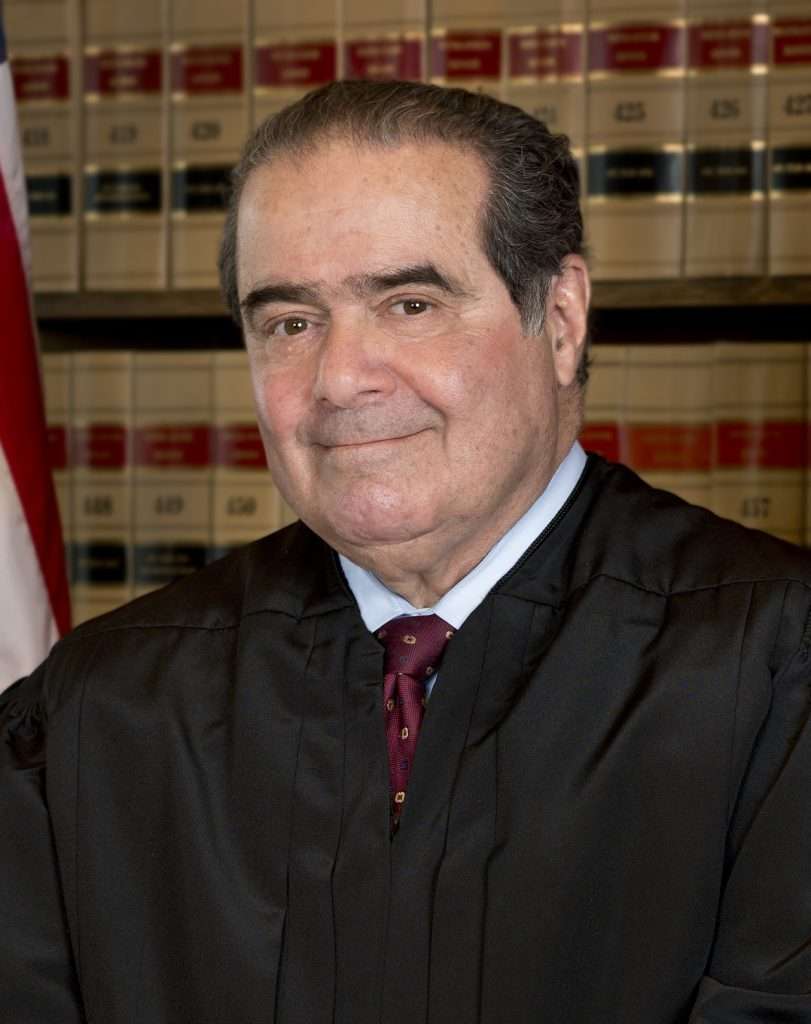
3/11/1936: Justice Antonin Scalia's birthday.
SEC to Vote on Climate Disclosure Rules
Companies may be required to provide broader climate-related disclosures to investors, but would such a requirement survive legal challenge?
In 2007, a handful of states, public interest groups and New York City asked the Securities and Exchange Commission to mandate broader disclosure of climate-related risks. They may be about to get their wish.
Yesterday the SEC posted public notice that it plans to vote on "whether to propose amendments that would enhance and standardize registrants' climate-related disclosures for investors." The vote will be held on Monday, March 21.
Advocates of expanded disclosure, including SEC Chair Gary Gensler, argue that such requirements are necessary to ensure that investors are properly informed of the risks climate change, and climate change policies, pose to their investments, and that climate-related risks are accurately reflected in share prices. Critics question whether climate risks are sufficiently distinct from other broad, systemic or policy-related risks to justify specific disclosure requirements. There are also questions as to whether climate-related disclosures could be held to the same legal standards for accuracy as are more traditional financial disclosures. Last year, I moderated a webinar (embedded below) exploring these questions featuring Professors Madison Condon (BU) and Kevin Haeberle (W&M) for the Coleman P. Burke Center for Environmental Law at Case Western Reserve University.
The timing of the SEC's decision is interesting because the Supreme Court's pending decision in West Virginia v. EPA could well affect the SEC's authority to mandate broader climate disclosures and increase the litigation risk to any new disclosure requirement. Should the Supreme Court conclude that Section 111 of the Clean Air Act can only be read to authorize traditional pollution control measures on specific facilities, as opposed to broader system-wide changes within the power sector, parallel arguments could be made against the SEC's authority under existing law to mandate broader climate or other environmental disclosures. If the former shift in regulatory authority is the sort of "major question" that requires legislative approval, it would seem the latter is too.
Should Ketanji Brown Jackson Recuse in Harvard Admissions Case?
Does her position on Harvard University's Board of Overseers require or counsel her recusal once she is confirmed?
One of the most high profile cases on the Supreme Court's docket for next term is Students for Fair Admissions v. President & Fellows of Harvard College, a challenge to Harvard University's use of race in undergraduate admissions. The petitioners claim that Harvard is discriminating against Asian applicants and are asking the Court to hold that federal law prohibits any use of race in college admissions, while Harvard maintains its admissions practices are consistent with the Supreme Court's decision in Grutter v. Bollinger, and that this precedent should be upheld.
Assuming Judge Ketanji Brown Jackson is confirmed to the Supreme Court this spring, one of her first decisions will be whether to recuse in this case. Since 2016, Judge Jackson has been a member of Harvard's Board of Overseers, which (according to Harvard's website) is "one of Harvard's two governing boards" and "plays an integral role in the governance of the University" by fulfilling oversight and advisory functions. Judge Jackson's term on the Board ends this year, but she has been a member throughout the pendency of this litigation.
A Washington Post story delves into the question whether this relationship means that a Justice Jackson should recuse from the Students for Fair Admissions case. As the article notes, the justices are not bound by the code of judicial conduct, but generally follow the same standard in determining whether to recuse from a case. The qualification "generally" is important here, as justices are somewhat less likely to recuse in cases than their lower court colleagues because, unlike on lower courts (and unlike some state supreme courts), there is no way to substitute for a recused justice. Thus, a recusal has the same practical effect as a vote against the petitioner.
From the Post article:
Jackson's affiliation with Harvard is more current. She has served as a member of the oversight board, which provides "counsel to the University's leadership on priorities, plans, and strategic initiatives," since 2016. Her term ends May 26; the court will hear the affirmative action challenges to policies at Harvard and the University of North Carolina in the term that begins in October.
"Six years on the Board is a long time, so, to quote the federal recusal law, her 'impartiality' in the case — that is, in favor of Harvard, given her ties to the Board — 'might reasonably be questioned' here, meaning disqualification is required," according to Gabe Roth, executive director of Fix the Court, a nonpartisan group that advocates for reforms. . . .
A key question in assessing whether Jackson should participate in the case is whether she played any role in the formation of the admissions policy being challenged, according to New York University law professor Stephen Gillers.
The board Jackson sits on was named in the original lawsuit in 2014 but dismissed as a party the next year, before Jackson was elected. It is separate from the smaller Harvard Corporation board, which has fiduciary responsibility.
As the Post story notes, Judge Jackson appears to have been fairly quick to recuse in cases where there was an apparent or potential conflict of interest, including some that involved Harvard.
Among the more than 2,000 pages Jackson submitted to the Senate Judiciary Committee in advance of her confirmation hearings is a list of the dozen cases over eight years in which she took the initiative to recuse. . . .
In a separate pair of cases, she recused because of her role on the Harvard board even though the university itself was not a party in the lawsuits. She declined in 2016 to get involved in a challenge to the Department of Education's sexual assault guidelines for colleges and universities because the board she was serving on "was evaluating its own potential response to those guidelines." Two years later, she removed herself from resolving a lawsuit filed by a Harvard research librarian against the Environmental Protection Agency after the government failed to respond to a public records request.
In both instances, Jackson wrote in her Senate questionnaire, "I determined that my impartiality might reasonably be questioned and that this issue was incurable."
If Judge Jackson is inclined to apply this same cautious approach as a Supreme Court justice, that would suggest she will recuse. But will it matter?
A potential recusal in the Harvard case would seem like a big deal, but it is not clear that it would affect the outcome. Harvard prevailed below, so it will take the votes of at least five justices for the petitioners, Students for Fair Admissions, to prevail. If there are not five votes for reversal, Harvard will be able to maintain its current policies and the Grutter precedent will stand, as the lower court's opinion would be affirmed without the issuance of a precedential opinion in the case of a tie vote. (Indeed, standard court practice is for there to be no opinion at all in such cases.)
Under the assumption that a Justice Jackson is likely to join the other liberal justices in rejecting the petitioners' claims, her recusal would not make it any easier for the petitioners to prevail. As a legal matter, a 5-3 decision holds the same force as a 5-4 decision. A recusal would, however, make it less likely that the Court issues an opinion reaffirming or expounding upon Grutter. For while it would only take four votes to prevent reversal of the lower court opinion, it would take five for the Court to issue a precedential opinion upholding Harvard's current admissions practices.
Whether it will matter or not, this is a question certain to come up in the Senate Judiciary Committee's confirmation hearings, and it will be interesting to see whether Judge Jackson commits to handling the recusal question in this case in any particular way.
Ukrainians Calling Russian Invaders "Orcs"
Apropos "ruscism," I thought I'd also note this other relatively new usage, seemingly pretty clearly from Tolkien.
Some Googling suggests there are some possible broader connections, e.g., to this Russia/Mordor item, but I can't speak to how common the usage was in the past. But right now it does seem to be a thing (e.g., here, here, and here).




