Justice Kagan was interviewed today at Northwestern Law School, and she addressed the national injunction. Here's the account by Josh Gerstein of Politico, which leaves no doubt about where she stands:
During her remarks on Wednesday in a conversation with Northwestern Law Dean Hari Osofsky, Kagan took a notably hostile and forceful stand against a practice that hasn't generated much public debate but has roiled the legal community in recent years: individual U.S. District Court judges blocking federal government policies nationwide.
Executive branch officials from the Biden, Trump and Obama administrations have all complained about their major policy initiatives often being hamstrung by a single judge.
"This has no political tilt to it," Kagan said, taking aim not only at the sweeping injunctions but at the transparent "forum shopping" by litigants filing cases in courts they think will be friendliest to them.
"You look at something like that and you think, that can't be right," Kagan said. "In the Trump years, people used to go to the Northern District of California, and in the Biden years, they go to Texas. It just can't be right that one district judge can stop a nationwide policy in its tracks and leave it stopped for the years that it takes to go through the normal process."
Applicants Yeshiva University and its president seek emergency relief from a non-final order of the New York trial court requiring the University to treat an LGBTQ student group similarly to other student groups in its student club recognition process. The application is denied because it appears that applicants have at least two further avenues for expedited or interim state court relief.
First, applicants may ask the New York courts to expedite consideration of the merits of their appeal. Applicants do not assert, nor does the Appellate Division docket reveal, that they have ever requested such relief. Second, applicants may file with the Appellate Division a corrected motion for permission to appeal that court's denial of a stay to the New York Court of Appeals, as the Appellate Division clerk's office directed applicants to do on August 25. Applicants may also ask the Appellate Division to expedite consideration of that motion.
If applicants seek and receive neither expedited review nor interim relief from the New York courts, they may return to this Court.
Justice Alito, joined by Justices Thomas, Gorsuch, and Barrett, dissented:
Does the First Amendment permit a State to force a Jewish school to instruct its students in accordance with an interpretation of Torah that the school, after careful study, has concluded is incorrect? The answer to that question is surely "no." The First Amendment guarantees the right to the free exercise of religion, and if that provision means anything, it prohibits a State from enforcing its own preferred interpretation of Holy Scripture. Yet that is exactly what New York has done in this case, and it is disappointing that a majority of this Court refuses to provide relief.
From Watts v. Lucifer, decided yesterday by Judge Sam Crow (D. Kan.):
Petitioner James B. Watts, who is proceeding pro se and in forma pauperis, is a pretrial detainee incarcerated at the Butler County Jail facing state criminal charges…. Petitioner … [filed various motions, including a motion] titled "Motion to Get Page 1 of My Petition for Habeas Corpus with Case No. of GOD Almighty's Number(s) and, Not of Lucifer's (Satan's, The Devil's)…" Therein, Petitioner explained his belief that certain numbers are "of God Almighty's Number(s)," while others are "of Lucifer's" numbers.
The case number administratively assigned to this matter when Petitioner filed it is 22-3109-SAC; the number 2 is one of the numbers Petitioner believes is Lucifer's. In his motion, Petitioner asserted that using "[a]ny…numbers that do not add up to GOD Almighty's are [sic] against [his] Religion and/or Faith," and he asked the Court to alter the case number to include only "GOD Almighty's Number(s) and Not…Lucifer's." …
Petitioner … asserts that he "will not get any justice under this case" number because the case number "is for Evil [and] Wicked people and their justice." He advises the Court that if it declines to comply with his requests to … grant Petitioner's motions, it should dismiss this case without prejudice so that Petitioner may proceed in another, identical habeas action he has initiated in this Court….
"On information and belief, and as discovery will likely reveal, Green has been acting as a proxy for another performer who, mistakenly believing that she and Plaintiff are stars of equal stature, has repeatedly used other social media intermediaries in a hopeless effort to advance her career at Plaintiff’s expense."
The Complaint filed today in Minaj v. Green is short (4 pages) and readable, so I thought I'd pass along pretty much the whole thing (minus the paragraph numbering and a bit of less interesting detail):
This action is brought to vindicate the reputation of Plaintiff, a superstar artist who is known as Nicki Minaj. The Defendants herein have outrageously defamed Plaintiff by posting a video on their Twitter page in which Defendant Marley Green ("Green") who goes by the name of "Nosey Heaux," falsely and maliciously stated that Plaintiff is a "cokehead" who is "shoving all this cocaine up her nose." Further, evidencing a fundamental lack of decency, Green has also posted vile comments about Plaintiff's one year-old son. While these comments are not actionable, they nonetheless demonstrate why punitive damages should be awarded in this case.
In a different age, Green's lie would have been meaningless because she is the ultimate "nobody"—on information and belief, a person whose main accomplishments in life have been a string of criminal charges, bail jumping, and bad debts. But this is the age of social media, one in which a "nobody" can find an undeserved following through relentless self- promotion. Green is one of those "nobodies," as she posts content belonging to her wholly owned company, Defendant Nosey Heaux Live LLC ("NHLLLC"), on multiple social media platforms. One of those platforms is the "Nosey Heaux Live" Twitter page, which, inexplicably, has approximately 3,300 followers. Green therefore has the means to publish a lie knowing that it will metastasize as it is retweeted by her followers, and then further retweeted by the followers of her followers, and so on.
That is what has happened here. In just the day following Green's September 12, 2022 publication of her lie that Plaintiff is a "cokehead" on her Twitter page, almost 2,000 people had "liked" it. More importantly, more than 260 people had retweeted it, which led to a firestorm of social media attention which was undoubtedly caused by multiple levels of subsequent retweets. While social media is an extraordinarily effective vehicle for spreading lies, it does not confer a license to do so.
On information and belief, and as discovery will likely reveal, Green has been acting as a proxy for another performer who, mistakenly believing that she and Plaintiff are stars of equal stature, has repeatedly used other social media intermediaries in a hopeless effort to advance her career at Plaintiff's expense. However, the fact that Green was acting at the behest of another does not make her conduct less egregious or excuse her from the consequences of the damages she has caused Plaintiff to suffer….
Should an appellate court provisionally seal a brief until the case is heard on the merits? Or should it try to make a redacted version promptly available?
I'm therefore planning to file this motion to intervene and reconsider, on my own behalf (it's due tomorrow, though I'd like to file it late tonight or early tomorrow morning); would love to hear people's comments on it before I do file it. Here's the substantive part:
Motion to Intervene and Reconsider Order of Sept. 1, 2022
Eugene Volokh seeks to intervene in this case, solely in order to ask this Court to reconsider the Order of Sept. 1, 2022, which provides that Appellant's Opening Brief should be "maintain[ed] under provisional seal" until the sealing questions are resolved by "the panel assigned to decide the merits of this appeal." Volokh would like to exercise his right to promptly access a redacted version of the Opening Brief, even if Doe's name and identifying information need to be deleted from the brief for now….
II. Appellate briefs may not be fully sealed, even temporarily, without a showing that redaction would not be possible
"[T]he public's First Amendment and common law rights of access" extend to "appellate filings" as well as trial court filings, because "the public should be given an opportunity to engage in and follow the dialogue" within those filings. United States v. Index Newspapers LLC, 766 F.3d 1072, 1097 (9th Cir. 2014). Circuit Rule 27-13(a), which recognizes that "This Court has a strong presumption in favor of public access to documents," reflects this principle. And "the public interest in obtaining news is an interest in obtaining contemporaneous news," Courthouse News Serv. v. Planet, 947 F.3d 581, 594 (9th Cir. 2020) (emphasis added), not long-delayed news. Indeed, even a delay of from a few days to "up to two weeks" in making filed documents accessible may violate the right of access. Id. at 597-98.
Starr's role in the impeachment of Clinton may have cost him a seat on the Supreme Court. And the biggest beneficiary of Starr's failure was probably George W. Bush.
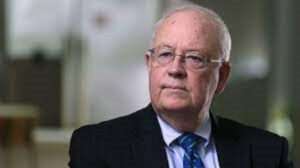
Kenneth Starr - most famous for his role as the independent counsel who drafted the report that led to the impeachment of President Bill Clinton - passed away yesterday. His controversial career includes two major ironies and historical what-ifs.
The first is that Starr's tenure as independent counsel may have cost him a seat on the Supreme Court. Before his role in the Clinton impeachment, Starr (a former prominent federal judge and solicitor general of the US) was seen as a highly plausible GOP Supreme Court nominee. Indeed, his status as a widely respected pillar of the legal establishment was one of the reasons why he was selected to be independent counsel in the first place! The Starr Report made him a hero to social conservatives, but a villain to most Democrats and independents. Thus, he was no longer a plausible Supreme Court nominee. No Republican president was likely to spend the political capital needed to get Starr confirmed, so long as there were other, less controversial options that had comparable credentials. In some alternate universe, Bill Clinton manages to restrain his impulses or never gets caught, or Starr isn't named independent counsel. And we get Supreme Court Justice Kenneth Starr.
The second irony is that the biggest beneficiary of Starr's failure to get Bill Clinton removed from office was probably…. George W. Bush! Had the Senate convicted Clinton, Al Gore would have become president and served out the last two years of Clinton's term. As an incumbent president, Gore would likely have gotten more of the credit for the good economy of the time than he did as Vice President. Also, incumbent presidents generally get some electoral boost just for being incumbents. Even a very small boost would have been enough to net Gore the extra few hundred votes needed to win Florida in 2000 and defeat Bush.
Incumbent status would likely have been worth at least a 1% bump or more, enabling Gore to win by thousands of votes. Gore would have won a clear, though still close, victory, and few would ever have heard of the butterfly ballot or hanging and dimpled chads. In retrospect, Republicans should be happy that Starr failed, and Democrats should lament it!
On a slightly more serious note, I think the Starr Report was mostly right about Bill Clinton. He didhave "sexual relations with that woman" and he did commit perjury about it (unless you adopt Clinton's highly idiosyncratic and convenient redefinition of what counts as "sexual relations"). And I reject the then-common view that Starr was delving into these details of the sexual relations out of some kind of prurient interest or obsession with sex. The allegations against Clinton related to perjury about his relationship with then-White House intern Monica Lewinsky, and investigators had little choice but to go into the evidence about that subject.
At the same time, I believed then and still believe now that Clinton's offenses weren't grave enough to justify impeachment and removal (Donald Trump's were far worse). But, in hindsight, I think it might have been better for the country if the Senate had convicted Clinton nonetheless, so as to set a precedent for accountability for presidential wrongdoing. Later events showed there is far more danger to underdeterrence of misconduct in high places than overdeterrence.
I had a number of ideological and jurisprudential differences with Starr, and his post-Clinton impeachment career certainly had its flaws (including a scandal-marred tenure as President of Baylor University). But he was likely more right than wrong about Bill Clinton. Ironically, Starr probably paid a higher price for investigating Clinton's wrongdoing than Clinton himself paid for committing those acts in the first place.
[Jack Goldsmith and I will have an article out about the Dormant Commerce Clause, geolocation, and state regulations of Internet transactions in the Texas Law Review early next year, and I'm serializing it here. There is still plenty of time for editing, so we'd love to hear any recommendations you folks might have; in the meantime, you can read the entire PDF of the latest draft (though with some formatting glitches stemming from the editing process) here.]
Let's now consider how these principles might apply to state regulations of social media platforms, and in particular to statutes (whether framed as public accommodations statutes or quasi-common-carrier statutes) that ban discrimination based on various attributes of a user or of the user's speech. We'll begin with two relatively simple and narrow hypotheticals, and then turn in a later post to the more controversial and ambitious statutes aimed at forbidding certain kinds of political discrimination, such as the ones recently enacted in Florida and Texas.
Antidiscrimination Statutes: Status
Federal public accommodations law likely doesn't cover social media platforms, because it's limited to only a few kinds of establishments.[1] It also only bans discrimination based on race, religion, and national origin.[2] But many states ban public accommodation discrimination in many establishments, based on many criteria.
Of course, today's major social media platforms likely wouldn't expressly exclude members based on, say, race or sex or sexual orientation. But consider a peculiar form of antidiscrimination law: bans on discrimination in places of public accommodation based on arrest or conviction history. Ann Arbor categorically bans such discrimination based on arrest record.[3] Madison, Urbana, and Champaign do the same as to arrest record or conviction record.[4] Connecticut bans discrimination based on expunged criminal records.[5] New Jersey bans discrimination based on criminal history involving possession, distribution, or manufacturing of marijuana and hashish.[6] Illinois, Hawaii, New York, and Wisconsin also ban such discrimination in employment,[7] so it's easy to imagine one of those states extending the ban to public accommodations.
Indeed, say Wisconsin is, rightly or wrongly, persuaded to do that (especially given Madison's step in that direction). But say some social network—call it SafeBook—decides to ban people with a history of criminal offenses from portions of its site that children can visit. (Maybe sex offenses, but maybe also drug offenses; many parents might not want their children to fall in with the wrong crowd online and be exposed to bad influences.)
And say that Wisconsin courts conclude that the Wisconsin law applies to social media networks. This isn't implausible: Some courts have already held that bans on disability discrimination in places of public accommodation apply to websites.[8] The Wisconsin law also provides that the term "public place[s] of accommodation or amusement" "shall be interpreted broadly to include, but not be limited to, places of business or recreation," "and any place where . . . amusement, goods, or services are available either free or for a consideration."[9] Finally, say that courts conclude that this nondiscrimination rule doesn't violate the social media networks' First Amendment rights,[10] and isn't preempted by § 230.[11]
A easy-to-remedy snafu in the government's Uniting for Ukraine program is exposing some Ukrainian migrants to deportation and preventing others from working legally in the United States.
Russia's invasion of Ukraine has, among other things, created the biggest refugee crisis in Europe since World War II. Since the Russian attack began in February, Western governments, including the US, have done much to open doors to Ukrainian refugees fleeing the conflict and associated Russian repression. Most notably, the Biden Administration has established the Uniting for Ukraine program, under which Americans can sponsor Ukrainian refugees to enter the country on an expedited basis. The president has also granted Temporary Protected Status (TPS) to Ukrainians who arrived in the US by April 11 (after initially cutting it off at March 1). TPS status gives Ukrainians the right to live and work in the US for up to 18 months (though the president can cut short - or extend - this period at will).
Unfortunately, however, a loophole in this combination of policies has exposed some Ukrainians to potential removal from the US, and prevented others from working legally. Ukrainians are only eligible for TPS if they arrived by April 11. The Uniting for Ukraine program only came into effect on April 25.
This leaves out in the cold people who arrived between April 11 and April 25, and in some cases even later because it took time for UforU to get underway, even after April 25. Based on my discussions with organizations assisting migrants, it appears there are hundreds or perhaps even thousands of people in this position, though I admittedly do not have reliable estimates. Some have even been subject to removal proceedings, according to reports I have heard. Others remain in limbo.
Most of these people entered the United States on B2 tourist/visitor visas (the only kind they could apply for at the time) or were granted humanitarian parole to cross the US-Mexican border. Either way, they may be able to stay in the US for only a short time (generally no more than six months), and often are not eligible to work legally. The latter both makes it hard for the Ukrainians to support themselves, and prevents them from benefiting the US economy through their labor.
There is an easy fix for these problems! Simply extend TPS to Ukrainians who arrived at least as late as April 25, but preferably at least by June 1. Better still, it should be extended to all who arrive at any time so long as the war continues. Under current law and judicial precedent, the president can do these things with the stroke of a pen.
The rationale for these steps is obvious: the Russian invasion of Ukraine and accompanying repression of people in occupied territories (including even mass deportations of civilians) is the sort of situation TPS is obviously intended to address. Despite recent Ukrainian successes on the battlefield, Russia still occupies large parts of the country, and the war seems likely to continue for some time to come. Letting Ukrainians stay is both the right thing to do on moral grounds, and likely to benefit our economy.
Ukrainians who arrived after April 11 are no less worthy of refuge than those who arrived before. There is no rationale for distinguishing between the two groups. There is still less justification for the April 11-25 loophole. Most likely, its creation was a bureaucratic oversight, rather than a deliberate policy.
There is also, as far as I can see, essentially zero political risk to fixing this problem for the White House, and perhaps even a modest benefit (refugee advocacy organizations and the Ukrainian immigrant community would be grateful). Hopefully, they will address it once made aware of it, though government bureaucracies have all too often allowed worse problems to persist through inertia.
Fixing this discrete issue is not a substitute for addressing broader flaws in our immigration and refugee policies generally, and those related to the Ukraine war specifically. Among other things, we need a larger-scale permanent private refugee sponsorship program, and Ukrainians fleeing the war should be given permanent rights to live and work in the US, not just a temporary status, revocable by the White House at any time. Moral, economic, and strategic considerations also support opening US doors to Russians fleeing Vladimir Putin's increasingly repressive regime.
In earlier posts (e.g. here and here), I have addressed claims that accepting Russian and Ukrainian refugees is unfair so long as the US and its allies are less open to those fleeing violence and tyranny elsewhere. These iniquities should be addressed by "leveling up," not "leveling down."
But even if the US government cannot or will not resolve these broader issues in the near future, it can at least close the ridiculous April 11-25 gap. The best should not be the enemy of the good. We have here a simple problem, with a simple and easy solution.
From the Minnesota Court of Appeals' majority opinion yesterday in State v. Trifiletti, written by Judge Randall Slieter and joined by Judge Matthew Johnson; the opinion is long, but here's the legal heart of the matter:
Did the state prove that M.W.'s [a witness's] possible exposure to COVID-19 and fully-dissipated-cough symptoms, which prevented her from testifying in person [at defendant's April 2021 retrial], render her unavailable [so that her past testimony at an earlier trial could be introduced, or alternative that she could be allowed to testify by video, without violating a criminal defendant's Confrontation Clause rights]?
M.W.'s possible exposure to COVID-19 without any symptoms of illness that prevents her from providing live, in-person testimony, does not satisfy any of the recognized circumstances rendering a witness unavailable. Therefore, she was available to provide live, in-person testimony. M.W. was willing to testify, she was physically and mentally able to testify, she was within the jurisdiction, and she remained in contact with the prosecutor.
The reason provided by the district court that M.W. was unavailable was its reasonable public-health concern for those in the courtroom who could potentially have been exposed to COVID-19. Our extensive review of the caselaw related to witness unavailability reveals no such public-health basis for admitting an unconfronted, testimonial statement against a criminal defendant. The district court erred by allowing the state to read her prior testimony into evidence. Therefore, Trifiletti's Sixth Amendment right to confront the witnesses against him was violated….
From Magistrate Judge Reid Neureiter's Report and Recommendation yesterday in Huff v. City of Aurora(D. Colo.) (the ultimate decision will be in the District Judge's hands, though such Magistrate Judge Reports and Recommendations are generally quite influential):
This lawsuit arises from an incident that occurred on October 10, 2019 at the Aurora home Mr. Huff shared with his wife, young daughter, and brother, George. That day, a man named George Bejar-Gutierrez, whom the brothers allowed to stay at the residence, stole George Huff's vehicle to drive to a methadone clinic. When Mr. Bejar-Gutierrez eventually returned, he was under the influence of methadone and George Huff's car was damaged. A confrontation, initiated by Mr. Bejar-Gutierrez, ensued, which prompted a passerby to call 911. Officers Doorgeest, VanDyk, and Vaughan of the Aurora Police Department ("APD") were dispatched to the scene, where they met with the Huff brothers, who explained what had happened. The officers informed the brothers that neither would be charged with any crime, and Andrew Huff gave them his cell phone number for any future communications.
Mr. Bejar-Gutierrez, who had fled before officers arrived and then proceeded to threaten the Huff brothers throughout that day and into the evening, eventually placed his own call to the APD, and met with Officers Ord, Marrero, and Oviatt at around 7:00 p.m. at a different Aurora residence. Mr. Bejar-Gutierrez told these officers that the Huff brothers assaulted him and that Andrew Huff had a firearm. Mr. Huff alleges that Mr. Bejar-Gutierrez was a convicted felon who had previously been arrested for giving false information to the APD.
At 11:30 p.m., Officers Ord, Marrero, and Oviatt, without any advance notice to Mr. Huff, went to Mr. Huff's home. They parked around the corner and, wearing all black clothing, proceeded to "creep" through neighboring yards towards Mr. Huff's residence. When Mr. Huff, who was smoking outside, saw these unidentified individuals advancing upon his home, he believed that Mr. Bejar-Gutierrez was following through on his earlier threats. He ran inside and retrieved a shotgun. He was facing the window with both hands by his side. His left hand held the shotgun by the barrel—his finger was not on the trigger and the gun was pointed at the ceiling. About 30 feet away, Officer Ord drew his weapon and, as he yelled, "Put your hands up, put your hands up!", fired five shots at Mr. Huff. Mr. Huff, who was diving away from the window as Officer Ord opened fire, was shot in rectum and severely injured. Another round entered the room where his daughter lay sleeping.
I am happy to share that my latest law review article "Adopting Nationality", co-authored with Cassandra Burke Robertson and available here, has been accepted for publication in the Washington Law Review. Here is the abstract:
Contrary to popular belief, when a child is adopted from abroad by an American citizen and brought to the United States, that child does not always become an American citizen. Many adoptees have not discovered until years later (sometimes far into adulthood) that they are not actually citizens, and some likely still do not know. To address this problem, the Child Citizenship Act of 2000 (CCA) was enacted to automate citizenship for certain international adoptees, but it did not cover everyone. Thousands or tens of thousands of adoptees still live under the assumption that they are American citizens when in fact they are not. While laws have been proposed to fill the gaps left by the CCA, none have yet passed.
This Article argues that children adopted by U.S. citizen parents are entitled to permanence of nationality. It explores how state and federal authorities deliberately and irrevocably sever the ties of transnational adoptees to their families of origin to promote the interests of the adoptive family. The U.S. adoption framework prioritizes the unity of the adoptive family over maintaining connection to the child's family of origin. Adoptees often struggle to understand and define their identity on various levels, including their personal, national, and ethnic identities. Citizenship precarity adds an extra layer of psychological difficulty for transnational adoptees, making the child's position in society even less secure. If a child can be adopted into an American family but not accepted as a member of the American nation, then the child will never have the full stability that adoption is intended to offer.
The United States can and should follow through on the promise of permanence to transnational adoptees by awarding them the status of U.S. nationals. This status would enable them to remain in the United States, travel on a U.S. passport, and fully participate in American society. The United States Code already contains an overlooked provision that awards nationality status to those who, although not formally citizens, nevertheless owe permanent allegiance to the country. Interpreting this statutory language to cover adoptees who do not otherwise qualify for formal citizenship reflects the reality that children adopted into American homes are permanent members of this society. Indeed, we argue that the right to nationality is grounded in the Equal Protection and Due Process Clauses of the United States Constitution. Recognizing nationality will ensure that adoptees—who were brought to the United States through no choice of their own—cannot be removed from it.
[Jack Goldsmith and I will have an article out about the Dormant Commerce Clause, geolocation, and state regulations of Internet transactions in the Texas Law Review early next year, and I'm serializing it here. There is still plenty of time for editing, so we'd love to hear any recommendations you folks might have; in the meantime, you can read the entire PDF of the latest draft (though with some formatting glitches stemming from the editing process) here.]
The pervasive reality of geolocation and filtering services on the internet should thus affect Dormant Commerce Clause analyses of state internet regulation. Most courts that examine state internet regulations do so under the undue burden test and some version of the extraterritoriality test. Whichever of these tests courts deploy, and whatever version of the extraterritoriality test they use, the previous posts suggest that four principles related to the geographical element of online transactions should govern the analysis.
First, the internet is not a borderless medium. All major firms operating on the internet, and many smaller ones, collect and use location data about consumers and users, and shape content by geography. The technology that supports these practices is quickly growing more pervasive, more accurate, and less expensive.
Second, because geolocation and filtering technology is pervasive, courts should not presume that internet operators have any greater difficulties than "real-space" operators in identifying internet users based on geography and tailoring their products to state law. Assessing the costs and benefits of complying with state regulations, or of the extraterritorial impact of state regulations, must include realistically assessing compliance costs based on the current state of geolocation and filtering technology.
As I mentioned yesterday, there's a new survey aimed at determining patterns of gun ownership and defensive gun use, from Prof. William English at the Georgetown University. It's much larger than most other such surveys, with over 54,000 adult American respondents, of whom over 16,700 personally owned guns.
The large sample allows the survey to give much more reliable information about subcategories of the U.S. population, for instance getting a sense of gun ownership rates by state (ranging from 16%, or about half the national level, in Massachusetts, to 54%, or more than half above the national level, in Idaho). My own California, generally seen as a state with very heavy gun regulations, is still not far below the average, at 25%. Even deepest-of-deep-blue D.C. is at 24% (though with a higher margin of error, 16% to 35%).
It also gives more reliable information about demographic subgroups. Gun ownership was reported by:
Gus Hurwitz brings us up to speed on major tech bills in Congress. They are all dead. But some of them don't know it yet.
The big privacy bill, American Data Privacy and Protection Act, was killed by the left, but I argue that it's the right that should be celebrating, since the bill would have imposed race and gender preferences all across the economy, and the GOP members who supported the measure in the House were likely sold a bill of goods by industry lobbyists.
The big antitrust bill, American Innovation and Choice Online Act, is also a zombie, Gus argues, lurching undead toward the Senate floor but unlikely to muster the GOP votes needed to pass, mainly because content moderation has become a simple partisan issue: the GOP wants less (or fairer) moderation, Dems want more of what Silicon Valley has been dishing out for the past few years. If the bill doesn't produce viewpoint competition in the tech sector, it offers nothing for the GOP, and industry lobbyists are happily driving wedges into that divide.
Meanwhile, the White House is having a weirdly inconclusive "listening session" that might better have been called a "talking but not really proposing anything session."
When Iran launched a wiper attack on Albania because of its harboring of Mujahedin-e-Kalq, Albania broke relations with Iran and the U.S. promised consequences. In fact, all the U.S. seems to have done is impose meaningless sanctions on the already-sanctioned Iranian spy ministry. What was Iran's response? A second cyberattack on Albania. Nate Jones runs down the story. Jamil Jaffer and I question whether governmental sanctions on foreign intelligence agencies, which never promised much, are now delivering an appearance of haplessness and not of strength.
Jamil and I dwell on the criminal trial of Joe Sullivan for how he handled some hackers who got access to personal data stored by Uber. He was the chief security officer, and he decided to pay the hackers a bug bounty in exchange for their promising to destroy the data. That allowed Uber to avoid treating (and reporting) the incident as a breach. Creative lawyering or too creative by half? I could go either way, but calling it obstruction of justice and wire fraud seems like a reach. Nonetheless, that's what the Justice is charging in a case that opened last week. It is heavily politicized, and all the politics – corporate and governmental – line up against Sullivan. Whether the jury will do the same is another question. Meanwhile, everyone from other CISOs to former New York Times reporter Nicole Perlroth are questioning the prosecution's merits and warning of its likely consequences. However the case comes out, I predict that the biggest loser will be the FBI, which will never again get the kind of welcome from CISOs that it has in more innocent days.
The sanctions on Tornado Cash come back to the podcast for the second week in a row, Nate tells us, this time as litigation. Coinbase is funding an APA and constitutional challenge to Treasury's sanctioning of a pile of code rather than a person or entity. My money is on the Treasury winning in the end.
You can subscribe to The Cyberlaw Podcast using iTunes, Google Play, Spotify, Pocket Casts, or our RSS feed. As always, The Cyberlaw Podcast is open to feedback. Be sure to engage with @stewartbaker on Twitter. Send your questions, comments, and suggestions for topics or interviewees to CyberlawPodcast@steptoe.com. Remember: If your suggested guest appears on the show, we will send you a highly coveted Cyberlaw Podcast mug!
The views expressed in this podcast are those of the speakers and do not reflect the opinions of their institutions, clients, friends, families, or pets.
"consisting of approximately 171 million handguns, 146 million rifles, and 98 million shotguns." There are also estimates of AR-15 ownership and ownership of magazines that hold over 10 rounds (which some state laws classify as "large-capacity").
There's a new survey aimed at determining patterns of gun ownership and defensive gun use, from Prof. William English at the Georgetown University. It's much larger than most other such surveys, with over 54,000 adult American respondents, of whom over 16,700 personally owned guns.
It measures some things that others have already measured—for instance, its estimate of the adult firearms ownership rate, 32%, is on par with other surveys. (Some other surveys also try to estimate what fraction of households contains at least one gun; this one didn't, though in response to my e-mail Prof. English wrote, "the individual gun ownership estimates are very much in line with other recent surveys that asked about ownership at the individual level; and some of these also asked about household ownership (Pew, Gallup), generally finding household rates in the 42-44% range.") But the survey also gives us some data that has rarely been gathered before, including (items reordered):
[Jack Goldsmith and I will have an article out about the Dormant Commerce Clause, geolocation, and state regulations of Internet transactions in the Texas Law Review early next year, and I'm serializing it here. There is still plenty of time for editing, so we'd love to hear any recommendations you folks might have; in the meantime, you can read the entire PDF of the latest draft (though with some formatting glitches stemming from the editing process) here.]
We think that the economic significance of geographical differences has driven the development of increasingly sophisticated technologies that identify where an internet user is coming from, and that allow websites and other internet operations to treat users differently based on geography. These technologies today permeate internet operations.
Geographical identification and filtering technologies grew up so that internet firms could better serve consumers and businesses, and, more generally, could make the internet a more effective communications tool.[1] Many internet firms, and all major internet platforms, collect and use geographical information as a core element of their business models.[2] For example, the firms involved in Greater L.A. Agency and Online Merchants Guild—CNN and Amazon—collect masses of location data about their users so that they can provide geographically tailored information to those users.[3] Firms operating on the internet cherish this geographical data because relevant consumer preferences differ by geography, and the data enable firms to better deliver their content and services.
"Location information plays an important role" in "providing useful, meaningful experiences" online, notes Google, a huge consumer and user of location information. "From driving directions, to making sure your search results include things near you, to showing you when a restaurant is typically busy, location can make your experiences across Google more relevant and helpful," and can "also help[] with some core product functionality, like providing a website in the right language or helping to keep Google's services secure."[4]
The best-known reason for firms to geolocate is that they want to advertise, and advertising success correlates with geography. A firm might want to deliver high-end advertisements to wealthy neighborhoods, or to deliver coupons when customers enter the mall, or offer a Burger King discount at a McDonald's, or promote farm-related software in rural areas.[5]